
Exploring Water Quality Macroinvertebrate Identification Sections of a

Exploring Water Quality Macroinvertebrate Identification
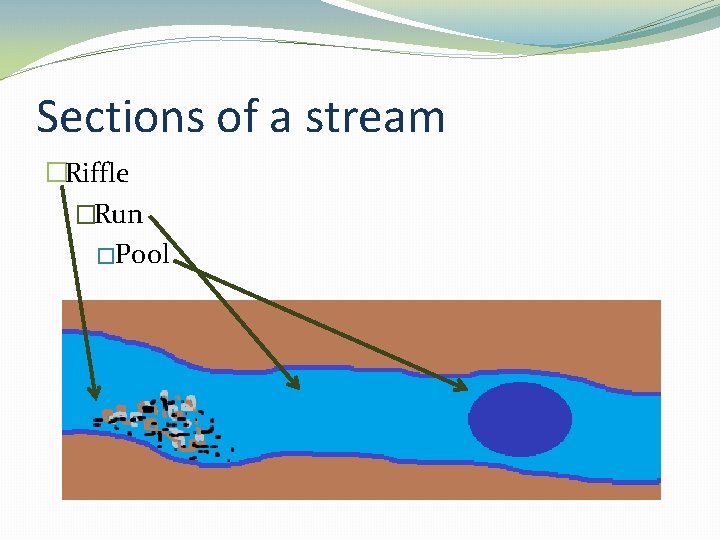
Sections of a stream �Riffle �Run �Pool
Streams are an important part of the environment. �Streams move water �Many animals and plants live in streams �The animals and plants that live in streams are the basis of the food chain for many ecosystems. �Healthy streams = water for people to use �Grow crops, industry, drinking, cooking, washing
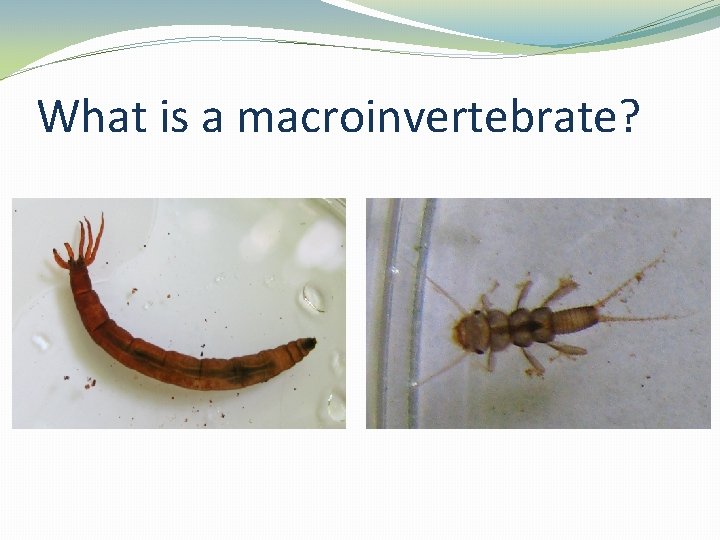
What is a macroinvertebrate?
What is a macroinvertebrate? �Macro – small but can be seen with out a microscope �Invertebrate – animal without a backbone �Insects (especially larval and nymph forms) �Snails �Crayfish �Aquatic worms
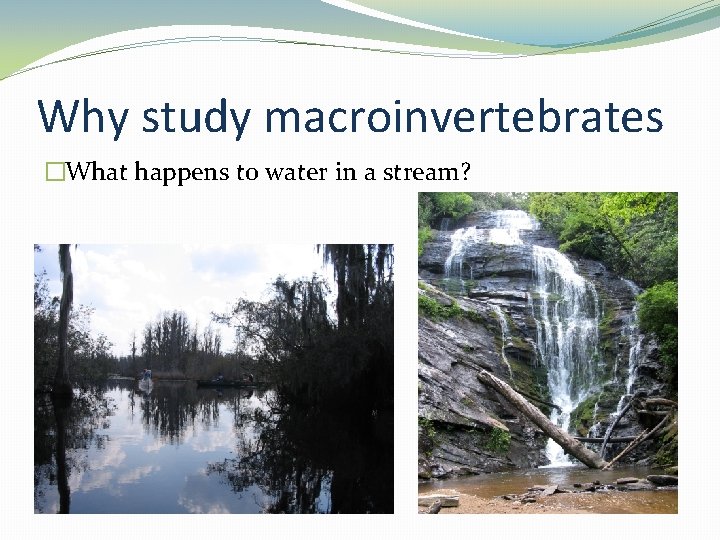
Why study macroinvertebrates �What happens to water in a stream?
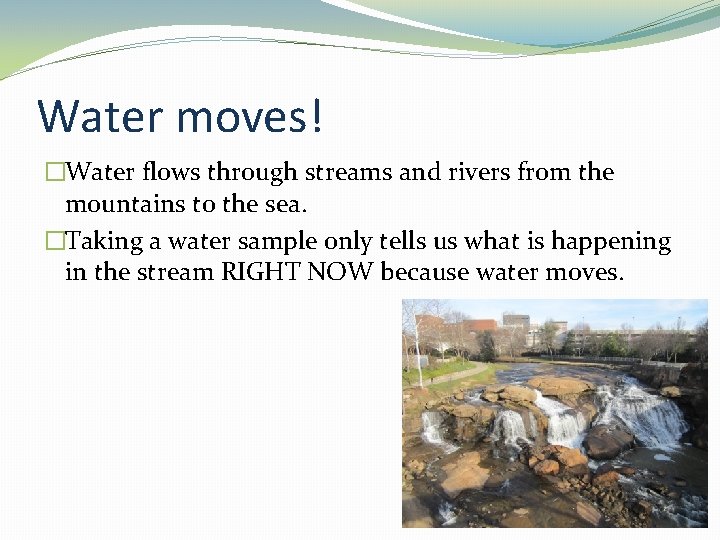
Water moves! �Water flows through streams and rivers from the mountains to the sea. �Taking a water sample only tells us what is happening in the stream RIGHT NOW because water moves.
Why study macroinvertebrates? �Macroinvertebrates live in water, and many live a long time �Macroinvertebrates are sensitive to pollutants in the water �Many macroinvertebrates cannot survive if there isn’t enough Dissolved Oxygen (DO) in the water, and most pollutants reduce DO levels �The presence or absence of sensitive macroinvertebrates can give us an idea about the overall quality of the water in a particular area
Collecting Macroinvertebrates �D-Nets �Identification Keys �Bowls – keep aquatic macroinvertebrates in water at all times
- Slides: 9