
Exploring the Use of Wikidata Highlights of a
- Slides: 50
Exploring the Use of Wikidata: Highlights of a Sabbatical Project Lori Robare University of Oregon Libraries
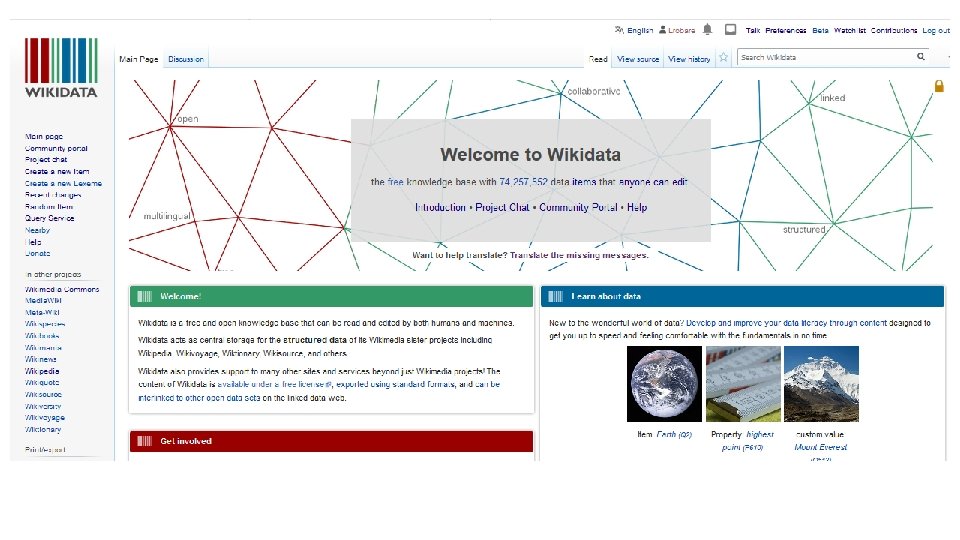
Wikidata is structured data • Like Wikipedia: • Part of the Wikimedia Foundation suite of projects • Free, open, collaborative • Anyone with an account can edit • Unlike Wikipedia: • Structured linked open data • Can be read and edited by both humans and machines • Much data has been imported from Wikipedia and other sources • Multilingual in the true sense: one data store with different language interfaces • Potential to be a linking hub for identifiers
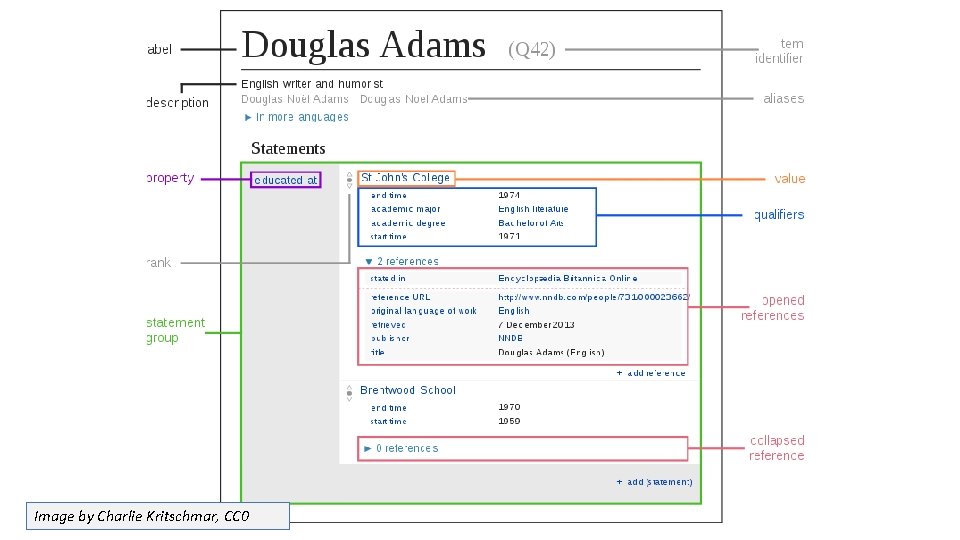
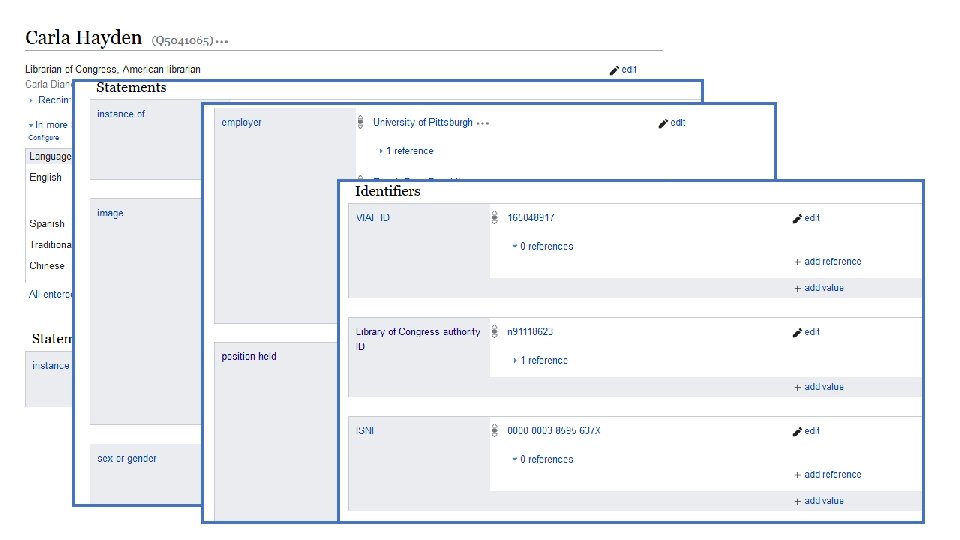
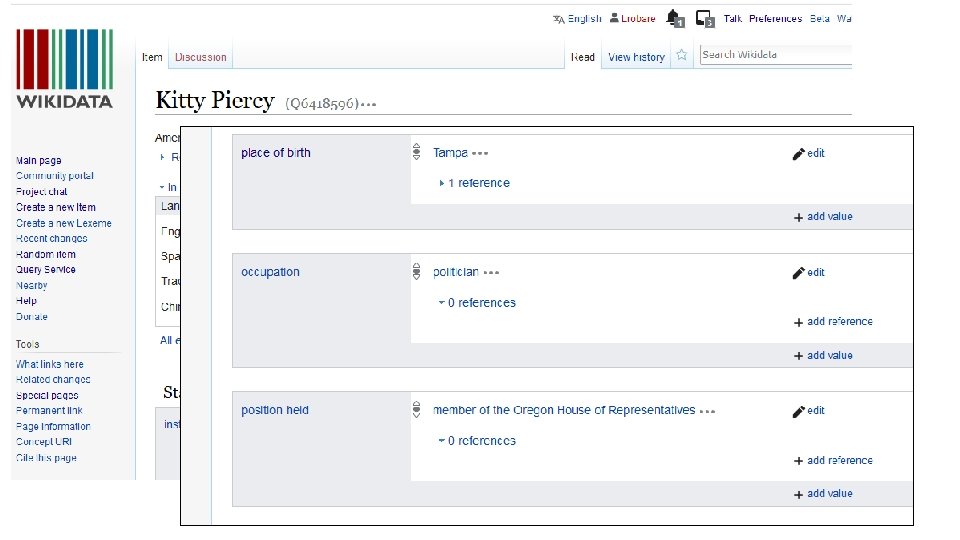
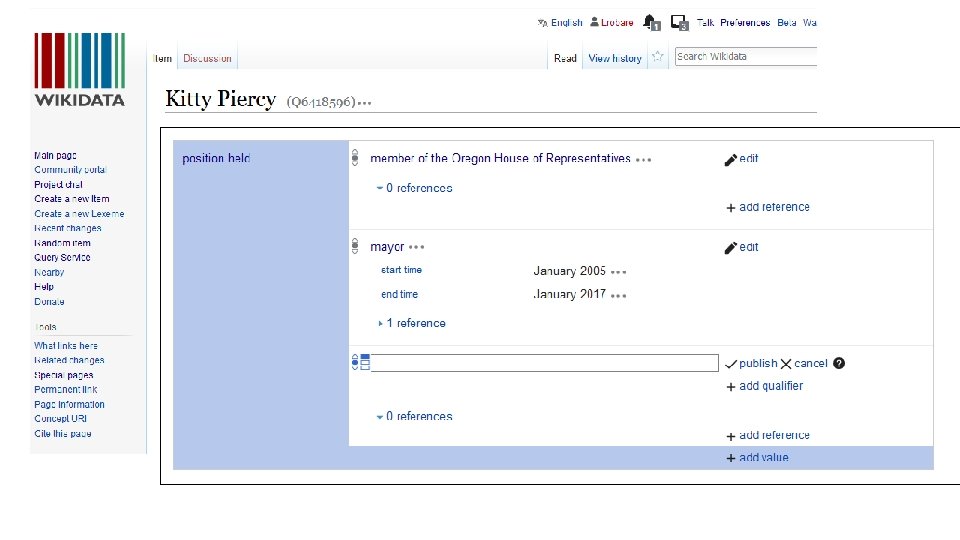
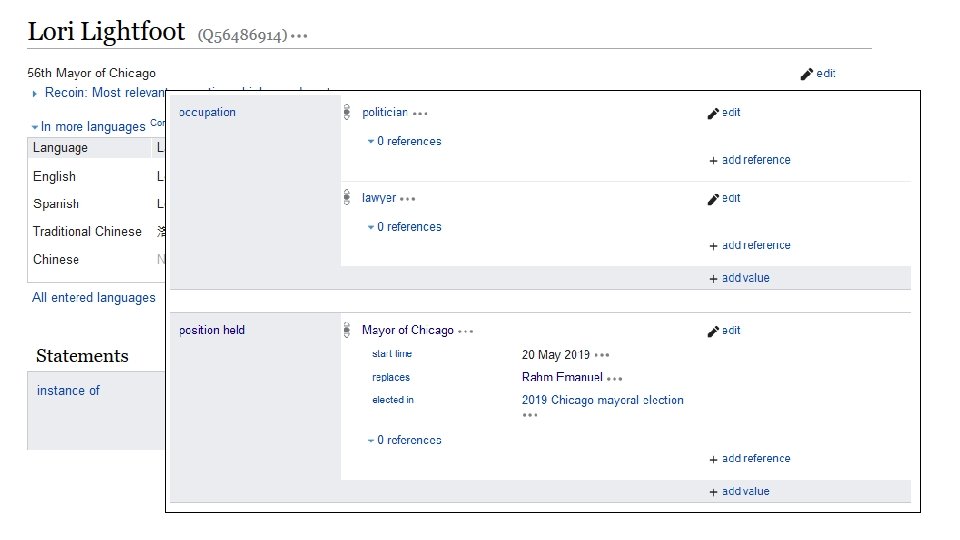
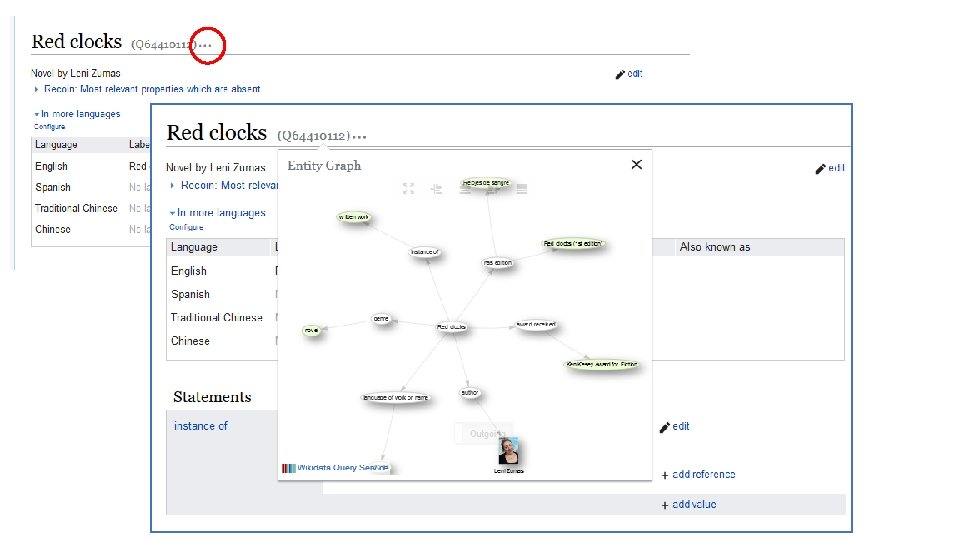
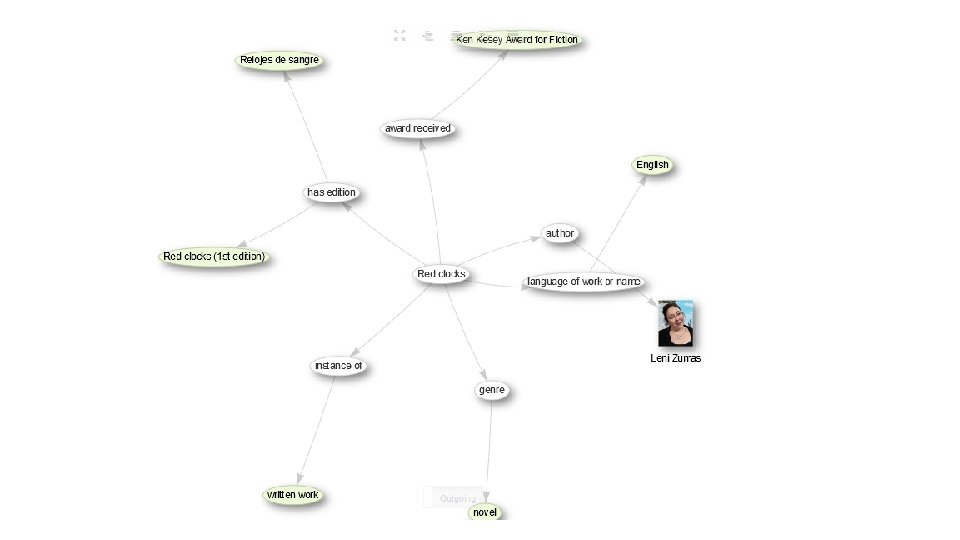
Items, Properties, Statements • Repository consists mainly of items • Each item is uniquely identified by a “Q” number • (Ideally) Each item has a label, description, may have aliases • Statements • Describe individual facts -- detailed characteristics of an item • Consist of a property and a value; (ideally) backed up by references • Properties • Can be thought of as a category of data • Each property is uniquely identified by a “P” number
Image by Charlie Kritschmar, CC 0
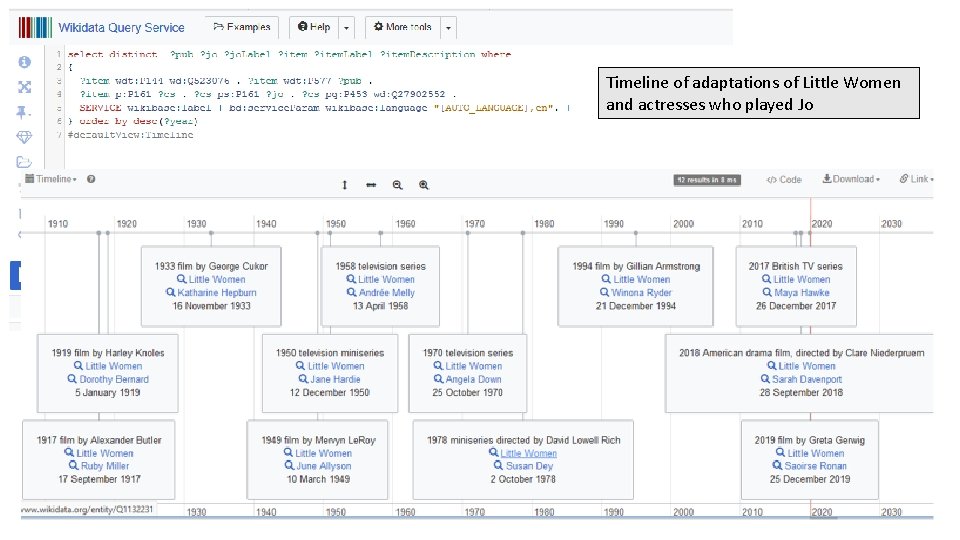
Timeline of adaptations of Little Women and actresses who played Jo
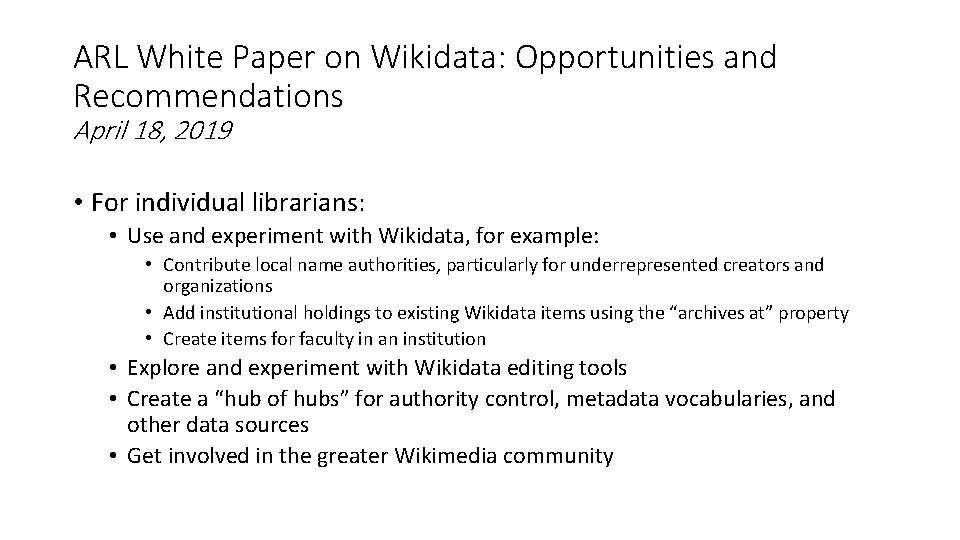
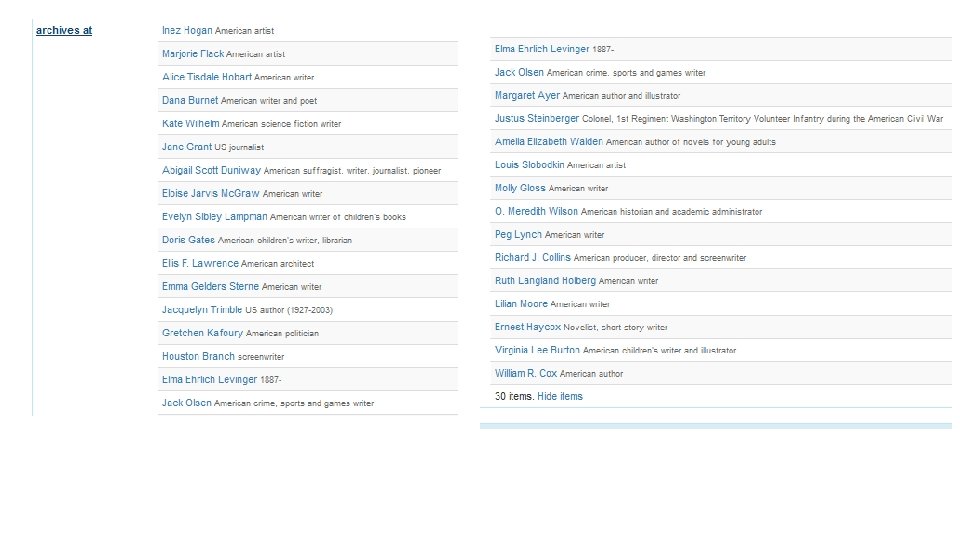
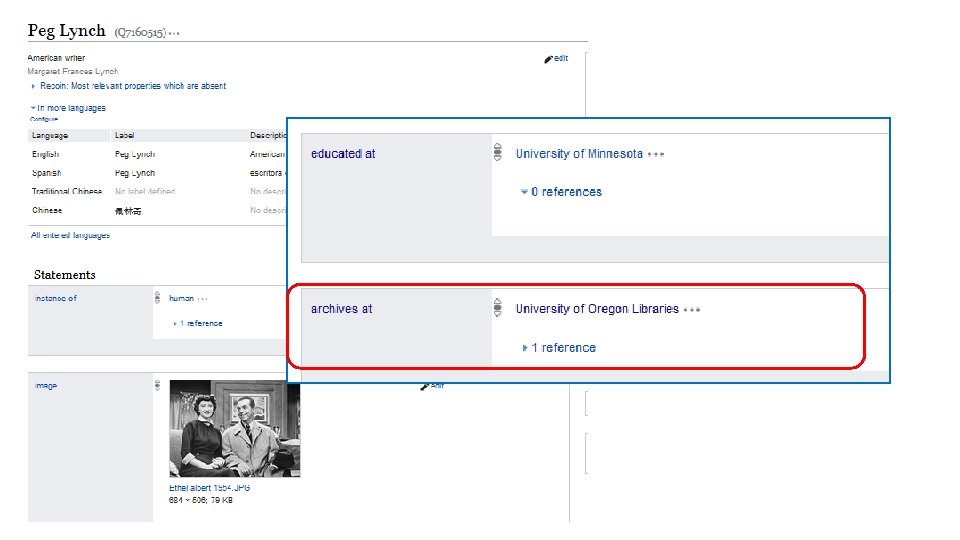
ARL White Paper on Wikidata: Opportunities and Recommendations April 18, 2019 • For individual librarians: • Use and experiment with Wikidata, for example: • Contribute local name authorities, particularly for underrepresented creators and organizations • Add institutional holdings to existing Wikidata items using the “archives at” property • Create items for faculty in an institution • Explore and experiment with Wikidata editing tools • Create a “hub of hubs” for authority control, metadata vocabularies, and other data sources • Get involved in the greater Wikimedia community
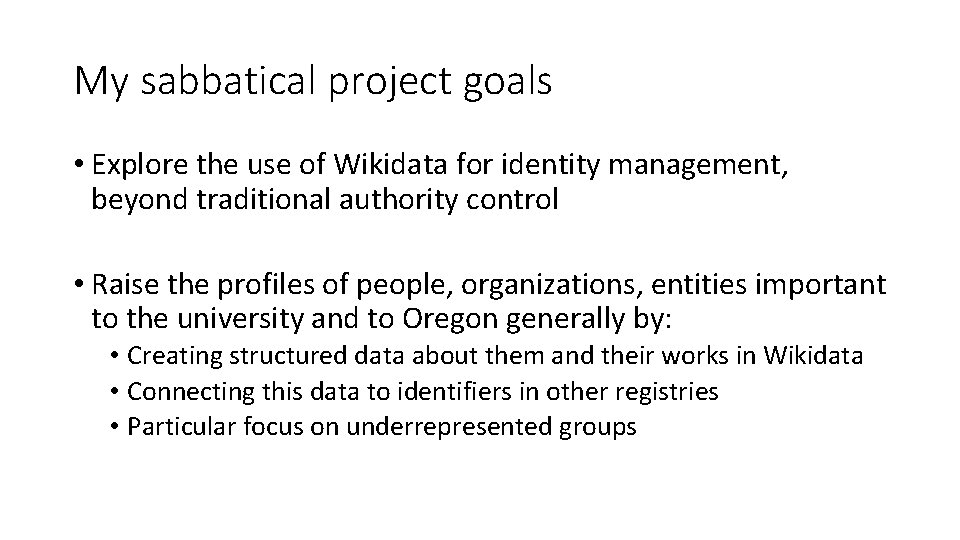
My sabbatical project goals • Explore the use of Wikidata for identity management, beyond traditional authority control • Raise the profiles of people, organizations, entities important to the university and to Oregon generally by: • Creating structured data about them and their works in Wikidata • Connecting this data to identifiers in other registries • Particular focus on underrepresented groups
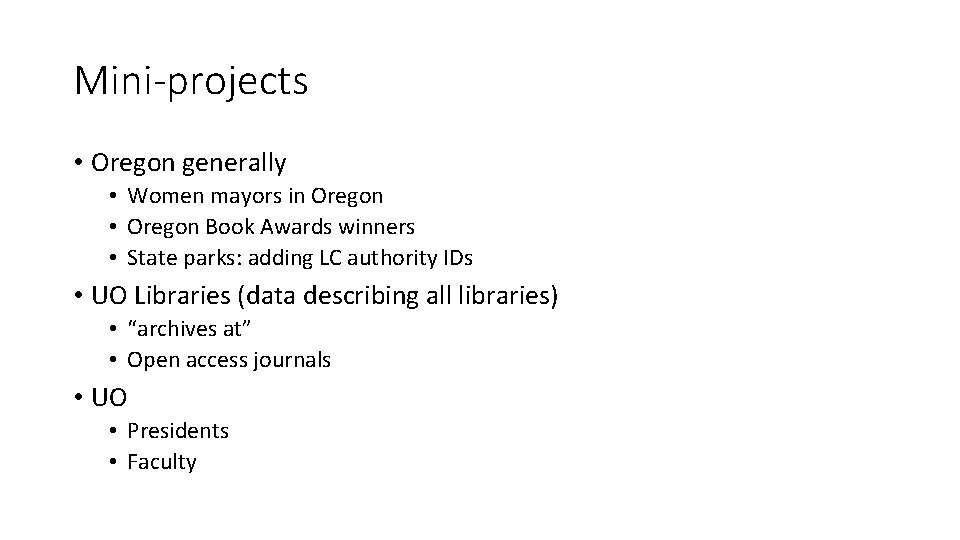
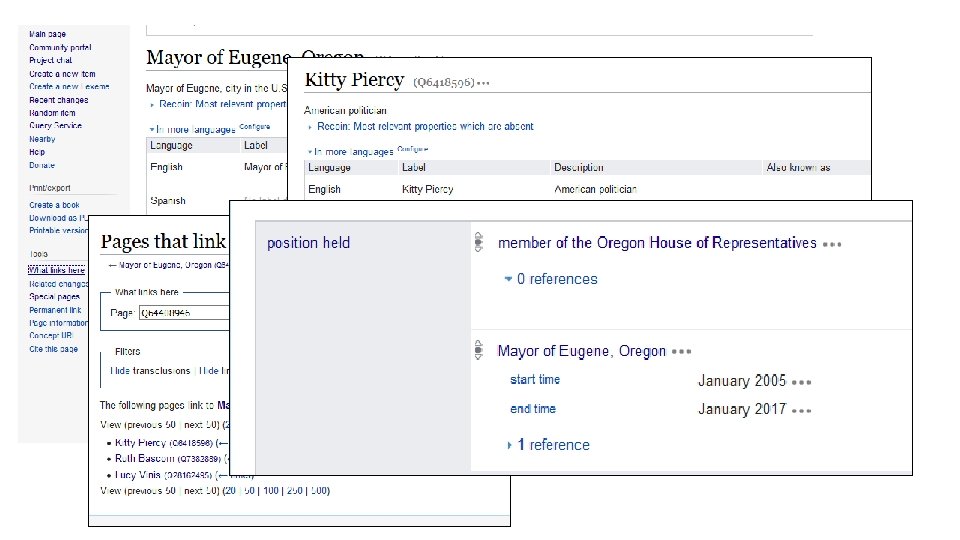
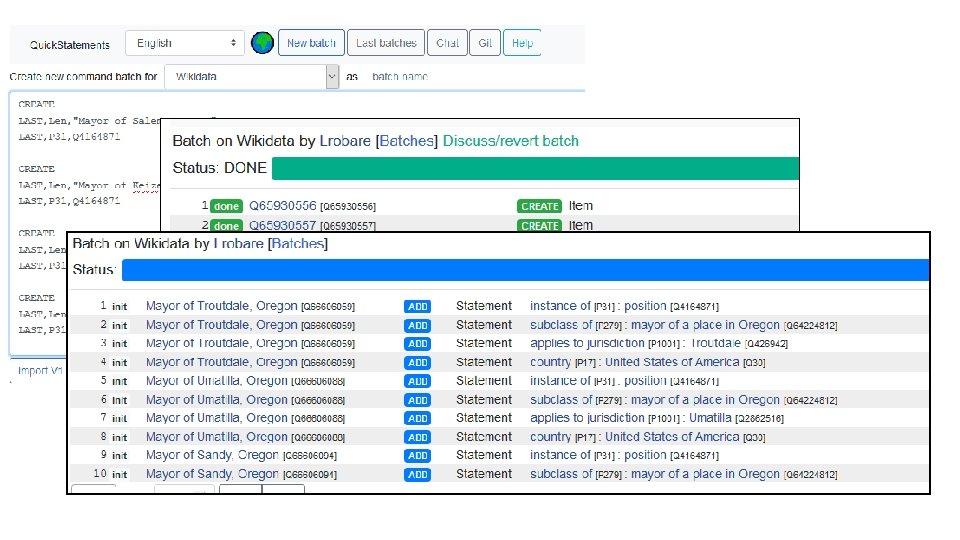
Mini-projects • Oregon generally • Women mayors in Oregon • Oregon Book Awards winners • State parks: adding LC authority IDs • UO Libraries (data describing all libraries) • “archives at” • Open access journals • UO • Presidents • Faculty
General approach • Exploring data models and best practices, querying and batch editing tools • No attempt to be comprehensive in contributing data in most categories • Following developments and community discussions • Adding identifiers whenever possible • LC authority numbers, ORCID, ISNI • Adding “educated at” routinely
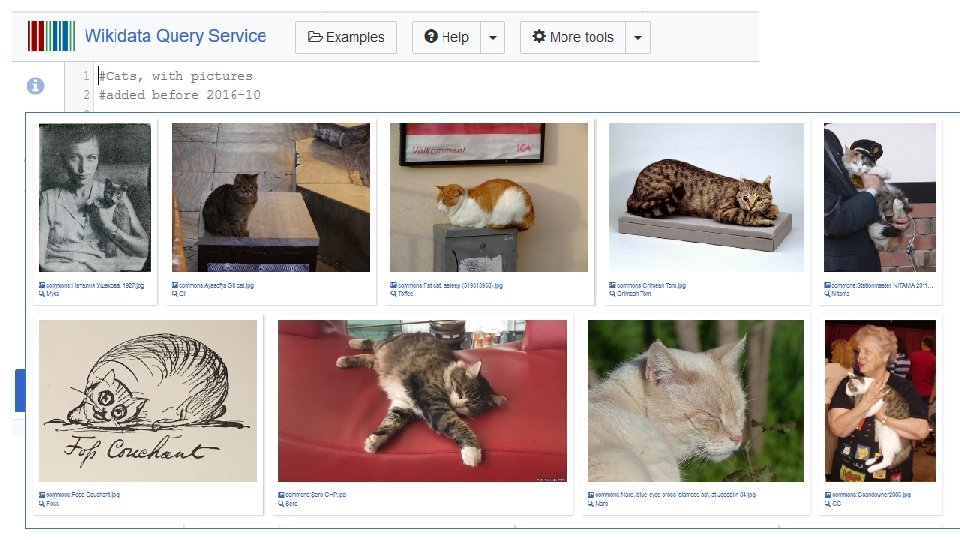
Exploring tools – for editing, querying, visualizing data • Wikidata Query Service • Viz. Query • SQID • Tabernacle • Reasonator • Quick Statements • Orcidator • Open. Refine
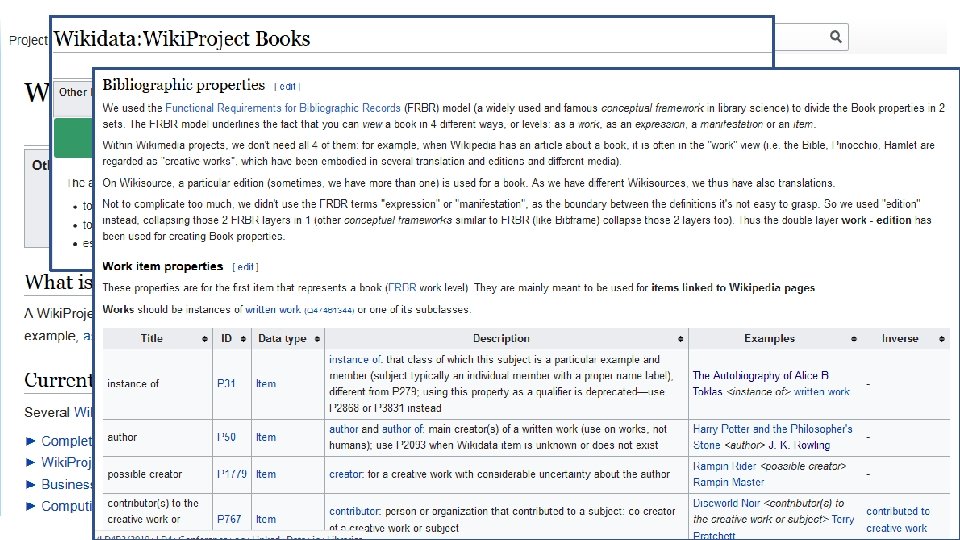
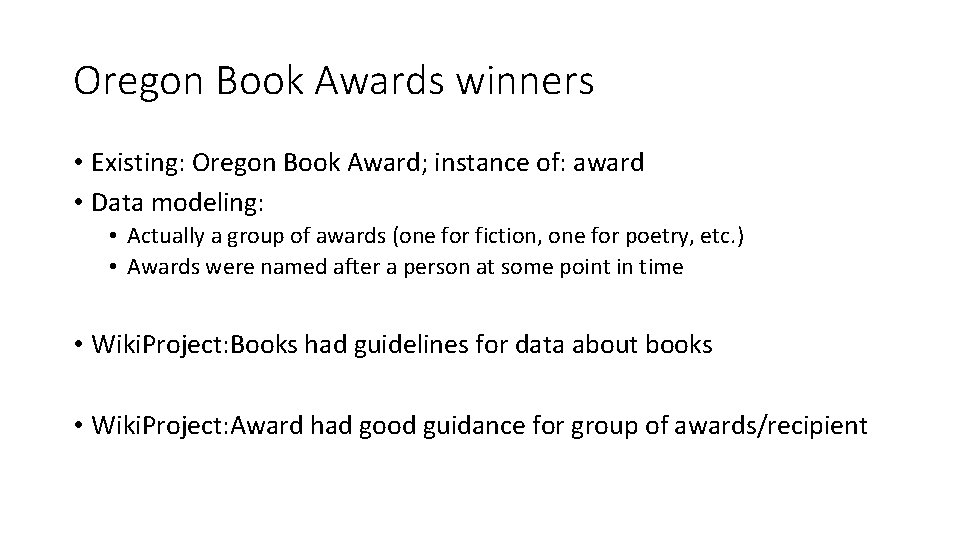
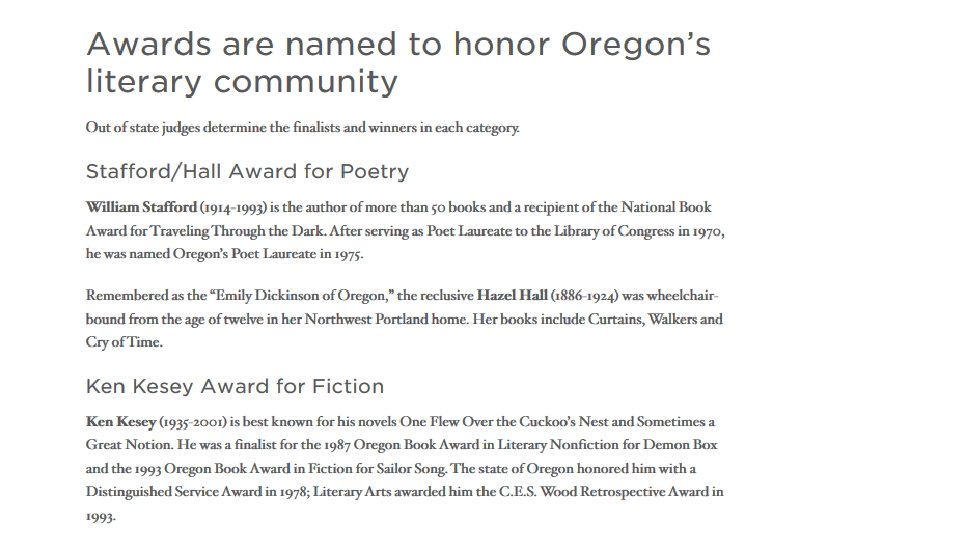
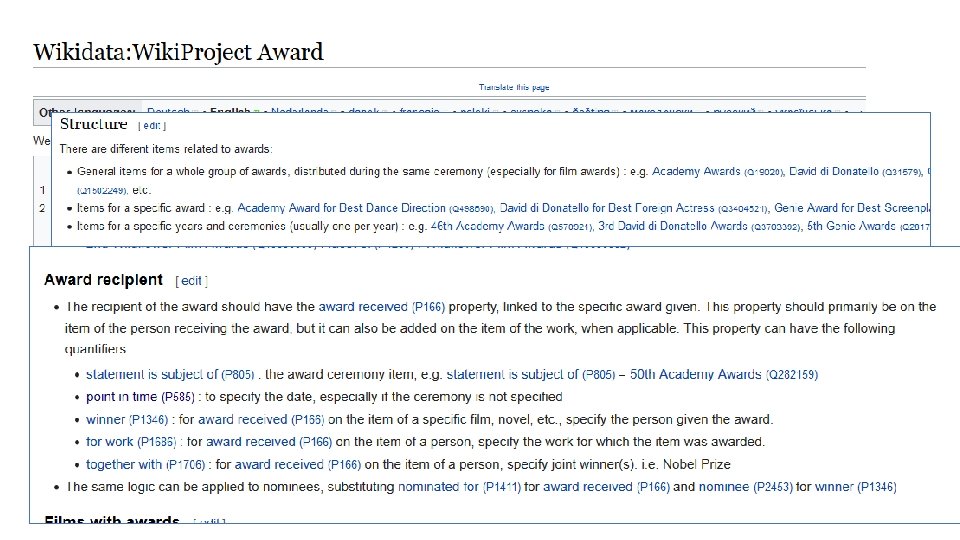
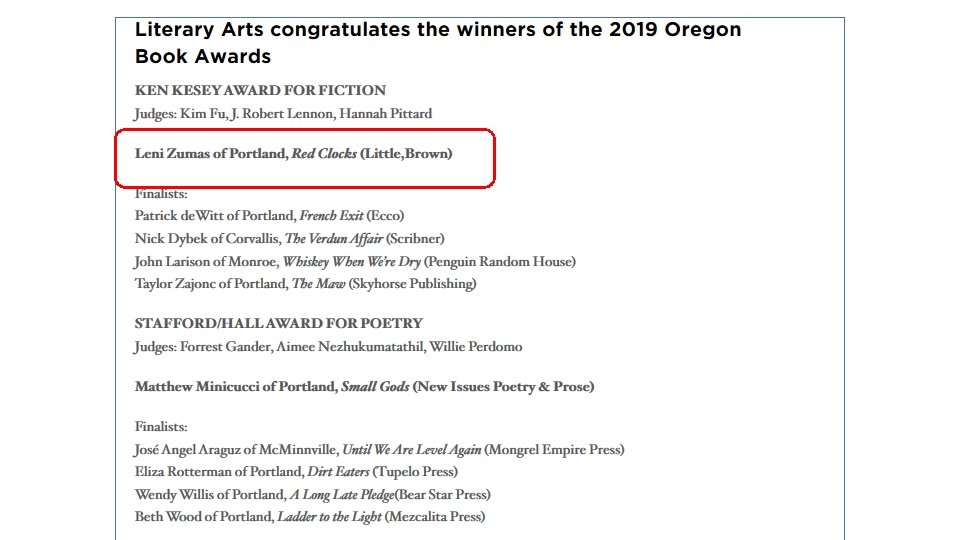
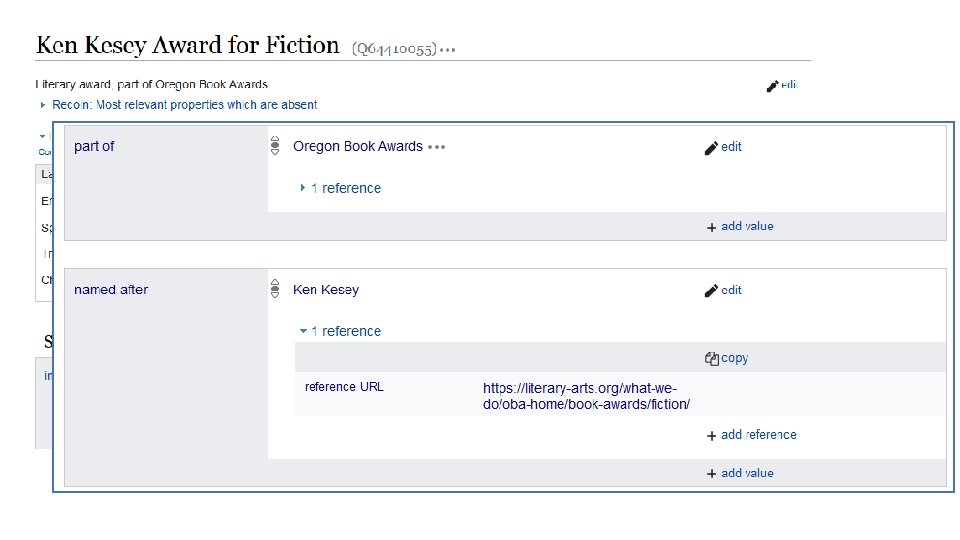
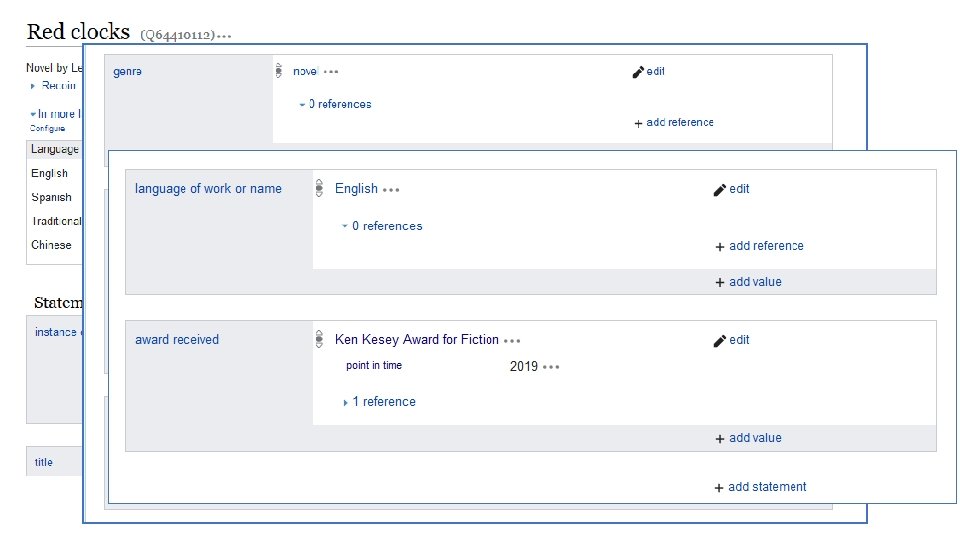
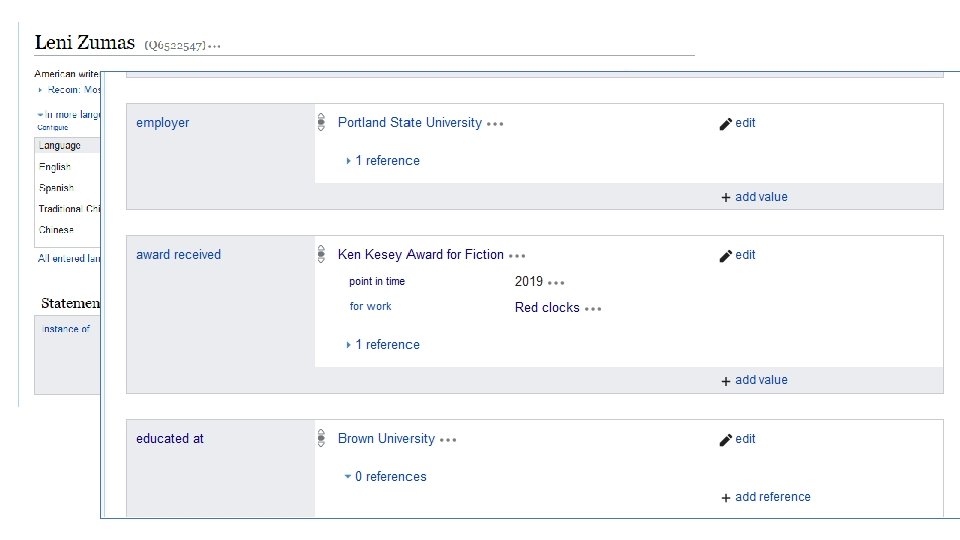
Oregon Book Awards winners • Existing: Oregon Book Award; instance of: award • Data modeling: • Actually a group of awards (one for fiction, one for poetry, etc. ) • Awards were named after a person at some point in time • Wiki. Project: Books had guidelines for data about books • Wiki. Project: Award had good guidance for group of awards/recipient
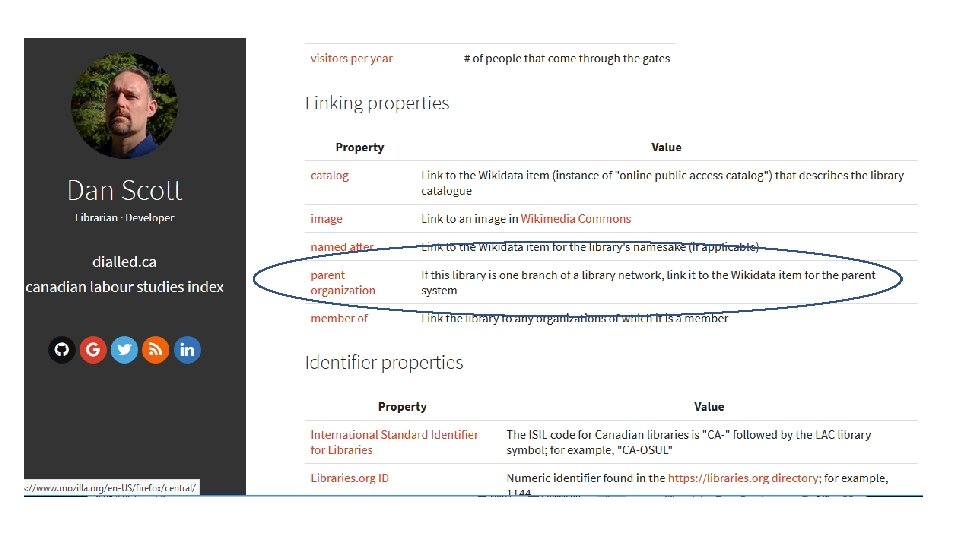
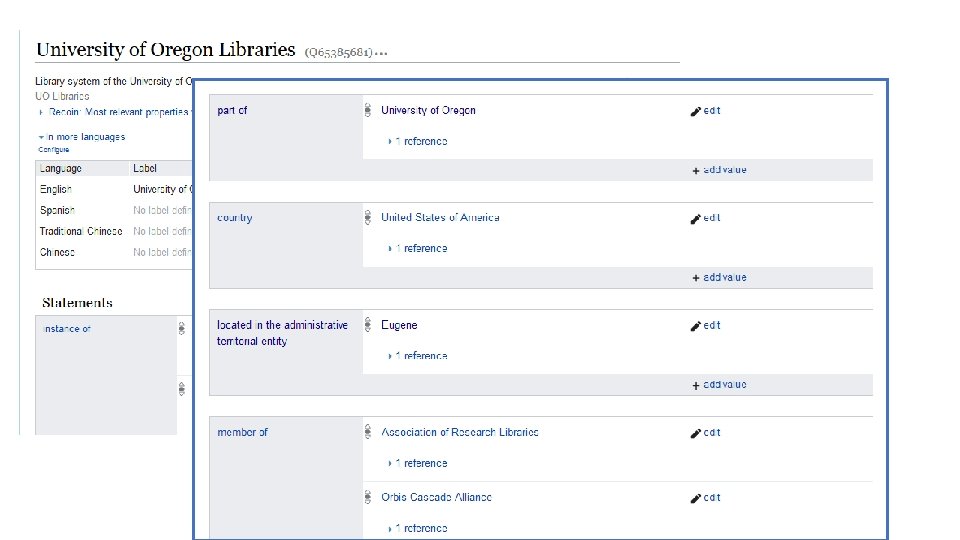
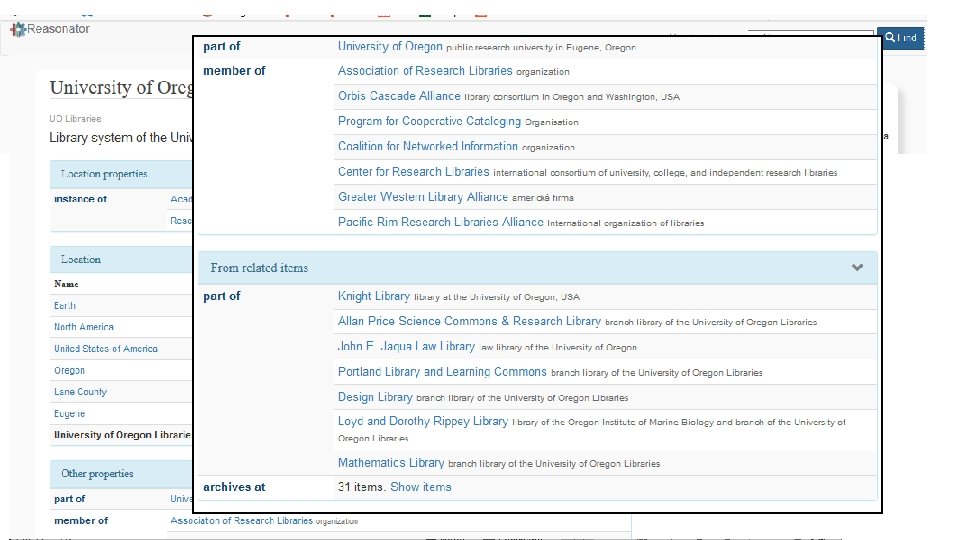
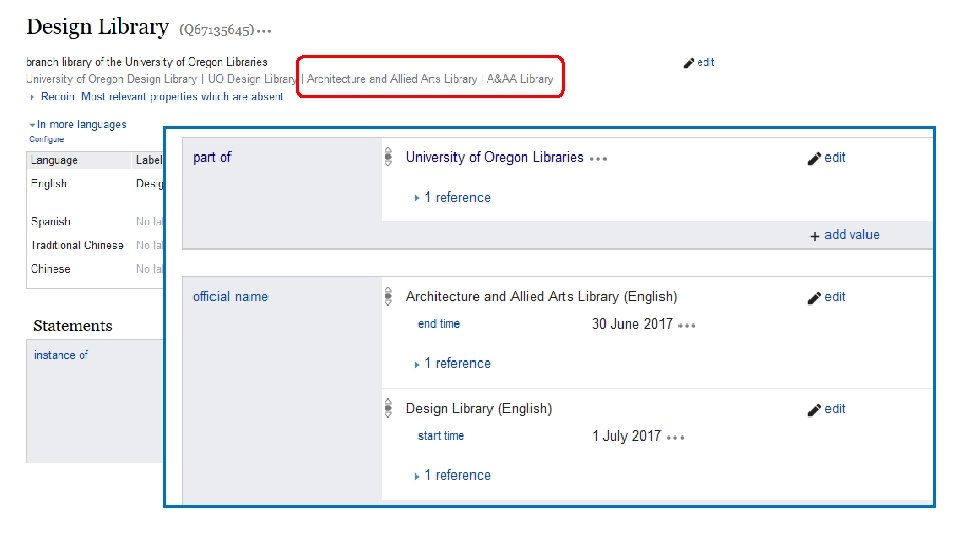
University of Oregon Libraries (seven libraries, Knight is the main library) • Item in Wikidata (hybrid): Knight Library • Data modeling question: • How to represent relationship between branches and system? • Wiki. Project: Libraries • Dan Scott blog
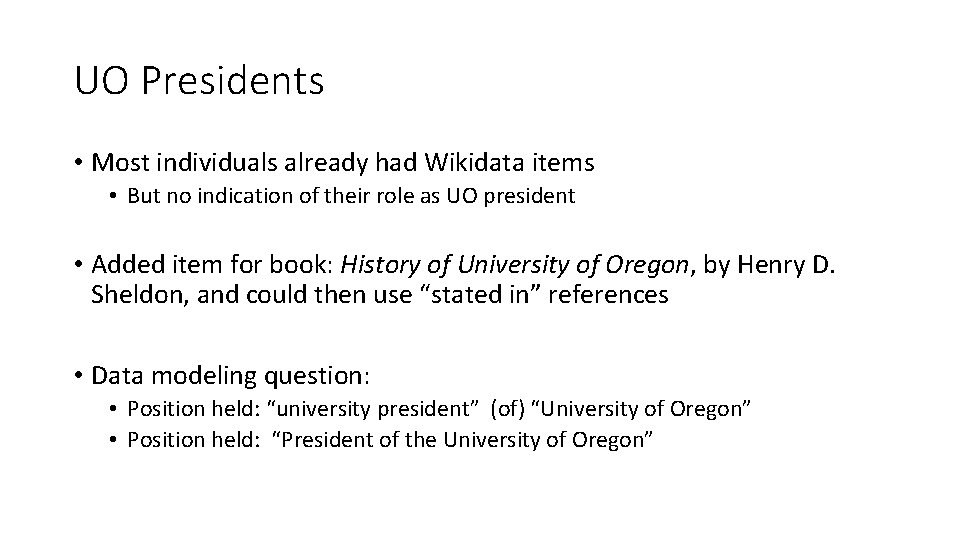
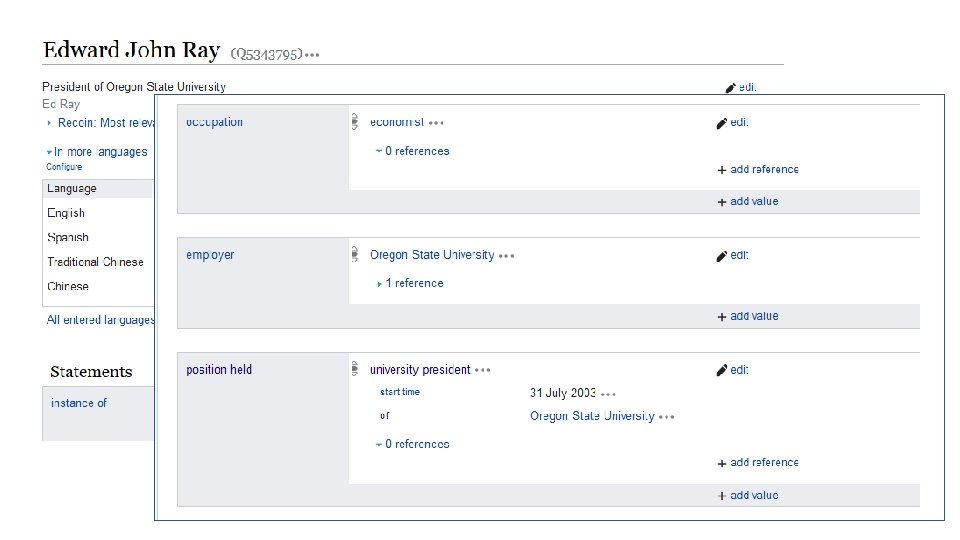
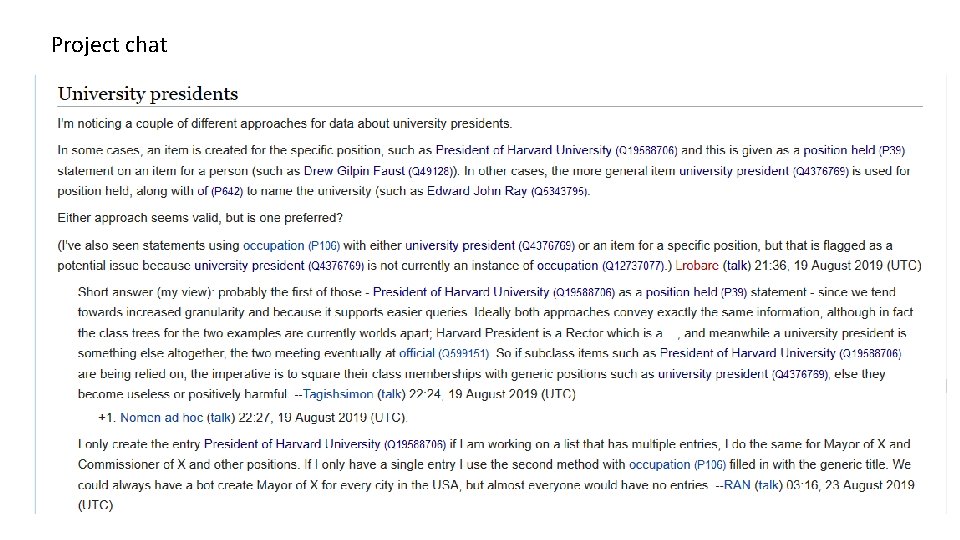
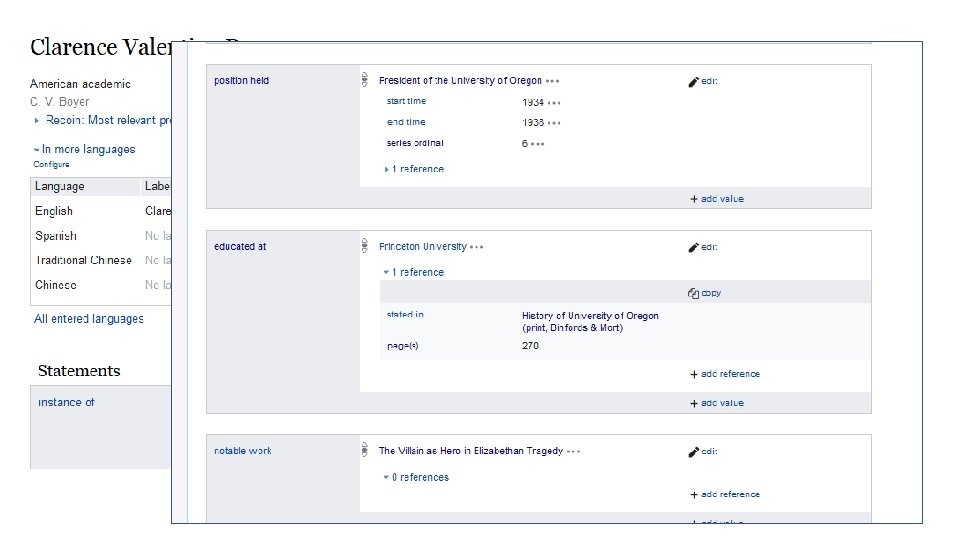
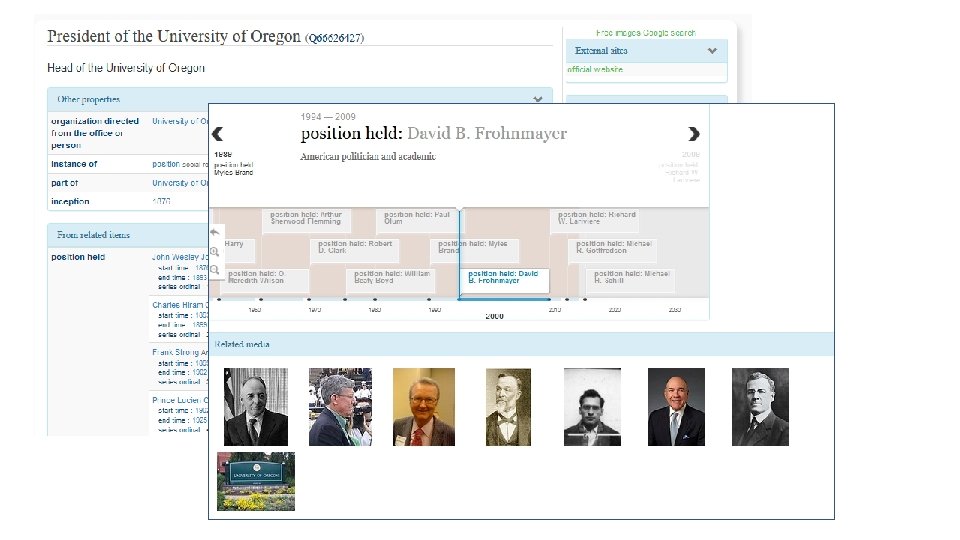
UO Presidents • Most individuals already had Wikidata items • But no indication of their role as UO president • Added item for book: History of University of Oregon, by Henry D. Sheldon, and could then use “stated in” references • Data modeling question: • Position held: “university president” (of) “University of Oregon” • Position held: “President of the University of Oregon”
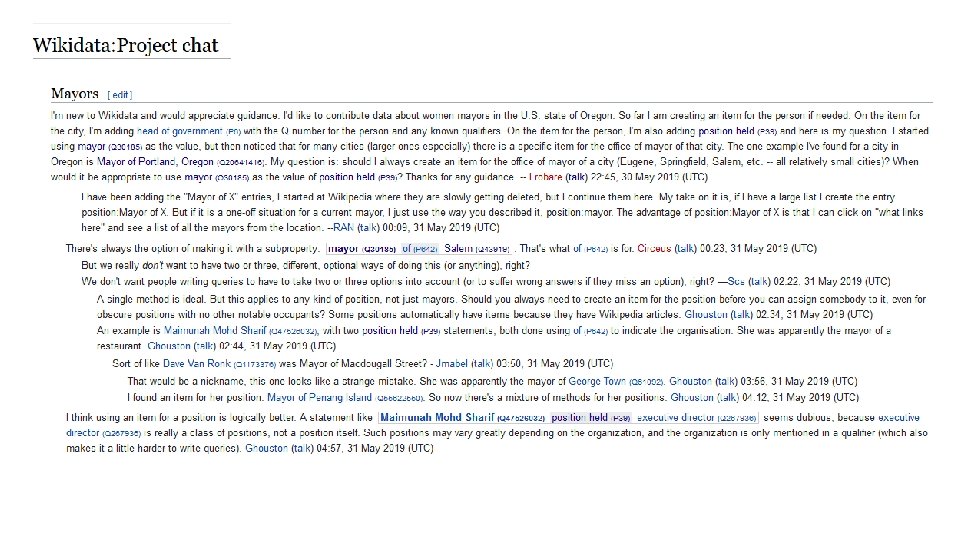
Project chat
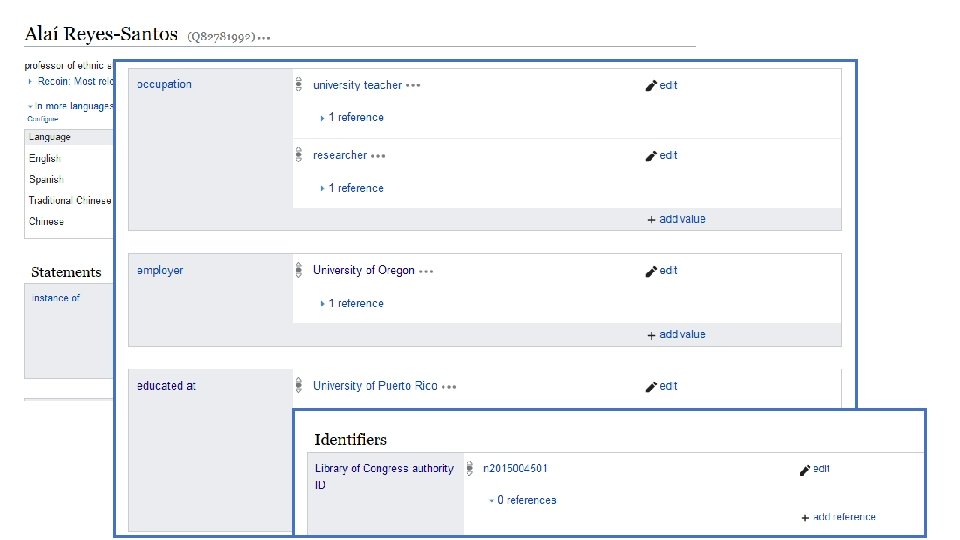
UO faculty • Created or updated Wikidata items for individual faculty • Using data from CV or department website bio • Main focus: Indigenous, Race, and Ethnic Studies • Emphasis on properties: • Educated at ; Occupation ; Employer • Notable work in some cases • And identifiers: • LC authority ID • ORCID, ISNI if known
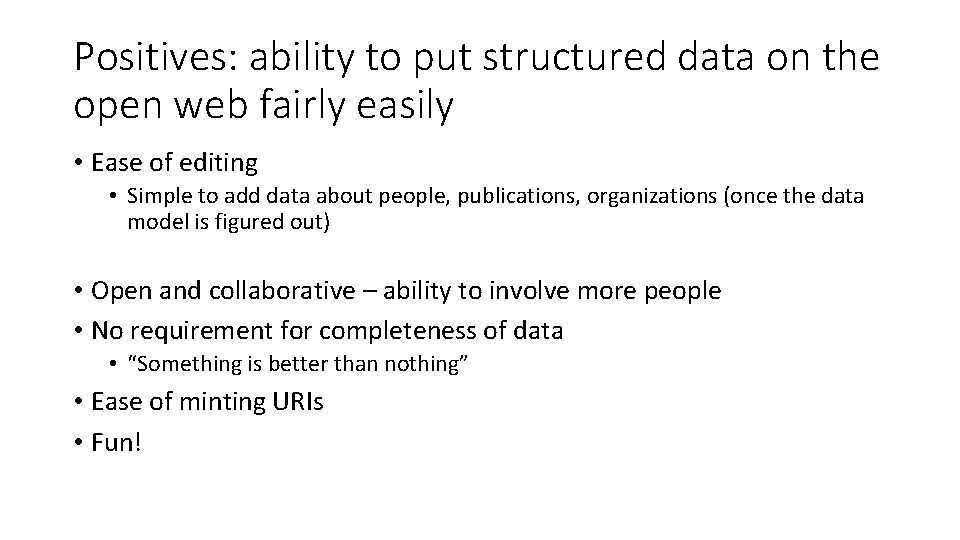
Positives: ability to put structured data on the open web fairly easily • Ease of editing • Simple to add data about people, publications, organizations (once the data model is figured out) • Open and collaborative – ability to involve more people • No requirement for completeness of data • “Something is better than nothing” • Ease of minting URIs • Fun!
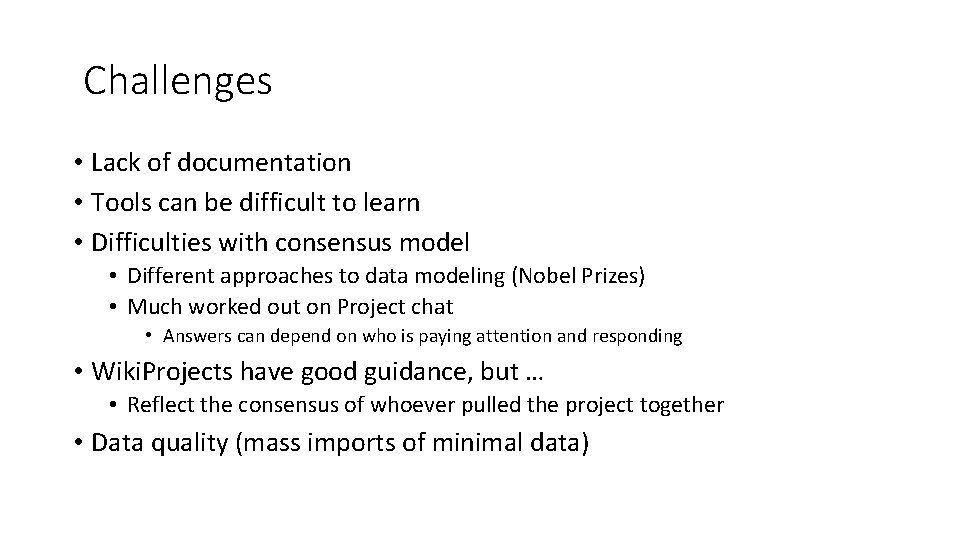
Challenges • Lack of documentation • Tools can be difficult to learn • Difficulties with consensus model • Different approaches to data modeling (Nobel Prizes) • Much worked out on Project chat • Answers can depend on who is paying attention and responding • Wiki. Projects have good guidance, but … • Reflect the consensus of whoever pulled the project together • Data quality (mass imports of minimal data)
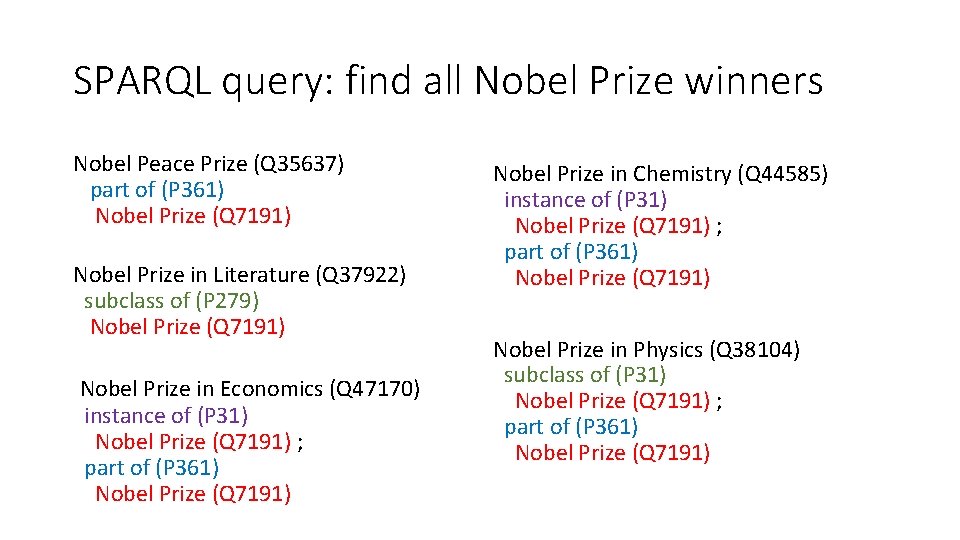
SPARQL query: find all Nobel Prize winners Nobel Peace Prize (Q 35637) part of (P 361) Nobel Prize (Q 7191) Nobel Prize in Literature (Q 37922) subclass of (P 279) Nobel Prize (Q 7191) Nobel Prize in Economics (Q 47170) instance of (P 31) Nobel Prize (Q 7191) ; part of (P 361) Nobel Prize (Q 7191) Nobel Prize in Chemistry (Q 44585) instance of (P 31) Nobel Prize (Q 7191) ; part of (P 361) Nobel Prize (Q 7191) Nobel Prize in Physics (Q 38104) subclass of (P 31) Nobel Prize (Q 7191) ; part of (P 361) Nobel Prize (Q 7191)
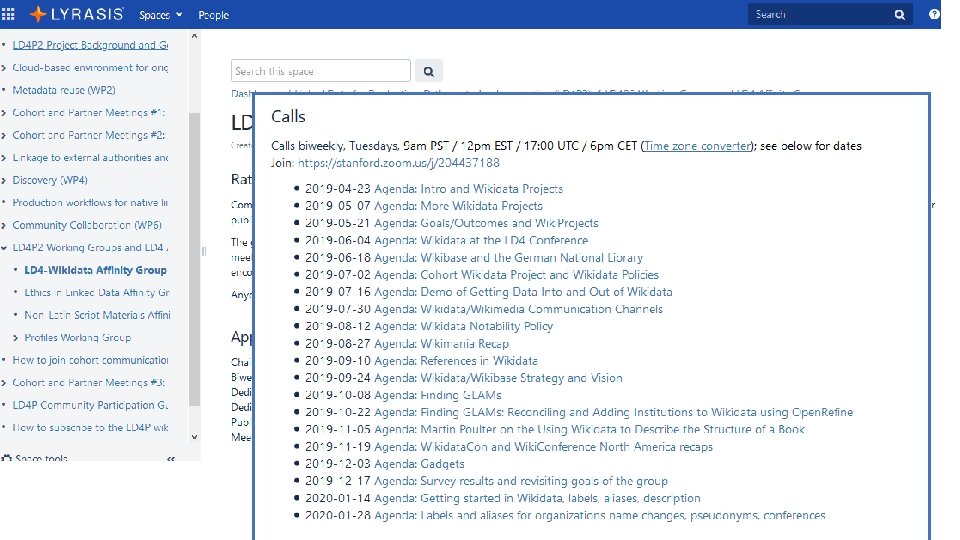
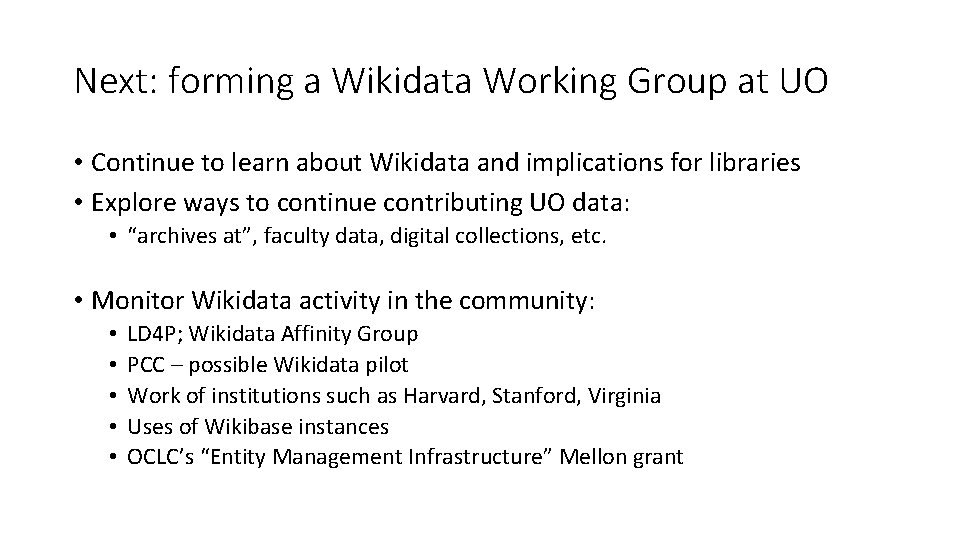
Next: forming a Wikidata Working Group at UO • Continue to learn about Wikidata and implications for libraries • Explore ways to continue contributing UO data: • “archives at”, faculty data, digital collections, etc. • Monitor Wikidata activity in the community: • • • LD 4 P; Wikidata Affinity Group PCC – possible Wikidata pilot Work of institutions such as Harvard, Stanford, Virginia Uses of Wikibase instances OCLC’s “Entity Management Infrastructure” Mellon grant
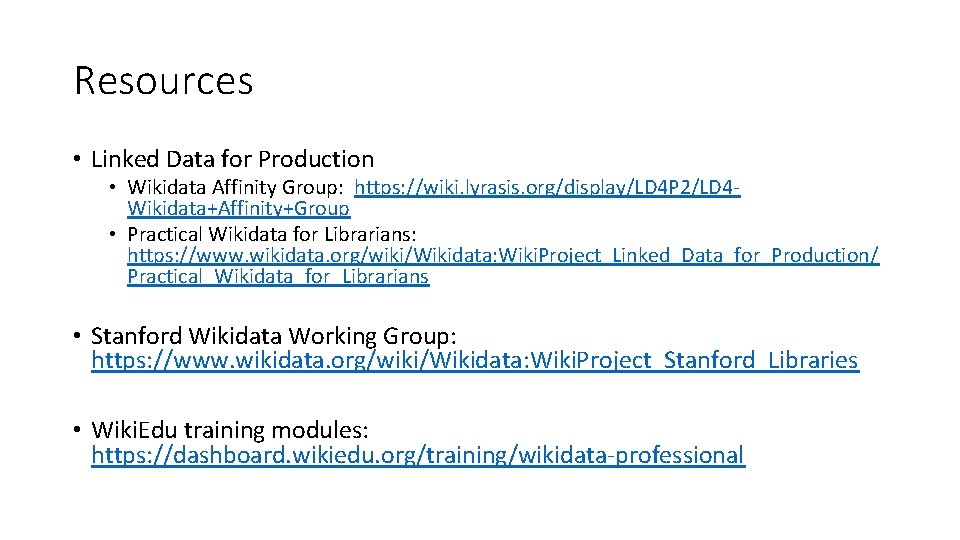
Resources • Linked Data for Production • Wikidata Affinity Group: https: //wiki. lyrasis. org/display/LD 4 P 2/LD 4 Wikidata+Affinity+Group • Practical Wikidata for Librarians: https: //www. wikidata. org/wiki/Wikidata: Wiki. Project_Linked_Data_for_Production/ Practical_Wikidata_for_Librarians • Stanford Wikidata Working Group: https: //www. wikidata. org/wiki/Wikidata: Wiki. Project_Stanford_Libraries • Wiki. Edu training modules: https: //dashboard. wikiedu. org/training/wikidata-professional
Thank you! lrobare@uoregon. edu