
Exploring the Universe with the National Schools Observatory
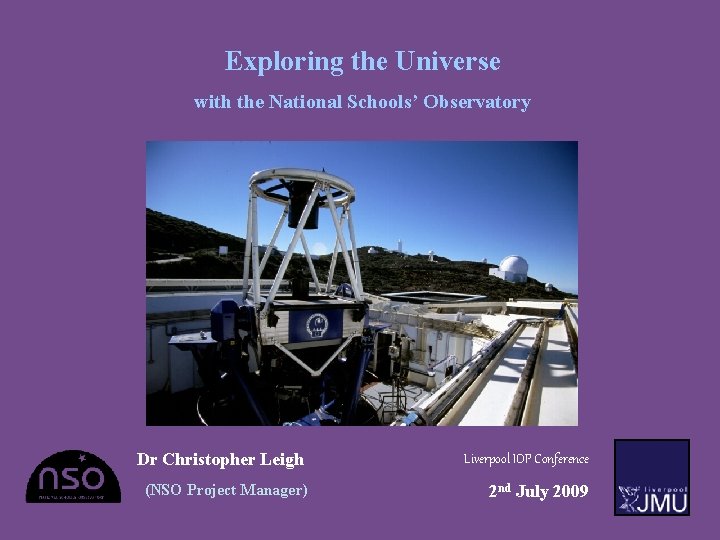
Exploring the Universe with the National Schools’ Observatory Dr Christopher Leigh Liverpool IOP Conference (NSO Project Manager) 2 nd July 2009
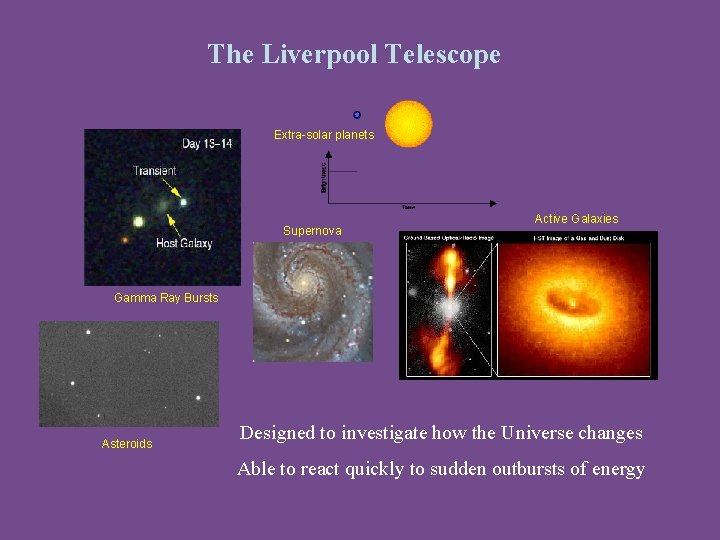
The Liverpool Telescope Extra-solar planets Supernova Active Galaxies Gamma Ray Bursts Asteroids Designed to investigate how the Universe changes Able to react quickly to sudden outbursts of energy
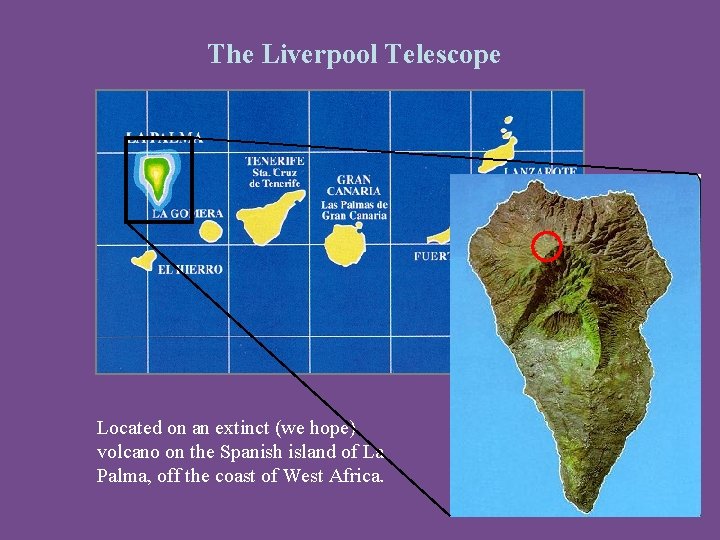
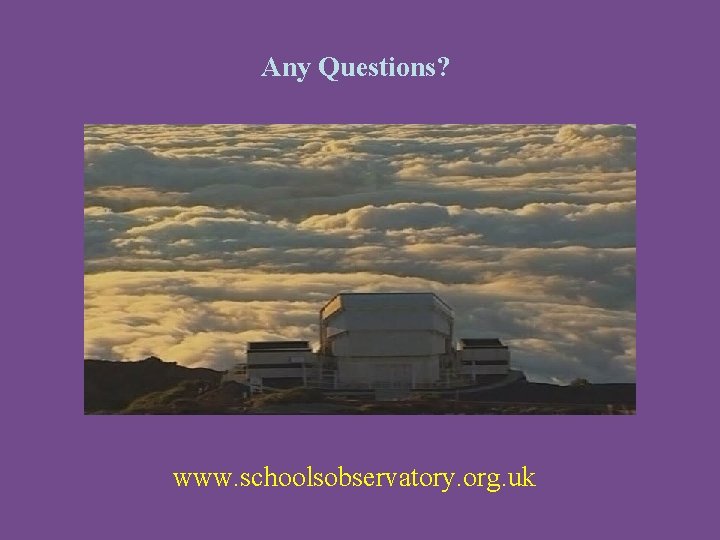
The Liverpool Telescope Located on an extinct (we hope) volcano on the Spanish island of La Palma, off the coast of West Africa.
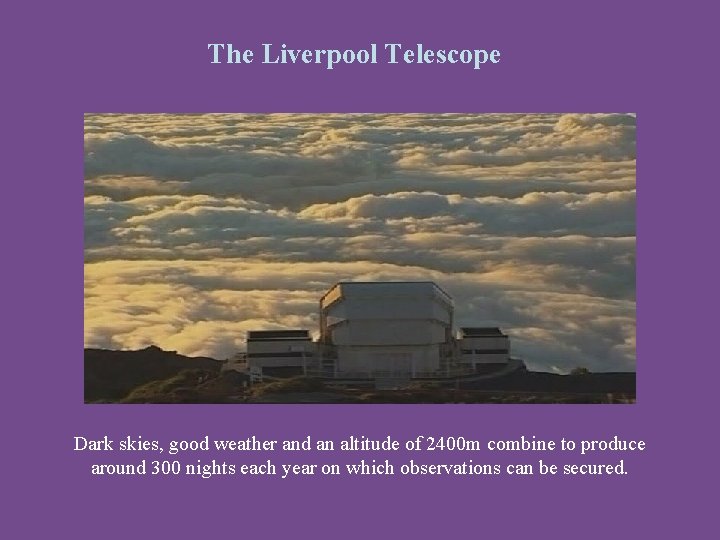
The Liverpool Telescope Dark skies, good weather and an altitude of 2400 m combine to produce around 300 nights each year on which observations can be secured.
The Liverpool Telescope The telescope is primarily used by: Professional Astronomers from LJMU, UK, Spain and collaborators Students on LJMU Undergraduate and Distance Learning Courses 5% set aside for use by schoolchildren in the UK and Ireland The National Schools’ Observatory
The Liverpool Telescope (LT) The LT is primarily used by: Professional Astronomers from LJMU, UK, Spain and collaborators Students on LJMU Undergraduate and Distance Learning Courses 5% set aside for use by school children in the UK and Ireland The National Schools’ Observatory Online link (GUI) between the schools and the telescope Ensures efficient use of allocated time Simplify process so that young children (7+) can request images Protect systems so that professional use is not affected
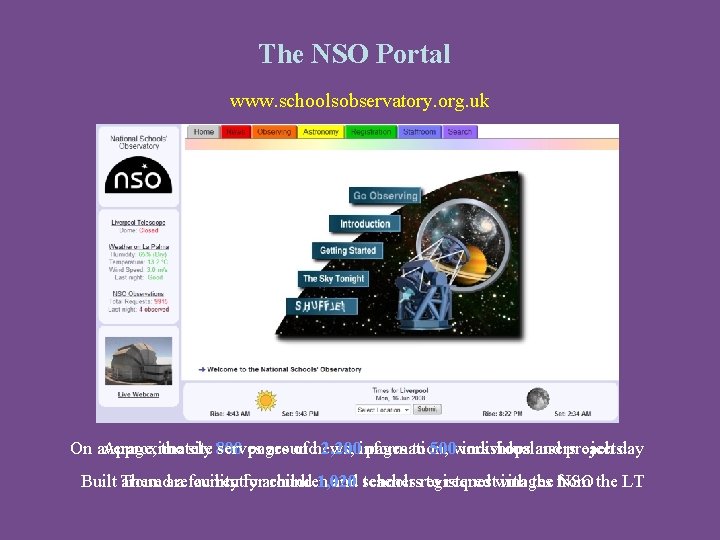
The NSO Portal www. schoolsobservatory. org. uk On average, Approximately the site 800 serves pages around of news, 2, 200 information, pages to 500 workshops individualand users projects each day Built There aroundare a facility currently foraround children 1, 020 and schools teachersregistered to requestwith images the from NSO the LT
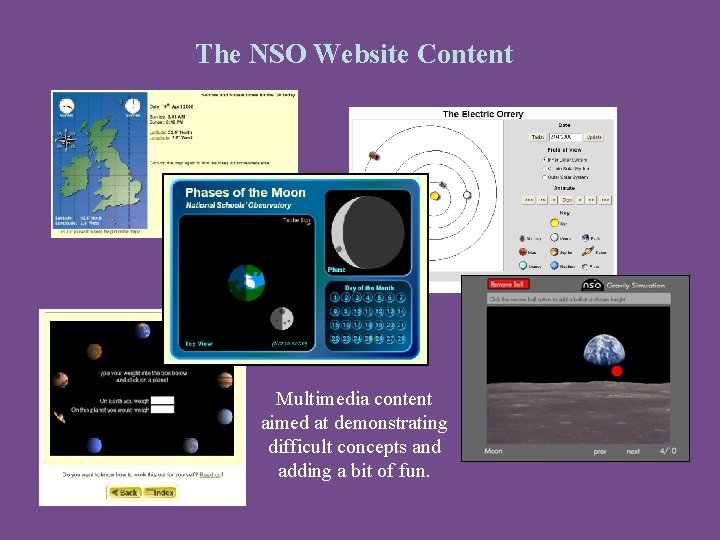
The NSO Website Content Multimedia content aimed at demonstrating difficult concepts and adding a bit of fun.
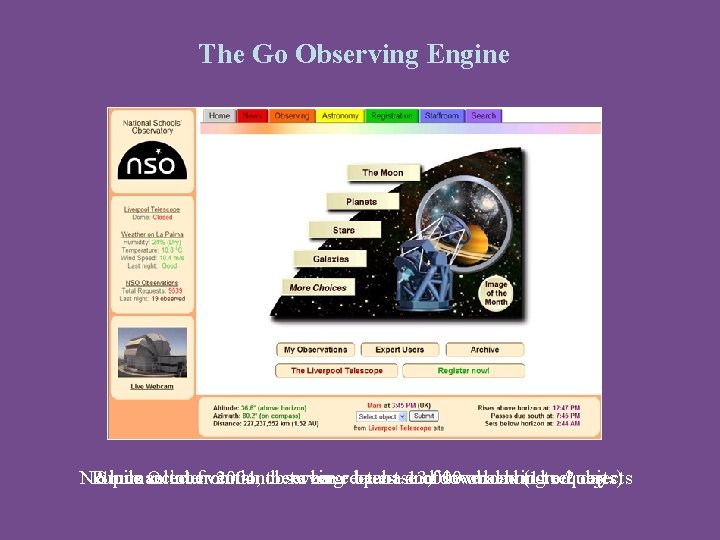
The Go Observing Engine No Pupils Since human select October intervention from 2004, an observing there between haverequest database been ~13, 000 and ofdownload several observing hundred (1 torequests 2 objects days)
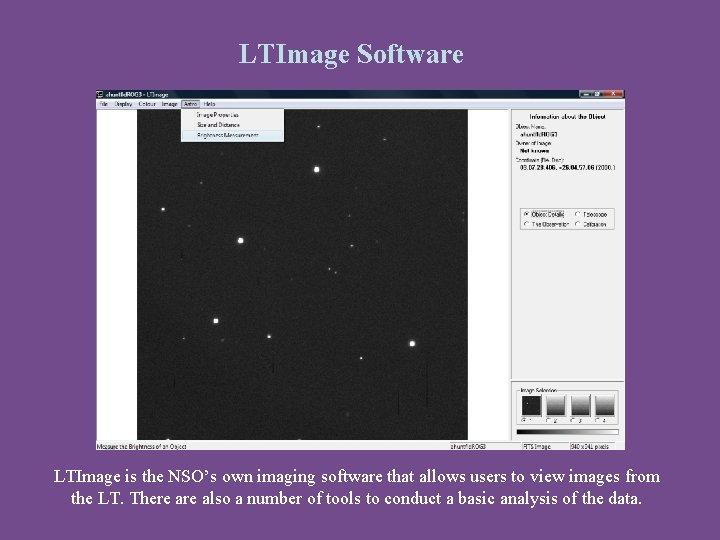
LTImage Software LTImage is the NSO’s own imaging software that allows users to view images from the LT. There also a number of tools to conduct a basic analysis of the data.
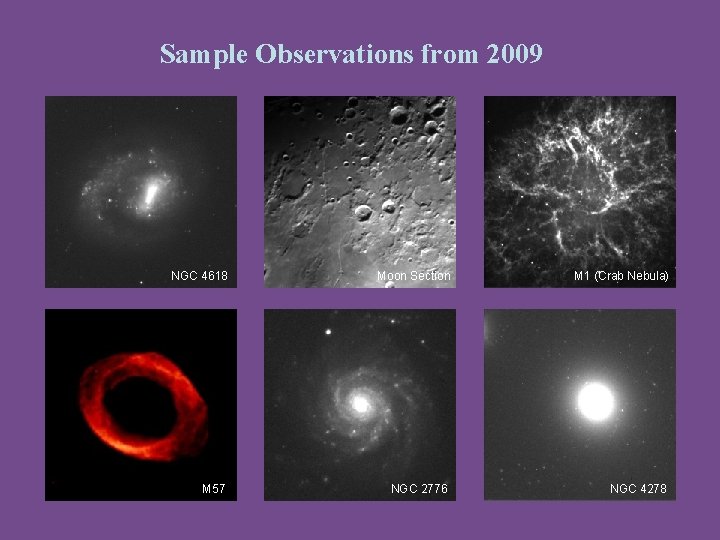
Sample Observations from 2009 NGC 4618 Moon Section M 1 (Crab Nebula) M 57 NGC 2776 NGC 4278
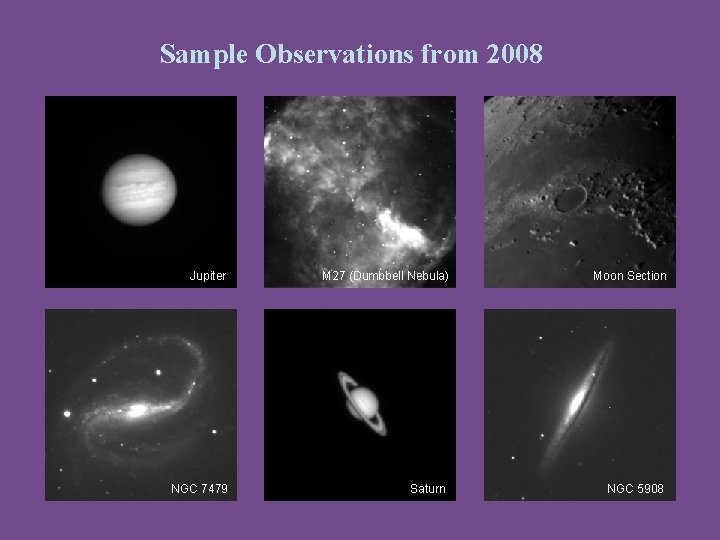
Sample Observations from 2008 Jupiter NGC 7479 M 27 (Dumbbell Nebula) Saturn Moon Section NGC 5908
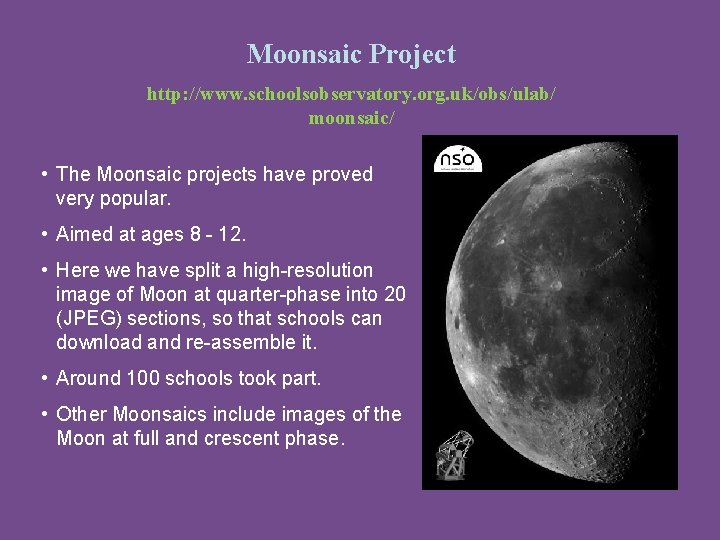
Moonsaic Project http: //www. schoolsobservatory. org. uk/obs/ulab/ moonsaic/ • The Moonsaic projects have proved very popular. • Aimed at ages 8 - 12. • Here we have split a high-resolution image of Moon at quarter-phase into 20 (JPEG) sections, so that schools can download and re-assemble it. • Around 100 schools took part. • Other Moonsaics include images of the Moon at full and crescent phase.
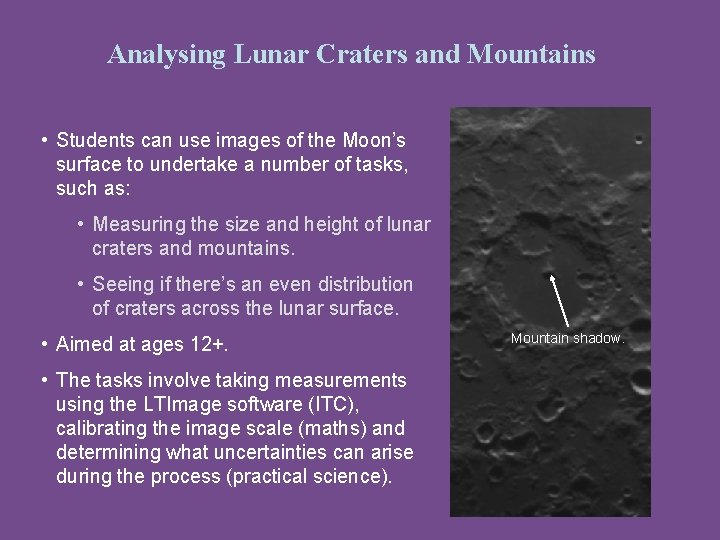
Analysing Lunar Craters and Mountains • Students can use images of the Moon’s surface to undertake a number of tasks, such as: • Measuring the size and height of lunar craters and mountains. • Seeing if there’s an even distribution of craters across the lunar surface. • Aimed at ages 12+. • The tasks involve taking measurements using the LTImage software (ITC), calibrating the image scale (maths) and determining what uncertainties can arise during the process (practical science). Mountain shadow.
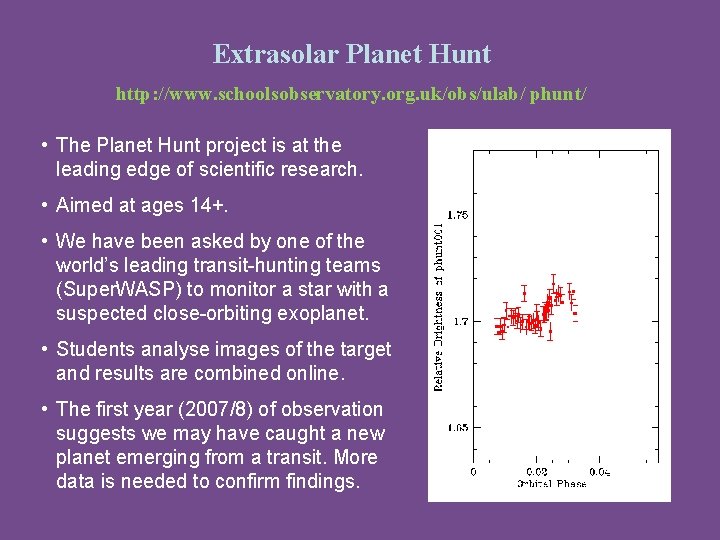
Extrasolar Planet Hunt http: //www. schoolsobservatory. org. uk/obs/ulab/ phunt/ • The Planet Hunt project is at the leading edge of scientific research. • Aimed at ages 14+. • We have been asked by one of the world’s leading transit-hunting teams (Super. WASP) to monitor a star with a suspected close-orbiting exoplanet. • Students analyse images of the target and results are combined online. • The first year (2007/8) of observation suggests we may have caught a new planet emerging from a transit. More data is needed to confirm findings.
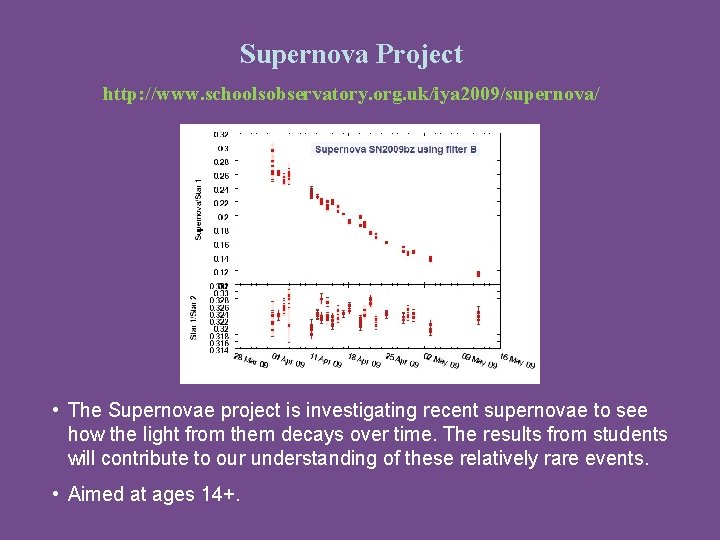
Supernova Project http: //www. schoolsobservatory. org. uk/iya 2009/supernova/ • The Supernovae project is investigating recent supernovae to see how the light from them decays over time. The results from students will contribute to our understanding of these relatively rare events. • Aimed at ages 14+.
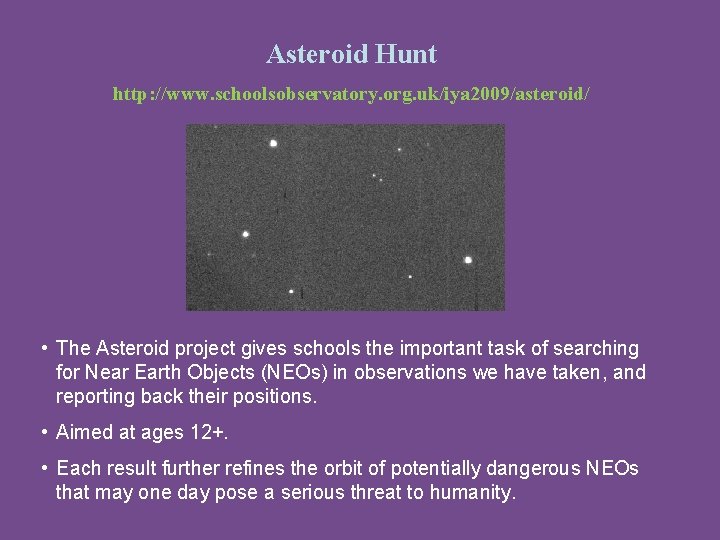
Asteroid Hunt http: //www. schoolsobservatory. org. uk/iya 2009/asteroid/ • The Asteroid project gives schools the important task of searching for Near Earth Objects (NEOs) in observations we have taken, and reporting back their positions. • Aimed at ages 12+. • Each result further refines the orbit of potentially dangerous NEOs that may one day pose a serious threat to humanity.
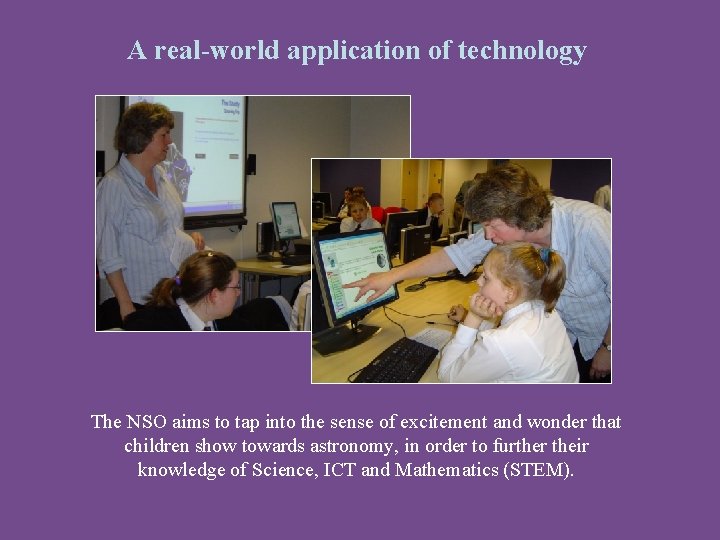
A real-world application of technology The NSO aims to tap into the sense of excitement and wonder that children show towards astronomy, in order to further their knowledge of Science, ICT and Mathematics (STEM).
Any Questions? www. schoolsobservatory. org. uk
- Slides: 19