
Exploring the surface of Mars What can we
- Slides: 20
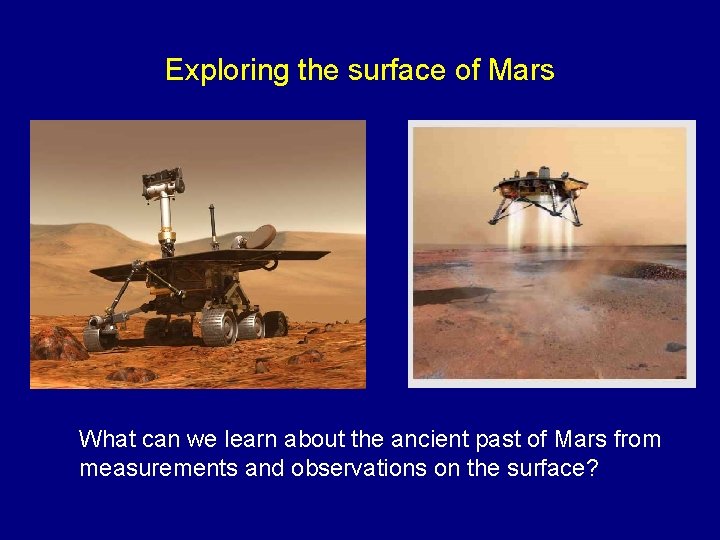
Exploring the surface of Mars What can we learn about the ancient past of Mars from measurements and observations on the surface?
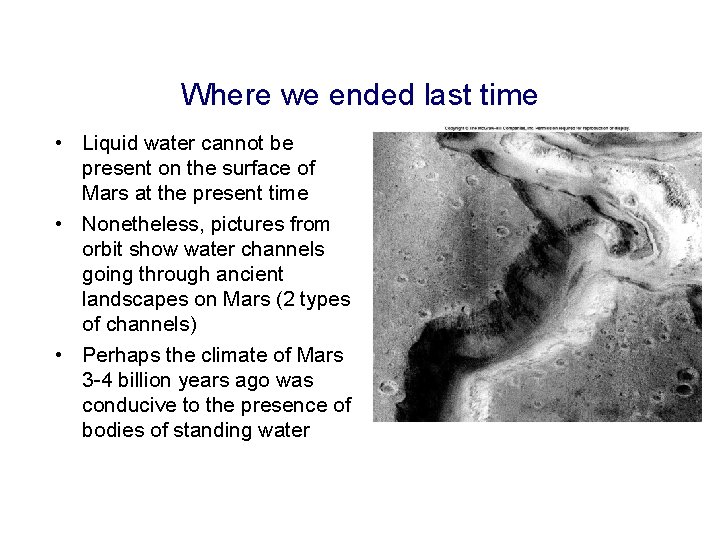
Where we ended last time • Liquid water cannot be present on the surface of Mars at the present time • Nonetheless, pictures from orbit show water channels going through ancient landscapes on Mars (2 types of channels) • Perhaps the climate of Mars 3 -4 billion years ago was conducive to the presence of bodies of standing water
To see what people have in mind, let’s compare the (relatively) well-known geological history of Earth with a speculative history of Mars
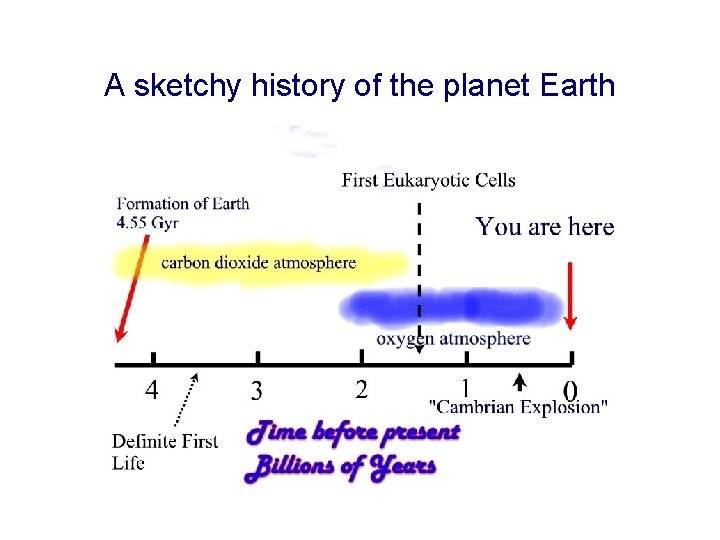
A sketchy history of the planet Earth
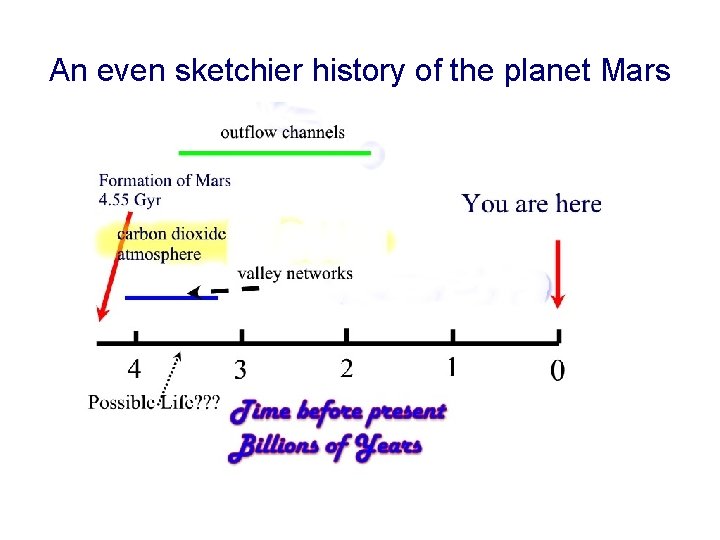
An even sketchier history of the planet Mars
Prior to 2004… 2 theories about the geological history of Mars • “warm, wet Mars”: early in solar system history, a dense atmosphere permitted higher temperatures and pressure, and existence of bodies of liquid water. Early Mars might have been similar to early Earth. • “cold, dry Mars”: Mars has been about the same as now for all of its history. The valley networks and outflow channels show water flows, but they were short duration floods rather than long lasting bodies of water • An argument in favor of “cold, dry Mars”: the apparent absence of carbonate rocks on the surface of Mars.
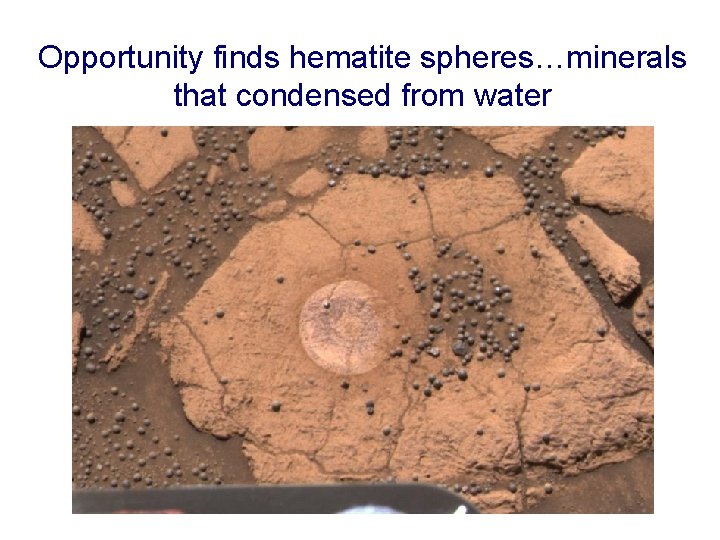
To resolve this required (and requires) geological measurements, studies of minerals in Martian rocks Some minerals (hematite) form in presence of standing water. Others, (olivine) are destroyed by water.
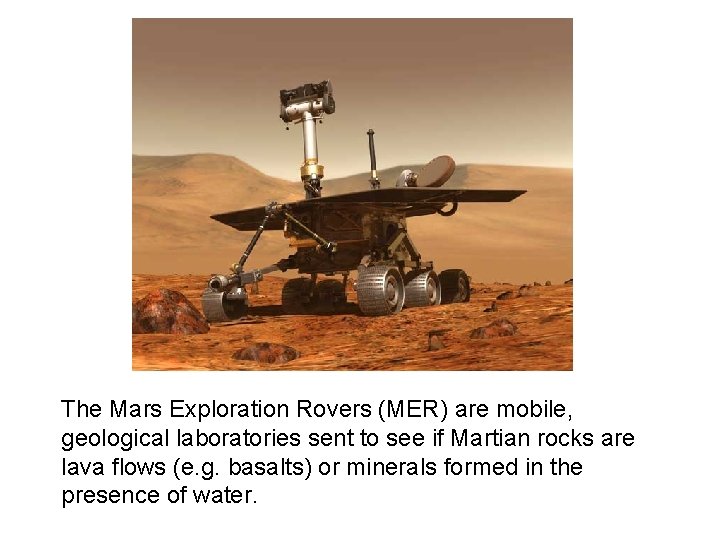
The Mars Exploration Rovers (MER) are mobile, geological laboratories sent to see if Martian rocks are lava flows (e. g. basalts) or minerals formed in the presence of water.
The launch, interplanetary journey, and arrival at Mars of an MER spacecraft The journey to Mars of "Spirit"
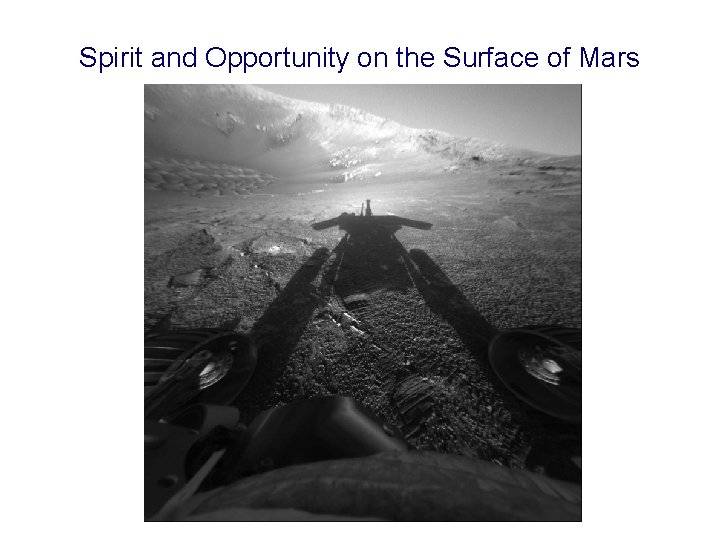
Spirit and Opportunity on the Surface of Mars
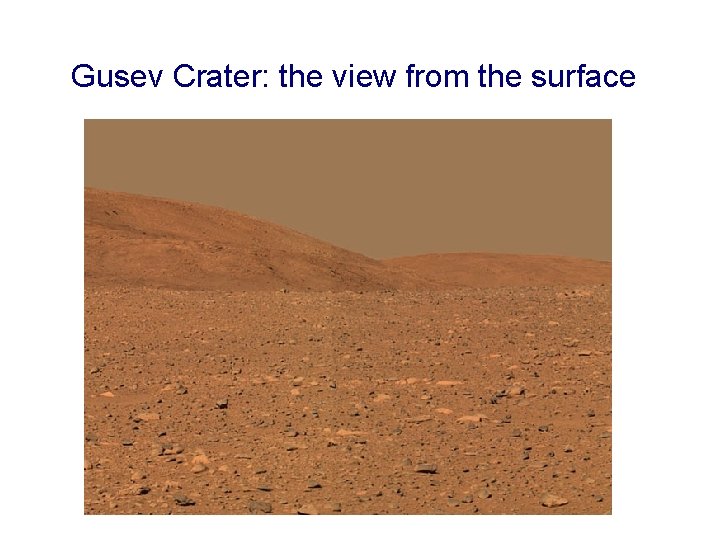
Gusev Crater: the view from the surface
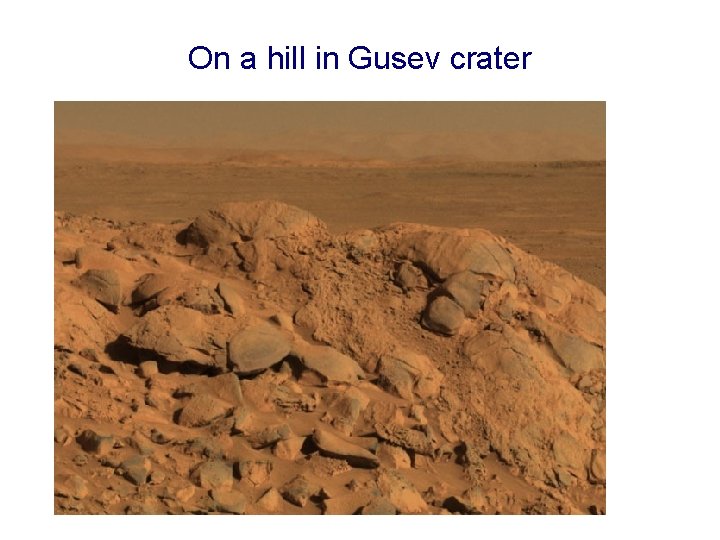
On a hill in Gusev crater
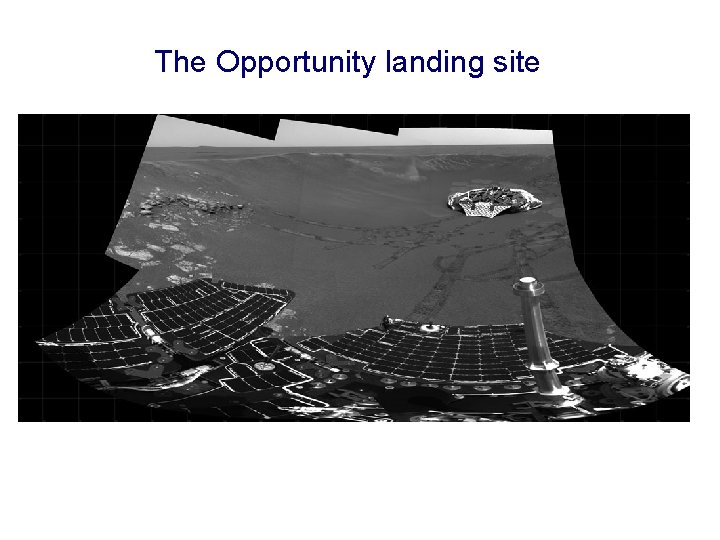
The Opportunity landing site
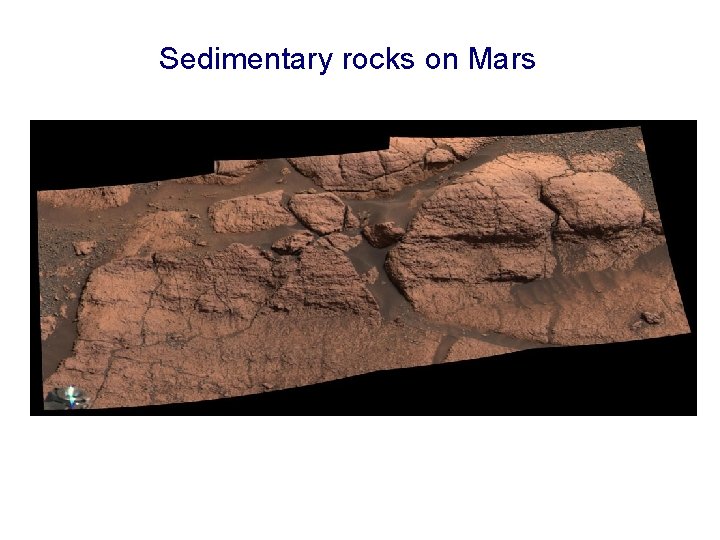
Sedimentary rocks on Mars
Opportunity finds hematite spheres…minerals that condensed from water
Opportunity explores ancient sedimentary rocks in Victoria Crater and other craters A panorama of Victoria Crater from the MER "Opportunity"
Take advantage of the marvelous images in your textbook • Figure 11. 29…overhead view of Opportunity at Victoria crater • 11. 28…panorama of Endurance crater • 11. 32…evidence of water waves (ripples) in ancient streambeds • 11. 20…water gullies formed in a space a few years
What have we learned from the MERs and “Mars Phoenix” • It now seems clear that there were standing bodies of water for long periods of time early in Martian history • Evidence is presence of hematite, jarosite, and other minerals that form in lakes or oceans • Relative absence of carbonate rocks is due to alternative chemistry in acidic water • But, apparently oldest rock strata do contain carbonate rocks and clay (montmorillonite)
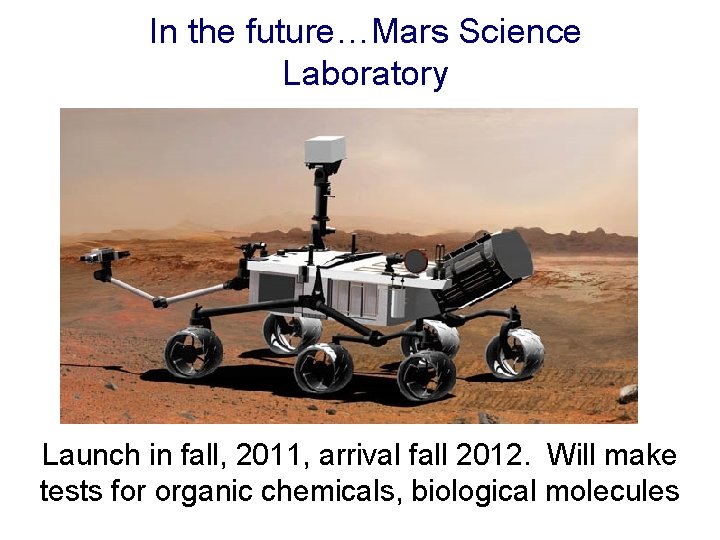
In the future…Mars Science Laboratory Launch in fall, 2011, arrival fall 2012. Will make tests for organic chemicals, biological molecules
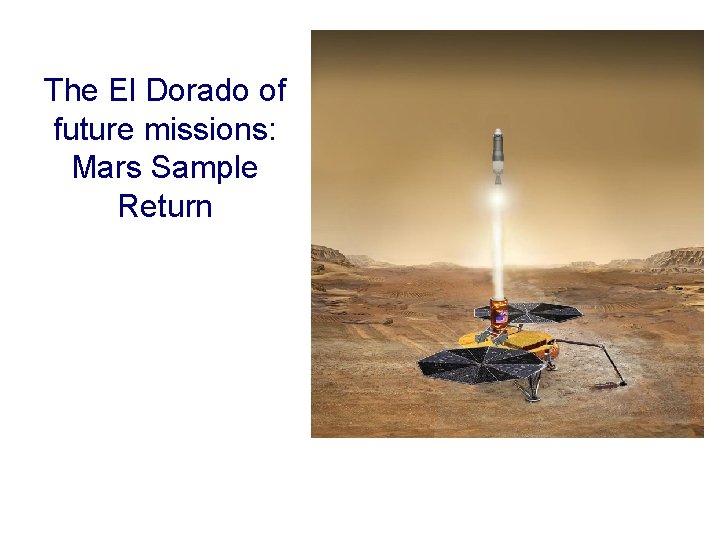
The El Dorado of future missions: Mars Sample Return rom Earth) in 2014.