
Exploring the Ocean Why do we study the
- Slides: 61
Exploring the Ocean Why do we study the ocean? How are waves & currents caused? What is the effect of Waves & currents? What are the main parts of the ocean floor? • What are the main zones of the ocean? • •
Cool Ocean Facts • Area: 362, 000 m 2 • Oceans = 70% of Earth’s (71 %) surface • Depth: 3. 8 km (12, 000 • Ocean water = 97. 5% of ft) all water • Deepest Point: 36, 198 ft • Freshwater = 2. 5 % of (11 km) water on Earth – Most freshwater in • Mountain Chain: 40, 000 icecaps and mountain m long tops • Highest Mountain: – Only ~0. 5% is found in Mauna Kea (33, 474 ft) accessible groundwater
Why study the ocean? • Ocean provides food • Ocean is a route for trade & travel • The Characteristics of the Ocean affect weather & life on land.
Waves are Energy moving through water. • Waves -Caused by Wind blowing across water • Only the ENERGY is moving, NOT the water • View wave motion here: • http: //www. onr. navy. mil/fo cus/ocean/motion/waves 1. htm
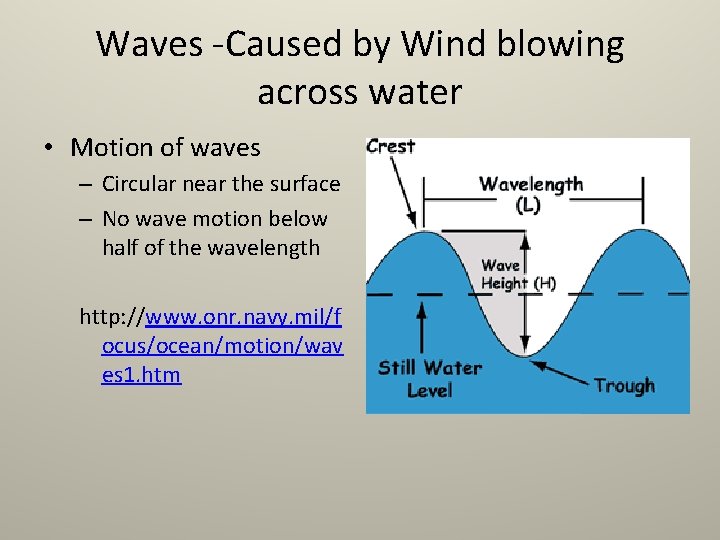
Wave parts • Wavelength- length of wave measured from crest to crest. • Trough – Bottom of the wave • Crest – Top of the wave • Wave Height (Amplitude) – distance from crest to trough.
Waves -Caused by Wind blowing across water • Motion of waves – Circular near the surface – No wave motion below half of the wavelength http: //www. onr. navy. mil/f ocus/ocean/motion/wav es 1. htm
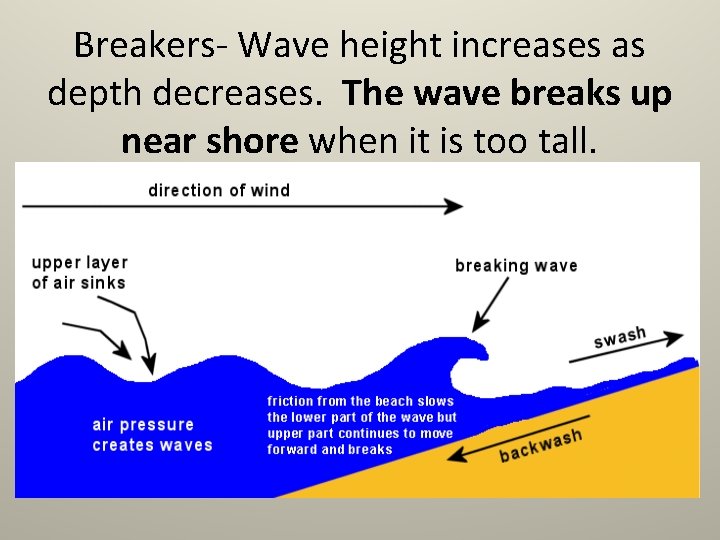
Breakers- Wave height increases as depth decreases. The wave breaks up near shore when it is too tall.
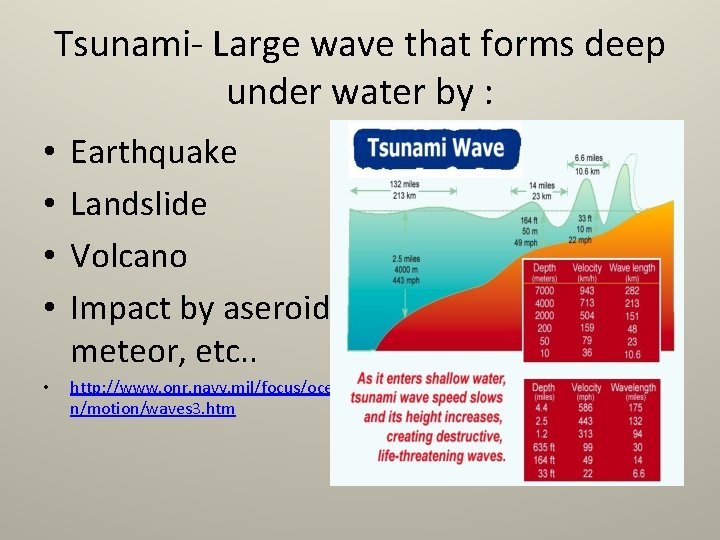
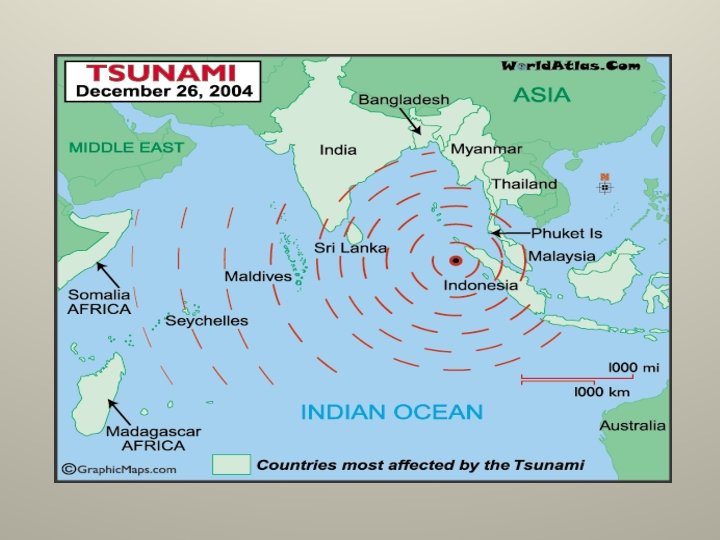
Tsunami- Large wave that forms deep under water by : • • Earthquake Landslide Volcano Impact by aseroid, meteor, etc. . • http: //www. onr. navy. mil/focus/ocea n/motion/waves 3. htm
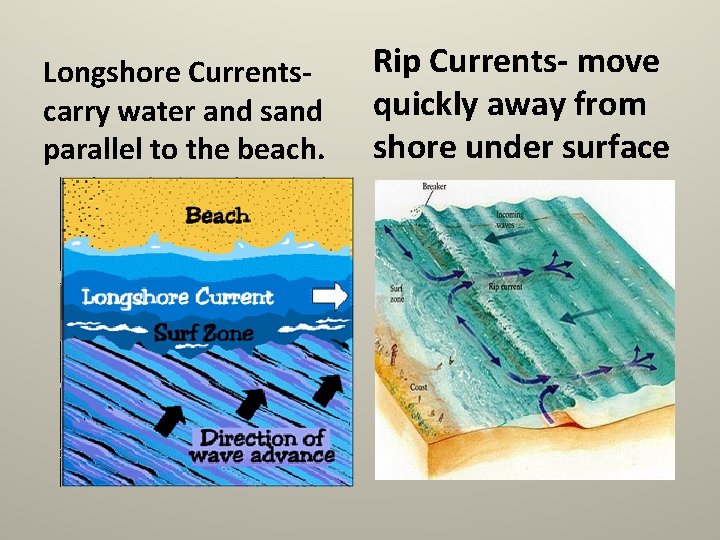
Longshore Currentscarry water and sand parallel to the beach. Rip Currents- move quickly away from shore under surface
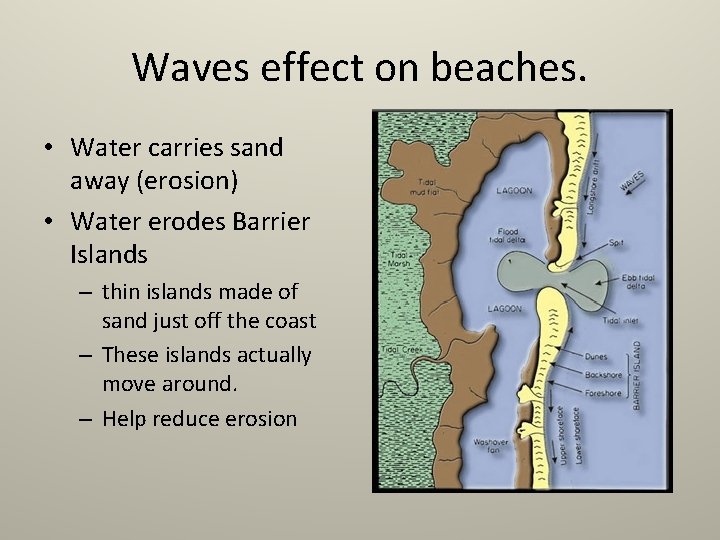
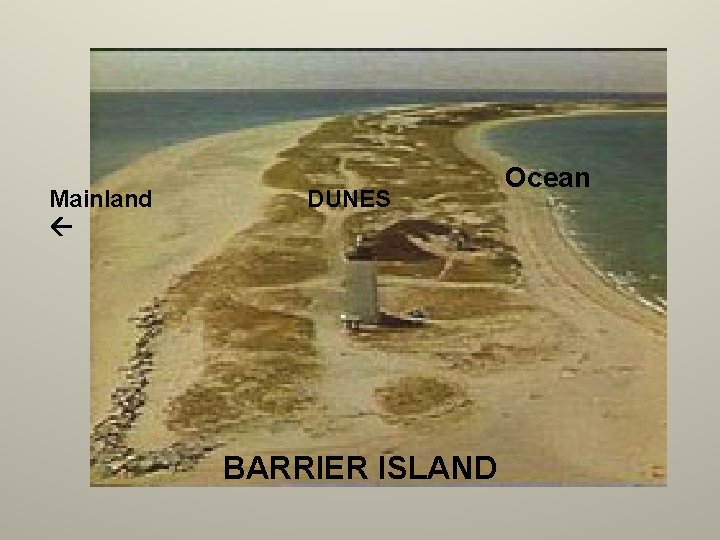
Waves effect on beaches. • Water carries sand away (erosion) • Water erodes Barrier Islands – thin islands made of sand just off the coast – These islands actually move around. – Help reduce erosion
Reduce Beach erosion by • Barrier islands (block waves from reaching shore) • Sand dunes (Hills of sand, that have plants which hold sand in place. )
Mainland DUNES BARRIER ISLAND Ocean
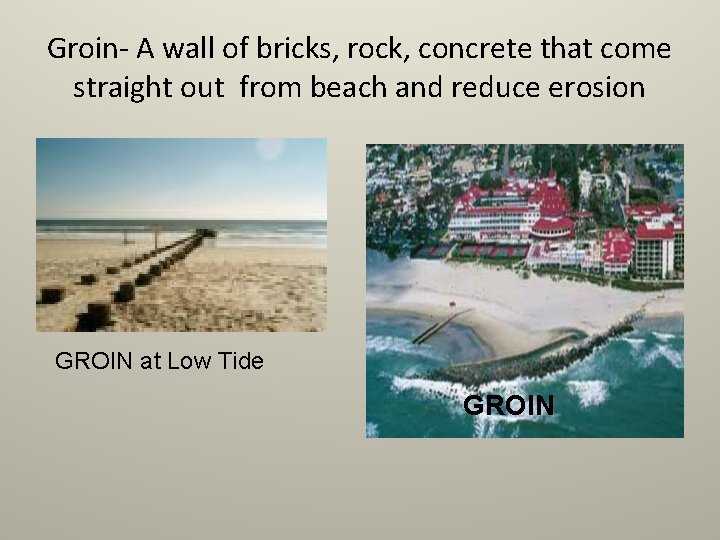
Groin- A wall of bricks, rock, concrete that come straight out from beach and reduce erosion GROIN at Low Tide GROIN
TIDES – Daily change in sea level. caused by Gravitational pull of Sun and moon. • Occur as moon revolves around Earth & Earth revolves around Sun • About 2 high tides and 2 low tides per day. (about 60 of each per month) • Tides importance = helps to mix the nutrients in the ocean. Helps life to continue. • Two types : Spring (Highest) & Neap (lowest difference in sea level)
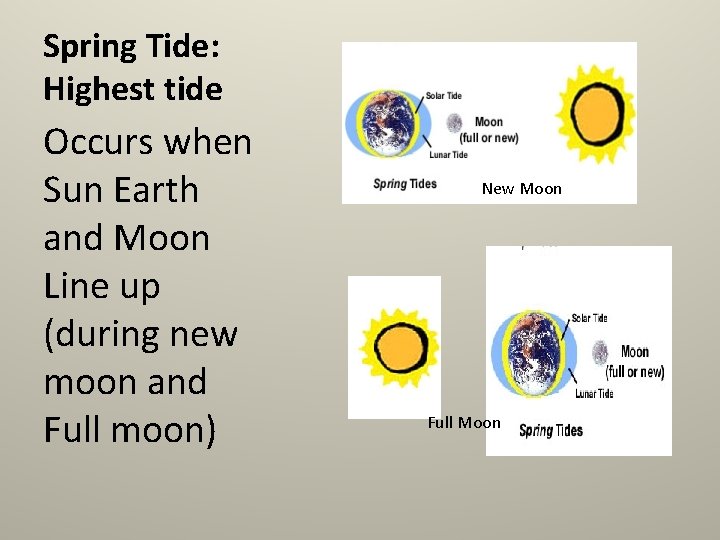
Spring Tide: Highest tide Occurs when Sun Earth and Moon Line up (during new moon and Full moon) New Moon Full Moon
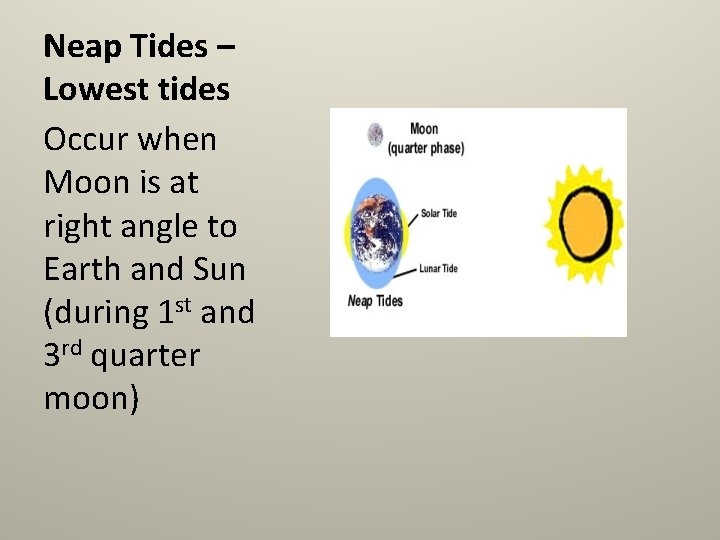
Neap Tides – Lowest tides Occur when Moon is at right angle to Earth and Sun (during 1 st and 3 rd quarter moon)
Tide video link • http: //www. google. com/imgres? imgurl=http: / /home. hiwaay. net/~krcool/Astro/moon/moo ntides/Tide. Ani. gif&imgrefurl=http: //home. hi waay. net/~krcool/Astro/moontides/&h =349&w=468&sz=95&tbnid=m. HQhyy. P 7 y 4 g. J: : &tbnh=95&tbnw=128&prev=/images%3 Fq%3 Dimage%2 Bof%2 Bspring%2 Btide&usg=__Fr. Hg Vup 1 t. JOer 68 o. GRe. AWk. Ba. Wu 0=&sa=X&oi=ima ge_result&resnum=1&ct=image&cd=1
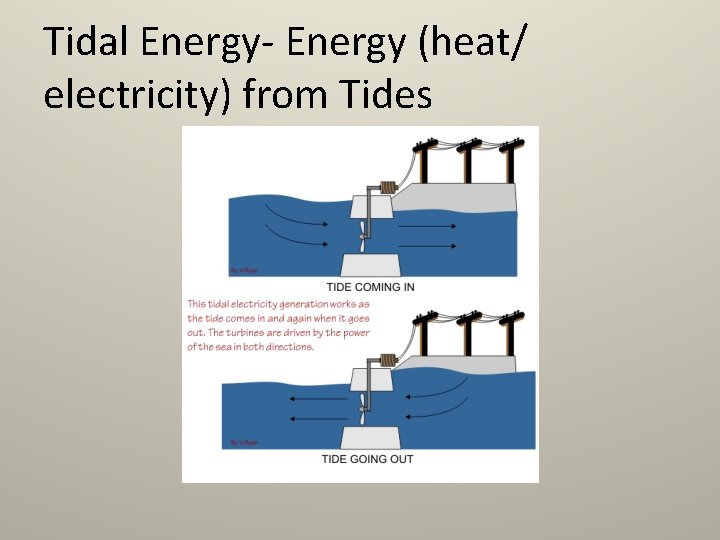
Tidal Energy- Energy (heat/ electricity) from Tides
Tidal Energy ADVANTAGES DISADVANTAGES - Renewable (always have - Good only where tides) is a BIG difference in High/Low tide - Clean (no pollution) - Tides don’t always occur when most energy is needed.
Salinity- The amount of SALT in water. (there are many salt types) • Ocean water is made of WATER & SALT (many types) • Sodium Chloride (Na. Cl) is the MAIN type! • More than 7 types of Ions of salt in water • Salinity drops the freezing point of water – The higher Salinity (more salt) means the water freezes at a lower temperature
• Salinity also INCREASES the density of water • So, SEA WATER is DENSER than FRESHWATER • A boat will float HIGHER in Freshwater (rivers, etc. . ) than in Sea water.
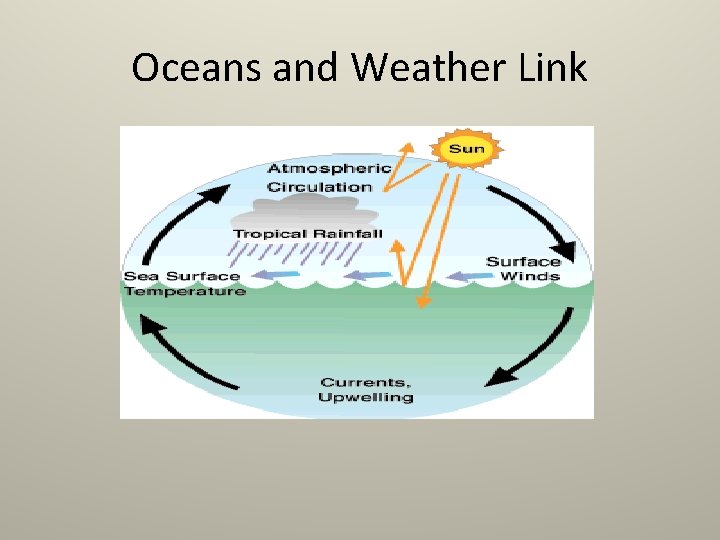
Oceans and Weather Link
• Sunlight does not travel below ~200 m • Scuba divers can’t swim below 40 m, due to pressure. • Oceans contain many dissolved gases (Oxygen, Carbon Dioxide, etc…)
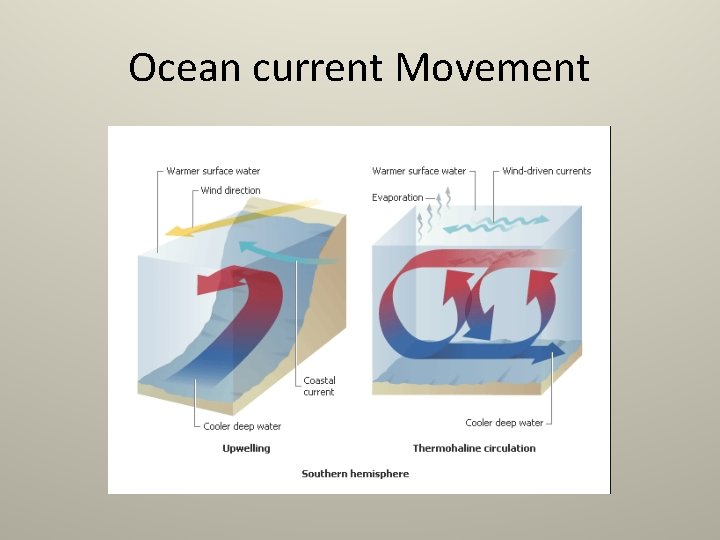
Ocean current Movement
Facts about the Water Column • Since the sun heats the surface of the sea, the Warmest water is at the surface • Also, most life that produces Oxygen is at surface- Most Oxygen is at surface of Sea • SO> the warmest water contains more Oxygen
Ocean Currents • So Pressure, Density, and Salinity increases as you get deeper in the ocean. • Temperature & the amount of sunlight decreases as you get deeper. • Ocean Currents help to determine the type of weather on land.
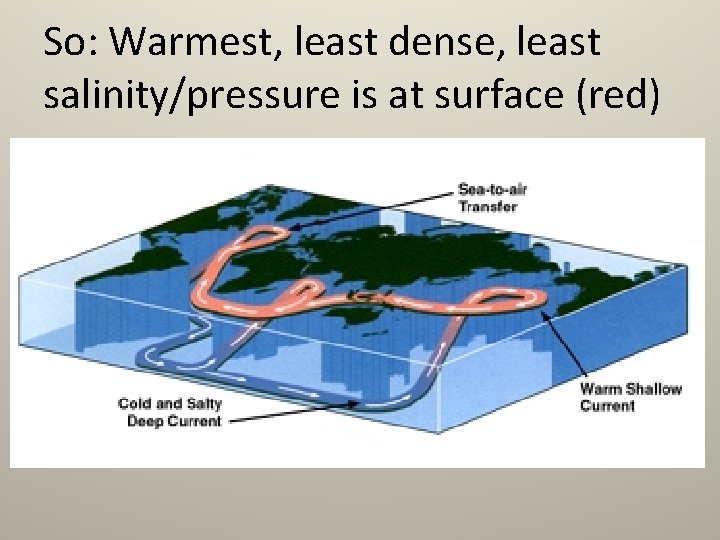
Ocean Currents - a cycling of water • Causes or Factors : 1) Pressure: High pressure sinks down, lower pressure water goes to the top. 2) Density: High density sinks, low density rises 3) Temperature: High temperature rises, low temperature sinks. 4) Salinity (the amount of salt in water): High Salinity (lots of salt) sinks, Low salinity rises.
So: Warmest, least dense, least salinity/pressure is at surface (red)
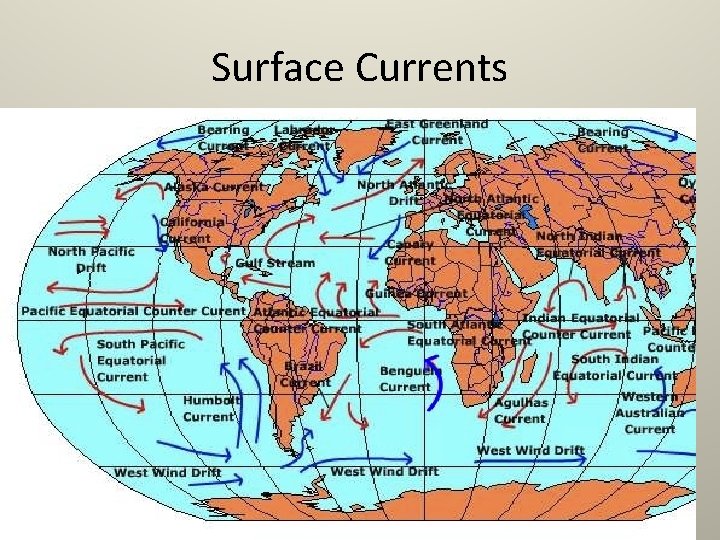
Surface Currents • Currents at surface caused mainly by wind. http: //www. classzone. com/books/earth_science/terc/content/visualizations/es 2401 page 01. cfm? chapter_no=visualizatio n • Coriolis effect (rotation of Earth) – causes these currents to rotate clockwise in N. Hemisphere; – opposite in S. Hemisphere – http: //www. classzone. com/books/earth_science/terc/content/visualizations/es 2401 page 01. cfm? chapter_no =visualization
Surface Currents
• Warm water moves away from equator to the poles. • Warmest water in Tropics • Cold water moves away from poles to equator • Coldest water in Polar
Ocean’s affect on Climate/Weather • The ocean stores the heat of the sun. – High sea level = too much stored heat, so land temperatures are low. – Low sea level = too little stored heat, so land temperatures are high. • Currents carry the weather (temp. & moisture) – Warm water brings warm weather, cold water brings cold weather • If ocean currents stop, then weather stops.
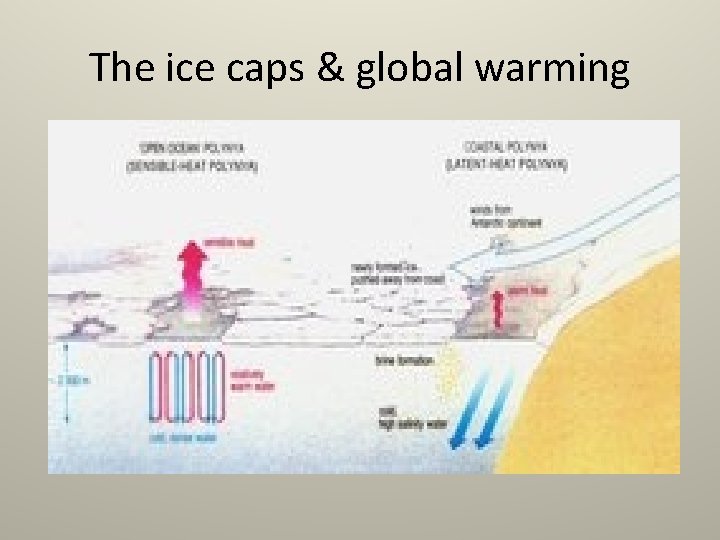
The ice caps & global warming
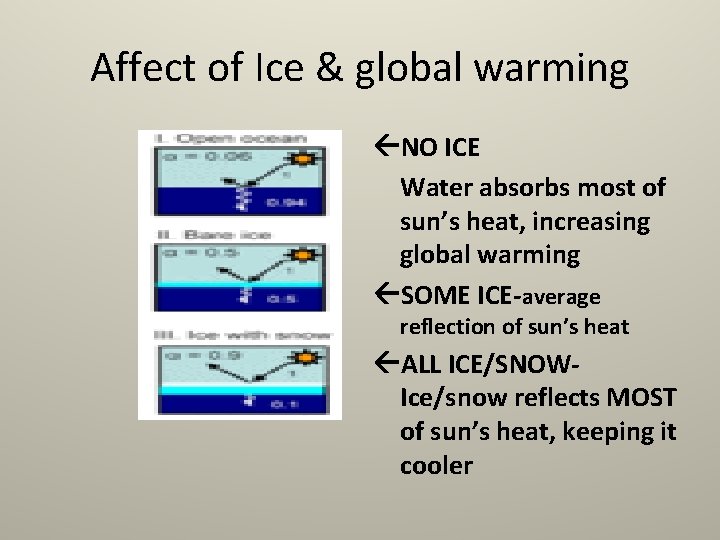
Affect of Ice & global warming NO ICE Water absorbs most of sun’s heat, increasing global warming SOME ICE-average reflection of sun’s heat ALL ICE/SNOWIce/snow reflects MOST of sun’s heat, keeping it cooler
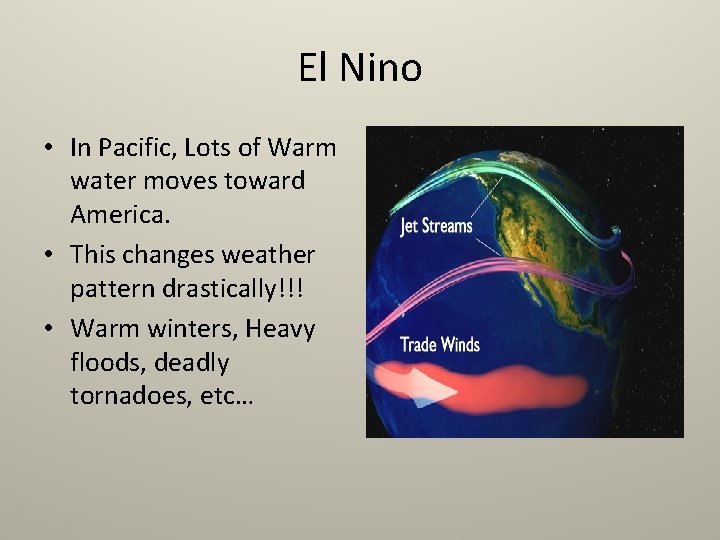
El Nino • In Pacific, Lots of Warm water moves toward America. • This changes weather pattern drastically!!! • Warm winters, Heavy floods, deadly tornadoes, etc…
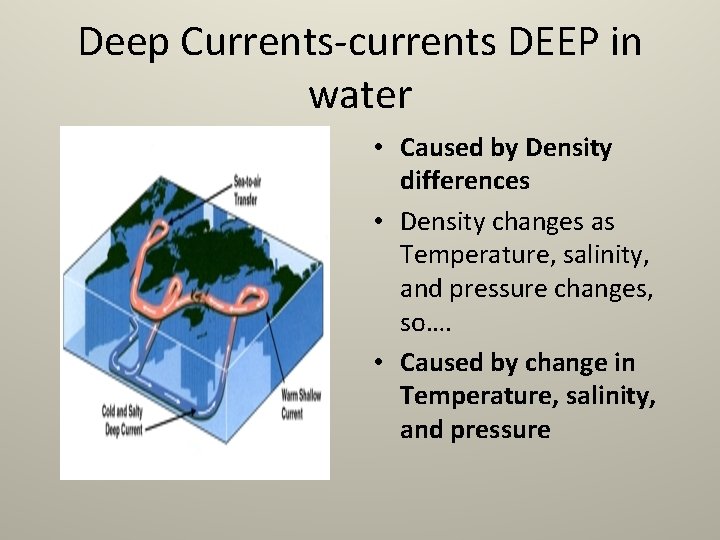
Deep Currents-currents DEEP in water • Caused by Density differences • Density changes as Temperature, salinity, and pressure changes, so…. • Caused by change in Temperature, salinity, and pressure
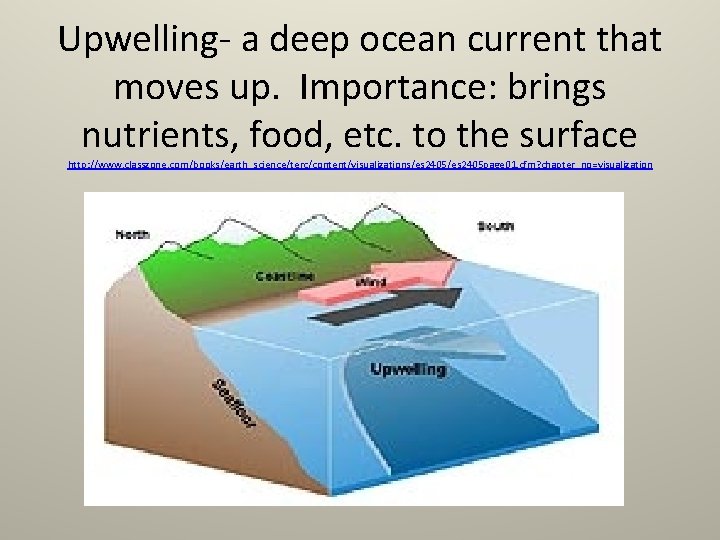
Upwelling- a deep ocean current that moves up. Importance: brings nutrients, food, etc. to the surface http: //www. classzone. com/books/earth_science/terc/content/visualizations/es 2405 page 01. cfm? chapter_no=visualization
Why Ocean currents form/move • Causes or Factors : 1) Pressure: High pressure sinks down, lower pressure water goes to the top. 2) Density: High density sinks, low density rises 3) Temperature: High temperature rises, low temperature sinks. 4) Salinity (the amount of salt in water): High Salinity (lots of salt) sinks, Low salinity rises. 5) CORIOLIS http: //www. classzone. com/books/earth_science/terc/content/visualizations/es 1904 page 01. cfm? chapter_no=visualization
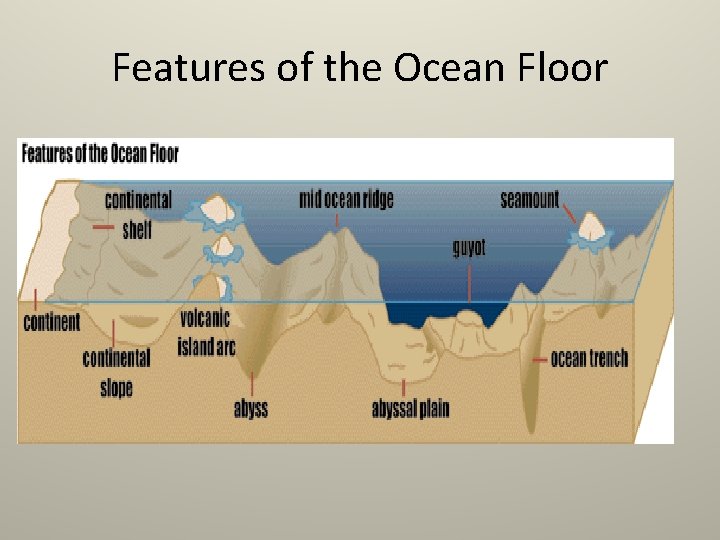
Features of the Ocean Floor • • Continental Shelf: gently sloping sea floor Continental Slope: steeply sloping sea floor Abyssal Plain: Deep, flat layers of sediment Mid-Ocean Ridge: ocean plates separate forming an underwater chain. New seafloor is made here as lava comes to surface.
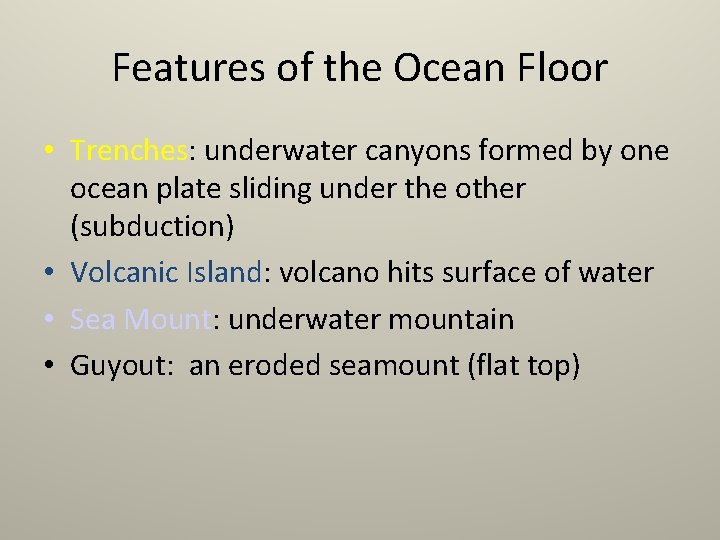
Features of the Ocean Floor • Trenches: underwater canyons formed by one ocean plate sliding under the other (subduction) • Volcanic Island: volcano hits surface of water • Sea Mount: underwater mountain • Guyout: an eroded seamount (flat top)
Features of the Ocean Floor
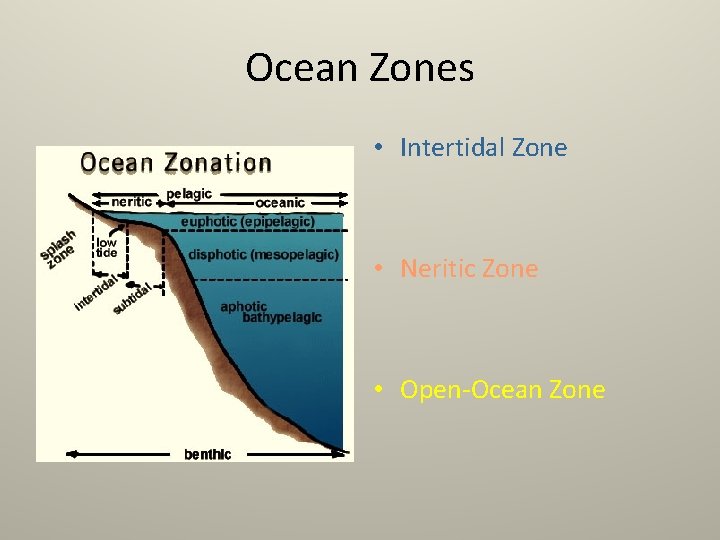
Ocean Zones • Intertidal Zone • Neritic Zone • Open-Ocean Zone
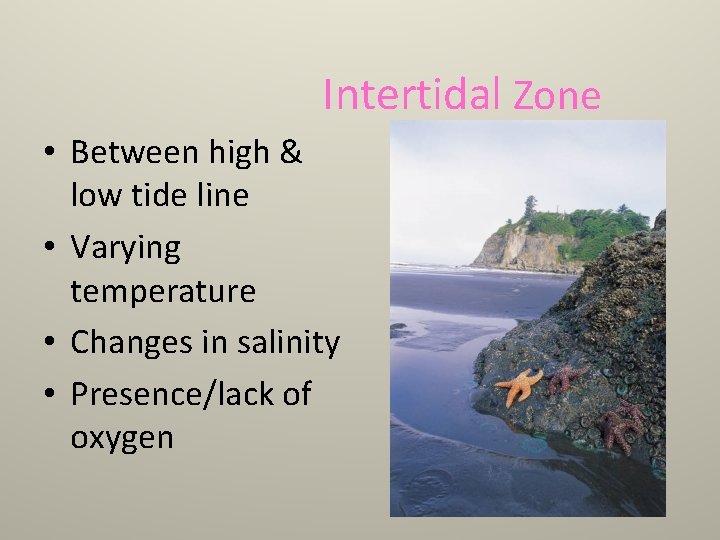
Intertidal Zone • Between high & low tide line • Varying temperature • Changes in salinity • Presence/lack of oxygen
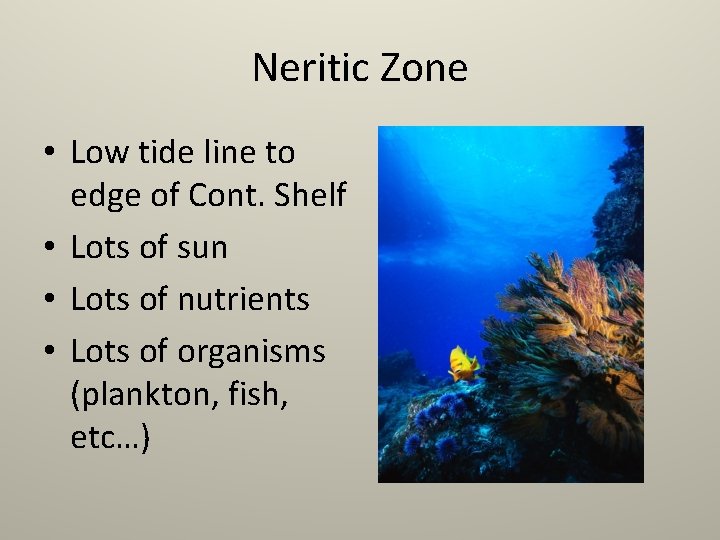
Neritic Zone • Low tide line to edge of Cont. Shelf • Lots of sun • Lots of nutrients • Lots of organisms (plankton, fish, etc…)
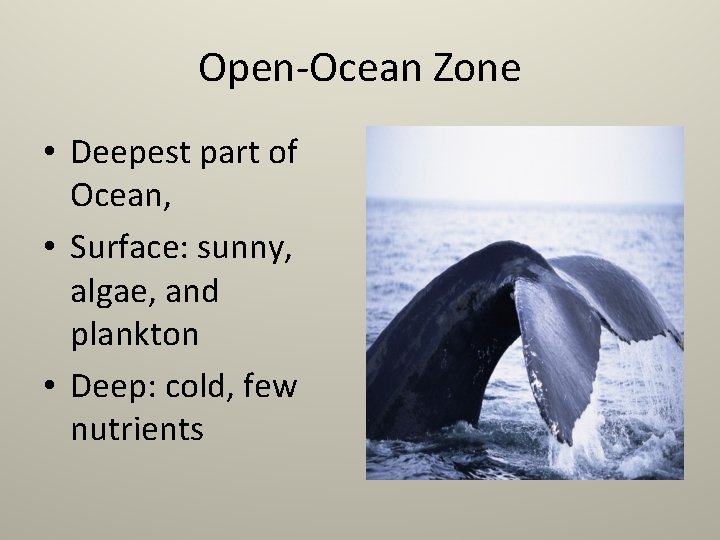
Open-Ocean Zone • Deepest part of Ocean, • Surface: sunny, algae, and plankton • Deep: cold, few nutrients
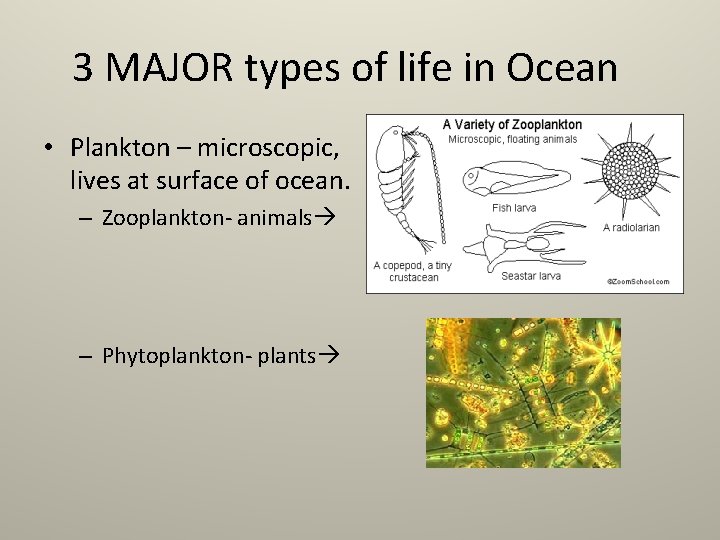
3 MAJOR types of life in Ocean • Plankton – microscopic, lives at surface of ocean. – Zooplankton- animals – Phytoplankton- plants
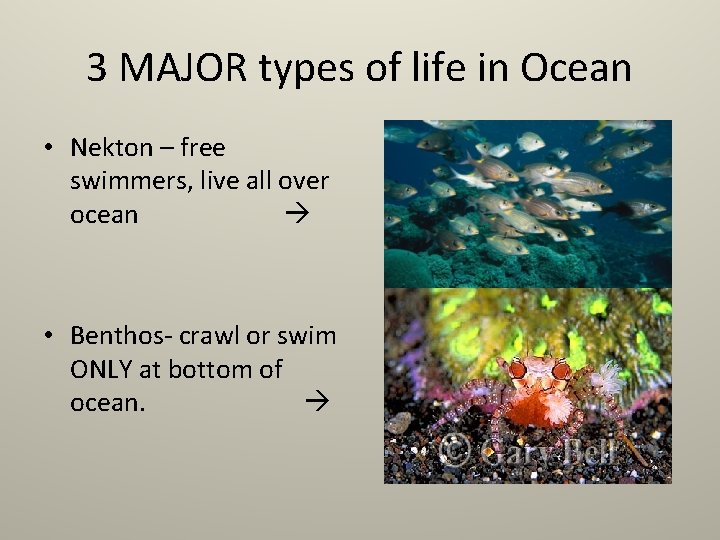
3 MAJOR types of life in Ocean • Nekton – free swimmers, live all over ocean • Benthos- crawl or swim ONLY at bottom of ocean.
Plant life change in Ocean & Land • http: //www. classzone. com/books/earth_scie nce/terc/content/visualizations/es 0106/es 010 6 page 01. cfm? chapter_no=visualization
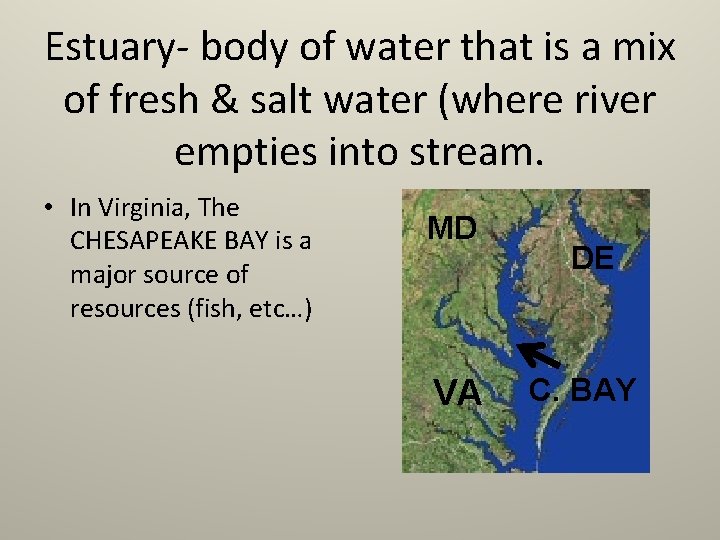
Estuary- body of water that is a mix of fresh & salt water (where river empties into stream. • In Virginia, The CHESAPEAKE BAY is a major source of resources (fish, etc…) MD VA DE C. BAY
Areas of life in INTERTIDAL ZONE • ESTUARIES- mix of salt & fresh water • MANGROVE FORESTSshort trees on coasts of estuary • SALT MARSH- a marsh/swamp with salt water • SANDY SHORES- beach made of sand • ROCKY SHORES- beach made of rocks • TIDE POOLS- areas that are under water in high tide, but not in low tide
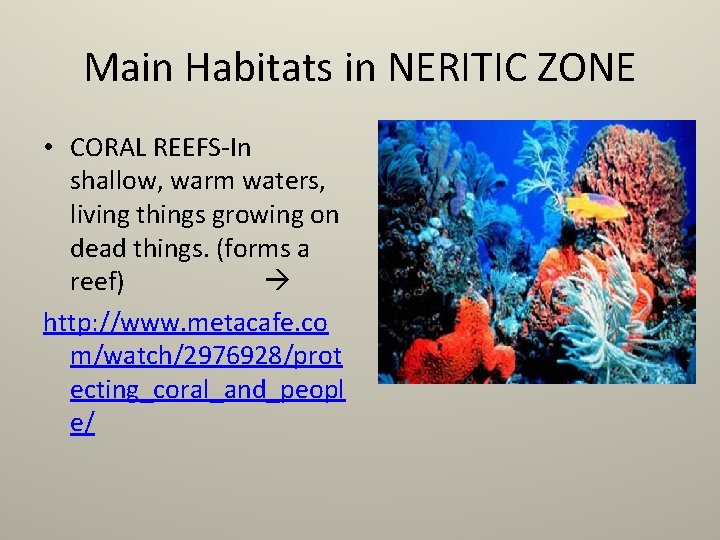
Main Habitats in NERITIC ZONE • CORAL REEFS-In shallow, warm waters, living things growing on dead things. (forms a reef) http: //www. metacafe. co m/watch/2976928/prot ecting_coral_and_peopl e/
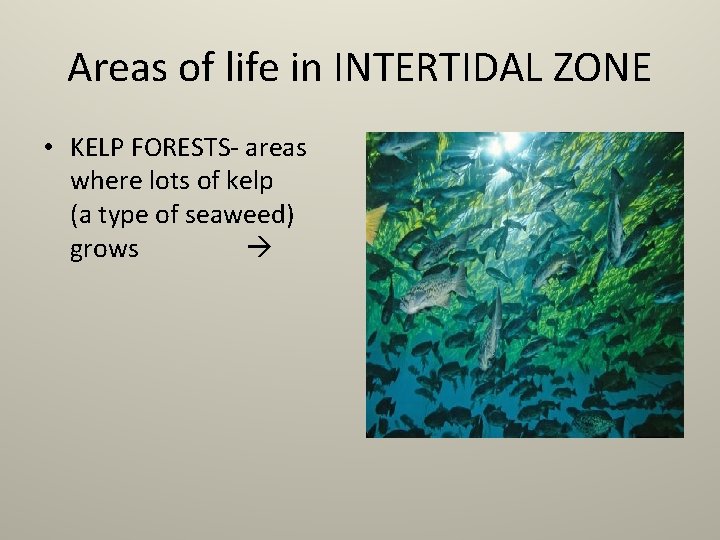
Areas of life in INTERTIDAL ZONE • KELP FORESTS- areas where lots of kelp (a type of seaweed) grows
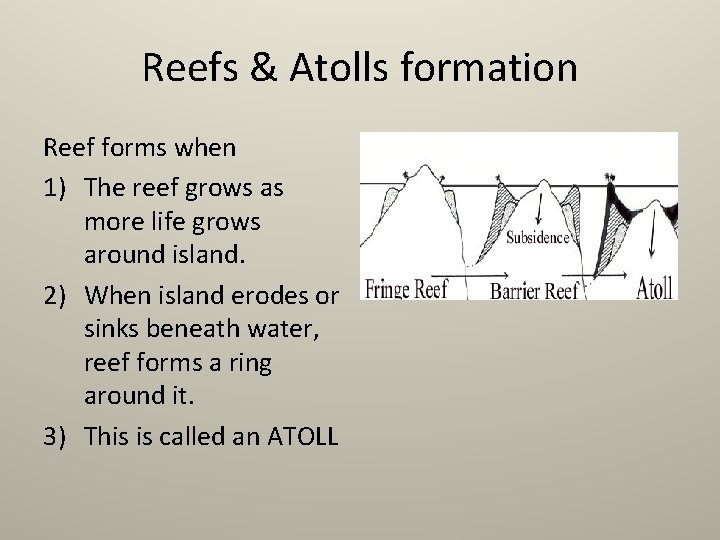
Reefs & Atolls formation Reef forms when 1) The reef grows as more life grows around island. 2) When island erodes or sinks beneath water, reef forms a ring around it. 3) This is called an ATOLL
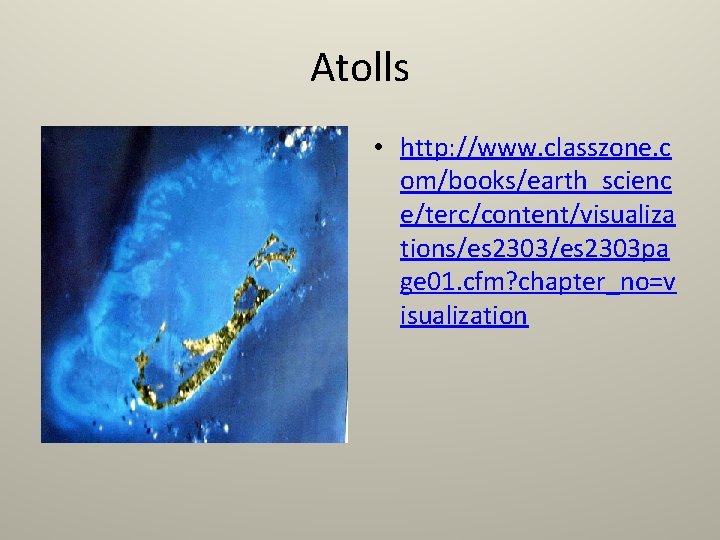
Atolls • http: //www. classzone. c om/books/earth_scienc e/terc/content/visualiza tions/es 2303 pa ge 01. cfm? chapter_no=v isualization
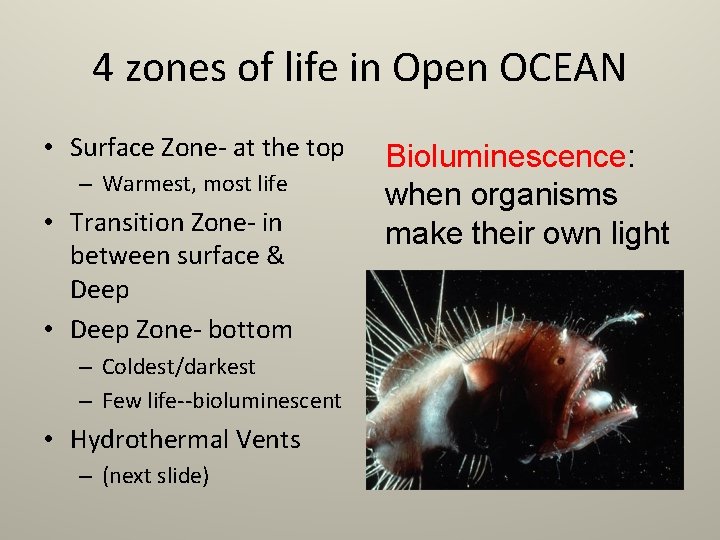
4 zones of life in Open OCEAN • Surface Zone- at the top – Warmest, most life • Transition Zone- in between surface & Deep • Deep Zone- bottom – Coldest/darkest – Few life--bioluminescent • Hydrothermal Vents – (next slide) Bioluminescence: when organisms make their own light
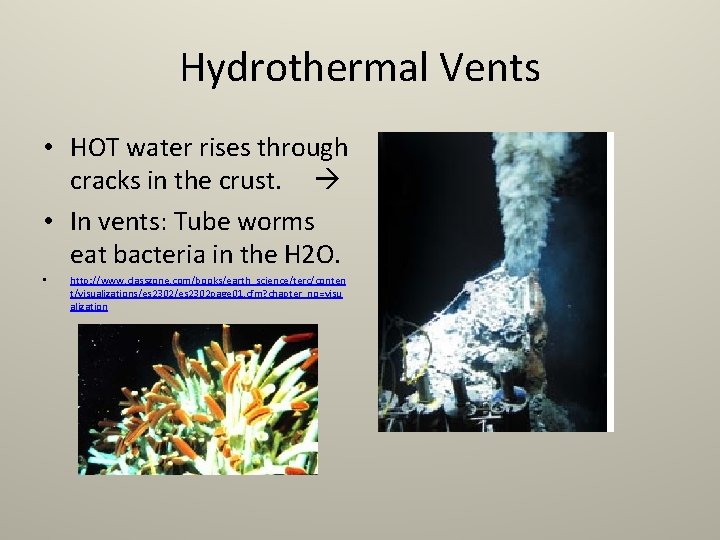
Hydrothermal Vents • HOT water rises through cracks in the crust. • In vents: Tube worms eat bacteria in the H 2 O. • http: //www. classzone. com/books/earth_science/terc/conten t/visualizations/es 2302 page 01. cfm? chapter_no=visu alization
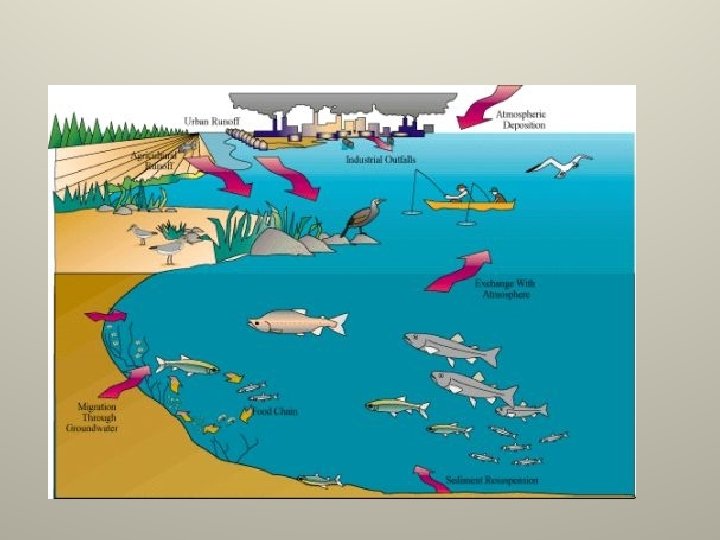
Man’s impact on Ocean • POLLUTION- from boats, factories, and chemicals used in fertilizer carried to sea by rivers. • Pollution stays near shore. • Clean up by using BIOCHEMICALS(bacterias, etc. . ) that break down oil & sewage into harmless chemical • OVERFISHING
Energy/Resources from the Ocean • Nonrenewable-(we CAN’T replace because it takes millions of years to make more) 1) Oil/Natural Gas – from microscopic sea organisms. Used for fuel 2) Minerals – nodules, manganese, gold, etc. . Many uses
Energy/Resources from the Ocean Renewable – can be replaced in a short time 1) Food -(fish, etc. . ) 2) Freshwater -saltwater changed to drinkable 3) Salt - (when removed from ocean) 4) Tidal energy – As tides come in and out, they run through a turbine to make electricity. • 5) Thermal Energy- heat from ocean • • •