
Exploring the language barrier to engagement in youth
‘Exploring the language barrier to engagement in youth justice assessment interview practice’ Ralph Morton r. morton@lboro. ac. uk
Outline • Project Team • What are we planning to do? • How are we planning to do this? • Timetable • Numbers • What we need from you • What we hope to offer • Any questions and concerns?
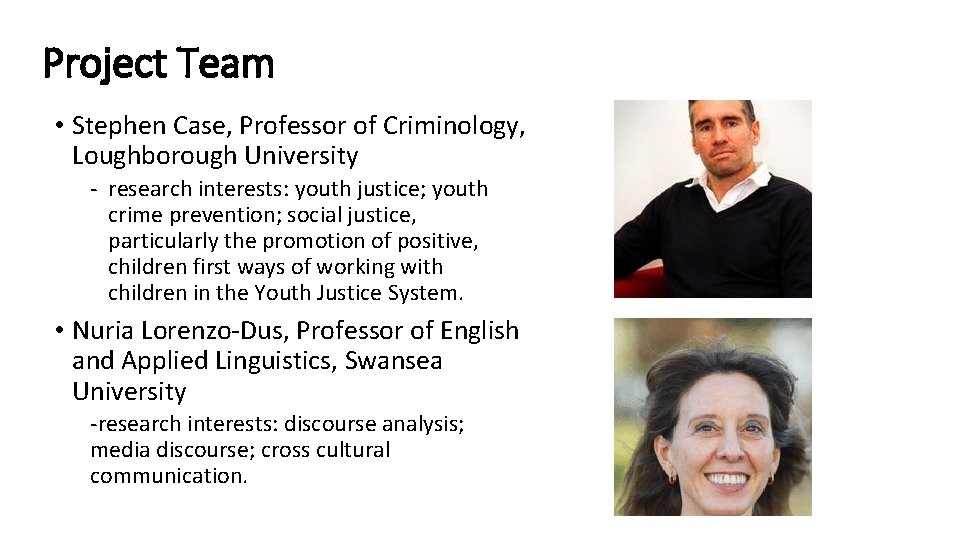
Project Team • Stephen Case, Professor of Criminology, Loughborough University - research interests: youth justice; youth crime prevention; social justice, particularly the promotion of positive, children first ways of working with children in the Youth Justice System. • Nuria Lorenzo-Dus, Professor of English and Applied Linguistics, Swansea University -research interests: discourse analysis; media discourse; cross cultural communication.
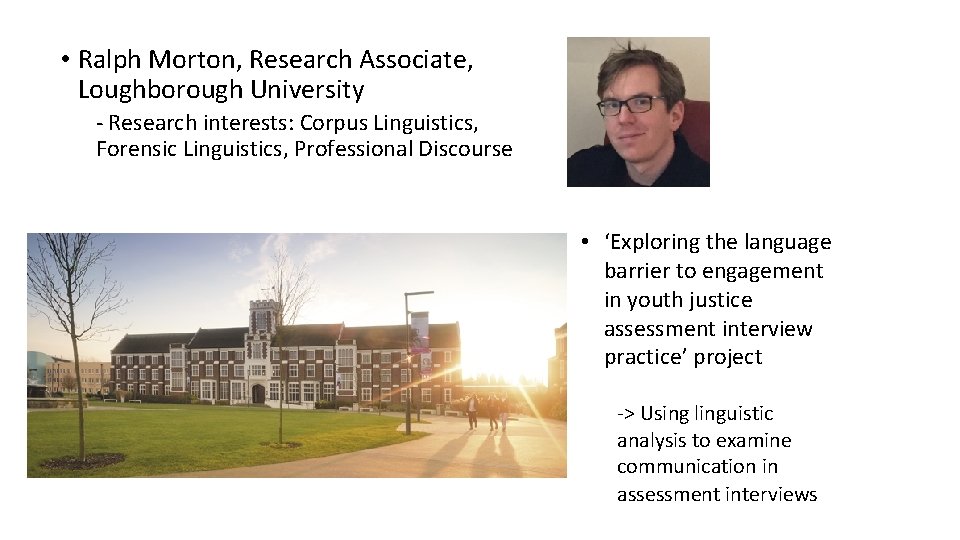
• Ralph Morton, Research Associate, Loughborough University - Research interests: Corpus Linguistics, Forensic Linguistics, Professional Discourse • ‘Exploring the language barrier to engagement in youth justice assessment interview practice’ project -> Using linguistic analysis to examine communication in assessment interviews
What are we planning to do? • ‘To identify and examine patterns of problematic discourse within assessment interviews’ • ‘To identify and examine patterns of effective management within assessment interviews’ • Examine the interview context and how this might effect communication • Develop, test, and deliver a set of protocols to serve as ‘a model for effective communication’ Leicestershire, Gwynedd, Walsall, Surrey
How are we planning to do this? • Record assessment interviews • Linguistic analyses of interaction • Questionnaires re: experiences in the Youth Justice System (practitioners and young people) • Semi-structured interviews re: experiences in Youth Justice System (practitioners and young people), incorporating findings from analyses • Bring this information together to produce a ‘toolkit’ for effective communication in interviews • Pilot, refine, and finalise toolkit for application in assessments
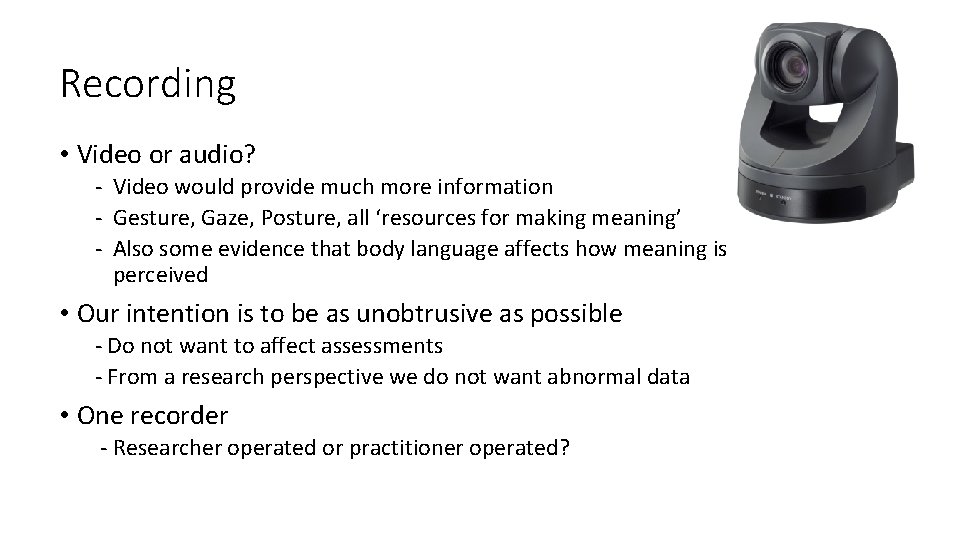
Recording • Video or audio? - Video would provide much more information - Gesture, Gaze, Posture, all ‘resources for making meaning’ - Also some evidence that body language affects how meaning is perceived • Our intention is to be as unobtrusive as possible - Do not want to affect assessments - From a research perspective we do not want abnormal data • One recorder - Researcher operated or practitioner operated?
Privacy • All data will be anonymised. Video and audio data will be masked. Identifying details such as names and locations will be removed before any results are shared • Focus of the study is interaction, not the details of individual cases • Real identities of participants will be stored on password-protected hard-drives only accessible to the three researchers on the project • Personal data will be processed in private locations • All personal data collected for the purposes of this project will be destroyed when it concludes in March 2019
Timetable • Phase 1 August 2017 - February 2018 - Observe and Record assessment interviews - Linguistic analysis • Phase 2 March-June 2018 - Questionnaires - Interviews - Phase 1 + Phase 2 => Phase 3 • Phase 3 July-August 2018 - Develop draft 1 of the toolkit - Test toolkit • Phase 4 September 2018 -February 2019 - Develop final toolkit - Provide training sessions
Numbers Phase One: Assessment interviews • Overall target of 50 interviews between the two YOTs • 20 assessment interviews per YOT - Initial Asset. Plus assessments and review assessments - If possible at least some initial and review assessments of same case • 5 -10 other interview types Phase Two: Questionnaires/Interviews • Questionnaires - all participants from Phase 1 (+? ) • Interviews - as many participants from Phase 1 as possible
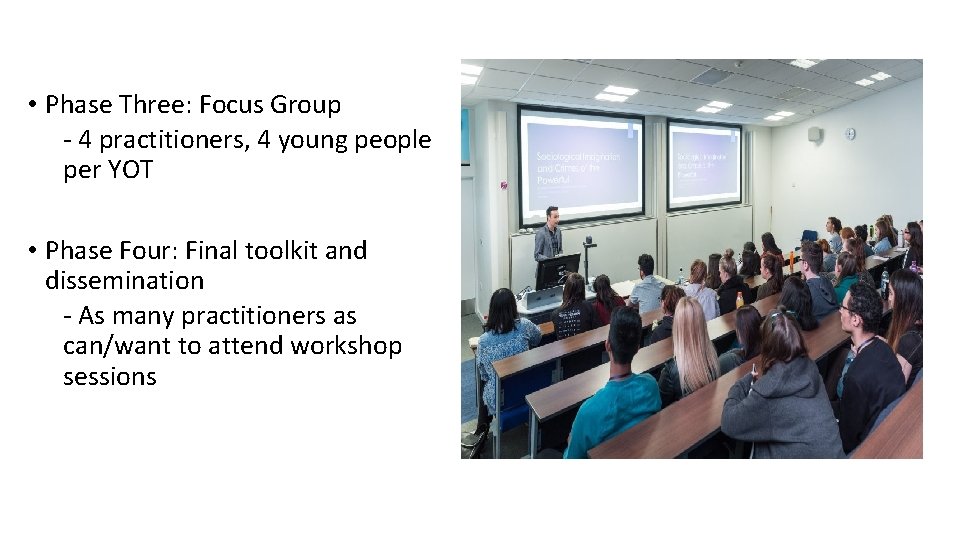
• Phase Three: Focus Group - 4 practitioners, 4 young people per YOT • Phase Four: Final toolkit and dissemination - As many practitioners as can/want to attend workshop sessions
What we need from you • Access to assessment interviews • Help to identify suitable cases • Help with approaching parents and securing permissions from them and the young people • Access to planning materials • Insight on the assessment process through questionnaire, interviews, focus group
What we will offer • ‘Toolkit’ for supporting best practice • Linguistics/communicative insights into assessment interviews (useful beyond YJ context) • To map your concerns and experiences onto the research • Workshops • (Feedback for young people) • Dissemination
Any questions or concerns? Contacts: Stephen Case s. case@lboro. ac. uk Nuria Lorenzo-Dus n. lorenzo-dus@swansea. ac. uk Ralph Morton r. morton@lboro. ac. uk
- Slides: 14