
Exploring the Impact of Family and Personal History

- Slides: 15
Exploring the Impact of Family and Personal History on the Perceived Value and Usefulness of Negative Genetic Test Results e. MERGE III Summer Steering Committee Meeting June 20, 2019 Sharon Aufox, MS, CGC
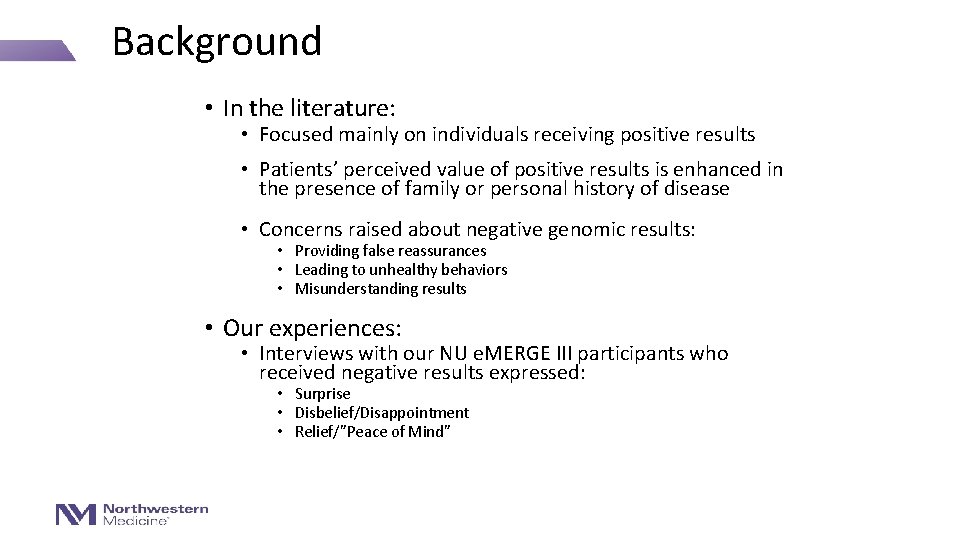
Background • In the literature: • Focused mainly on individuals receiving positive results • Patients’ perceived value of positive results is enhanced in the presence of family or personal history of disease • Concerns raised about negative genomic results: • Providing false reassurances • Leading to unhealthy behaviors • Misunderstanding results • Our experiences: • Interviews with our NU e. MERGE III participants who received negative results expressed: • Surprise • Disbelief/Disappointment • Relief/”Peace of Mind”
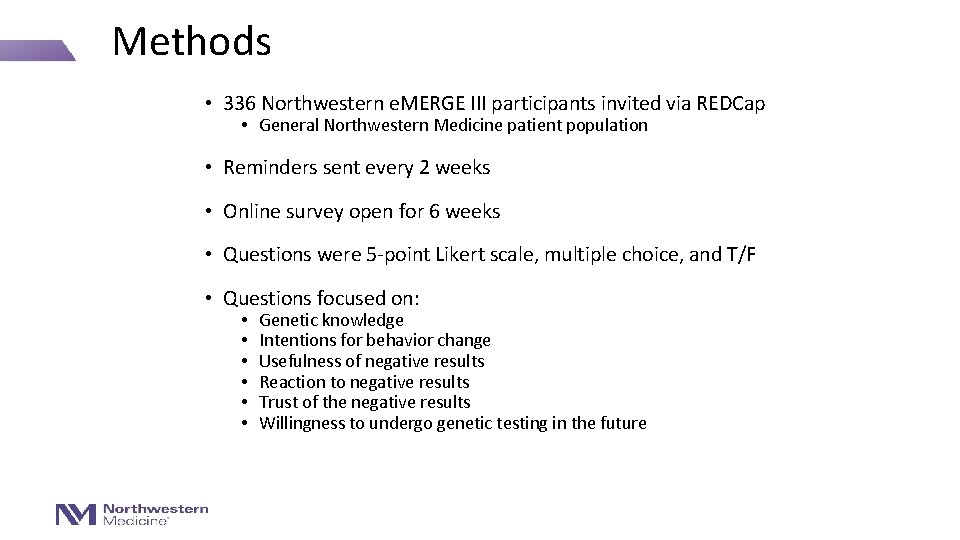
Methods • 336 Northwestern e. MERGE III participants invited via REDCap • General Northwestern Medicine patient population • Reminders sent every 2 weeks • Online survey open for 6 weeks • Questions were 5 -point Likert scale, multiple choice, and T/F • Questions focused on: • • • Genetic knowledge Intentions for behavior change Usefulness of negative results Reaction to negative results Trust of the negative results Willingness to undergo genetic testing in the future
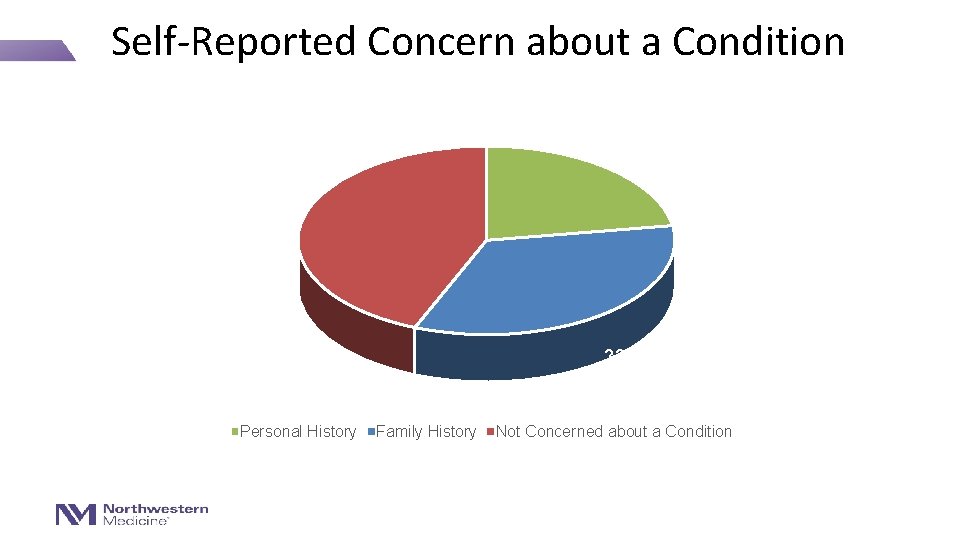
Self-Reported Concern about a Condition 22. 5% 43. 8% 33. 7% Personal History Family History Not Concerned about a Condition
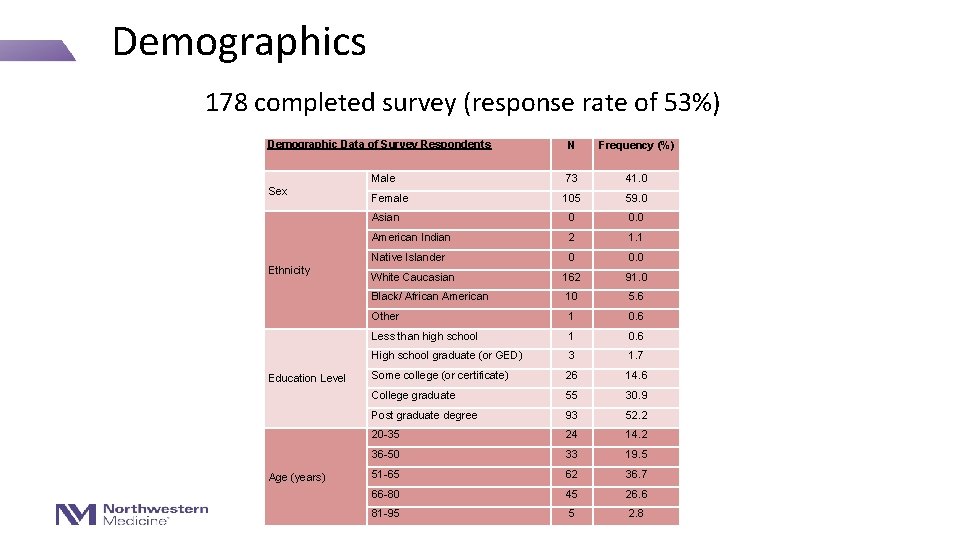
Demographics 178 completed survey (response rate of 53%) Demographic Data of Survey Respondents Sex Ethnicity Education Level Age (years) N Frequency (%) Male 73 41. 0 Female 105 59. 0 Asian 0 0. 0 American Indian 2 1. 1 Native Islander 0 0. 0 White Caucasian 162 91. 0 Black/ African American 10 5. 6 Other 1 0. 6 Less than high school 1 0. 6 High school graduate (or GED) 3 1. 7 Some college (or certificate) 26 14. 6 College graduate 55 30. 9 Post graduate degree 93 52. 2 20 -35 24 14. 2 36 -50 33 19. 5 51 -65 62 36. 7 66 -80 45 26. 6 81 -95 5 2. 8
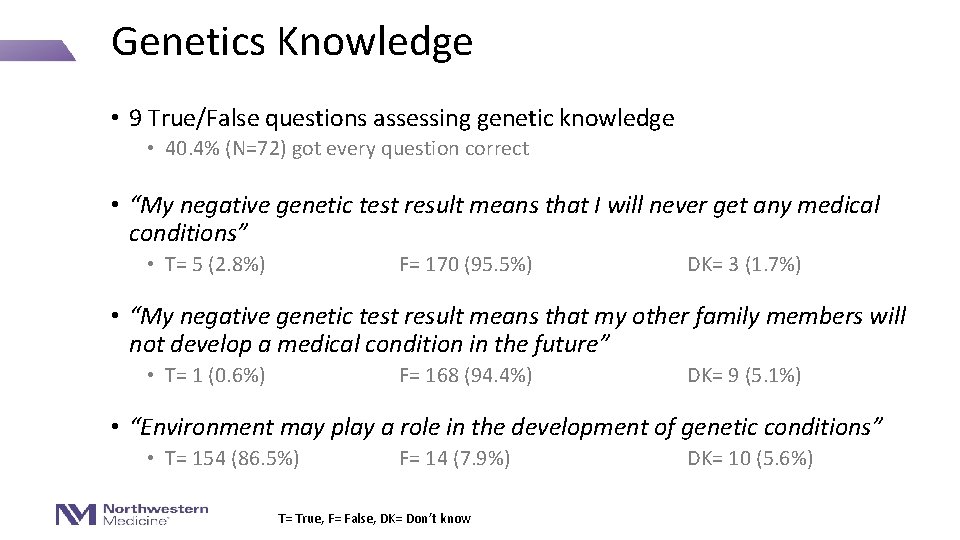
Genetics Knowledge • 9 True/False questions assessing genetic knowledge • 40. 4% (N=72) got every question correct • “My negative genetic test result means that I will never get any medical conditions” • T= 5 (2. 8%) F= 170 (95. 5%) DK= 3 (1. 7%) • “My negative genetic test result means that my other family members will not develop a medical condition in the future” • T= 1 (0. 6%) F= 168 (94. 4%) DK= 9 (5. 1%) • “Environment may play a role in the development of genetic conditions” • T= 154 (86. 5%) F= 14 (7. 9%) T= True, F= False, DK= Don’t know DK= 10 (5. 6%)
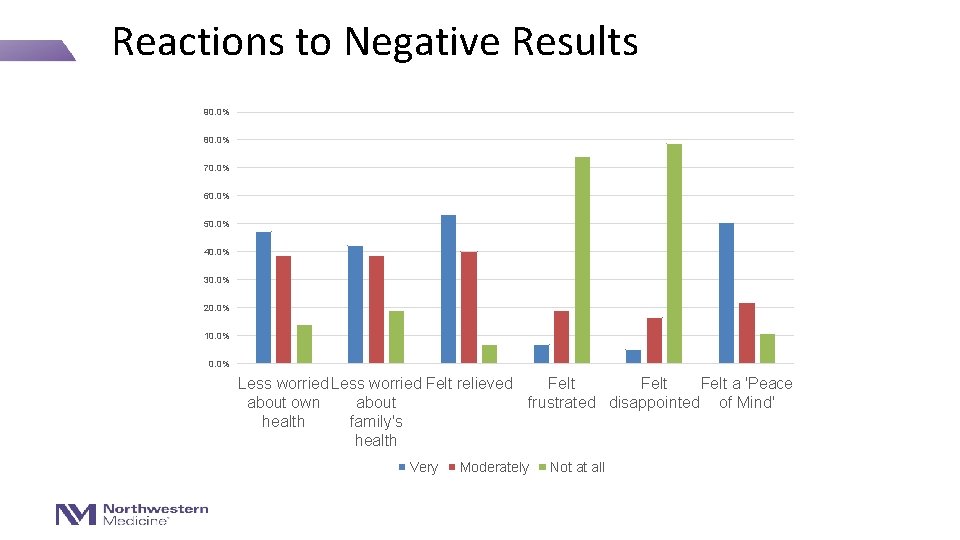
Reactions to Negative Results 90. 0% 80. 0% 70. 0% 60. 0% 50. 0% 40. 0% 30. 0% 20. 0% 10. 0% Less worried Felt relieved Felt a 'Peace about own about frustrated disappointed of Mind' health family's health Very Moderately Not at all
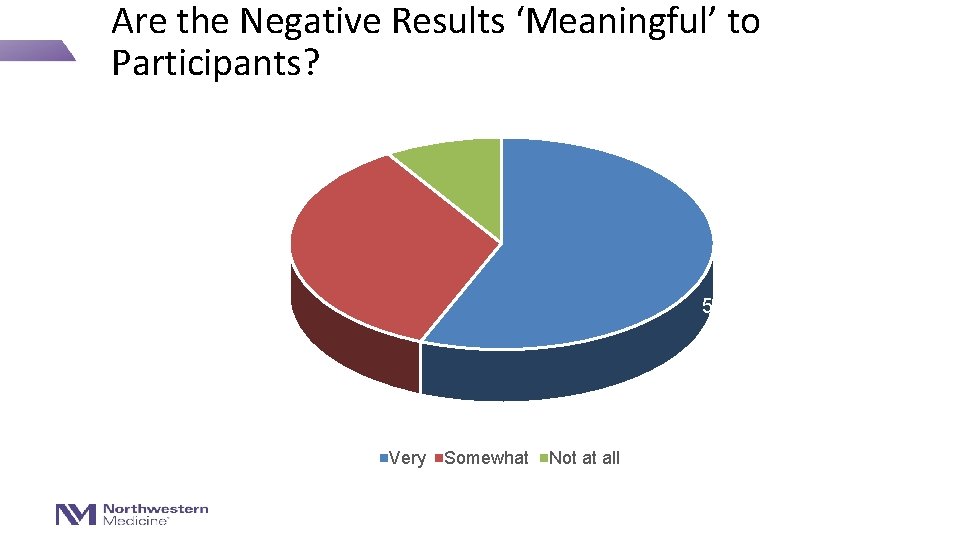
Are the Negative Results ‘Meaningful’ to Participants? 9. 0% 34. 8% 56. 2% Very Somewhat Not at all
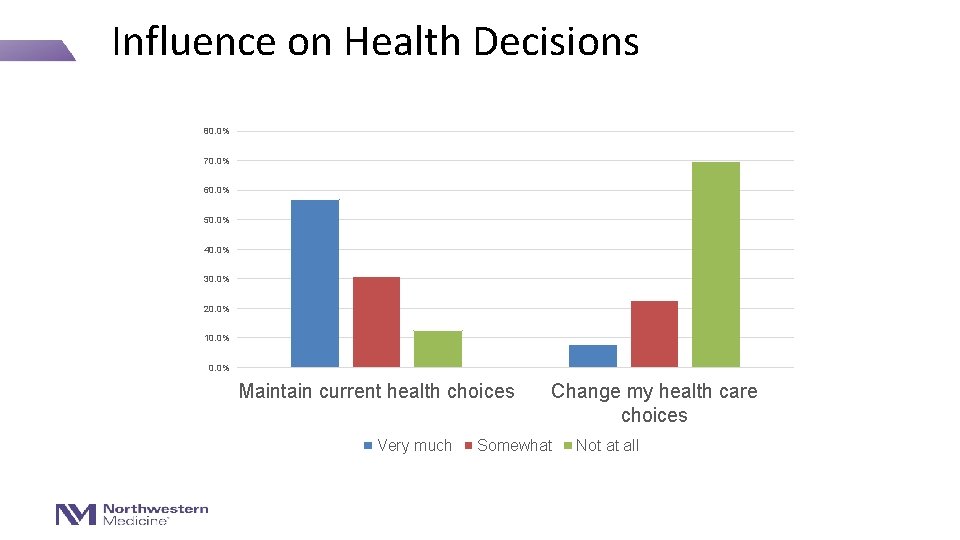
Influence on Health Decisions 80. 0% 70. 0% 60. 0% 50. 0% 40. 0% 30. 0% 20. 0% 10. 0% Maintain current health choices Very much Change my health care choices Somewhat Not at all
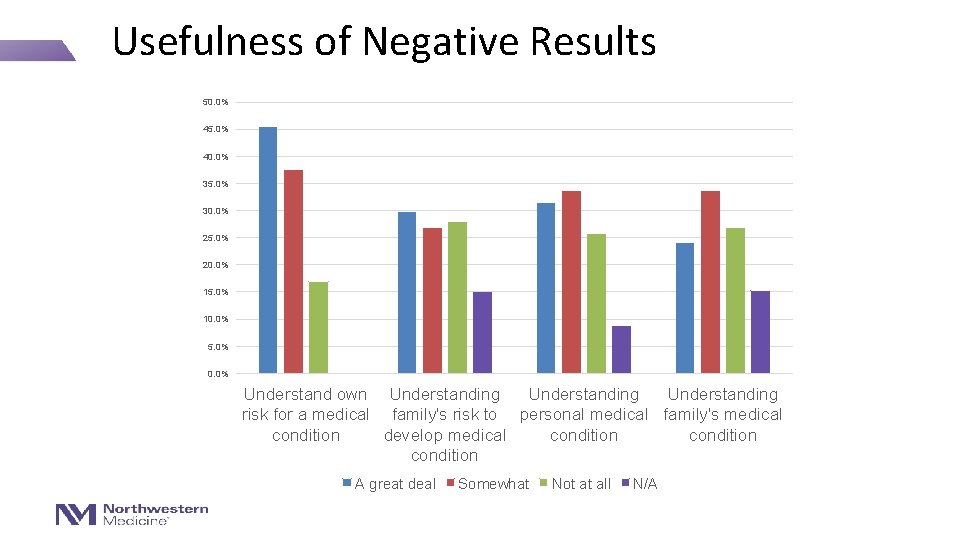
Usefulness of Negative Results 50. 0% 45. 0% 40. 0% 35. 0% 30. 0% 25. 0% 20. 0% 15. 0% 10. 0% 5. 0% 0. 0% Understand own Understanding risk for a medical family's risk to personal medical family's medical condition develop medical condition A great deal Somewhat Not at all N/A
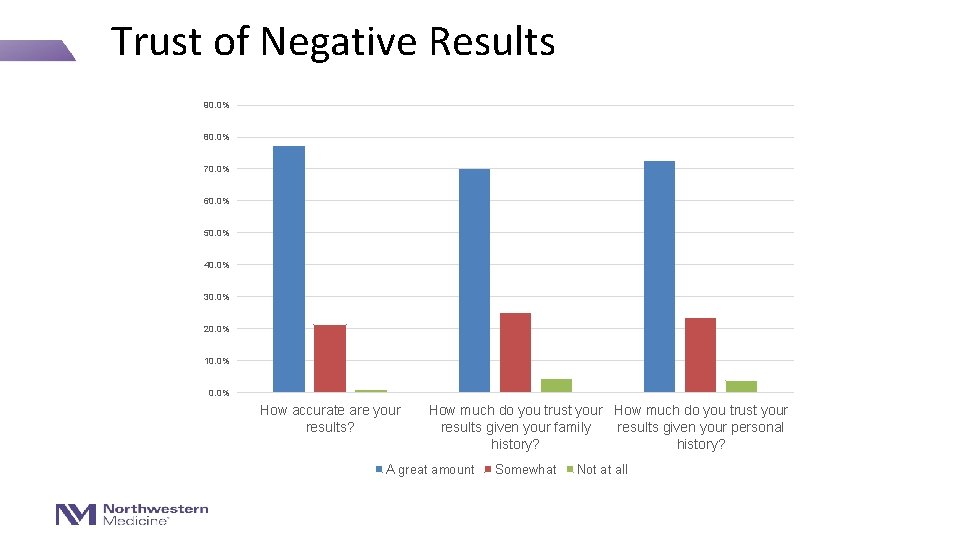
Trust of Negative Results 90. 0% 80. 0% 70. 0% 60. 0% 50. 0% 40. 0% 30. 0% 20. 0% 10. 0% How accurate are your results? How much do you trust your results given your family results given your personal history? A great amount Somewhat Not at all
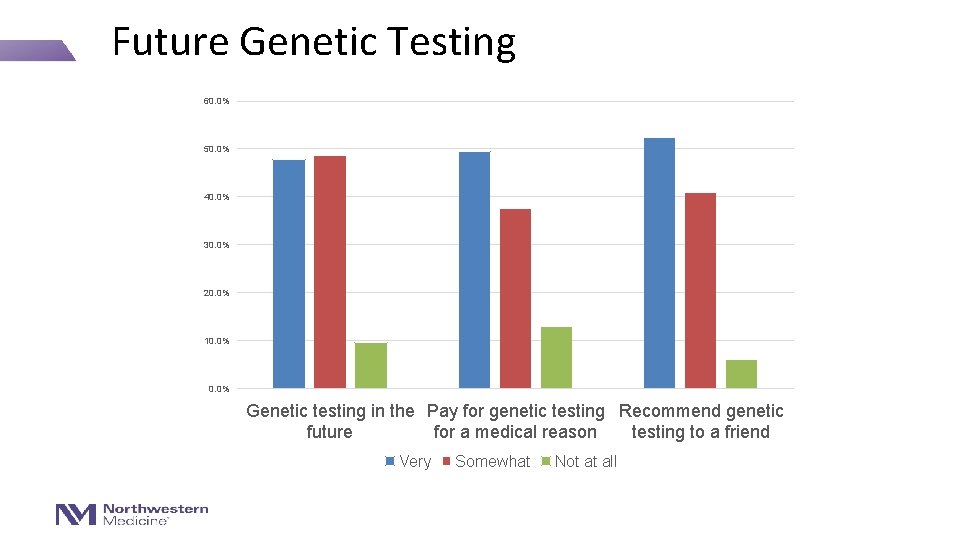
Future Genetic Testing 60. 0% 50. 0% 40. 0% 30. 0% 20. 0% 10. 0% Genetic testing in the Pay for genetic testing Recommend genetic future for a medical reason testing to a friend Very Somewhat Not at all
Conclusions • In our population, concerns over family history or personal history of a medical condition did not appear to influence the perceived usefulness or value of negative results compared to those who had no personal or family medical concerns • Majority were not frustrated or disappointed by receiving negative genetic results • Majority of participants found some meaning with their negative results • Negative results did not seem to influence health-related decisions • Majority still would undergo genetic testing in the future • Majority of participants still trusted their results even though it did not explain their family or personal history of a medical condition
Limitations • Small number of participants • Highly educated • Minority populations not well represented
Thank You! • Sinead Horgan, MS • Maureen Smith, MS, CGC • Christie Hoell, MS, CGC • Carmen Williams, MS, CGC