
Exploring the Global Knowledge Space Dr Liz Lyon
Exploring the Global Knowledge Space Dr Liz Lyon, UKOLN, University of Bath, UK SWMLAC ICT Masterclass Bristol, January 2005. UKOLN is supported by: www. bath. ac. uk www. ukoln. ac. uk a centre of expertise in digital information management SWMLAC ICT Masterclass January 2005
Overview 1. 2. 3. 4. 5. 6. Access, communications and collaboration Paradigm shifts and innovation Cross-sectoral frameworks and integration Resources, services and interoperability Digital preservation, curation & sustainability Consumers, audiences and personalisation SWMLAC ICT Masterclass January 2005
1. Access, communications and collaboration SWMLAC ICT Masterclass January 2005 3
SWMLAC ICT Masterclass January 2005 4
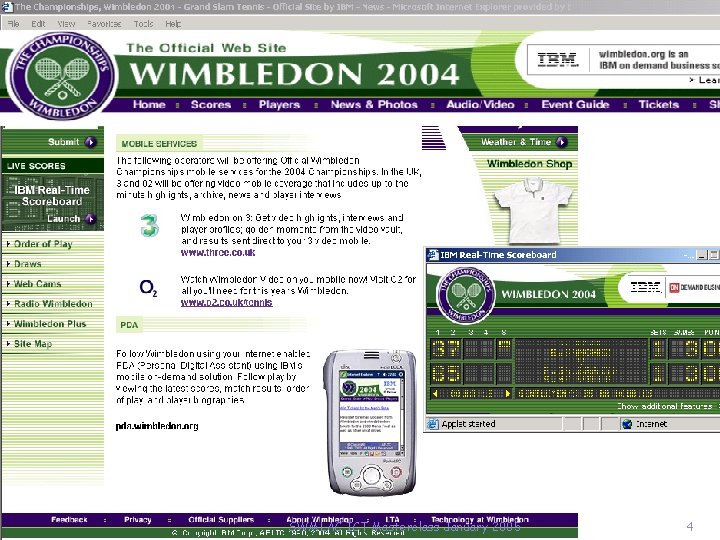
Communications today • • • Always “on” Ubiquitous and pervasive Multi-modal Parallel Multiple channels Real-time messaging Voice over IP, scype Pod-casting Blogging Collaborative Discussion lists, forums, wikis Overload ? SWMLAC ICT Masterclass January 2005
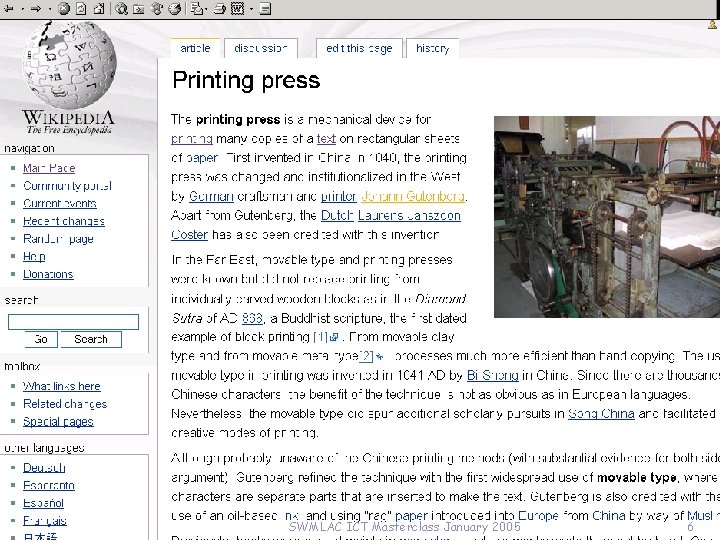
SWMLAC ICT Masterclass January 2005 6
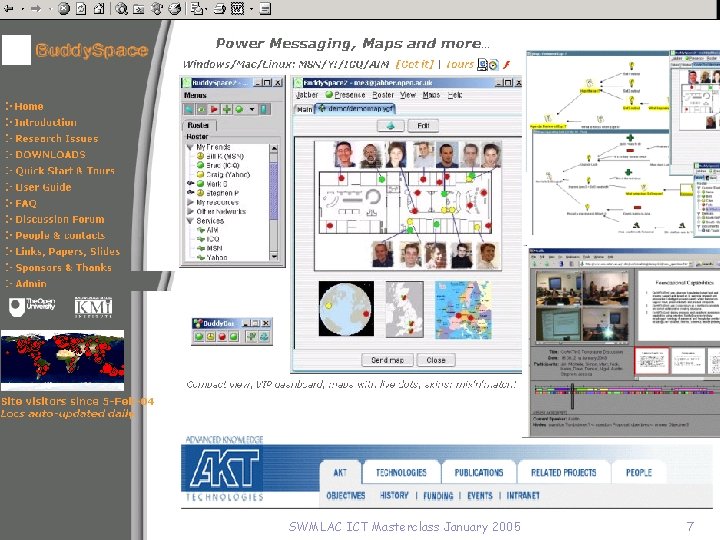
SWMLAC ICT Masterclass January 2005 7
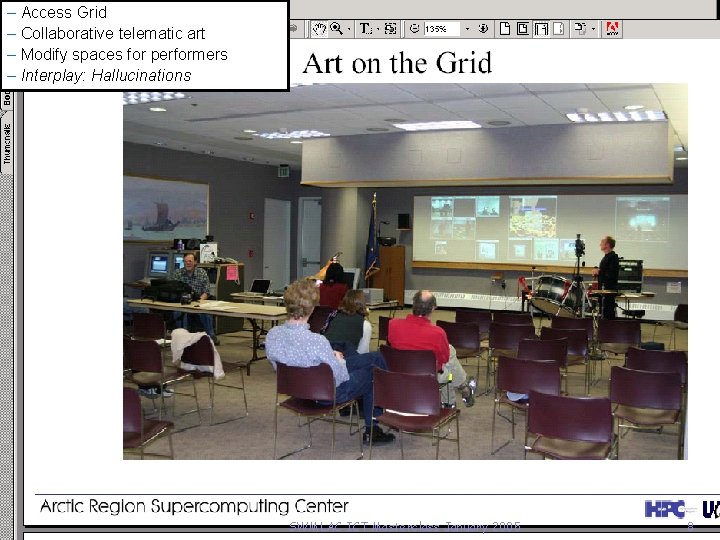
– Access Grid – Collaborative telematic art – Modify spaces for performers – Interplay: Hallucinations SWMLAC ICT Masterclass January 2005 8
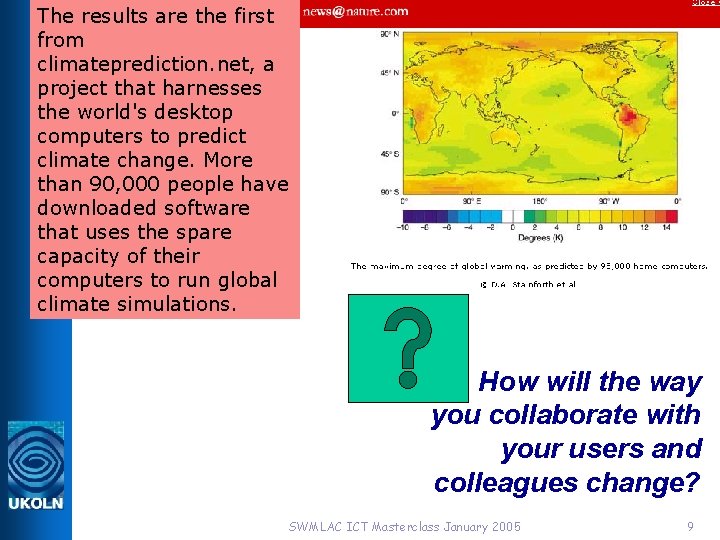
The results are the first from climateprediction. net, a project that harnesses the world's desktop computers to predict climate change. More than 90, 000 people have downloaded software that uses the spare capacity of their computers to run global climate simulations. How will the way you collaborate with your users and colleagues change? SWMLAC ICT Masterclass January 2005 9
2. Paradigm shifts and innovation SWMLAC ICT Masterclass January 2005 10
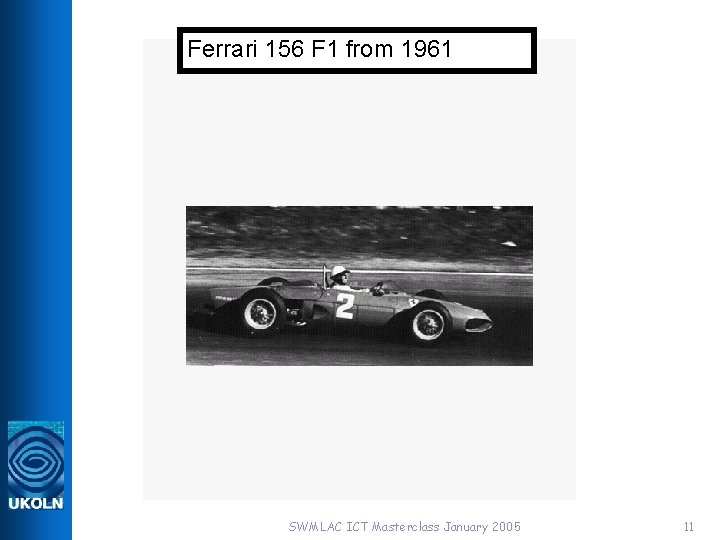
Ferrari 156 F 1 from 1961 SWMLAC ICT Masterclass January 2005 11
SWMLAC ICT Masterclass January 2005 12
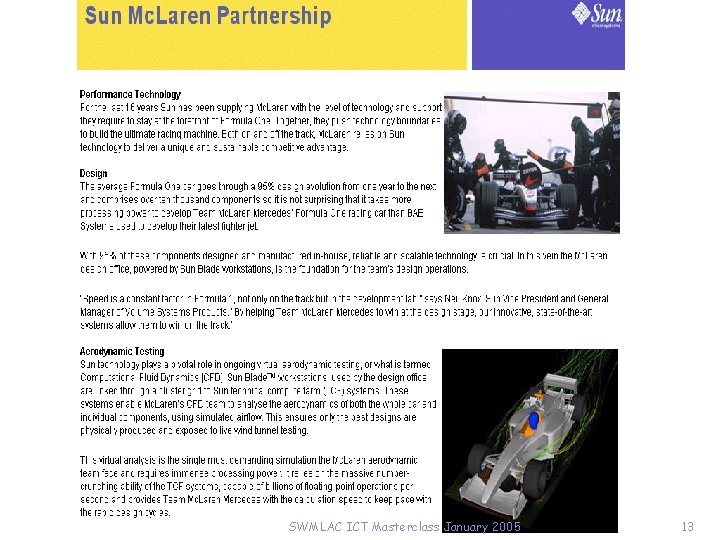
SWMLAC ICT Masterclass January 2005 13
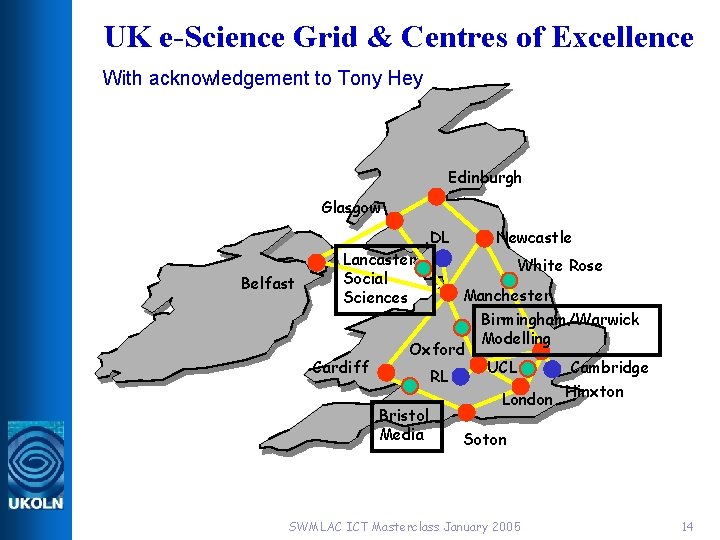
UK e-Science Grid & Centres of Excellence With acknowledgement to Tony Hey Edinburgh Glasgow Belfast Lancaster Social Sciences DL Newcastle White Rose Manchester Birmingham/Warwick Modelling Oxford Cardiff UCL Cambridge RL Hinxton London Bristol Media Soton SWMLAC ICT Masterclass January 2005 14
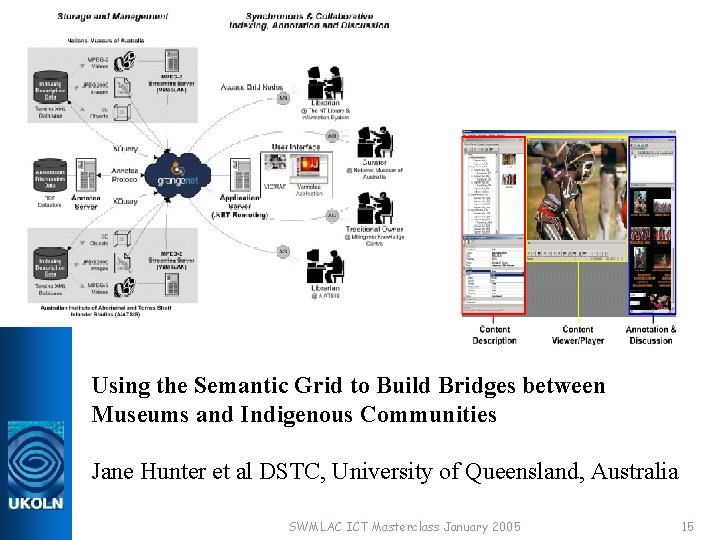
Using the Semantic Grid to Build Bridges between Museums and Indigenous Communities Jane Hunter et al DSTC, University of Queensland, Australia SWMLAC ICT Masterclass January 2005 15
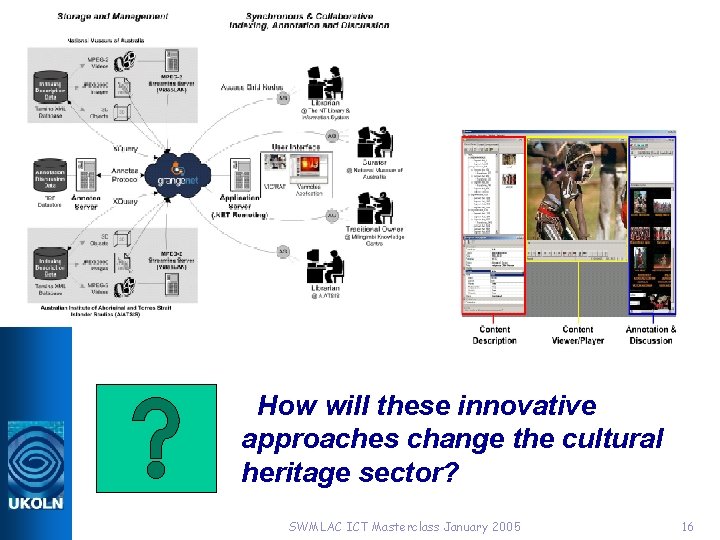
How will these innovative approaches change the cultural heritage sector? SWMLAC ICT Masterclass January 2005 16
3. Cross-sectoral frameworks and integration SWMLAC ICT Masterclass January 2005 17
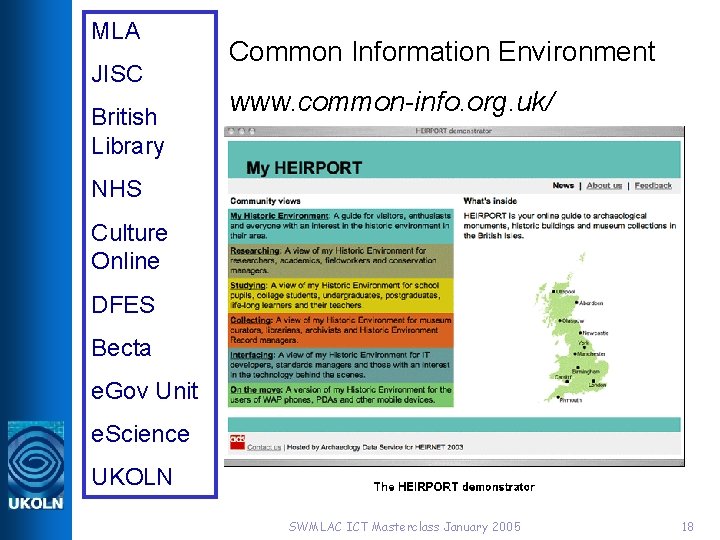
MLA JISC British Library Common Information Environment www. common-info. org. uk/ NHS Culture Online DFES Becta e. Gov Unit e. Science UKOLN SWMLAC ICT Masterclass January 2005 18
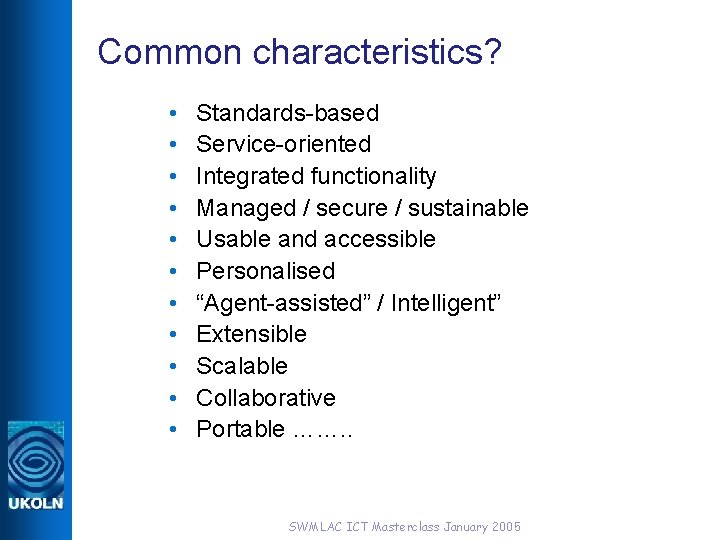
Common characteristics? • • • Standards-based Service-oriented Integrated functionality Managed / secure / sustainable Usable and accessible Personalised “Agent-assisted” / Intelligent” Extensible Scalable Collaborative Portable ……. . SWMLAC ICT Masterclass January 2005
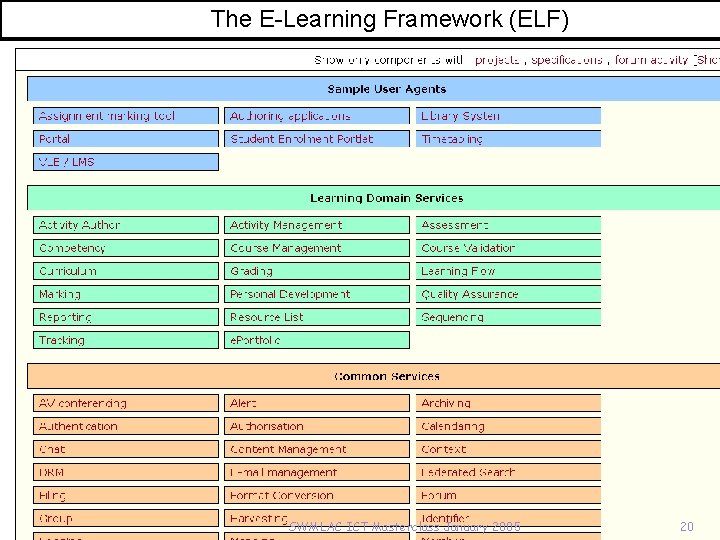
The E-Learning Framework (ELF) SWMLAC ICT Masterclass January 2005 20
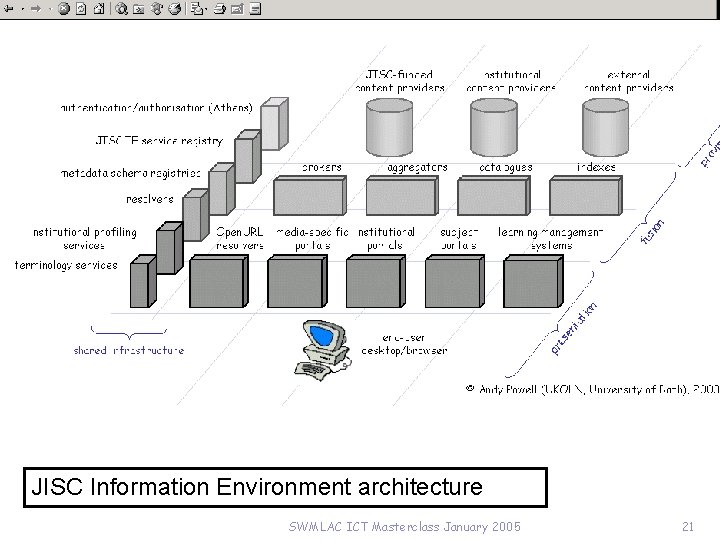
JISC Information Environment architecture SWMLAC ICT Masterclass January 2005 21
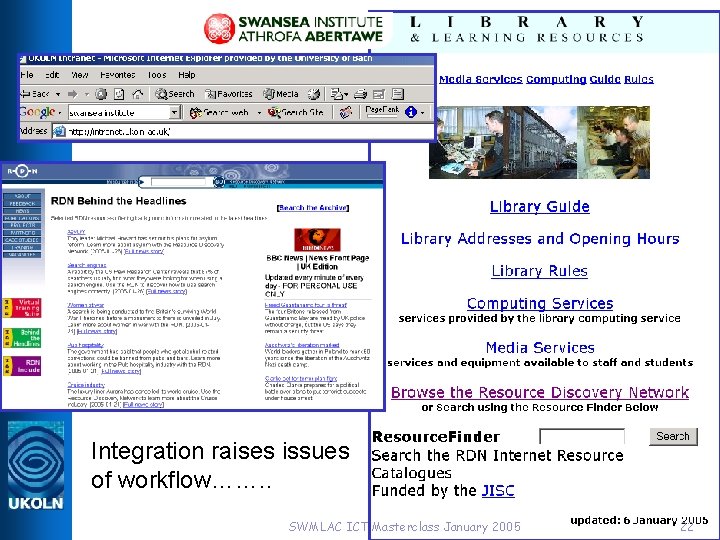
Integration raises issues of workflow……. . SWMLAC ICT Masterclass January 2005 22
What level of service integration has your organisation achieved? ? SWMLAC ICT Masterclass January 2005 23
4. Resources, services and interoperability SWMLAC ICT Masterclass January 2005 24

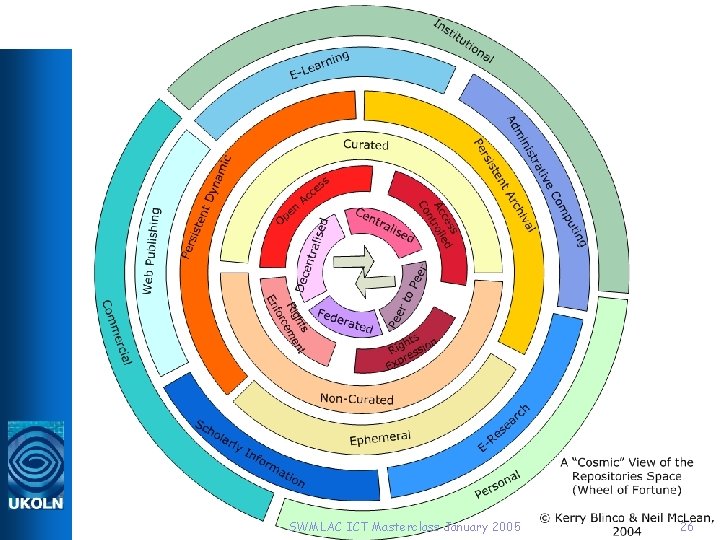
The Life Cycle Approach Creation Repackaging Digital repositories Management Access Collection development SWMLAC ICT Masterclass January 2005 25
SWMLAC ICT Masterclass January 2005 26
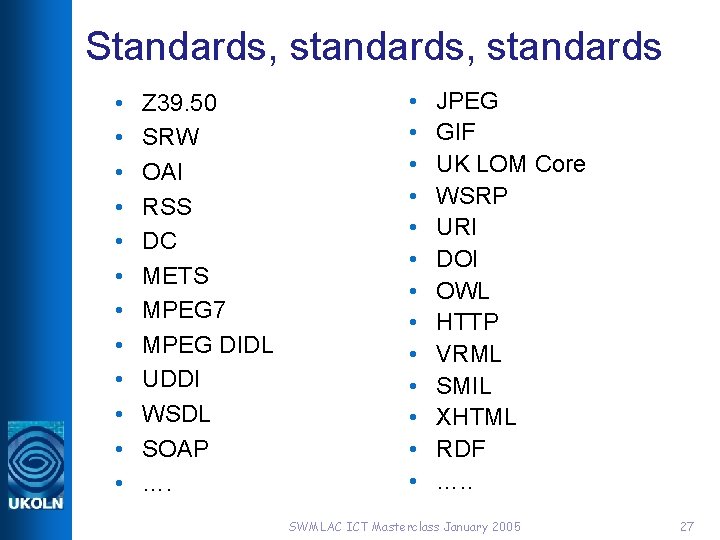
Standards, standards • • • Z 39. 50 SRW OAI RSS DC METS MPEG 7 MPEG DIDL UDDI WSDL SOAP …. • • • • JPEG GIF UK LOM Core WSRP URI DOI OWL HTTP VRML SMIL XHTML RDF …. . SWMLAC ICT Masterclass January 2005 27
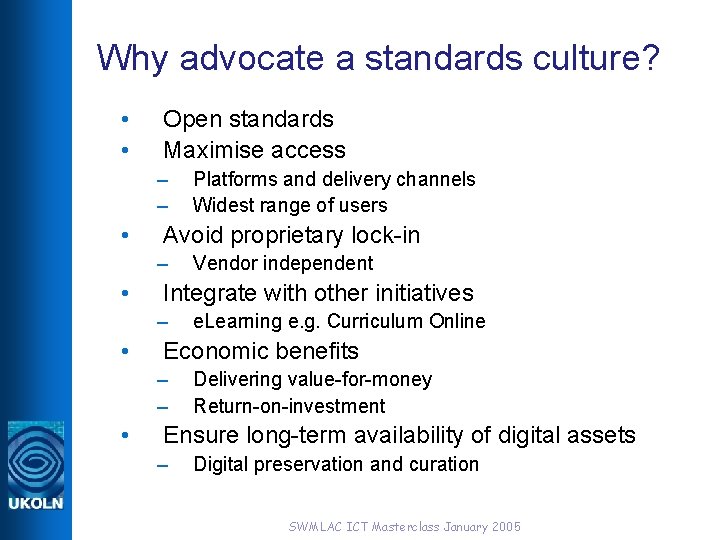
Why advocate a standards culture? • • Open standards Maximise access – – • Avoid proprietary lock-in – • e. Learning e. g. Curriculum Online Economic benefits – – • Vendor independent Integrate with other initiatives – • Platforms and delivery channels Widest range of users Delivering value-for-money Return-on-investment Ensure long-term availability of digital assets – Digital preservation and curation SWMLAC ICT Masterclass January 2005
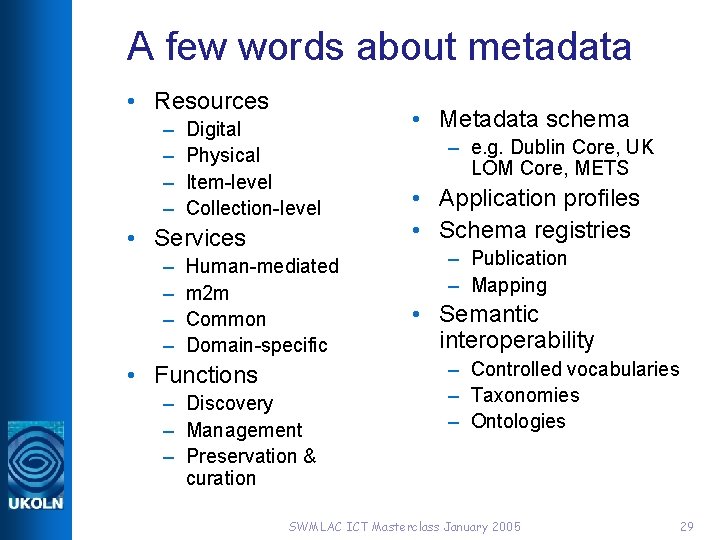
A few words about metadata • Resources – – Digital Physical Item-level Collection-level • Services – – Human-mediated m 2 m Common Domain-specific • Functions – Discovery – Management – Preservation & curation • Metadata schema – e. g. Dublin Core, UK LOM Core, METS • Application profiles • Schema registries – Publication – Mapping • Semantic interoperability – Controlled vocabularies – Taxonomies – Ontologies SWMLAC ICT Masterclass January 2005 29
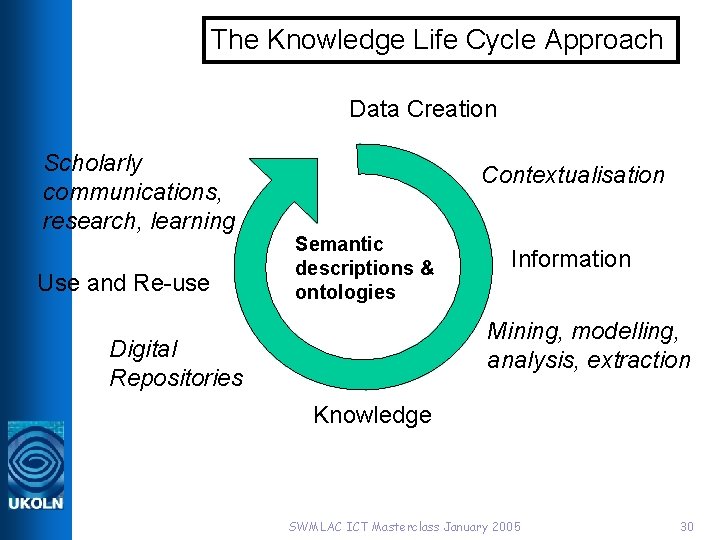
The Knowledge Life Cycle Approach Data Creation Scholarly communications, research, learning Use and Re-use Contextualisation Semantic descriptions & ontologies Information Mining, modelling, analysis, extraction Digital Repositories Knowledge SWMLAC ICT Masterclass January 2005 30
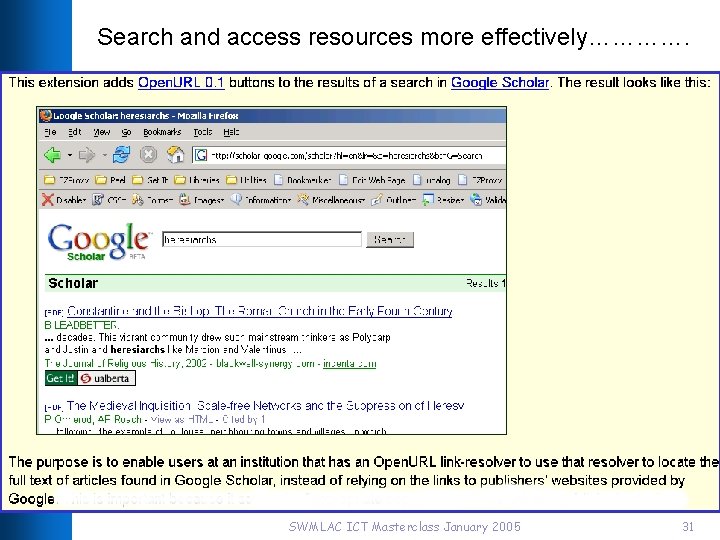
Search and access resources more effectively…………. SWMLAC ICT Masterclass January 2005 31
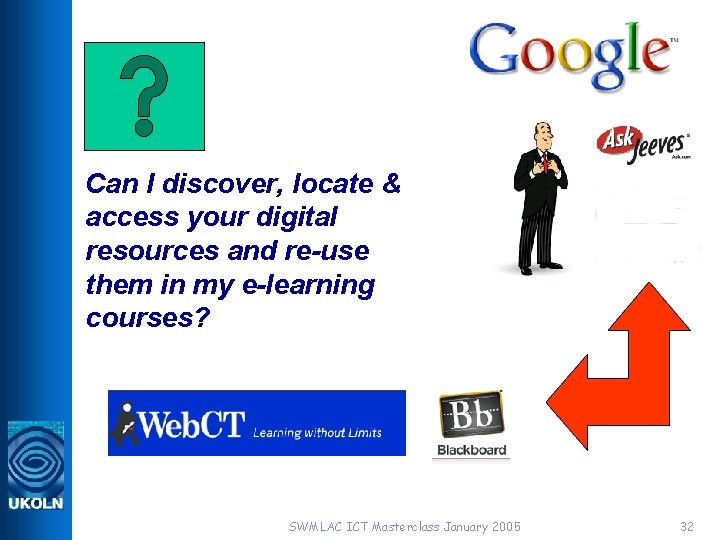
Can I discover, locate & access your digital resources and re-use them in my e-learning courses? SWMLAC ICT Masterclass January 2005 32
5. Digital preservation, curation and sustainability SWMLAC ICT Masterclass January 2005 33

Obsolete media Images by Philip Hunter, UKOLN SWMLAC ICT Masterclass January 2005 34
Why advocate a digital preservation / curation policy? • Long-term access to digital assets • Preservation approaches – Emulation, migration – LOCKSS – Universal Virtual Computer • • OAIS reference model Preservation metadata Provenance Persistent identifiers SWMLAC ICT Masterclass January 2005
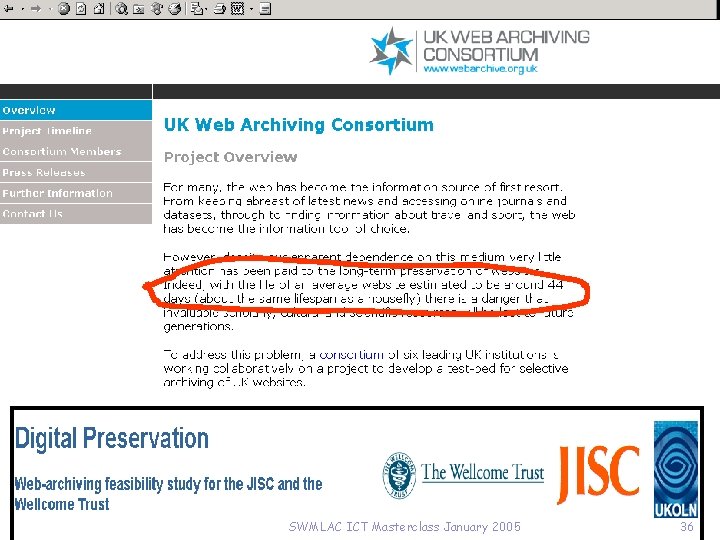
SWMLAC ICT Masterclass January 2005 36
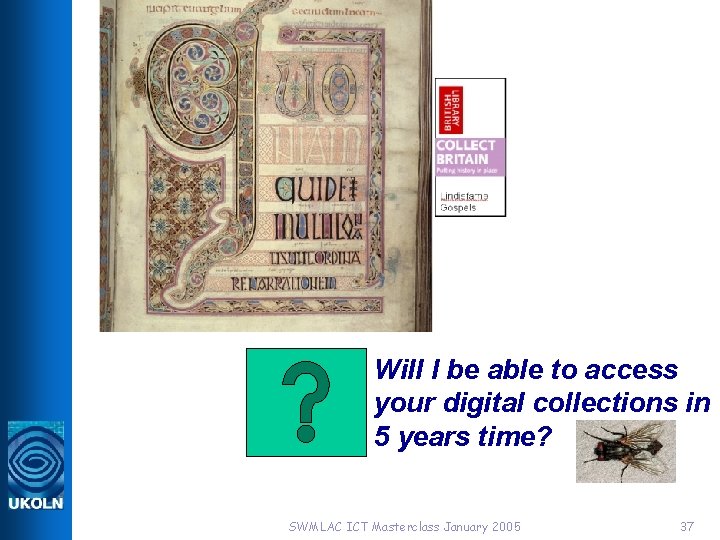
Will I be able to access your digital collections in 5 years time? SWMLAC ICT Masterclass January 2005 37
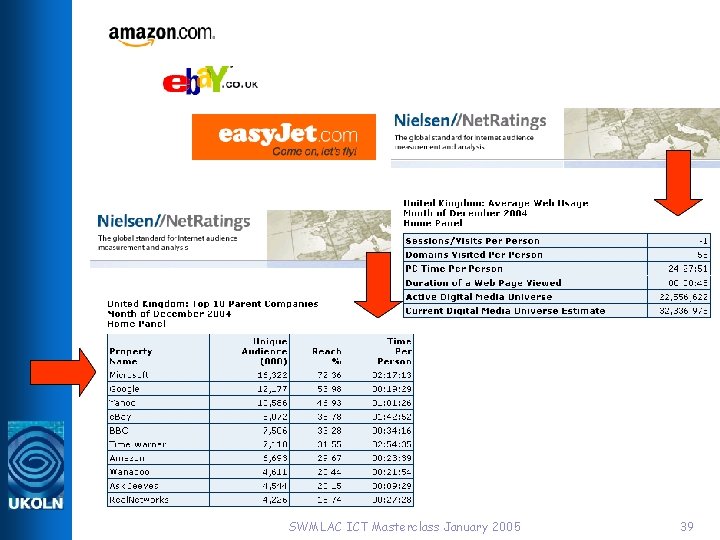
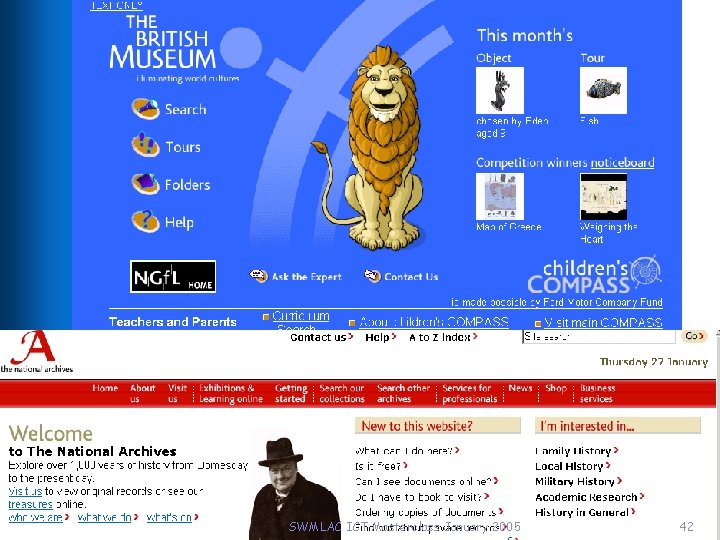
6. Consumers, audiences and personalisation SWMLAC ICT Masterclass January 2005 38
SWMLAC ICT Masterclass January 2005 39
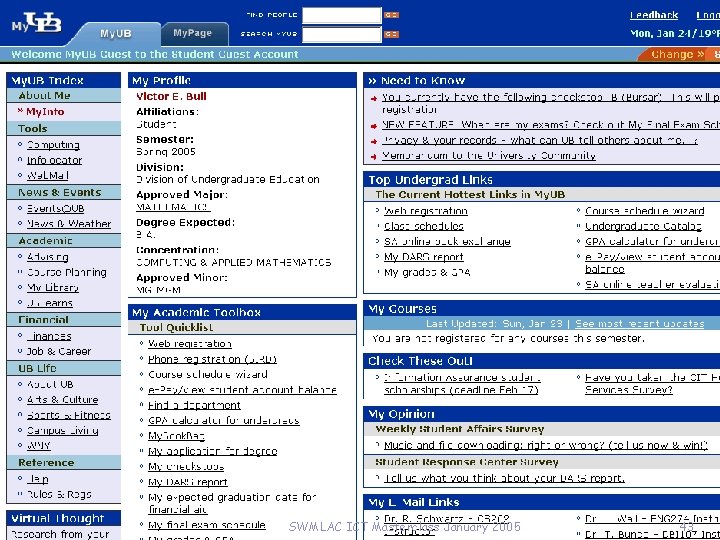
Different sectors • Libraries, museums, archives – Cultural roots? • Resources – – – Items Collections Format types Complex objects Uniqueness or mass market • Standards • Contexts – Learning – Research – Leisure • Skills SWMLAC ICT Masterclass January 2005 40
Different sectors • Libraries, museums, archives – Cultural roots? • Resources – – – Learning – Research – Leisure • Skills • Applications and tools – Finding aids – Text mining algorithms • Level of user experience Items Collections Format types Complex objects Uniqueness or mass market • Standards • Contexts Different audiences – Novice or experienced • Design – Use of colour, graphics, animations, interactivity • Cognitive styles – Use of visuals over text • Degree of personalisation – Use of agent technology • Presentation and visualisation requirements – Complex objects – Search results SWMLAC ICT Masterclass January 2005 41
SWMLAC ICT Masterclass January 2005 42
SWMLAC ICT Masterclass January 2005 43
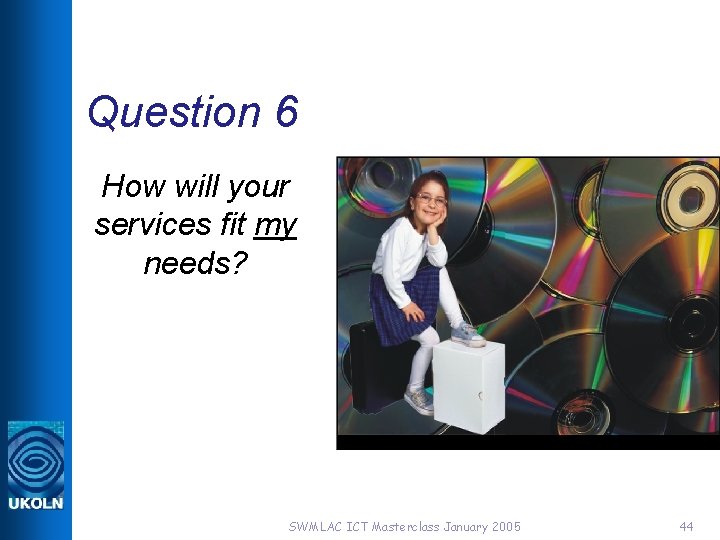
Question 6 How will your services fit my needs? SWMLAC ICT Masterclass January 2005 44
How will this affect the way you collaborate with your users and colleagues? How will these innovative approaches change the cultural heritage sector? What level of service integration has your organisation achieved? Can I discover, locate & access your digital resources and re-use them in my e-learning courses? Will I be able to access your digital collections in 5 years time? How will your services fit my needs? SWMLAC ICT Masterclass January 2005 45
- Slides: 45