
EXPLORING THE ALIGNMENT BETWEEN THE NEW SERVICE DEVELOPMENT
EXPLORING THE ALIGNMENT BETWEEN THE NEW SERVICE DEVELOPMENT AND SERVICE-DOMINANT LOGIC: A GROUNDED THEORY STUDY OF LOGISTICS SERVICE PROVIDERS’ PERSPECTIVE Res. Asst. Ebru SÜRÜCÜ Dokuz Eylul University Maritime Faculty Department of Maritime Business Administration ebru. surucu@deu. edu. tr Assoc. Prof. GÜL DENKTAŞ ŞAKAR Dokuz Eylul University Maritime Faculty Department of Logistics Management gul. denktas@deu. edu. tr
INDEX • • Motivation for the Study Theoretical Foundation Methodology – Grounded Theory Emergent Framework & Results – Firm-Related Value Co-Creation Attributes – Dyadic Value Co-Creation Attributes – Industry Specific Influencers vs. Macro Environment Influencers • Conclusion • Suggestions for Future Research & Limitations
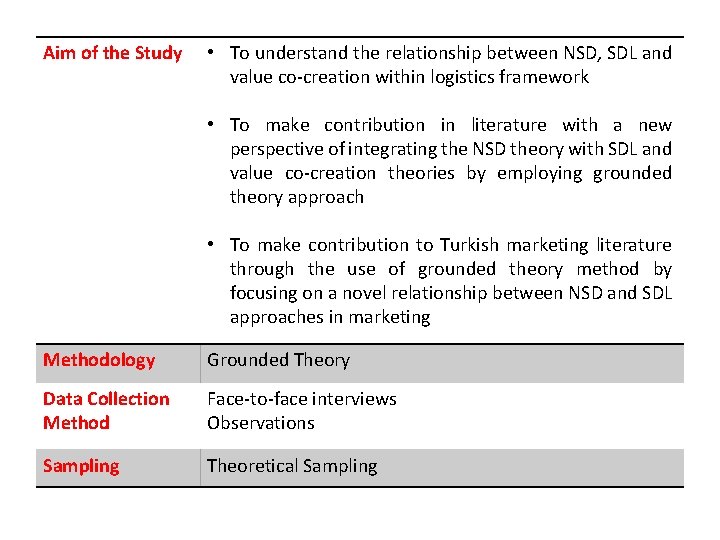
Aim of the Study • To understand the relationship between NSD, SDL and value co-creation within logistics framework • To make contribution in literature with a new perspective of integrating the NSD theory with SDL and value co-creation theories by employing grounded theory approach • To make contribution to Turkish marketing literature through the use of grounded theory method by focusing on a novel relationship between NSD and SDL approaches in marketing Methodology Grounded Theory Data Collection Method Face-to-face interviews Observations Sampling Theoretical Sampling
Motivation for the Study - 1/2 ü The study of NSD processes is still in its infancy (Baykara, 2006; Ozdemir et. al. , 2007; Solak-Fiskin et. al. , 2015) in Turkish marketing literature. ü The number of studies examining the nexus between NSD and SDL perspectives is limited in the literature. – the discontinuous innovations (Michel et al. , 2008, p. 54) – the main antecedents and consequences of service innovation (Ordanini and Parasuraman, 2011) – integration of SDL with service innovation from network perspective (Mele et al. , 2011), – relationship between value propositions and service innovation (Skålén et al. , 2015). ü There is room for qualitative studies questioning and interpreting the various relationships between NSD and value co-creation processes as well as the critical resources to be integrated into such processes.
Motivation for the Study - 2/2 ü Besides, although grounded theory approach in international marketing literature is widely used by many scholars (Belk et. al. , 1989; Hirschman and Thompson, 1997; Pettigrew, 2000), it is observed that the use of such technique is in its infancy in Turkish marketing literature and it is almost neglected (Babacan, 2010). ü In addition, it is observed that the detailed exploration of value cocreation in NSD by focusing on a specific industry through grounded theory approach is neglected in Turkish marketing literature. ü Yazdanparast et al. (2010) strongly argues that “…. . . there is a great fit between logistics services and SDL approach since co-creation of value is important in a logistics context due to dynamic and changing environment…. . ”

Theoretical Foundations – 1/7 New Service Development Donnelly et. al. 1985 Song et. al. , 2009 Johnson et. al. 1986 Alam & Perry, 2002 Bowers, 1989 NSD Models Scheuing & Johnson, 1989 Sundbo, 1997 Edvardsson & Olsson, 1996 Gronroos, 1990 Cooper, 1994

Theoretical Foundations – 2/7 New Service Development Dulskaia & Menshikova’s study (2014): • Technology • Market & customer • Resources & skills • Inter – organization Relationships (suppliers/partners) Kjos’s study (2013) : • Size of firm • Skilled labor & knowledge training • Research & development • Networks & inter-firm alliances • Proactive managers • Business model & customer orientation Drivers of NSD Tien’s study (2007): • Collaboration • Customization • Integration • Adaptation
Theoretical Foundations -3/7 Service Dominant Logic Dominance of goods-dominant logic (GDL) in the marketing literature for a certain period of time…. . . Service-dominant logic (SDL) as an emerging philosophy ü Value – in use: integration of operand & operant resources ü Value propositions establish connections and relationships among service systems (Vargo et al. , 2008, p. 148). ü Value co-creation network is defined as value proposing social and economic actors interacting through institutions and technology, to: (1) (2) (3) Co-produce service offerings, Exchange service offerings, and Co-create value
Methodology – Grounded Theory A specific methodology developed by Glaser and Strauss (1967)…. . üaims creation of theory from data. üunique data generation-‘open coding’, ‘axial coding’ and ‘selective coding’. üdata collection, analysis and eventual theory stand in close relationship to one another. üwhich data or cases to integrate next in the analysis and how or with which methods they should be collected is agreed according to the findings….
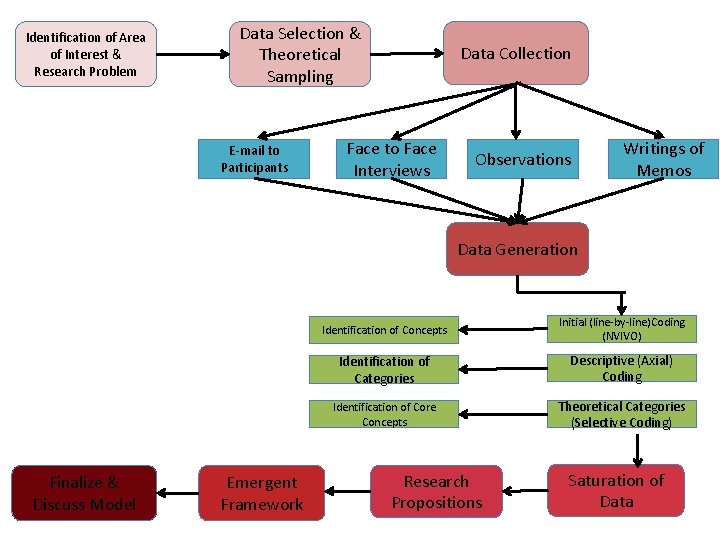
Identification of Area of Interest & Research Problem Data Selection & Theoretical Sampling E-mail to Participants Data Collection Face to Face Interviews Observations Writings of Memos Data Generation Finalize & Discuss Model Emergent Framework Identification of Concepts Initial (line-by-line)Coding (NVIVO) Identification of Categories Descriptive (Axial) Coding Identification of Core Concepts Theoretical Categories (Selective Coding) Research Propositions Saturation of Data
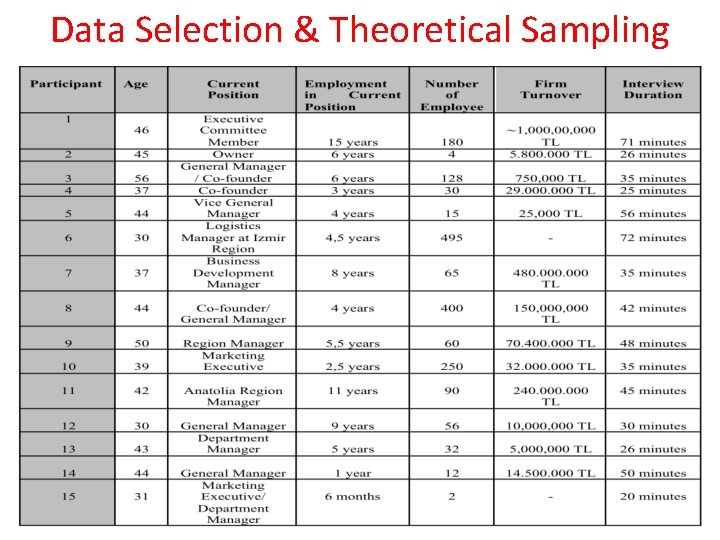
Data Selection & Theoretical Sampling
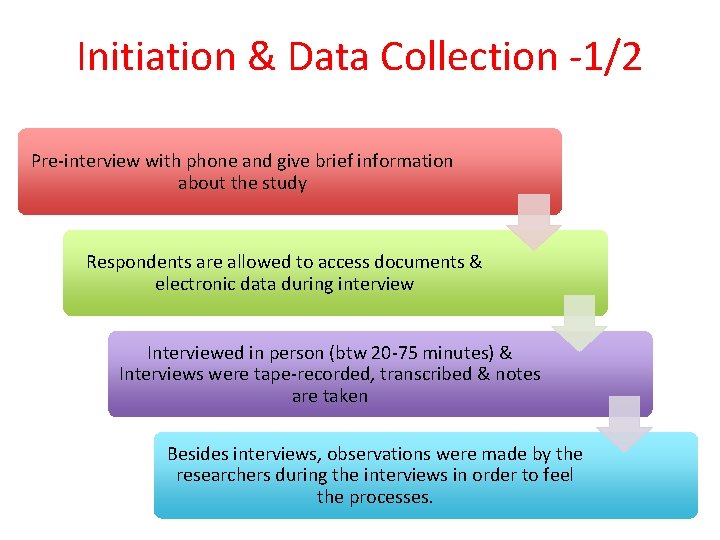
Initiation & Data Collection -1/2 Pre-interview with phone and give brief information about the study Respondents are allowed to access documents & electronic data during interview Interviewed in person (btw 20 -75 minutes) & Interviews were tape-recorded, transcribed & notes are taken Besides interviews, observations were made by the researchers during the interviews in order to feel the processes.
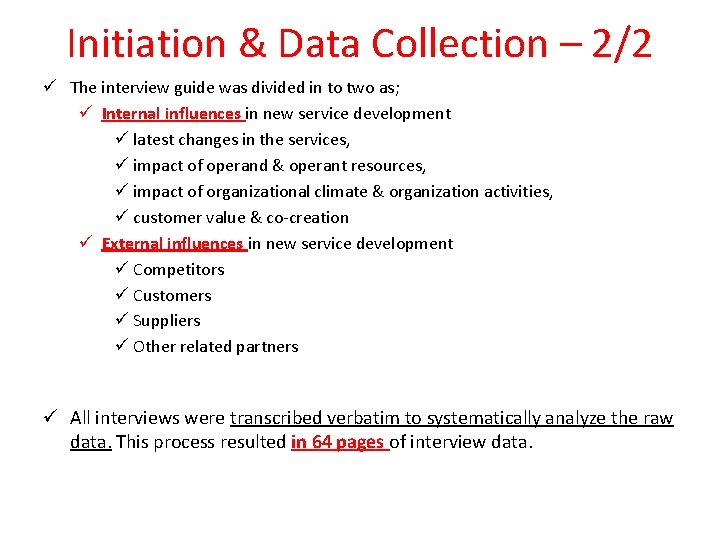
Initiation & Data Collection – 2/2 ü The interview guide was divided in to two as; ü Internal influences in new service development ü latest changes in the services, ü impact of operand & operant resources, ü impact of organizational climate & organization activities, ü customer value & co-creation ü External influences in new service development ü Competitors ü Customers ü Suppliers ü Other related partners ü All interviews were transcribed verbatim to systematically analyze the raw data. This process resulted in 64 pages of interview data.
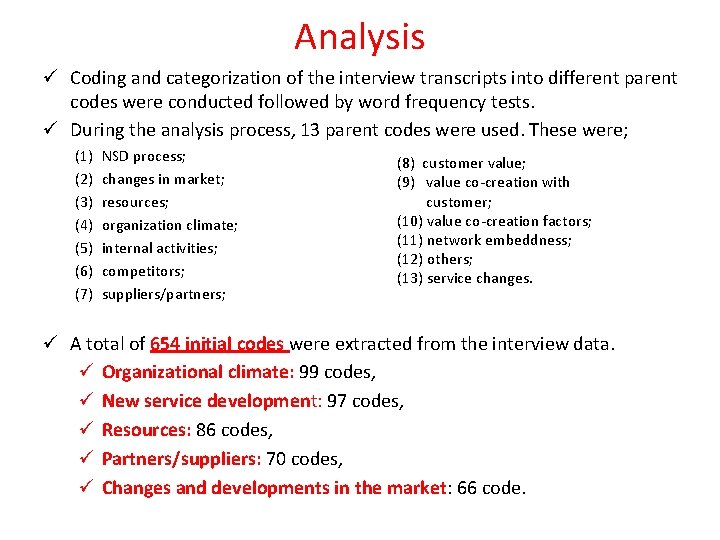
Analysis ü Coding and categorization of the interview transcripts into different parent codes were conducted followed by word frequency tests. ü During the analysis process, 13 parent codes were used. These were; (1) (2) (3) (4) (5) (6) (7) NSD process; changes in market; resources; organization climate; internal activities; competitors; suppliers/partners; (8) customer value; (9) value co-creation with customer; (10) value co-creation factors; (11) network embeddness; (12) others; (13) service changes. ü A total of 654 initial codes were extracted from the interview data. ü Organizational climate: 99 codes, ü New service development: 97 codes, ü Resources: 86 codes, ü Partners/suppliers: 70 codes, ü Changes and developments in the market: 66 code.
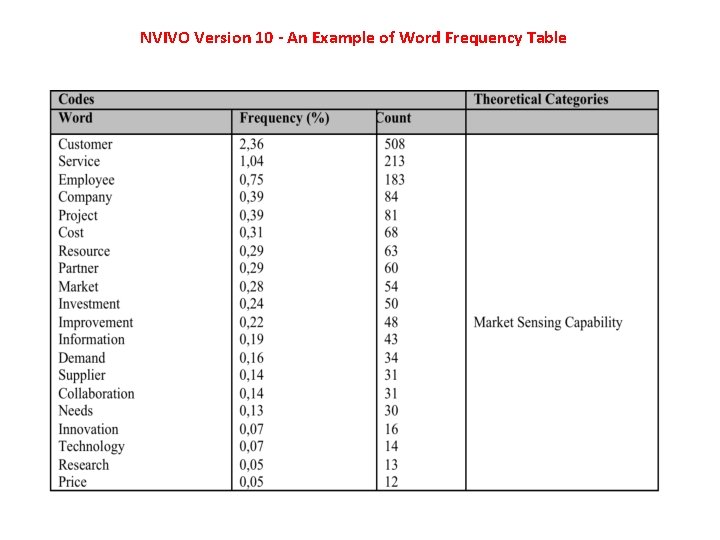
NVIVO Version 10 - An Example of Word Frequency Table
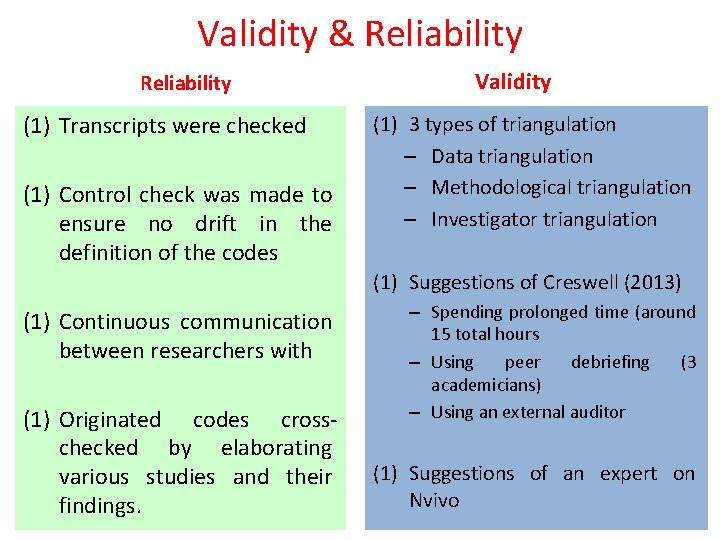
Validity & Reliability (1) Transcripts were checked (1) Control check was made to ensure no drift in the definition of the codes Validity (1) 3 types of triangulation – Data triangulation – Methodological triangulation – Investigator triangulation (1) Suggestions of Creswell (2013) (1) Continuous communication between researchers with (1) Originated codes crosschecked by elaborating various studies and their findings. – Spending prolonged time (around 15 total hours – Using peer debriefing (3 academicians) – Using an external auditor (1) Suggestions of an expert on Nvivo
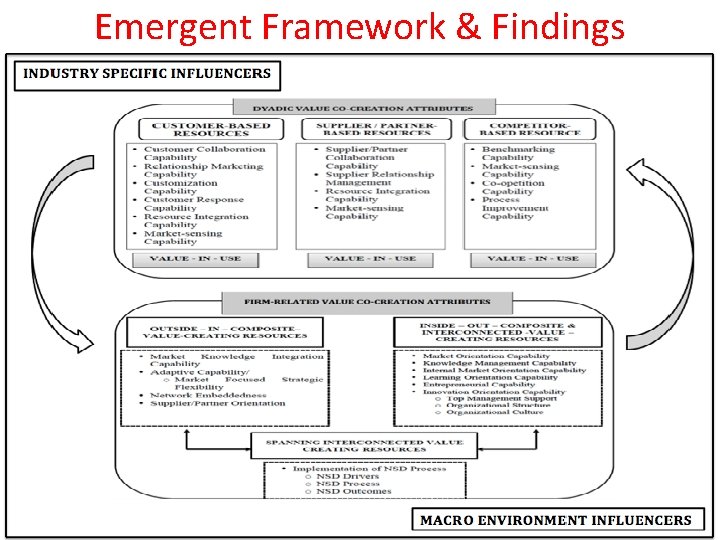
Emergent Framework & Findings
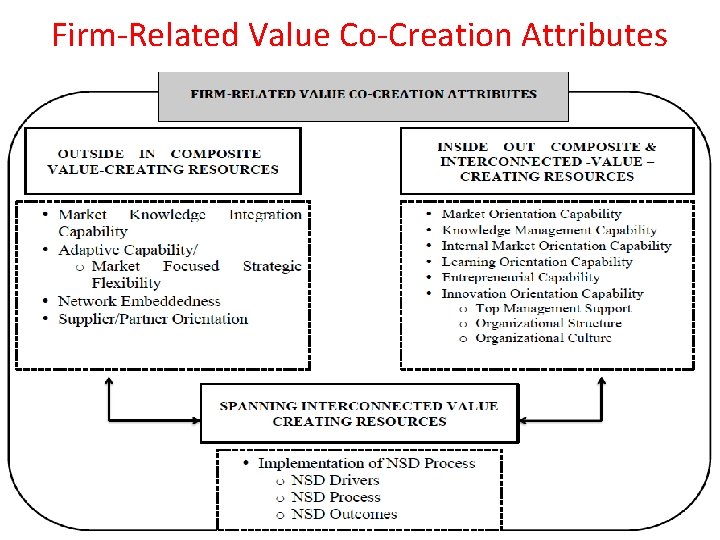
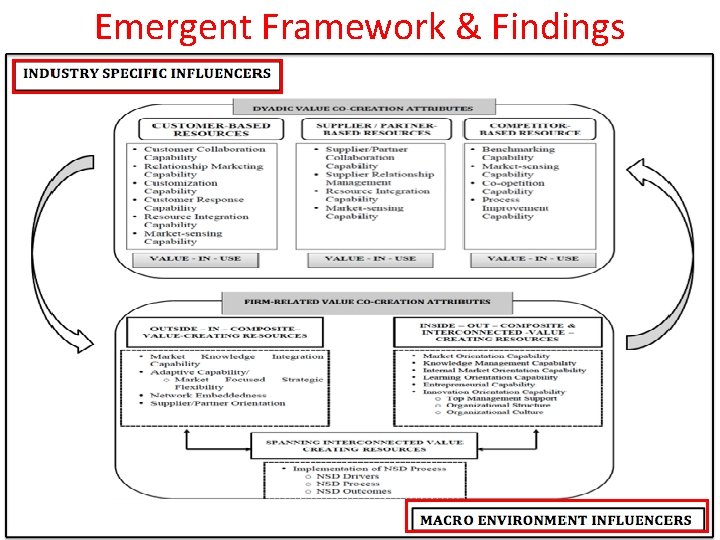
Firm-Related Value Co-Creation Attributes
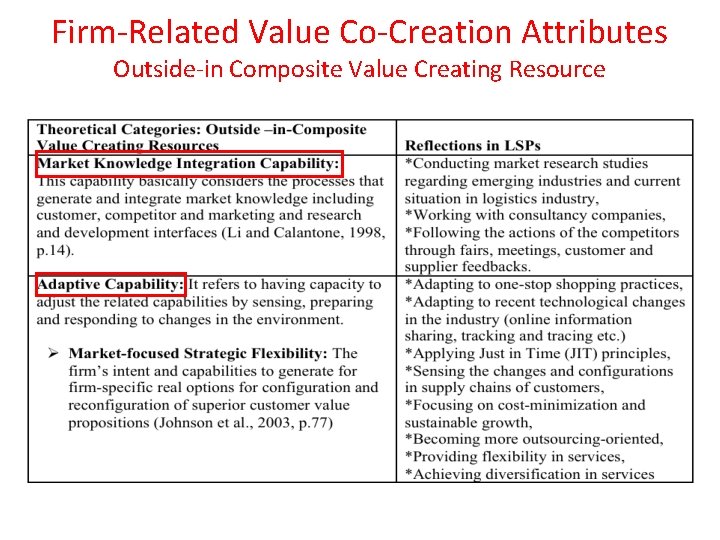
Firm-Related Value Co-Creation Attributes Outside-in Composite Value Creating Resource
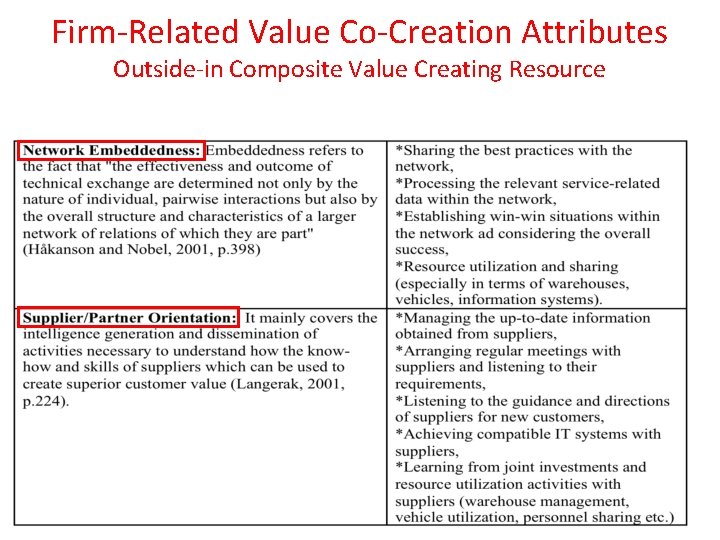
Firm-Related Value Co-Creation Attributes Outside-in Composite Value Creating Resource
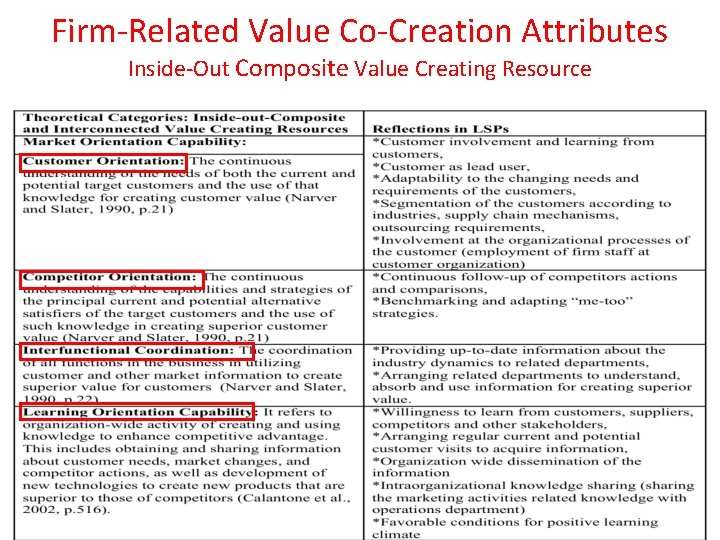
Firm-Related Value Co-Creation Attributes Inside-Out Composite Value Creating Resource
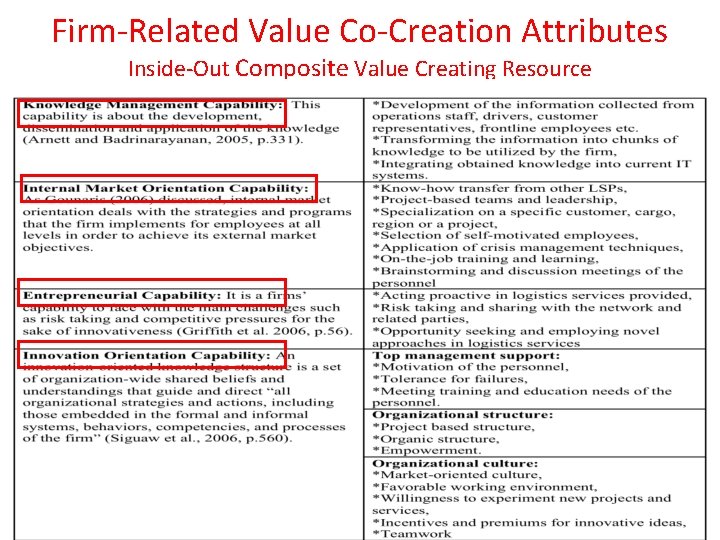
Firm-Related Value Co-Creation Attributes Inside-Out Composite Value Creating Resource
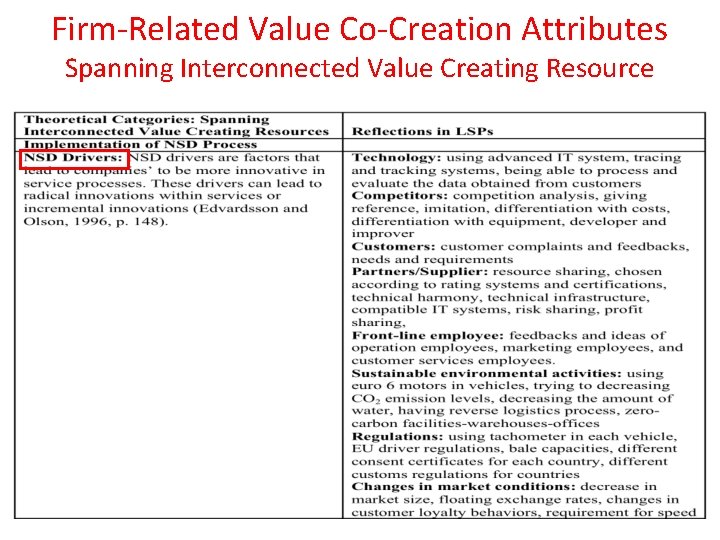
Firm-Related Value Co-Creation Attributes Spanning Interconnected Value Creating Resource
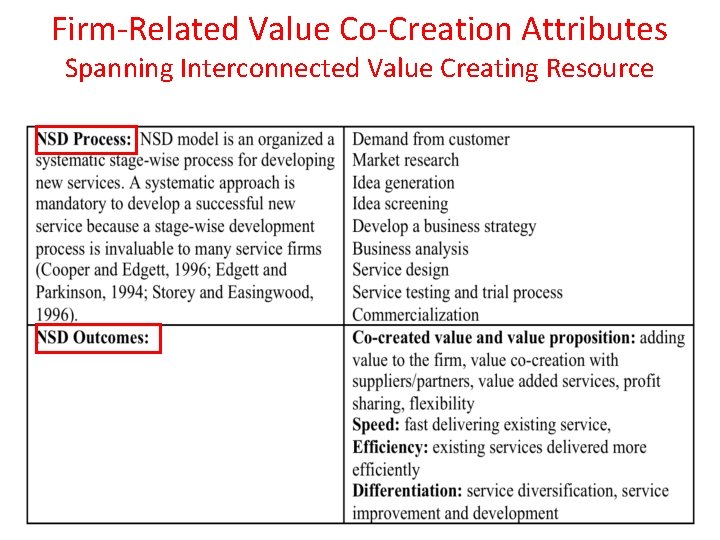
Firm-Related Value Co-Creation Attributes Spanning Interconnected Value Creating Resource
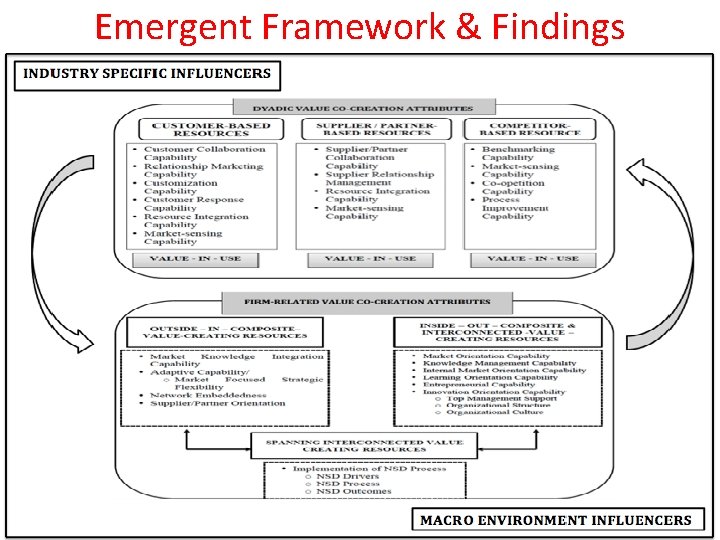
Emergent Framework & Findings
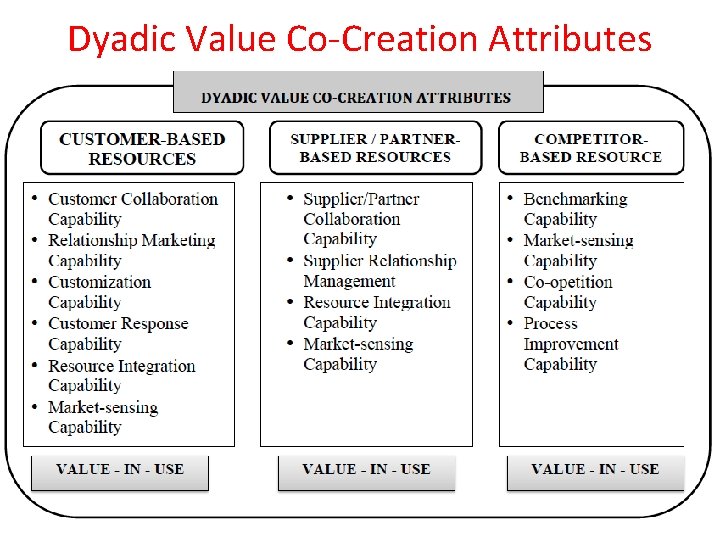
Dyadic Value Co-Creation Attributes
Emergent Framework & Findings
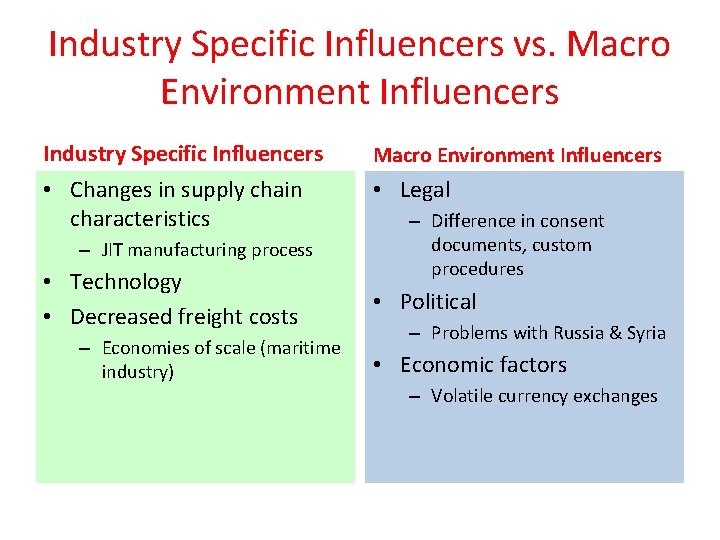
Industry Specific Influencers vs. Macro Environment Influencers Industry Specific Influencers Macro Environment Influencers • Changes in supply chain characteristics • Legal – JIT manufacturing process • Technology • Decreased freight costs – Economies of scale (maritime industry) – Difference in consent documents, custom procedures • Political – Problems with Russia & Syria • Economic factors – Volatile currency exchanges
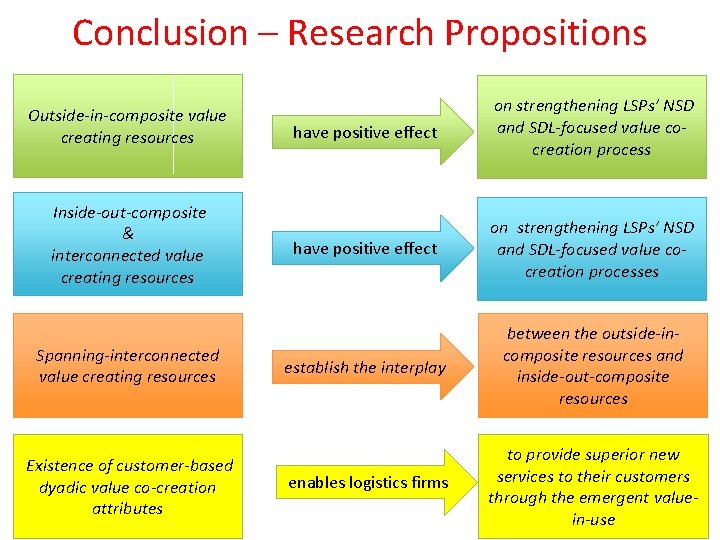
Conclusion – Research Propositions Outside-in-composite value creating resources Inside-out-composite & interconnected value creating resources Spanning-interconnected value creating resources Existence of customer-based dyadic value co-creation attributes have positive effect on strengthening LSPs’ NSD and SDL-focused value cocreation processes establish the interplay between the outside-incomposite resources and inside-out-composite resources enables logistics firms to provide superior new services to their customers through the emergent valuein-use
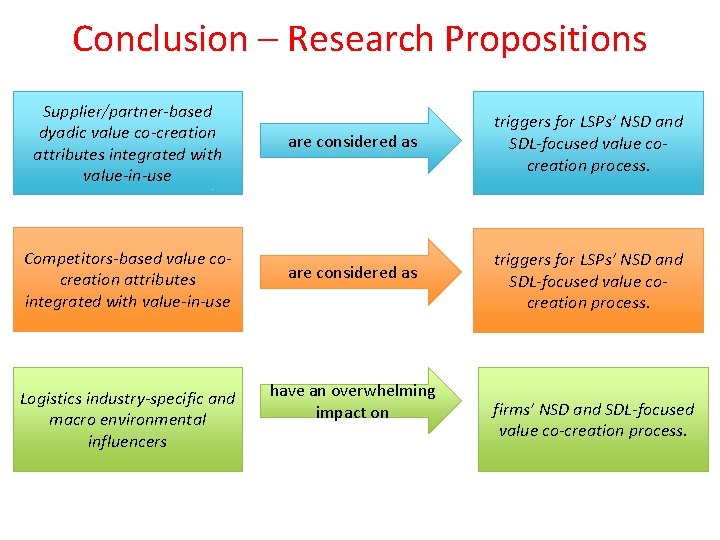
Conclusion – Research Propositions Supplier/partner-based dyadic value co-creation attributes integrated with value-in-use are considered as triggers for LSPs’ NSD and SDL-focused value cocreation process. Competitors-based value cocreation attributes integrated with value-in-use are considered as triggers for LSPs’ NSD and SDL-focused value cocreation process. Logistics industry-specific and macro environmental influencers have an overwhelming impact on firms’ NSD and SDL-focused value co-creation process.
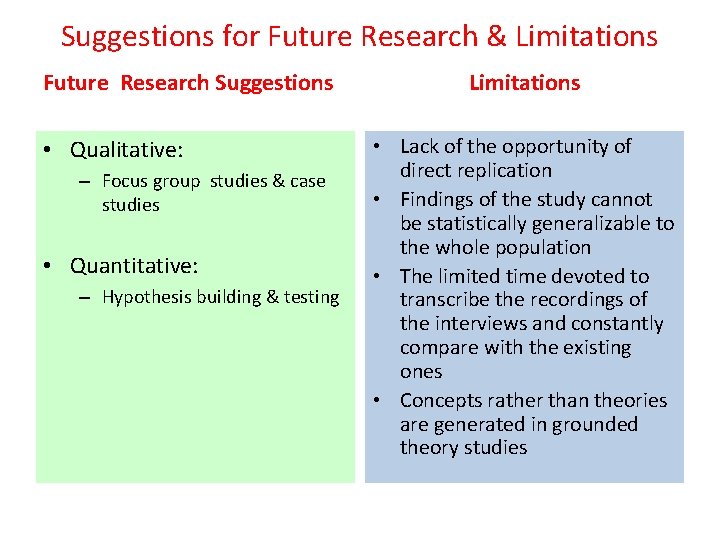
Suggestions for Future Research & Limitations Future Research Suggestions • Qualitative: – Focus group studies & case studies • Quantitative: – Hypothesis building & testing Limitations • Lack of the opportunity of direct replication • Findings of the study cannot be statistically generalizable to the whole population • The limited time devoted to transcribe the recordings of the interviews and constantly compare with the existing ones • Concepts rather than theories are generated in grounded theory studies

THANK YOU FOR YOUR ATTENTION ? ? ? QUESTIONS ? ? ?
- Slides: 32