
EXPLORING THE 1978 REBELLION The Impact of the
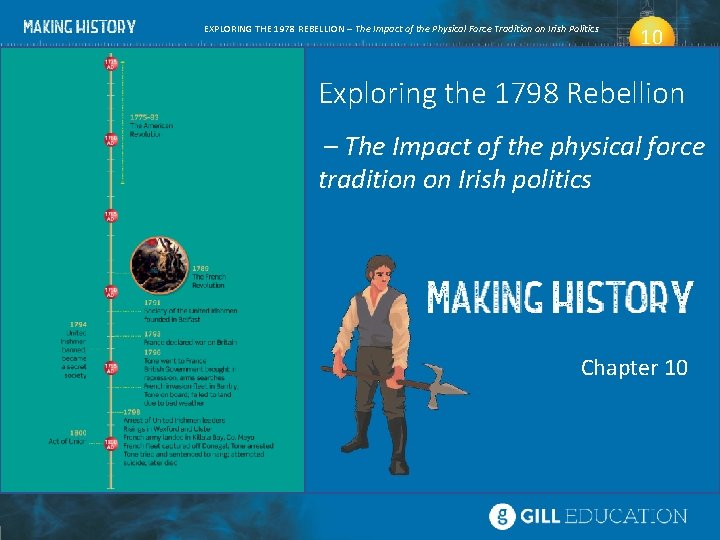
EXPLORING THE 1978 REBELLION – The Impact of the Physical Force Tradition on Irish Politics 10 Exploring the 1798 Rebellion – The Impact of the physical force tradition on Irish politics Chapter 10
EXPLORING THE 1978 REBELLION – The Impact of the Physical Force Tradition on Irish Politics What Will I Learn? • Explore the impact of the physical force tradition on Irish politics • Explore the impact of the 1798 Rebellion • Explore the Nature of History 10
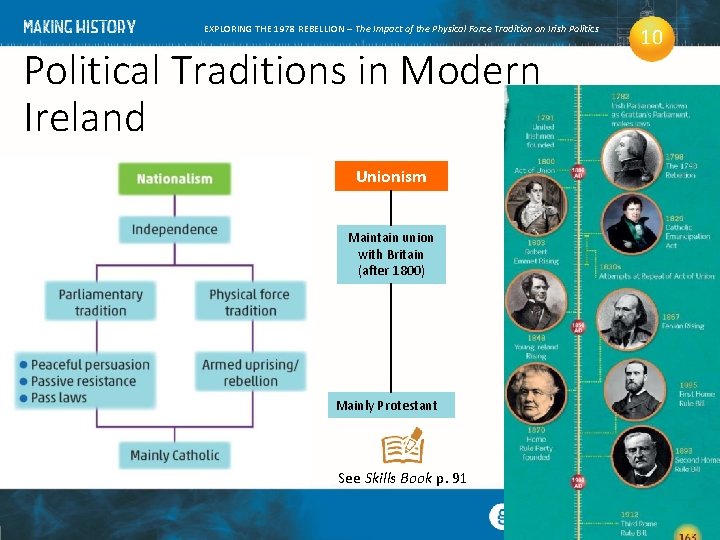
EXPLORING THE 1978 REBELLION – The Impact of the Physical Force Tradition on Irish Politics Political Traditions in Modern Ireland Unionism Maintain union with Britain (after 1800) Mainly Protestant See Skills Book p. 91 10
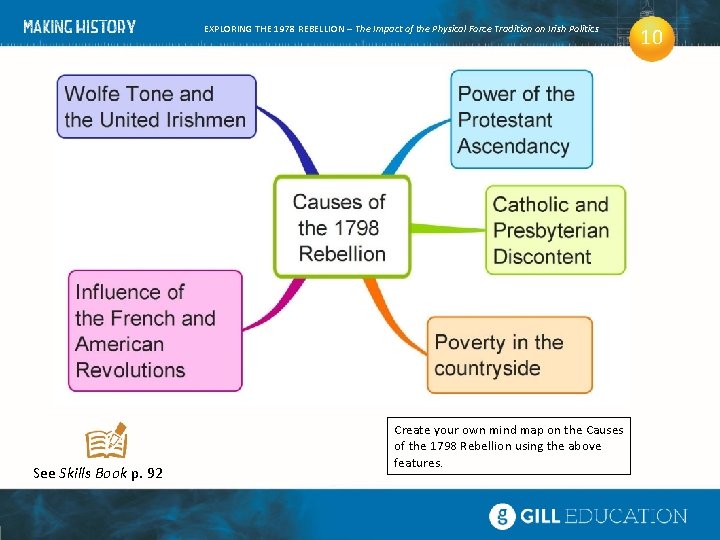
EXPLORING THE 1978 REBELLION – The Impact of the Physical Force Tradition on Irish Politics See Skills Book p. 92 Create your own mind map on the Causes of the 1798 Rebellion using the above features. 10
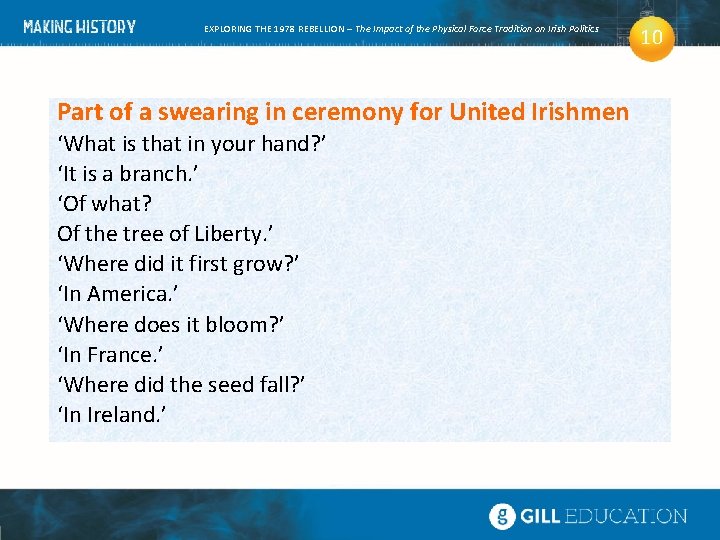
EXPLORING THE 1978 REBELLION – The Impact of the Physical Force Tradition on Irish Politics Part of a swearing in ceremony for United Irishmen ‘What is that in your hand? ’ ‘It is a branch. ’ ‘Of what? Of the tree of Liberty. ’ ‘Where did it first grow? ’ ‘In America. ’ ‘Where does it bloom? ’ ‘In France. ’ ‘Where did the seed fall? ’ ‘In Ireland. ’ 10
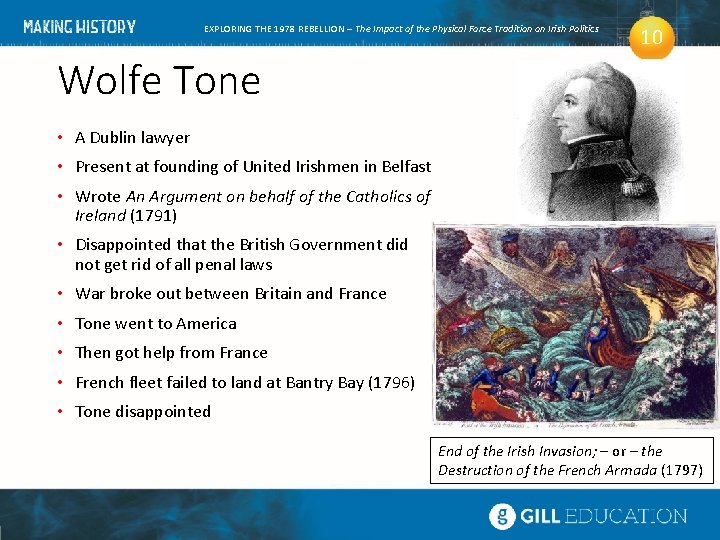
EXPLORING THE 1978 REBELLION – The Impact of the Physical Force Tradition on Irish Politics 10 Wolfe Tone • A Dublin lawyer • Present at founding of United Irishmen in Belfast • Wrote An Argument on behalf of the Catholics of Ireland (1791) • Disappointed that the British Government did not get rid of all penal laws • War broke out between Britain and France • Tone went to America • Then got help from France • French fleet failed to land at Bantry Bay (1796) • Tone disappointed End of the Irish Invasion; – or – the Destruction of the French Armada (1797)
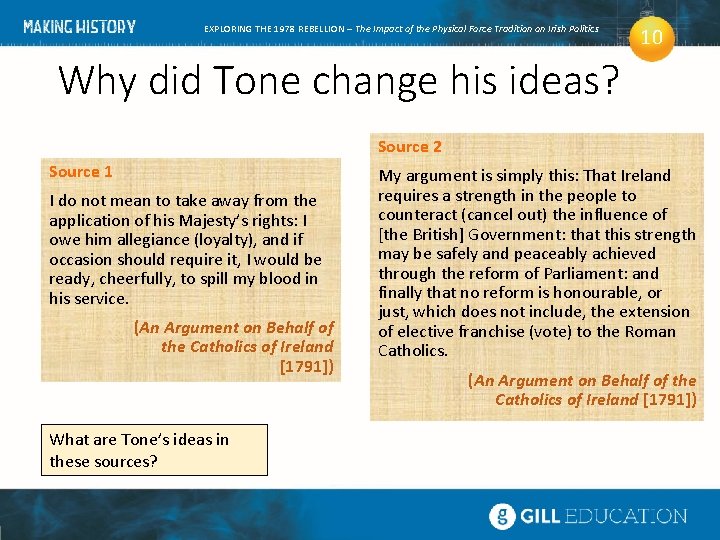
EXPLORING THE 1978 REBELLION – The Impact of the Physical Force Tradition on Irish Politics 10 Why did Tone change his ideas? Source 2 Source 1 I do not mean to take away from the application of his Majesty’s rights: I owe him allegiance (loyalty), and if occasion should require it, I would be ready, cheerfully, to spill my blood in his service. (An Argument on Behalf of the Catholics of Ireland [1791]) What are Tone’s ideas in these sources? My argument is simply this: That Ireland requires a strength in the people to counteract (cancel out) the influence of [the British] Government: that this strength may be safely and peaceably achieved through the reform of Parliament: and finally that no reform is honourable, or just, which does not include, the extension of elective franchise (vote) to the Roman Catholics. (An Argument on Behalf of the Catholics of Ireland [1791])
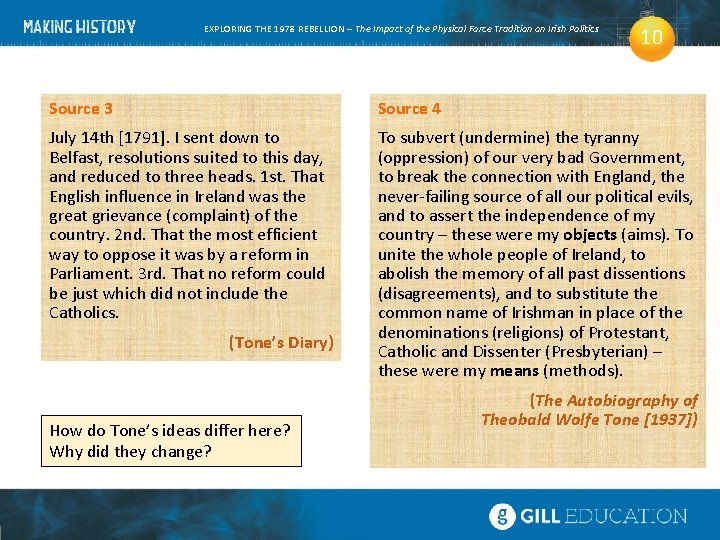
EXPLORING THE 1978 REBELLION – The Impact of the Physical Force Tradition on Irish Politics 10 Source 3 Source 4 July 14 th [1791]. I sent down to Belfast, resolutions suited to this day, and reduced to three heads. 1 st. That English influence in Ireland was the great grievance (complaint) of the country. 2 nd. That the most efficient way to oppose it was by a reform in Parliament. 3 rd. That no reform could be just which did not include the Catholics. To subvert (undermine) the tyranny (oppression) of our very bad Government, to break the connection with England, the never-failing source of all our political evils, and to assert the independence of my country – these were my objects (aims). To unite the whole people of Ireland, to abolish the memory of all past dissentions (disagreements), and to substitute the common name of Irishman in place of the denominations (religions) of Protestant, Catholic and Dissenter (Presbyterian) – these were my means (methods). (Tone’s Diary) How do Tone’s ideas differ here? Why did they change? (The Autobiography of Theobald Wolfe Tone [1937])
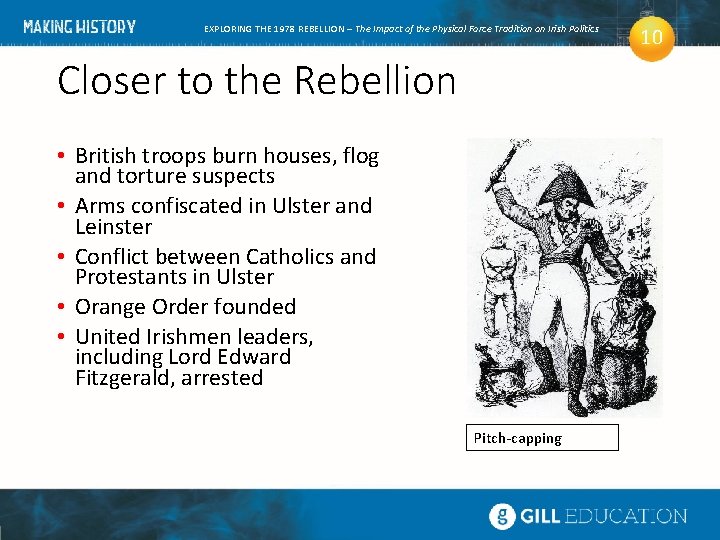
EXPLORING THE 1978 REBELLION – The Impact of the Physical Force Tradition on Irish Politics Closer to the Rebellion • British troops burn houses, flog and torture suspects • Arms confiscated in Ulster and Leinster • Conflict between Catholics and Protestants in Ulster • Orange Order founded • United Irishmen leaders, including Lord Edward Fitzgerald, arrested Pitch-capping 10
EXPLORING THE 1978 REBELLION – The Impact of the Physical Force Tradition on Irish Politics 10 Closer to the Rebellion Croppies Lie Down! We soldiers of Erin, so proud of the name, We’ll raise on the rebels and Frenchmen our fame; We’ll fight to the last in the honest old cause, And guard our religion, our freedom and laws; We’ll fight for our country, our King and his crown, And make all the traitors and croppies lie down. Down, down, croppies lie down. The rebels so bold, when they’ve none to oppose, To houses and haystacks are terrible foes; They murder poor parsons and likewise their wives, At the sight of a soldier they run for their lives; Whenever we march over country and town In ditches and cellars the croppies lie down. Down, down, croppies lie down. What is the meaning of this song? What is the purpose of the song?
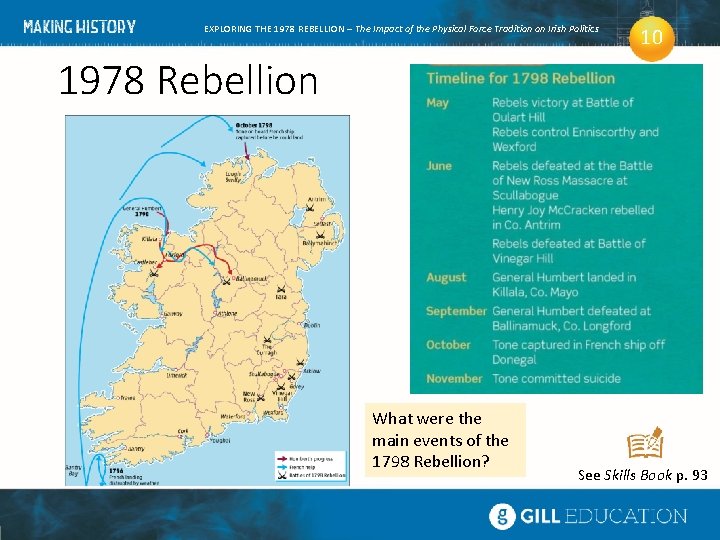
EXPLORING THE 1978 REBELLION – The Impact of the Physical Force Tradition on Irish Politics 10 1978 Rebellion What were the main events of the 1798 Rebellion? See Skills Book p. 93
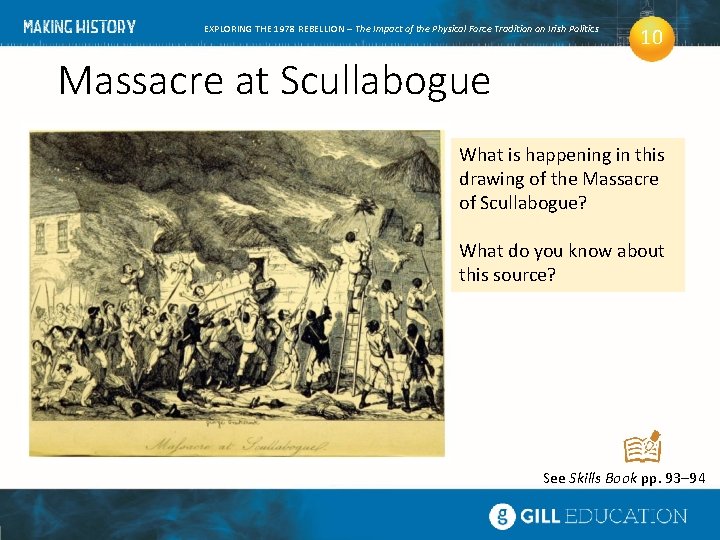
EXPLORING THE 1978 REBELLION – The Impact of the Physical Force Tradition on Irish Politics 10 Massacre at Scullabogue What is happening in this drawing of the Massacre of Scullabogue? What do you know about this source? See Skills Book pp. 93– 94
EXPLORING THE 1978 REBELLION – The Impact of the Physical Force Tradition on Irish Politics Sources and Evidence about the Scullabogue Massacre Source 2 … The evidence strongly suggests that the killings took place as an immediate reaction to atrocities in the battle of New Ross, raging six miles away. … Finally, while it cannot be denied that sectarian hatred (hatred between religions, groups) had some part to play in the affair, I suspect that as we learn more about the crime and the people who carried it out, … the sectarian dimensions (aspect) will then come to appear far more incidental (less important) to the affair than it has seemed up to this. (Daniel Gahan, The Scullabogue Massacre 1798, in History Ireland, 1996) 10 Source 3 The killings were not a matter of mob frenzy … but a military-style operation carried out by a small number of men … So far as we know all of [the Catholics] were imprisoned and killed because of their connection with local Protestants … Apart from [the wife and son of a yeoman], none [of the total killed] had any known connection with the military; … Most died mainly because they belonged to recently established and deeply resented local Protestant settlements. (Tom Dunne, The Killings at Scullabogue, in Rebellions: Memoir, Memory and 1798 [2010])
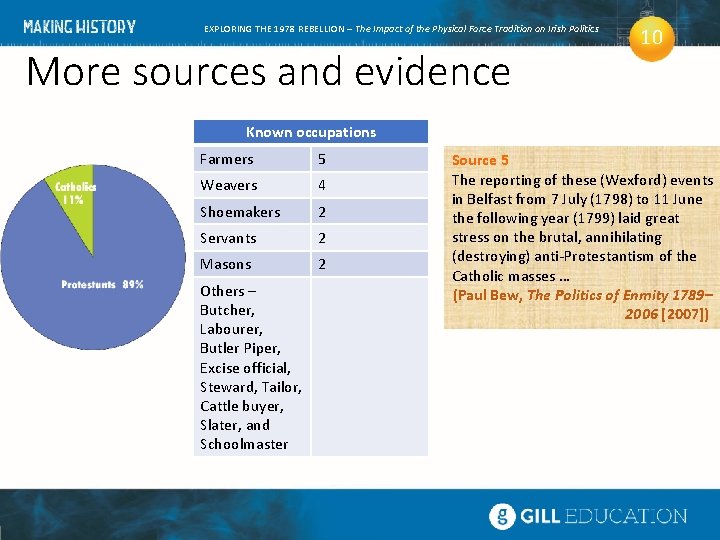
EXPLORING THE 1978 REBELLION – The Impact of the Physical Force Tradition on Irish Politics More sources and evidence 10 Known occupations Farmers 5 Weavers 4 Shoemakers 2 Servants 2 Masons 2 Others – Butcher, Labourer, Butler Piper, Excise official, Steward, Tailor, Cattle buyer, Slater, and Schoolmaster Source 5 The reporting of these (Wexford) events in Belfast from 7 July (1798) to 11 June the following year (1799) laid great stress on the brutal, annihilating (destroying) anti-Protestantism of the Catholic masses … (Paul Bew, The Politics of Enmity 1789– 2006 [2007])
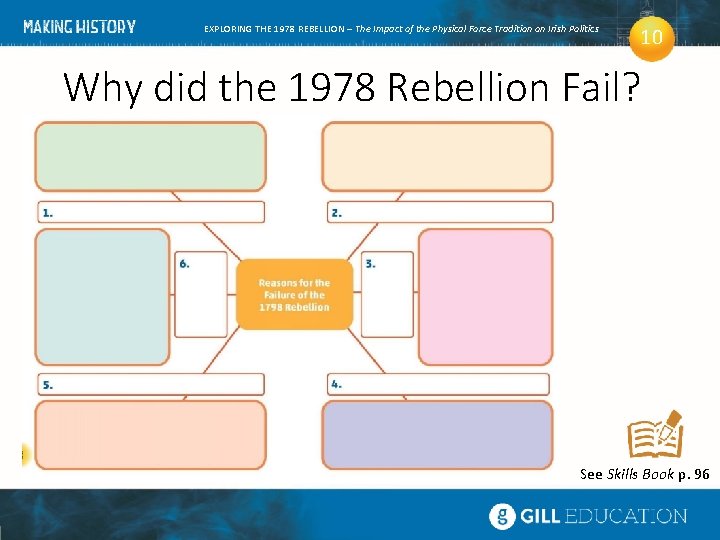
EXPLORING THE 1978 REBELLION – The Impact of the Physical Force Tradition on Irish Politics 10 Why did the 1978 Rebellion Fail? See Skills Book p. 96
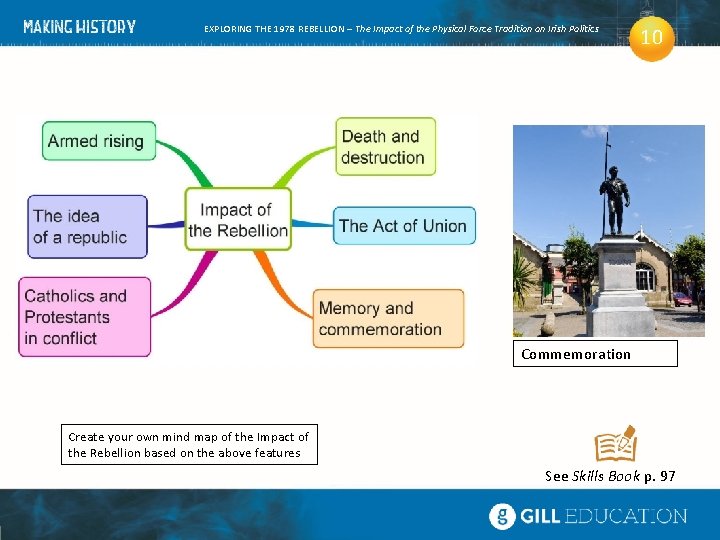
EXPLORING THE 1978 REBELLION – The Impact of the Physical Force Tradition on Irish Politics 10 Commemoration Create your own mind map of the Impact of the Rebellion based on the above features See Skills Book p. 97
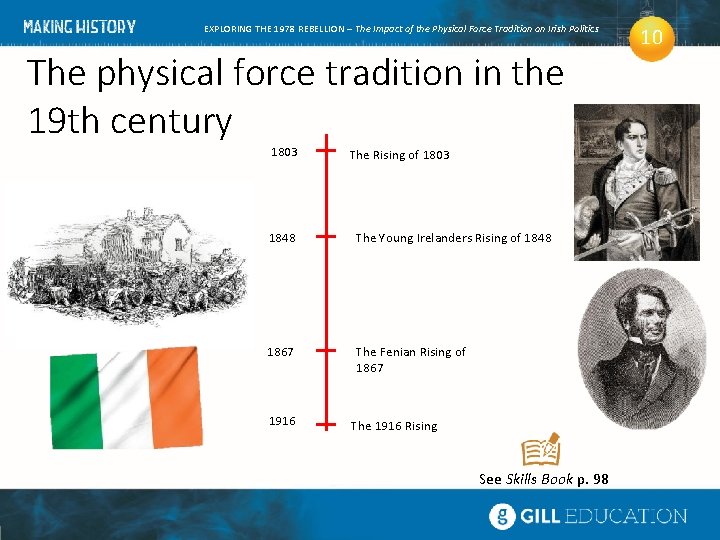
EXPLORING THE 1978 REBELLION – The Impact of the Physical Force Tradition on Irish Politics The physical force tradition in the 19 th century 1803 The Rising of 1803 1848 The Young Irelanders Rising of 1848 1867 The Fenian Rising of 1867 1916 The 1916 Rising See Skills Book p. 98 10
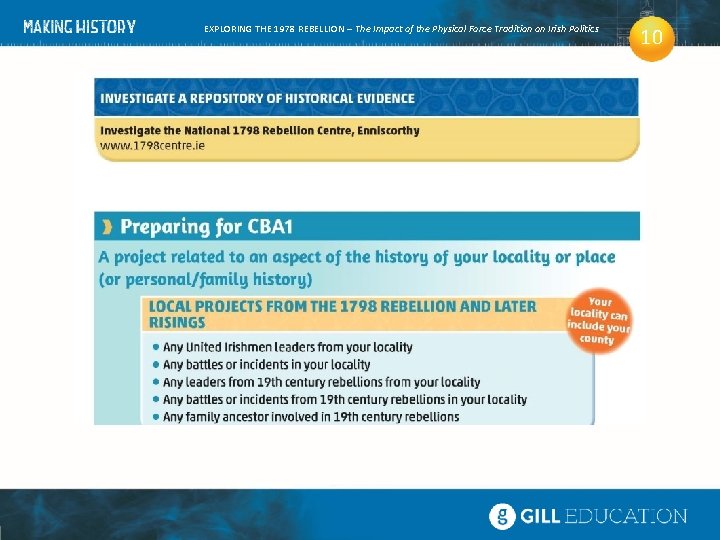
EXPLORING THE 1978 REBELLION – The Impact of the Physical Force Tradition on Irish Politics 10
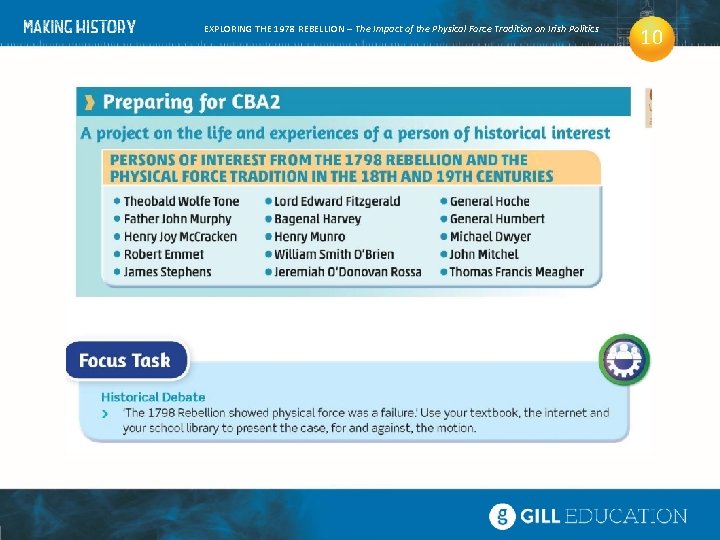
EXPLORING THE 1978 REBELLION – The Impact of the Physical Force Tradition on Irish Politics 10
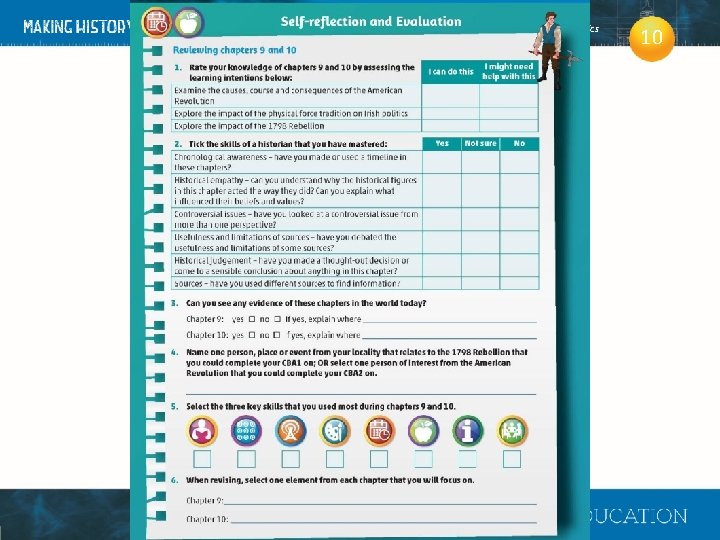
EXPLORING THE 1978 REBELLION – The Impact of the Physical Force Tradition on Irish Politics 10
- Slides: 20