
Exploring Space Arrangement of Universe Earth o Our
- Slides: 11
Exploring Space
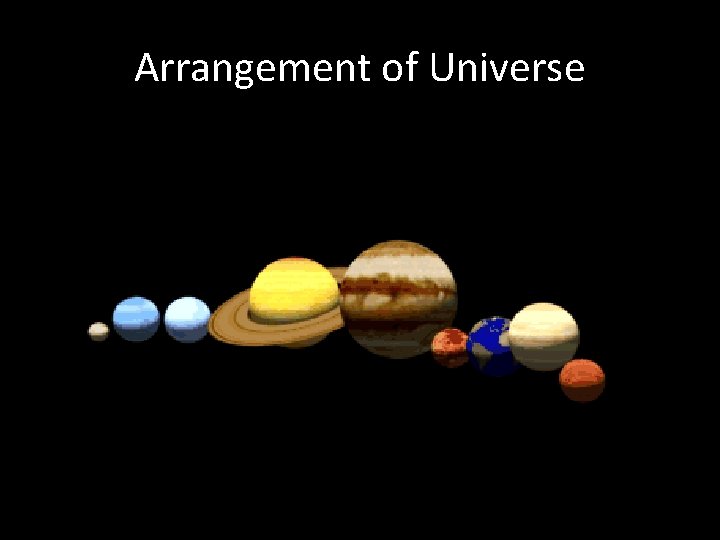
Arrangement of Universe
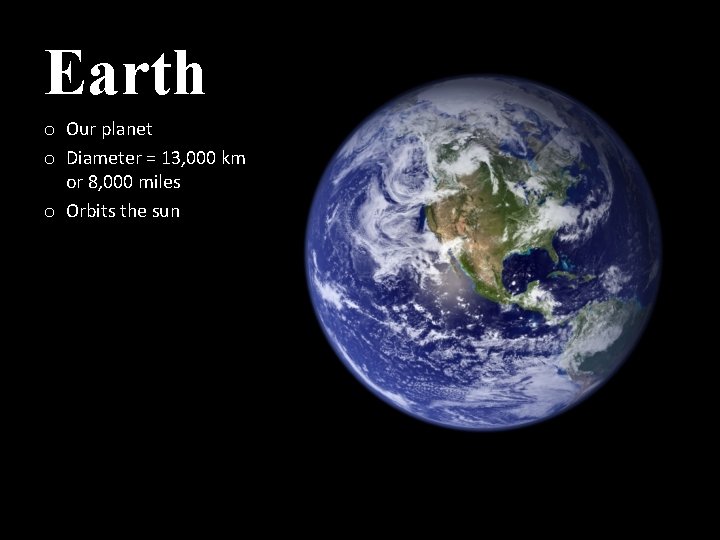
Earth o Our planet o Diameter = 13, 000 km or 8, 000 miles o Orbits the sun
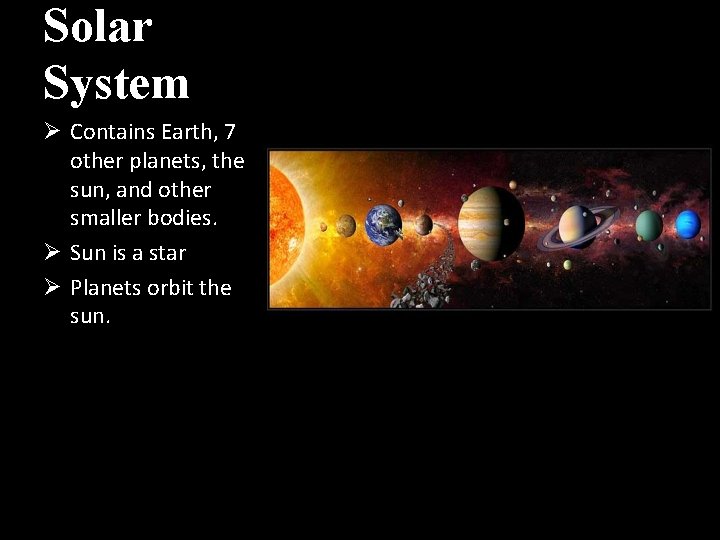
Solar System Ø Contains Earth, 7 other planets, the sun, and other smaller bodies. Ø Sun is a star Ø Planets orbit the sun.
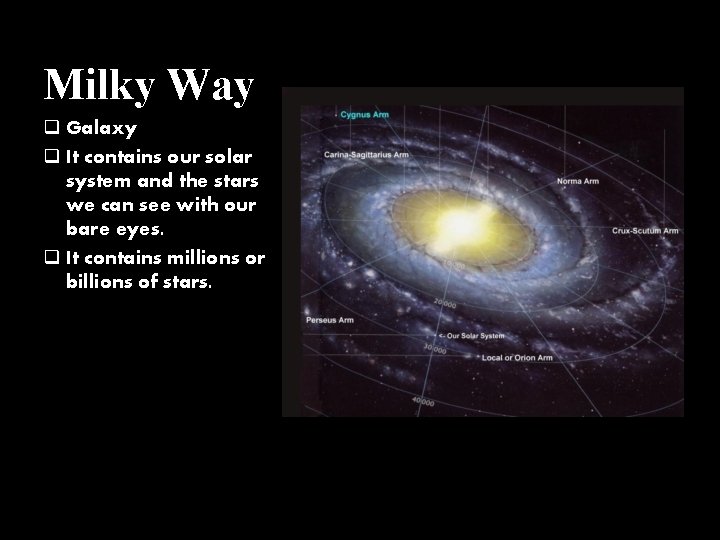
Milky Way q Galaxy q It contains our solar system and the stars we can see with our bare eyes. q It contains millions or billions of stars.
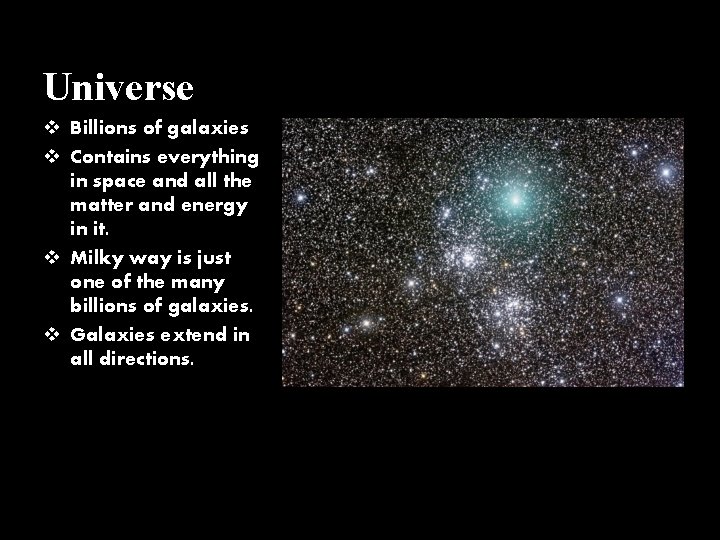
Universe v Billions of galaxies v Contains everything in space and all the matter and energy in it. v Milky way is just one of the many billions of galaxies. v Galaxies extend in all directions.
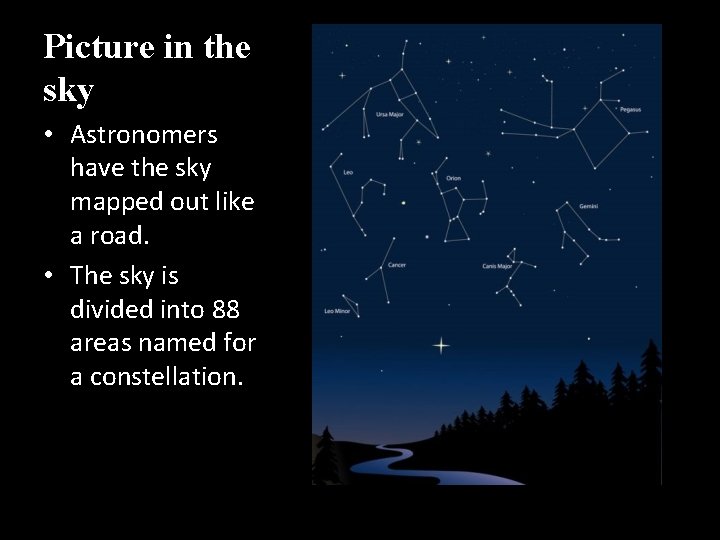
Picture in the sky • Astronomers have the sky mapped out like a road. • The sky is divided into 88 areas named for a constellation.
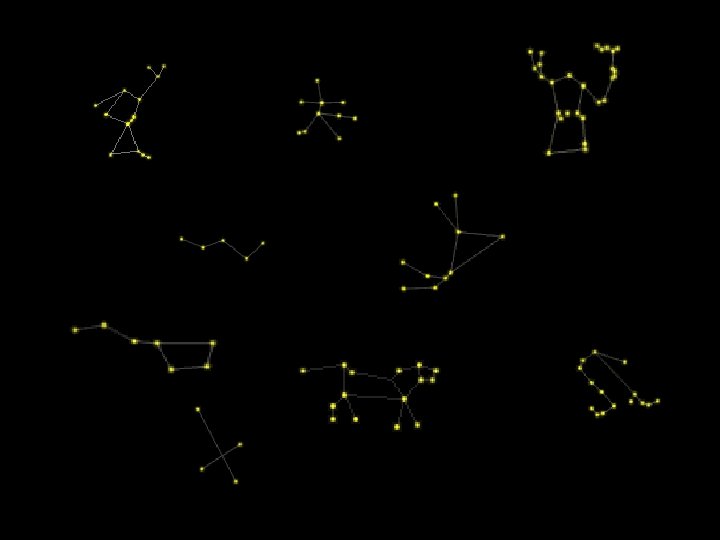
Constellation • Group of stars that form a pattern. • Greek named many of the constellations for animals and imaginary beings. • Stars in constellation are not really close to each other. • They seem grouped from Earth, but many of the stars are several light years away from each other. • We see different constellation due to Earth rotating on its axis.
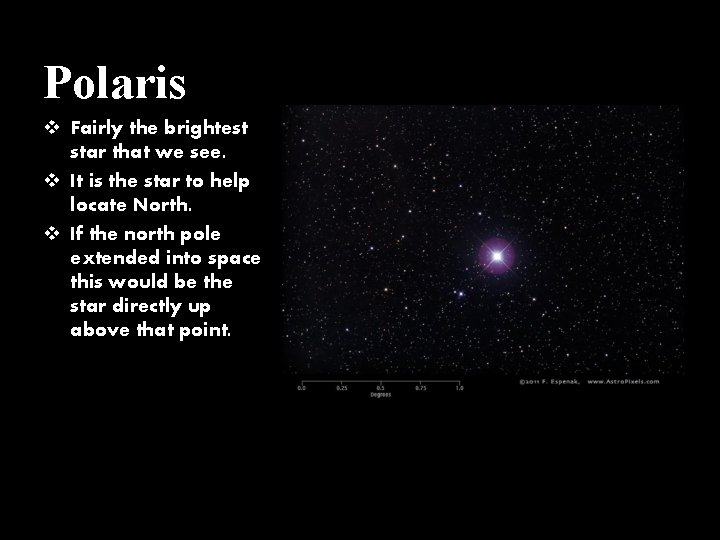
Polaris v Fairly the brightest star that we see. v It is the star to help locate North. v If the north pole extended into space this would be the star directly up above that point.
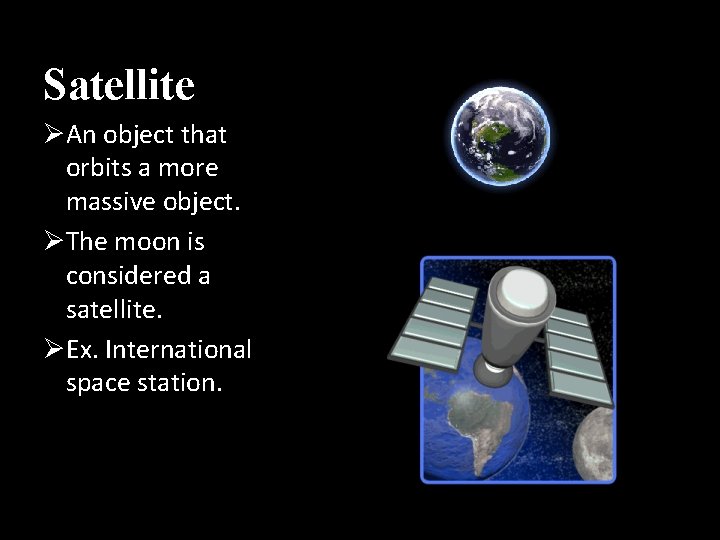
Satellite ØAn object that orbits a more massive object. ØThe moon is considered a satellite. ØEx. International space station.