
Exploring Selfattention for Image Recognition CVPR 2020 2020

- Slides: 21
Exploring Self-attention for Image Recognition CVPR 2020 李琦玥 2020. 07. 20
Index • Convolutional Networks • Contribution & Motivation • Pairwise & Patchwise • Self-attention Block • Comparisons • Conclusion
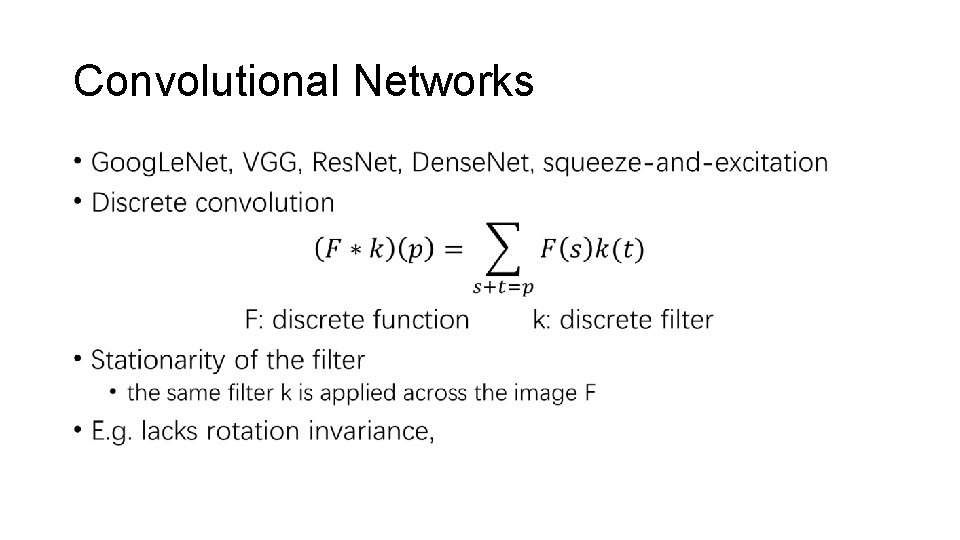
Convolutional Networks •
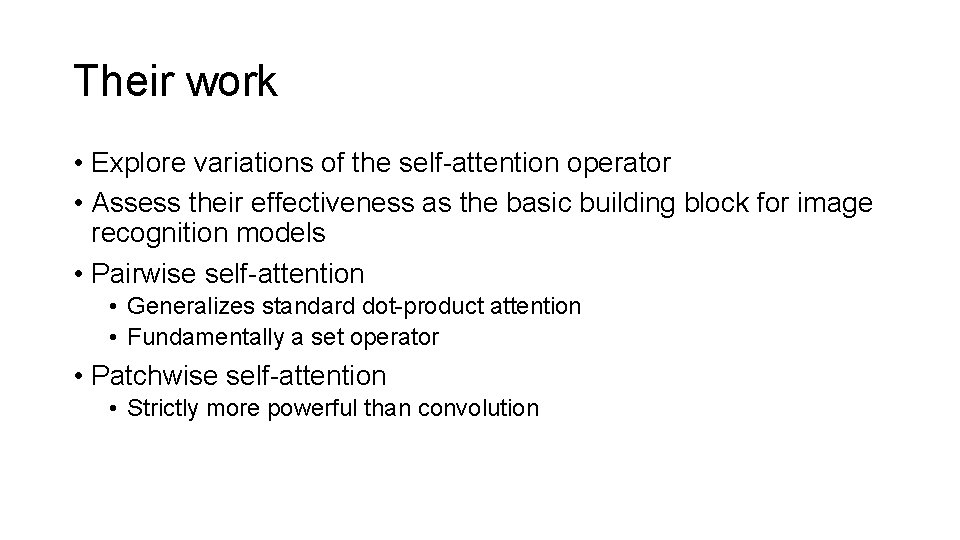
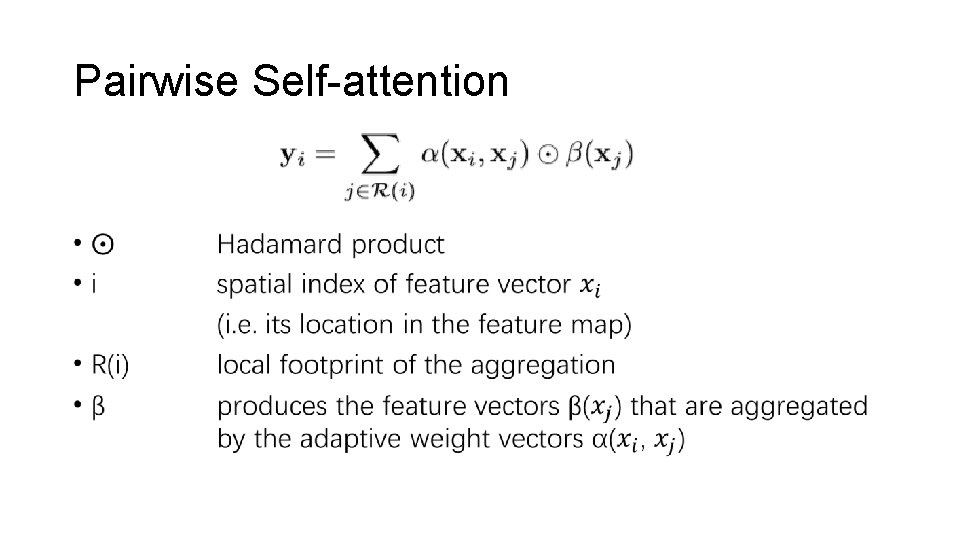
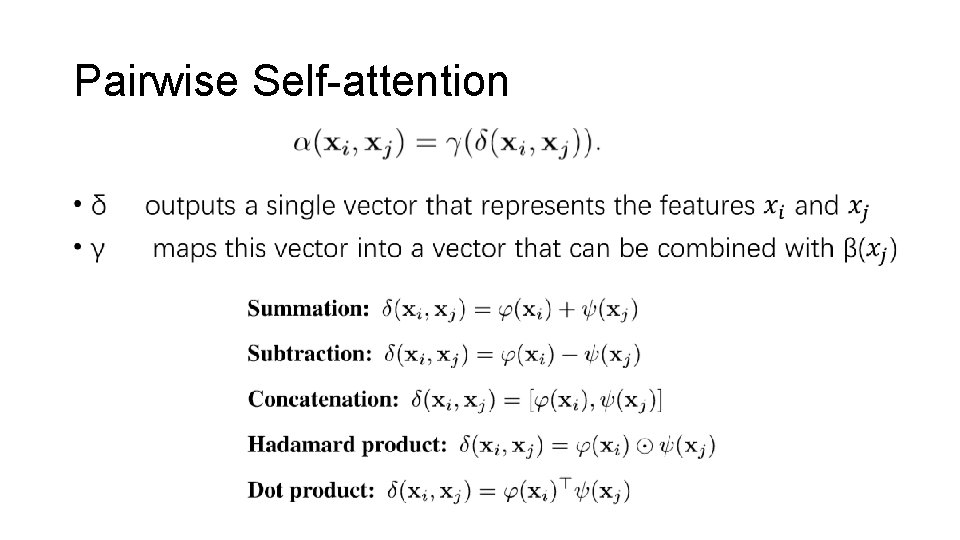
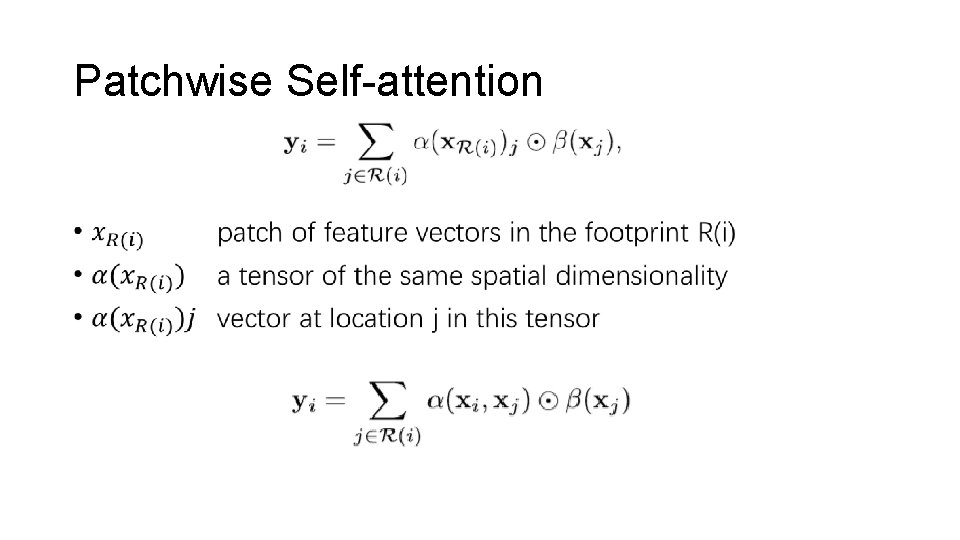
Their work • Explore variations of the self-attention operator • Assess their effectiveness as the basic building block for image recognition models • Pairwise self-attention • Generalizes standard dot-product attention • Fundamentally a set operator • Patchwise self-attention • Strictly more powerful than convolution
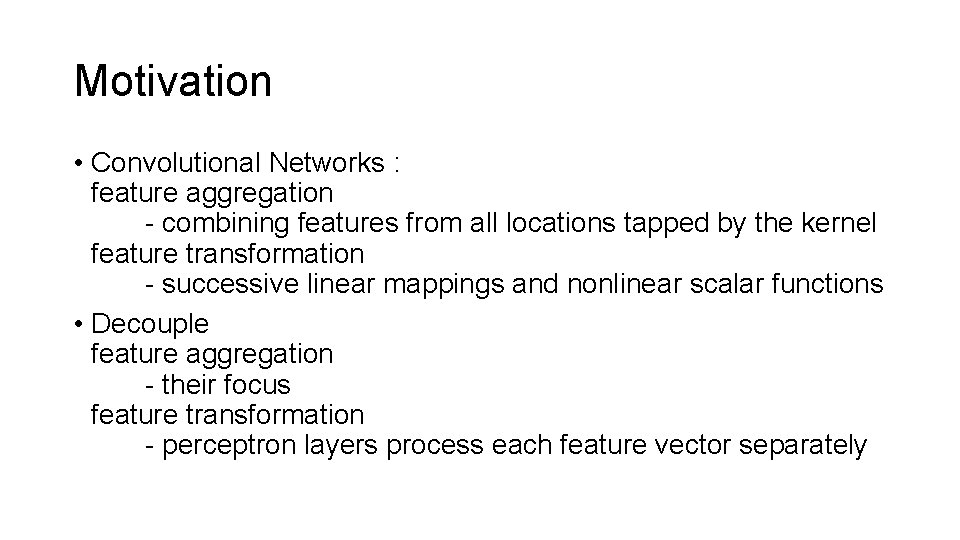
Motivation • Convolutional Networks : feature aggregation - combining features from all locations tapped by the kernel feature transformation - successive linear mappings and nonlinear scalar functions • Decouple feature aggregation - their focus feature transformation - perceptron layers process each feature vector separately
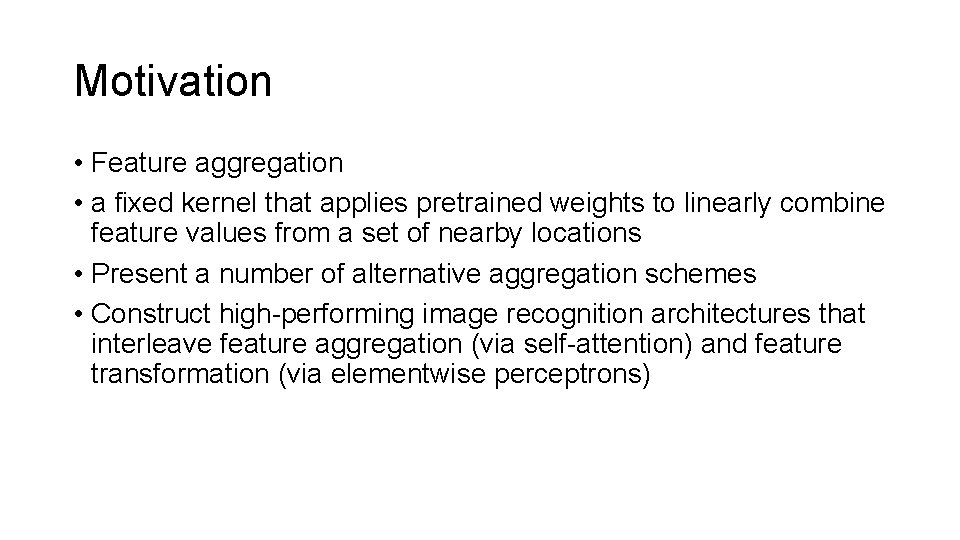
Motivation • Feature aggregation • a fixed kernel that applies pretrained weights to linearly combine feature values from a set of nearby locations • Present a number of alternative aggregation schemes • Construct high-performing image recognition architectures that interleave feature aggregation (via self-attention) and feature transformation (via elementwise perceptrons)
Pairwise Self-attention •
Pairwise Self-attention •
Patchwise Self-attention •
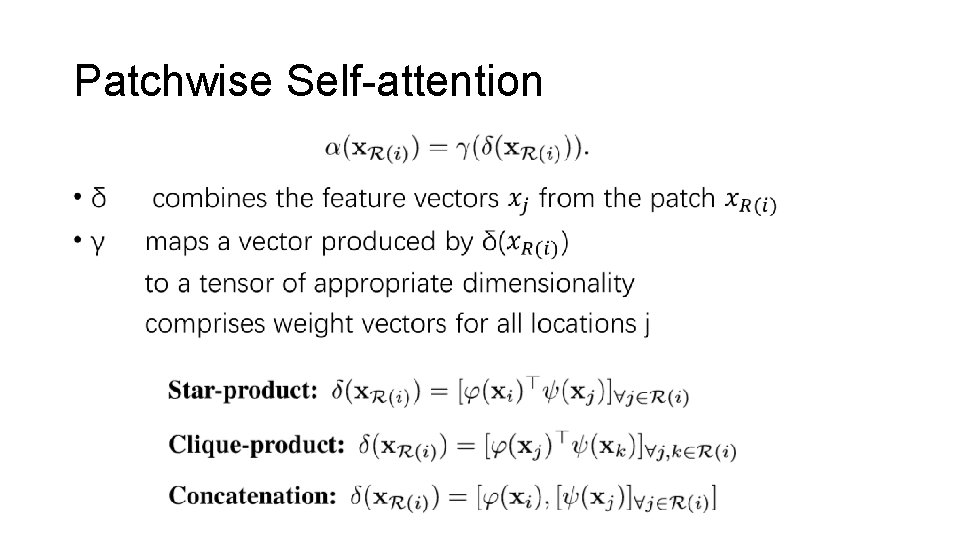
Patchwise Self-attention
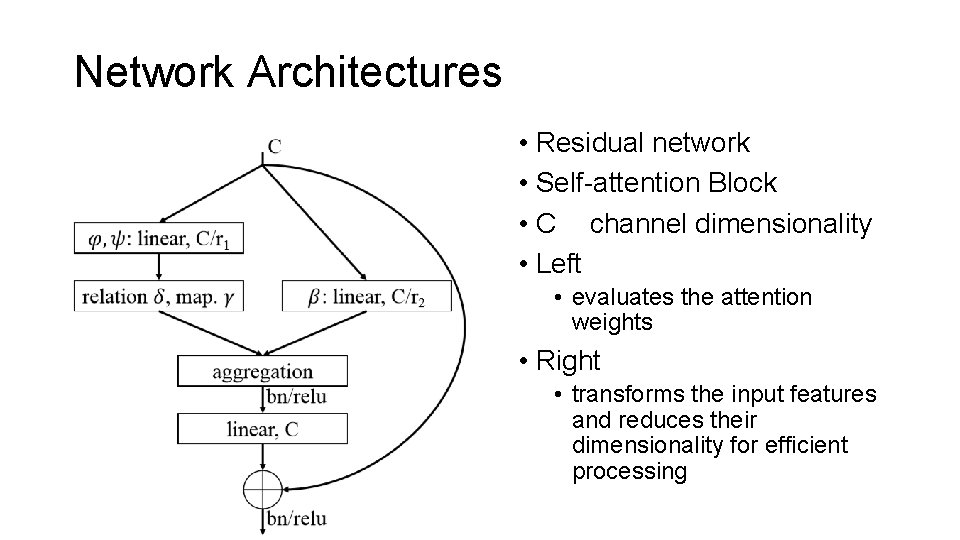
Network Architectures • Residual network • Self-attention Block • C channel dimensionality • Left • evaluates the attention weights • Right • transforms the input features and reduces their dimensionality for efficient processing
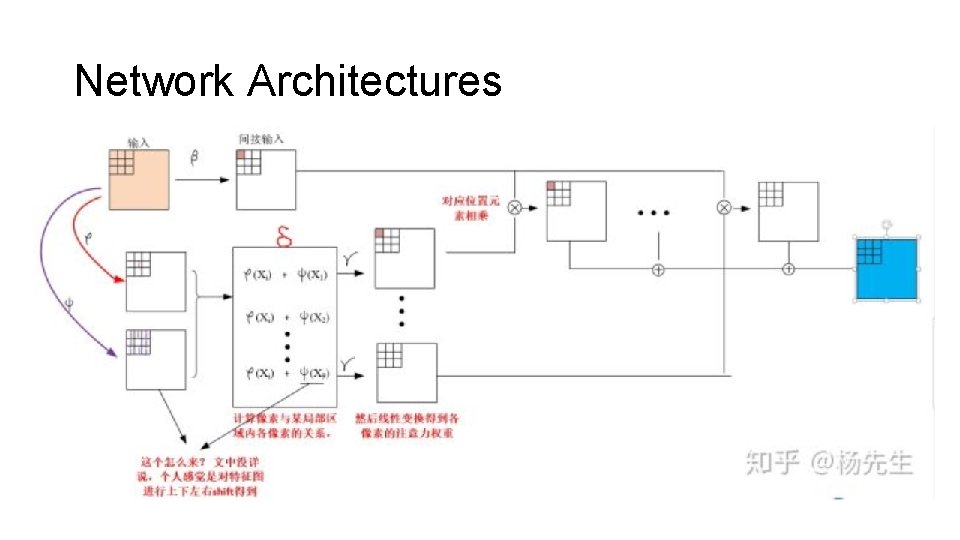
Network Architectures
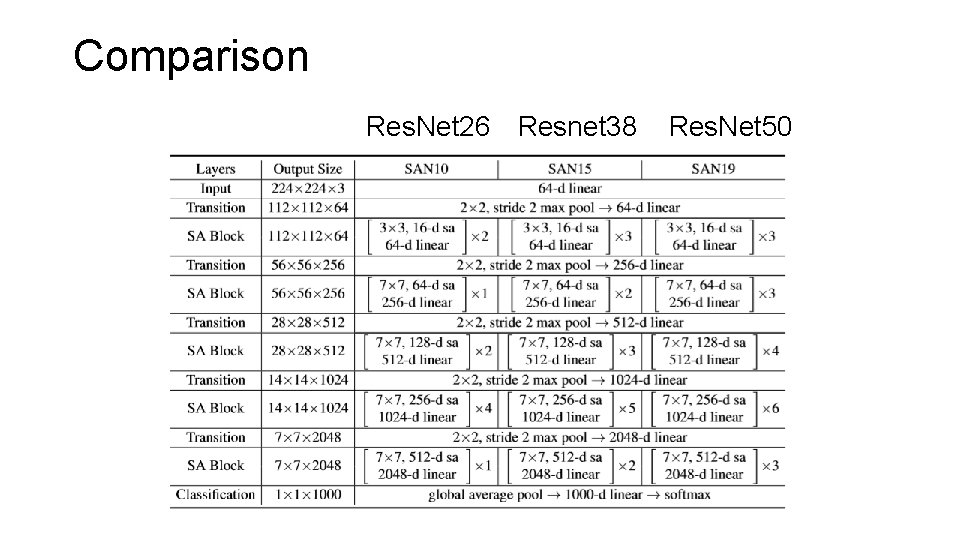
Comparison Res. Net 26 Resnet 38 Res. Net 50
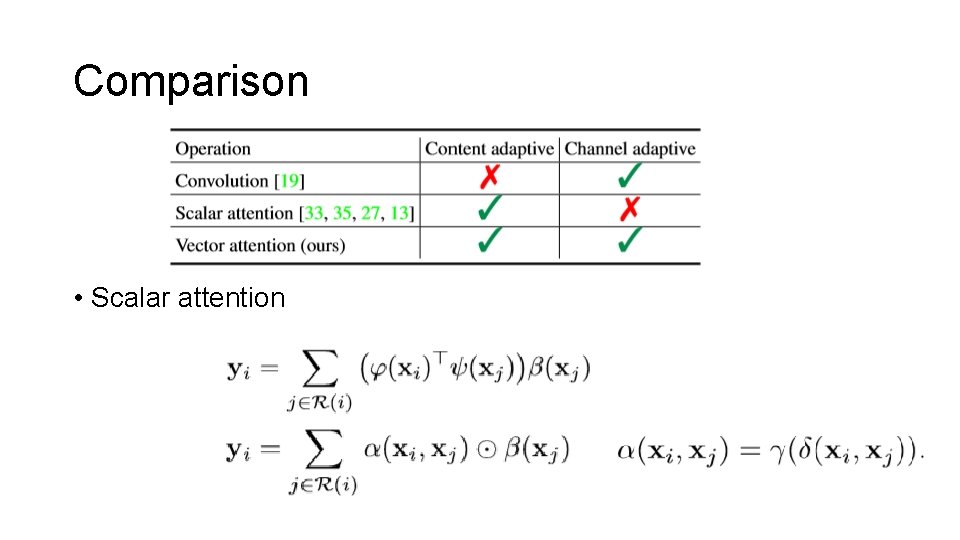
Comparison • Scalar attention
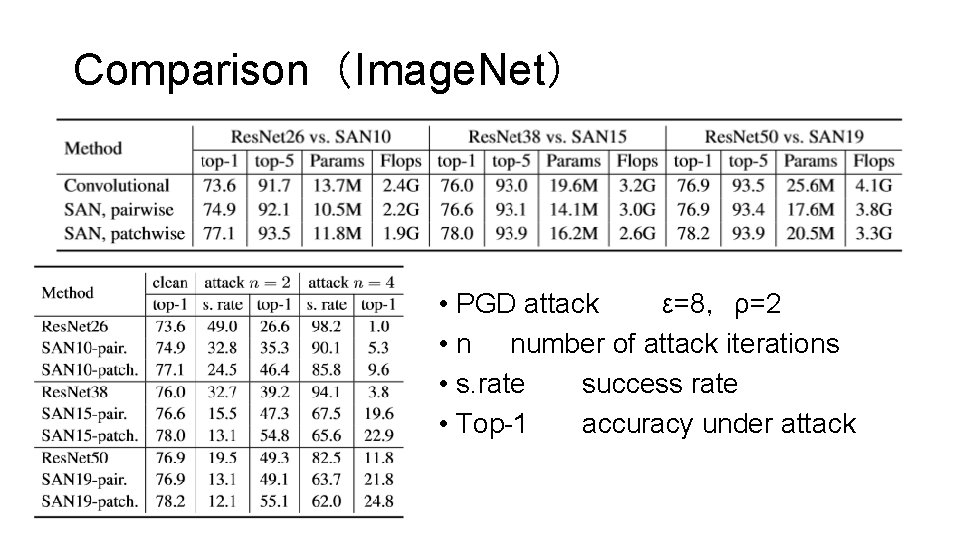
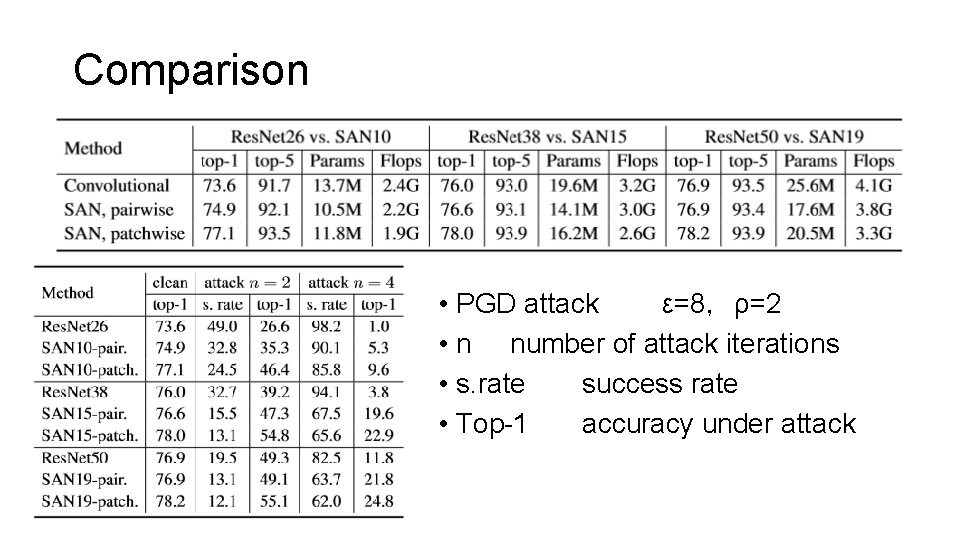
Comparison(Image. Net) • PGD attack ε=8,ρ=2 • n number of attack iterations • s. rate success rate • Top-1 accuracy under attack
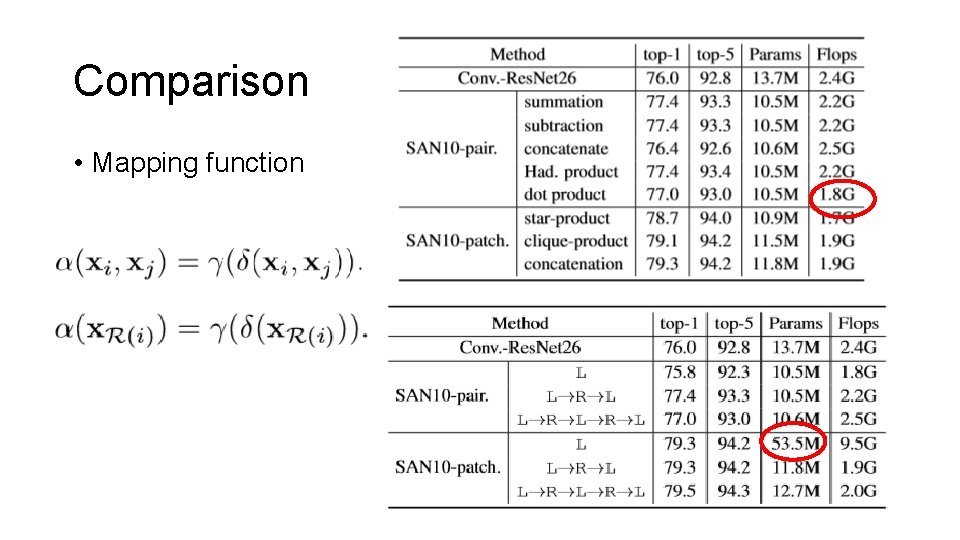
Comparison • Mapping function
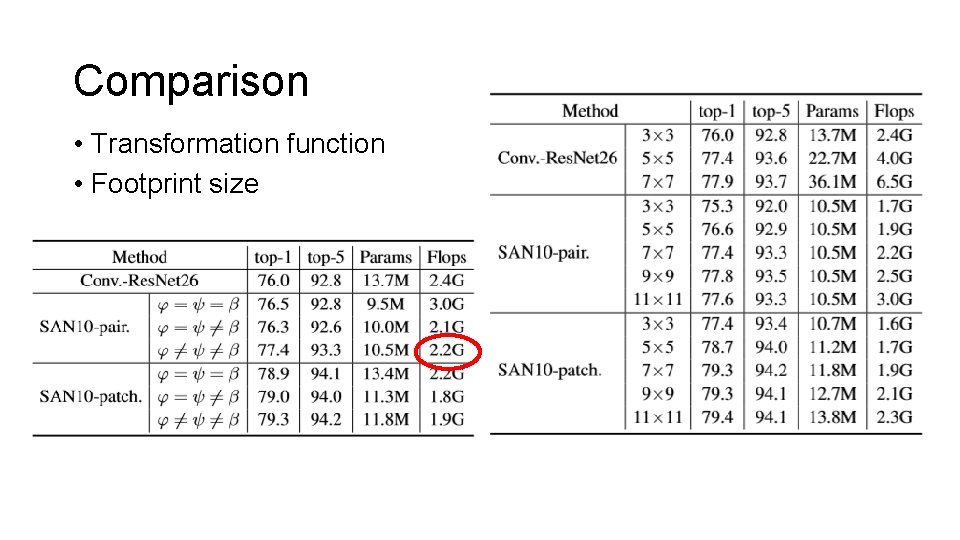
Comparison • Transformation function • Footprint size
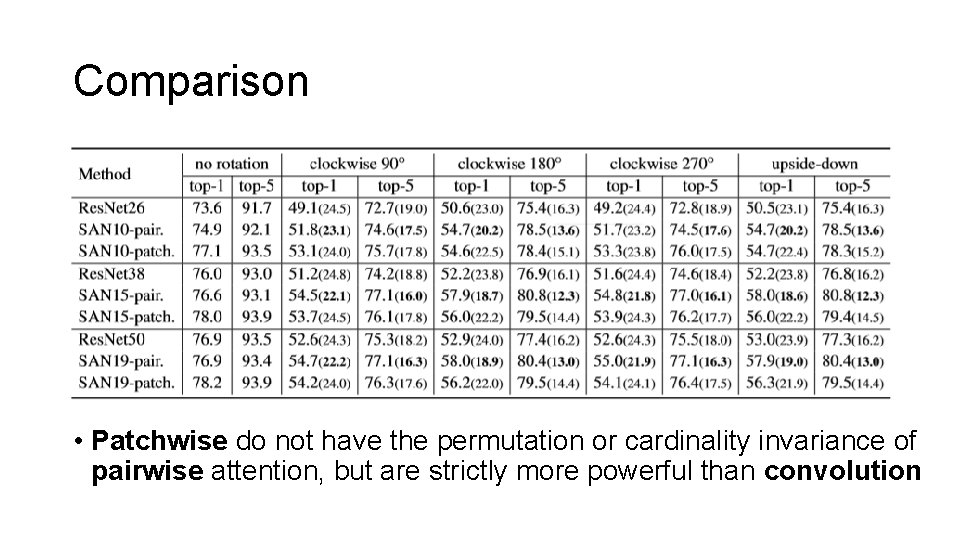
Comparison • Patchwise do not have the permutation or cardinality invariance of pairwise attention, but are strictly more powerful than convolution
Comparison • PGD attack ε=8,ρ=2 • n number of attack iterations • s. rate success rate • Top-1 accuracy under attack
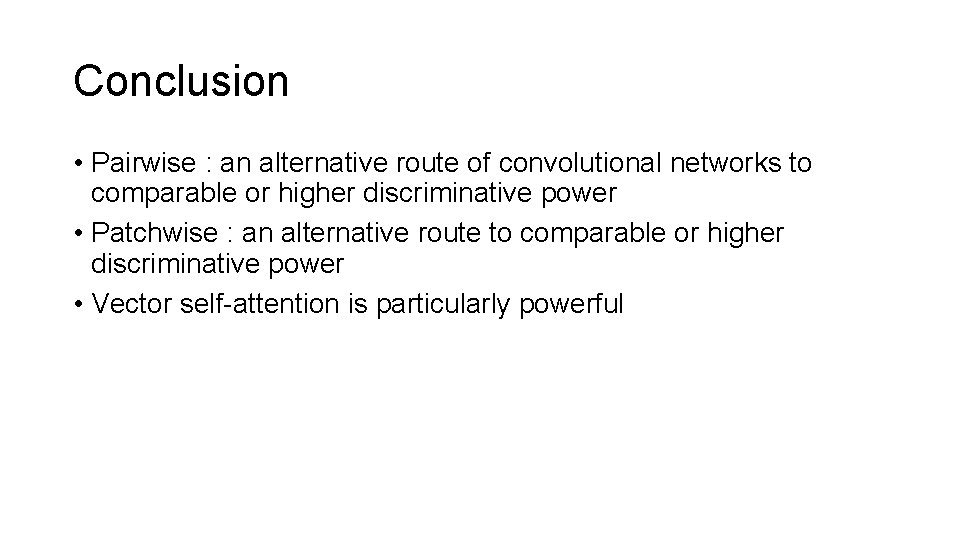
Conclusion • Pairwise : an alternative route of convolutional networks to comparable or higher discriminative power • Patchwise : an alternative route to comparable or higher discriminative power • Vector self-attention is particularly powerful
Thanks