
Exploring Our Beloved Earth Earths Parts are open
Exploring Our Beloved Earth
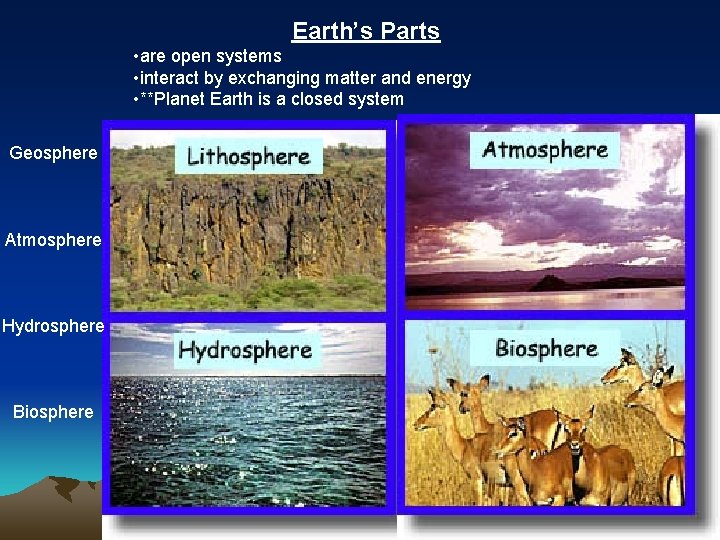
Earth’s Parts • are open systems • interact by exchanging matter and energy • **Planet Earth is a closed system Geosphere Atmosphere Hydrosphere Biosphere
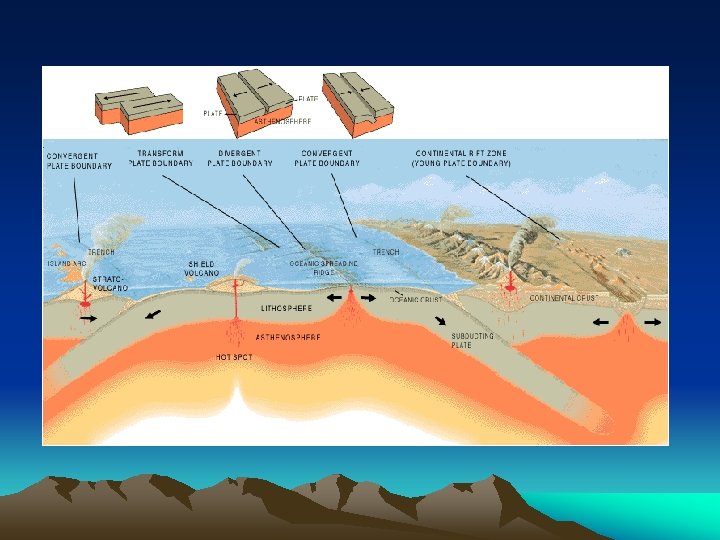
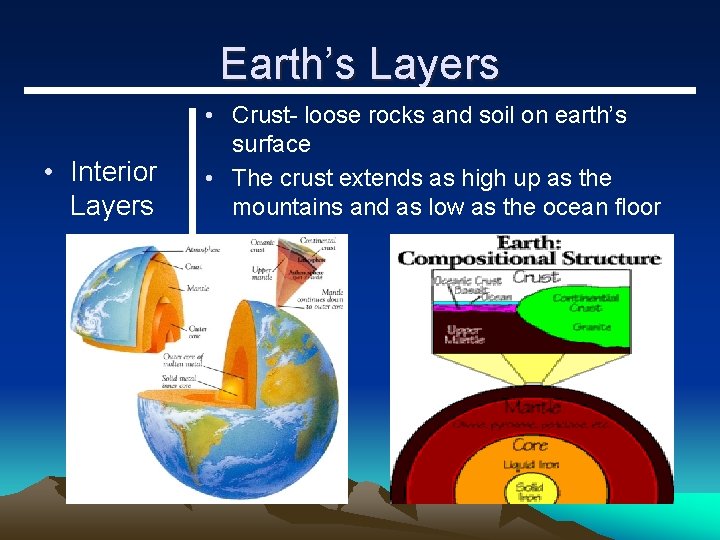
Earth’s Layers • Interior Layers • Crust- loose rocks and soil on earth’s surface • The crust extends as high up as the mountains and as low as the ocean floor
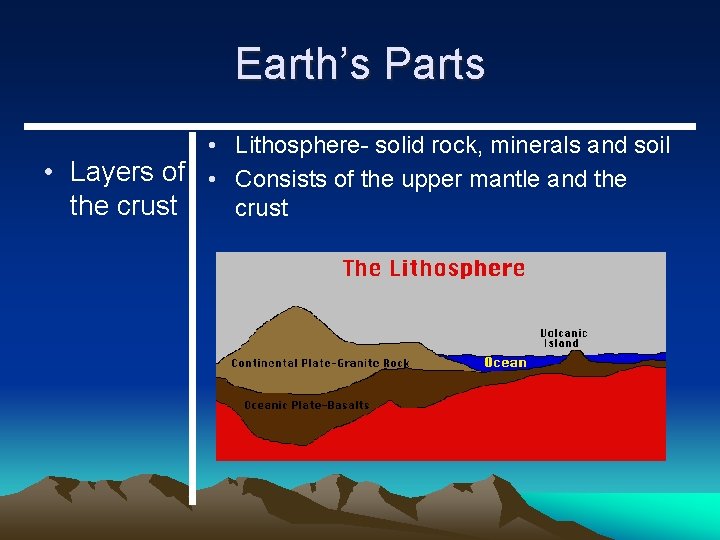
Earth’s Parts • Lithosphere- solid rock, minerals and soil • Layers of • Consists of the upper mantle and the crust
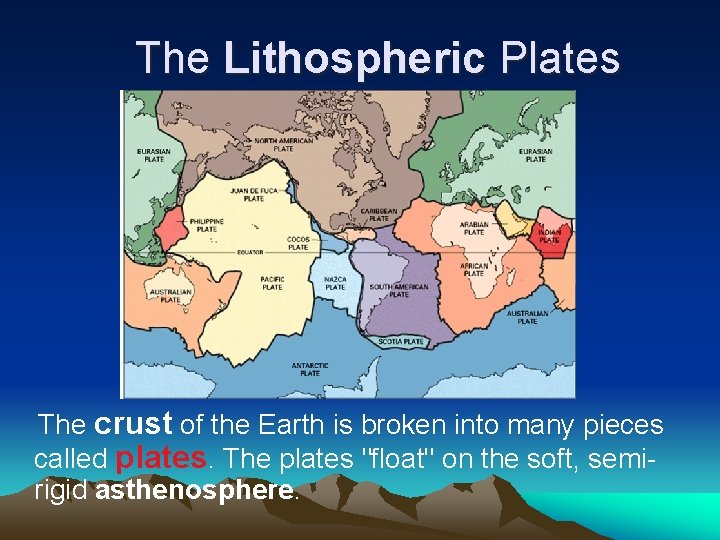
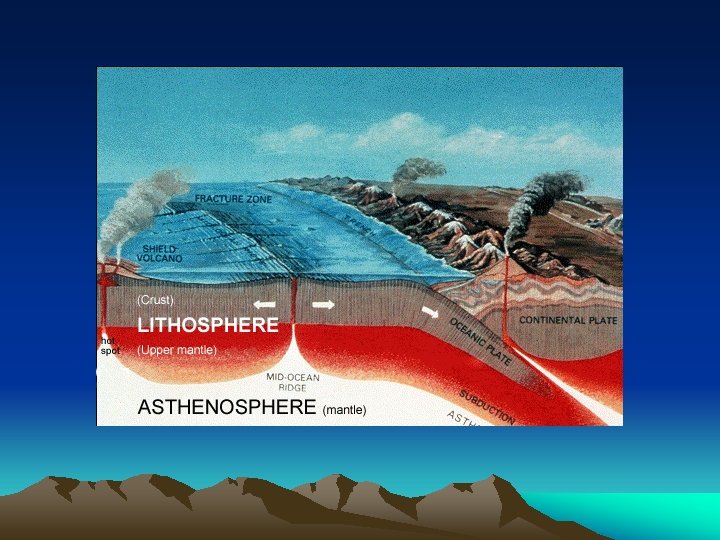
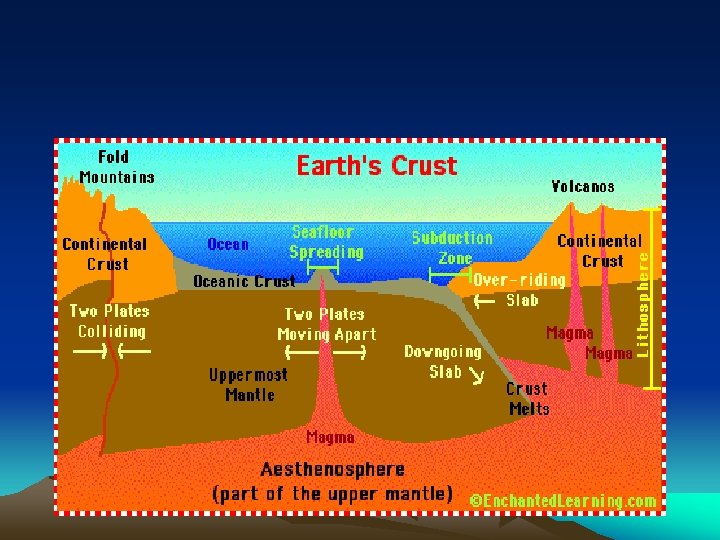
The Lithospheric Plates The crust of the Earth is broken into many pieces called plates. The plates "float" on the soft, semirigid asthenosphere.
Earth Stats • The Earth's mass is about 5. 98 x 1024 kg. • Earth is the densest planet in our Solar System (mass/volume). • Earth is made of several layers with different compositions and physical properties, like temperature, density, and the ability to flow.
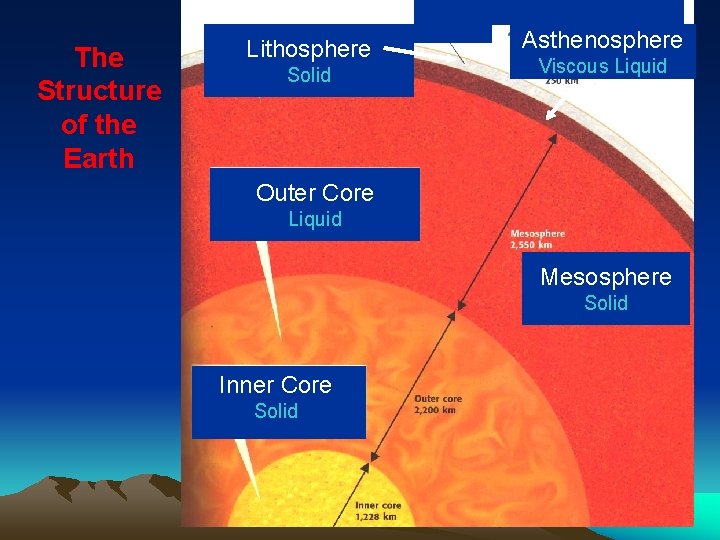
The Structure of the Earth Lithosphere Solid Asthenosphere Viscous Liquid Outer Core Liquid Mesosphere Solid Inner Core Solid
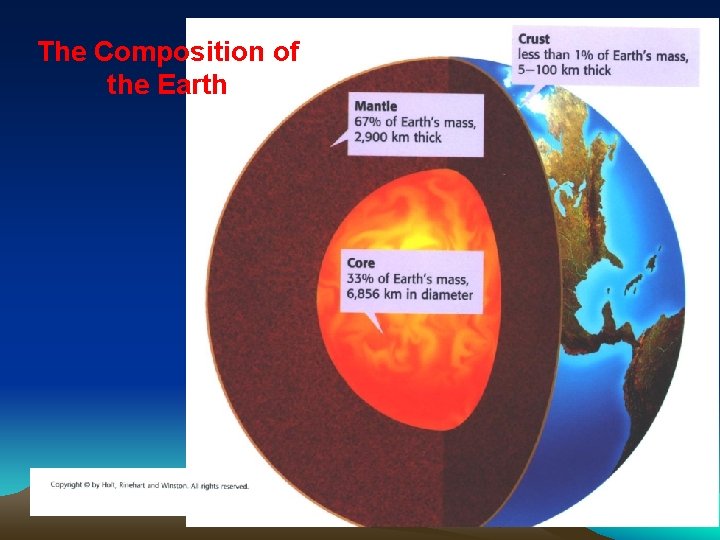
The Composition of the Earth
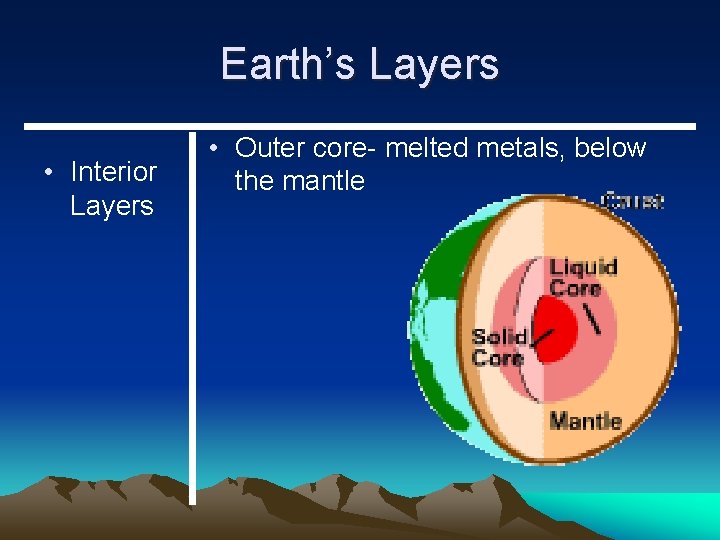
Earth’s Layers • Interior Layers • Outer core- melted metals, below the mantle
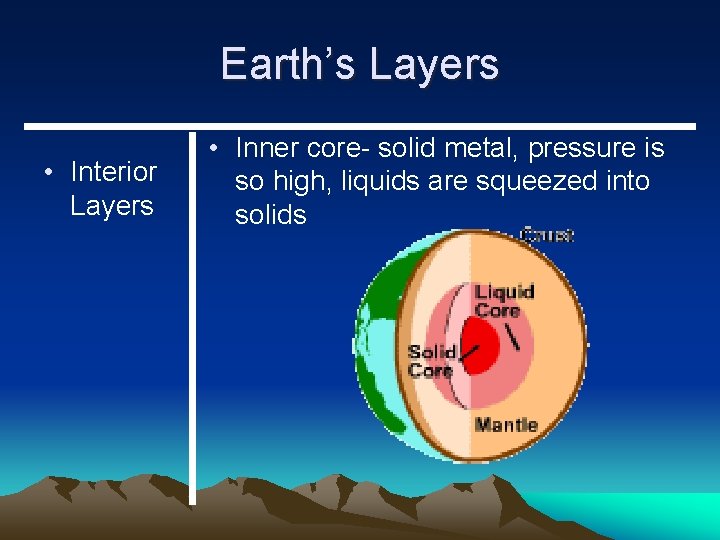
Earth’s Layers • Interior Layers • Inner core- solid metal, pressure is so high, liquids are squeezed into solids
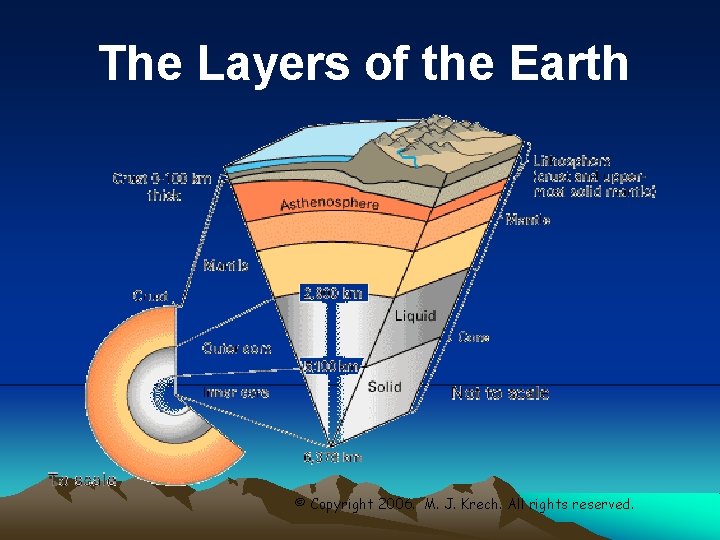
The Layers of the Earth © Copyright 2006. M. J. Krech. All rights reserved.
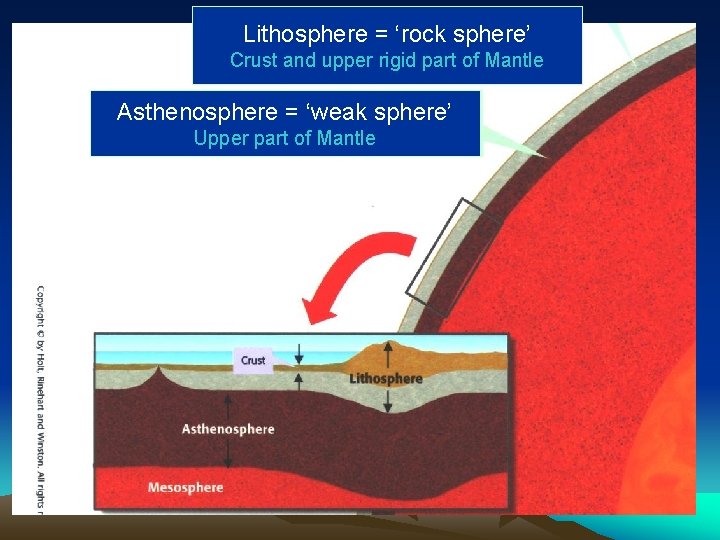
Lithosphere = ‘rock sphere’ Crust and upper rigid part of Mantle Asthenosphere = ‘weak sphere’ Upper part of Mantle
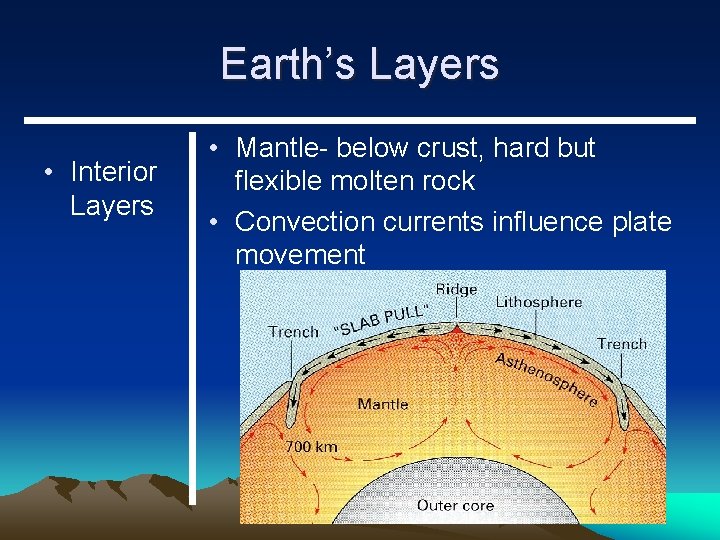
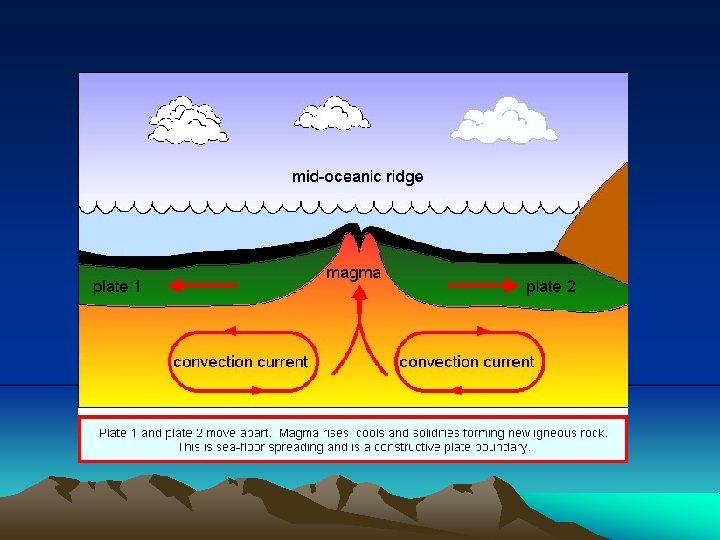
Earth’s Layers • Interior Layers • Mantle- below crust, hard but flexible molten rock • Convection currents influence plate movement
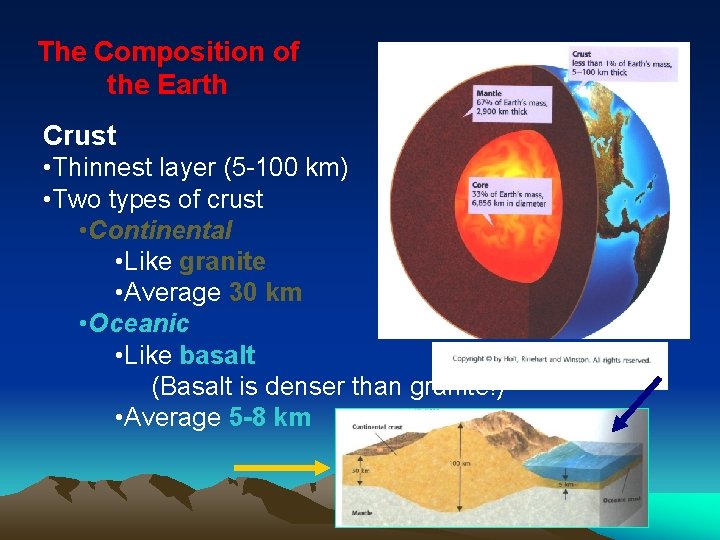
The Composition of the Earth Crust • Thinnest layer (5 -100 km) • Two types of crust • Continental • Like granite • Average 30 km • Oceanic • Like basalt (Basalt is denser than granite!) • Average 5 -8 km
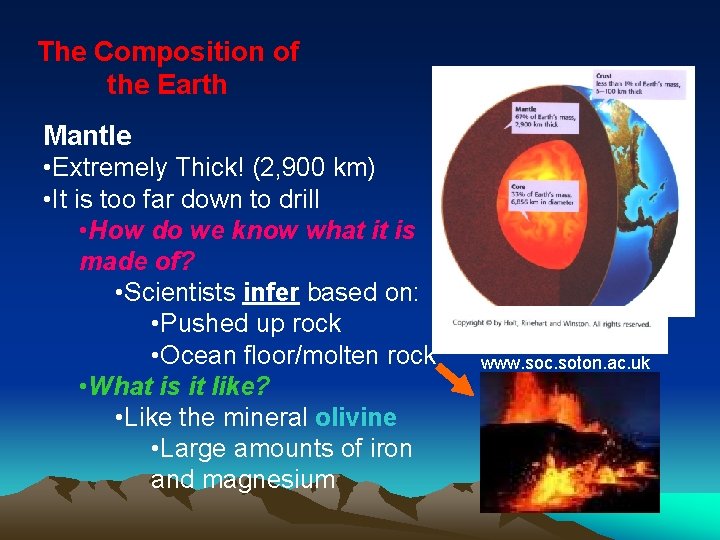
The Composition of the Earth Mantle • Extremely Thick! (2, 900 km) • It is too far down to drill • How do we know what it is made of? • Scientists infer based on: • Pushed up rock • Ocean floor/molten rock • What is it like? • Like the mineral olivine • Large amounts of iron and magnesium www. soc. soton. ac. uk
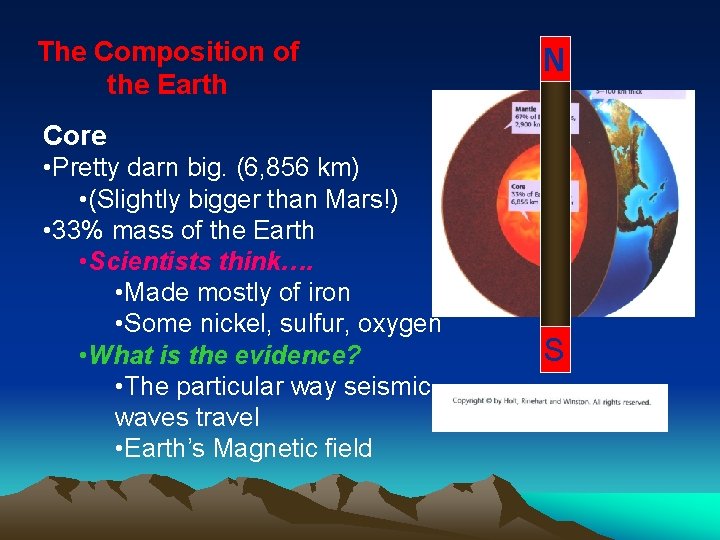
The Composition of the Earth N Core • Pretty darn big. (6, 856 km) • (Slightly bigger than Mars!) • 33% mass of the Earth • Scientists think…. • Made mostly of iron • Some nickel, sulfur, oxygen • What is the evidence? • The particular way seismic waves travel • Earth’s Magnetic field S
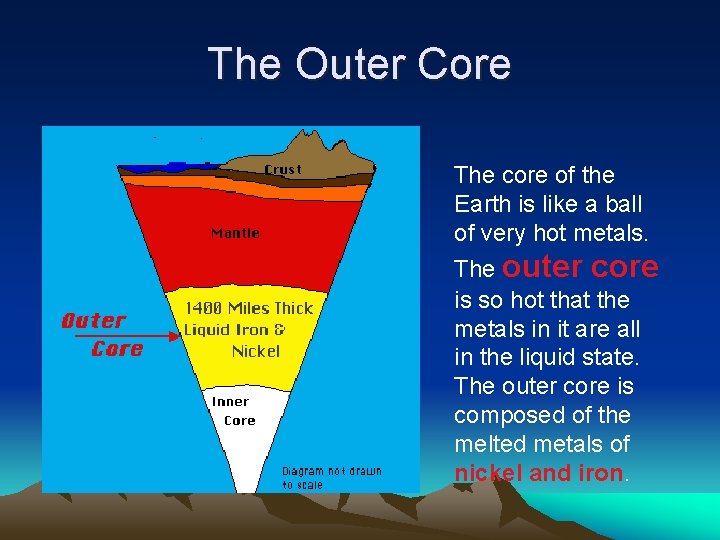
The Outer Core The core of the Earth is like a ball of very hot metals. The outer core is so hot that the metals in it are all in the liquid state. The outer core is composed of the melted metals of nickel and iron.
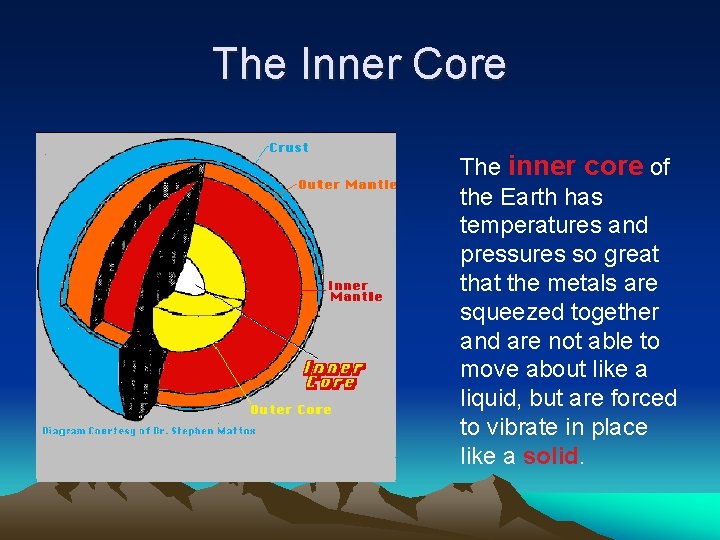
The Inner Core The inner core of the Earth has temperatures and pressures so great the metals are squeezed together and are not able to move about like a liquid, but are forced to vibrate in place like a solid.
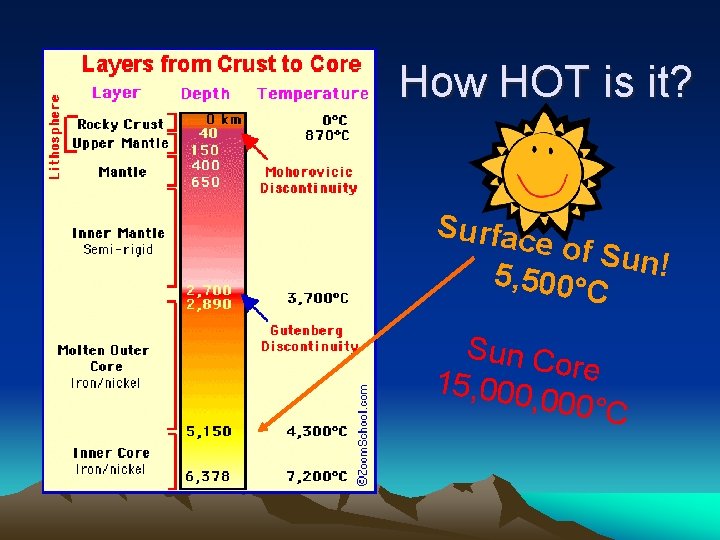
How HOT is it? Surfac e of Su n ! 5, 500° C Sun Co 15, 000 re , 000°C
Convection • Convection (heat) currents – carry heat from the hot inner mantle to the cooler outer mantle. • The mantle gets warmer with depth • top of the mantle is ~ 1, 600° F (870° C) • bottom of the mantle is ~4, 000 -6, 700° F (2, 200 -3, 700° C) • The mantle contains most of the mass of the Earth
Assessment One • 1. Name Earth’s parts. • 2. Describe how Earth’s parts are interconnected. What are some examples? • 3. Describe the Earth’s top two interior layers.
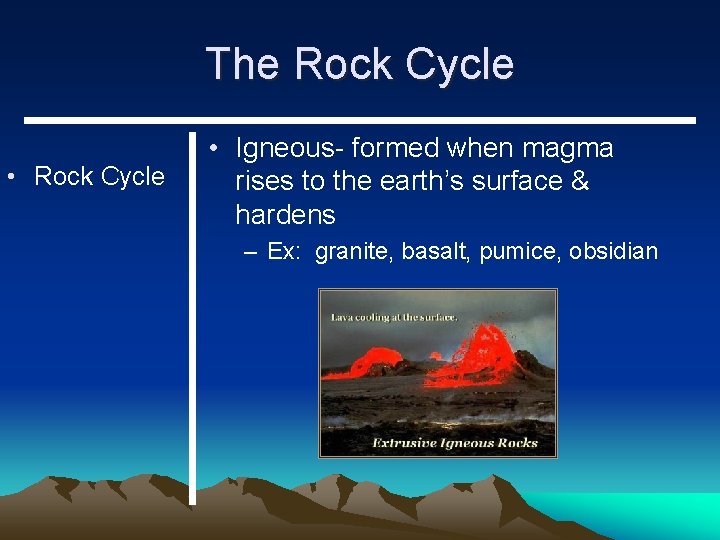
The Rock Cycle • Rock Cycle • Igneous- formed when magma rises to the earth’s surface & hardens – Ex: granite, basalt, pumice, obsidian
- Slides: 26