
Exploring more persuasive letter features Friday 26 th

- Slides: 14
Exploring more persuasive letter features Friday 26 th February 2021
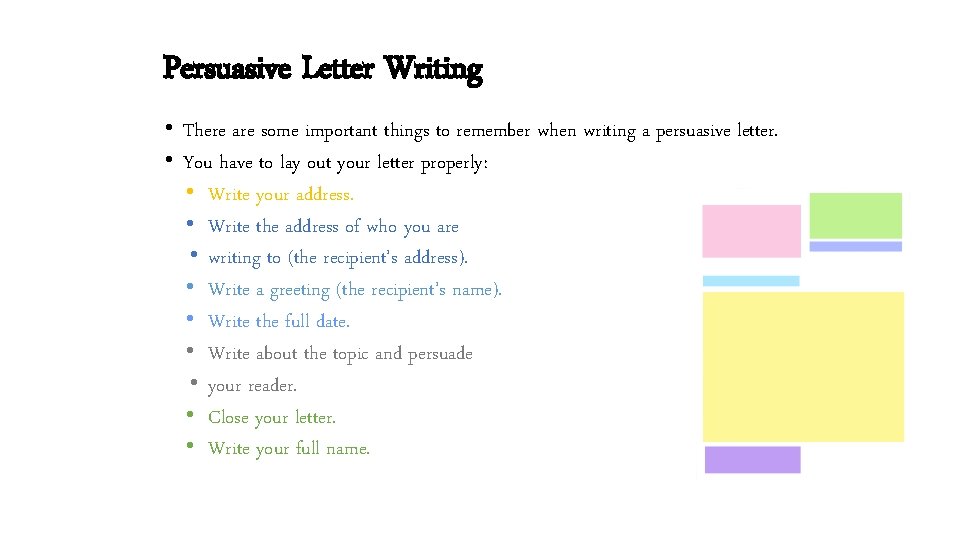
Persuasive Letter Writing • There are some important things to remember when writing a persuasive letter. • You have to lay out your letter properly: • Write your address. • Write the address of who you are • writing to (the recipient’s address). • Write a greeting (the recipient’s name). • Write the full date. • Write about the topic and persuade • your reader. • Close your letter. • Write your full name.
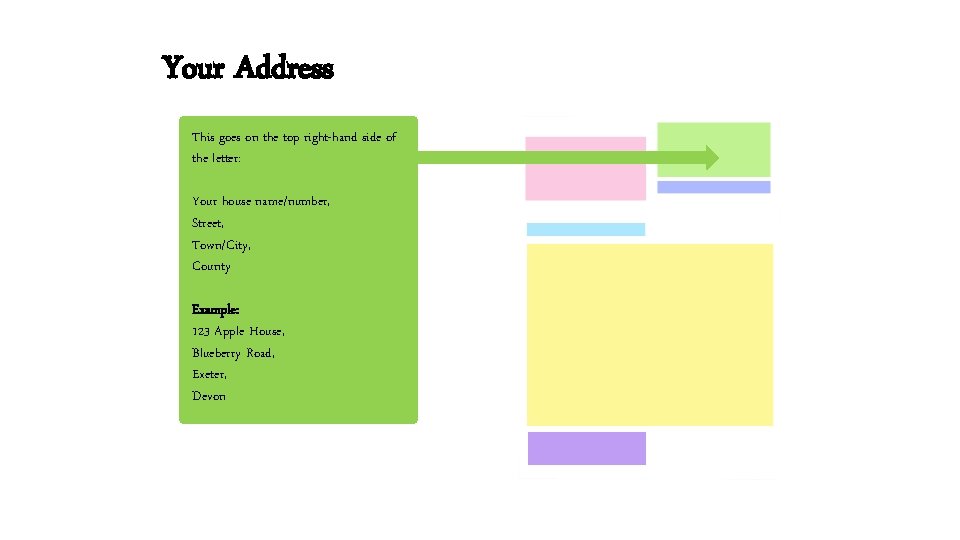
Your Address This goes on the top right-hand side of the letter: Your house name/number, Street, Town/City, County Example: 123 Apple House, Blueberry Road, Exeter, Devon
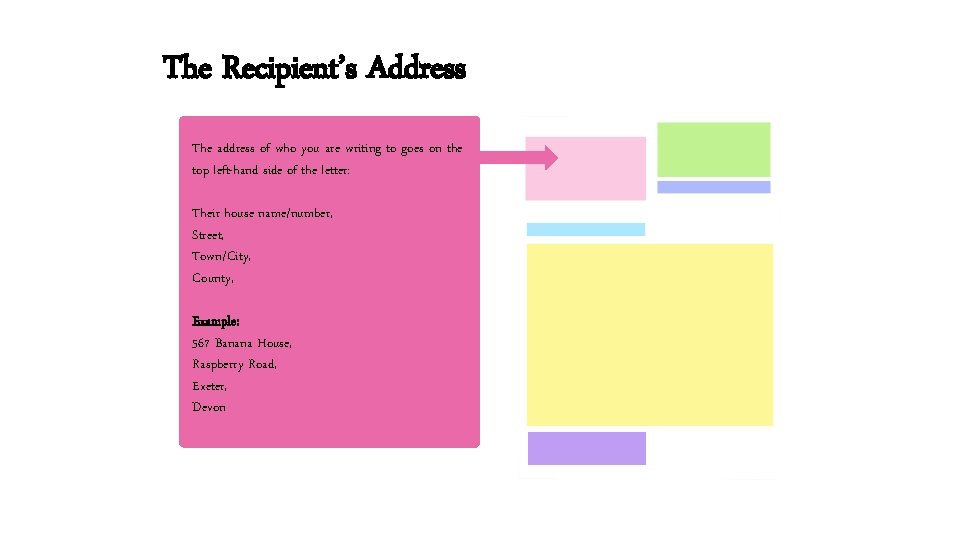
The Recipient’s Address The address of who you are writing to goes on the top left-hand side of the letter: Their house name/number, Street, Town/City, County, Example: 567 Banana House, Raspberry Road, Exeter, Devon
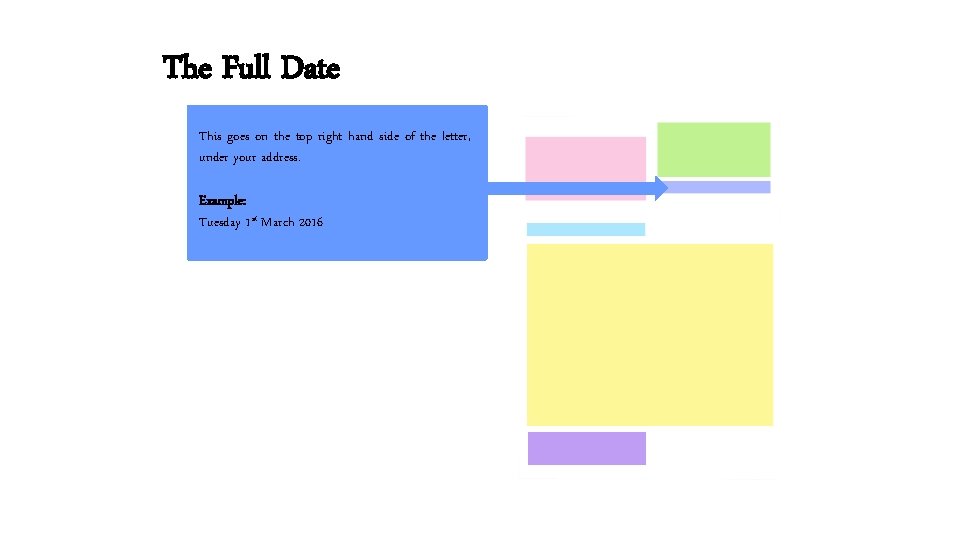
The Full Date This goes on the top right hand side of the letter, under your address. Example: Tuesday 1 st March 2016
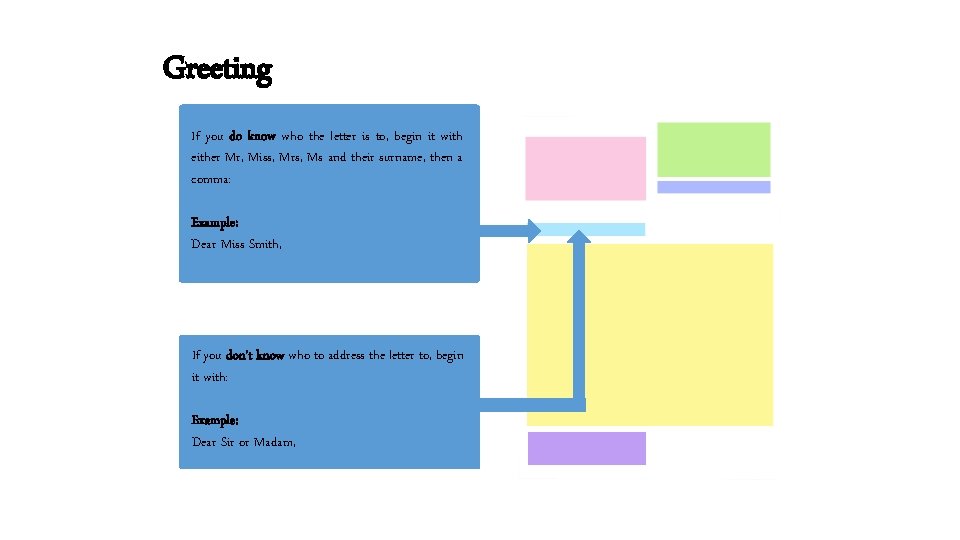
Greeting If you do know who the letter is to, begin it with either Mr, Miss, Mrs, Ms and their surname, then a comma: Example: Dear Miss Smith, If you don’t know who to address the letter to, begin it with: Example: Dear Sir or Madam,
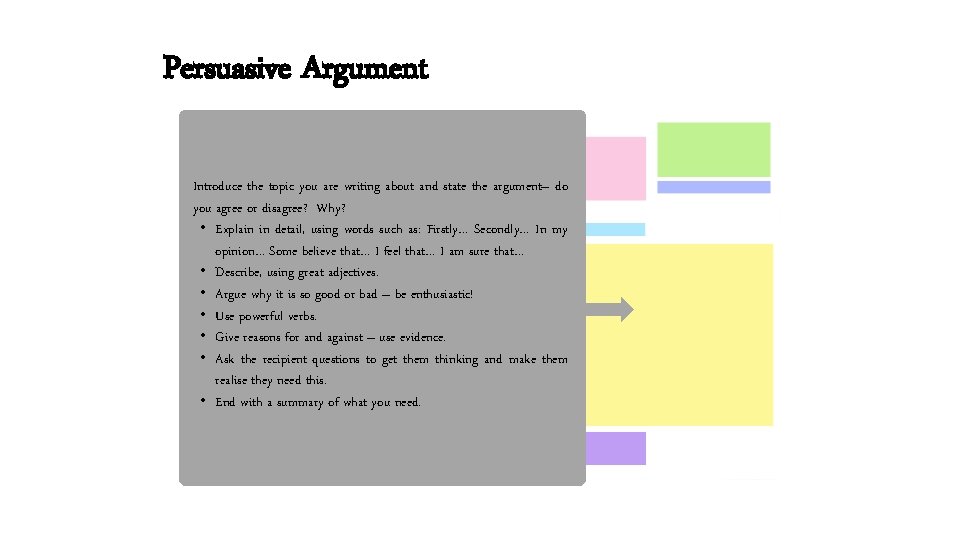
Persuasive Argument Introduce the topic you are writing about and state the argument– do you agree or disagree? Why? • Explain in detail, using words such as: Firstly… Secondly… In my opinion… Some believe that… I feel that… I am sure that… • Describe, using great adjectives. • Argue why it is so good or bad – be enthusiastic! • Use powerful verbs. • Give reasons for and against – use evidence. • Ask the recipient questions to get them thinking and make them realise they need this. • End with a summary of what you need.
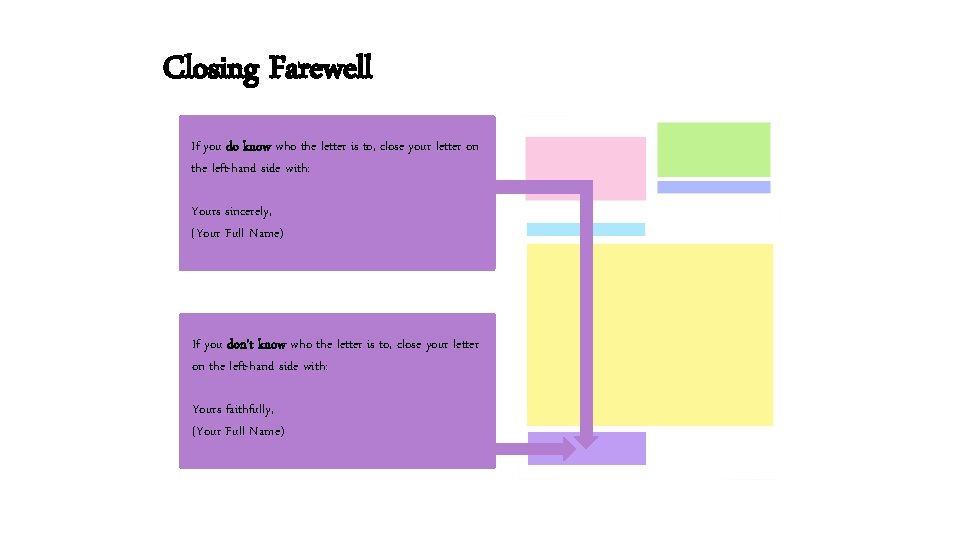
Closing Farewell If you do know who the letter is to, close your letter on the left-hand side with: Yours sincerely, (Your Full Name) If you don’t know who the letter is to, close your letter on the left-hand side with: Yours faithfully, (Your Full Name)
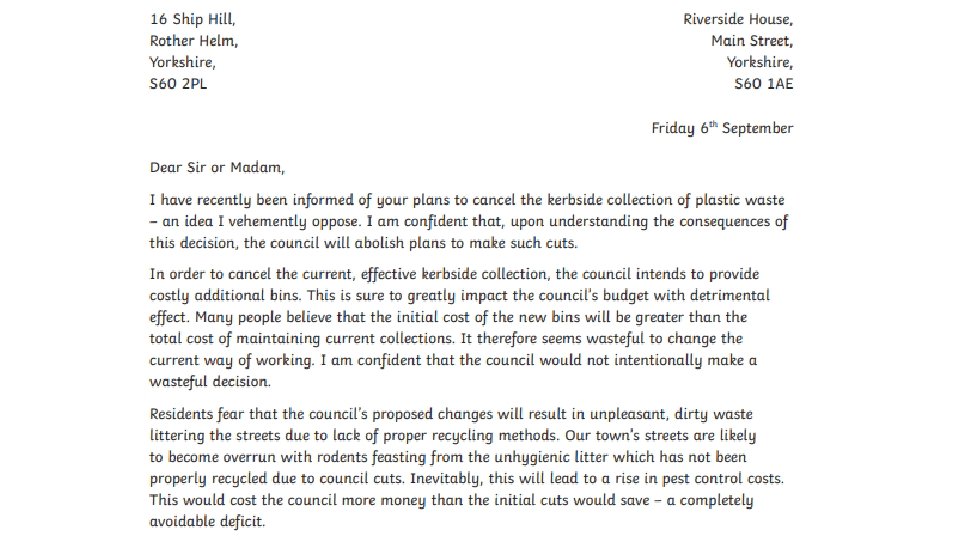
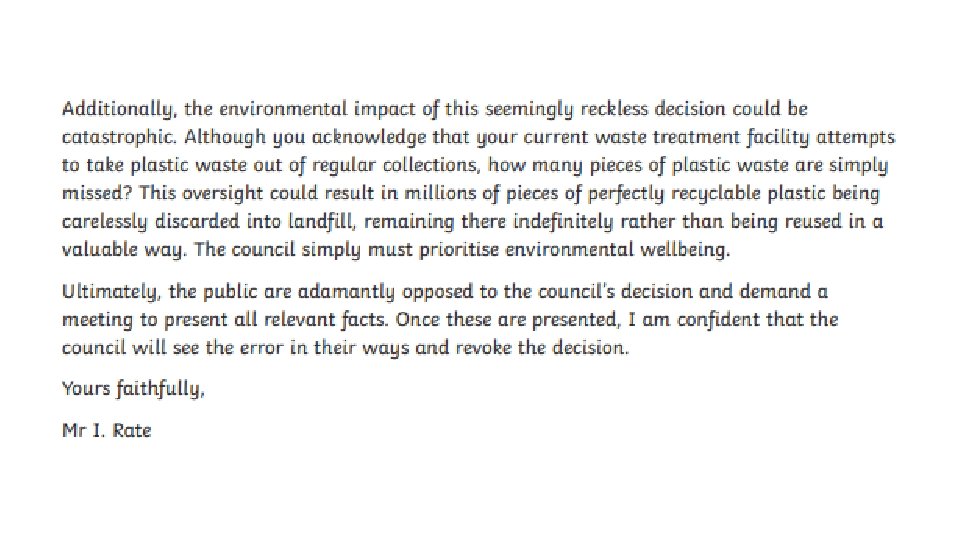
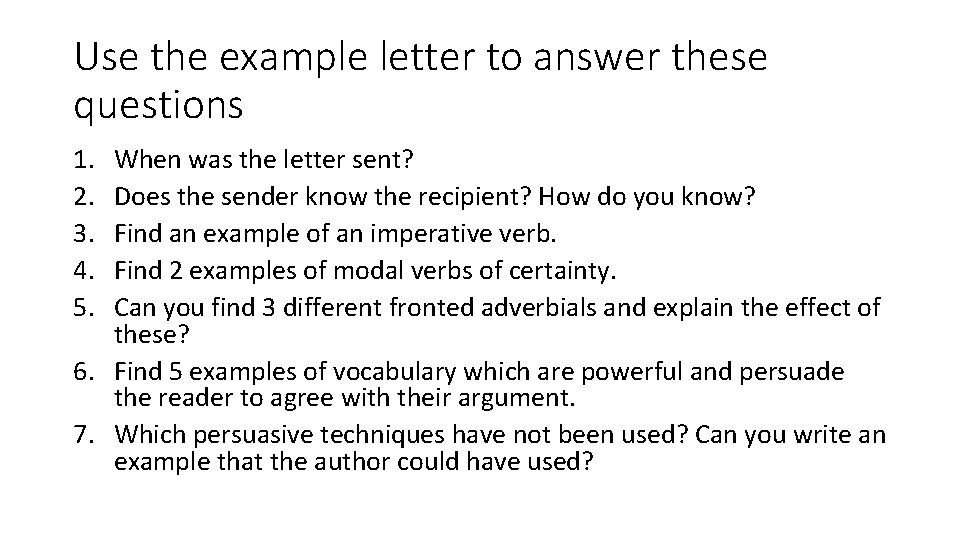
Use the example letter to answer these questions 1. 2. 3. 4. 5. When was the letter sent? Does the sender know the recipient? How do you know? Find an example of an imperative verb. Find 2 examples of modal verbs of certainty. Can you find 3 different fronted adverbials and explain the effect of these? 6. Find 5 examples of vocabulary which are powerful and persuade the reader to agree with their argument. 7. Which persuasive techniques have not been used? Can you write an example that the author could have used?