
Exploring Life Regents Biology What does it mean
Exploring Life Regents Biology
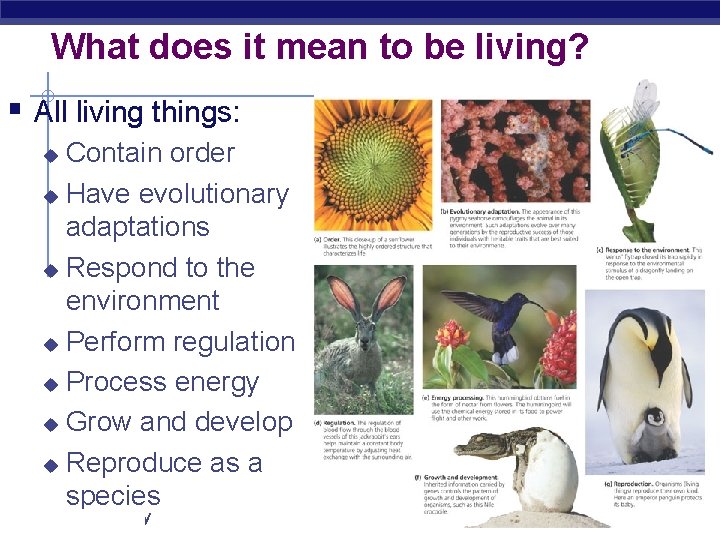
What does it mean to be living? § All living things: Contain order u Have evolutionary adaptations u Respond to the environment u Perform regulation u Process energy u Grow and develop u Reproduce as a species u Regents Biology
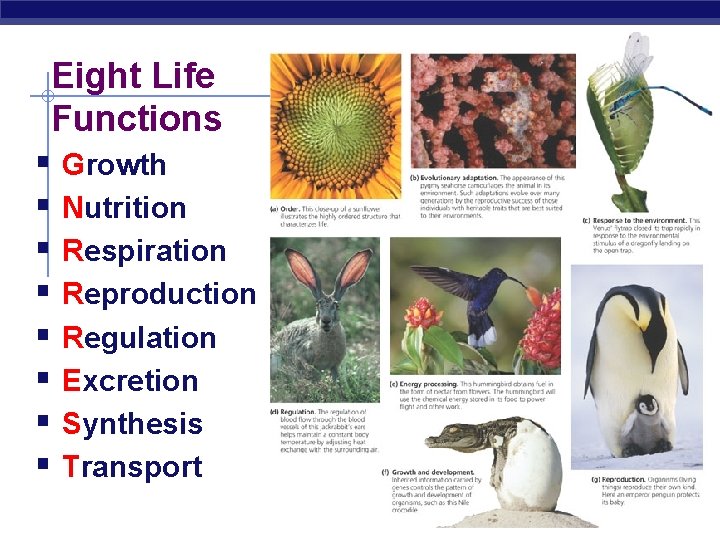
Eight Life Functions § Growth § Nutrition § Respiration § Reproduction § Regulation § Excretion § Synthesis § Transport Regents Biology
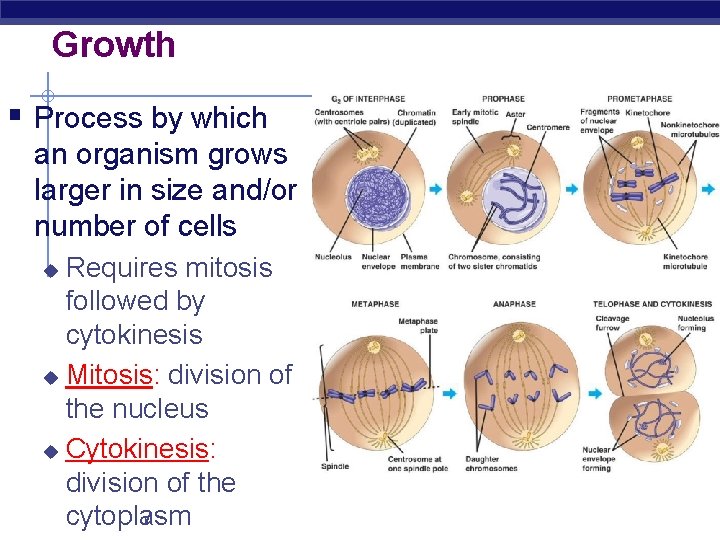
Growth § Process by which an organism grows larger in size and/or number of cells Requires mitosis followed by cytokinesis u Mitosis: division of the nucleus u Cytokinesis: division of the Regents Biology cytoplasm u
Nutrition § The means by which a living things uses molecules from its environment for synthesis, growth and regulation Autotrophic nutrition: the organism makes its own food molecules u Heterotrophic nutrition: the organism ingests food molecules u u How a paramecium eats! Regents Biology
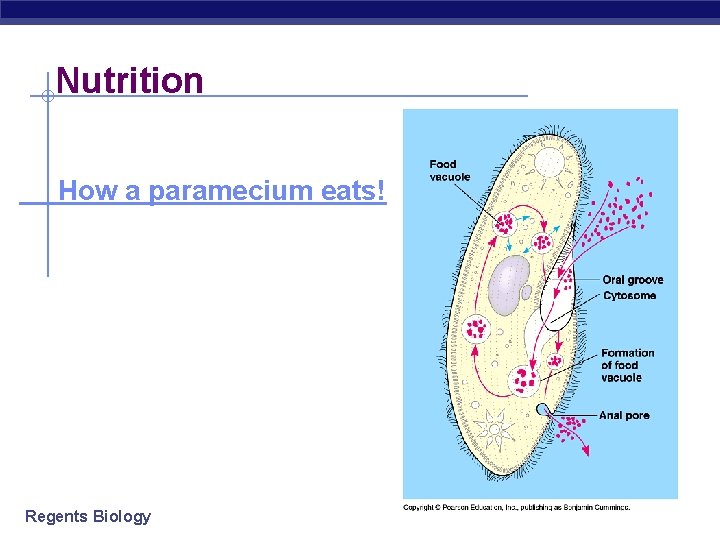
Nutrition How a paramecium eats! Regents Biology
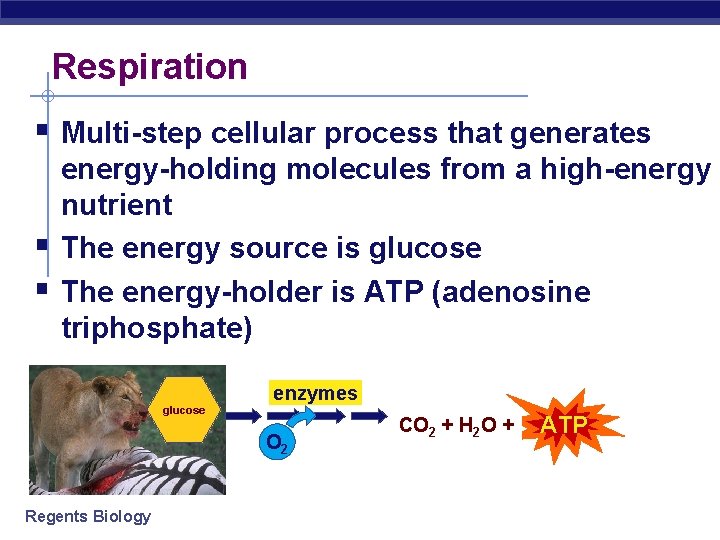
Respiration § Multi-step cellular process that generates § § energy-holding molecules from a high-energy nutrient The energy source is glucose The energy-holder is ATP (adenosine triphosphate) glucose enzymes O 2 Regents Biology CO 2 + H 2 O + ATP
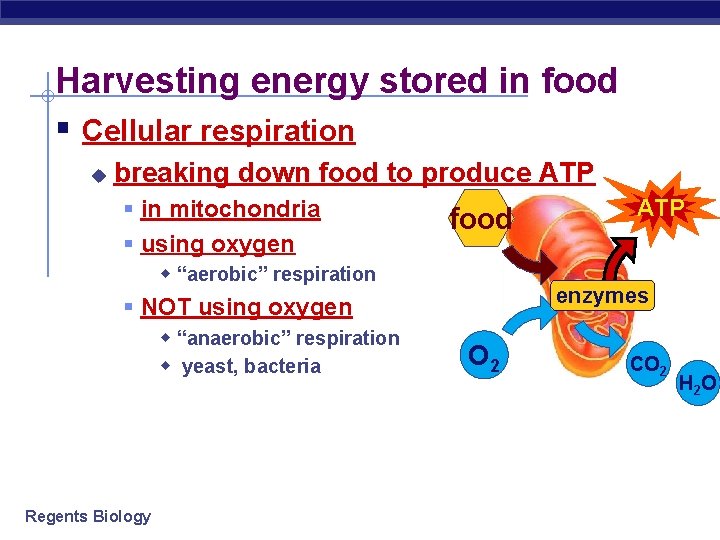
Harvesting energy stored in food § Cellular respiration u breaking down food to produce ATP § in mitochondria § using oxygen w “aerobic” respiration § NOT using oxygen w “anaerobic” respiration w yeast, bacteria Regents Biology food ATP enzymes O 2 CO 2 H 2 O
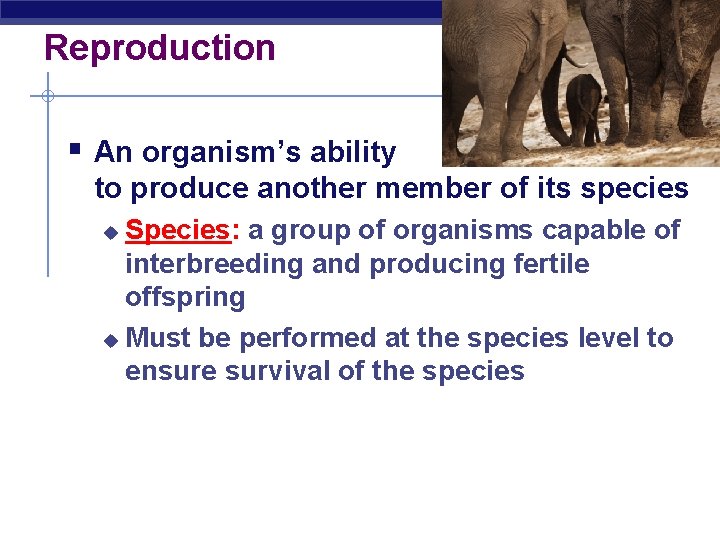
Reproduction § An organism’s ability to produce another member of its species Species: a group of organisms capable of interbreeding and producing fertile offspring u Must be performed at the species level to ensure survival of the species u Regents Biology
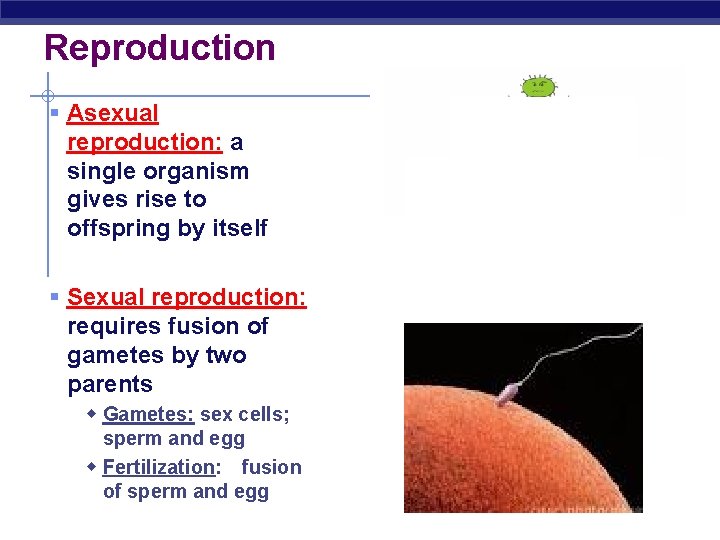
Reproduction § Asexual reproduction: a single organism gives rise to offspring by itself § Sexual reproduction: requires fusion of gametes by two parents w Gametes: sex cells; sperm and egg w Fertilization: fusion of sperm and egg Regents Biology
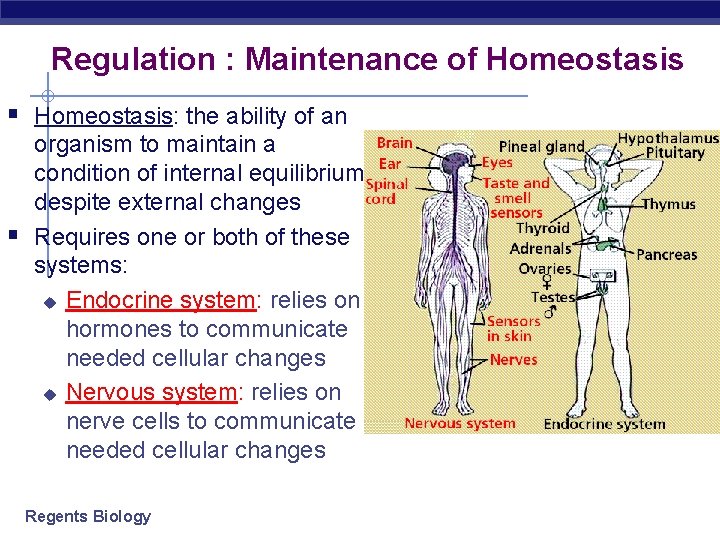
Regulation : Maintenance of Homeostasis § Homeostasis: the ability of an § organism to maintain a condition of internal equilibrium despite external changes Requires one or both of these systems: u Endocrine system: relies on hormones to communicate needed cellular changes u Nervous system: relies on nerve cells to communicate needed cellular changes Regents Biology
Excretion § Removal of cellular wastes These wastes can be harmful if allowed to accumulate u Ex. Urea in urine and sweat u Synthesis • Use of ingested molecules to build needed molecules in the organism • Ingestion → digestion → absorption → synthesis Regents Biology
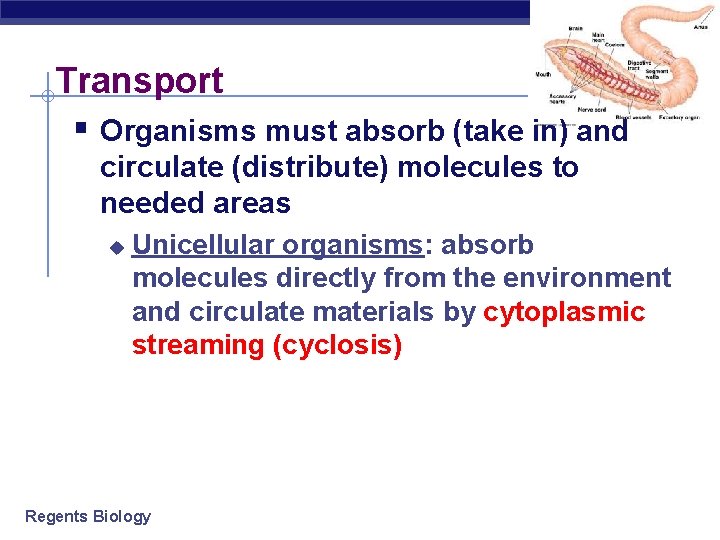
Transport § Organisms must absorb (take in) and circulate (distribute) molecules to needed areas u Unicellular organisms: absorb molecules directly from the environment and circulate materials by cytoplasmic streaming (cyclosis) Regents Biology
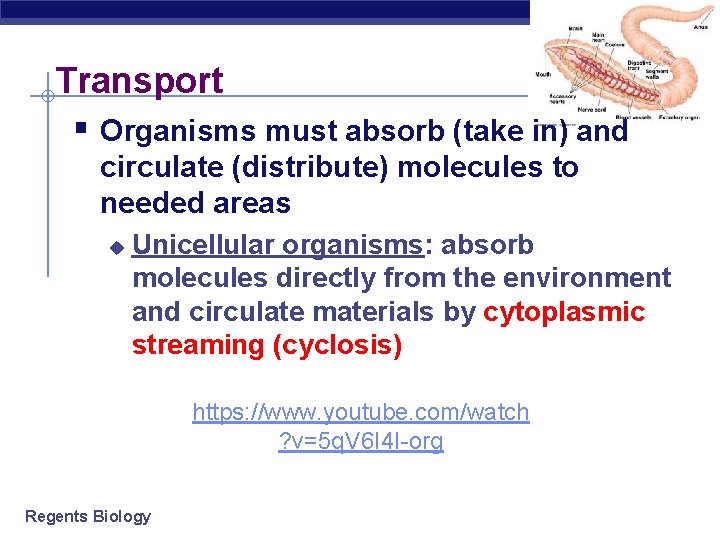
Transport § Organisms must absorb (take in) and circulate (distribute) molecules to needed areas u Unicellular organisms: absorb molecules directly from the environment and circulate materials by cytoplasmic streaming (cyclosis) https: //www. youtube. com/watch ? v=5 q. V 6 I 4 I-org Regents Biology
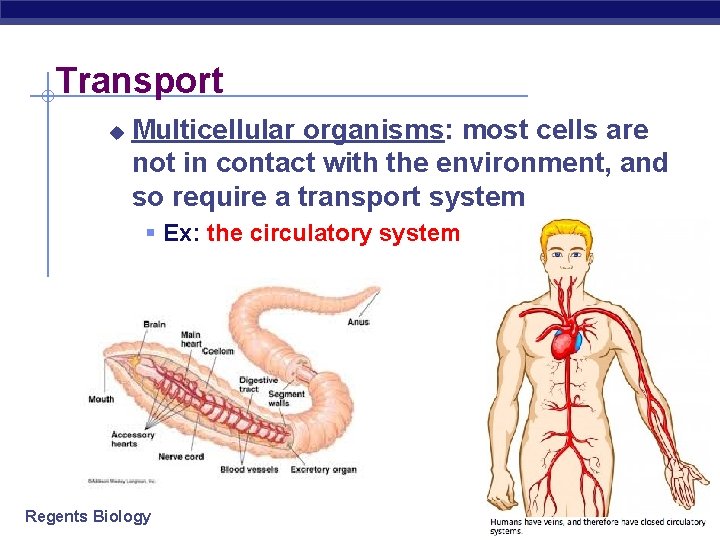
Transport u Multicellular organisms: most cells are not in contact with the environment, and so require a transport system § Ex: the circulatory system Regents Biology
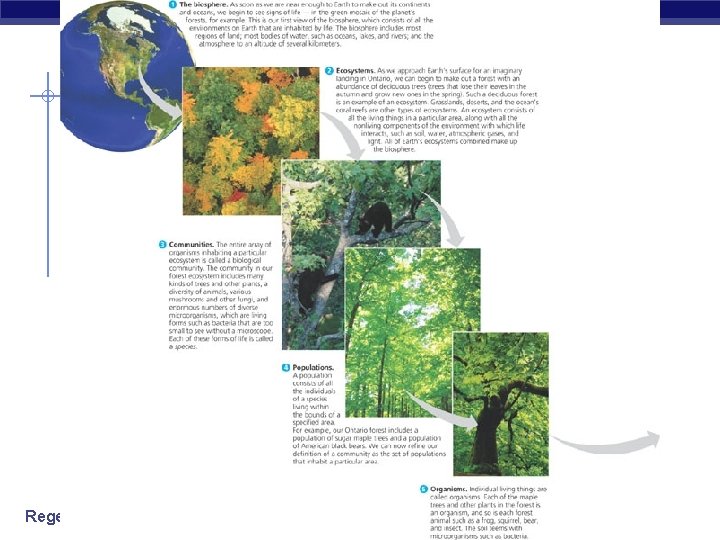
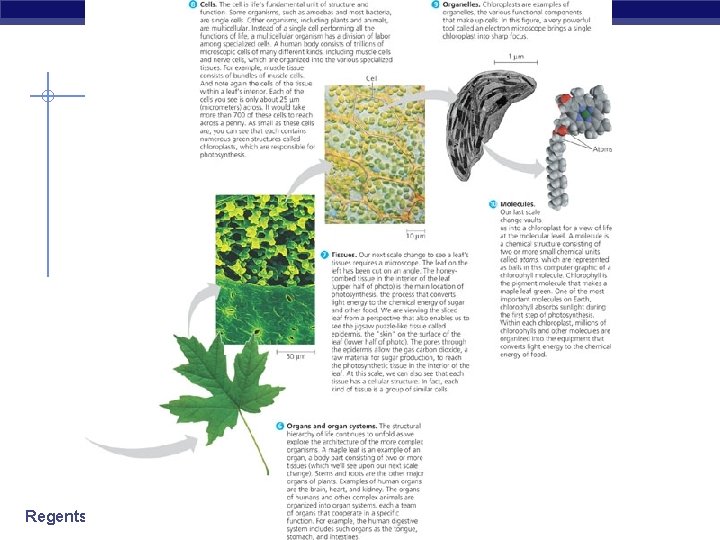
Order § Ordered structure is a character of life § Organization occurs on a global to a molecular scale u Biosphere → ecosystem → community → population → organism → organ systems → organs → tissues → cells → organelles → molecules Regents Biology
Regents Biology
Regents Biology
How do living things survive? § Maintenance of homeostasis: Maintenance of a stable, internal environment regardless of internal or external changes u Ex: internal change: increase in blood sugar u Ex: external change: decrease in temperature u Regents Biology
Homeostasis § Mechanism for homeostasis: u Negative feedback: “more gets you less” § The products of a chemical reaction inhibit the activity of the reactants that made the products u Positive feedback: “more gets you more” § the products of a chemical reaction stimulate the activity of the reactants that made the products Regents Biology
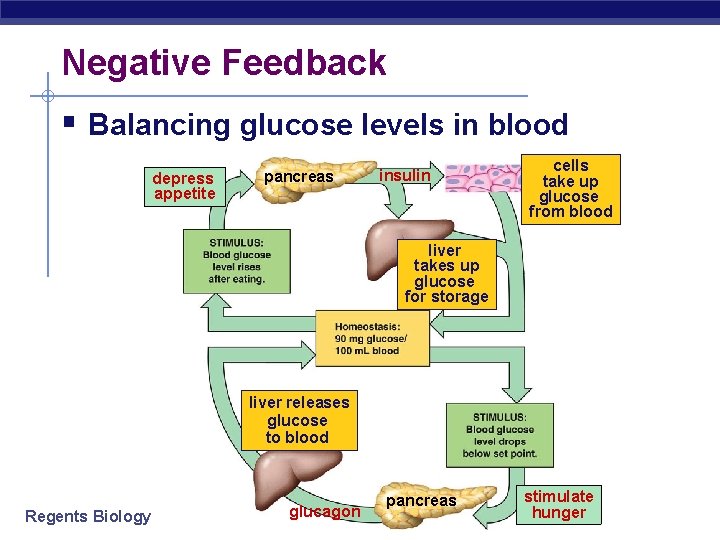
Negative Feedback § Balancing glucose levels in blood depress appetite pancreas insulin cells take up glucose from blood liver takes up glucose for storage liver releases glucose to blood Regents Biology glucagon pancreas stimulate hunger
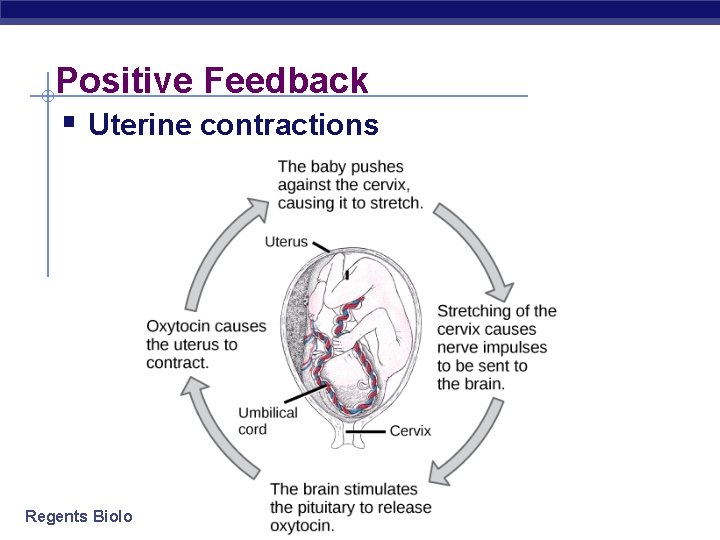
Positive Feedback § Uterine contractions Regents Biology
- Slides: 22