
Exploring Interests and Values Chapter 3 The Interest












- Slides: 55
Exploring Interests and Values Chapter 3
The Interest Profiler* • Place a checkmark next to the items you might like to do. • You do not need to know how to do them or even have the opportunity to do them. • Don’t select items based on income. • You can earn higher income with more education. For example, if you would like to build a brick walkway, you could work in construction or with more education, become a civil engineer. *Available in the textbook
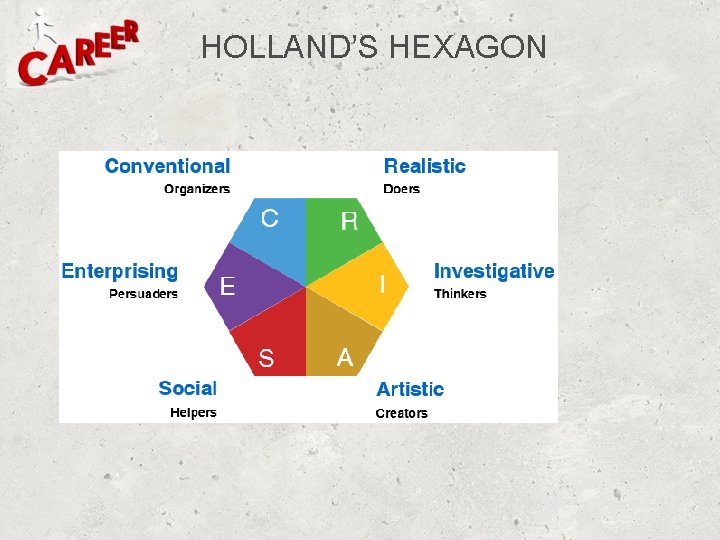
HOLLAND’S HEXAGON
Investigative Persons • Have a strong interest in science • Work with theories, analyze data and solve problems • Are analytical, curious, original and creative • Have good skills in math and science • Are employed in science or lab related work
Artistic Persons • Enjoy visual arts, music, drama or writing • Are creative and value self expression • Work in unstructured and flexible environments • Have artistic talent • Work in museums, theaters, concert halls, advertising
Social Persons • Like to work with people • Enjoy helping, nurturing and caring for others • Have social, communication and teaching skills • Humanistic, idealistic • Work in schools, social services, religious occupations, health care
Enterprising Persons • Like to persuade, lead or supervise • Have skills in selling and communication • Seek positions of leadership, status and power • Employed in business, government, sales and politics
Conventional Persons • • • Good at organizing and managing details Like math, accounting, finance Are efficient and patient Prefer structure Work in business, corporations, quality control, and financial institutions
Realistic Persons • Enjoy working with tools, machines, equipment • Often work outdoors • Are active and adventurous • Have good mechanical abilities • Are employed in manufacturing, construction, transportation and engineering
Exercise: What are 20 things you like to do?
Can you list 20 things you like to do in 5 minutes?
$ Now that you have your list, put a next to anything that costs more than $20 each time you do it.
P Write to the left of each item that you do with people.
I Write next to anything that you do by yourself (individually)
T Write next to the items that involve working with things. • • Cars Tools Gardening Crafts
D Write next to items that involve working with data. • • Computers Math Budgeting Organizing
A Write next to items that involve physical activity.
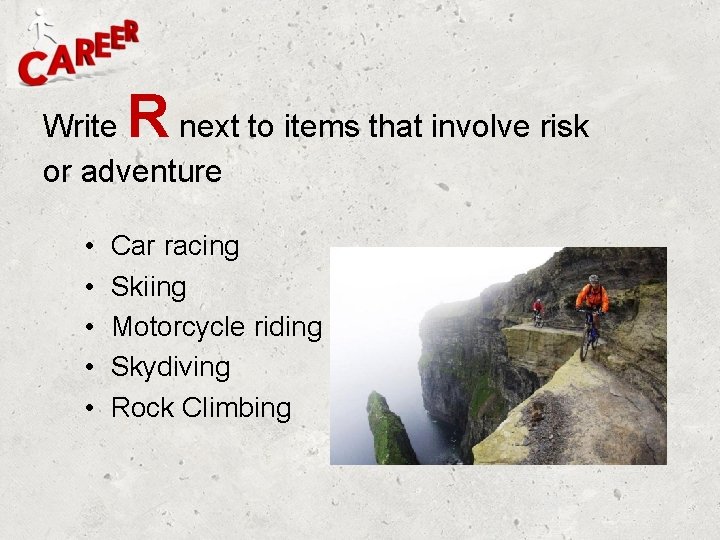
R Write next to items that involve risk or adventure • • • Car racing Skiing Motorcycle riding Skydiving Rock Climbing
MT Write next to the items you would like to spend more time doing.
1 -5 Number the most important items on your list. What is your number one interest? Share it with the class.
20 Things You Like to Do Answer questions at the end of this activity.
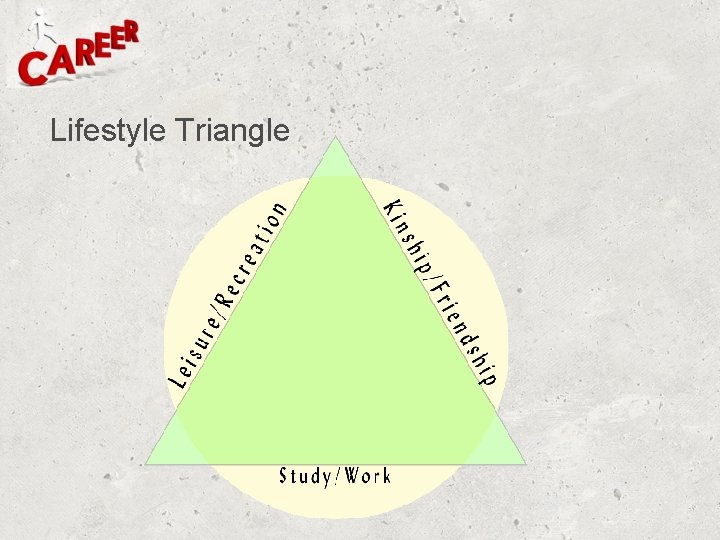
What kind of lifestyle do you prefer?
Lifestyle Triangle
Lifestyle Look at the results of 20 Things You Like to Do. Do you have a balance between leisure, socializing and work/study?
Exploring Your Values
What Are Your Values?
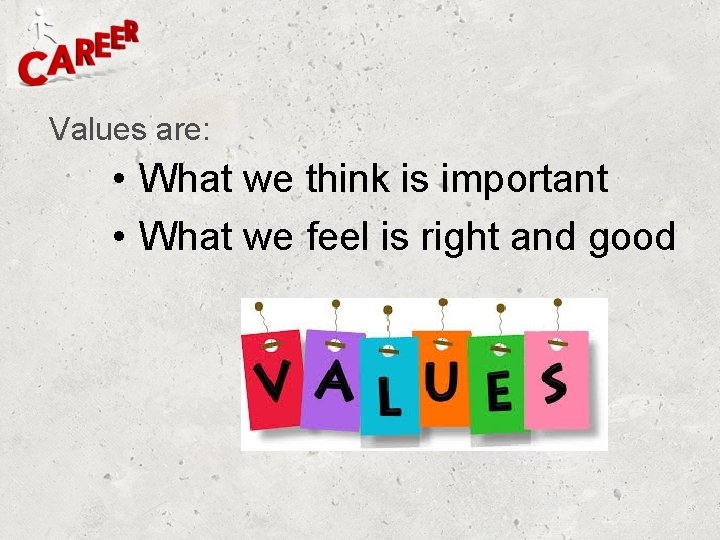
Values are: • What we think is important • What we feel is right and good
Make important decisions based on your values • • Should I go to college? What is my major What career should I choose? Who should I marry?
Where do we get our values?
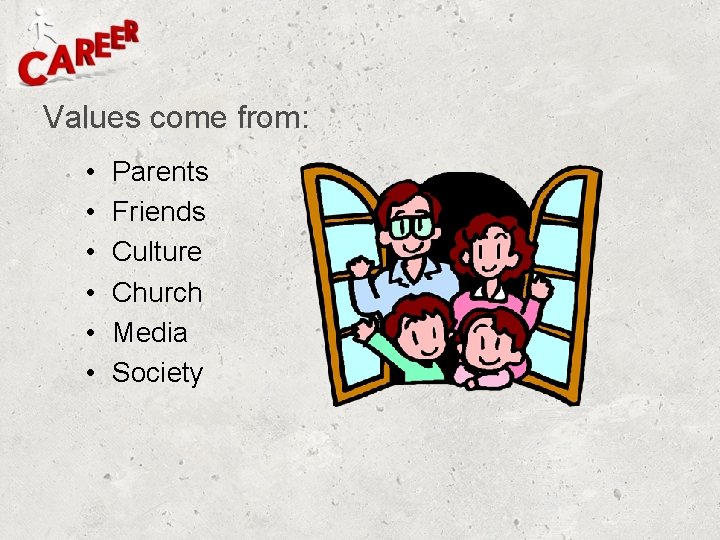
Values come from: • • • Parents Friends Culture Church Media Society
Values and needs are related.
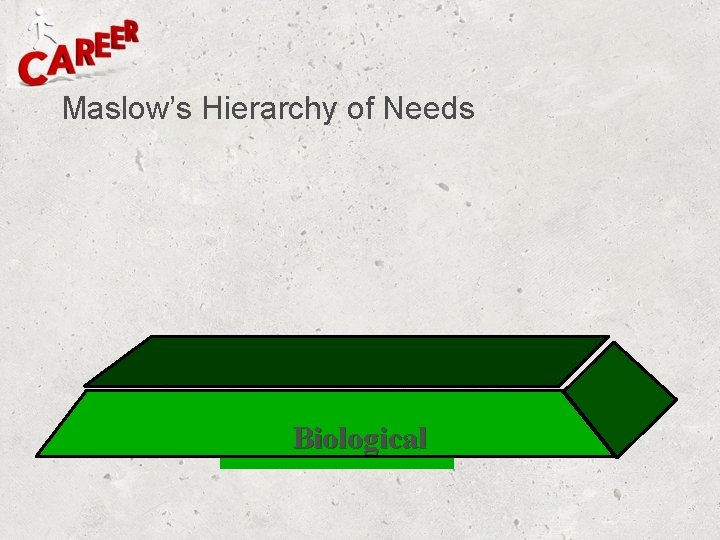
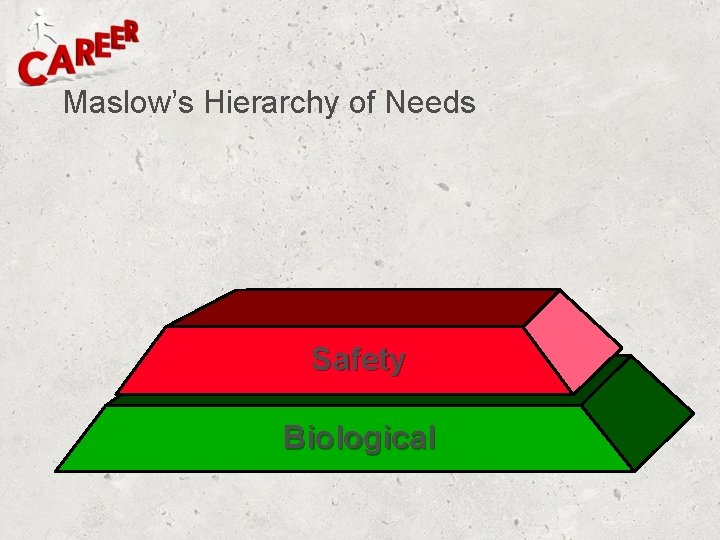
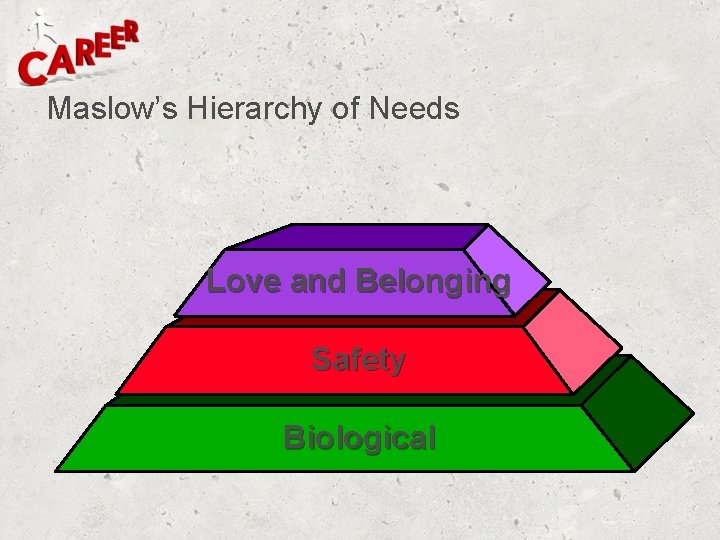
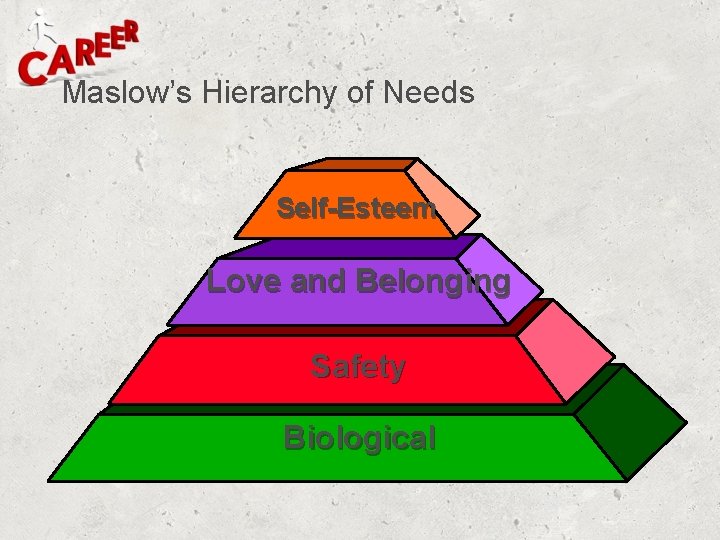
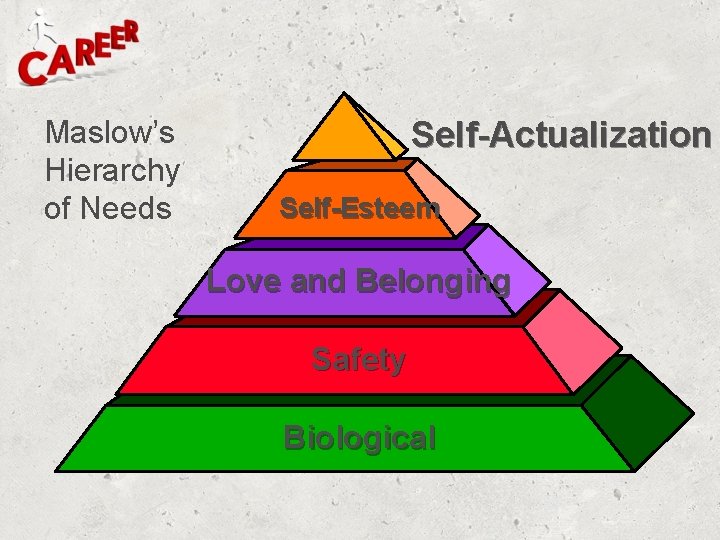
Maslow’s Hierarchy of Needs
Maslow’s Hierarchy of Needs Tell. Biological the truth
Maslow’s Hierarchy of Needs Safety Commit to use Tell. Biological the truth
Maslow’s Hierarchy of Needs Love and Belonging Affirmation Safety Commit to use Tell. Biological the truth
Maslow’s Hierarchy of Needs Self-Esteem Love and Belonging Affirmation Safety Commit to use Biological Tell the truth
Maslow’s Hierarchy of Needs Self-Actualization Self-Esteem Love and Belonging Affirmation Safety Commit to use Tell. Biological the truth
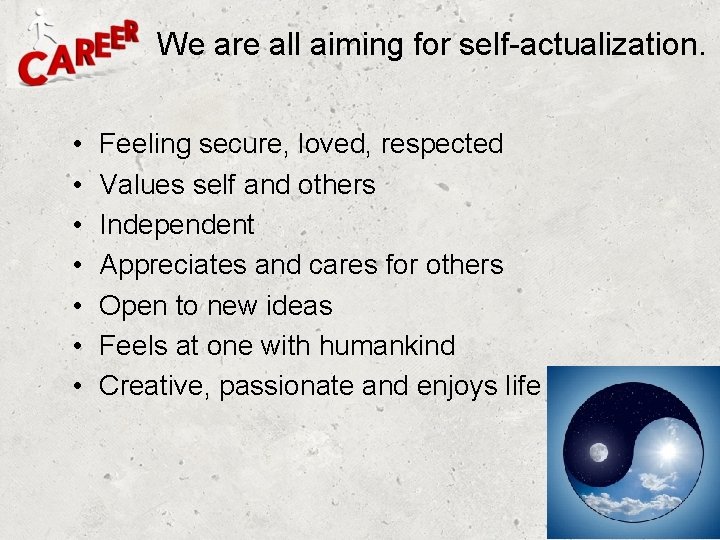
We are all aiming for self-actualization. • • Feeling secure, loved, respected Values self and others Independent Appreciates and cares for others Open to new ideas Feels at one with humankind Creative, passionate and enjoys life
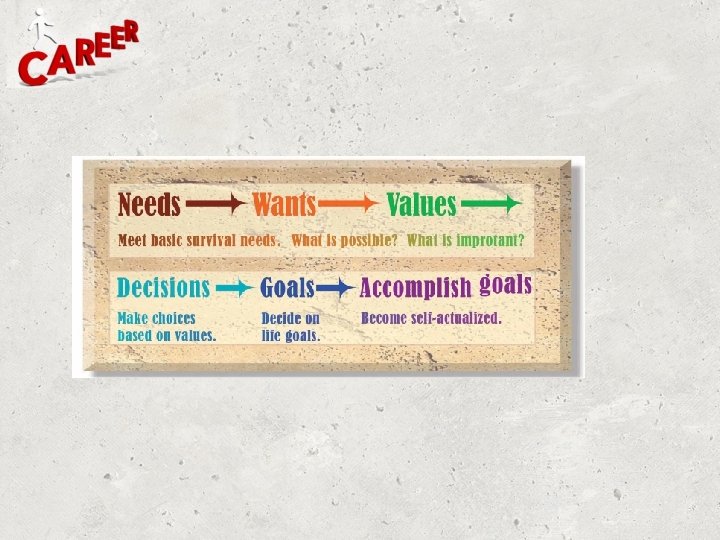
How are Needs and Values Related? • • First we meet basic survival needs Then focus on wants or desires Determine what is important (values) Knowing what we value helps us to make good decisions • Decide on life goals • Accomplish goals
Complete: Assessing Your Personal Values Share your highest value with the class Complete: Summing Up Values
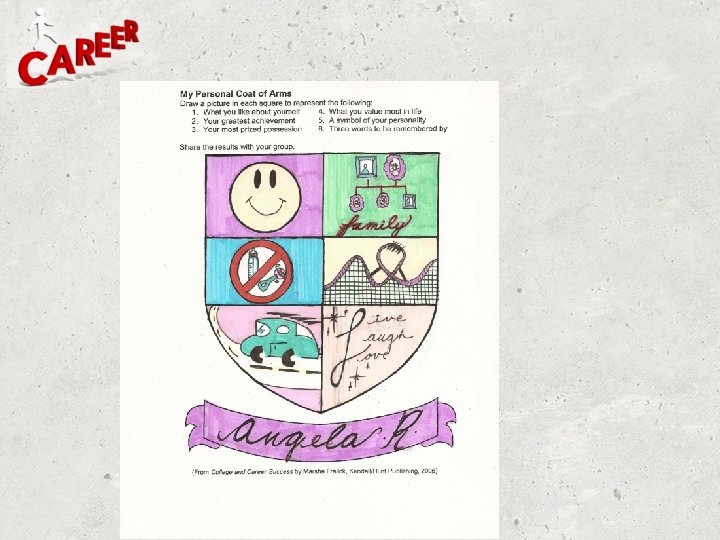
Assignment: My Personal Coat of Arms • • • What you like about yourself Your greatest achievement Your most prized possession What you value most in life A symbol of your personality Three words to be remembered by
Some samples
Keys to Success: Act on Your Values
Knowing your values is not enough.
Act on your values.
For example, if you value your good health, what actions will you take?
If you value a college education, you can find the motivation needed to be successful.
Group Activity: Values in Action
Take the Achieve. Works Intelligences in Chapter 3 This assessment helps you to think positively about your abilities and connect them to careers. Answer the questions honestly for the best results.
Multiple Intelligences Developed by Howard Gardner Defined as the human ability to solve problems or design or compose things valued in at least one culture. He selected these intelligences because they are all represented by an area in the brain that are valued in different cultures.
Multiple Intelligences Measures 9 Elements of Intelligence ü ü ü ü ü Musical: hearing and remembering musical patterns Interpersonal: understanding other people Mathematical: working with numbers Spatial: manipulating objects in space Bodily-Kinesthetic: using your body Linguistic: using language Intrapersonal: understanding yourself Naturalist: understanding the environment Existential: pondering the meaning of life and our place in the universe