
Exploring Inside Atoms Combined science Physics Key stage
Exploring Inside Atoms Combined science - Physics - Key stage 4 - Atomic Structure Mr van Hoek 1
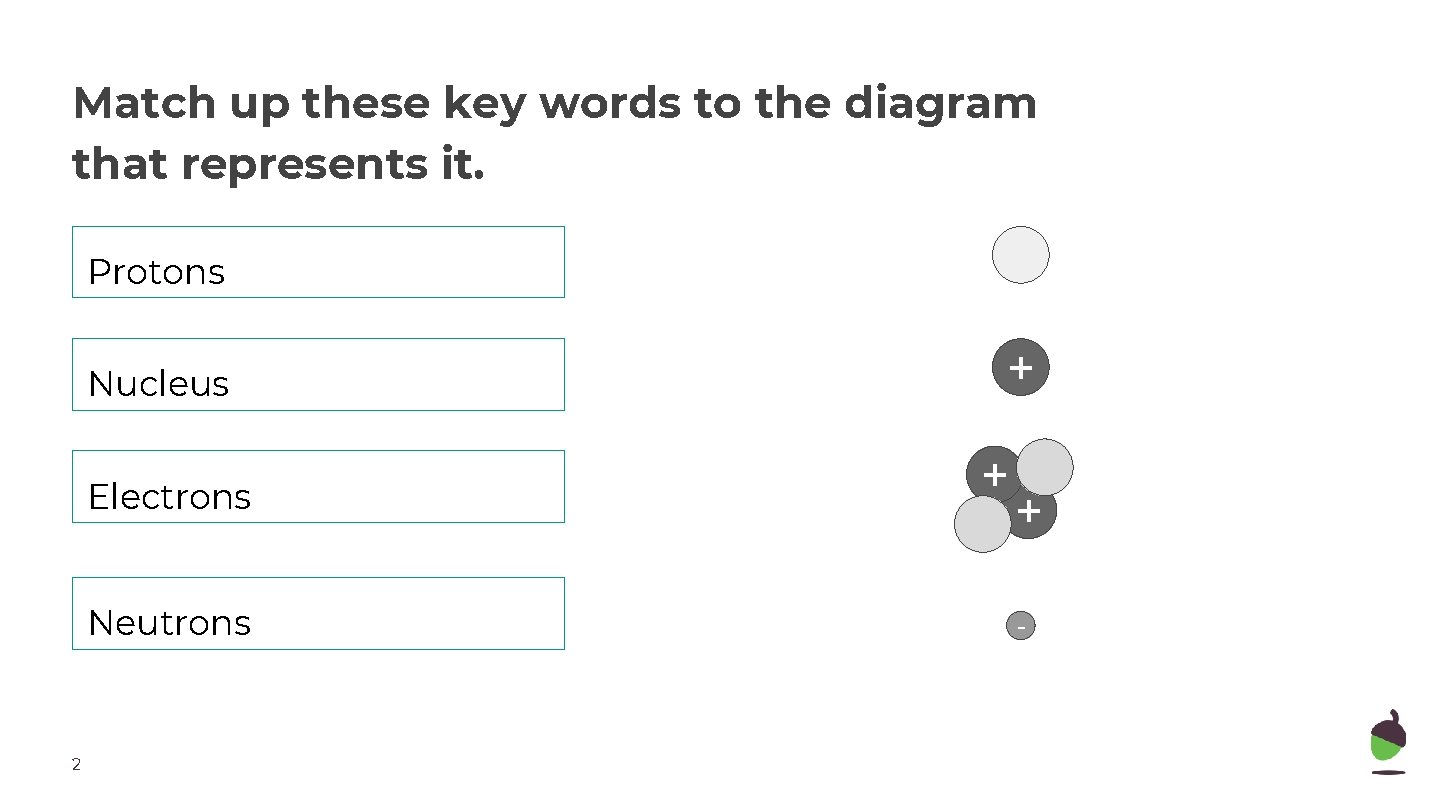
Match up these key words to the diagram that represents it. Protons Nucleus Electrons Neutrons 2 + + + -

Draw a labelled diagram of an atom Protons 3
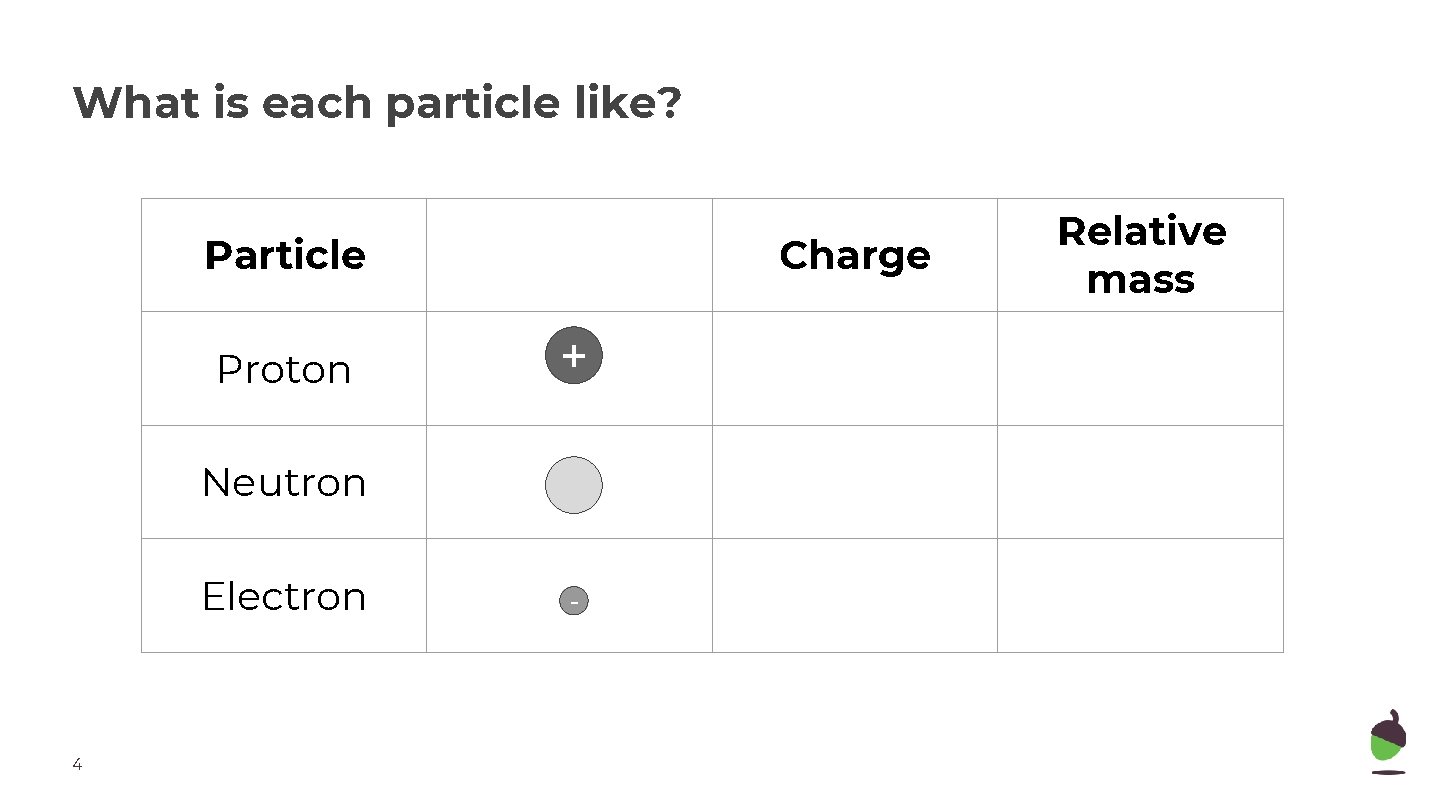
What is each particle like? Particle Proton Charge + Neutron Electron 4 - Relative mass
Independent practice 1. What is the charge on the nucleus? – The charge on the nucleus is ____________ 2. Why is the charge on an atom neutral? – The charge on an atom is _______because there are _____ numbers of ________ and _______. 3. An atom has 5 protons in its nucleus. What is the charge on the nucleus and the charge of the atom overall? Use numbers. – The charge on the nucleus is _____ and the charge on the atom overall is _____. 5
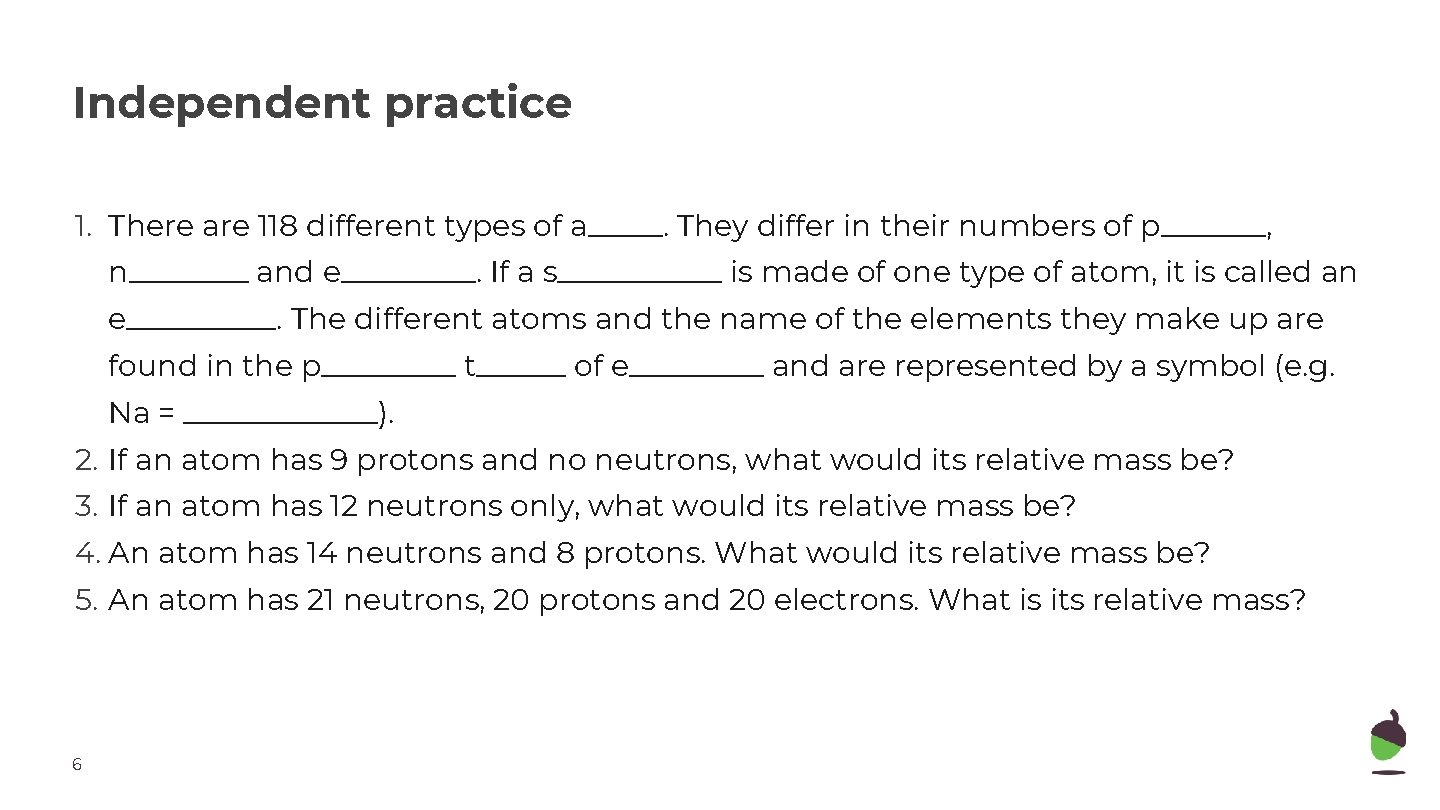
Independent practice 1. There are 118 different types of a_____. They differ in their numbers of p_______, n____ and e_____. If a s______ is made of one type of atom, it is called an e_____. The different atoms and the name of the elements they make up are found in the p_____ t______ of e_____ and are represented by a symbol (e. g. Na = _______). 2. If an atom has 9 protons and no neutrons, what would its relative mass be? 3. If an atom has 12 neutrons only, what would its relative mass be? 4. An atom has 14 neutrons and 8 protons. What would its relative mass be? 5. An atom has 21 neutrons, 20 protons and 20 electrons. What is its relative mass? 6
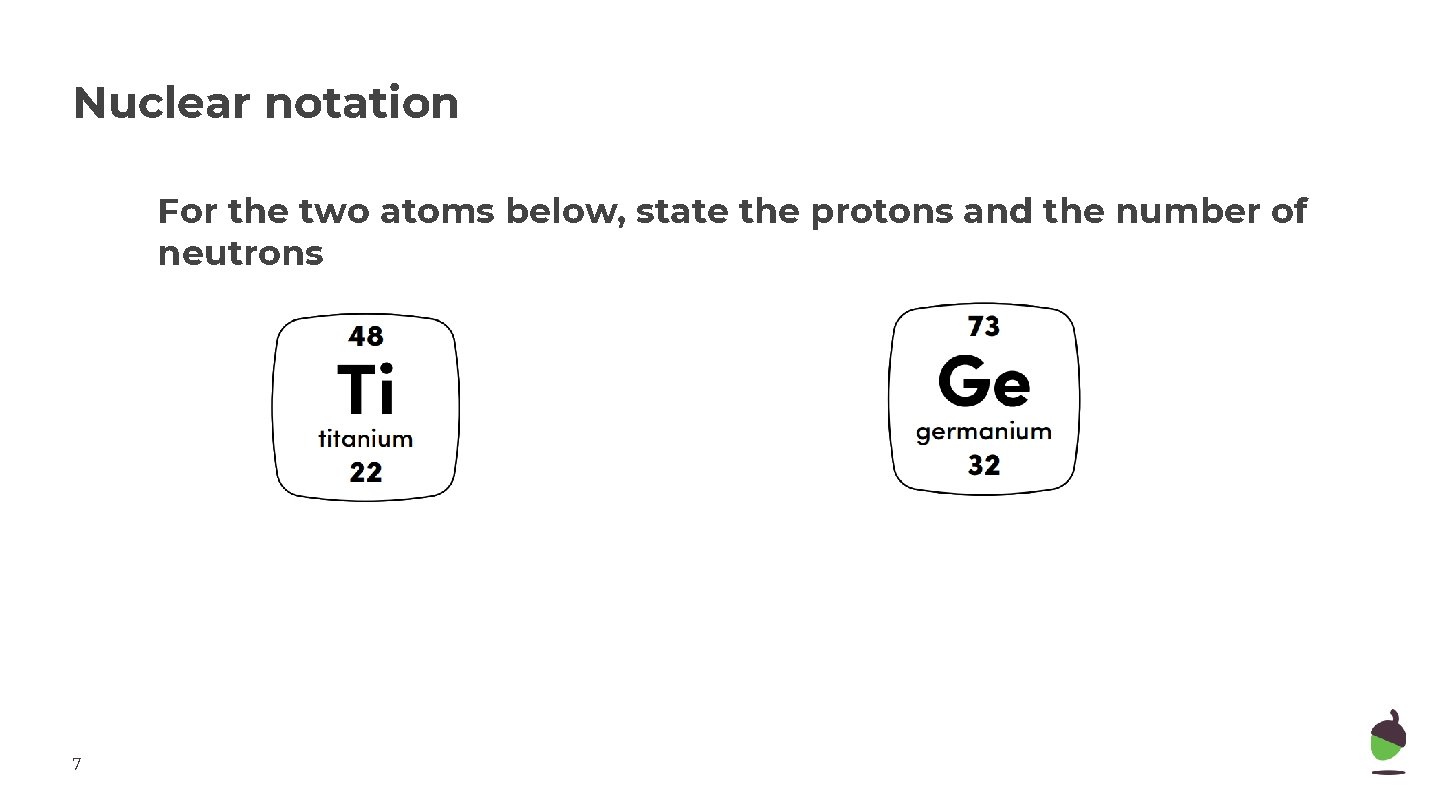
Nuclear notation For the two atoms below, state the protons and the number of neutrons 7
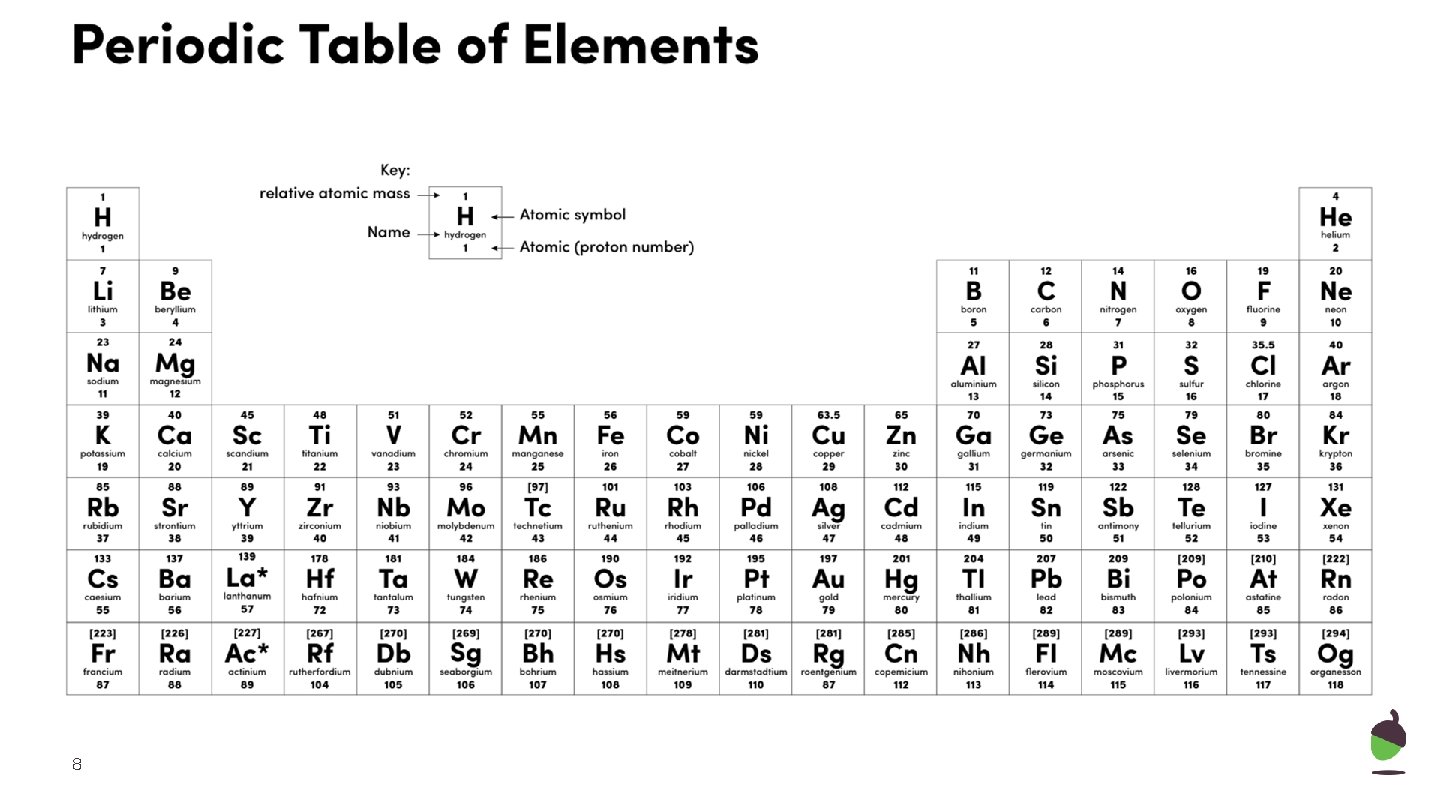
8
Use a periodic table to find the following information. 1. The number of protons in Carbon. 2. The number of protons in Helium. 3. The number of electrons in Zinc. 4. The number of neutrons in Sodium. 5. The number of neutrons in Iron. 6. The proton number of Copper. 7. The number of electrons in Rb. 8. The proton number of Ge. 9. The overall charge on the atom of W. 10. The number of neutrons in phosphorus.
- Slides: 9