
Exploring Earths Biomes Biomes Divisions in the environment

Exploring Earth’s Biomes

Biomes
Divisions in the environment based on climate, plants, and animals.
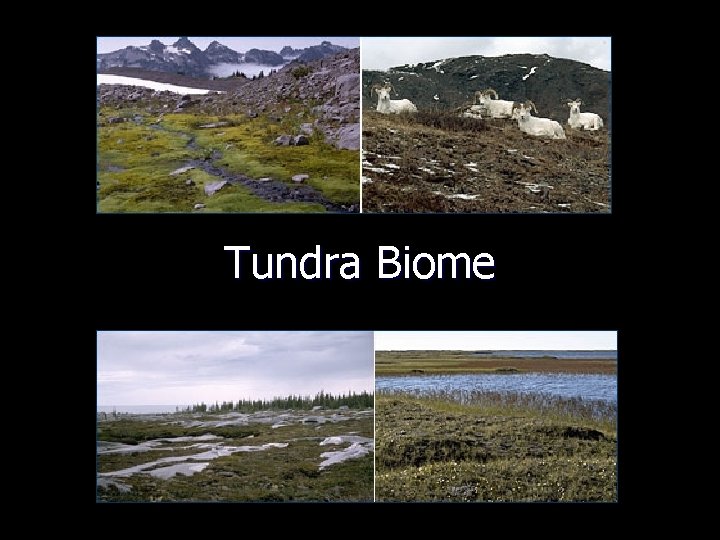
Tundra Biome

Tundra Biome • Climate is very cold and dry. • Less than 25 cm of rain and snow. • Soil stays permanently frozen called permafrost.

Coniferous Forest Biome
Coniferous Forest • In Canada, Alaska, Northern Asia, and Northern Europe. • Made up of trees called conifers evergreens that have cones. • Often called Taiga
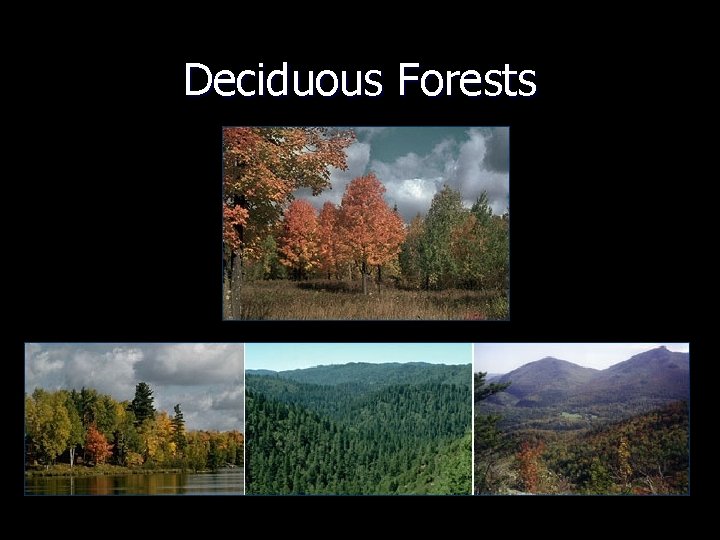
Deciduous Forests
Deciduous Forest • Covers the eastern United States and most of Europe and eastern Asia. • Deciduous trees shed their leaves in the fall. • Summers are warm and winters are cold.
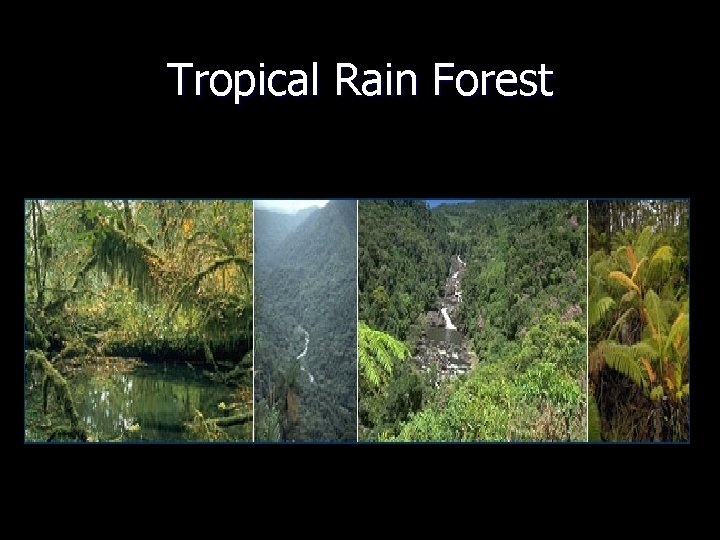
Tropical Rain Forest
Tropical Rain Forest • Rains almost everyday - at least 200 cm of rain yearly. • Climate is like summer year round, so plants can grow for all 12 months. • The tops of the trees form a green roof, or canopy.
Grassland Biomes
Grassland Biome • Grasses are main producers • Very few trees • Feeds large herds of herbivores, like Zebras and Antelopes.
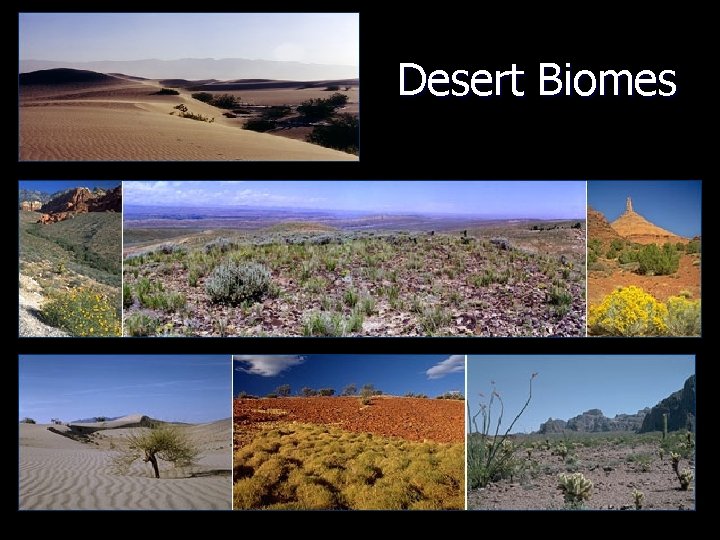
Desert Biomes
Desert Biome • Receives less than 25 cm of rainfall a year. • A desert can actually be hot or cold -usually hot during the day and cold at night.
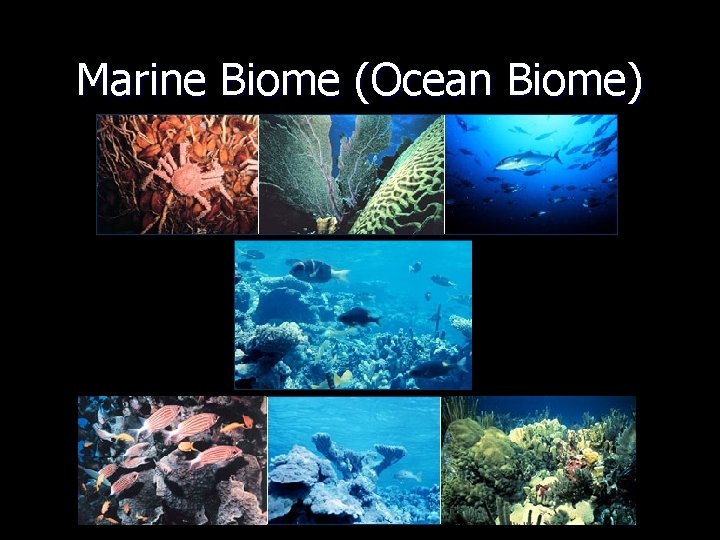
Marine Biome (Ocean Biome)
Ocean Biome • The largest of all the ecosystems. • The ocean regions are separated into separate zones. All four zones have a great diversity of species.
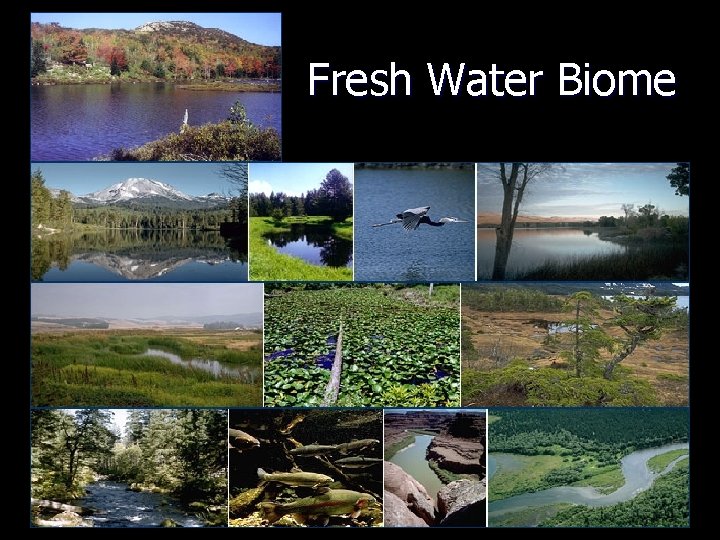
Fresh Water Biome
Freshwater Biome • Includes both still and running water. • Ponds, lakes, streams, and rivers. • Wetlands areas of standing water like marshes, swamps, and bogs.
- Slides: 19