
Exploring Biomass Garbage wood landfill gasits all biomass
Exploring Biomass Garbage, wood, landfill gas…it’s all biomass!
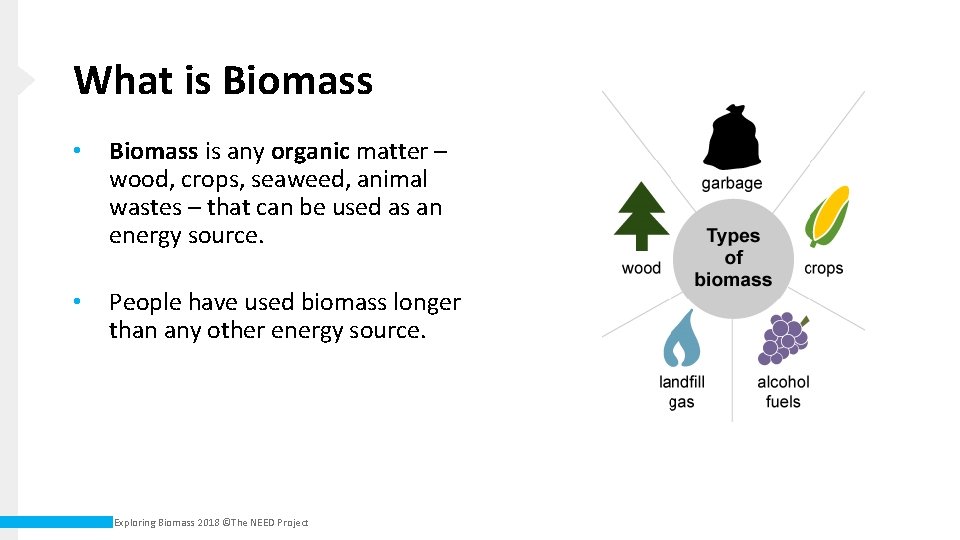
What is Biomass • Biomass is any organic matter – wood, crops, seaweed, animal wastes – that can be used as an energy source. • People have used biomass longer than any other energy source. Exploring Biomass 2018 ©The NEED Project

Biomass and the Environment • Biomass can pollute the air when it is burned, though not as much as fossil fuels. • Burning biomass fuels does not produce pollutants like sulfur, which can cause acid rain. • Growing plants for biomass fuel may help to reduce greenhouse gases, since plants use carbon dioxide and produce oxygen as they grow. Exploring Biomass 2018 ©The NEED Project
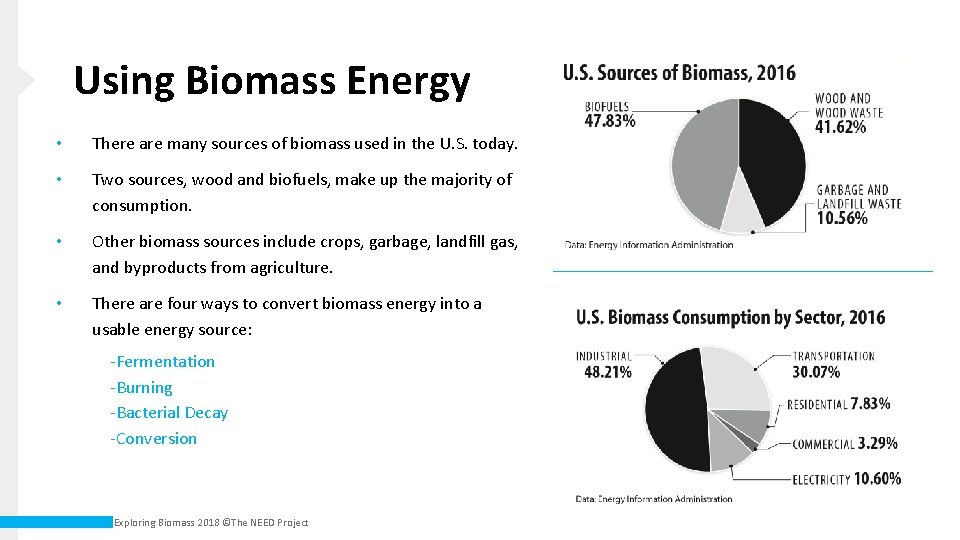
Using Biomass Energy • There are many sources of biomass used in the U. S. today. • Two sources, wood and biofuels, make up the majority of consumption. • Other biomass sources include crops, garbage, landfill gas, and byproducts from agriculture. • There are four ways to convert biomass energy into a usable energy source: -Fermentation -Burning -Bacterial Decay -Conversion Exploring Biomass 2018 ©The NEED Project
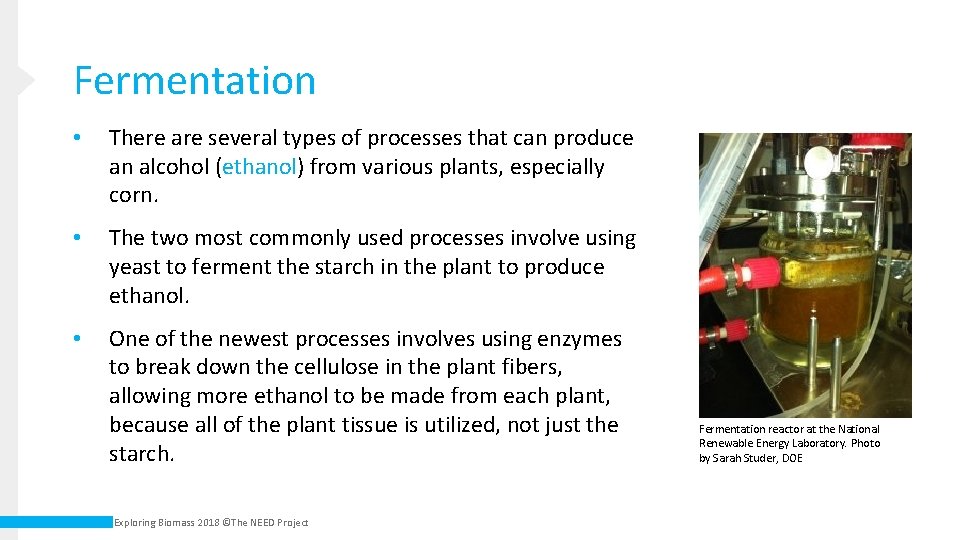
Fermentation • There are several types of processes that can produce an alcohol (ethanol) from various plants, especially corn. • The two most commonly used processes involve using yeast to ferment the starch in the plant to produce ethanol. • One of the newest processes involves using enzymes to break down the cellulose in the plant fibers, allowing more ethanol to be made from each plant, because all of the plant tissue is utilized, not just the starch. Exploring Biomass 2018 ©The NEED Project Fermentation reactor at the National Renewable Energy Laboratory. Photo by Sarah Studer, DOE

Burning We can burn biomass in waste-to-energy plants to produce steam for making electricity, or we can burn it to provide heat for industries and homes. Exploring Biomass 2018 ©The NEED Project
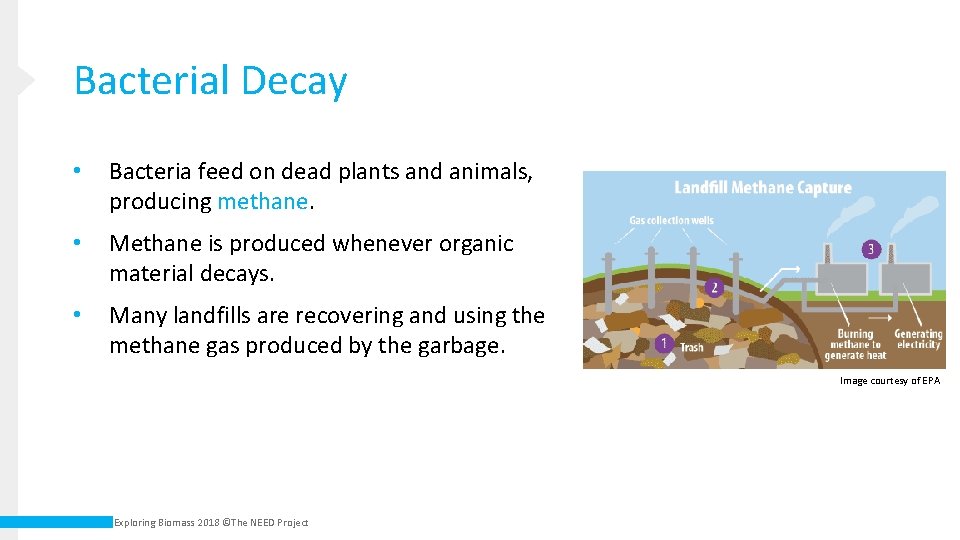
Bacterial Decay • Bacteria feed on dead plants and animals, producing methane. • Methane is produced whenever organic material decays. • Many landfills are recovering and using the methane gas produced by the garbage. Image courtesy of EPA Exploring Biomass 2018 ©The NEED Project
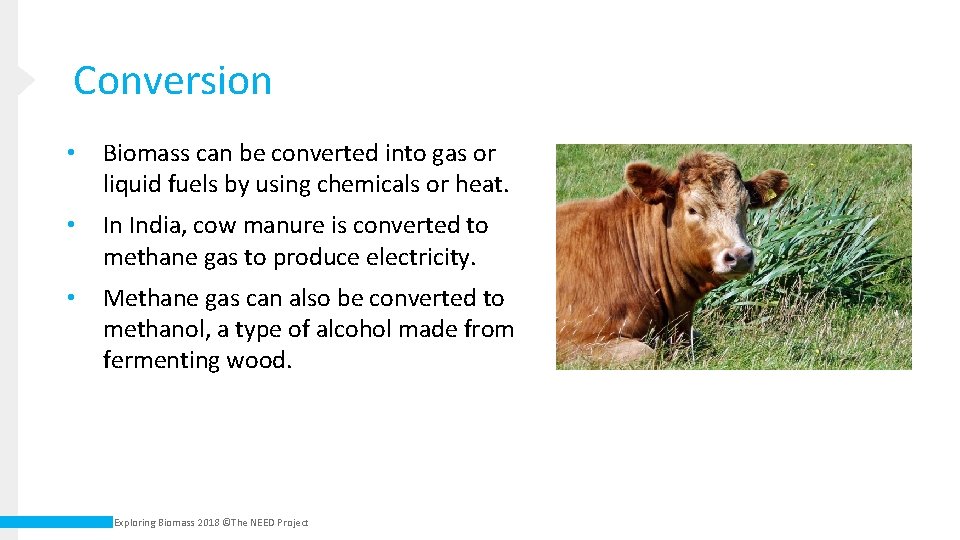
Conversion • Biomass can be converted into gas or liquid fuels by using chemicals or heat. • In India, cow manure is converted to methane gas to produce electricity. • Methane gas can also be converted to methanol, a type of alcohol made from fermenting wood. Exploring Biomass 2018 ©The NEED Project
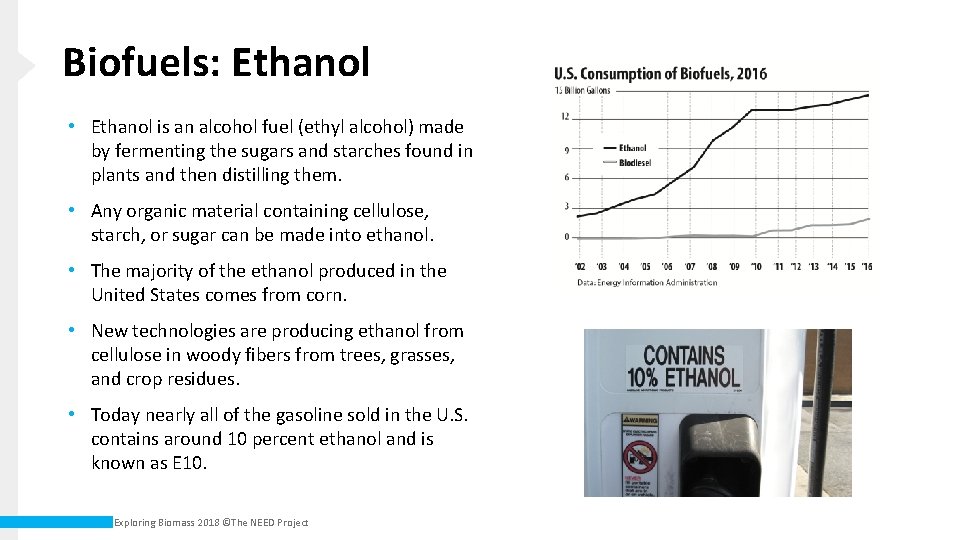
Biofuels: Ethanol • Ethanol is an alcohol fuel (ethyl alcohol) made by fermenting the sugars and starches found in plants and then distilling them. • Any organic material containing cellulose, starch, or sugar can be made into ethanol. • The majority of the ethanol produced in the United States comes from corn. • New technologies are producing ethanol from cellulose in woody fibers from trees, grasses, and crop residues. • Today nearly all of the gasoline sold in the U. S. contains around 10 percent ethanol and is known as E 10. Exploring Biomass 2018 ©The NEED Project
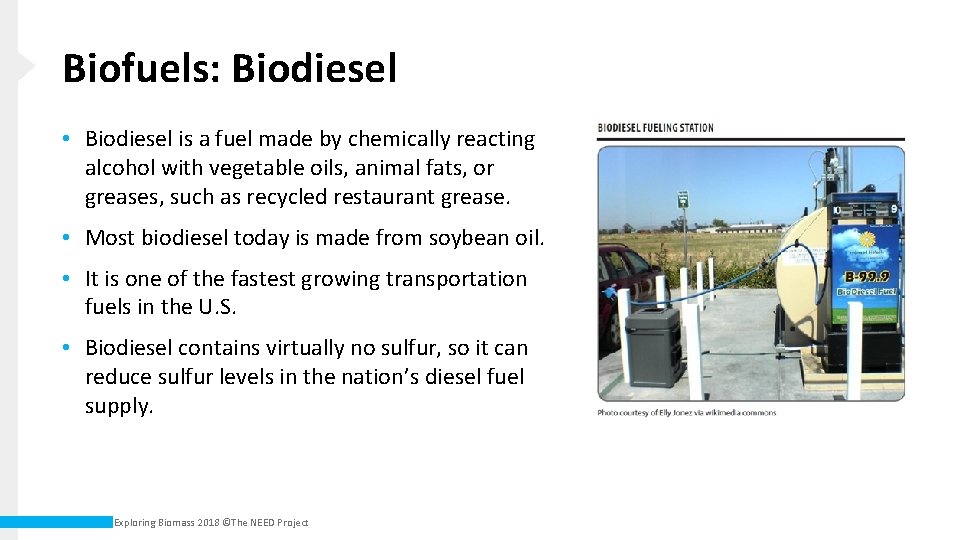
Biofuels: Biodiesel • Biodiesel is a fuel made by chemically reacting alcohol with vegetable oils, animal fats, or greases, such as recycled restaurant grease. • Most biodiesel today is made from soybean oil. • It is one of the fastest growing transportation fuels in the U. S. • Biodiesel contains virtually no sulfur, so it can reduce sulfur levels in the nation’s diesel fuel supply. Exploring Biomass 2018 ©The NEED Project
For More Information The NEED Project • www. need. org • info@need. org • 1 -800 -875 -5029 Energy Information Administration • U. S. Department of Energy • www. eia. gov Exploring Biomass 2018 ©The NEED Project
NEED IS SOCIAL! Let’s be Facebook (@needproject) official! Events, energy news, and more! Follow us on Twitter (@NEED_Project)! We share the latest energy news from around the country. Follow us on Instagram (@theneedproject) and check out photos from workshops and when we go live for hands-on experiments. Follow us on Pinterest and pin ideas to use in your classroom. www. pinterest. com/needproject Subscribe to our You. Tube channel. Hands-on energy lesson tutorials, interviews with energy career professionals, & more! www. youtube. com/user/needproject NEED is social! ©The NEED Project
- Slides: 12