
EXPLORE how short and long term environmental changes
- Slides: 23
EXPLORE how short and long term environmental changes affect organisms and their offspring.
Natural Selection The unequal survival and reproduction of organisms due to environmental forces, resulting in the preservation of favorable adaptations. It is a two step process: 1. The Production of variation in a population 2. Non-random aspects of survival and reproduction
Natural Selection is a two step process: Step One: The Production of Variation. (Chance) Mutations Random mate selection & fertilization ? Step Two: Non-random aspects of survival and reproduction Superior success of certain phenotypes Nonrandom mate choice
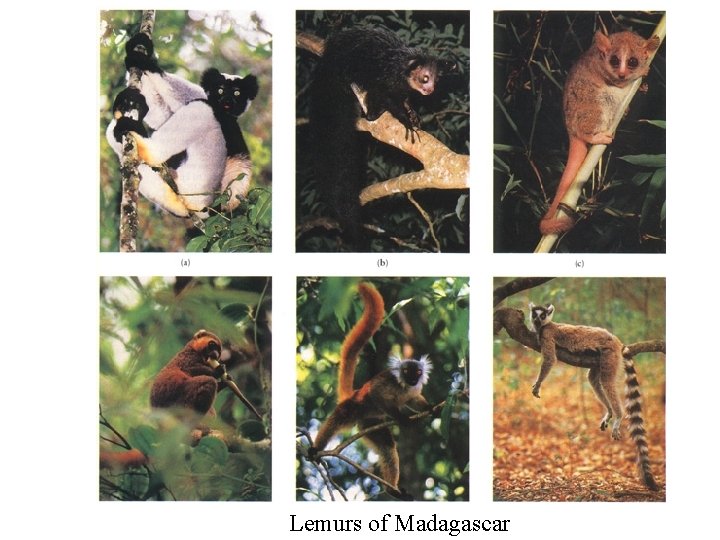
Lemurs of Madagascar
Amazonian Frogs
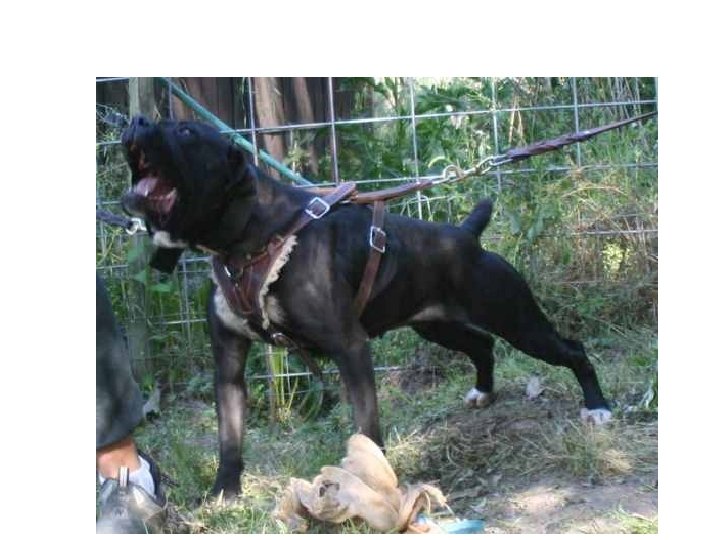
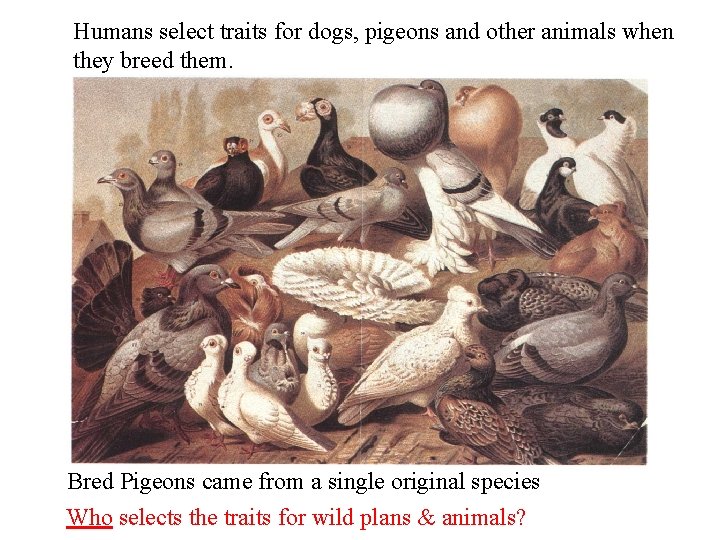
Humans select traits for dogs, pigeons and other animals when they breed them. Bred Pigeons came from a single original species Who selects the traits for wild plans & animals?
NOBODY!! There is no agent involved in natural selection. Natural selection is a process of elimination INDIVIDUALS THAT HAVE TRAITS THAT ARE BEST ADAPTED FOR THE CURRENT ENVIRONMENT ARE THE ONES THAT SURVIVE TO BREED AND PASS ON THEIR GENES TO THE NEXT GENERATION. Organisms not possessing the beneficial traits either die or don’t have as many offspring. Natural Selection is Survival of the fittest
What acts as a selection pressure on a population? • Competition for food • Competition for a mate • Changes in the environment • Predators • Parasites Example of Natural Selection in Action: Monarch / milkweed Card game Video of Darwin’s Finches
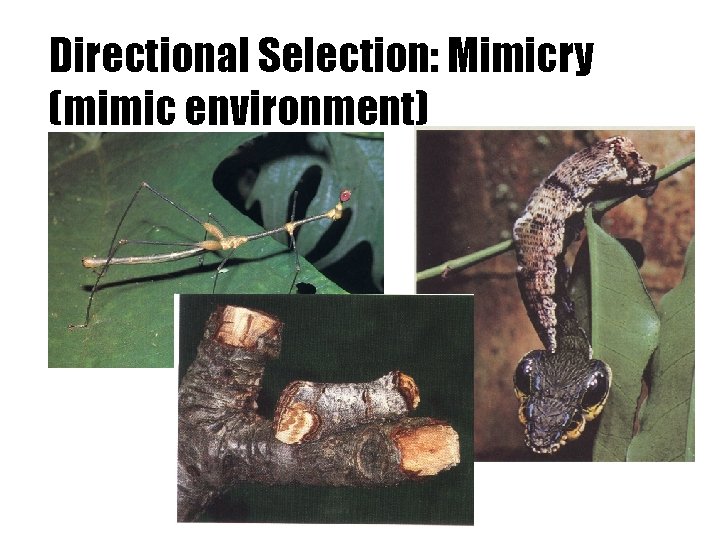
Directional Selection: Mimicry (mimic environment)
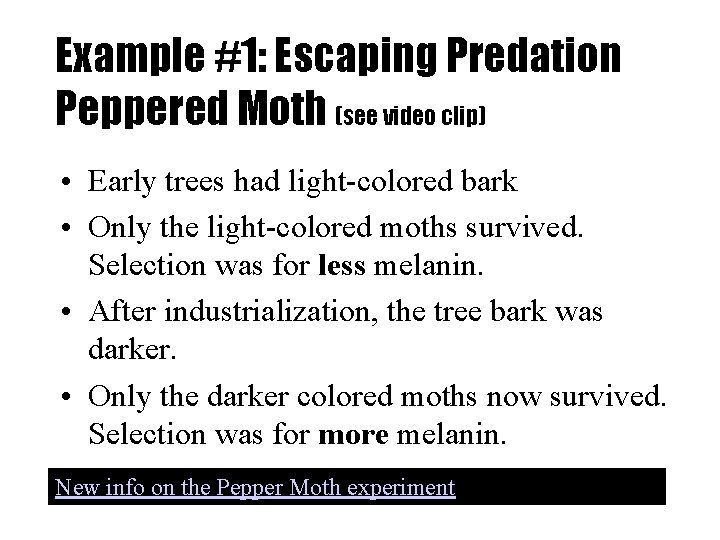
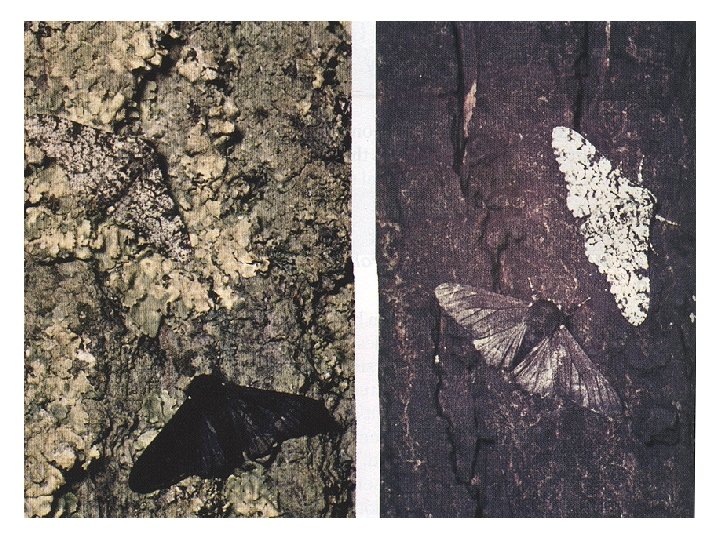
Example #1: Escaping Predation Peppered Moth (see video clip) • Early trees had light-colored bark • Only the light-colored moths survived. Selection was for less melanin. • After industrialization, the tree bark was darker. • Only the darker colored moths now survived. Selection was for more melanin. New info on the Pepper Moth experiment
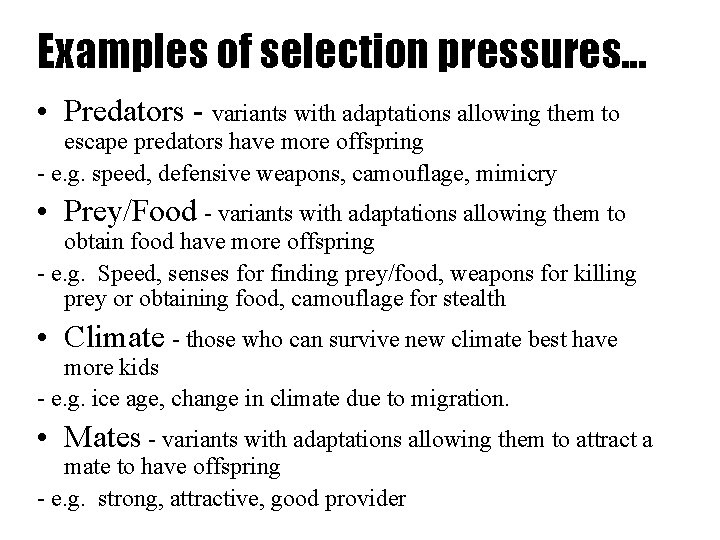
Examples of selection pressures. . . • Predators - variants with adaptations allowing them to escape predators have more offspring - e. g. speed, defensive weapons, camouflage, mimicry • Prey/Food - variants with adaptations allowing them to obtain food have more offspring - e. g. Speed, senses for finding prey/food, weapons for killing prey or obtaining food, camouflage for stealth • Climate - those who can survive new climate best have more kids - e. g. ice age, change in climate due to migration. • Mates - variants with adaptations allowing them to attract a mate to have offspring - e. g. strong, attractive, good provider
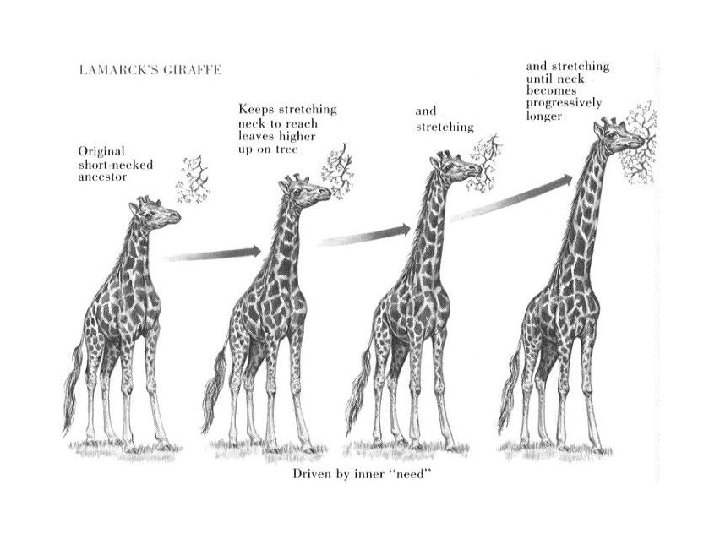
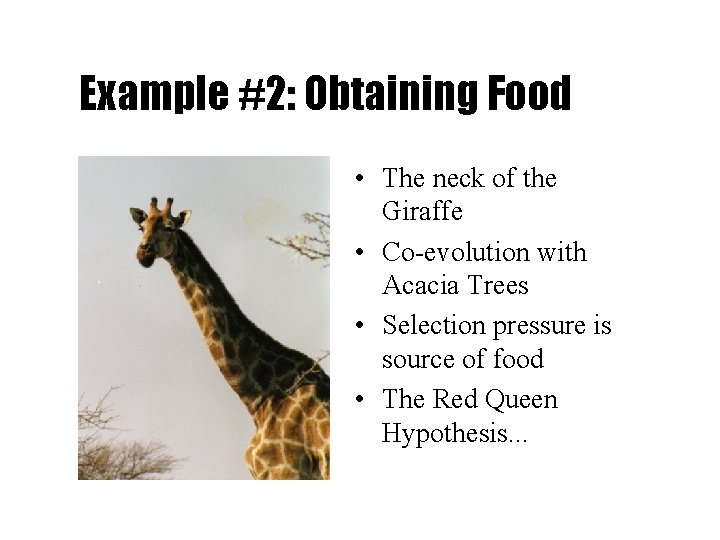
Example #2: Obtaining Food • The neck of the Giraffe • Co-evolution with Acacia Trees • Selection pressure is source of food • The Red Queen Hypothesis. . .
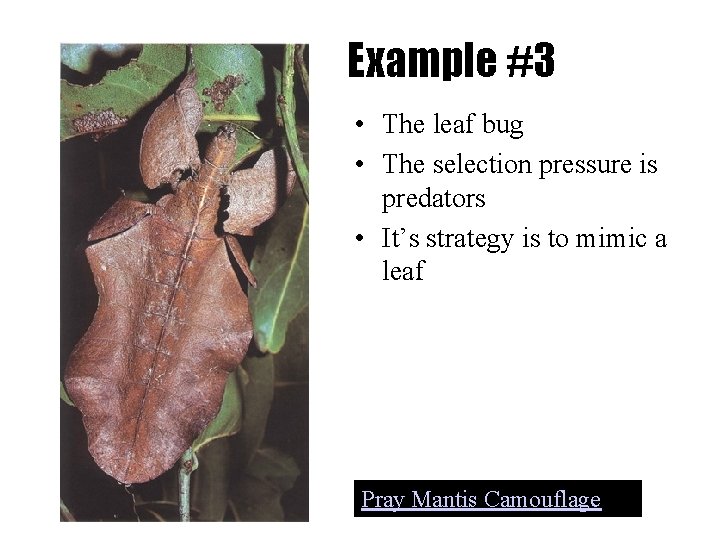
Example #3 • The leaf bug • The selection pressure is predators • It’s strategy is to mimic a leaf Pray Mantis Camouflage
Camouflage, Mimicry & Decoys Purpose - escape from predators, sneaking up on prey Camouflage - directional selection favors individuals who most resemble environment Mimicry - directional selection can favor individuals who most resemble something harmful, unappetizing, or nonthreatening Decoys - directional selection can favor individuals who Use lures or decoys to attract other animals to be eaten or help them unwittingly
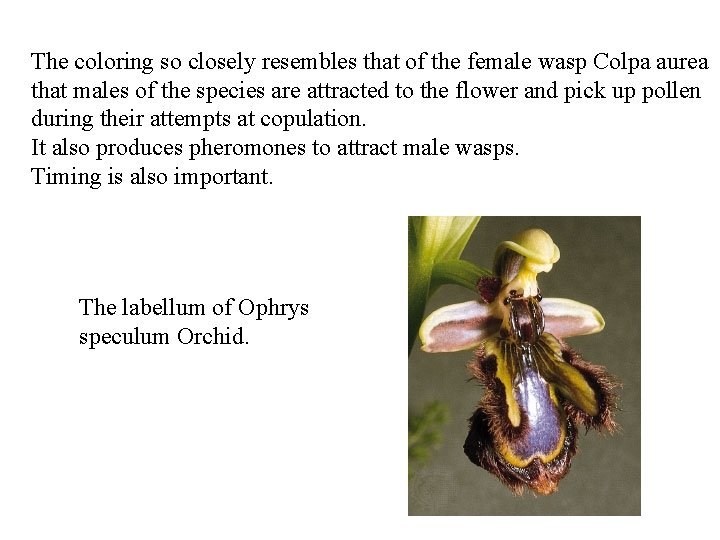
Other Mimicry Examples 1. Viceroy and Monarch butterflies (see video) 2. Walking stick 3. Crab with rock garden on shell 4. Cobra mimic 5. Angler Fish with lure 6. Orchid and wasp
The coloring so closely resembles that of the female wasp Colpa aurea that males of the species are attracted to the flower and pick up pollen during their attempts at copulation. It also produces pheromones to attract male wasps. Timing is also important. The labellum of Ophrys speculum Orchid.
Natural Selection is a mixture of both Chance and necessity Natural Selection is not goal directed. It does not have a long term goal.
Main Types of Selection Pressures • Directional Selection – Natural selection favors one extreme of the population for that trait – often happens when environment changes in a consistent way- e. g. climate gets colder. • Disruptive Selection – Natural selection favors both extremes selected – Causes species to diverge • Stabilizing Selection – Natural selection favors the average for population selected • Sexual Selection