
Exploration of Mars Why is Mars of such
- Slides: 25
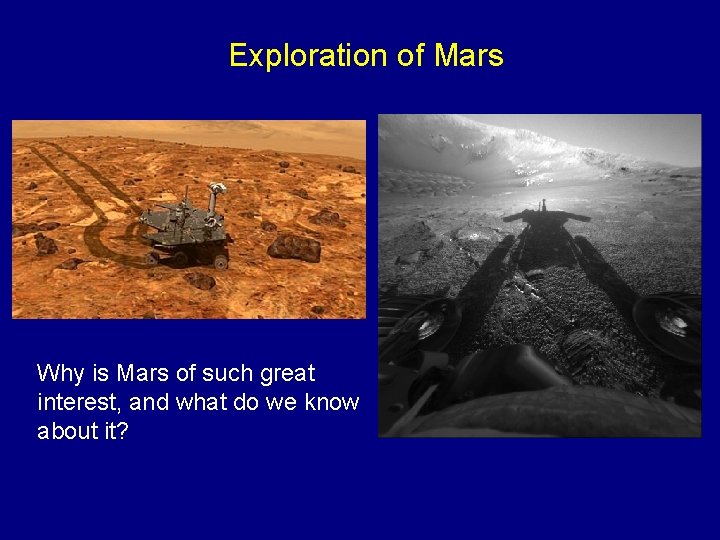
Exploration of Mars Why is Mars of such great interest, and what do we know about it?
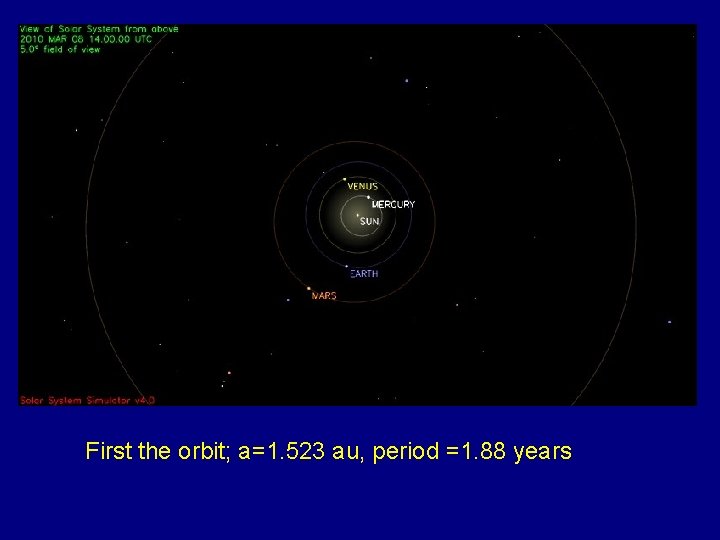
First the orbit; a=1. 523 au, period =1. 88 years
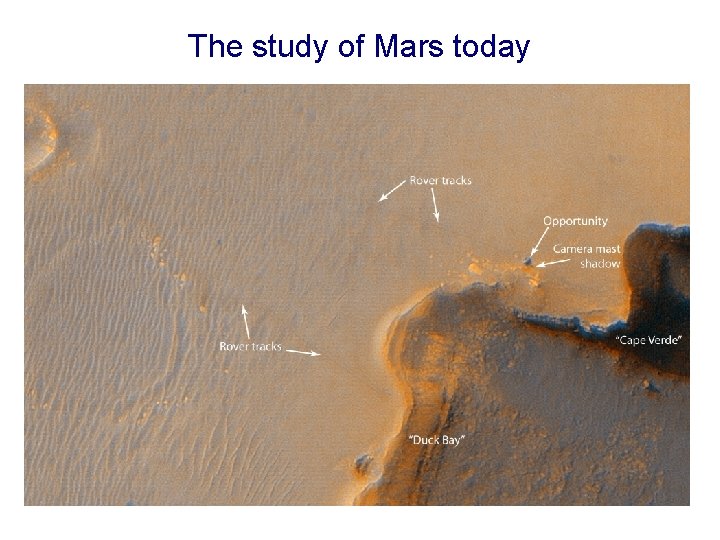
The study of Mars today
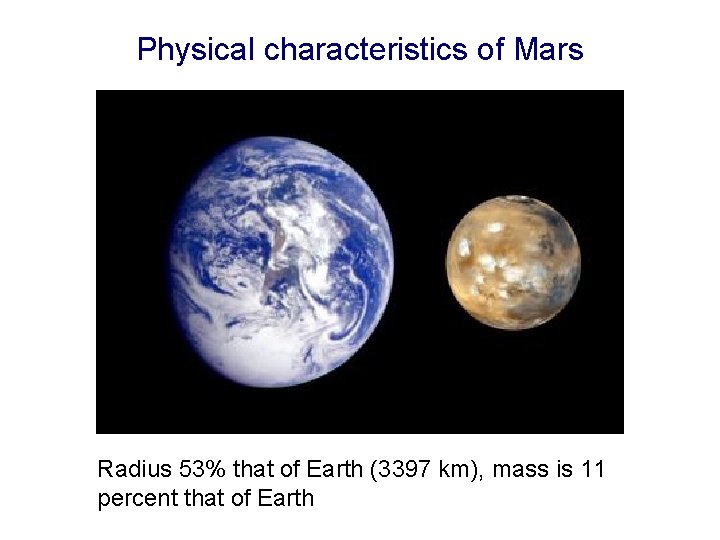
Physical characteristics of Mars Radius 53% that of Earth (3397 km), mass is 11 percent that of Earth
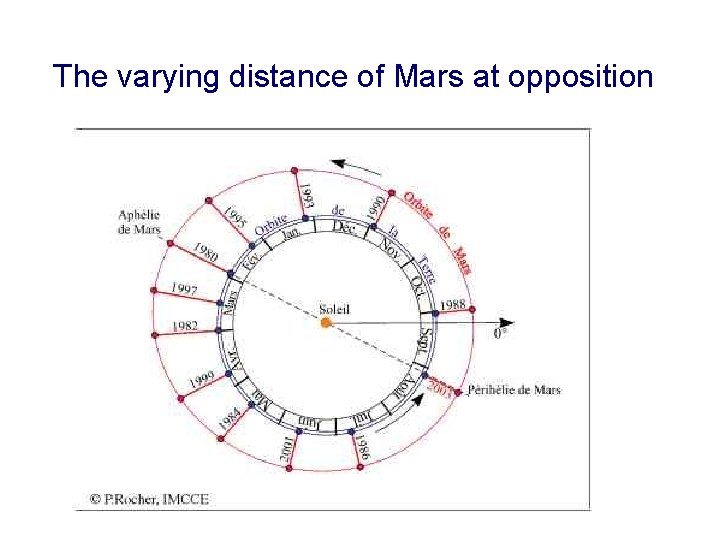
The varying distance of Mars at opposition
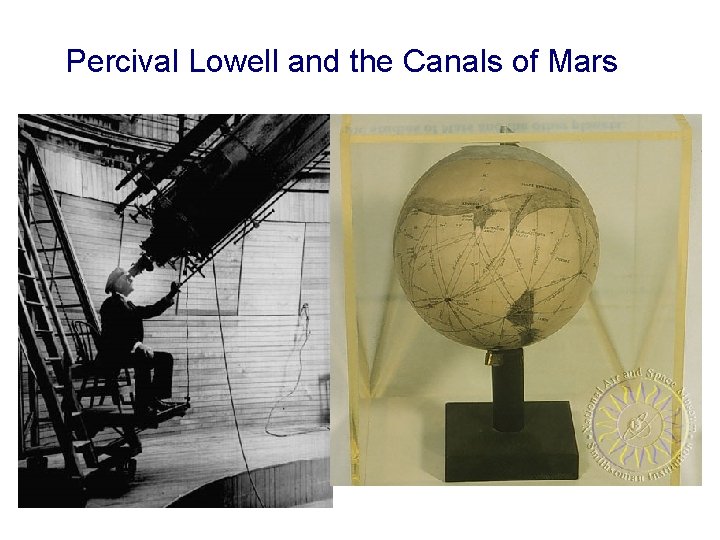
Percival Lowell and the Canals of Mars
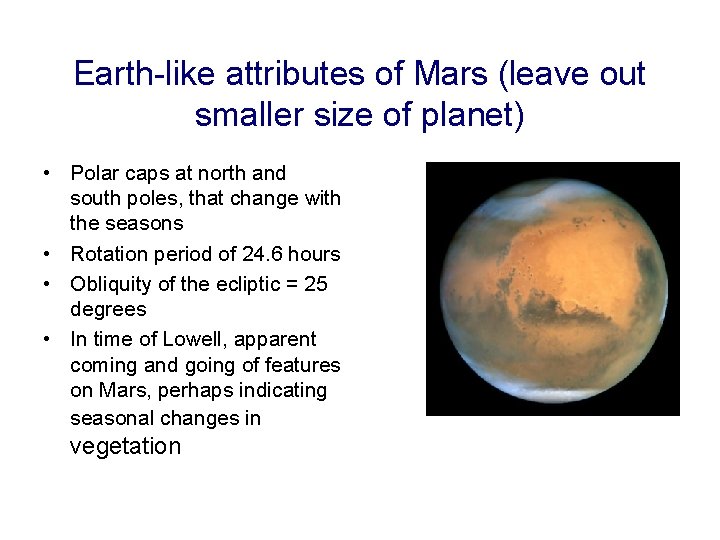
Earth-like attributes of Mars (leave out smaller size of planet) • Polar caps at north and south poles, that change with the seasons • Rotation period of 24. 6 hours • Obliquity of the ecliptic = 25 degrees • In time of Lowell, apparent coming and going of features on Mars, perhaps indicating seasonal changes in vegetation
By the 1960 s it was known that Lowell’s view of an Earth-like Mars with higher life forms could not be right; the atmosphere on the surface of Mars is about 0. 7 % the sea-level pressure on Earth. Water cannot exist in liquid form under those conditions. The average surface temperature on Mars is also about 60 degrees Centigrade below freezing (210 K rather than 293 K in this room).
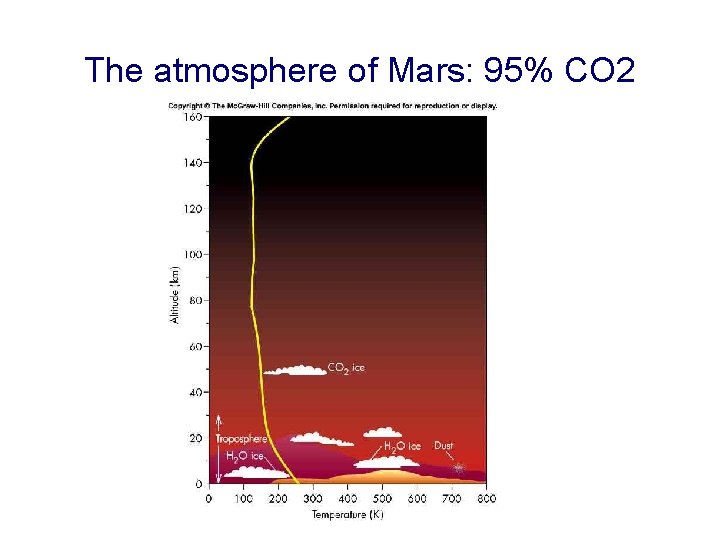
The atmosphere of Mars: 95% CO 2
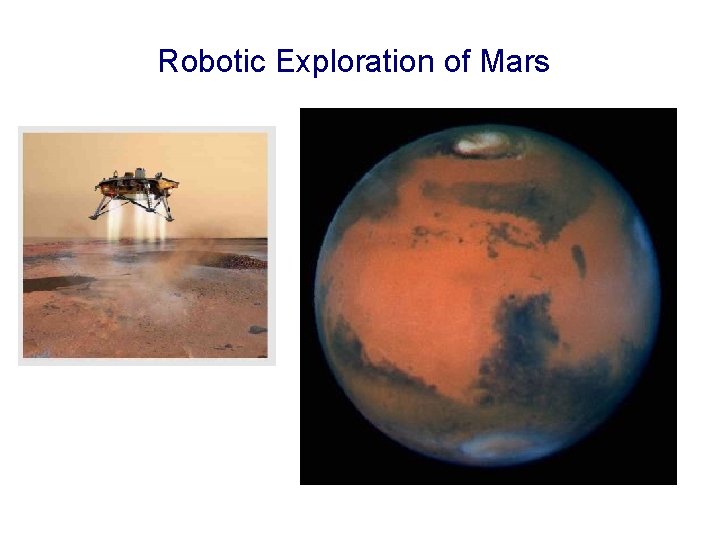
Robotic Exploration of Mars
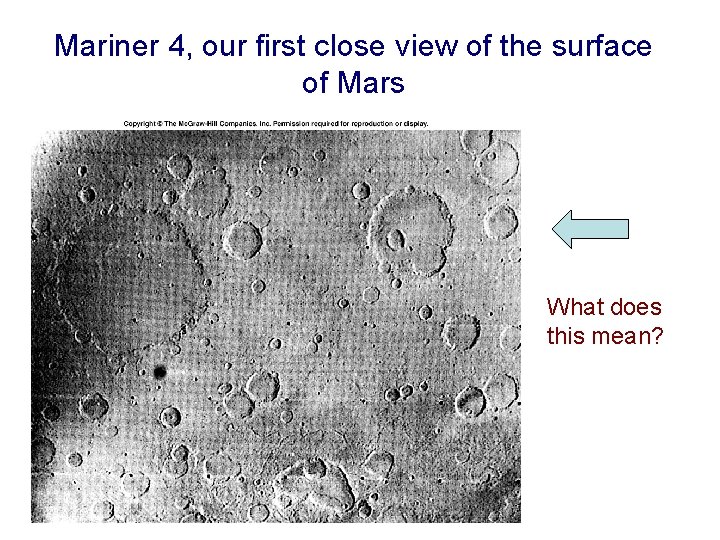
The exploration of Mars by spacecraft • • • Began in 1960 37 missions attempted 18 successful First with results was US Mariner 4 in 1965 Mariner 4 gave us our first close-up view of Mars • Several other major ones since then (Mariner 9 in 1971, Viking 1 and 2 in 1976, MER in 2004 - present
Mariner 4, our first close view of the surface of Mars What does this mean?
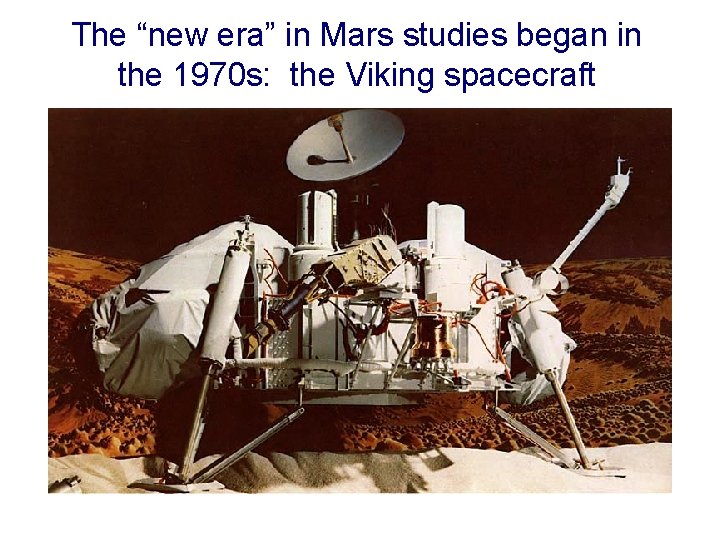
The “new era” in Mars studies began in the 1970 s: the Viking spacecraft
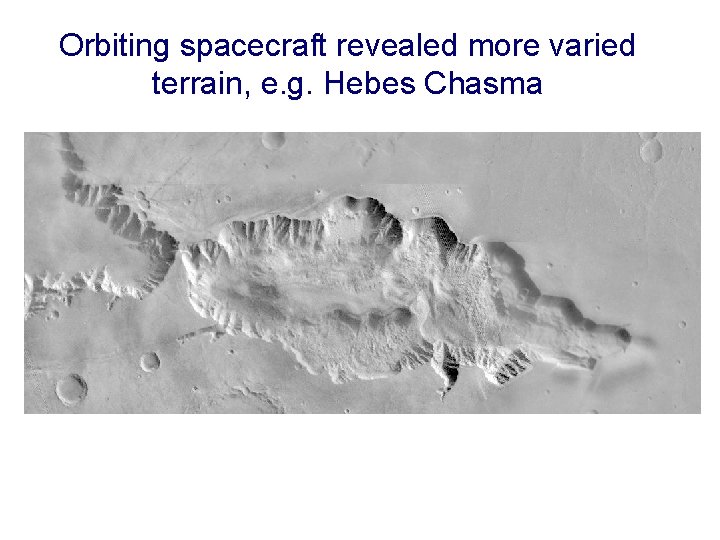
Orbiting spacecraft revealed more varied terrain, e. g. Hebes Chasma
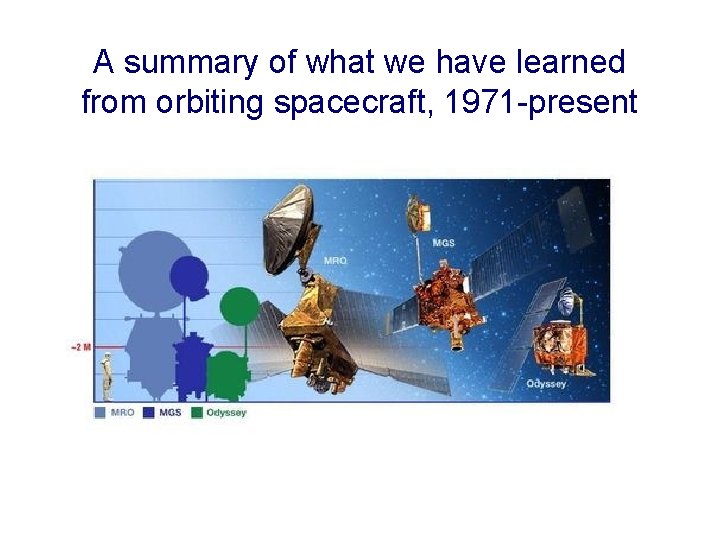
A summary of what we have learned from orbiting spacecraft, 1971 -present
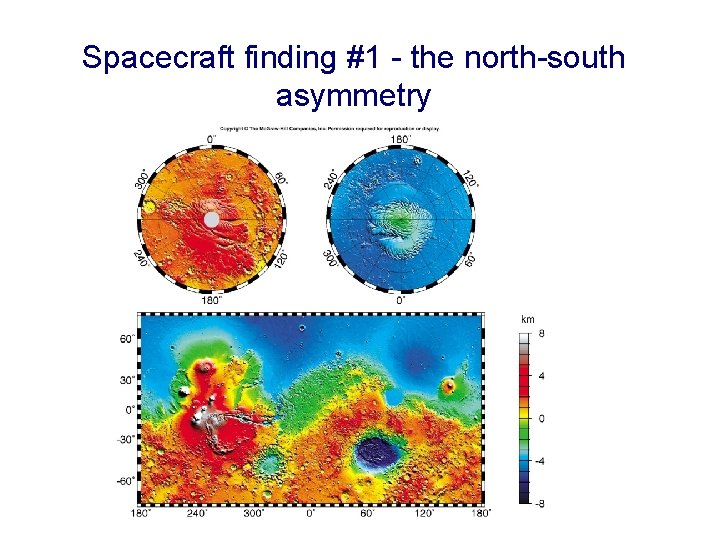
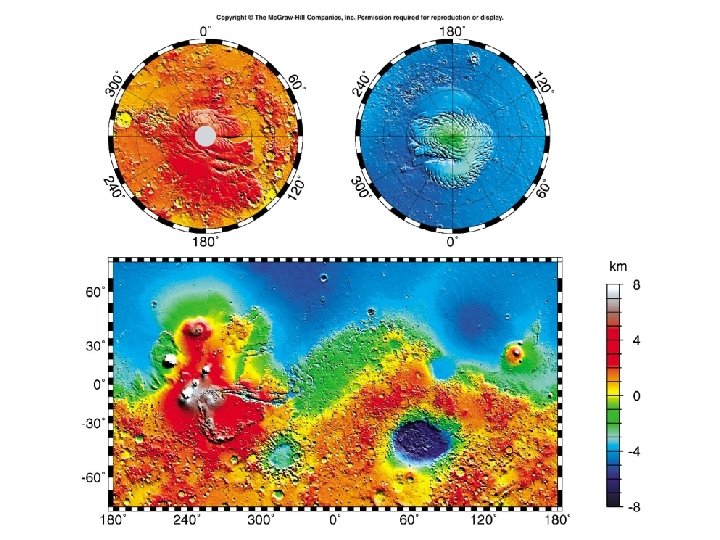
Spacecraft finding #1 - the north-south asymmetry
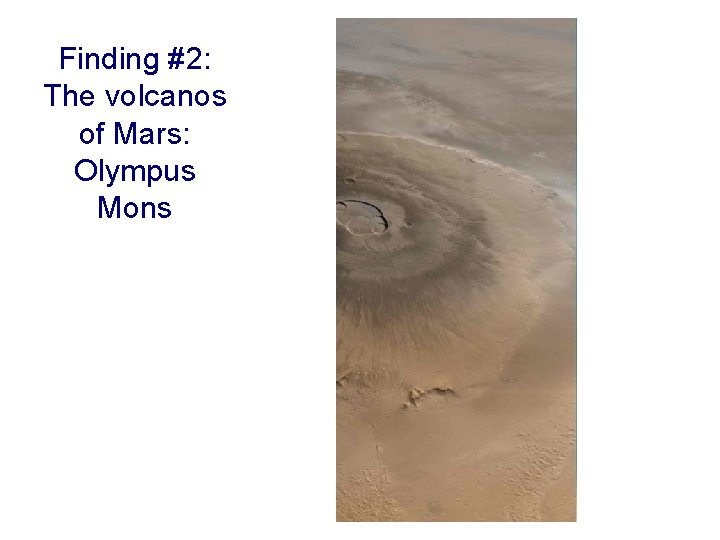
Finding #2: The volcanos of Mars: Olympus Mons Notice smooth, uncratered Slopes of mountain
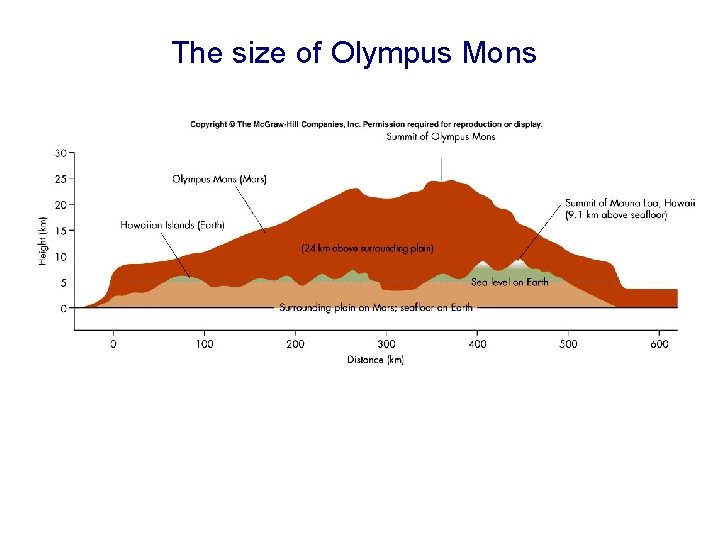
The size of Olympus Mons
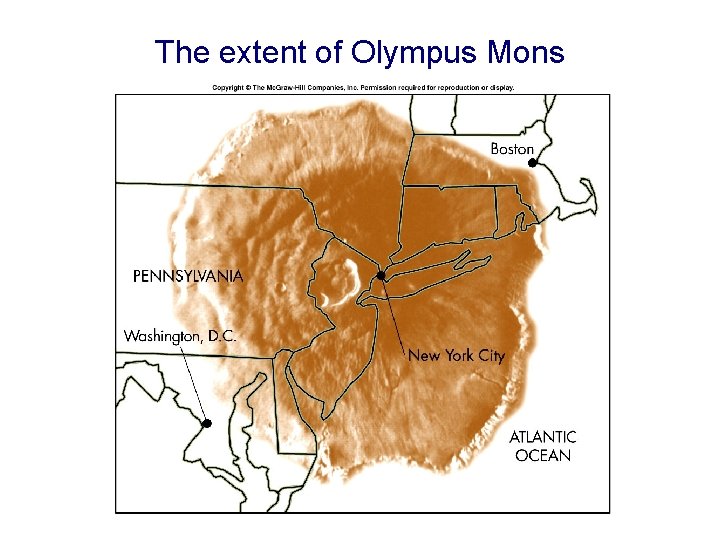
The extent of Olympus Mons
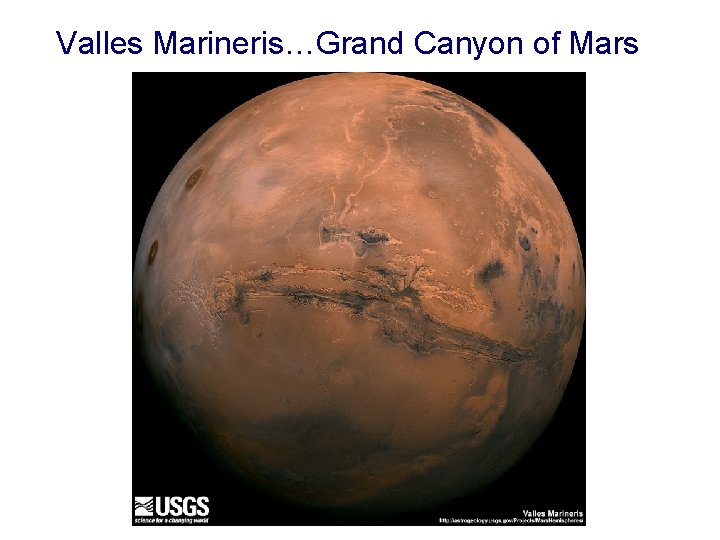
Valles Marineris…Grand Canyon of Mars
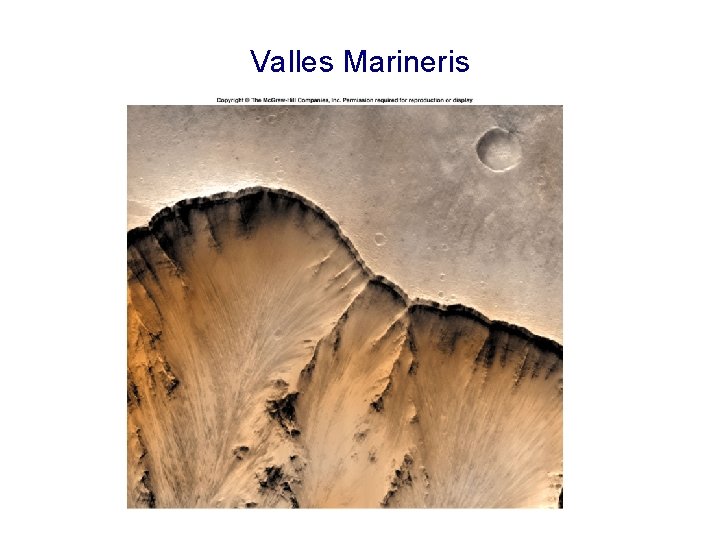
Valles Marineris
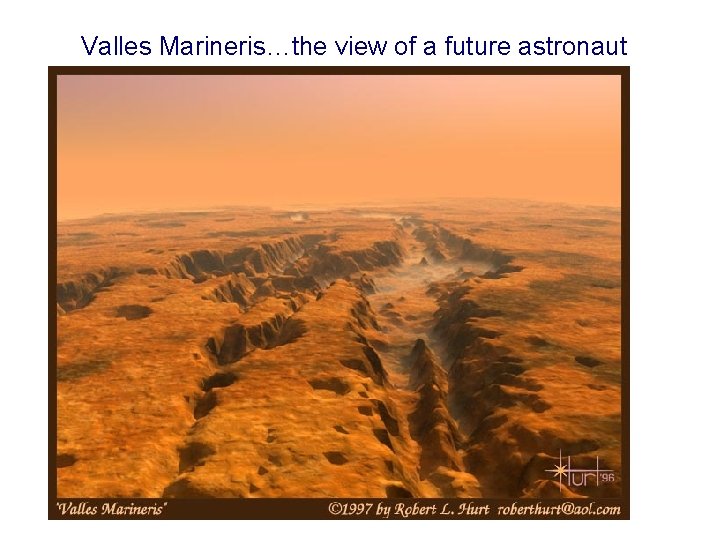
Valles Marineris…the view of a future astronaut
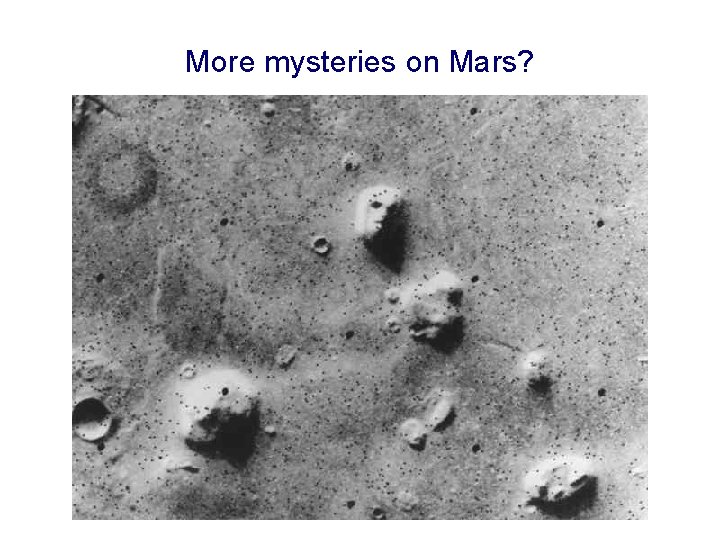
More mysteries on Mars?
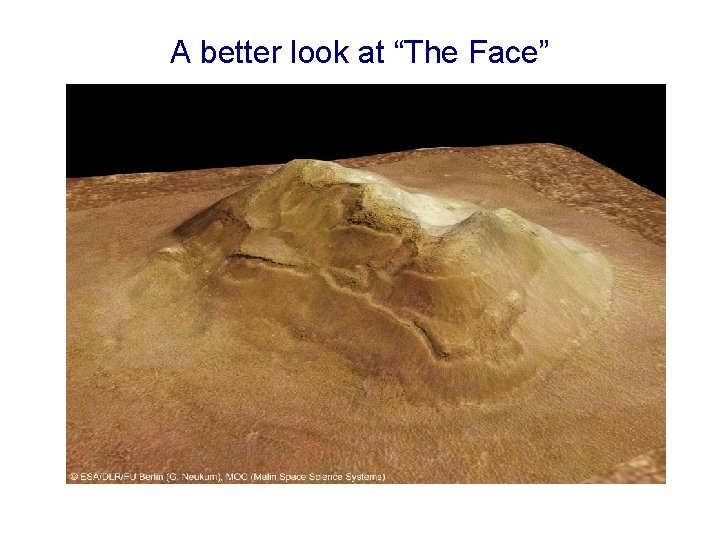
A better look at “The Face”