
Explanations 2 Reduction levels and styles of research
- Slides: 24
Explanations 2 Reduction, levels and styles of research Kim (2000): To call someone 'a reductionist', in highculture press if not in serious philosophy, goes beyond mere criticism or expression of doctrinal disagreement; it is to put a person down, to heap scorn on him and his work. If you want to be politically correct in philosophical matters, you would not dare come anywhere near reductionism, nor a reductionist. 1
PM: Reduction of laws • 5 -steps model for explanation • Reduction iff aggregation, identification, or approximation • Eliminative: iff severely corrective approximation • Non-eliminative: otherwise • Reduction by identification based on type-type identities between concepts, Examples: – water = an aggregate of H 2 O-molecules – genes = aggregates of DNA-molecules 2
Reduction of emergent phenomena by simulation • piling wood chips by termites: 2 simulations – by programming the termites to take chips to predesignated spots – by programming them with two behavioral rules: • if you carry nothing and bump into a chip, pick it up • if you carry a chip and bump into another, put it down • random direction after bumping into something • second, emergentist, solution is 3
Reduction and correlation of concepts Causey: main distinction: general identities vs causal correlations 1 th criterion: (both need empirical support, but) only the second require explanation practical but circular 2 th criterion: substitution, salva veritate noncircular but impractical Causey: subsequent distinction object vs attribute identities Criticisms 4
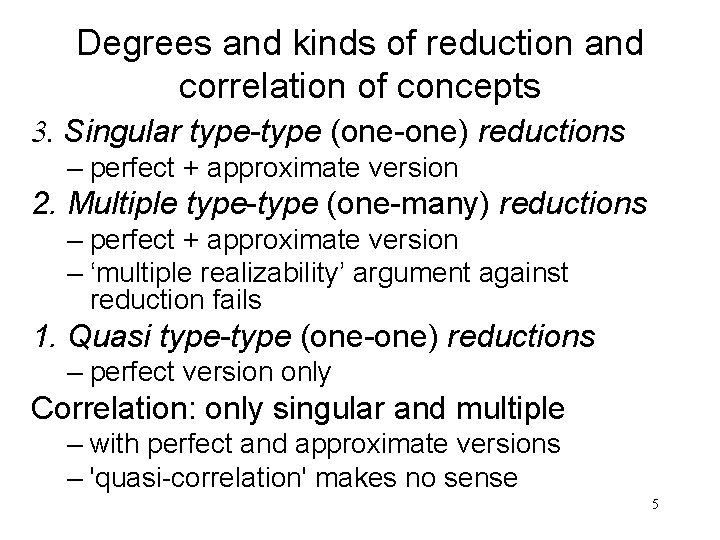
Degrees and kinds of reduction and correlation of concepts 3. Singular type-type (one-one) reductions – perfect + approximate version 2. Multiple type-type (one-many) reductions – perfect + approximate version – ‘multiple realizability’ argument against reduction fails 1. Quasi type-type (one-one) reductions – perfect version only Correlation: only singular and multiple – with perfect and approximate versions – 'quasi-correlation' makes no sense 5
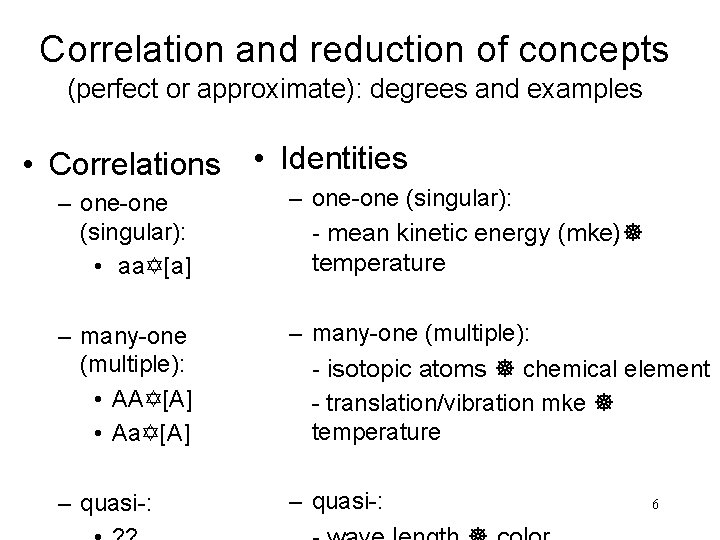
Correlation and reduction of concepts (perfect or approximate): degrees and examples • Correlations • Identities – one-one (singular): • aa [a] – one-one (singular): - mean kinetic energy (mke) temperature – many-one (multiple): • AA [A] • Aa [A] – many-one (multiple): - isotopic atoms chemical element - translation/vibration mke temperature – quasi-: 6
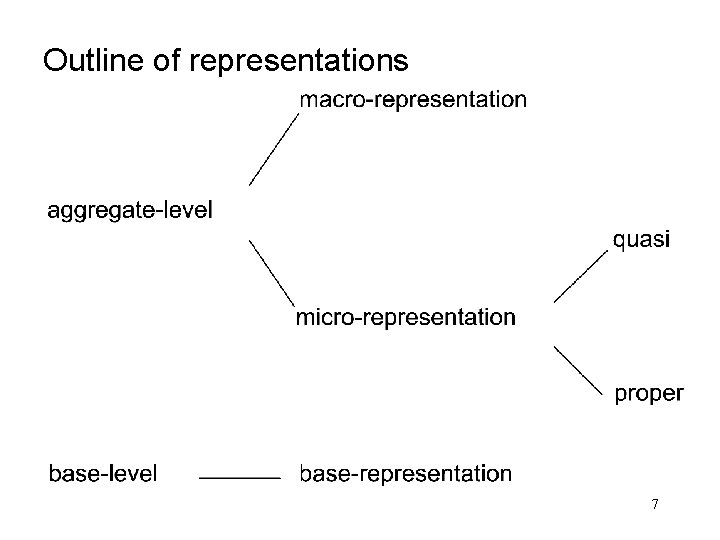
Outline of representations 7
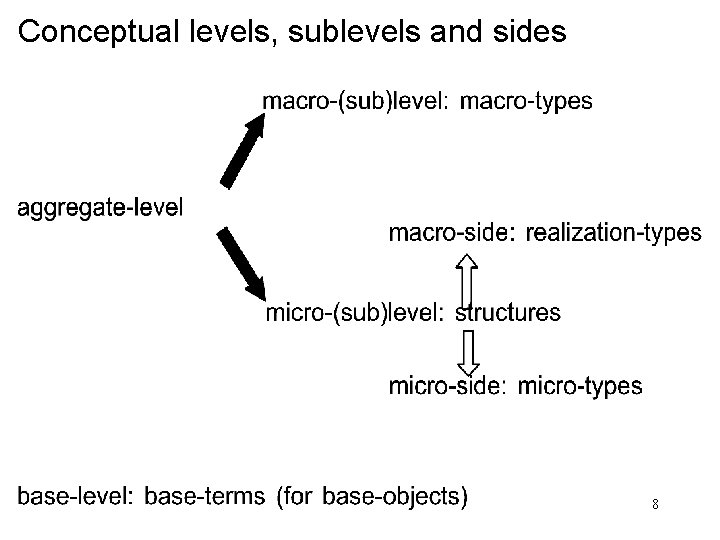
Conceptual levels, sublevels and sides 8
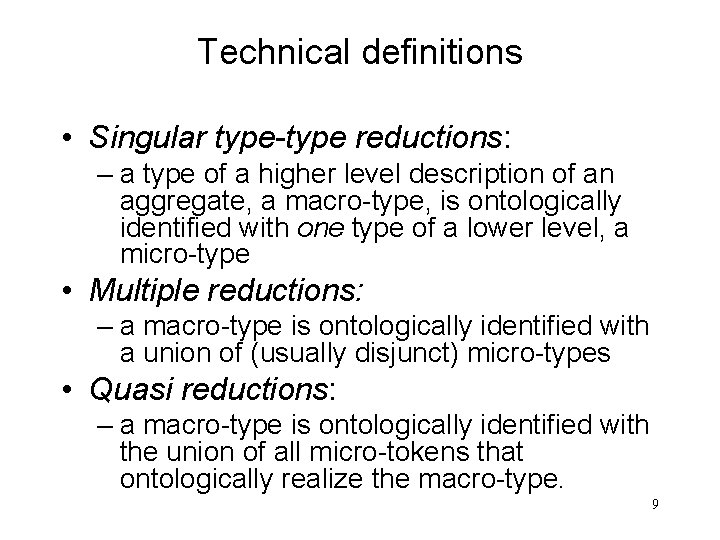
Technical definitions • Singular type-type reductions: – a type of a higher level description of an aggregate, a macro-type, is ontologically identified with one type of a lower level, a micro-type • Multiple reductions: – a macro-type is ontologically identified with a union of (usually disjunct) micro-types • Quasi reductions: – a macro-type is ontologically identified with the union of all micro-tokens that ontologically realize the macro-type. 9
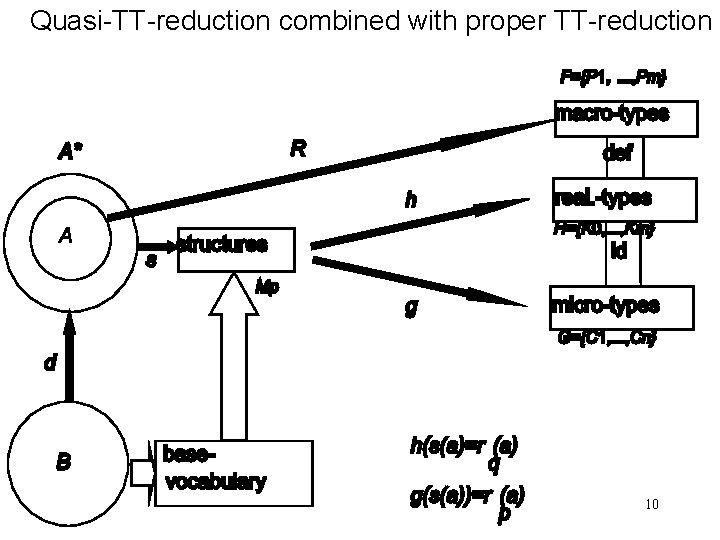
Quasi-TT-reduction combined with proper TT-reduction 10
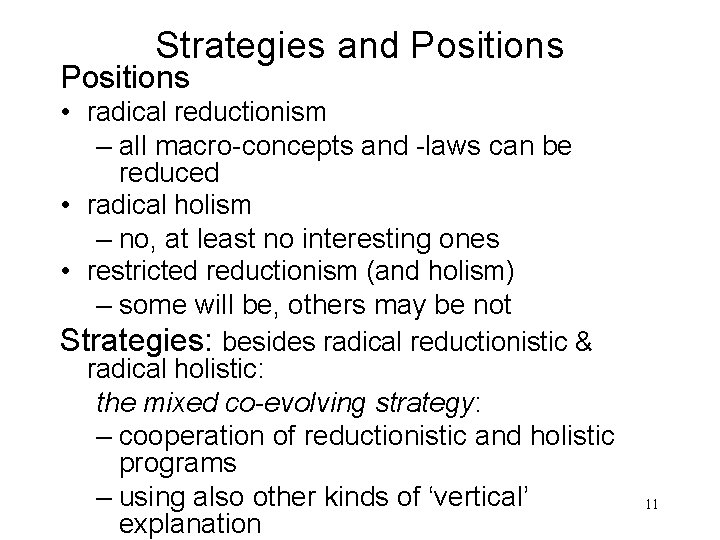
Strategies and Positions • radical reductionism – all macro-concepts and -laws can be reduced • radical holism – no, at least no interesting ones • restricted reductionism (and holism) – some will be, others may be not Strategies: besides radical reductionistic & radical holistic: the mixed co-evolving strategy: – cooperation of reductionistic and holistic programs – using also other kinds of ‘vertical’ explanation 11
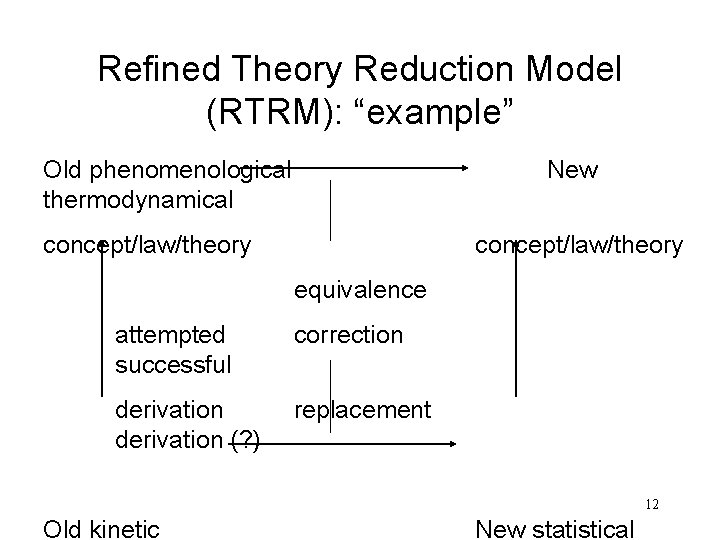
Refined Theory Reduction Model (RTRM): “example” Old phenomenological thermodynamical New concept/law/theory equivalence attempted successful correction derivation (? ) replacement 12 Old kinetic New statistical
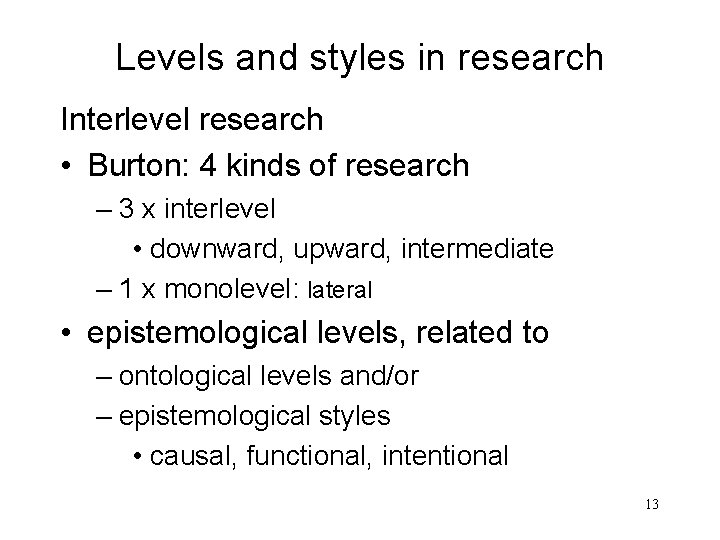
Levels and styles in research Interlevel research • Burton: 4 kinds of research – 3 x interlevel • downward, upward, intermediate – 1 x monolevel: lateral • epistemological levels, related to – ontological levels and/or – epistemological styles • causal, functional, intentional 13
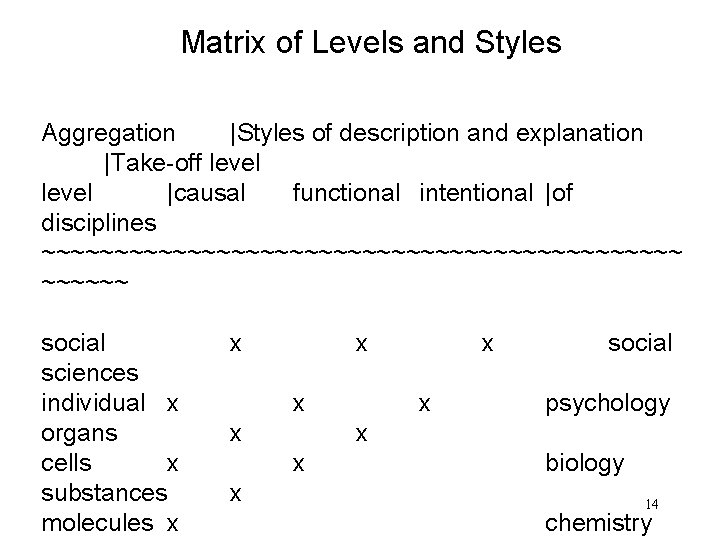
Matrix of Levels and Styles Aggregation |Styles of description and explanation |Take-off level |causal functional intentional |of disciplines ~~~~~~~~~~~~~~~~~~~~~~ social sciences individual x organs cells x substances molecules x x x social psychology x x biology 14 chemistry
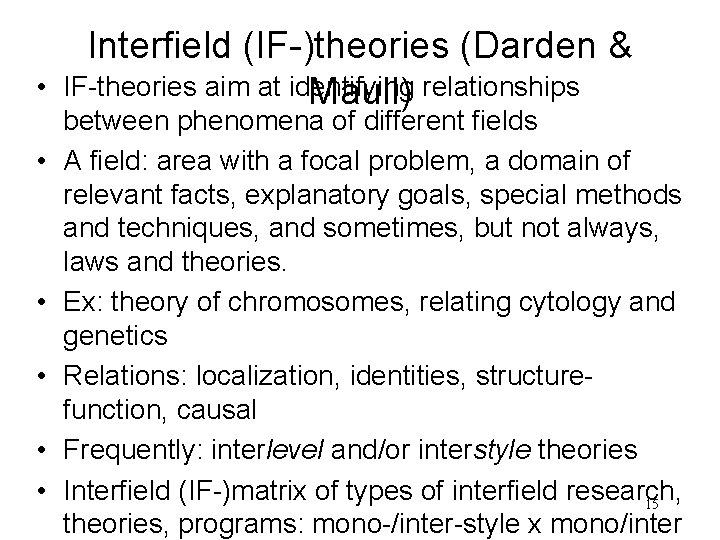
• • • Interfield (IF-)theories (Darden & IF-theories aim at identifying Maull) relationships between phenomena of different fields A field: area with a focal problem, a domain of relevant facts, explanatory goals, special methods and techniques, and sometimes, but not always, laws and theories. Ex: theory of chromosomes, relating cytology and genetics Relations: localization, identities, structurefunction, causal Frequently: interlevel and/or interstyle theories Interfield (IF-)matrix of types of interfield research, 15 theories, programs: mono-/inter-style x mono/inter
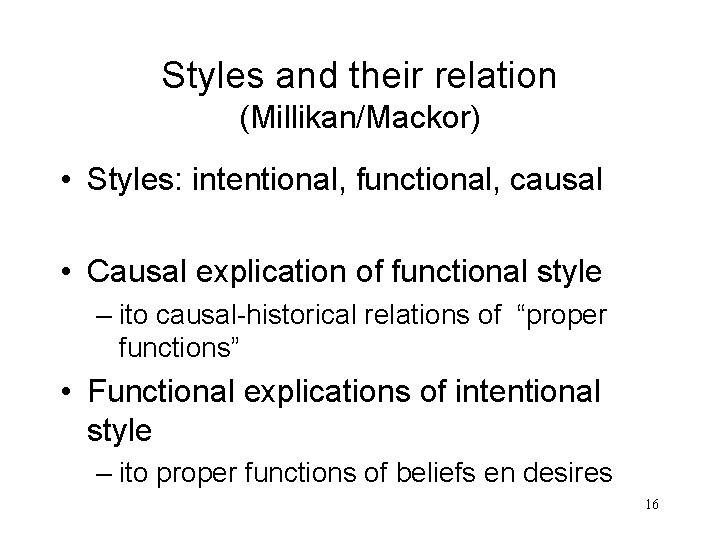
Styles and their relation (Millikan/Mackor) • Styles: intentional, functional, causal • Causal explication of functional style – ito causal-historical relations of “proper functions” • Functional explications of intentional style – ito proper functions of beliefs en desires 16
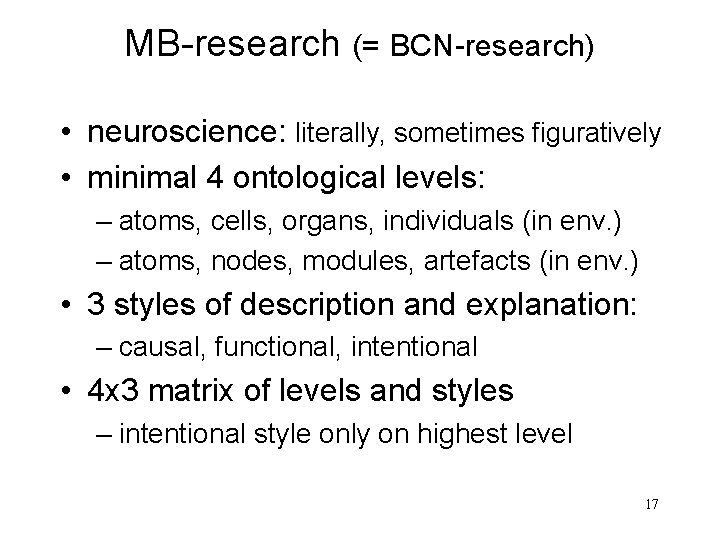
MB-research (= BCN-research) • neuroscience: literally, sometimes figuratively • minimal 4 ontological levels: – atoms, cells, organs, individuals (in env. ) – atoms, nodes, modules, artefacts (in env. ) • 3 styles of description and explanation: – causal, functional, intentional • 4 x 3 matrix of levels and styles – intentional style only on highest level 17
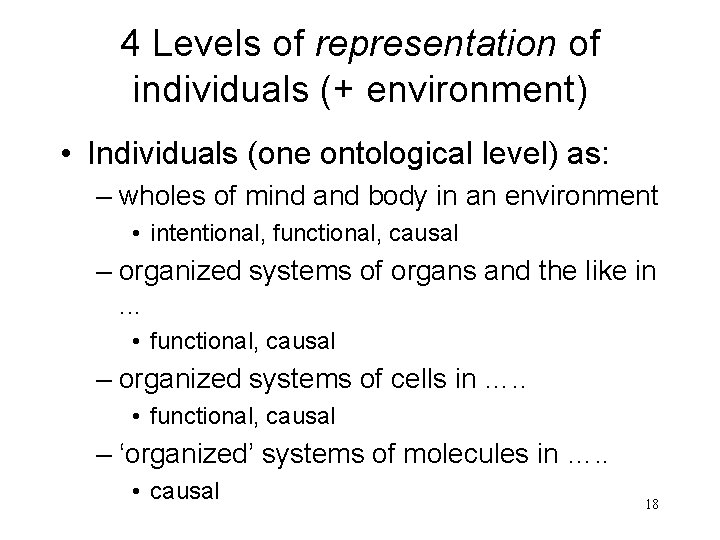
4 Levels of representation of individuals (+ environment) • Individuals (one ontological level) as: – wholes of mind and body in an environment • intentional, functional, causal – organized systems of organs and the like in. . . • functional, causal – organized systems of cells in …. . • functional, causal – ‘organized’ systems of molecules in …. . • causal 18
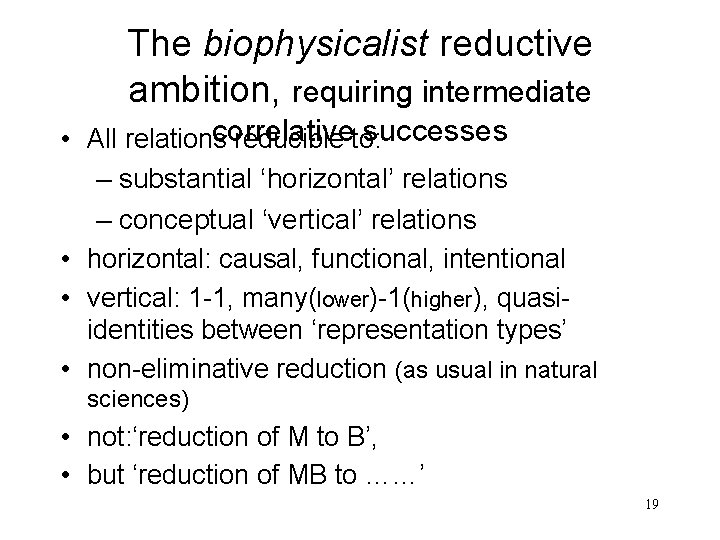
The biophysicalist reductive ambition, requiring intermediate correlative successes • All relations reducible to: – substantial ‘horizontal’ relations – conceptual ‘vertical’ relations • horizontal: causal, functional, intentional • vertical: 1 -1, many(lower)-1(higher), quasiidentities between ‘representation types’ • non-eliminative reduction (as usual in natural sciences) • not: ‘reduction of M to B’, • but ‘reduction of MB to ……’ 19
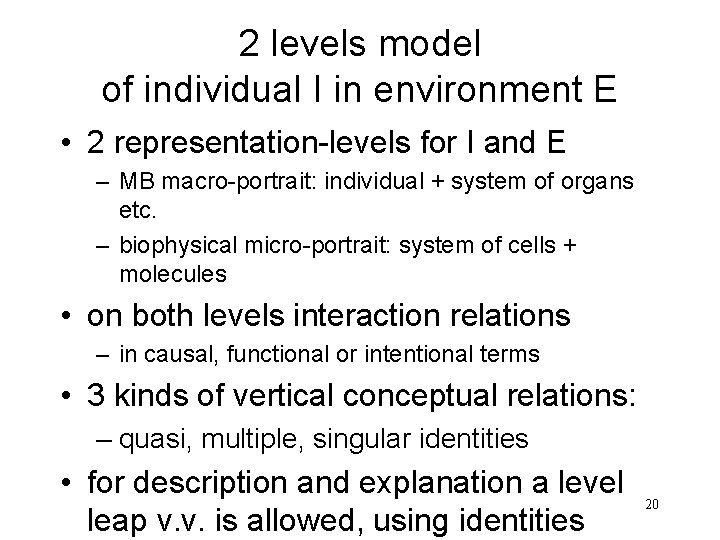
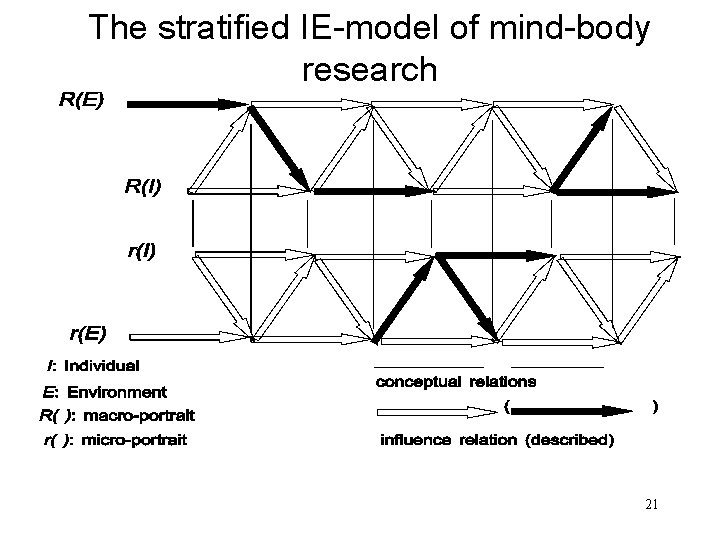
2 levels model of individual I in environment E • 2 representation-levels for I and E – MB macro-portrait: individual + system of organs etc. – biophysical micro-portrait: system of cells + molecules • on both levels interaction relations – in causal, functional or intentional terms • 3 kinds of vertical conceptual relations: – quasi, multiple, singular identities • for description and explanation a level leap v. v. is allowed, using identities 20
The stratified IE-model of mind-body research 21
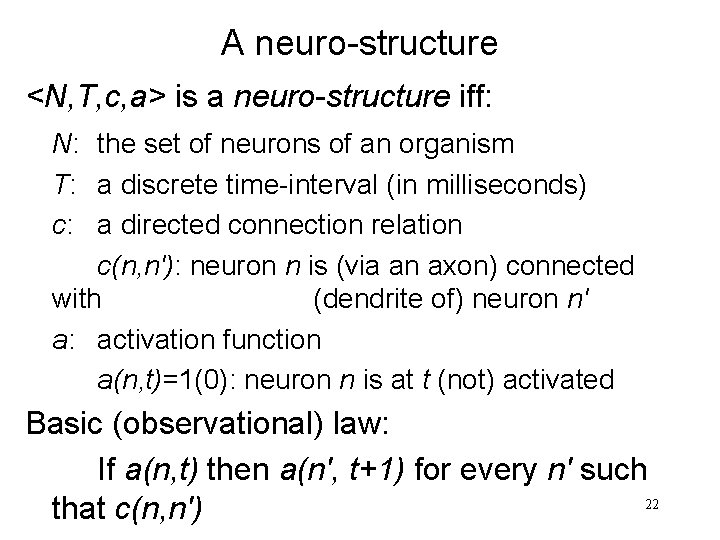
A neuro-structure <N, T, c, a> is a neuro-structure iff: N: the set of neurons of an organism T: a discrete time-interval (in milliseconds) c: a directed connection relation c(n, n'): neuron n is (via an axon) connected with (dendrite of) neuron n' a: activation function a(n, t)=1(0): neuron n is at t (not) activated Basic (observational) law: If a(n, t) then a(n', t+1) for every n' such 22 that c(n, n')
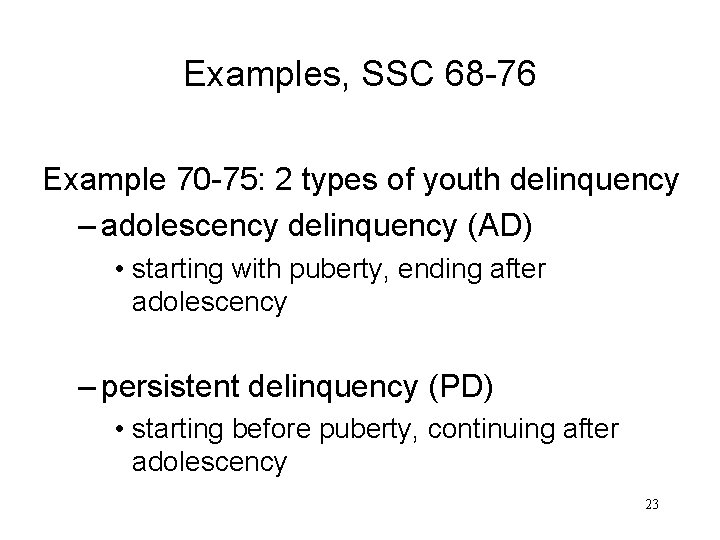
Examples, SSC 68 -76 Example 70 -75: 2 types of youth delinquency – adolescency delinquency (AD) • starting with puberty, ending after adolescency – persistent delinquency (PD) • starting before puberty, continuing after adolescency 23
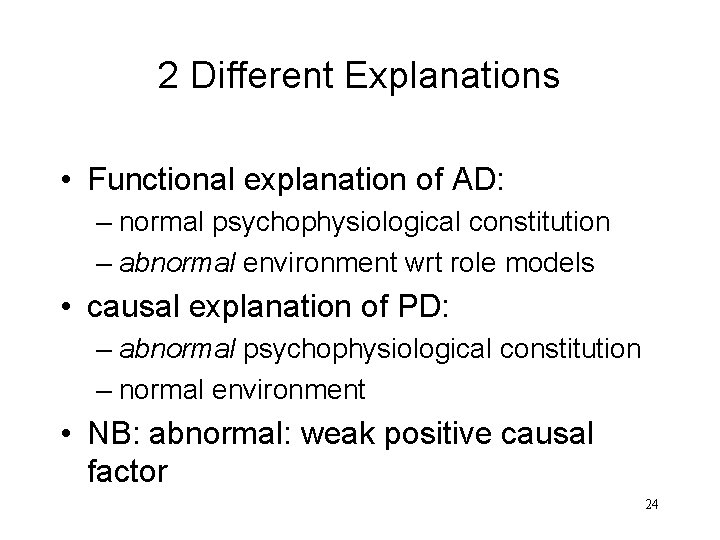
2 Different Explanations • Functional explanation of AD: – normal psychophysiological constitution – abnormal environment wrt role models • causal explanation of PD: – abnormal psychophysiological constitution – normal environment • NB: abnormal: weak positive causal factor 24