
EXPLAINING CHANGING OF STATES Guess What HEATING SOLIDS






- Slides: 12
EXPLAINING CHANGING OF STATES
“Guess What”
HEATING SOLIDS • When a solid is HEATED they EXPAND. • The particles in solid vibrate. • The heat energy is transferred to the particle. • As it vibrates more, they take up more space but maintain in a fixed position by attractive forces.
MELTING SOLIDS • When solids are heated even more strongly they melt and becomes liquid. • The particles vibrate so much that the attractive forces between them no longer strong enough to holds them. They are able to slide past one another.
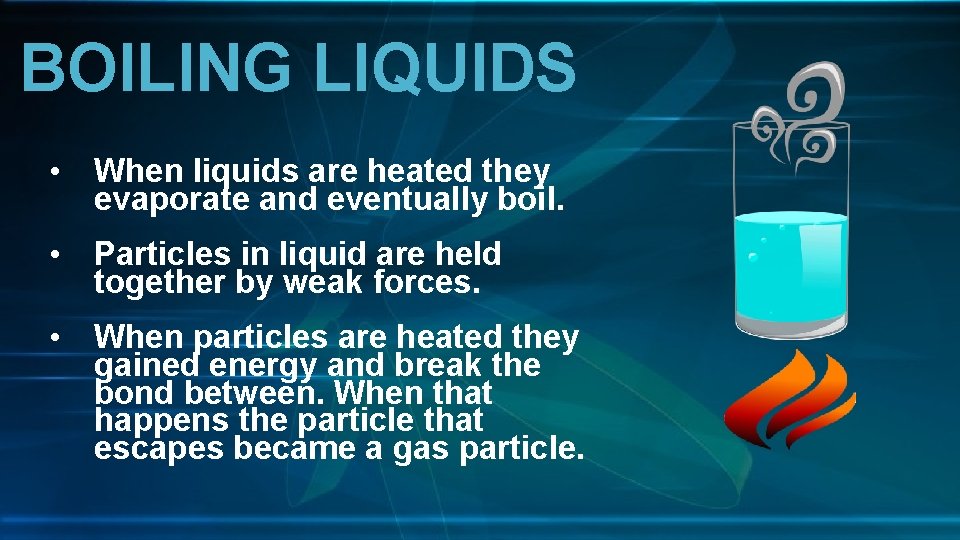
BOILING LIQUIDS • When liquids are heated they evaporate and eventually boil. • Particles in liquid are held together by weak forces. • When particles are heated they gained energy and break the bond between. When that happens the particle that escapes became a gas particle.
Questions
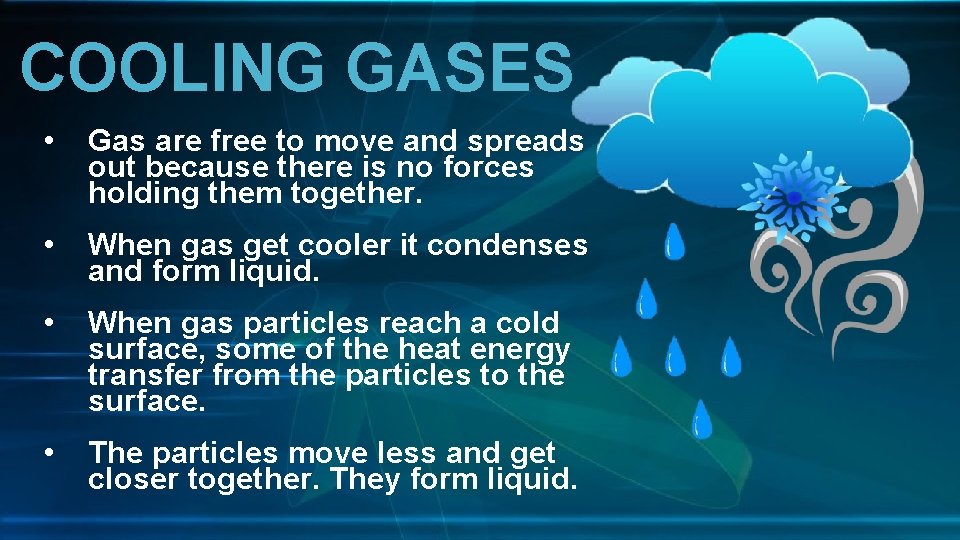
COOLING GASES • Gas are free to move and spreads out because there is no forces holding them together. • When gas get cooler it condenses and form liquid. • When gas particles reach a cold surface, some of the heat energy transfer from the particles to the surface. • The particles move less and get closer together. They form liquid.
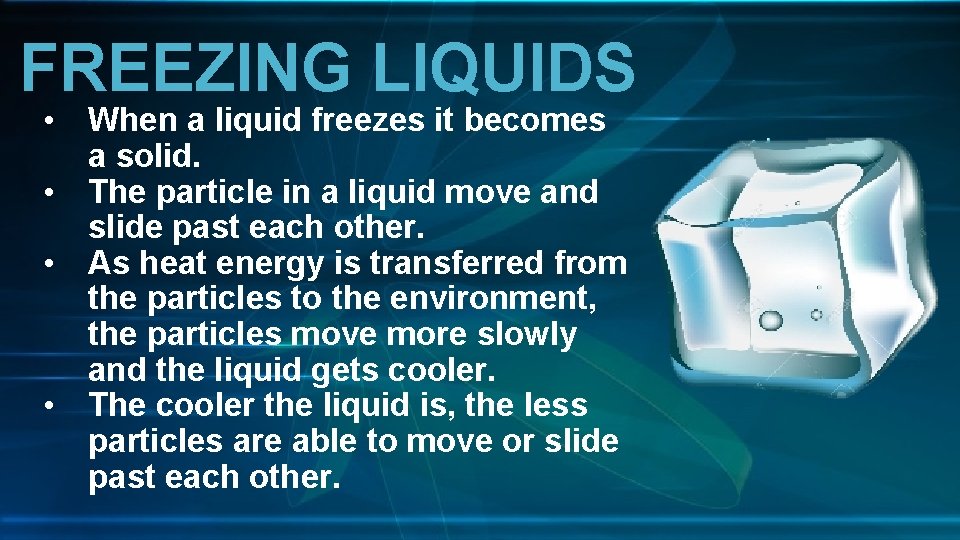
FREEZING LIQUIDS • When a liquid freezes it becomes a solid. • The particle in a liquid move and slide past each other. • As heat energy is transferred from the particles to the environment, the particles move more slowly and the liquid gets cooler. • The cooler the liquid is, the less particles are able to move or slide past each other.
Questions
FILLING THE CHART
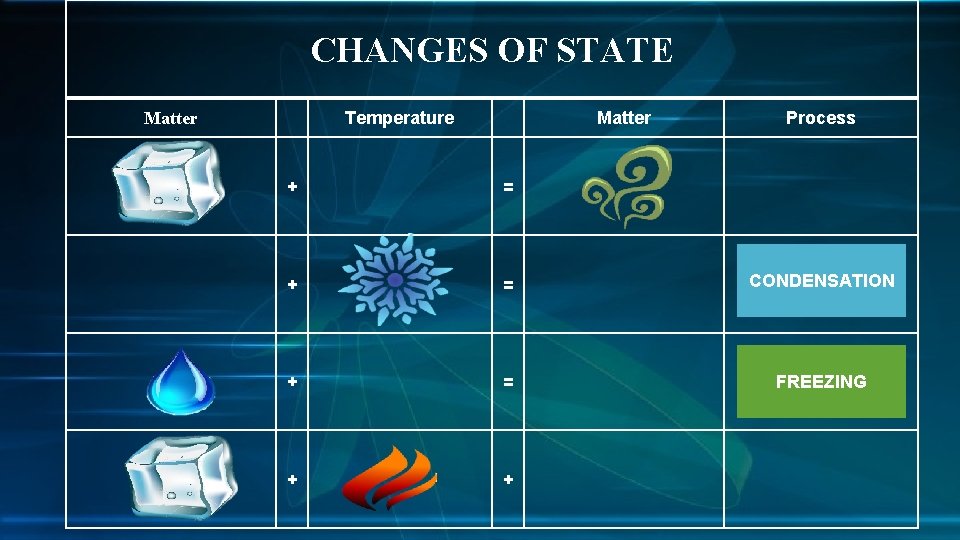
CHANGES OF STATE Temperature Matter Process + = CONDENSATION + = FREEZING + +
ACTIVITY