
Explain why unicellular organisms divide Unicellular organisms divide










- Slides: 50
Explain why unicellular organisms divide
Unicellular organisms divide to reproduce
Explain why multicellular organisms divide
Multicellular organisms divide to replace damaged cells or to grow as an organism
What does specialization mean and why do multicellular organisms have it?
Specialization means the cells have a specific job/function. Multicellular organisms have specialization because the organism is so big, the organs and organ systems need to work together to make the organism work efficiently. Therefore each cell/tissue/organ system has a specific job or function.
What is the level of cellular organization?
A group of cells make up tissues A group of tissues make up an organ A group of organs make up an organ system A group of organ systems make up an organism. The organization of living things is the term to describe the adaption of cells, organs, or organ systems for a specific function.
Explain the relationship between Structure and Function EXPLAIN!
The shape (structure) of a cell, organ or organ system depends on the job (function) it does. The location, structure and function of different tissues, organs and organ systems working together make the organism work together efficiently.
What are the eleven organ systems?
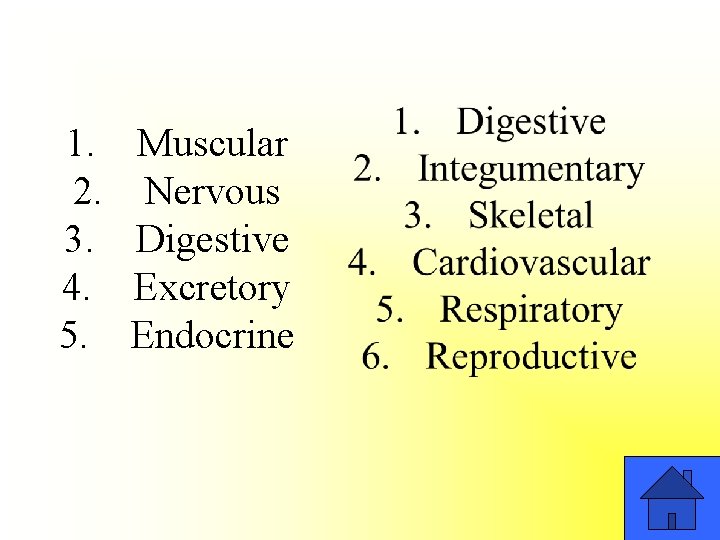
1. 2. 3. 4. 5. Muscular Nervous Digestive Excretory Endocrine
tissue
Liver
Organ
Endocrine
System
Stomach
Organ
hypothalamus, pituitary, thyroid, parathyroid, adrenals, pineal gland
Endocrine System
mouth, esophagus, stomach, small intestine, large intestine, rectum, anus, colon, liver, pancreas, and gallbladder
Digestive System
veins, arteries, capillaries, blood vessels, heart,
Circulatory System
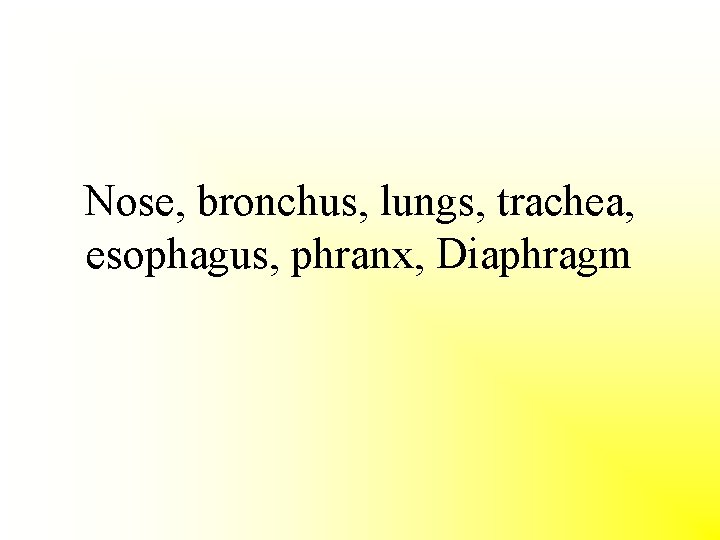
Nose, bronchus, lungs, trachea, esophagus, phranx, Diaphragm
Respiratory System
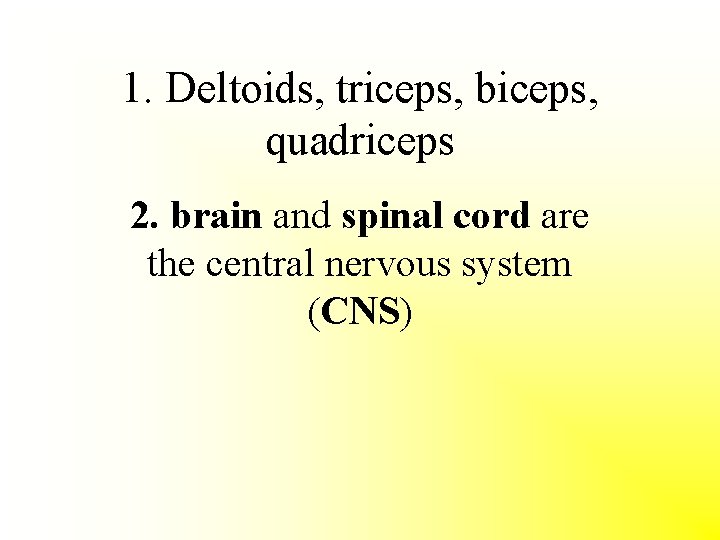
1. Deltoids, triceps, biceps, quadriceps 2. brain and spinal cord are the central nervous system (CNS)
1. Muscle 2. Nervous
What is the xylem?
• Xylem is the type of tissue in vascular plants that provides support and conducts water and nutrients from the roots.
What is the Phloem?
• Phloem is the tissue that conducts food in vascular plants.
What’s the function of the roots? What organ system in humans could you compare this to?
• Roots supply plants with water and dissolved minerals. Roots hold plants securely in the soil. Roots store surplus food made during photosynthesis Roots could be compared to the skeletal system of humans.
What organ system in the human is like the xylem and phloem in a plant?
The xylem is like the cardiovascular system in the human. The phloem would be more like the digestive system in a human.
What is the function of the stem? What organ system in the human is like the stem in a plant?
The function of the stem is to provide support. This could be compared to the skeletal system of humans.
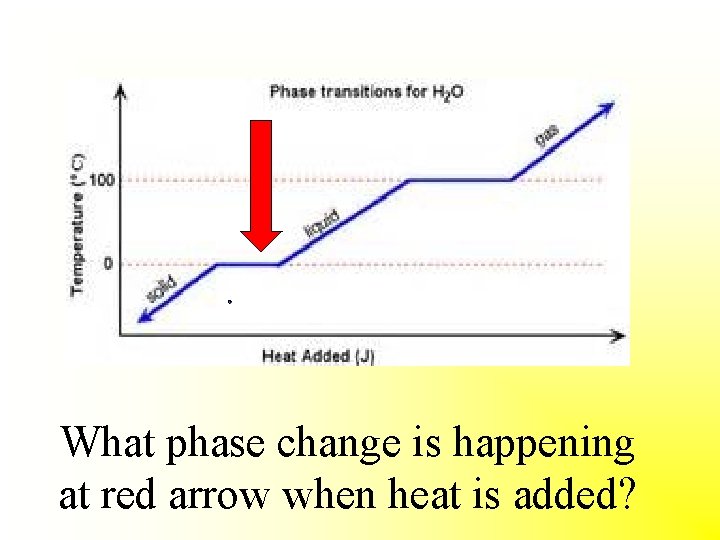
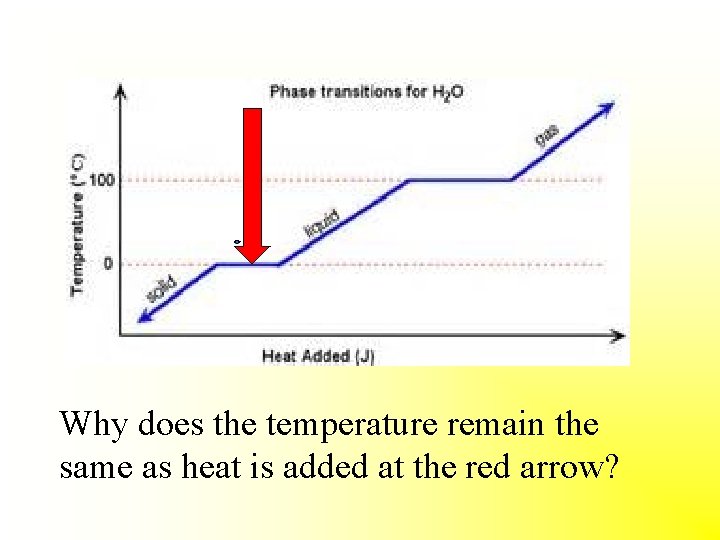
What phase change is happening at red arrow when heat is added?
Melting – going from a solid to a liquid
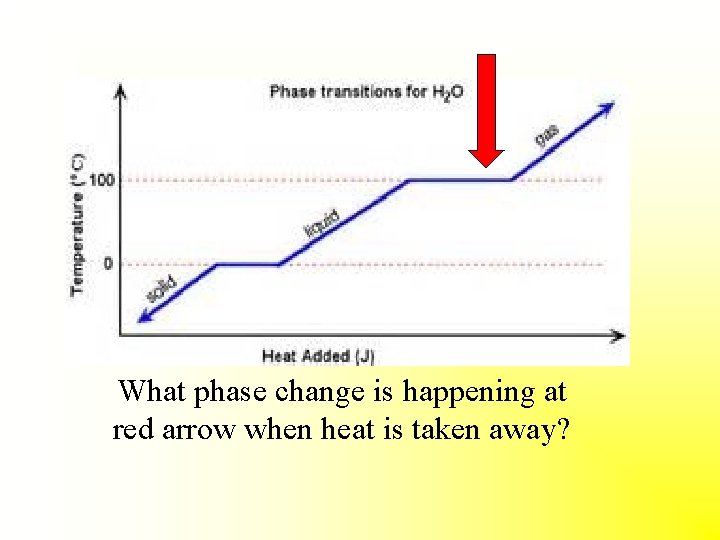
What phase change is happening at red arrow when heat is taken away?
Condensation – going from a gas to a liquid
Why does the temperature remain the same as heat is added at the red arrow?
The reaction requires energy for a phase change to happen.
What organ system in a human is like the flower of a plant?
The reproductive system
What do leaves do for a plant?
Leaves collect the sunlight and the chlorophyll in the leaves creates the food for the plant.