
Explain how animals defend themselves Structures of Animals
- Slides: 19
• Explain how animals defend themselves
Structures of Animals 6 -3. 2 Summarize the basic functions of the structures of animals that allow them to defend themselves, to move, and to obtain resources.
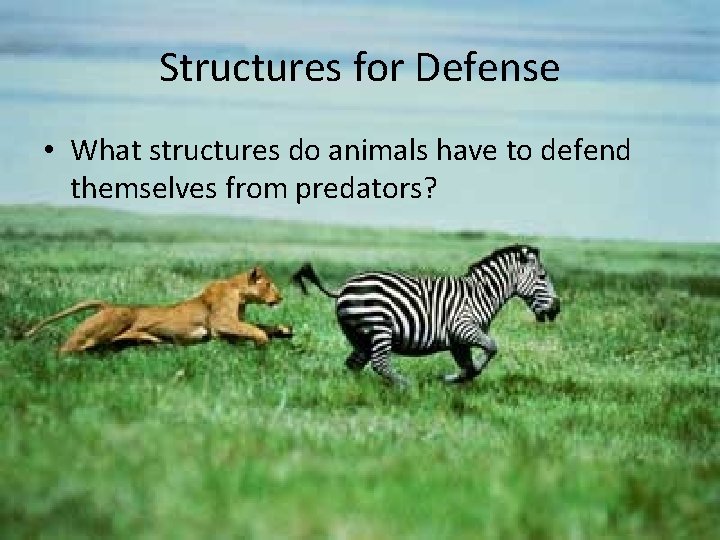
Structures for Defense • What structures do animals have to defend themselves from predators?
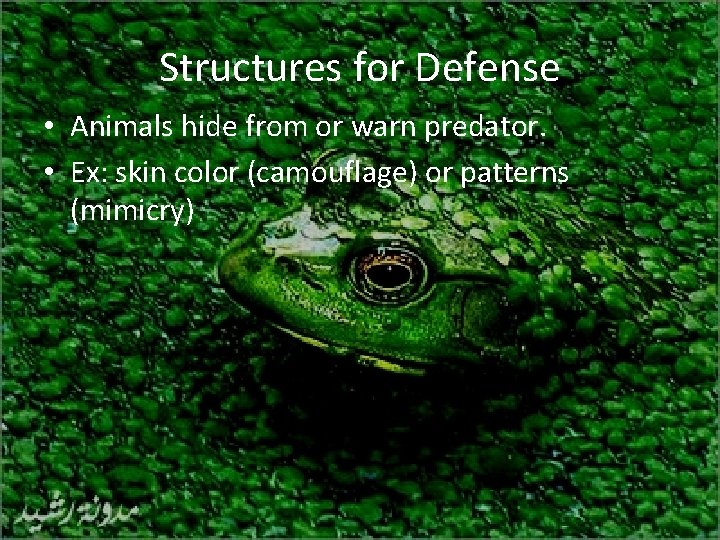
Structures for Defense • Animals hide from or warn predator. • Ex: skin color (camouflage) or patterns (mimicry)
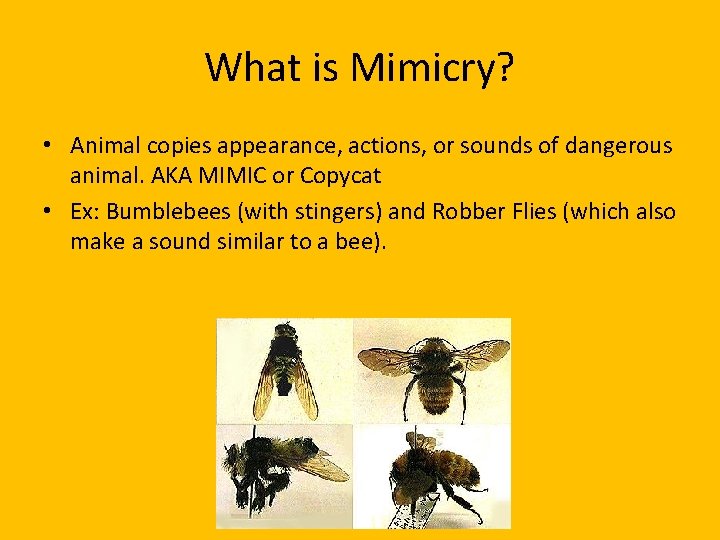
What is Mimicry? • Animal copies appearance, actions, or sounds of dangerous animal. AKA MIMIC or Copycat • Ex: Bumblebees (with stingers) and Robber Flies (which also make a sound similar to a bee).
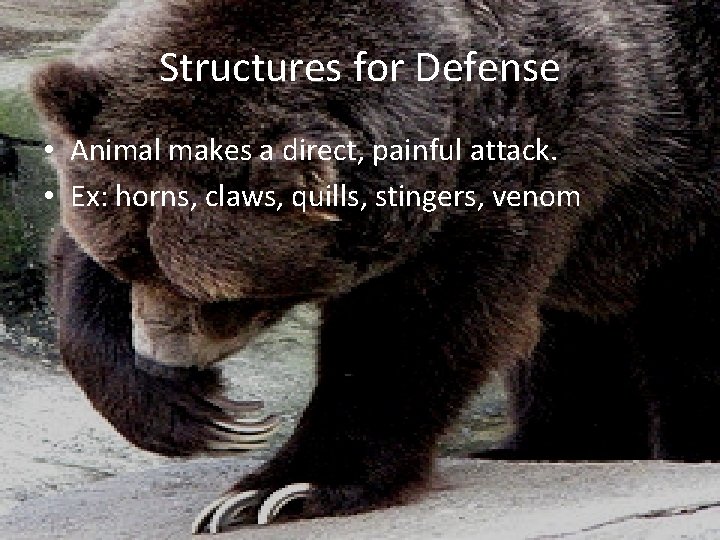
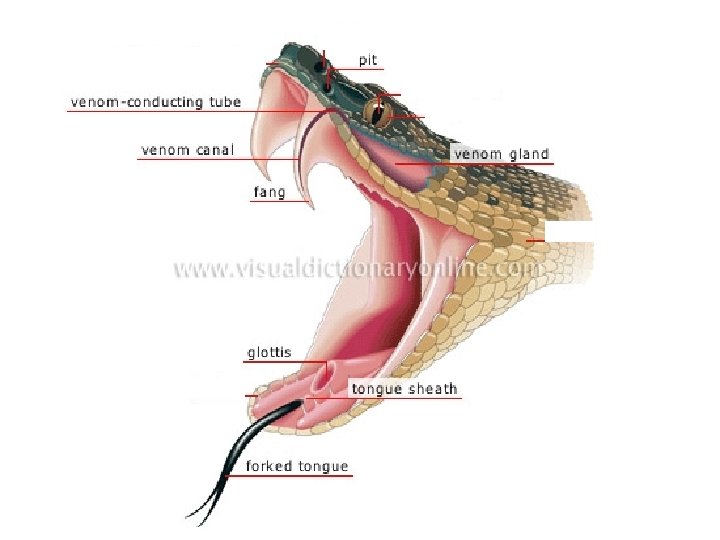
Structures for Defense • Animal makes a direct, painful attack. • Ex: horns, claws, quills, stingers, venom
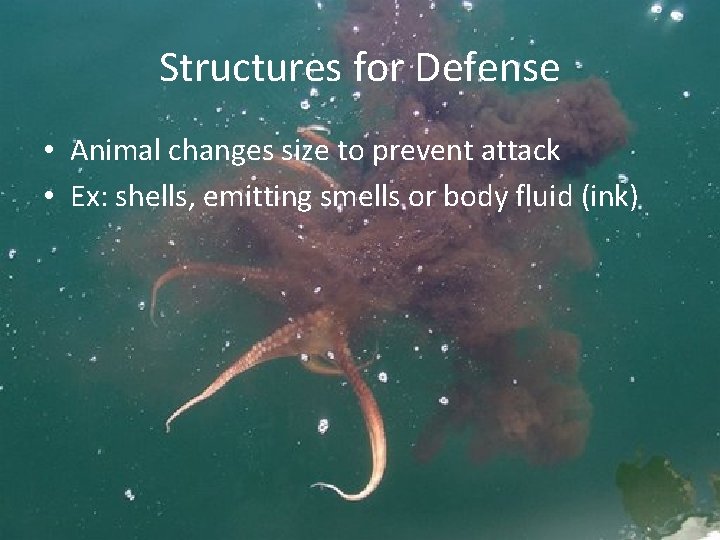
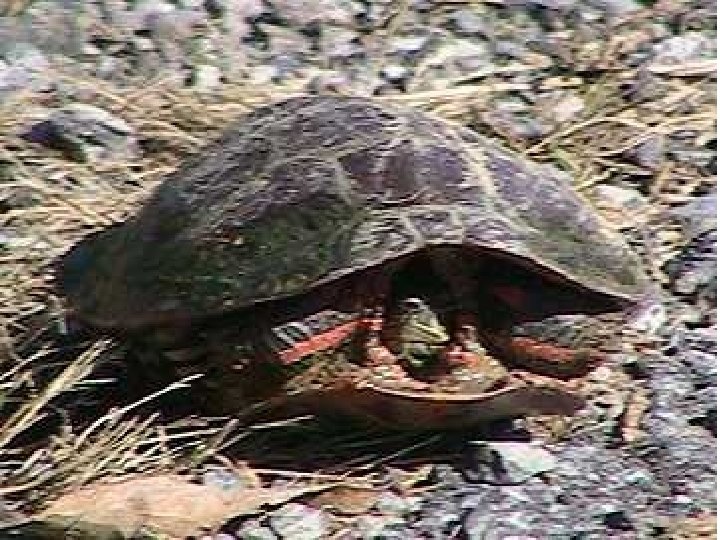
Structures for Defense • Animal changes size to prevent attack • Ex: shells, emitting smells or body fluid (ink)
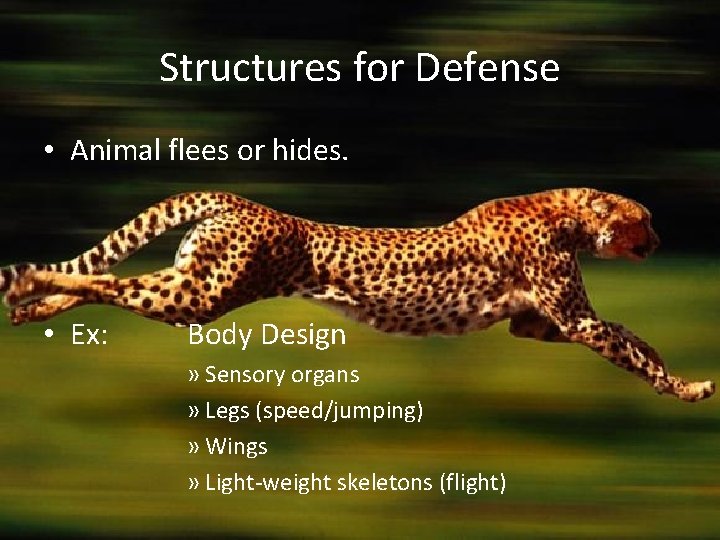
Structures for Defense • Animal flees or hides. • Ex: Body Design » Sensory organs » Legs (speed/jumping) » Wings » Light-weight skeletons (flight)
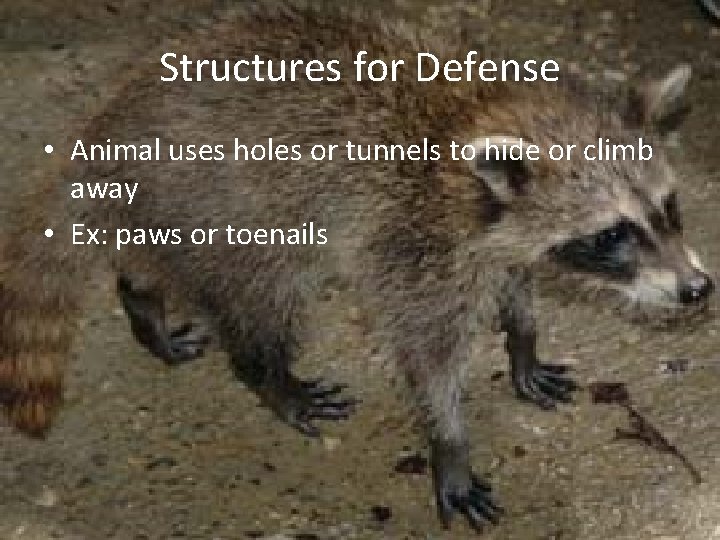
Structures for Defense • Animal uses holes or tunnels to hide or climb away • Ex: paws or toenails
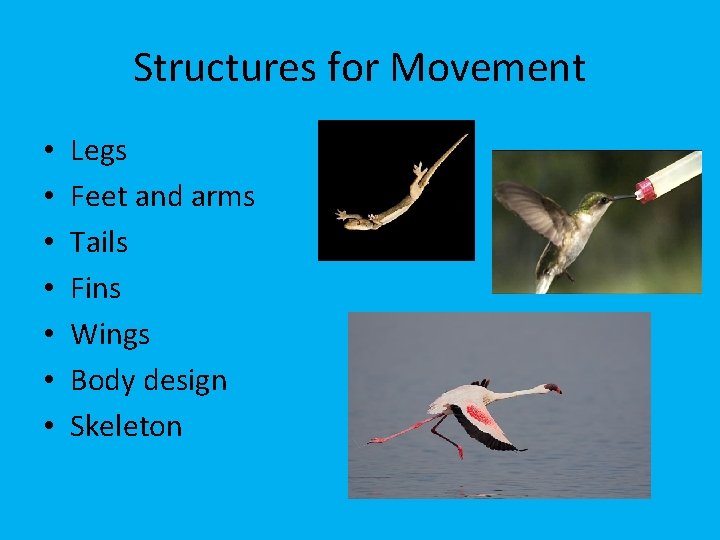
Structures for Movement • What structures allow animals to move to fulfill their needs, such as finding food and escaping predators?
Structures for Movement • • Legs Feet and arms Tails Fins Wings Body design Skeleton
Structures to Obtain Resources • What specialized structures do animals have in order to obtain food? • What structures do animals have that we (as humans) don’t have?
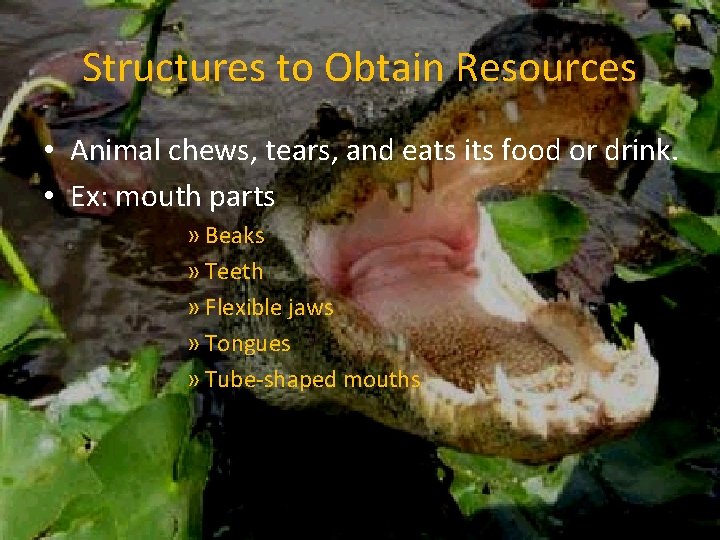
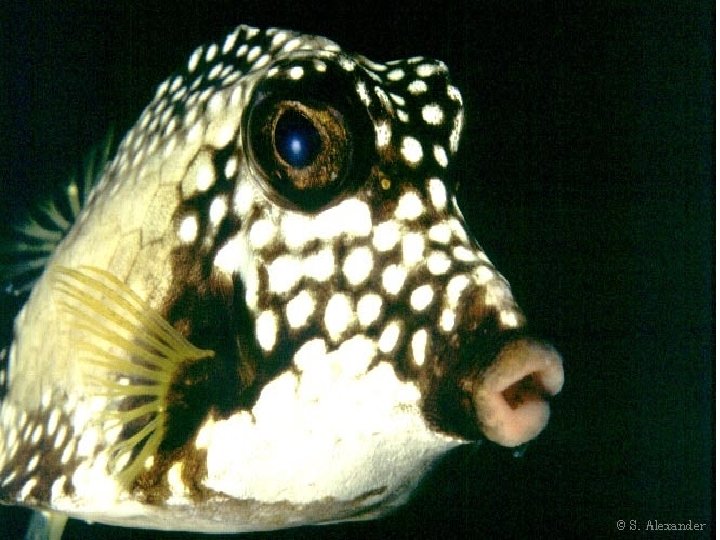
Structures to Obtain Resources • Animal chews, tears, and eats its food or drink. • Ex: mouth parts » Beaks » Teeth » Flexible jaws » Tongues » Tube-shaped mouths
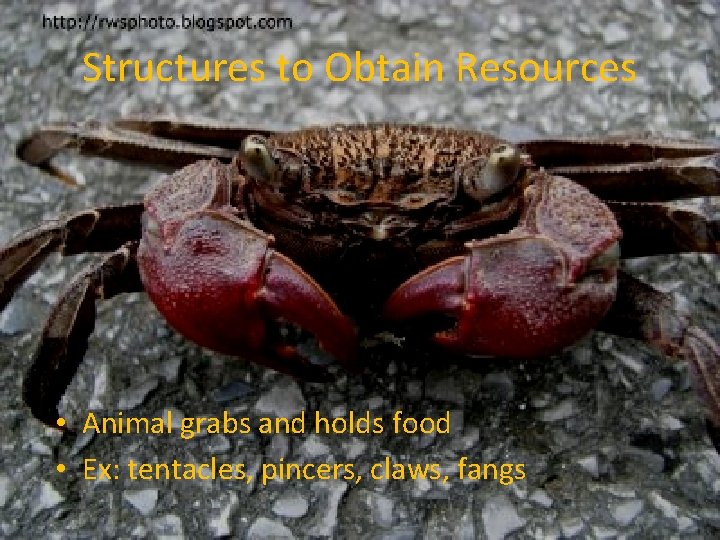
Structures to Obtain Resources • Animal grabs and holds food • Ex: tentacles, pincers, claws, fangs
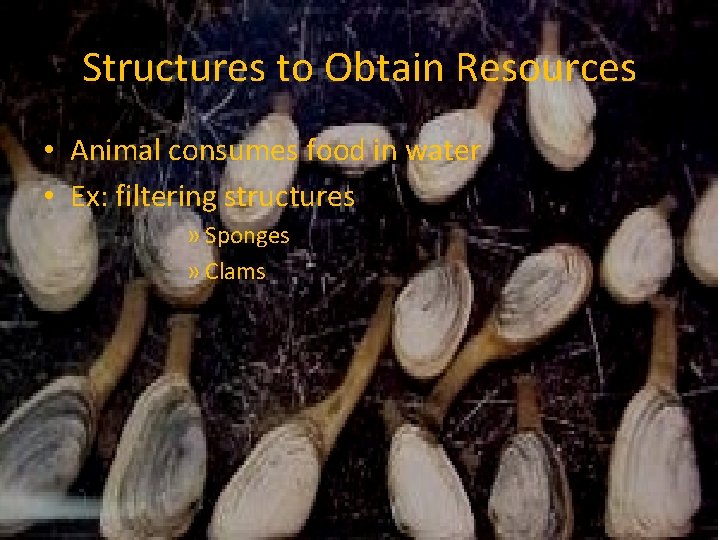
Structures to Obtain Resources • Animal consumes food in water • Ex: filtering structures » Sponges » Clams
Give two examples of how animals use camouflage for different reasons.