
Experimentation and numerical simulation of meteoroid ablation M
Experimentation and numerical simulation of meteoroid ablation M E T E O R O I D 2 0 1 6 Lorenzo Limonta, Sigrid Close Space Environment and Satellite Systems Lab
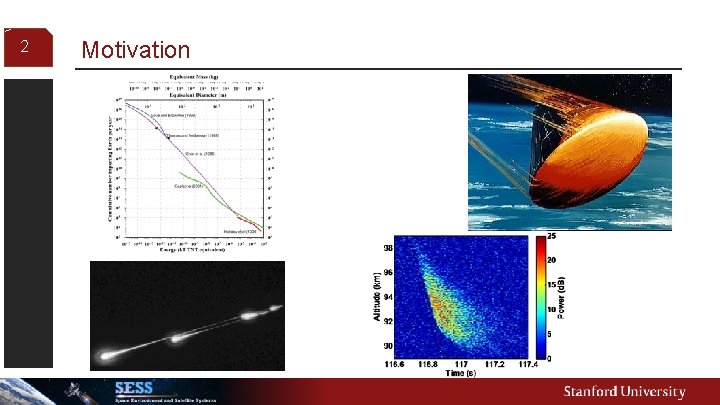
2 Motivation

3 Overview QUESTIONS: § What is the global distribution of meteoroid masses entering Earth’s atmosphere? § How are meteor size, mass, and velocity related to measurable parameters? § Can we better constrain › › › Composition Luminous efficiency τ Ionization probability β METHODS: § Simultaneous optical and radar detection § Modeling › Ablation model: from mass and velocity to plasma size, density, and brightness › Scattering model: from plasma size and density to radar cross section

4 Data collection § Joint optical and radar experiment conducted at PFISR spring 2014 § Two sensitive CMOS cameras, one with a long pass filter (λ > 475 nm) § High power PFISR radar capable of detecting meteor head echoes § Pointing 75 deg elevation, 15 deg azimuth § Field of fiew ~9 x 9 deg
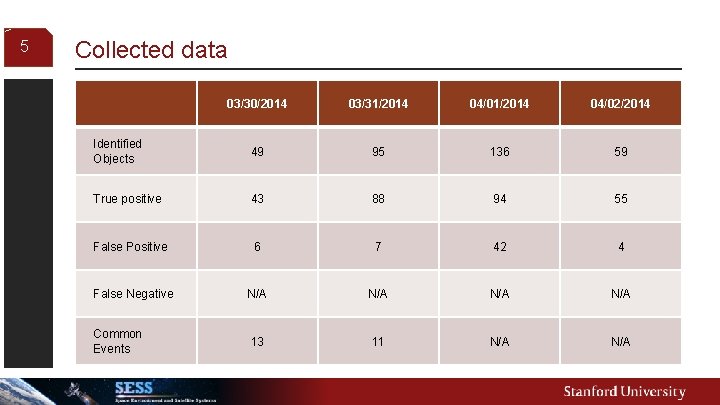
5 Collected data 03/30/2014 03/31/2014 04/02/2014 Identified Objects 49 95 136 59 True positive 43 88 94 55 False Positive 6 7 42 4 False Negative N/A N/A Common Events 13 11 N/A
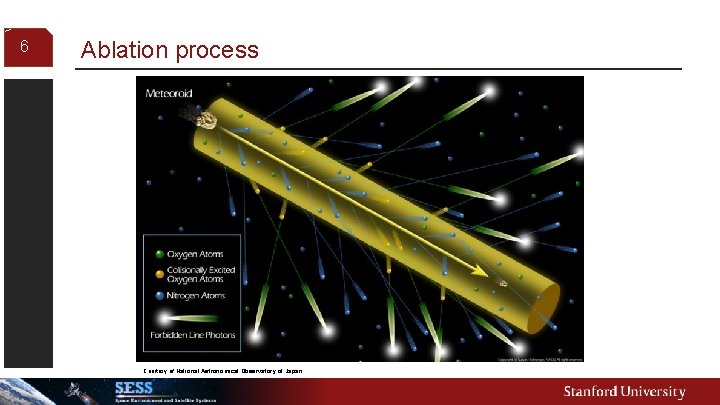
6 Ablation process Courtesy of National Astronomical Observatory of Japan
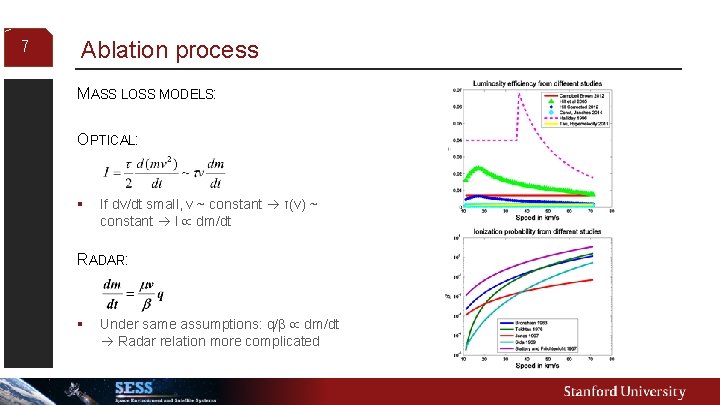
7 Ablation process MASS LOSS MODELS: OPTICAL: § If dv/dt small, v ~ constant τ(v) ~ constant I dm/dt RADAR: § Under same assumptions: q/β dm/dt Radar relation more complicated
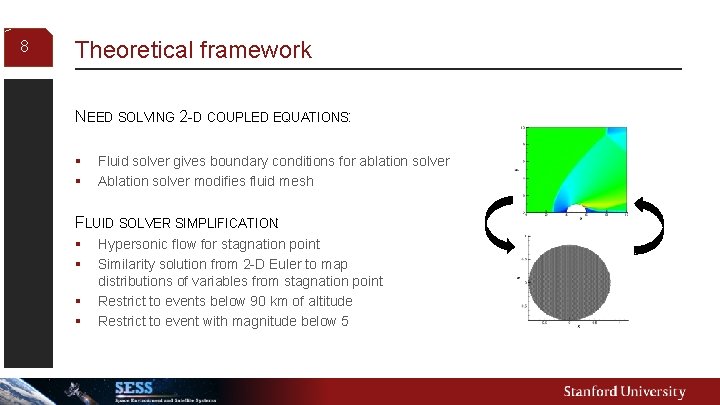
8 Theoretical framework NEED SOLVING 2 -D COUPLED EQUATIONS: § § Fluid solver gives boundary conditions for ablation solver Ablation solver modifies fluid mesh FLUID SOLVER SIMPLIFICATION: § § Hypersonic flow for stagnation point Similarity solution from 2 -D Euler to map distributions of variables from stagnation point Restrict to events below 90 km of altitude Restrict to event with magnitude below 5
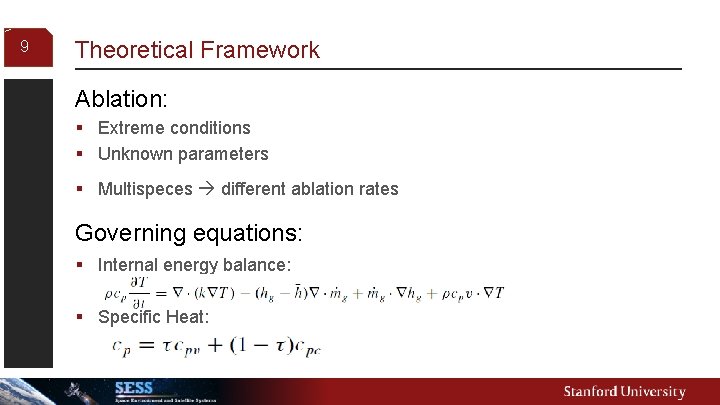
9 Theoretical Framework Ablation: § Extreme conditions § Unknown parameters § Multispeces different ablation rates Governing equations: § Internal energy balance: § Specific Heat:
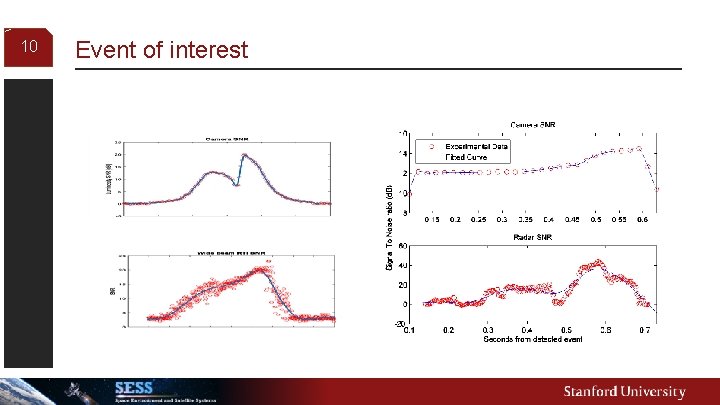
10 Event of interest
11 Conclusions CONCLUSIONS: § § § Working model for a simplified 2 -d numerical simulation Shown effects of shelled-multi-composition meteoroid models on mass loss › Not sufficient to completely capture what detected Shown effects of rotation on mass loss FUTURE WORK: § § Crack propagation and fragmentation model (in collaboration with prof. Chiaramonte of Princeton University) Plasma PIC
- Slides: 11