
Experimental Research Hanser and Wheeler Principles Independent Variable
Experimental Research Hanser and Wheeler
Principles • Independent Variable • Dependent Variable
• Control – Random assignment to groups – Setting – Time of day – Therapist – Etc.
• Generalizability – Random selection/random sample (match population of interest) – Size of sample – Normal distribution – External validity
• Experimental Design – Way to structure conditions in scientific inquiry – Test hypotheses by controlling certain variables and allowing others to change
• Hypotheses – Prediction – Null hypothesis – Reject or accept
Experimental Designs • • Pre-Experimental True Experimental: Independent Groups True Experimental: Related Groups Quasi Experimental
Independent Groups • • • Experimental group – Control group Random assignment to conditions Pretest-posttest, posttest only Three or more groups – multiple levels Factorial design – interaction effects
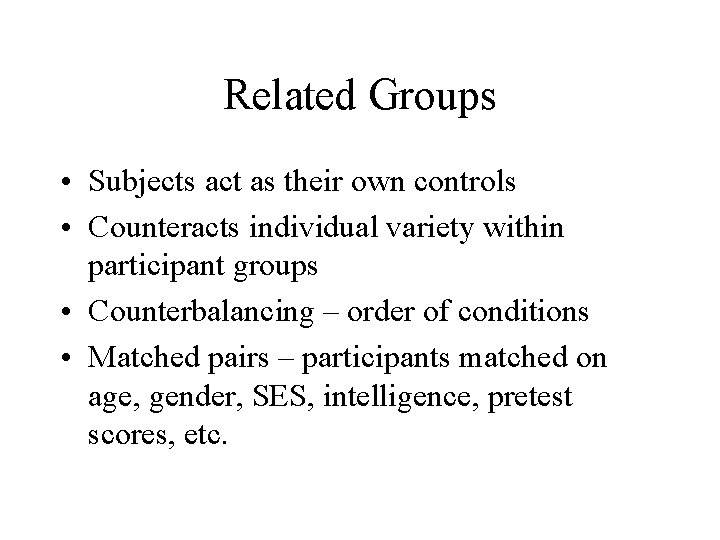
Related Groups • Subjects act as their own controls • Counteracts individual variety within participant groups • Counterbalancing – order of conditions • Matched pairs – participants matched on age, gender, SES, intelligence, pretest scores, etc.
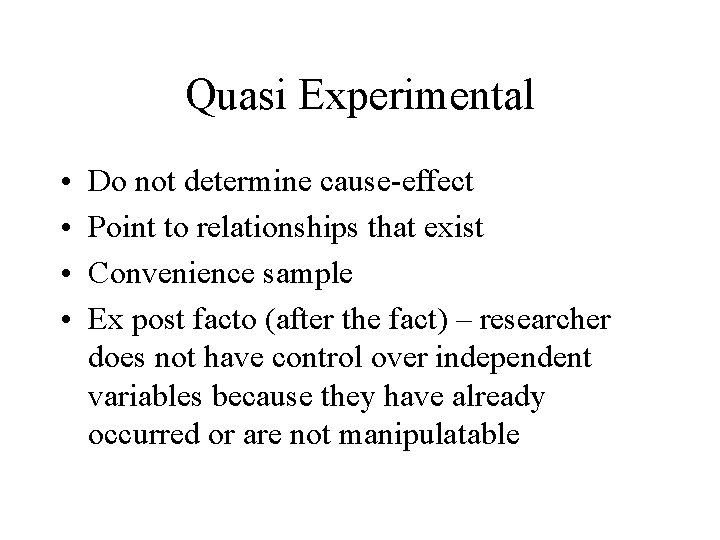
Quasi Experimental • • Do not determine cause-effect Point to relationships that exist Convenience sample Ex post facto (after the fact) – researcher does not have control over independent variables because they have already occurred or are not manipulatable
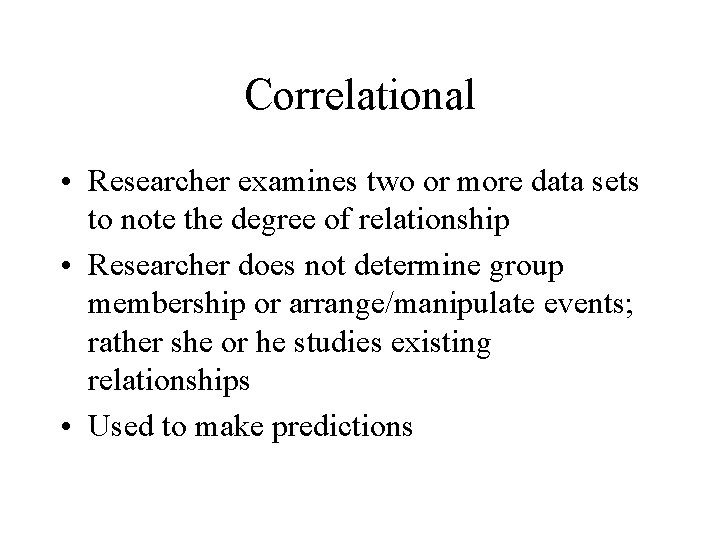
Correlational • Researcher examines two or more data sets to note the degree of relationship • Researcher does not determine group membership or arrange/manipulate events; rather she or he studies existing relationships • Used to make predictions
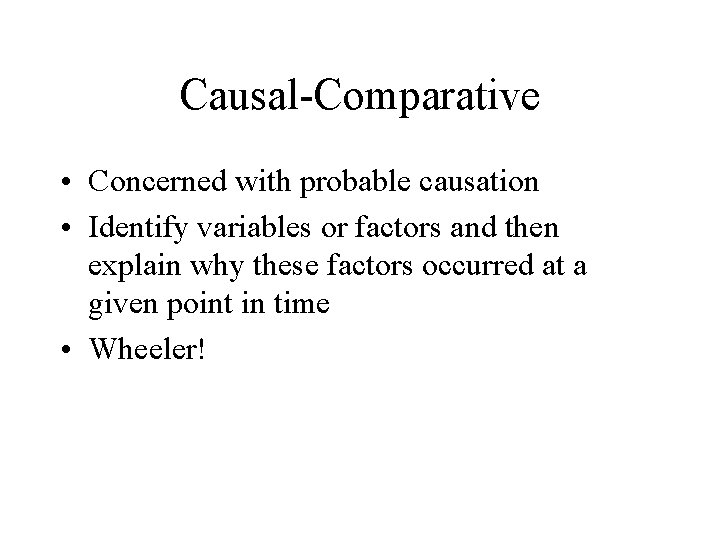
Causal-Comparative • Concerned with probable causation • Identify variables or factors and then explain why these factors occurred at a given point in time • Wheeler!
- Slides: 12