
Experimental Design Step One Hypothesis A claim prediction
- Slides: 6
Experimental Design
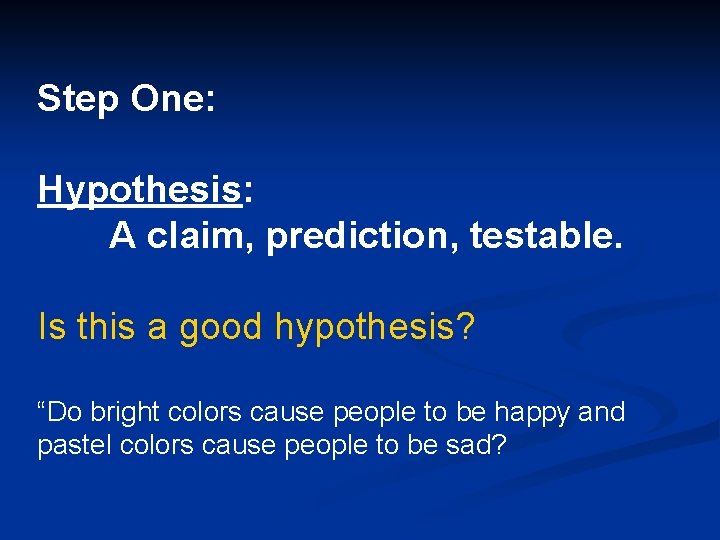
Step One: Hypothesis: A claim, prediction, testable. Is this a good hypothesis? “Do bright colors cause people to be happy and pastel colors cause people to be sad?
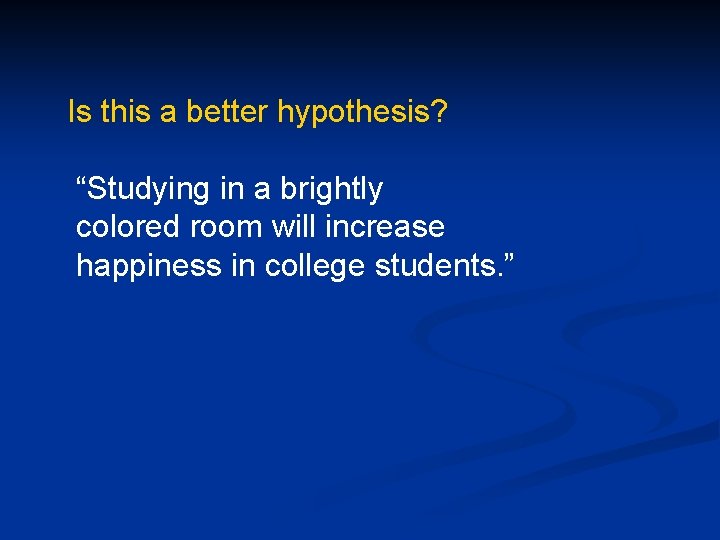
Is this a better hypothesis? “Studying in a brightly colored room will increase happiness in college students. ”
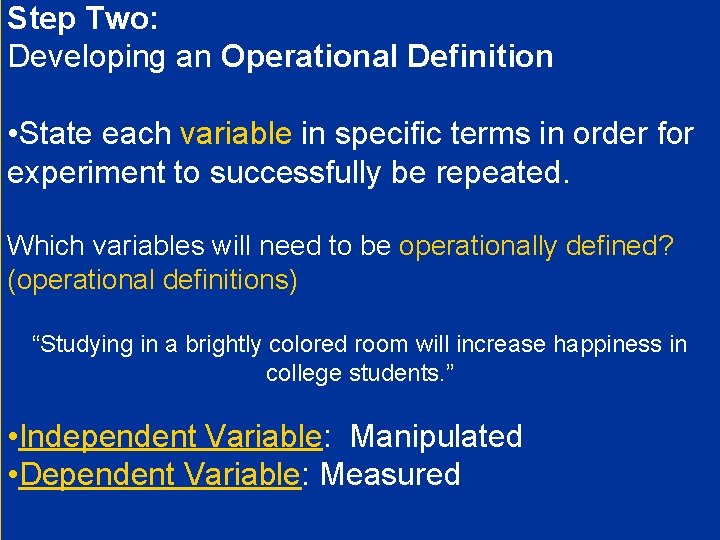
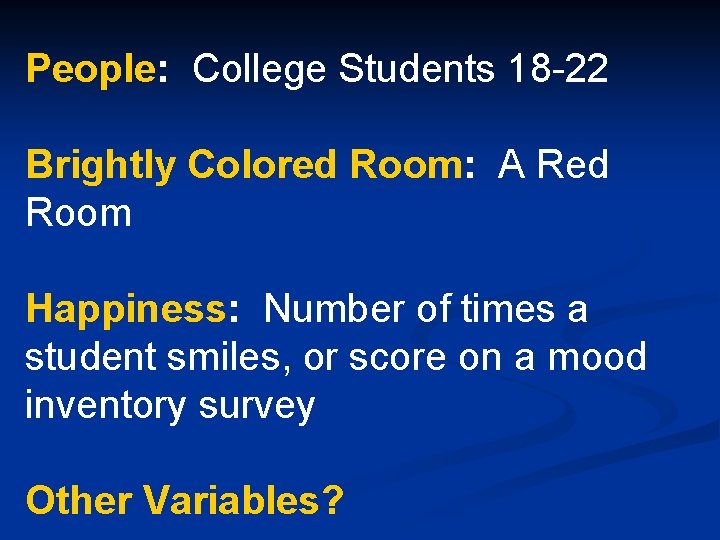
Step Two: Developing an Operational Definition • State each variable in specific terms in order for experiment to successfully be repeated. Which variables will need to be operationally defined? (operational definitions) “Studying in a brightly colored room will increase happiness in college students. ” • Independent Variable: Manipulated • Dependent Variable: Measured
People: College Students 18 -22 Brightly Colored Room: A Red Room Happiness: Number of times a student smiles, or score on a mood inventory survey Other Variables?
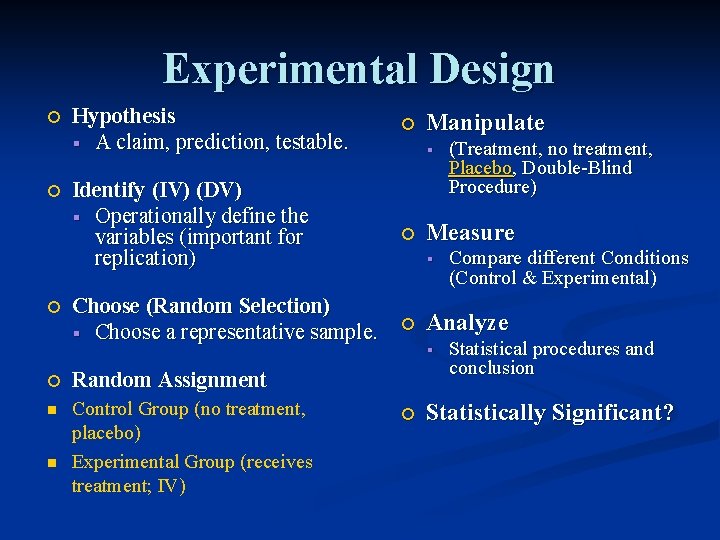
Experimental Design Hypothesis A claim, prediction, testable. Identify (IV) (DV) Operationally define the variables (important for replication) Choose (Random Selection) Choose a representative sample. Random Assignment n Control Group (no treatment, placebo) Experimental Group (receives treatment; IV) n Manipulate Measure Compare different Conditions (Control & Experimental) Analyze (Treatment, no treatment, Placebo, Double-Blind Procedure) Statistical procedures and conclusion Statistically Significant?