
Experiment No 2 Determination of Acetic Acid Content

- Slides: 7
Experiment No (2): Determination of Acetic Acid Content of Vinegar
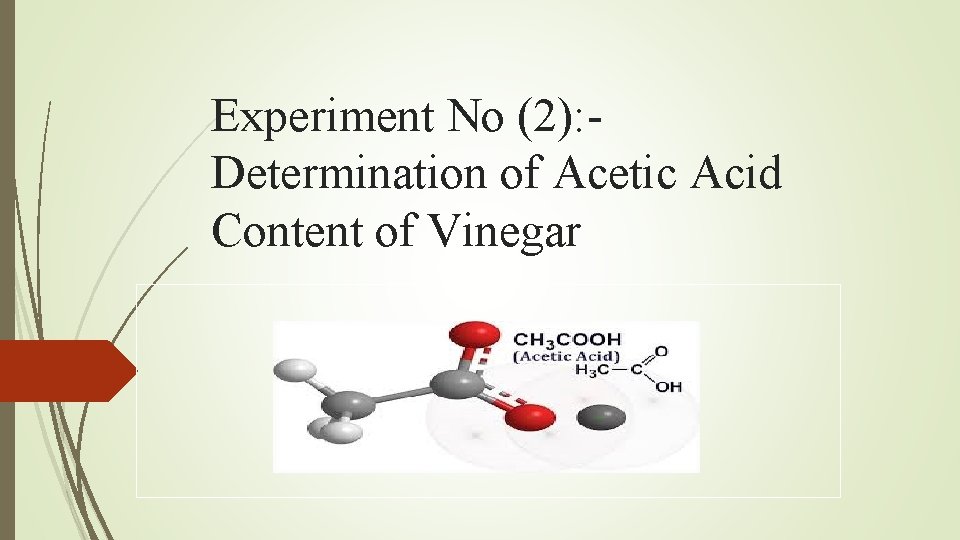
Theory Acetic acid: is a colorless liquid organic compound with the chemical formula CH 3 COOH (also written as CH 3 CO 2 H or C 2 H 4 O 2). Liquid acetic acid is a hydrophilic (polar) Vinegar can have different strengths. Most popular are concentrations between 4% and 15% In case of such concentrated solutions it may be impossible to simply take a single sample for titration
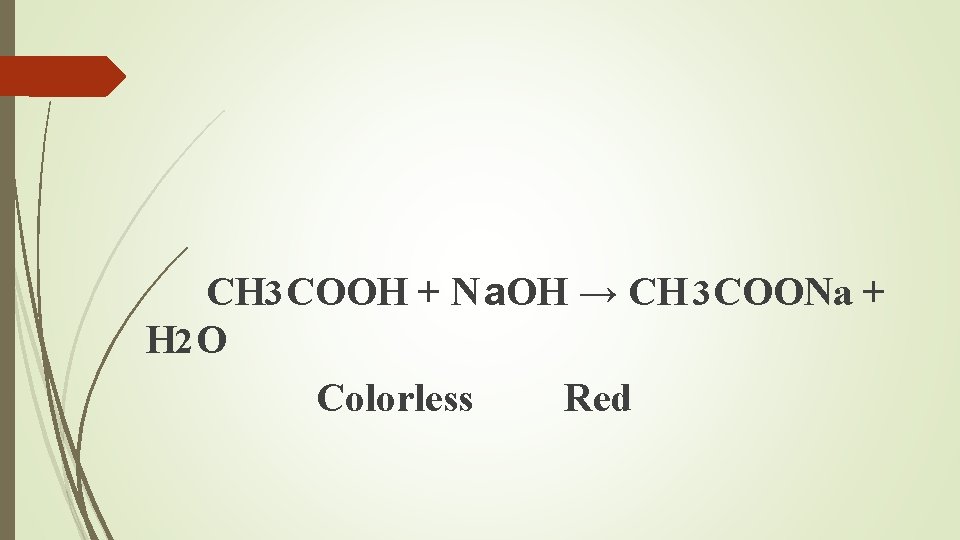
CH 3 COOH + N a. OH → CH 3 COONa + H 2 O Colorless Red
Uses acetic acid Helps improve food digestion and prevents indigestion . It strengthens the bones and keeps them healthy. Helps burn body fat and reduce body weight. Added to different food types to improve the taste. Speed up the process of leveling meat, chicken and fish. Prevents harmful high cholesterol in the blood. It strengthens the immune system and prevents many diseases. Relieves sore throat, chest and sinuses.
Side effects of using acetic acid Cause some allergic reactions in the body. Sometimes it causes a hole in the ear when used to treat ear infections. It causes some skin burns for some people.
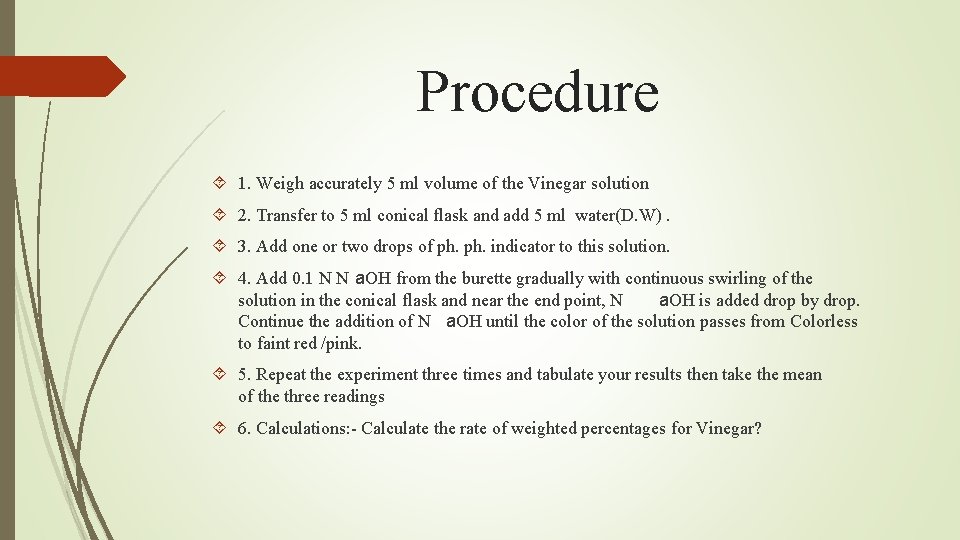
Procedure 1. Weigh accurately 5 ml volume of the Vinegar solution 2. Transfer to 5 ml conical flask and add 5 ml water(D. W). 3. Add one or two drops of ph. indicator to this solution. 4. Add 0. 1 N N a. OH from the burette gradually with continuous swirling of the solution in the conical flask and near the end point, N a. OH is added drop by drop. Continue the addition of N a. OH until the color of the solution passes from Colorless to faint red /pink. 5. Repeat the experiment three times and tabulate your results then take the mean of the three readings 6. Calculations: - Calculate the rate of weighted percentages for Vinegar?