
EXPERIMENT 4 IDENTIFICATION OF CARBOXYLIC ACIDS M SC
EXPERIMENT 4 IDENTIFICATION OF CARBOXYLIC ACIDS M. SC SURA S. RAOOF
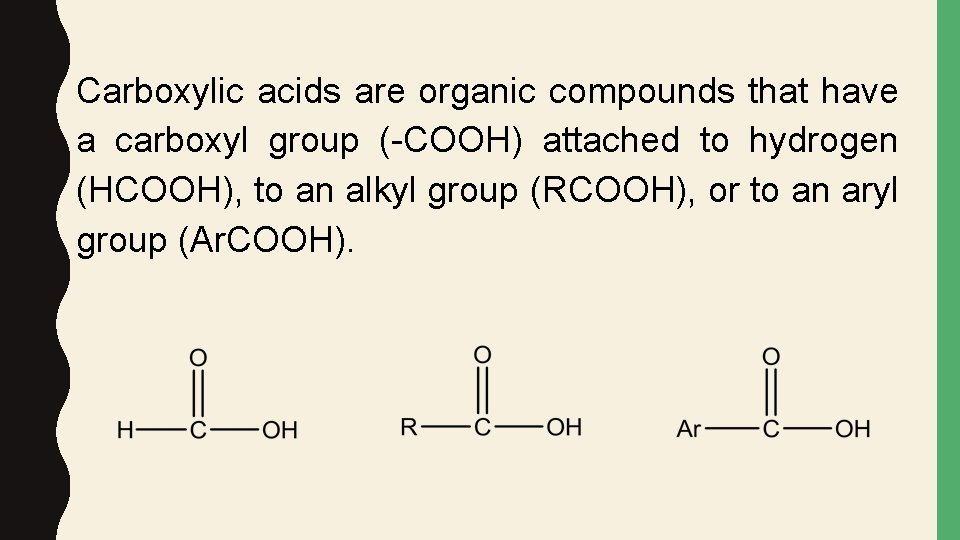
Carboxylic acids are organic compounds that have a carboxyl group (-COOH) attached to hydrogen (HCOOH), to an alkyl group (RCOOH), or to an aryl group (Ar. COOH).
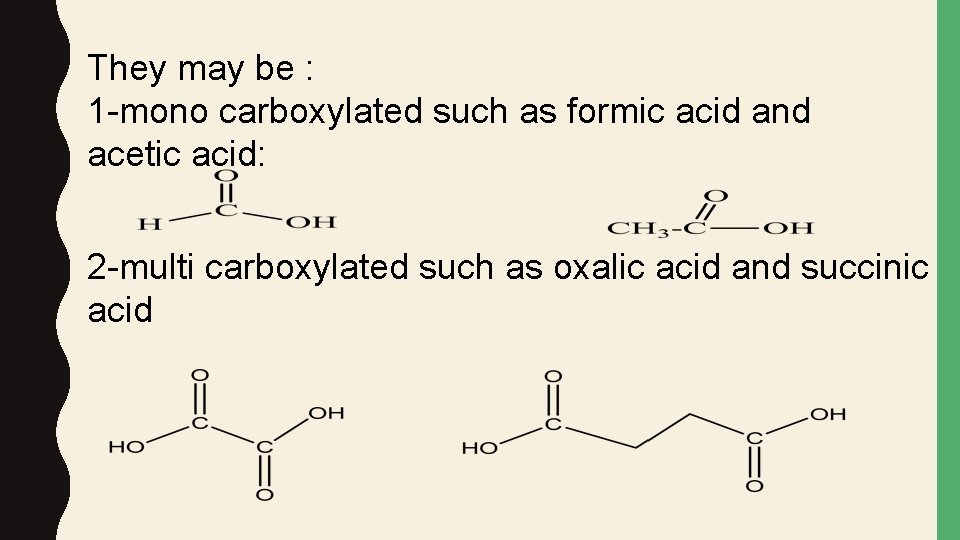
They may be : 1 -mono carboxylated such as formic acid and acetic acid: 2 -multi carboxylated such as oxalic acid and succinic acid
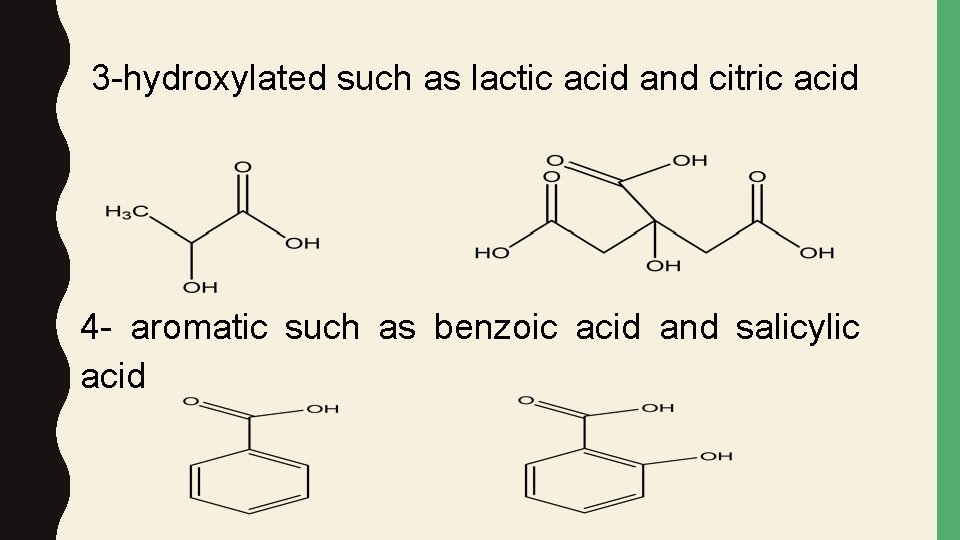
3 -hydroxylated such as lactic acid and citric acid 4 - aromatic such as benzoic acid and salicylic acid
IUPAC NAMES OF CARBOXYLIC ACIDS The name of the carboxylic acid of benzene, is benzoic acid. • The carbon in the carbonyl group is bonded to. carbon 1 in the benzene ring. • The ring is numbered to give the lowest possible. numbers for any substituents. • The prefixes ortho, meta, and para may be used to. show the position of one other substituent.

IUPAC Names of Carboxylic Acids The prefixes ortho, meta, and para may be used to show the position of one other substituent.
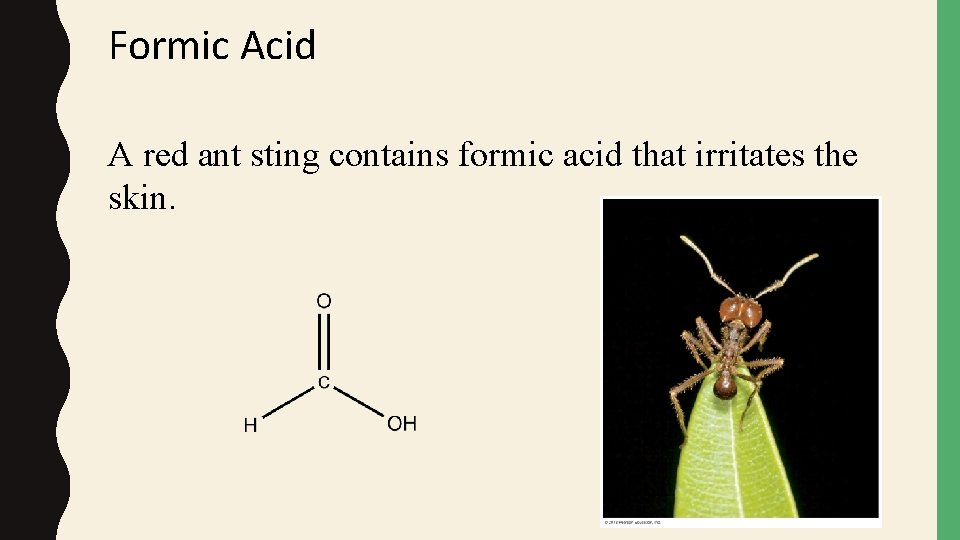
Formic Acid A red ant sting contains formic acid that irritates the skin.
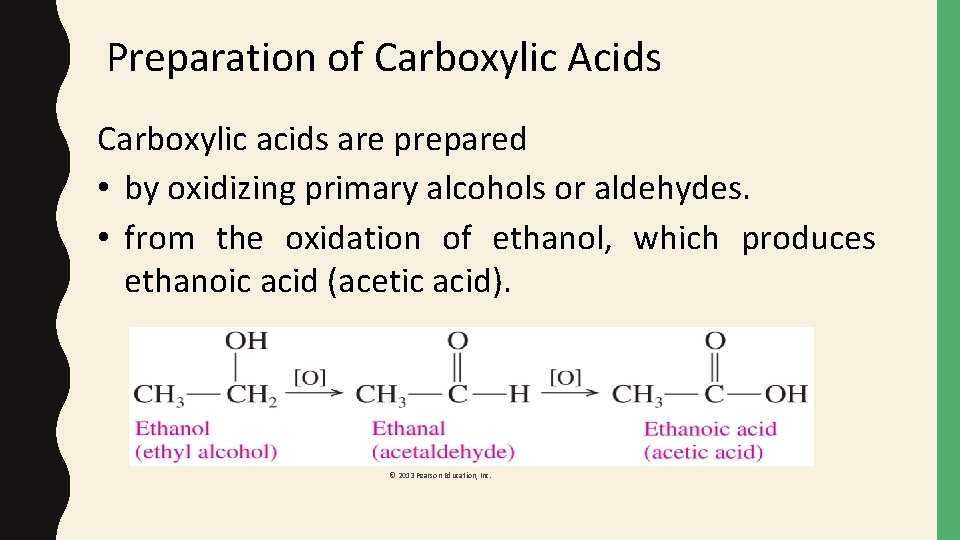
Preparation of Carboxylic Acids Carboxylic acids are prepared • by oxidizing primary alcohols or aldehydes. • from the oxidation of ethanol, which produces ethanoic acid (acetic acid). © 2013 Pearson Education, Inc.
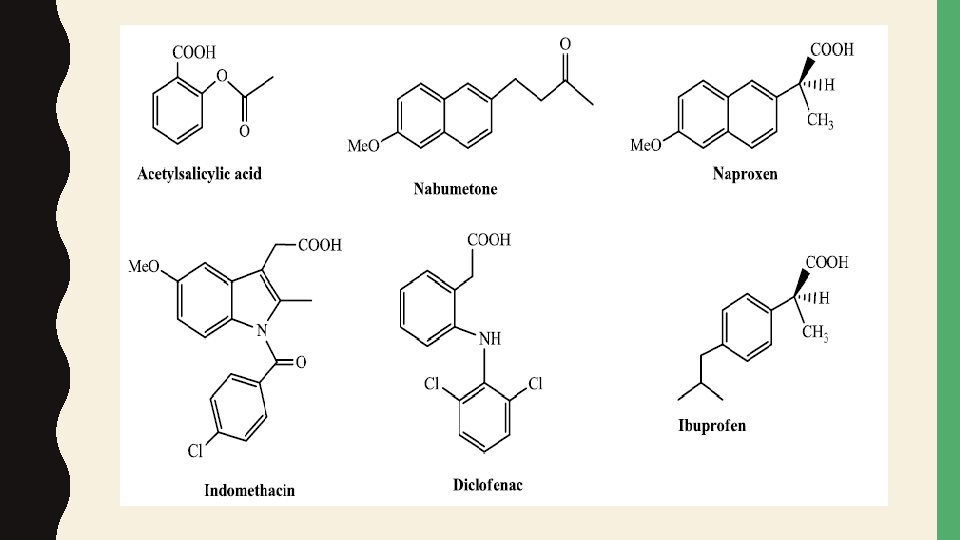
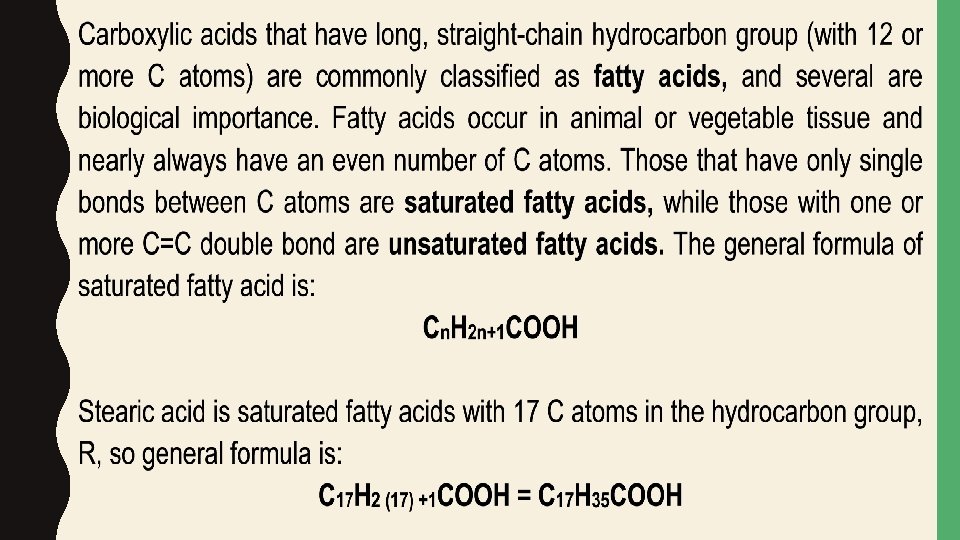
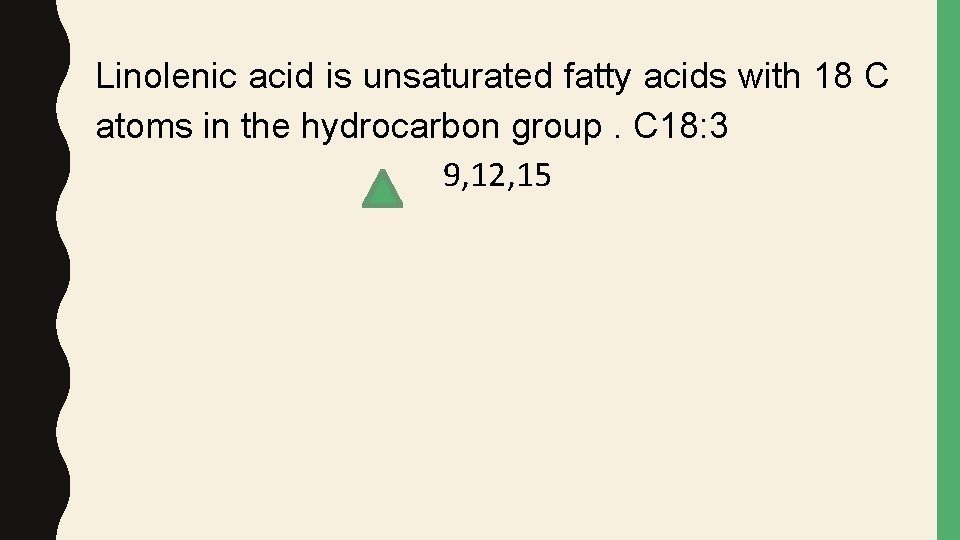
Linolenic acid is unsaturated fatty acids with 18 C atoms in the hydrocarbon group. C 18: 3 9, 12, 15
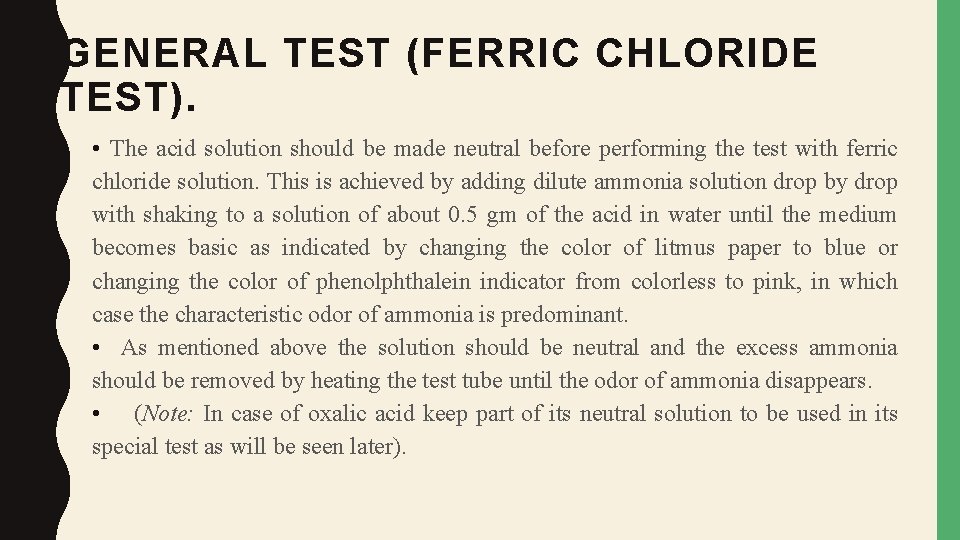
GENERAL TEST (FERRIC CHLORIDE TEST). • The acid solution should be made neutral before performing the test with ferric chloride solution. This is achieved by adding dilute ammonia solution drop by drop with shaking to a solution of about 0. 5 gm of the acid in water until the medium becomes basic as indicated by changing the color of litmus paper to blue or changing the color of phenolphthalein indicator from colorless to pink, in which case the characteristic odor of ammonia is predominant. • As mentioned above the solution should be neutral and the excess ammonia should be removed by heating the test tube until the odor of ammonia disappears. • (Note: In case of oxalic acid keep part of its neutral solution to be used in its special test as will be seen later).
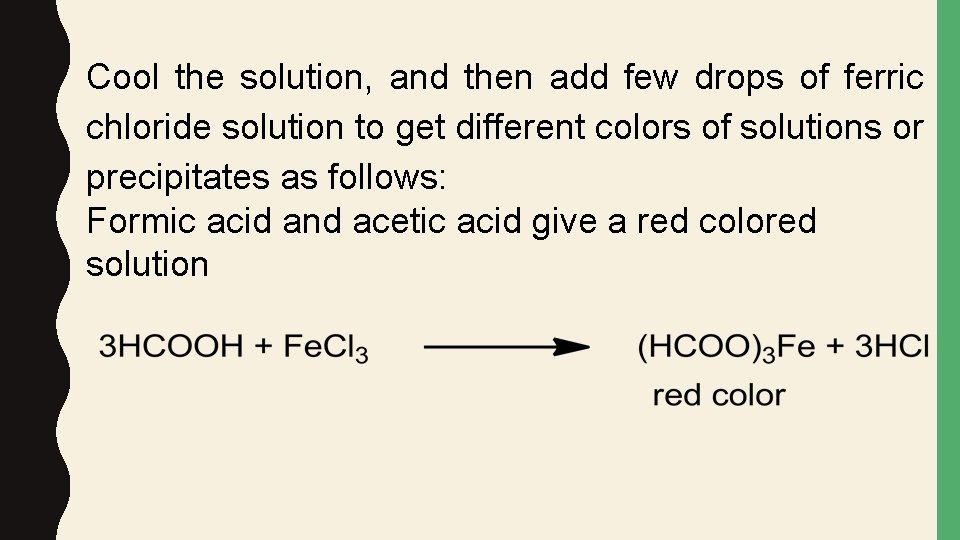
Cool the solution, and then add few drops of ferric chloride solution to get different colors of solutions or precipitates as follows: Formic acid and acetic acid give a red colored solution
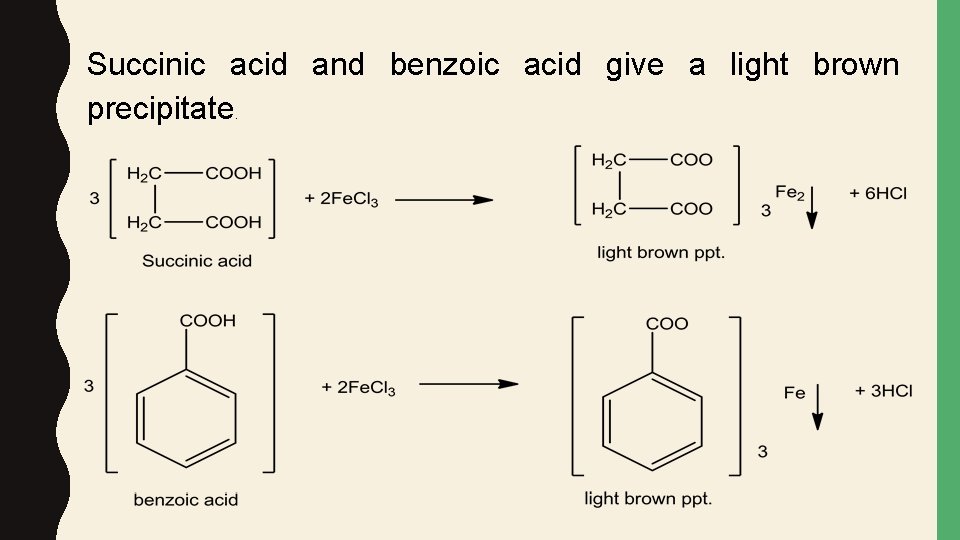
Succinic acid and benzoic acid give a light brown precipitate.
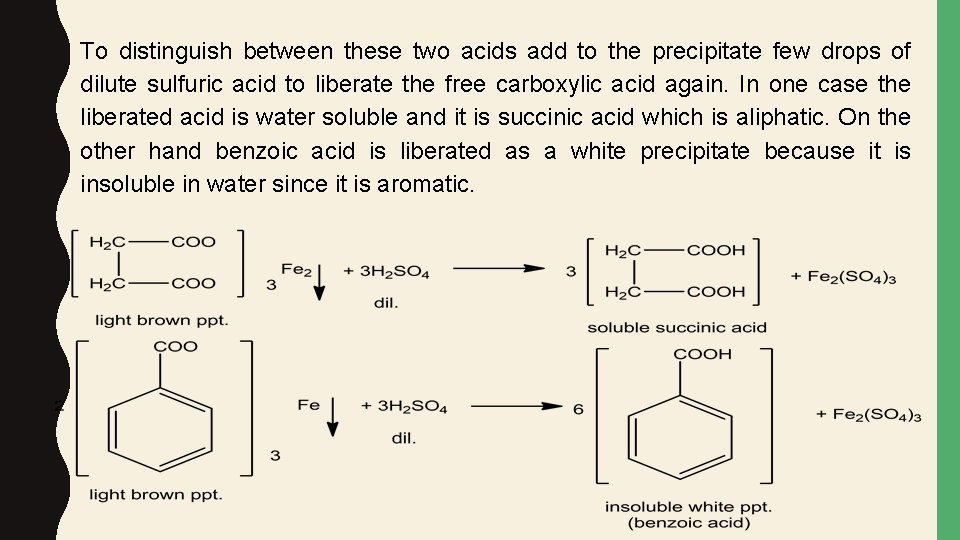
To distinguish between these two acids add to the precipitate few drops of dilute sulfuric acid to liberate the free carboxylic acid again. In one case the liberated acid is water soluble and it is succinic acid which is aliphatic. On the other hand benzoic acid is liberated as a white precipitate because it is insoluble in water since it is aromatic.
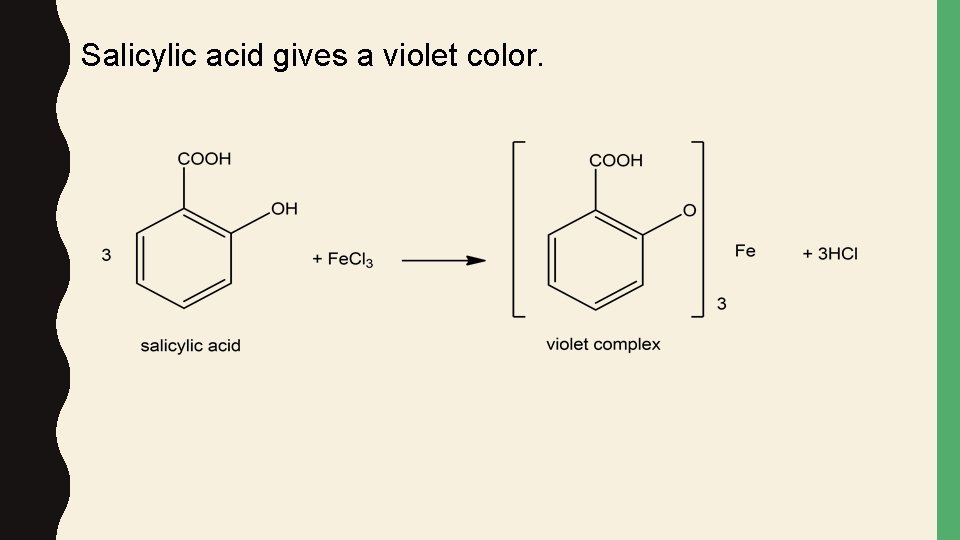
Salicylic acid gives a violet color.
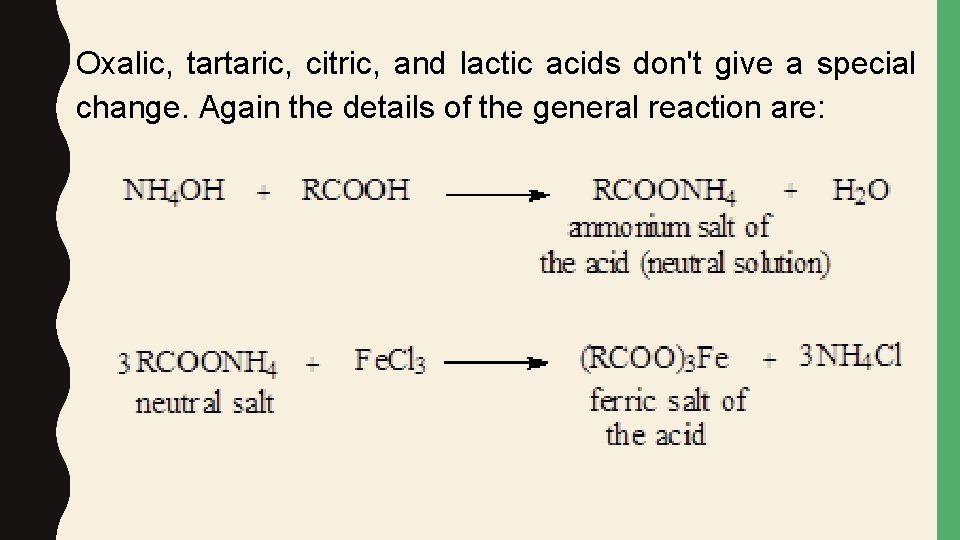
Oxalic, tartaric, citric, and lactic acids don't give a special change. Again the details of the general reaction are:
SPECIAL TESTS FORMIC ACID • Formic acid has the group (HC=O) so it can reduce certain compounds while being oxidized: A. Hg. Cl 2 test. • Formic acid reduces mercuric chloride to mercurous chloride (white precipitate) and, in the presence of excess acid, to mercury element (gray precipitate).
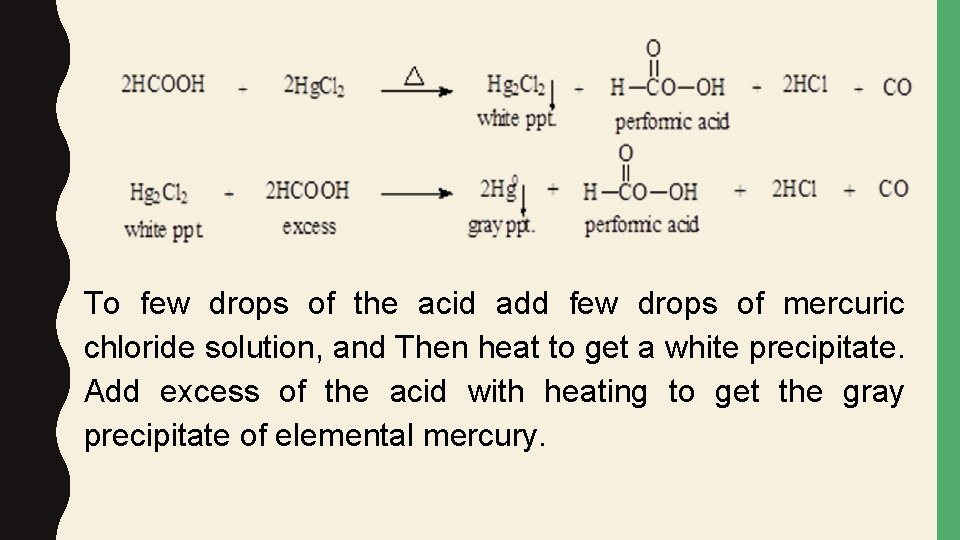
To few drops of the acid add few drops of mercuric chloride solution, and Then heat to get a white precipitate. Add excess of the acid with heating to get the gray precipitate of elemental mercury.
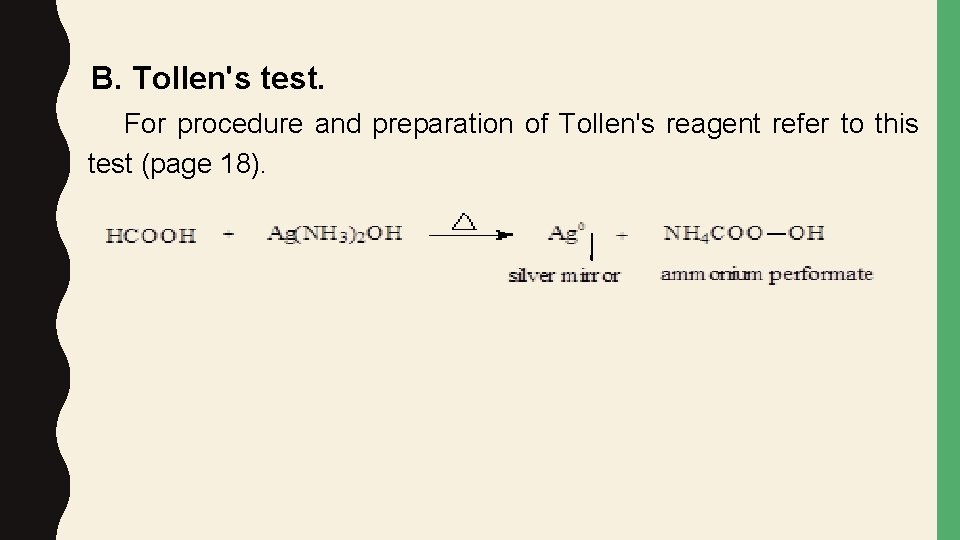
B. Tollen's test. For procedure and preparation of Tollen's reagent refer to this test (page 18).
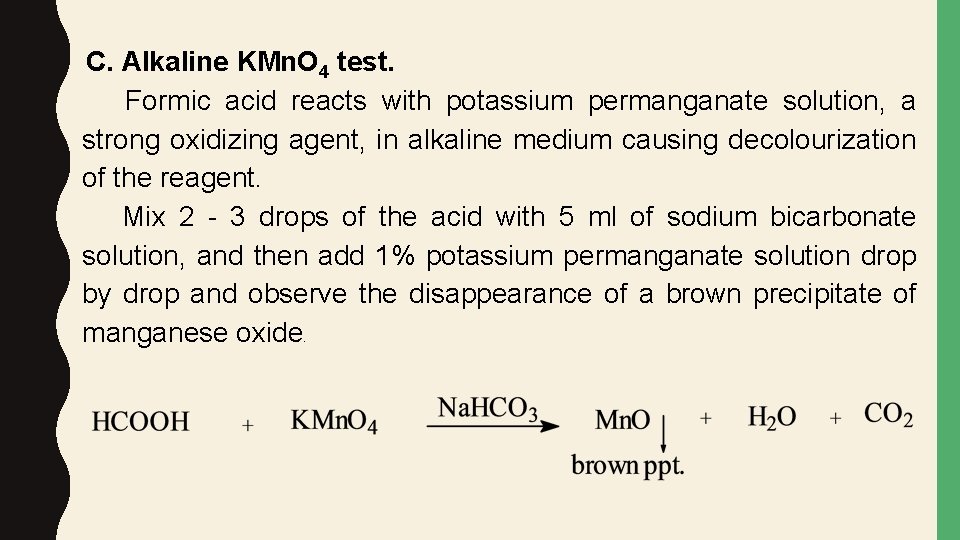
C. Alkaline KMn. O 4 test. Formic acid reacts with potassium permanganate solution, a strong oxidizing agent, in alkaline medium causing decolourization of the reagent. Mix 2 - 3 drops of the acid with 5 ml of sodium bicarbonate solution, and then add 1% potassium permanganate solution drop by drop and observe the disappearance of a brown precipitate of manganese oxide.
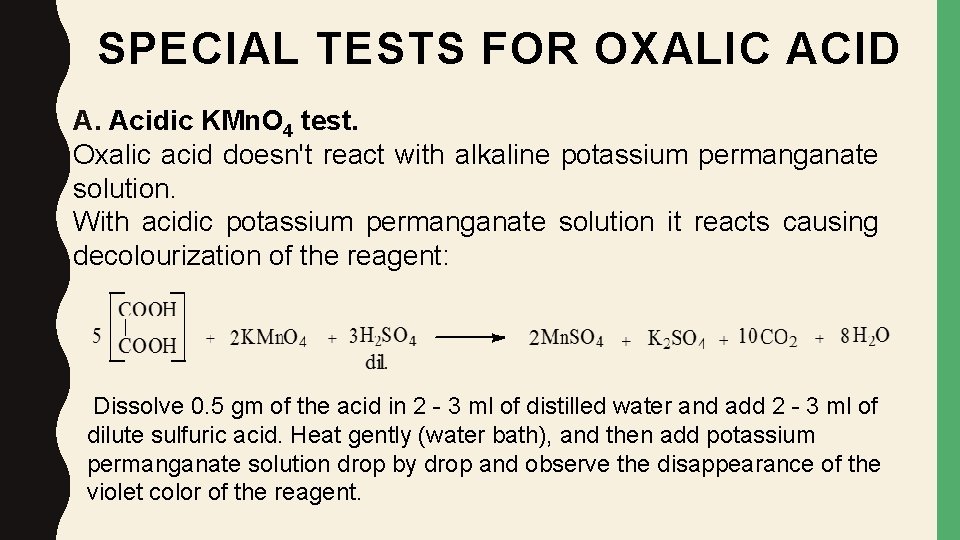
SPECIAL TESTS FOR OXALIC ACID A. Acidic KMn. O 4 test. Oxalic acid doesn't react with alkaline potassium permanganate solution. With acidic potassium permanganate solution it reacts causing decolourization of the reagent: Dissolve 0. 5 gm of the acid in 2 - 3 ml of distilled water and add 2 - 3 ml of dilute sulfuric acid. Heat gently (water bath), and then add potassium permanganate solution drop by drop and observe the disappearance of the violet color of the reagent.
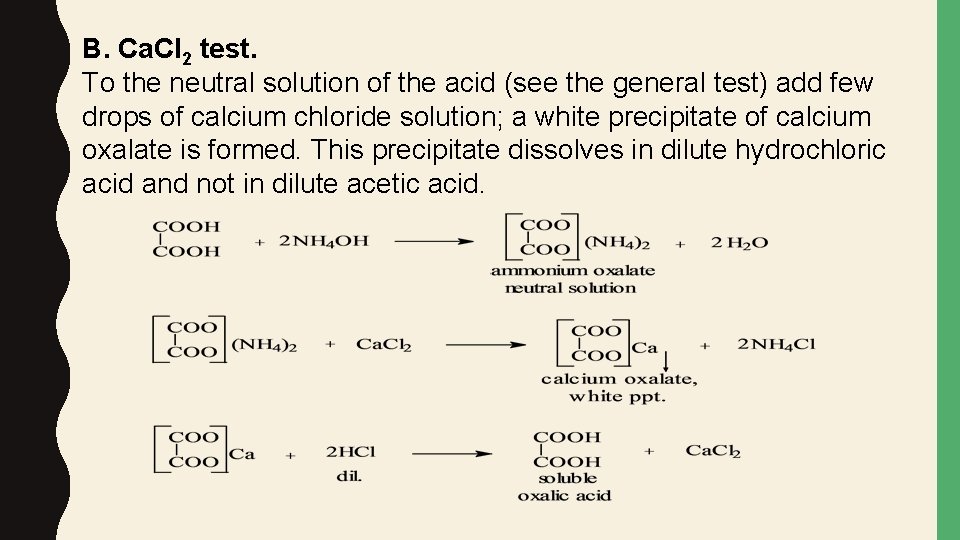
B. Ca. Cl 2 test. To the neutral solution of the acid (see the general test) add few drops of calcium chloride solution; a white precipitate of calcium oxalate is formed. This precipitate dissolves in dilute hydrochloric acid and not in dilute acetic acid.
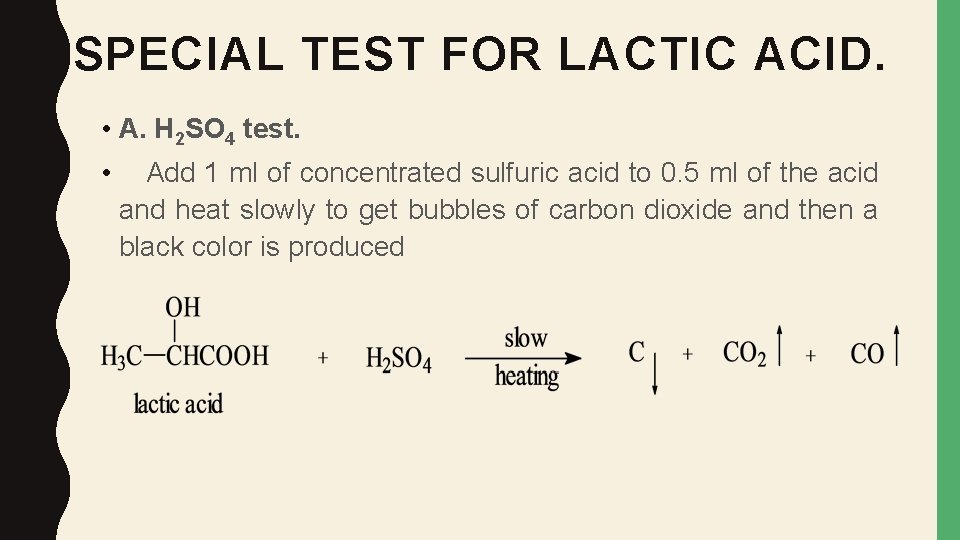
SPECIAL TEST FOR LACTIC ACID. • A. H 2 SO 4 test. • Add 1 ml of concentrated sulfuric acid to 0. 5 ml of the acid and heat slowly to get bubbles of carbon dioxide and then a black color is produced
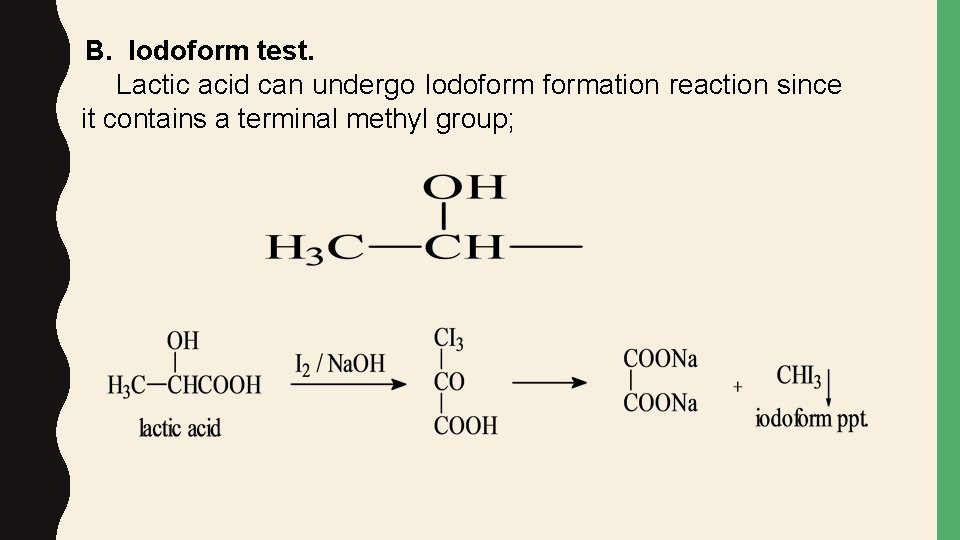
B. Iodoform test. Lactic acid can undergo Iodoformation reaction since it contains a terminal methyl group;
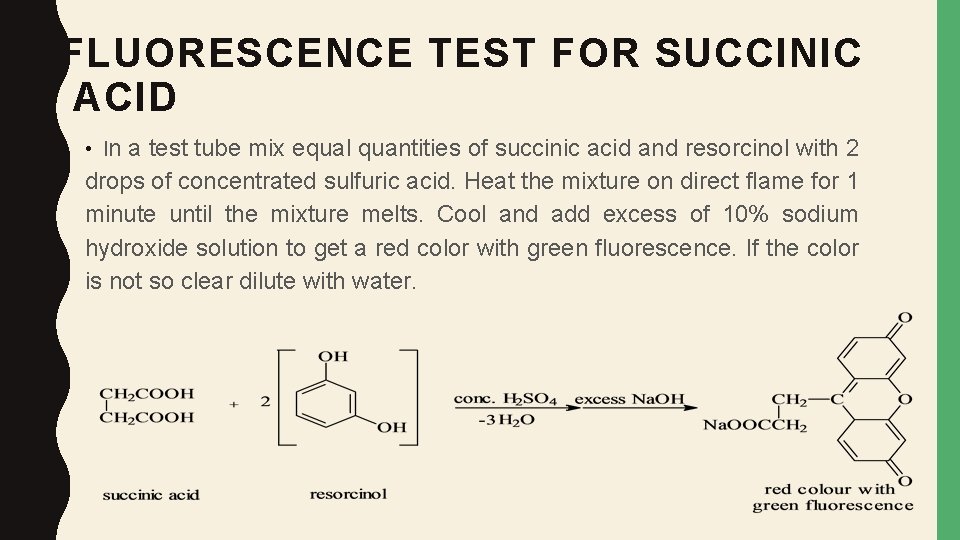
FLUORESCENCE TEST FOR SUCCINIC ACID • In a test tube mix equal quantities of succinic acid and resorcinol with 2 drops of concentrated sulfuric acid. Heat the mixture on direct flame for 1 minute until the mixture melts. Cool and add excess of 10% sodium hydroxide solution to get a red color with green fluorescence. If the color is not so clear dilute with water.
- Slides: 26