
EXPERIMENT 3 IDENTIFICATION OF PHENOLS Phenols are organic
- Slides: 10
EXPERIMENT 3 IDENTIFICATION OF PHENOLS
Phenols are organic compounds with a hydroxyl group attached directly to an aromatic ring. They have the general formula Ar-OH. Examples of them include phenol, hydroquinone, resorcinol, o-cresol, m-cresol, p-cresol, βnaphthol, and catechol.
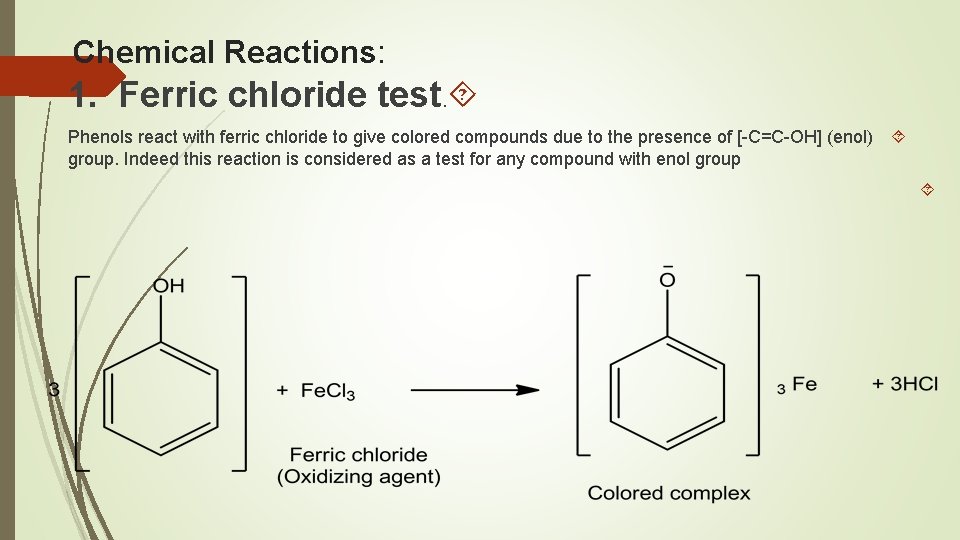
Chemical Reactions: 1. Ferric chloride test. Phenols react with ferric chloride to give colored compounds due to the presence of [-C=C-OH] (enol) group. Indeed this reaction is considered as a test for any compound with enol group
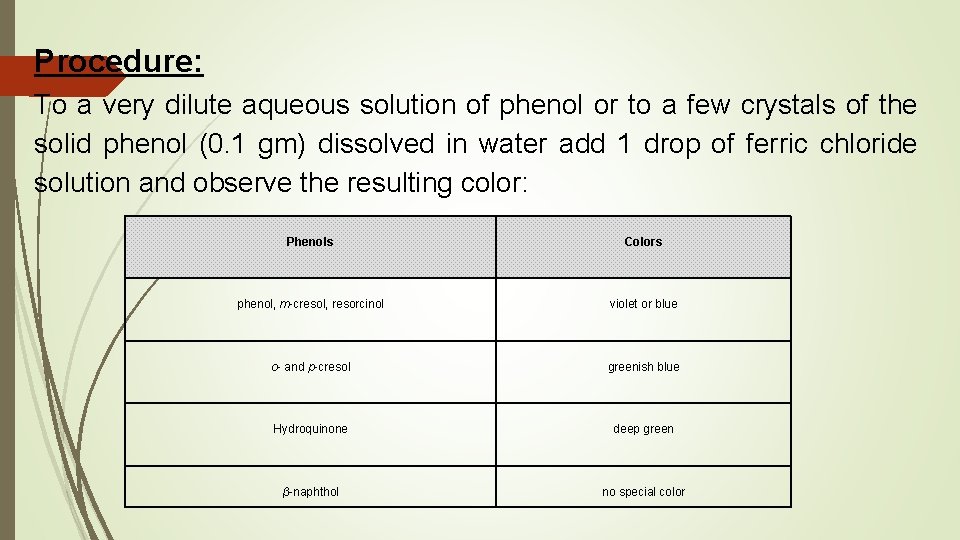
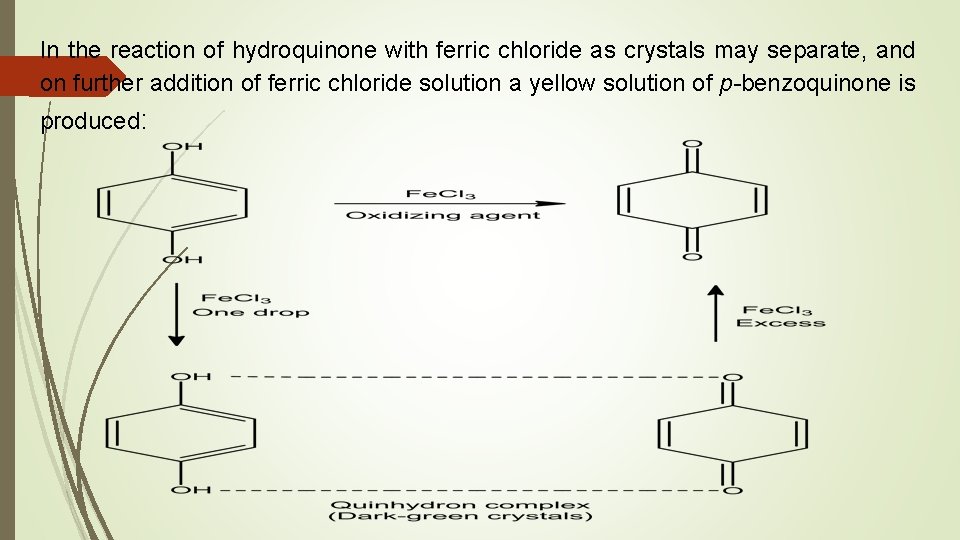
Procedure: To a very dilute aqueous solution of phenol or to a few crystals of the solid phenol (0. 1 gm) dissolved in water add 1 drop of ferric chloride solution and observe the resulting color: Phenols Colors phenol, m-cresol, resorcinol violet or blue o- and p-cresol greenish blue Hydroquinone deep green β-naphthol no special color
In the reaction of hydroquinone with ferric chloride as crystals may separate, and on further addition of ferric chloride solution a yellow solution of p-benzoquinone is produced:
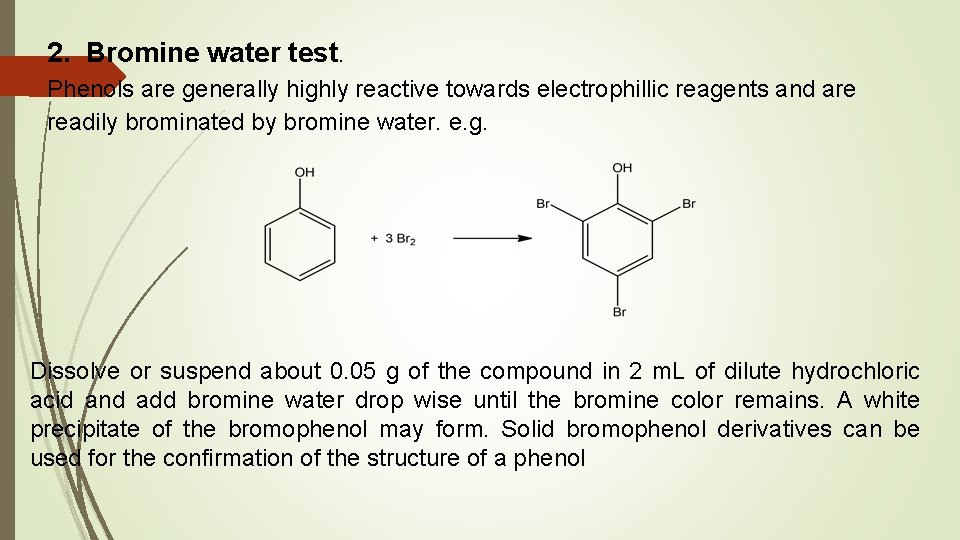
2. Bromine water test. Phenols are generally highly reactive towards electrophillic reagents and are readily brominated by bromine water. e. g. Dissolve or suspend about 0. 05 g of the compound in 2 m. L of dilute hydrochloric acid and add bromine water drop wise until the bromine color remains. A white precipitate of the bromophenol may form. Solid bromophenol derivatives can be used for the confirmation of the structure of a phenol
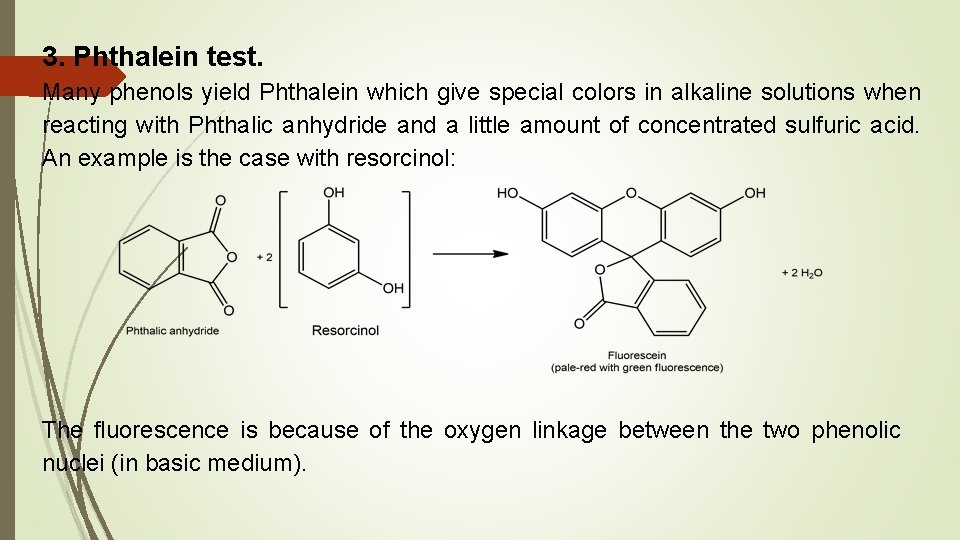
3. Phthalein test. Many phenols yield Phthalein which give special colors in alkaline solutions when reacting with Phthalic anhydride and a little amount of concentrated sulfuric acid. An example is the case with resorcinol: The fluorescence is because of the oxygen linkage between the two phenolic nuclei (in basic medium).
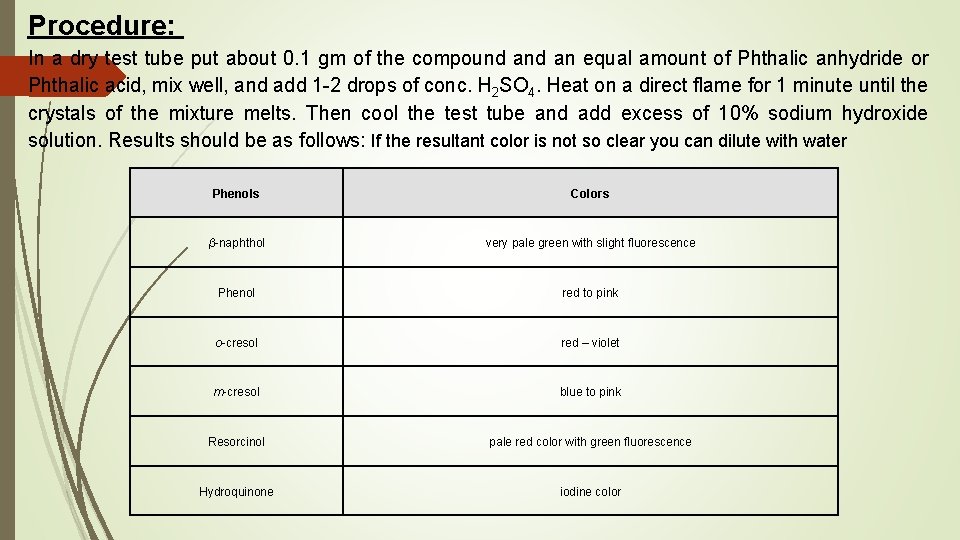
Procedure: In a dry test tube put about 0. 1 gm of the compound an equal amount of Phthalic anhydride or Phthalic acid, mix well, and add 1 -2 drops of conc. H 2 SO 4. Heat on a direct flame for 1 minute until the crystals of the mixture melts. Then cool the test tube and add excess of 10% sodium hydroxide solution. Results should be as follows: If the resultant color is not so clear you can dilute with water Phenols β-naphthol Phenol o-cresol m-cresol Resorcinol Hydroquinone Colors very pale green with slight fluorescence red to pink red – violet blue to pink pale red color with green fluorescence iodine color
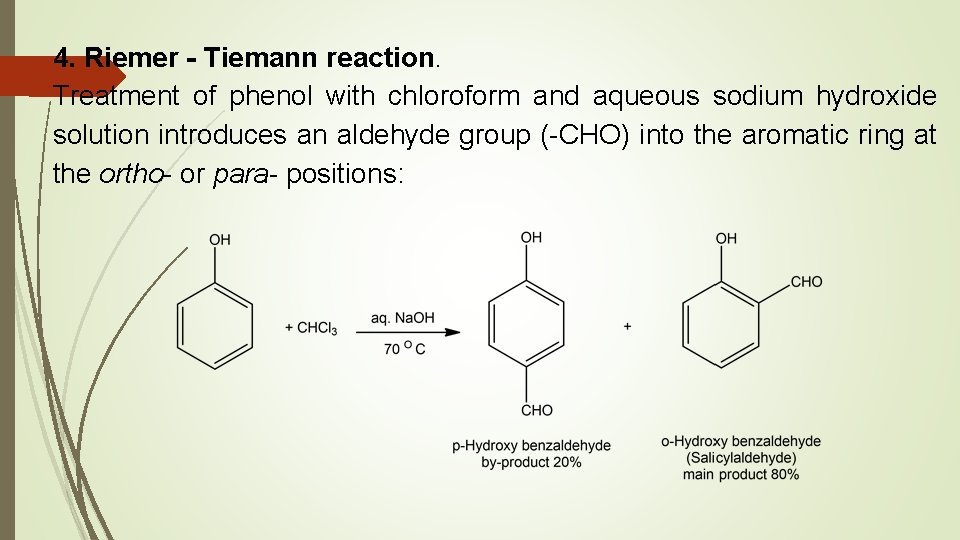
4. Riemer - Tiemann reaction. Treatment of phenol with chloroform and aqueous sodium hydroxide solution introduces an aldehyde group (-CHO) into the aromatic ring at the ortho- or para- positions:
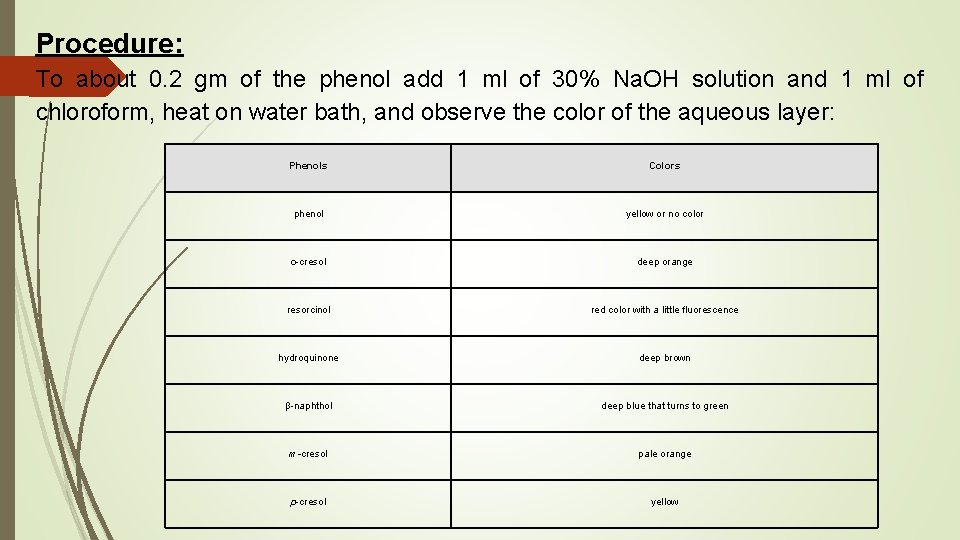
Procedure: To about 0. 2 gm of the phenol add 1 ml of 30% Na. OH solution and 1 ml of chloroform, heat on water bath, and observe the color of the aqueous layer: Phenols Colors phenol yellow or no color o-cresol deep orange resorcinol red color with a little fluorescence hydroquinone deep brown β-naphthol deep blue that turns to green m-cresol pale orange p-cresol yellow