
EXPERIENCES OF IMPLEMENTATION OF EU PREVENTION QUALITY STANDARDS

- Slides: 15
EXPERIENCES OF IMPLEMENTATION OF EU PREVENTION QUALITY STANDARDS Harry Sumnall
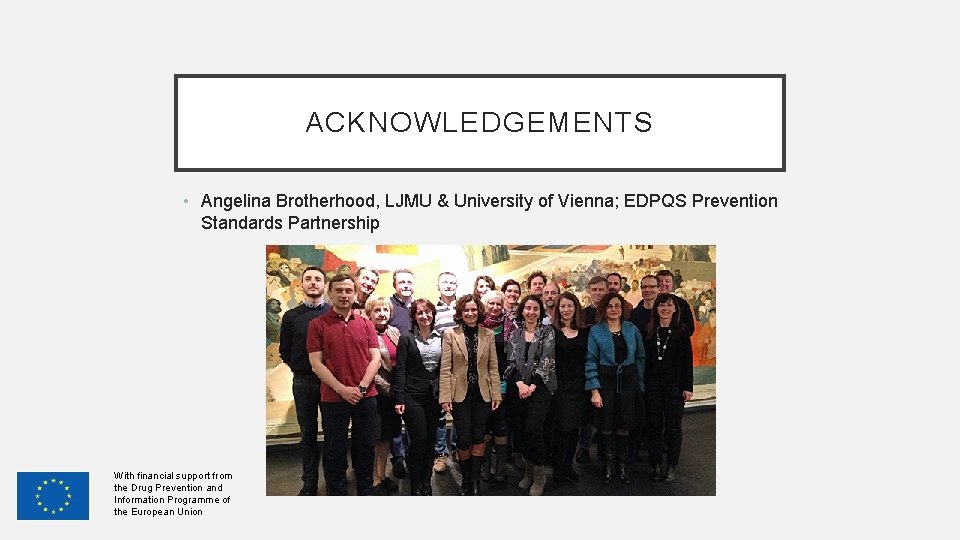
ACKNOWLEDGEMENTS • Angelina Brotherhood, LJMU & University of Vienna; EDPQS Prevention Standards Partnership With financial support from the Drug Prevention and Information Programme of the European Union
Slide courtesy of Marica Ferri
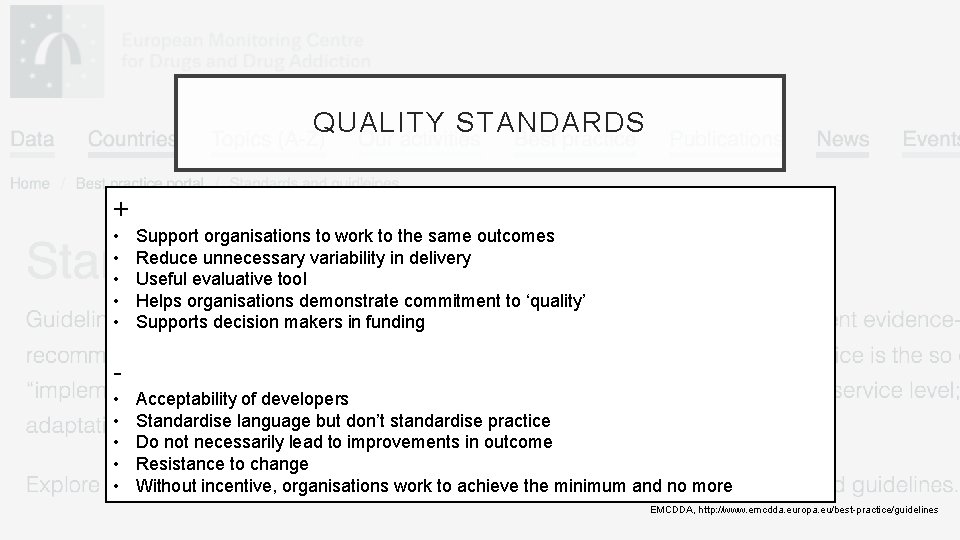
QUALITY STANDARDS + • • • Principles and rules set by recognised national or international Support organisations to work to the same outcomes bodies about what to do and what to aim for. Reduce unnecessary variability in delivery Useful evaluative tool • Standards propose clear and aspirational, yet measurable, Helps organisations demonstrate commitment to ‘quality’ statements related to content issues, to processes, or to Supports decision makers in funding structural (formal) aspects of quality assurance, such as environment and staffing composition Acceptability of developers Standardise language but don’t standardise practice Do not necessarily lead to improvements in outcome Resistance to change Without incentive, organisations work to achieve the minimum and no more EMCDDA, http: //www. emcdda. europa. eu/best-practice/guidelines
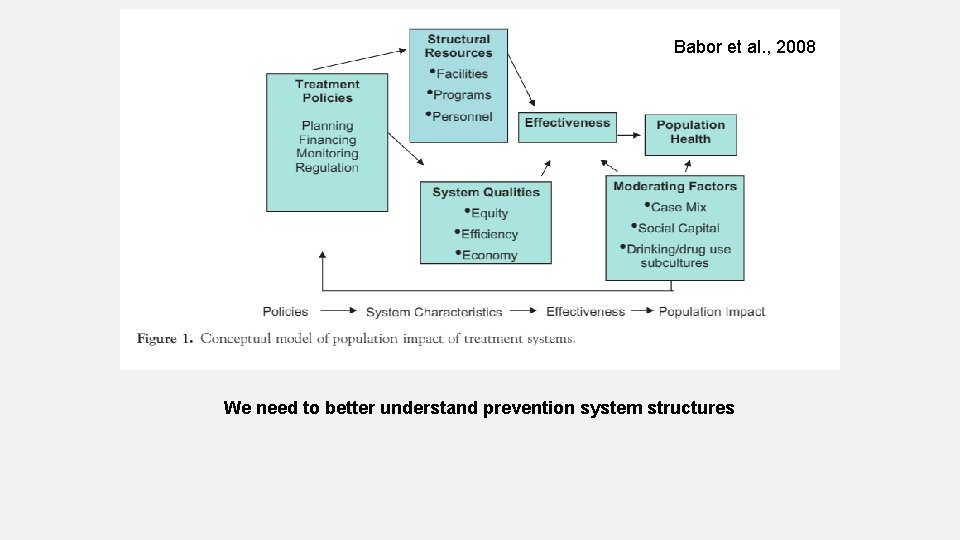
Babor et al. , 2008 We need to better understand prevention system structures
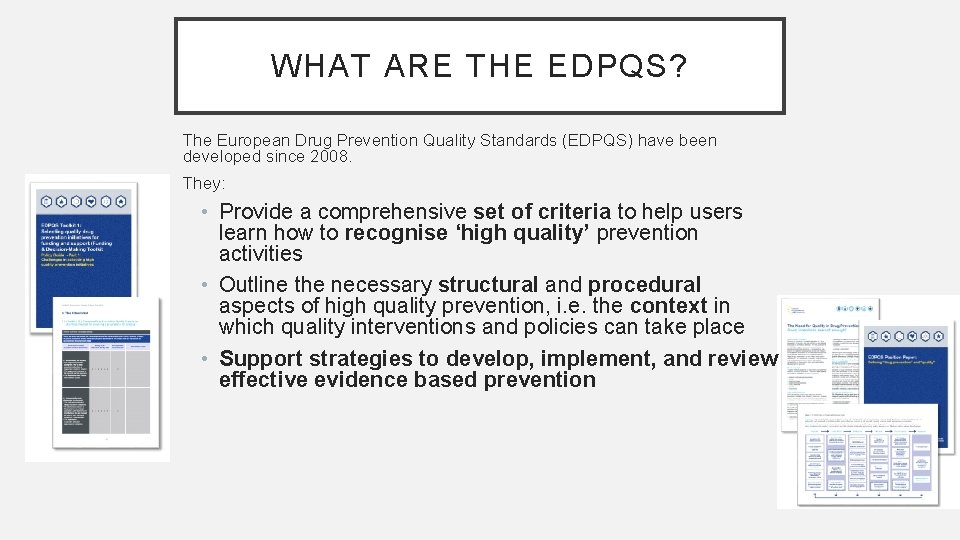
WHAT ARE THE EDPQS? The European Drug Prevention Quality Standards (EDPQS) have been developed since 2008. They: • Provide a comprehensive set of criteria to help users learn how to recognise ‘high quality’ prevention activities • Outline the necessary structural and procedural aspects of high quality prevention, i. e. the context in which quality interventions and policies can take place • Support strategies to develop, implement, and review effective evidence based prevention
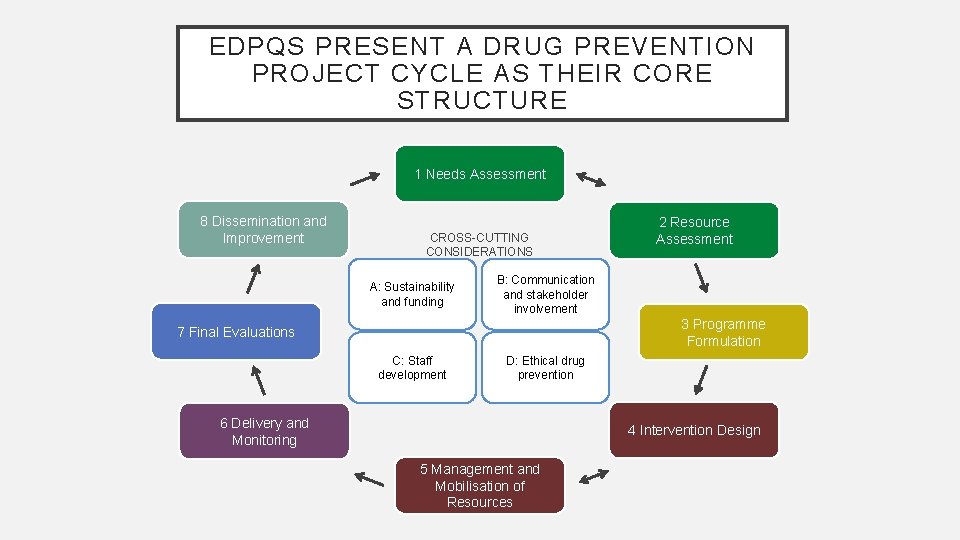
EDPQS PRESENT A DRUG PREVENTION PROJECT CYCLE AS THEIR CORE STRUCTURE 1 Needs Assessment 8 Dissemination and Improvement CROSS-CUTTING CONSIDERATIONS A: Sustainability and funding 2 Resource Assessment B: Communication and stakeholder involvement 3 Programme Formulation 7 Final Evaluations C: Staff development D: Ethical drug prevention 6 Delivery and Monitoring 4 Intervention Design 5 Management and Mobilisation of Resources
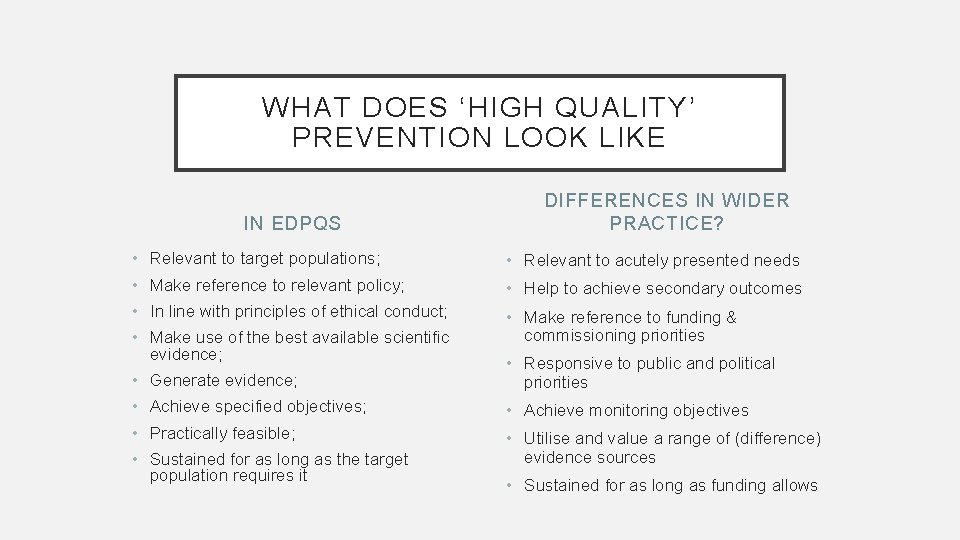
WHAT DOES ‘HIGH QUALITY’ PREVENTION LOOK LIKE IN EDPQS DIFFERENCES IN WIDER PRACTICE? • Relevant to target populations; • Relevant to acutely presented needs • Make reference to relevant policy; • Help to achieve secondary outcomes • In line with principles of ethical conduct; • Make reference to funding & commissioning priorities • Make use of the best available scientific evidence; • Generate evidence; • Responsive to public and political priorities • Achieve specified objectives; • Achieve monitoring objectives • Practically feasible; • Utilise and value a range of (difference) evidence sources • Sustained for as long as the target population requires it • Sustained for as long as funding allows
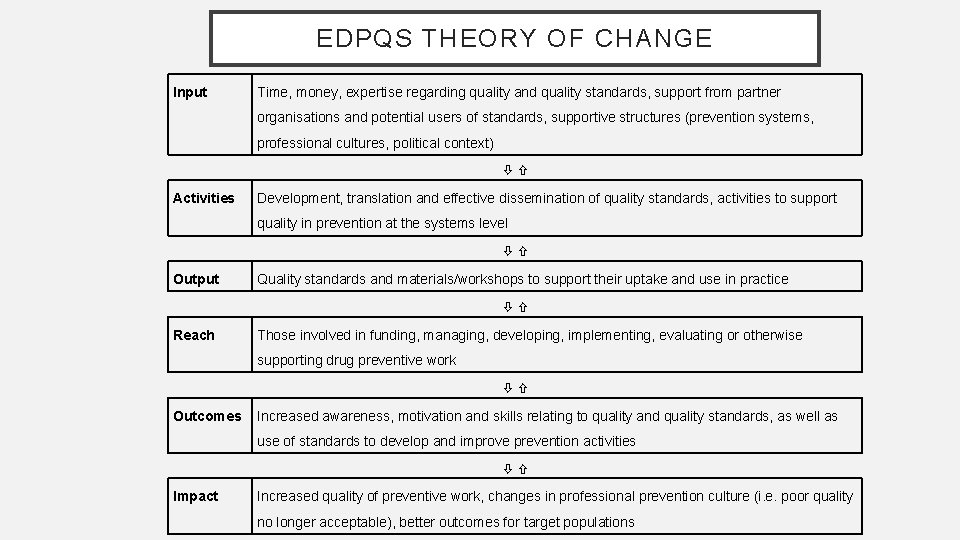
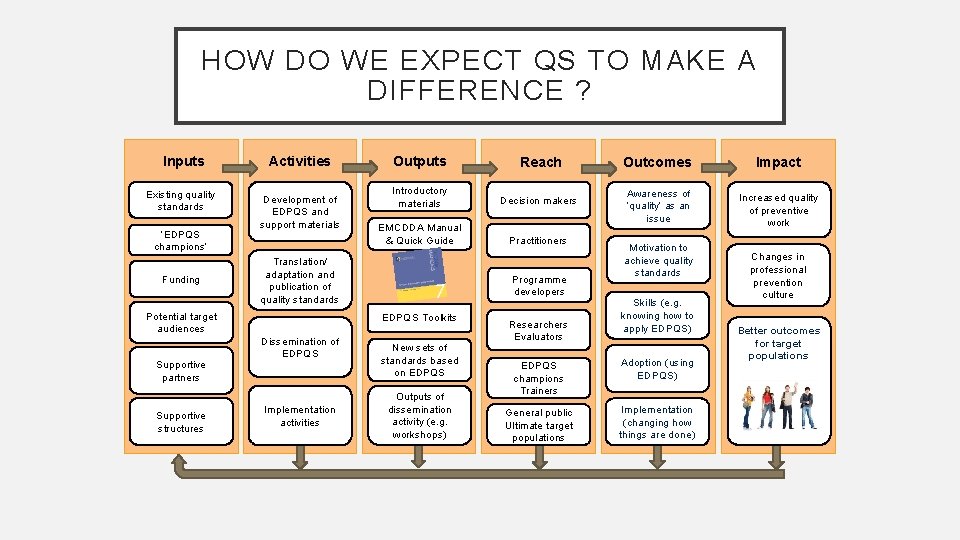
EDPQS THEORY OF CHANGE Input Time, money, expertise regarding quality and quality standards, support from partner organisations and potential users of standards, supportive structures (prevention systems, professional cultures, political context) Activities Development, translation and effective dissemination of quality standards, activities to support quality in prevention at the systems level Output Quality standards and materials/workshops to support their uptake and use in practice Reach Those involved in funding, managing, developing, implementing, evaluating or otherwise supporting drug preventive work Outcomes Increased awareness, motivation and skills relating to quality and quality standards, as well as use of standards to develop and improve prevention activities Impact Increased quality of preventive work, changes in professional prevention culture (i. e. poor quality no longer acceptable), better outcomes for target populations
HOW DO WE EXPECT QS TO MAKE A DIFFERENCE ? Inputs Existing quality standards ‘EDPQS champions’ Funding Activities Development of EDPQS and support materials Supportive structures Reach Introductory materials Decision makers EMCDDA Manual & Quick Guide Practitioners Translation/ adaptation and publication of quality standards Potential target audiences Supportive partners Outputs Programme developers EDPQS Toolkits Dissemination of EDPQS Implementation activities New sets of standards based on EDPQS Outputs of dissemination activity (e. g. workshops) Researchers Evaluators Outcomes Impact Awareness of ‘quality’ as an issue Increased quality of preventive work Motivation to achieve quality standards Skills (e. g. knowing how to apply EDPQS) EDPQS champions Trainers Adoption (using EDPQS) General public Ultimate target populations Implementation (changing how things are done) Changes in professional prevention culture Better outcomes for target populations
HOW CAN STANDARDS BE USED? There are many uses, including: • • Planning new projects Identifying strengths and weaknesses of prevention initiatives Reviewing the quality of ongoing or completed prevention initiatives Assessing whether a prevention related activity is undertaken or likely to operate in a way that can be considered “high quality” Developing and improving the quality of existing prevention provision Professional and organisational development – self-reflection, training and education Evidence-based policy-making – helping to achieve the aims of broader national and international strategies and policies Developing or updating existing quality criteria or standards
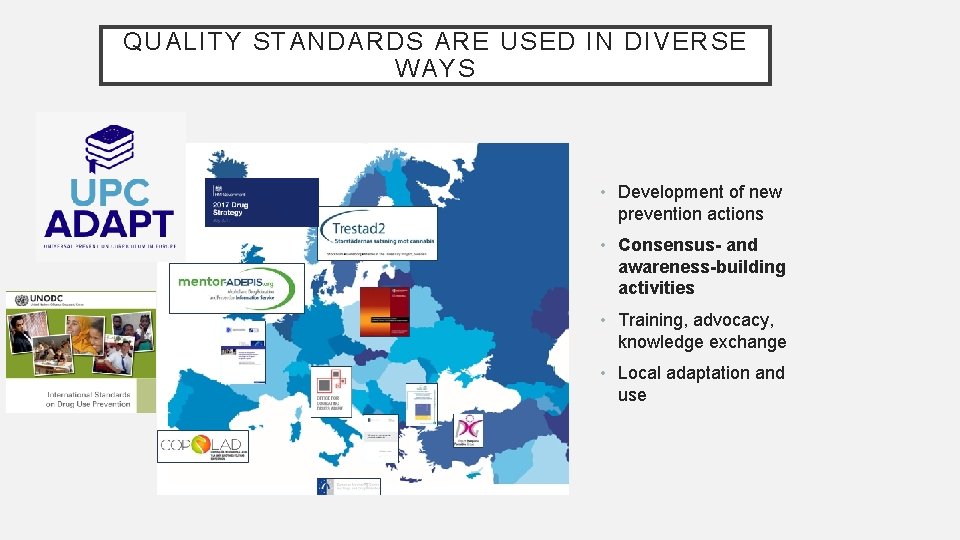
QUALITY STANDARDS ARE USED IN DIVERSE WAYS • Development of new prevention actions • Consensus- and awareness-building activities • Training, advocacy, knowledge exchange • Local adaptation and use
LOTS OF RELEVANT LESSONS FROM IMPLEMENTATION SCIENCE… • Provides clear and succinct messages, with simple, focussed objectives that require small practical changes; • Supports systems or procedures that are accessible and easy to use, with little effort required to comply; • Refers to reliable and credible sources, with accurate, evidence-based information; • Includes assessment of, and focus on barriers to change; • Utilises an interactive format that is appealing, persuasive and encourages participation; • Addresses changes at multiple levels, including the individual practitioner behaviour, organisational structure and culture, and health system policy; • Tailors information so that it is personalised and can modified to the local setting without disrupting the overall aims of the QS; • Identifies organisational changes that require practitioners to respond or take action (e. g. , automatic prompts and obligatory responses); • Highlights the relevance of information (i. e. QS) to the user and their client needs; • Reinforces key messages with additional materials and support; • Includes clear identification of roles and activities • Provides for the sustainability of the QS over a prolonged period.
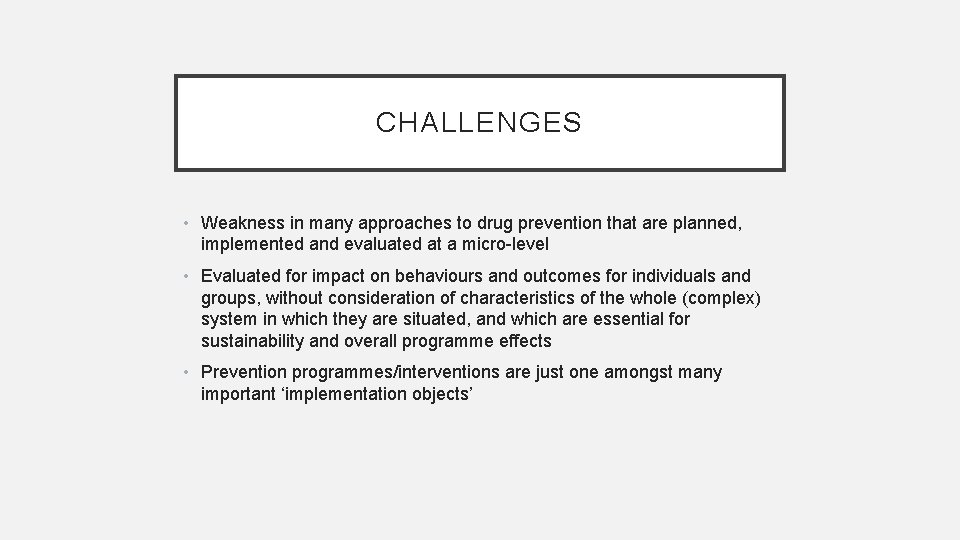
CHALLENGES • Weakness in many approaches to drug prevention that are planned, implemented and evaluated at a micro-level • Evaluated for impact on behaviours and outcomes for individuals and groups, without consideration of characteristics of the whole (complex) system in which they are situated, and which are essential for sustainability and overall programme effects • Prevention programmes/interventions are just one amongst many important ‘implementation objects’
CONTACT Professor Harry Sumnall Public Health Institute Liverpool UK h. sumnall@ljmu. ac. uk @profhrs @euspr http: //prevention-standards. eu 15