
Experiences of embedding an online system for ethical
Experiences of embedding an online system for ethical approval of research projects Aline Giordano & Sean Wellington Southampton Solent University
QAA Institutional Audit Report December 2008 Recommendation for action: ‘The audit team recommends that the University formalise the arrangements for faculty scrutiny and ethical approval of research projects and for reporting the outcomes to the University Ethics Committee. ’ Quality Assurance Agency, 2008. Institutional audit: Southampton Solent University [online]. Available at: http: //www. qaa. ac. uk/reviews/reports/institutional/Southam pton 09/RG 415 Southampton. pdf [accessed 30 April 2011]
Outcome of the review of the implementation of the Ethics Policy Must strengthen procedures taking into consideration the following : Some staff members were still not aware of the Ethics Policy There was a need to develop a protocol for all subject areas represented within the University Responsibilities and lines of reporting from the faculties to the University Ethics Committee would need to be strengthened It would need to be applicable to students and staff
Review of the ethics approval process Review of best practice Principles from the ESRC Research Ethics Framework (REF) and the British Educational Research Association (BERA) Guidelines The duty to protect participants’ anonymity and their personal data and prevent damage to participants’ health (mental or physical) The need to implement a systematic process that is robust and recognises the variations in ethical requirements across disciplines and services
Review of the ethics approval process Issues encountered: Research only or applicable to enterprise too? Definition of key terms (e. g. project, gatekeepers…) Exemptions? How to deal with academic audit and service evaluation? From a laissez-faire approach to autocratic?
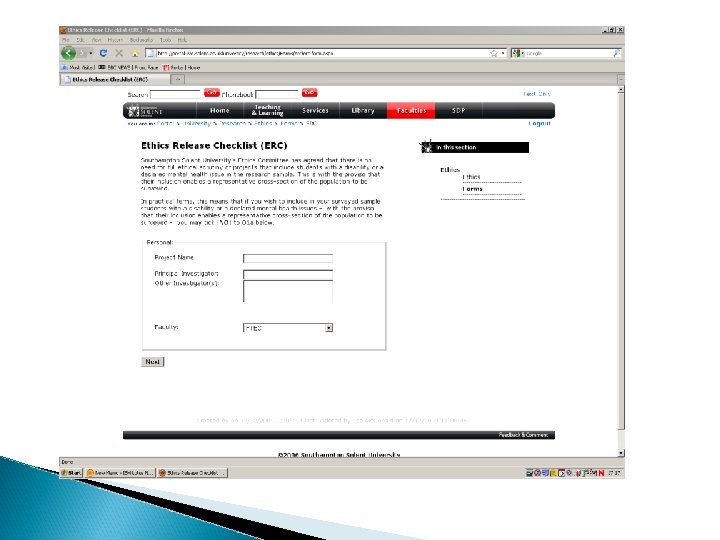
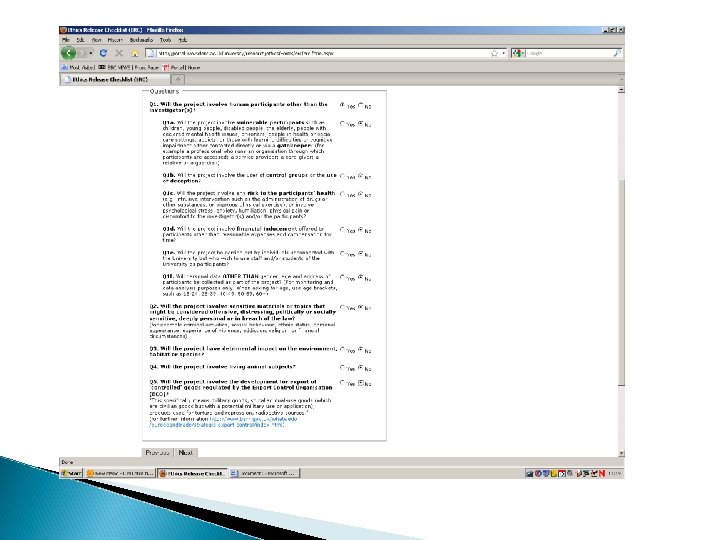
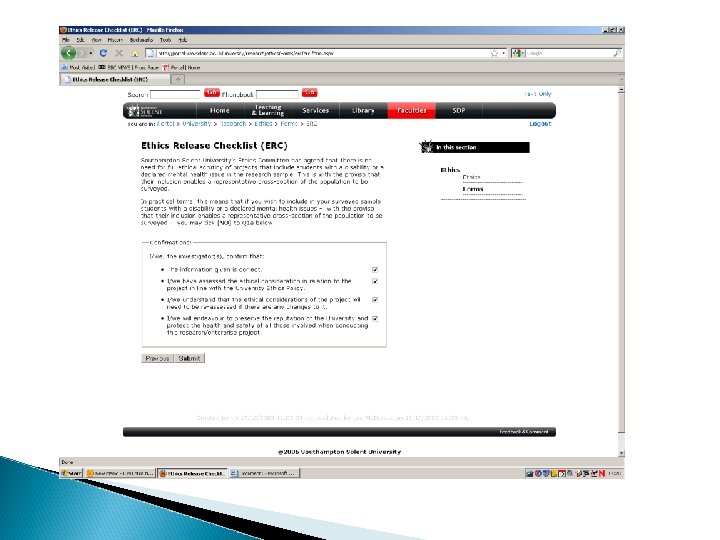
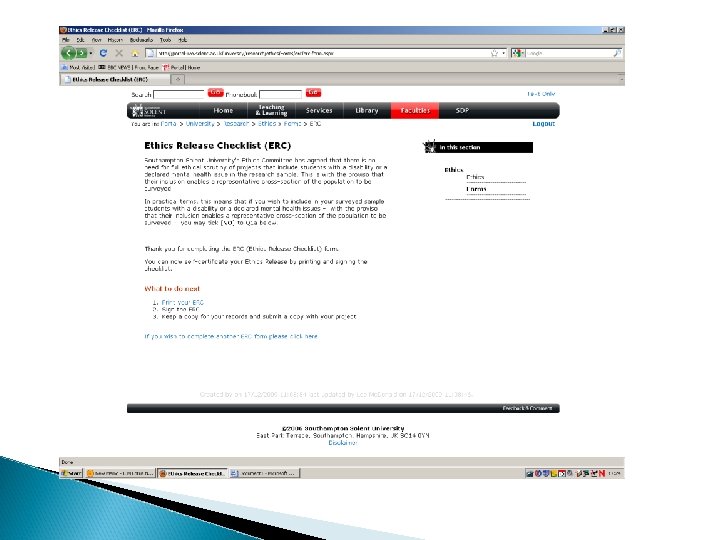
The revised procedures for the ethical approval of research/enterprise projects Outline of process Para. 8: ‘The principal investigator must secure ethical clearance before any research project or enterprise activity can commence and potential human participants can be approached’. 1. 2. Fast tracking Ethical Approval [Ethics Release] Full Ethical Review
Full ethical review Request for ethical approval (REAF) Application is then reviewed by the Chair of the Ethics Standing Panel + two members of the panel
Implementing the University Ethics Policy Faculty of Technology

Faculty of Technology 3, 400 student Three academic schools: ◦ Computing & Communications ◦ Design ◦ Engineering, Construction & Maritime Research Centre Enterprise Centre
Ethics Standing Panel Chair – Professor Sean Wellington Two members of academic staff from each school – experienced in research Head of Faculty Enterprise Centre Faculty Ethics Advisor
Implementation Establish Faculty Ethics Standing Panel Produce briefing material Development session held for members of Ethics Standing Panel, subsequently offered to all staff Faculty Standard for Supervision of Final Year Projects and Dissertations Appropriate reference to ethical approval process included in student project/dissertation handbooks
Experience Two stage (risk-based) process is effective, with attention focused on stage two proposal (REAF) Some variability in the quality of submissions from students, suggesting a need to strengthen treatment of ethical issues in some subject areas In some cases the REAF submission led to a dialogue about the purpose of the study (and appropriateness of methodology) Promoted a greater understanding and discussion of research ethics amongst staff and students
Contact Aline Giordano aline. giordano@solent. ac. uk T: +44 (0)23 8031 9577 Professor Sean Wellington sean. wellington@solent. ac. uk T: +44 (0)23 8031 9826
- Slides: 17