
ExpectationMaximization EM Algorithm Monte Carlo Sampling for Inference
- Slides: 12
Expectation-Maximization (EM) Algorithm & Monte Carlo Sampling for Inference and Approximation
Expectation-Maximization Algorithm “The Expectation-Maximization algorithm is a general technique for finding maximum likelyhood* solutions for probabilistic models having latent variables” (Dempster et al. , 1977; Mc. Lachlan and Krishnan, 1997). Is an iterative process and consists of two steps: E-step and M-step. General purpose technique: - Needs to be adapted for each application - Versatile. Used in machine learning, computer vision, language processing. .
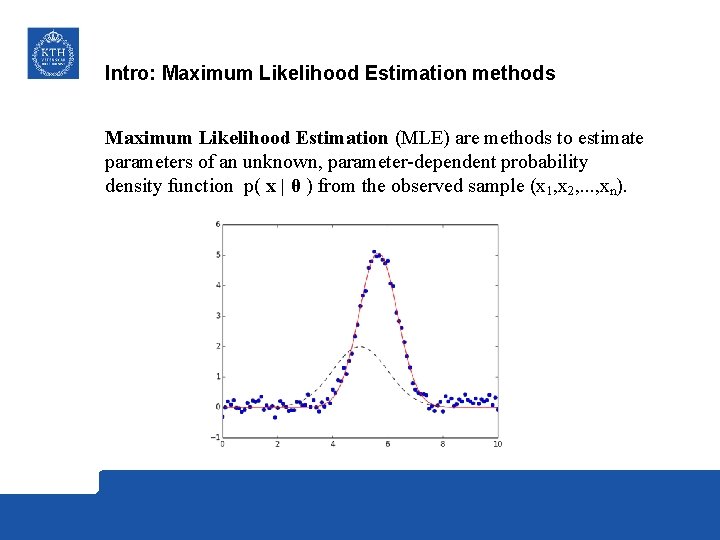
Intro: Maximum Likelihood Estimation methods Maximum Likelihood Estimation (MLE) are methods to estimate parameters of an unknown, parameter-dependent probability density function p( x | θ ) from the observed sample (x 1, x 2, . . . , xn).
- When is EM useful? - When MLE solutions are difficult or not possible to get because there are latent variables involved. - Either missing values or we decide to get aditional unkown variables for modelling simplicity.
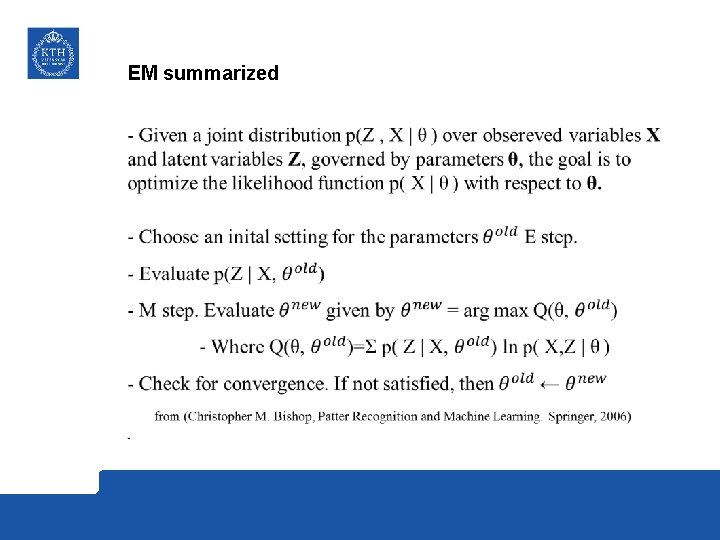
EM summarized
Monte Carlo Sampling for Inference and Approximation - Inference – To draw conclusions from gathered data. - Monte Carlo Sampling – Broad selection of computational algorithms that rely on repeated random sampling to obtain numerical results. - For a better understanding we have prepared two very simple examples.
Rolling a dice - We know that the probability of getting a 4 is: - 1/6 (approx 17%) - Can we obtain the same result by Monte Carlo simulation? - More iterations give less error in the result!
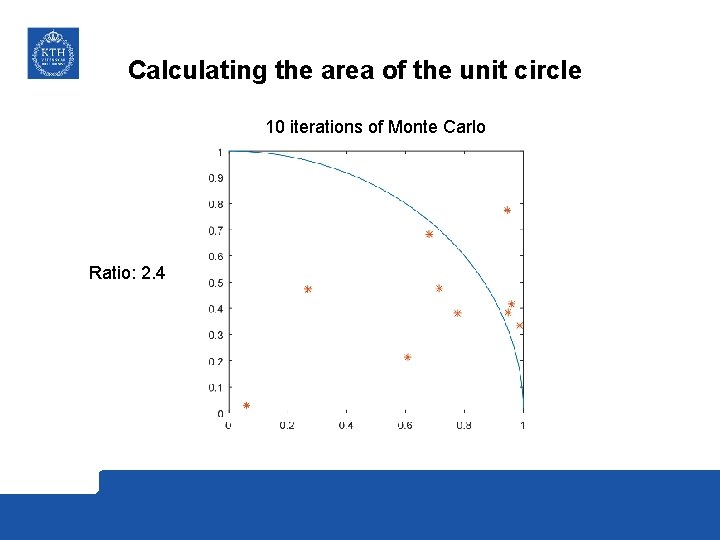
Calculating the area of the unit circle 10 iterations of Monte Carlo Ratio: 2. 4
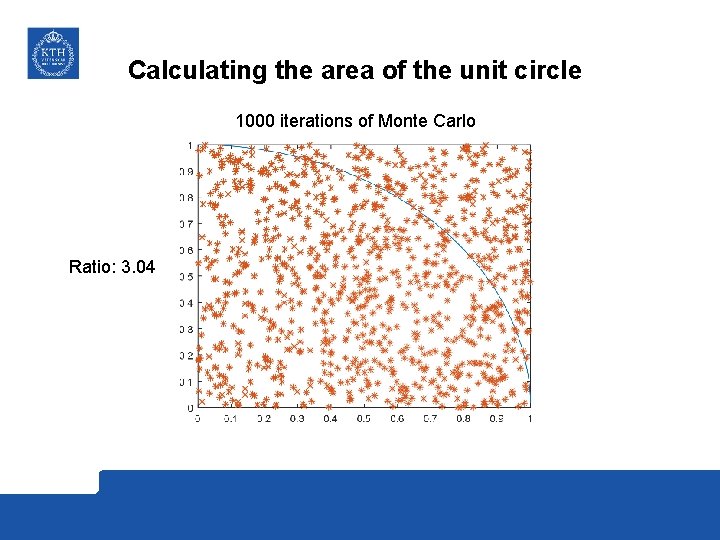
Calculating the area of the unit circle 1000 iterations of Monte Carlo Ratio: 3. 04
Calculating the area of the unit circle - 1 million iterations: - Ratio: 3. 1400 - 100 million iterations: - Ratio: 3. 1416 And so forth!
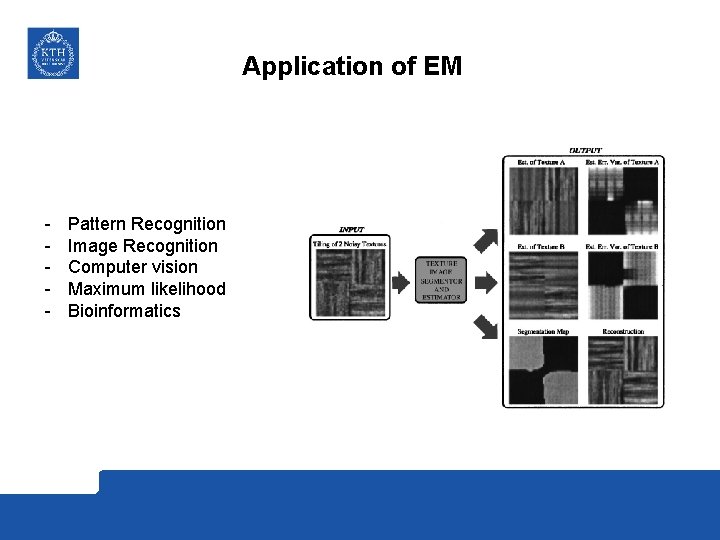
Application of EM - Pattern Recognition Image Recognition Computer vision Maximum likelihood Bioinformatics
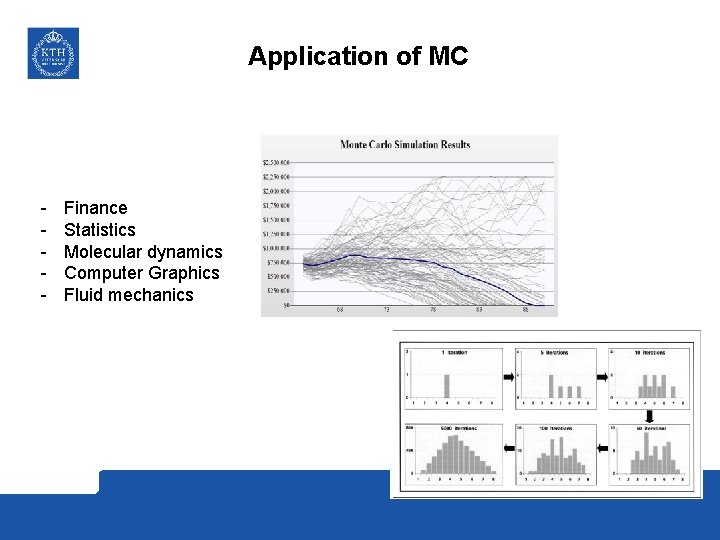
Application of MC - Finance Statistics Molecular dynamics Computer Graphics Fluid mechanics