
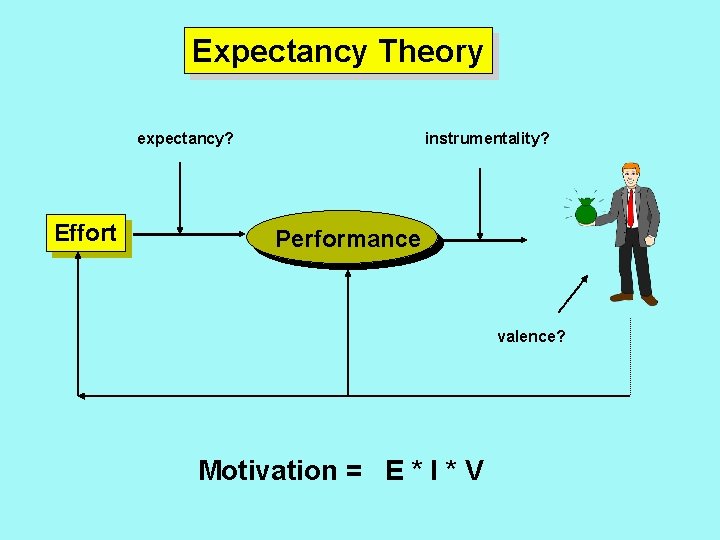
Expectancy Theory expectancy Effort instrumentality Performance valence Motivation
- Slides: 10
Expectancy Theory expectancy? Effort instrumentality? Performance valence? Motivation = E * I * V
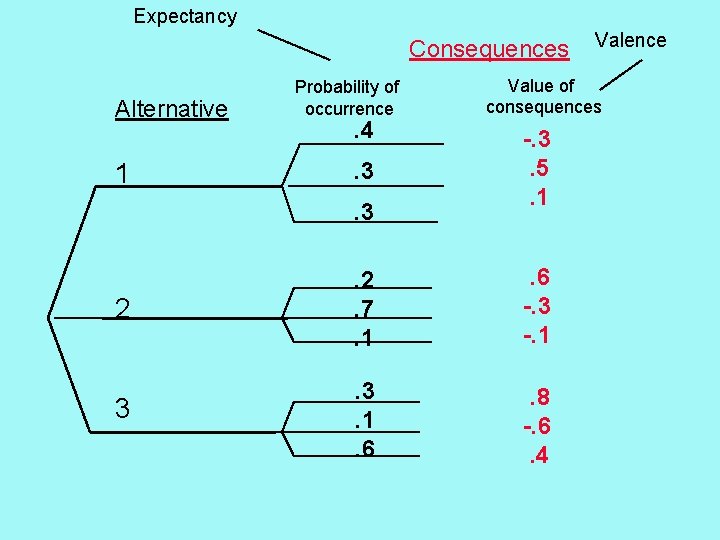
Expectancy Consequences Alternative 1 Probability of occurrence . 4. 3. 3 Valence Value of consequences -. 3. 5. 1 2 . 2. 7. 1 . 6 -. 3 -. 1 3 . 3. 1. 6 . 8 -. 6. 4
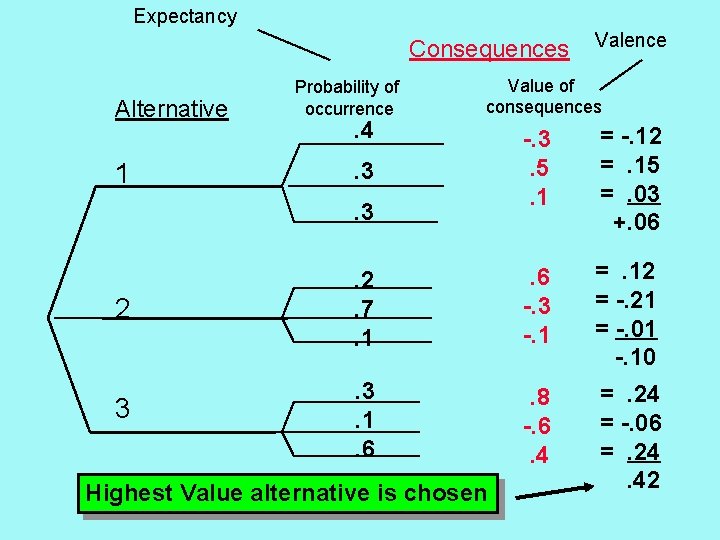
Expectancy Consequences Alternative Probability of occurrence . 4 Valence Value of consequences -. 3. 5. 1 = -. 12 =. 15 =. 03 +. 06 2 . 2. 7. 1 . 6 -. 3 -. 1 =. 12 = -. 21 = -. 01 -. 10 3 . 3. 1. 6 . 8 -. 6. 4 =. 24 = -. 06 =. 24. 42 1 . 3. 3 Highest Value alternative is chosen
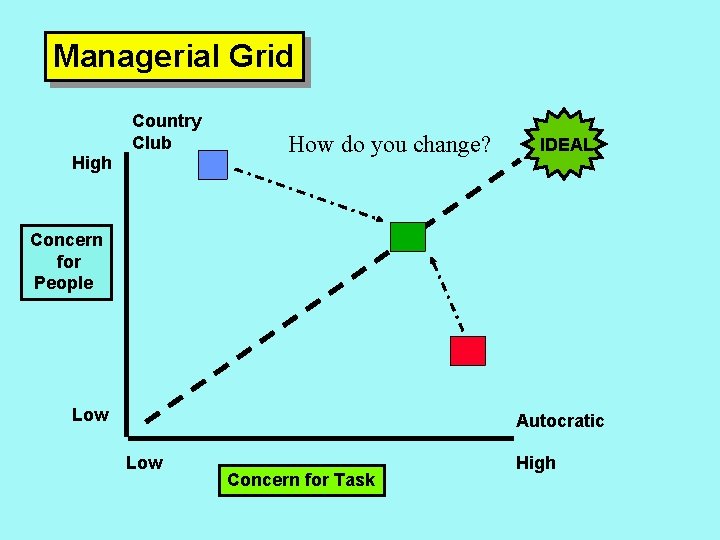
Managerial Grid Country Club High How do you change? IDEAL Concern for People Low Autocratic Low Concern for Task High
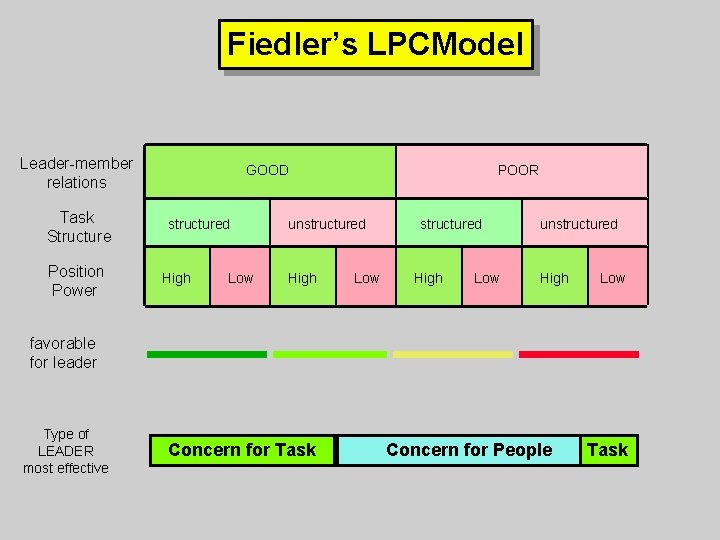
Fiedler’s LPCModel Leader-member relations Task Structure Position Power GOOD structured High Low POOR unstructured High Low favorable for leader Type of LEADER most effective Concern for Task Concern for People Task
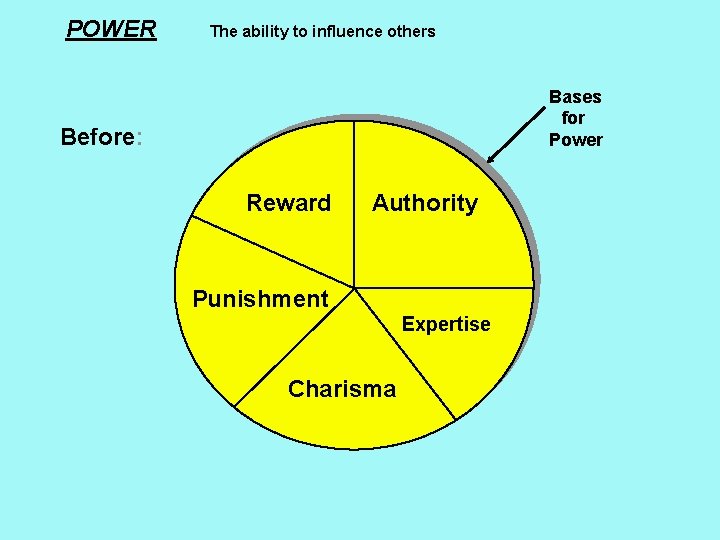
POWER The ability to influence others Bases for Power Before: Reward Authority Punishment Expertise Charisma
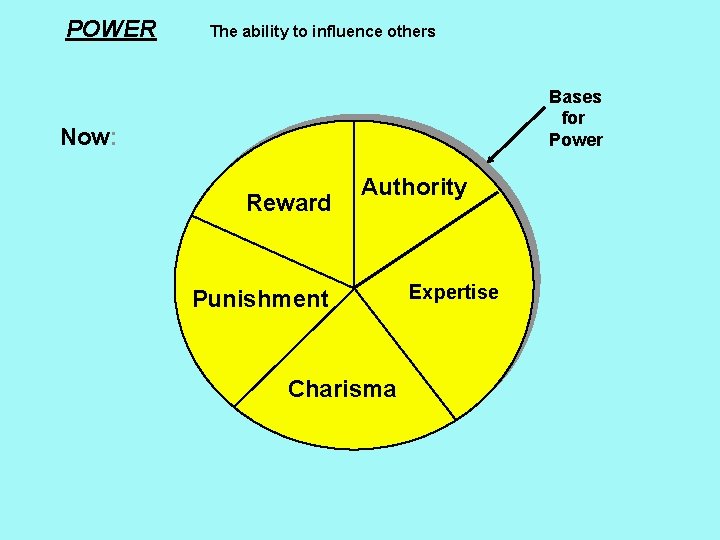
POWER The ability to influence others Bases for Power Now: Reward Authority Punishment Charisma Expertise
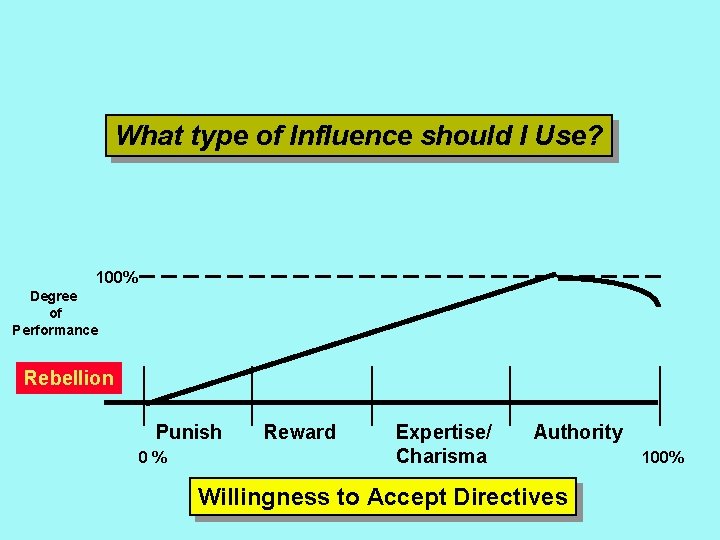
What type of Influence should I Use? 100% Degree of Performance Rebellion Punish 0% Reward Expertise/ Charisma Authority Willingness to Accept Directives 100%
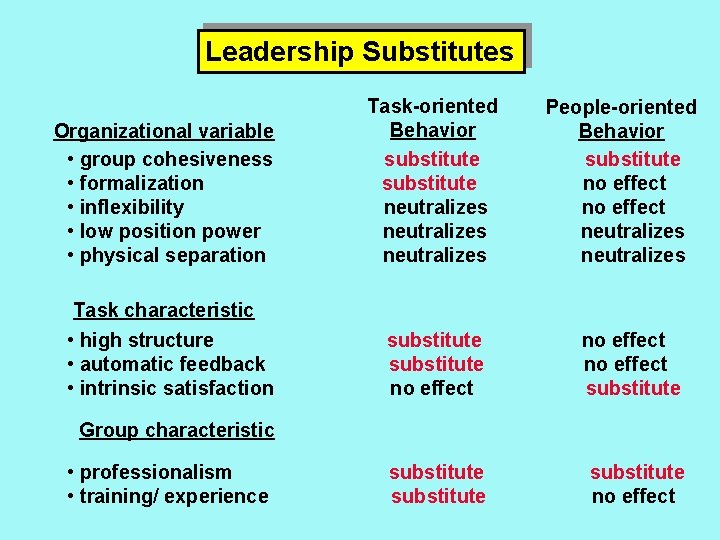
Leadership Substitutes Organizational variable • group cohesiveness • formalization • inflexibility • low position power • physical separation Task characteristic • high structure • automatic feedback • intrinsic satisfaction Task-oriented Behavior substitute neutralizes People-oriented Behavior substitute no effect neutralizes substitute no effect substitute no effect Group characteristic • professionalism • training/ experience
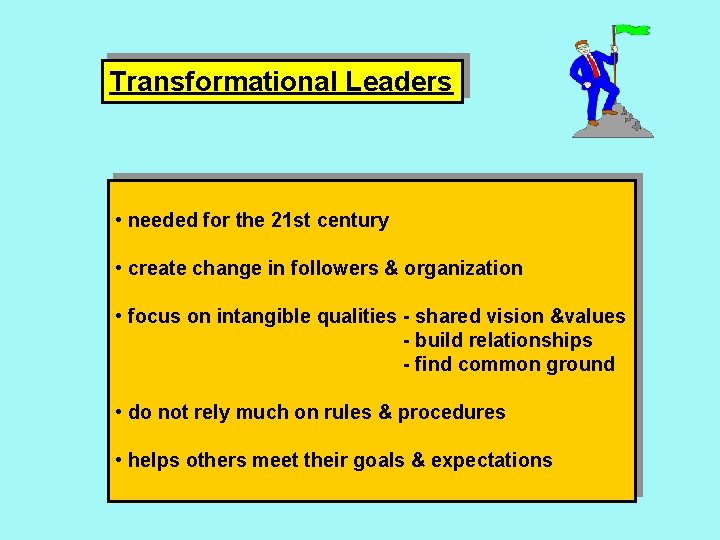
Transformational Leaders • needed for the 21 st century • create change in followers & organization • focus on intangible qualities - shared vision &values - build relationships - find common ground • do not rely much on rules & procedures • helps others meet their goals & expectations