
Exotic Animal Health and Husbandry Ethical Sourcing By
Exotic Animal Health and Husbandry Ethical Sourcing
By the end of the lesson you will be able to: 1. Understand the sourcing and legislation of exotic animal species – Compare and contrast the impact of sources on trade and animals a. b. c. d. Captive farmed (CF), Long term Captive(LTC), Wild Caught (WC), Captive Bred (CB)
Animal Sources 1. Captive farmed (CF), – Animals bred in their country of origin of farms or ranches 2. Long term Captive(LTC) – A wild caught animal that has been in captivity (e. g. pet shop) for a long period of time 3. Wild Caught (WC) – Animal taken directly from their natural habitat and shipped for sale 4. Captive Bred (CB) – Animals bred in a place other than their natural country of origin

Evaluate

Captive Bred: Royal (Ball) Python • From West Africa: Savanah, grassland woodland • Wild Caught: • aneroxia • High ecto and endoparasitic load • Captive Bred • Temperament • Adaptability
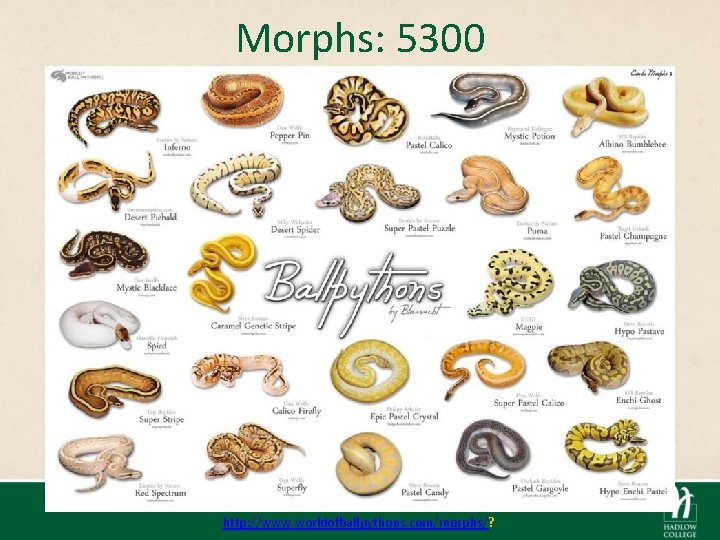
Morphs: 5300 http: //www. worldofballpythons. com/morphs/?
Royal Python Morphs • Mutation in gene coding for type, number and distribution of chromatophores – melanophores (containing black/dark brown pigment), – xanthophores (containing yellow pigment) – iridiophores (which reflect and refract light). • Base Morphs – carry a single mutation • Designer morphs – crossbred base morphs to combine multiple mutations
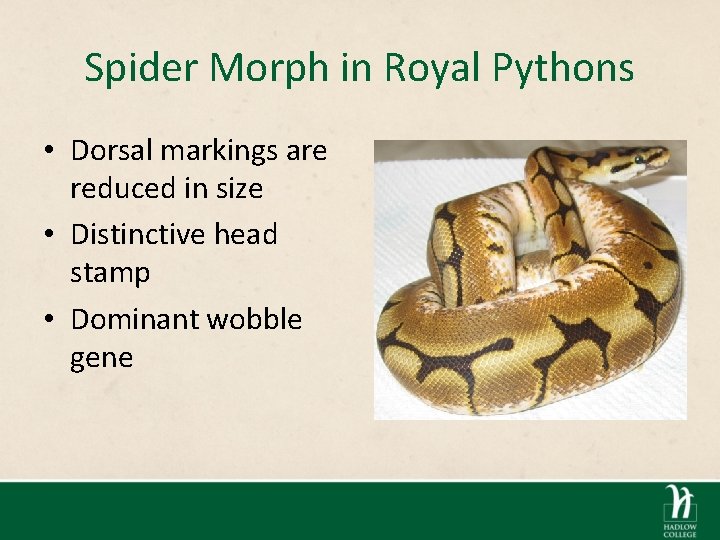
Spider Morph in Royal Pythons • Dorsal markings are reduced in size • Distinctive head stamp • Dominant wobble gene
What is the problem with Spider Morphs? What is the impact? Consider all stakeholders and suggest a solution.
Welfare of morphs • Use the Five Animal Needs to assess potential impacts of Royal Python Captive Breeding
- Slides: 10