
Exothermic and Endothermic reactions th 7 Grade Background
Exothermic and Endothermic reactions th 7 Grade

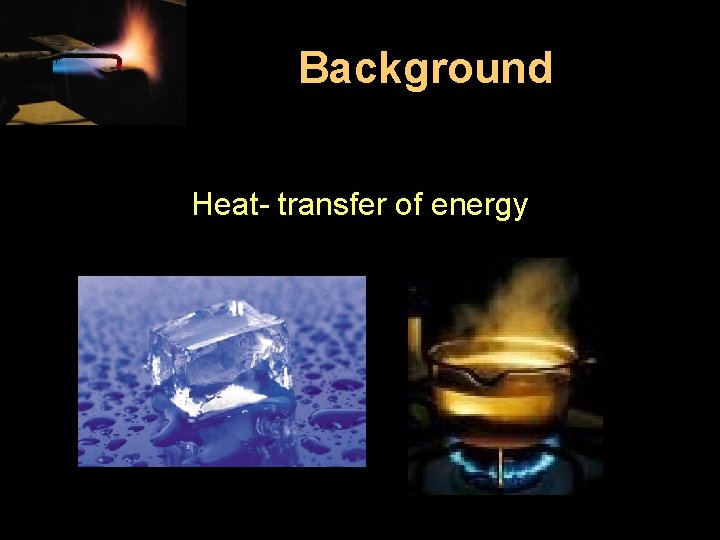
Background Heat- transfer of energy
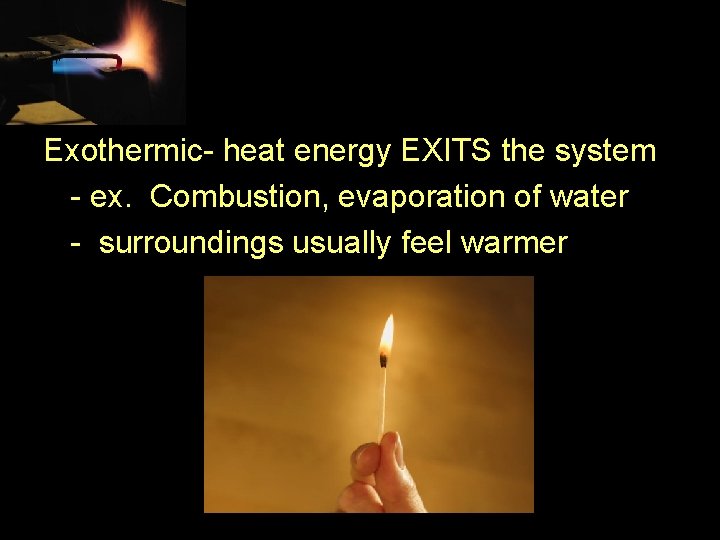
Exothermic- heat energy EXITS the system - ex. Combustion, evaporation of water - surroundings usually feel warmer
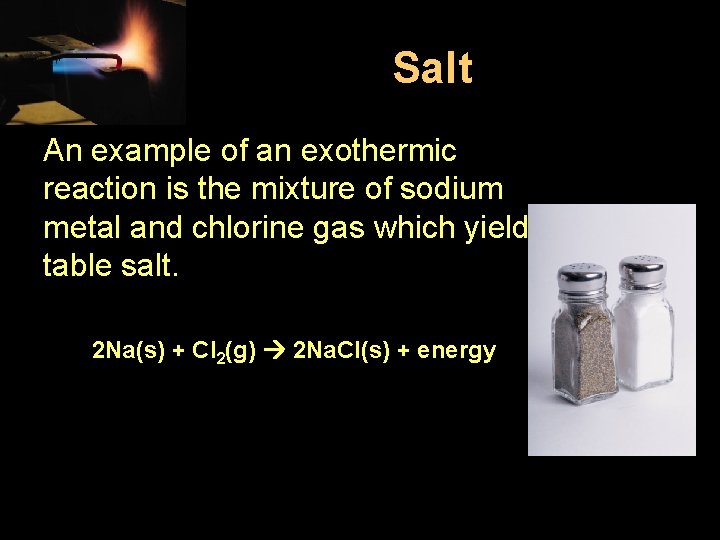
Salt An example of an exothermic reaction is the mixture of sodium metal and chlorine gas which yields table salt. 2 Na(s) + Cl 2(g) 2 Na. Cl(s) + energy

Endothermic- heat energy ENTERS the system - ex. Cold packs, melting ice - surroundings usually feel cooler
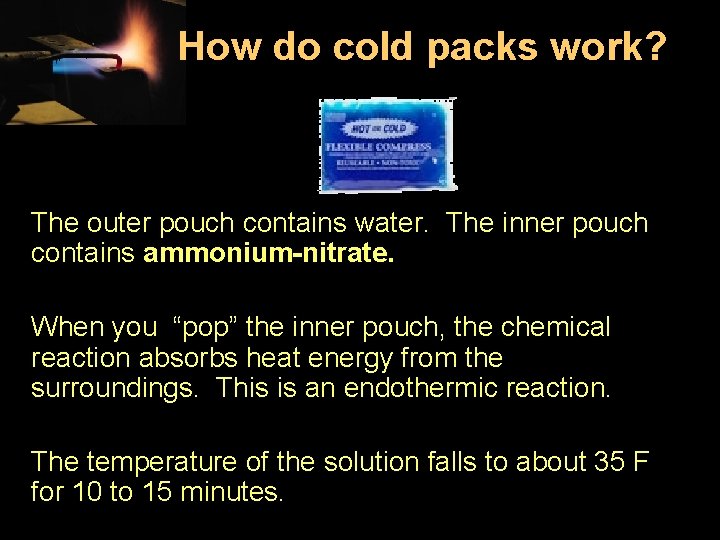
How do cold packs work? The outer pouch contains water. The inner pouch contains ammonium-nitrate. When you “pop” the inner pouch, the chemical reaction absorbs heat energy from the surroundings. This is an endothermic reaction. The temperature of the solution falls to about 35 F for 10 to 15 minutes.
Photosynthesis During photosynthesis, plants absorb the energy from the sun to convert carbon dioxide and water into glucose and oxygen. sunlight + 6 CO 2(g) + 6 H 2 O(l) C 6 H 12 O 6(aq) + 6 O 2(g)
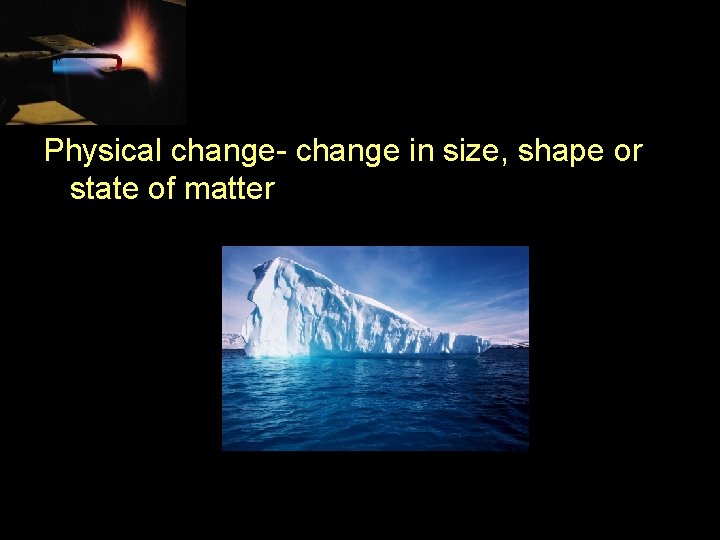
Physical change- change in size, shape or state of matter
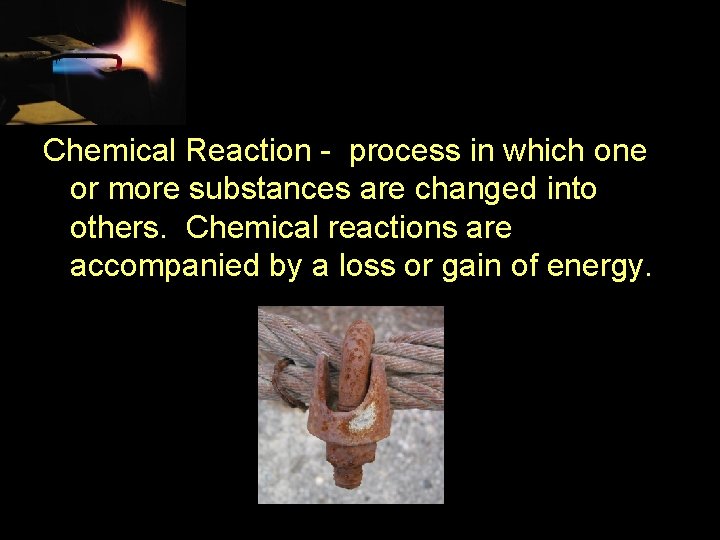
Chemical Reaction - process in which one or more substances are changed into others. Chemical reactions are accompanied by a loss or gain of energy.
True or False Chemical reactions always produce heat
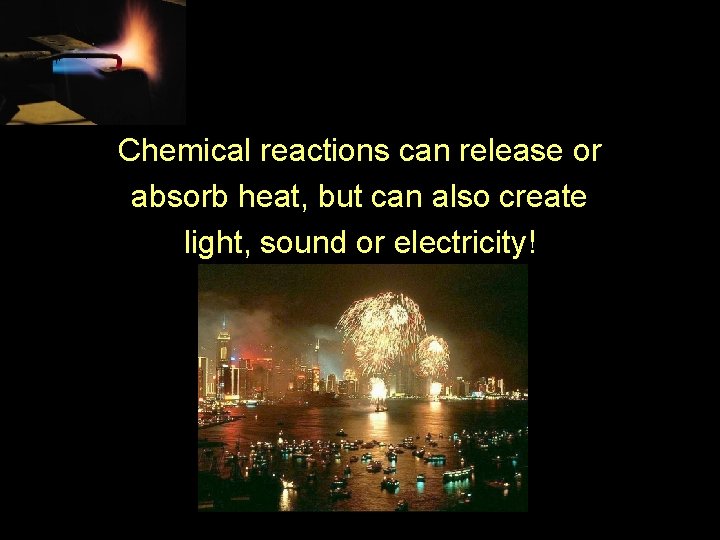
Chemical reactions can release or absorb heat, but can also create light, sound or electricity!
True or False Heat can be lost, destroyed or just disappear
Heat energy is transferred from one object to another, or is transferred to another form of energy, but never disappears. Law of Conservation of Energy
- Slides: 14