
Exoskeleton Hard tough outer covering that provides framework
- Slides: 22
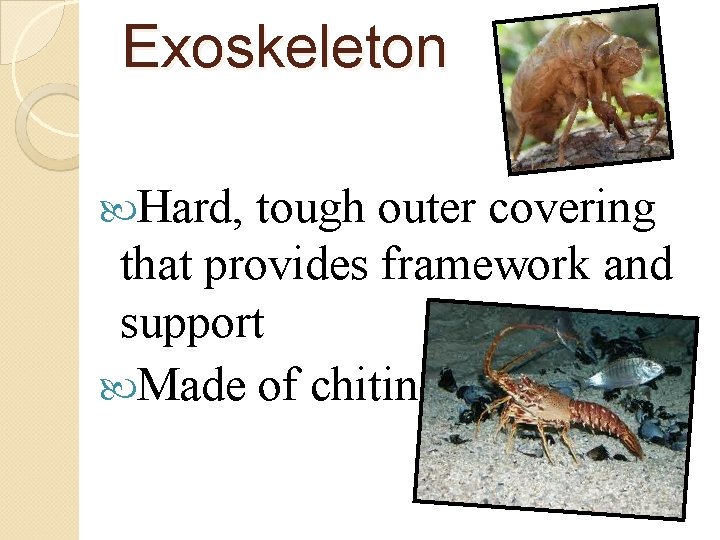
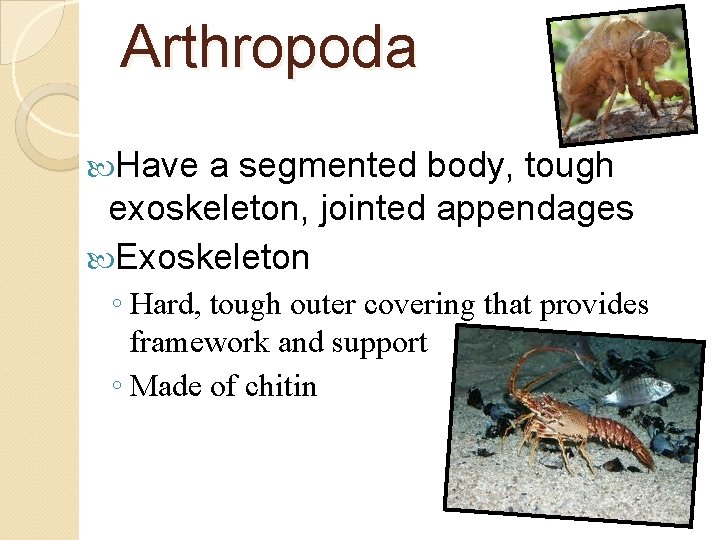
Exoskeleton Hard, tough outer covering that provides framework and support Made of chitin
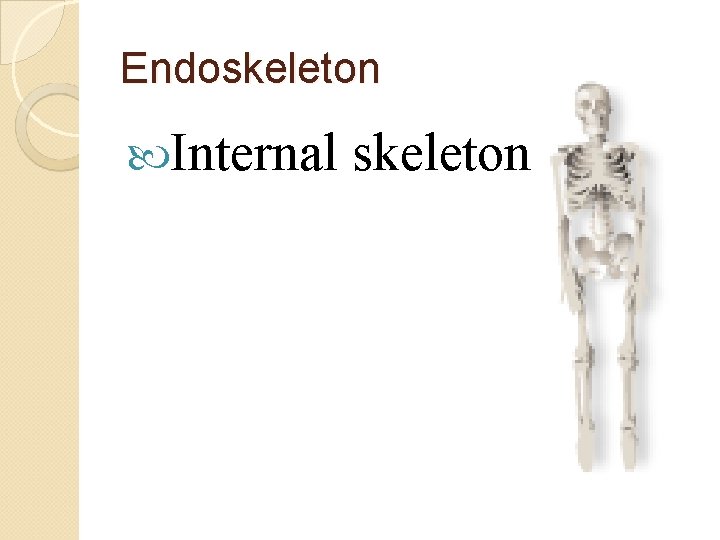
Endoskeleton Internal skeleton
Endoderm Inner layer of cells in the gastula Develops into digestive tract
Ectoderm Outer layer of cells in the gastula Develops into outer coverings and the nervous system
Mesoderm Between the 2 -derms Develops into skeletons and muscles
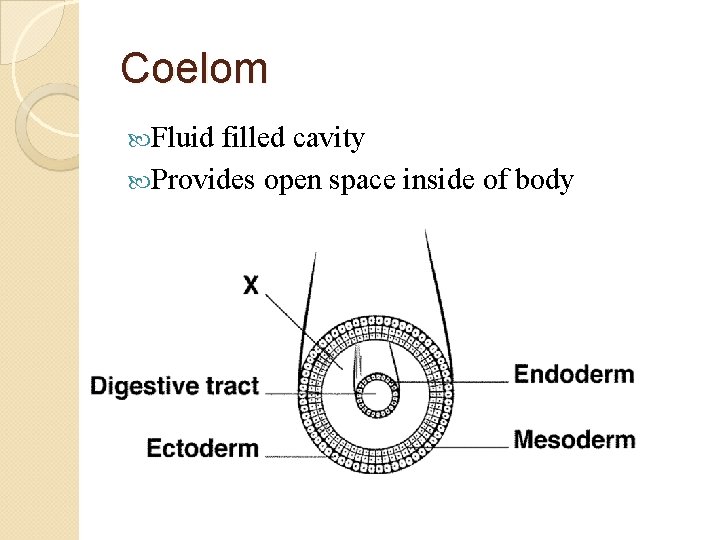
Coelom Fluid filled cavity Provides open space inside of body
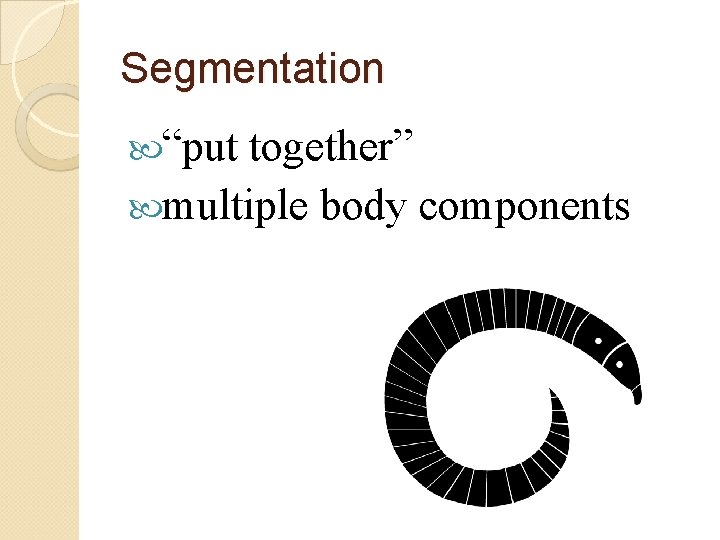
Segmentation “put together” multiple body components
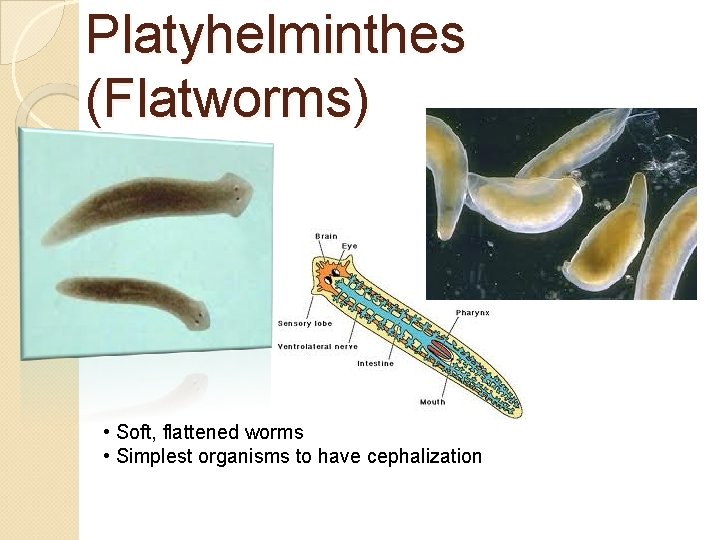
Cephalization Animals with anterior (head) & posterior (tail) Concentrate nervous and sensory organs at the anterior Development of a specialized head
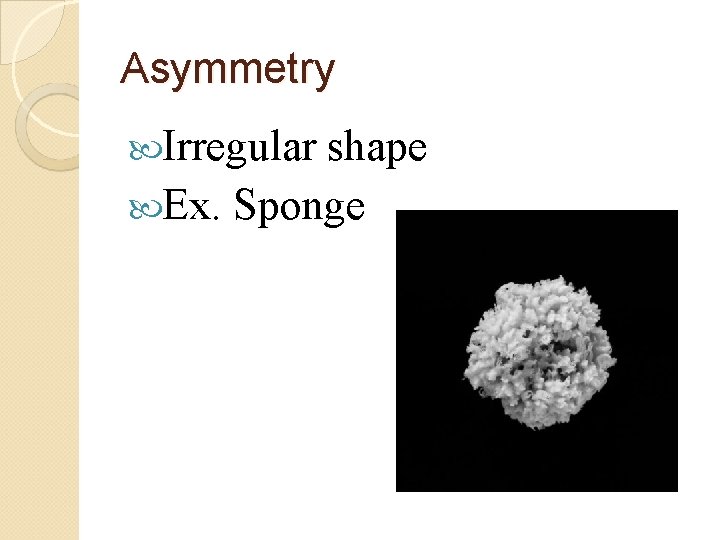
Asymmetry Irregular shape Ex. Sponge
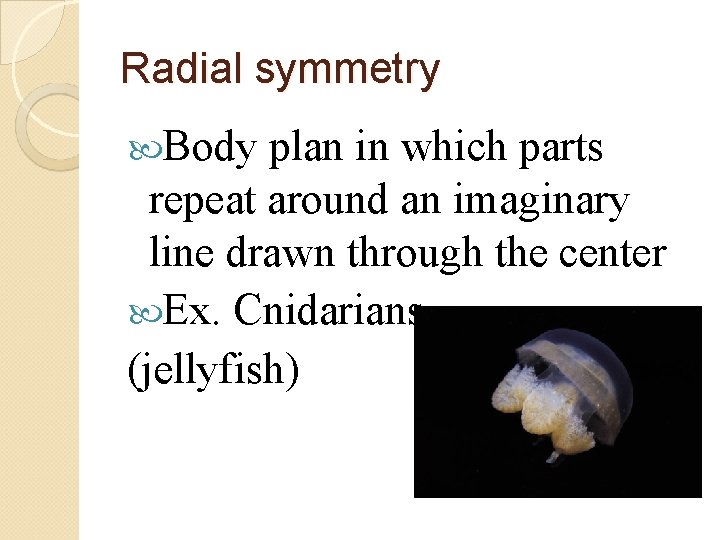
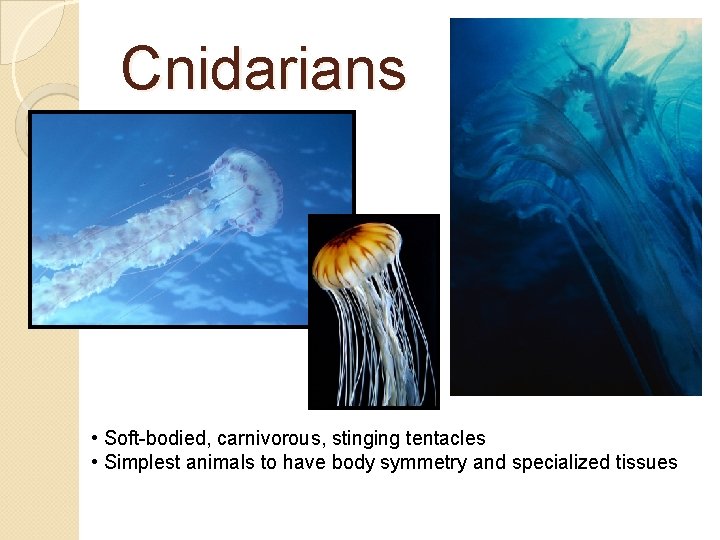
Radial symmetry Body plan in which parts repeat around an imaginary line drawn through the center Ex. Cnidarians (jellyfish)
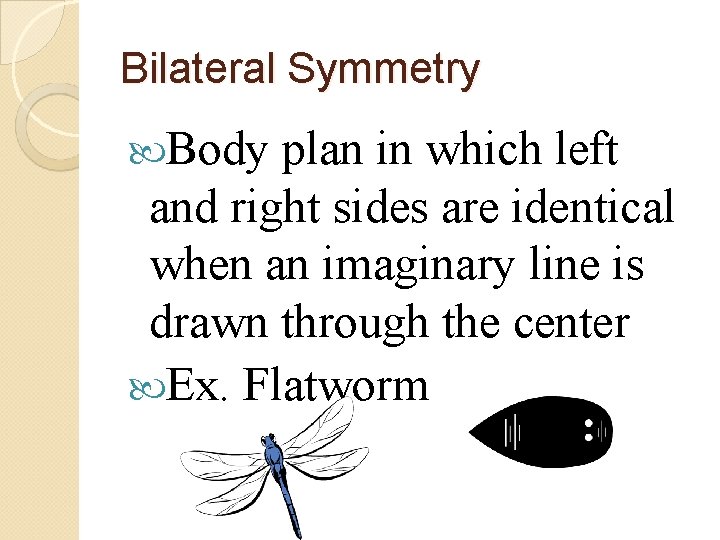
Bilateral Symmetry Body plan in which left and right sides are identical when an imaginary line is drawn through the center Ex. Flatworm
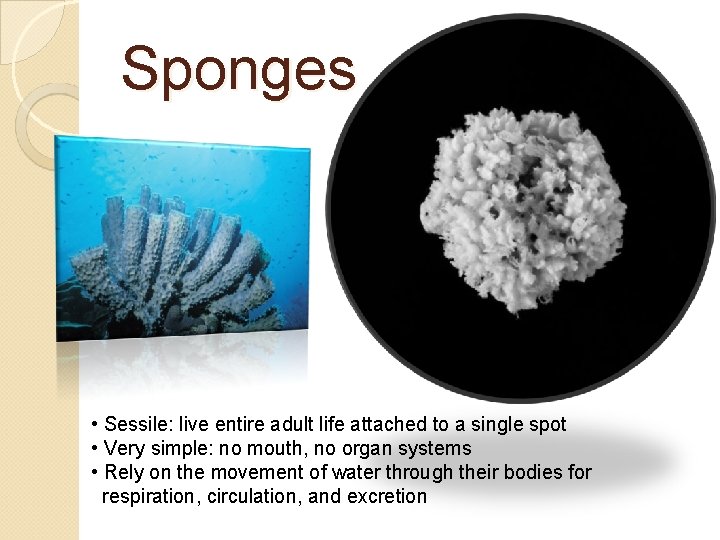
Sponges • Sessile: live entire adult life attached to a single spot • Very simple: no mouth, no organ systems • Rely on the movement of water through their bodies for respiration, circulation, and excretion
Cnidarians • Soft-bodied, carnivorous, stinging tentacles • Simplest animals to have body symmetry and specialized tissues
Platyhelminthes (Flatworms) • Soft, flattened worms • Simplest organisms to have cephalization
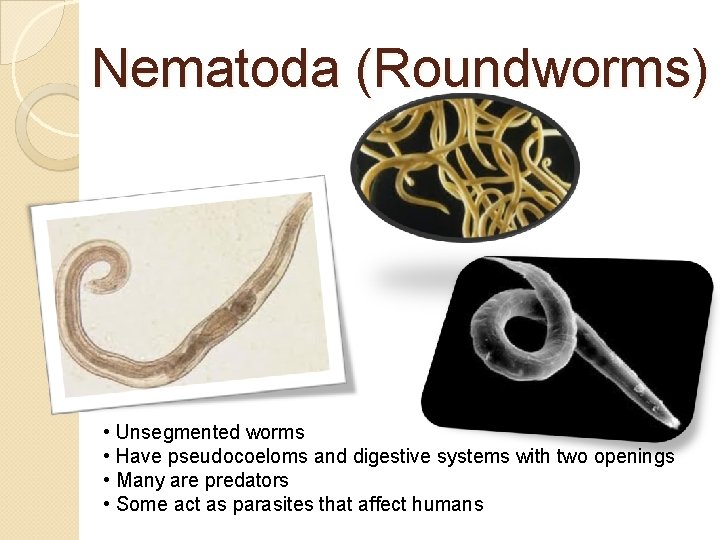
Nematoda (Roundworms) • Unsegmented worms • Have pseudocoeloms and digestive systems with two openings • Many are predators • Some act as parasites that affect humans
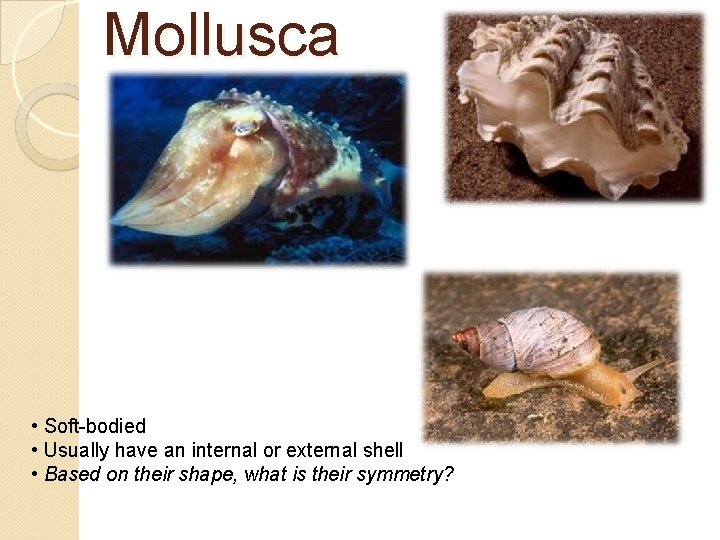
Mollusca • Soft-bodied • Usually have an internal or external shell • Based on their shape, what is their symmetry?
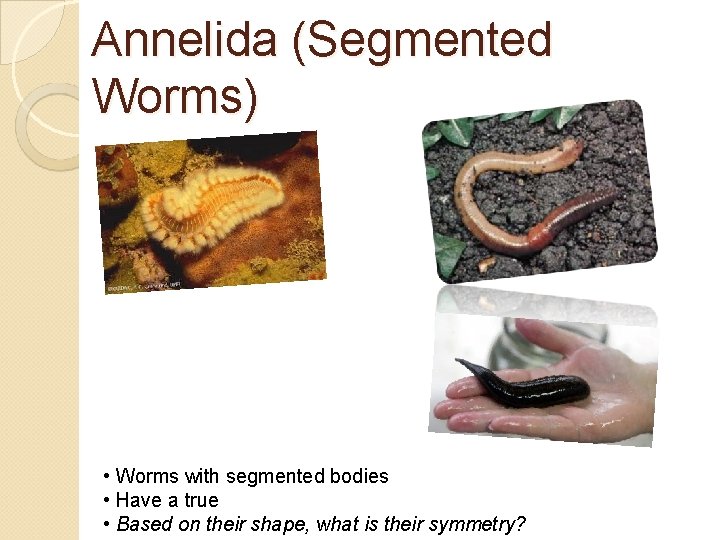
Annelida (Segmented Worms) • Worms with segmented bodies • Have a true • Based on their shape, what is their symmetry?
Arthropoda Have a segmented body, tough exoskeleton, jointed appendages Exoskeleton ◦ Hard, tough outer covering that provides framework and support ◦ Made of chitin
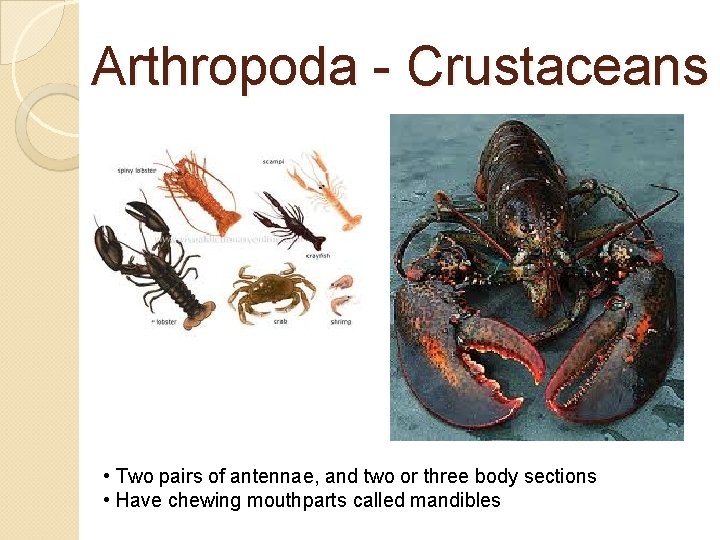
Arthropoda - Crustaceans • Two pairs of antennae, and two or three body sections • Have chewing mouthparts called mandibles
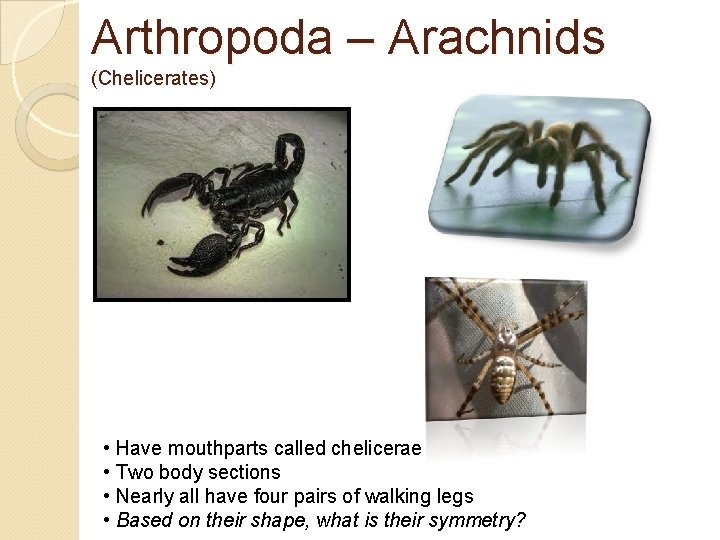
Arthropoda – Arachnids (Chelicerates) • Have mouthparts called chelicerae • Two body sections • Nearly all have four pairs of walking legs • Based on their shape, what is their symmetry?
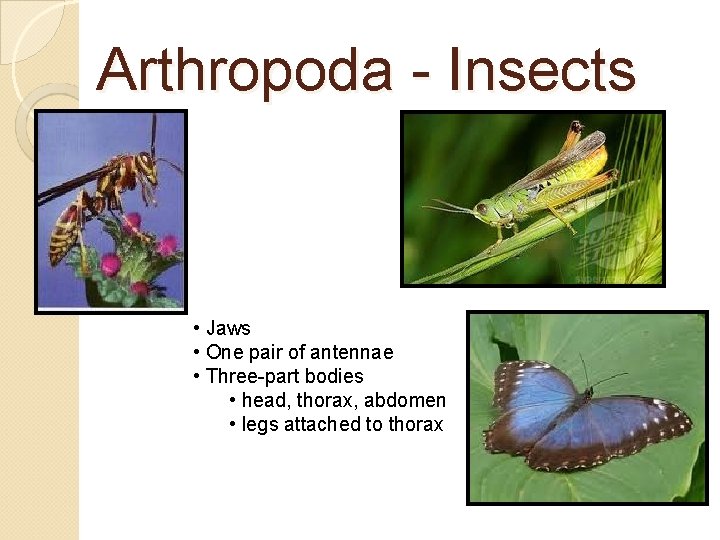
Arthropoda - Insects • Jaws • One pair of antennae • Three-part bodies • head, thorax, abdomen • legs attached to thorax
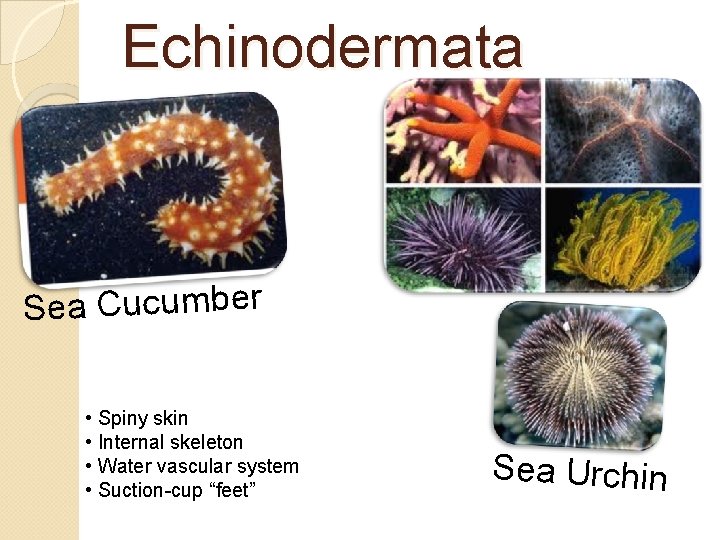
Echinodermata Sea Cucumber • Spiny skin • Internal skeleton • Water vascular system • Suction-cup “feet” Sea Urchin