
Exoplanets UCL Space Week 2019 Prof Giovanna Tinetti
- Slides: 8
Exoplanets @ UCL Space Week 2019 Prof Giovanna Tinetti, Dr Ingo Waldmann
Exoplanet Research @ UCL - an overview Space Missions: - ESA M 4 Ariel mission BSSL Twinkle mission members of NASA/ESA JWST MIRI instrument consortium Exoplanet Atmospheric characterisation: - Observations of exoplanet atmospheres (Hubble / VLT) Theoretical modelling of exoplanet atmospheres High temperature molecular opacities: - Exo. Mol: Calculating high-temperature molecular opacities ab-initio Statistical / Machine learning methods: - Deep learning applied to exoplanet detection Machine learning to better and faster analyse exoplanet atmospheres
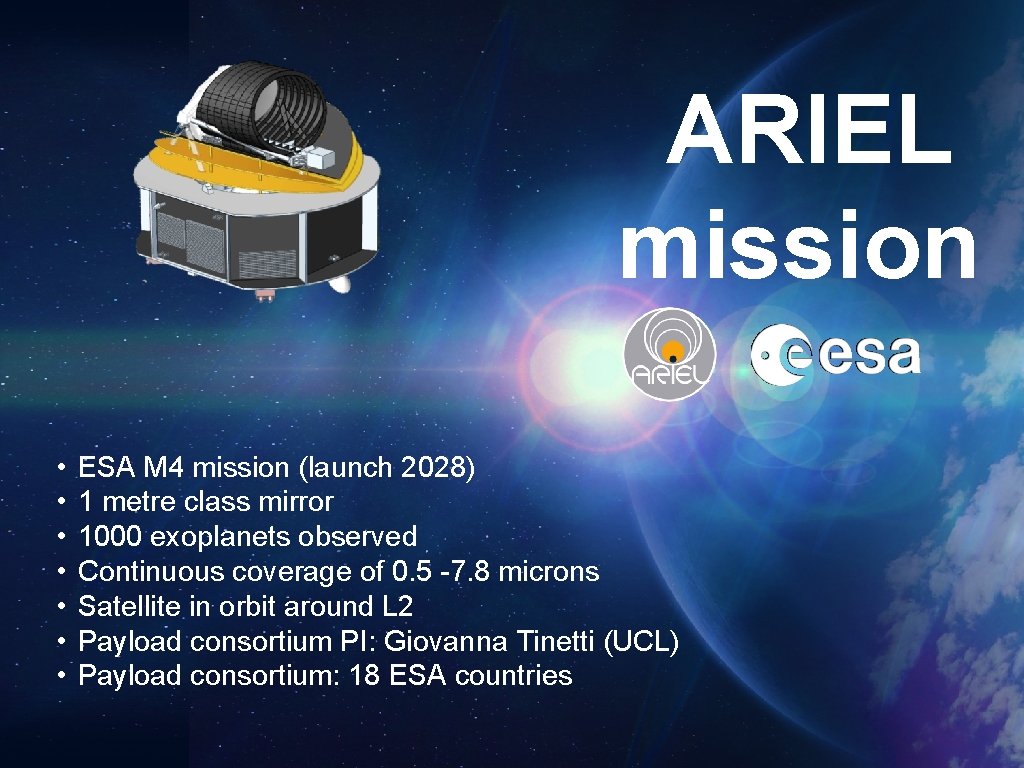
ARIEL mission • • ESA M 4 mission (launch 2028) 1 metre class mirror 1000 exoplanets observed Continuous coverage of 0. 5 -7. 8 microns Satellite in orbit around L 2 Payload consortium PI: Giovanna Tinetti (UCL) Payload consortium: 18 ESA countries
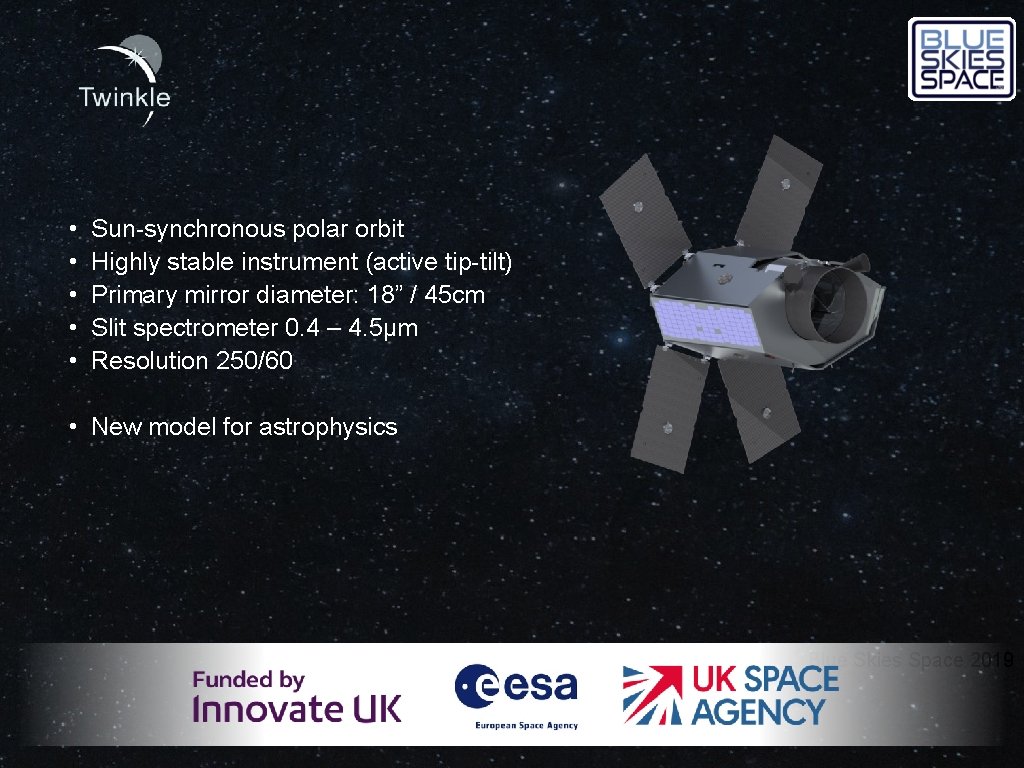
• • • Sun-synchronous polar orbit Highly stable instrument (active tip-tilt) Primary mirror diameter: 18” / 45 cm Slit spectrometer 0. 4 – 4. 5µm Resolution 250/60 • New model for astrophysics © Blue Skies Space 2019
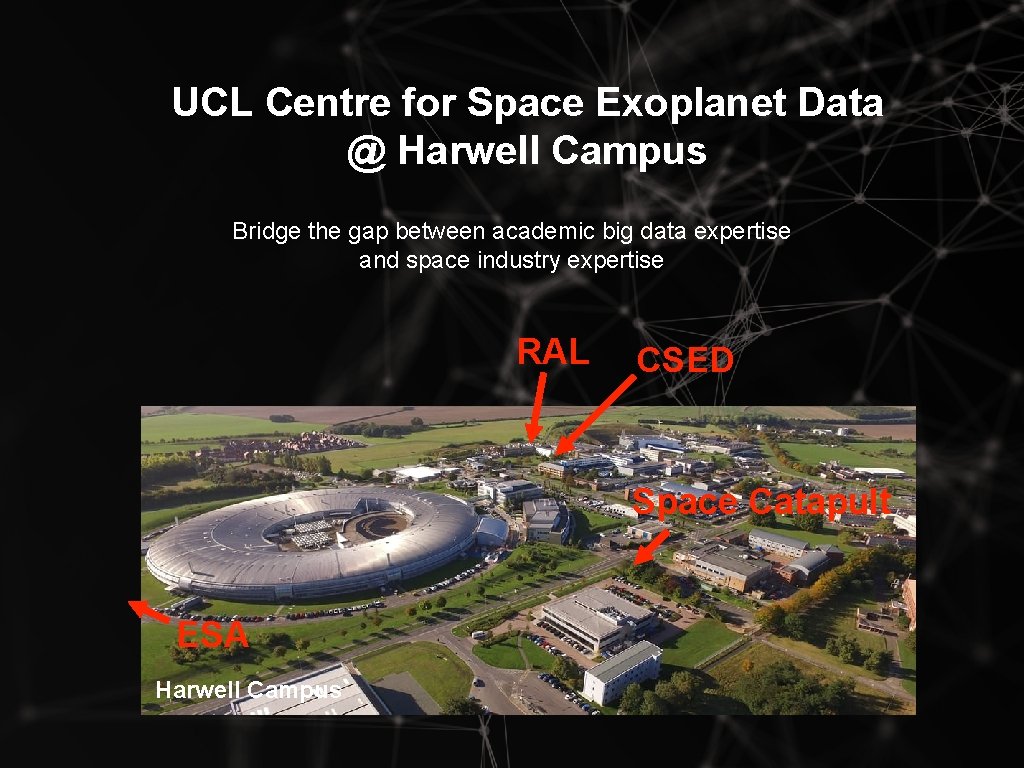
UCL Centre for Space Exoplanet Data @ Harwell Campus Bridge the gap between academic big data expertise and space industry expertise RAL CSED Space Catapult ESA Harwell Campus
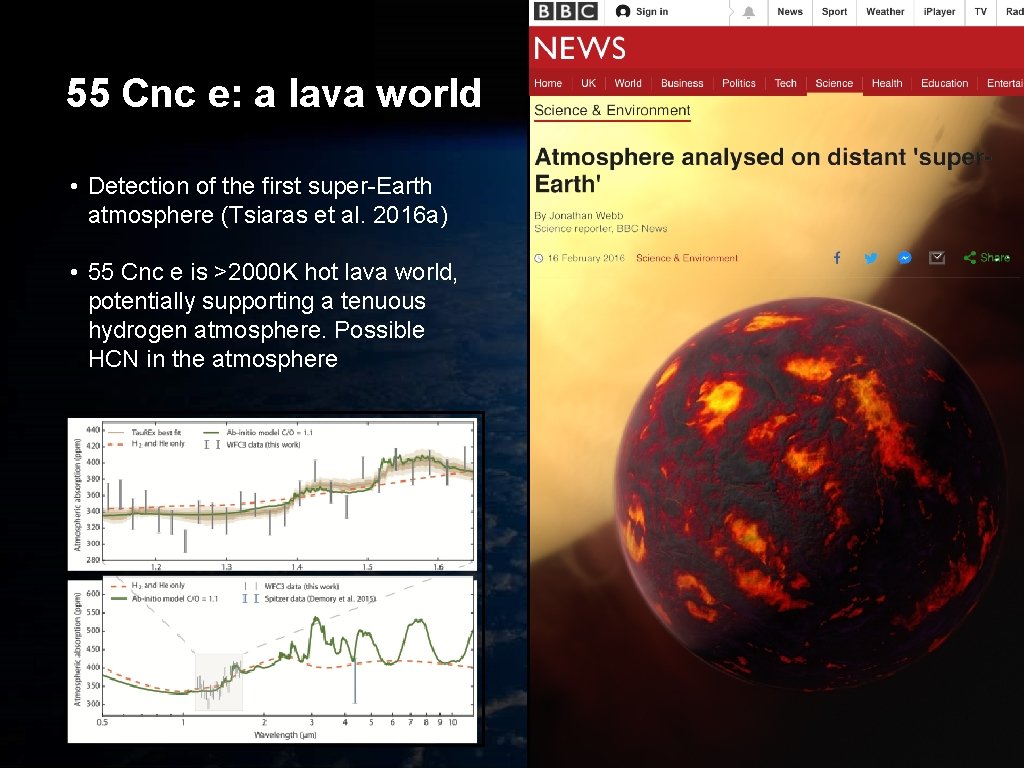
55 Cnc e: a lava world • Detection of the first super-Earth atmosphere (Tsiaras et al. 2016 a) • 55 Cnc e is >2000 K hot lava world, potentially supporting a tenuous hydrogen atmosphere. Possible HCN in the atmosphere
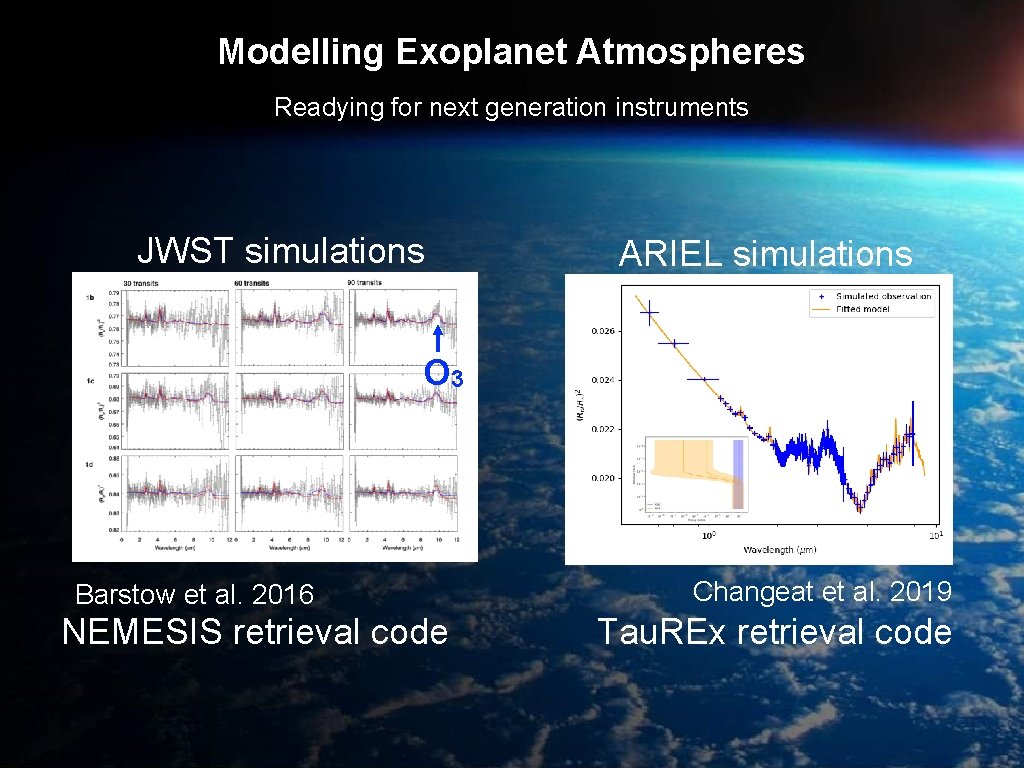
Modelling Exoplanet Atmospheres Readying for next generation instruments JWST simulations ARIEL simulations O 3 Barstow et al. 2016 NEMESIS retrieval code Changeat et al. 2019 Tau. REx retrieval code
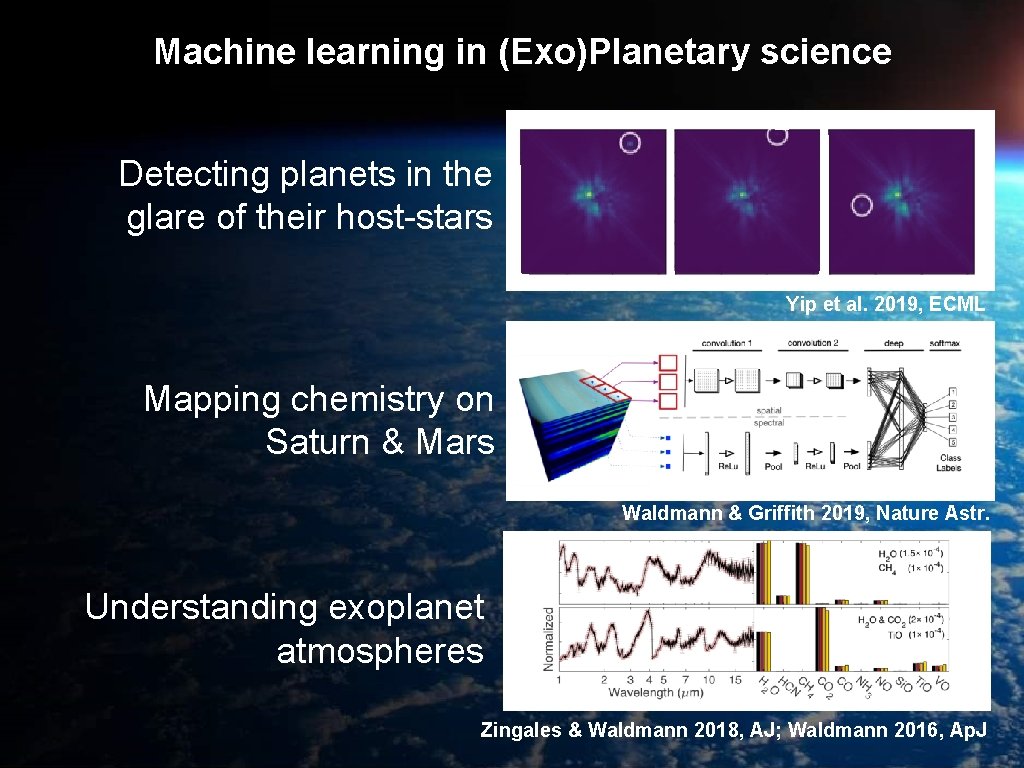
Machine learning in (Exo)Planetary science Detecting planets in the glare of their host-stars Yip et al. 2019, ECML Mapping chemistry on Saturn & Mars Waldmann & Griffith 2019, Nature Astr. Understanding exoplanet atmospheres Zingales & Waldmann 2018, AJ; Waldmann 2016, Ap. J