
Exocrine Pancreas Physiology Pancreatic Anatomy Pancreatic secretion Pancreatic


- Slides: 30
Exocrine Pancreas Physiology Pancreatic Anatomy Pancreatic secretion Pancreatic enzymes Daniel S. Kamin MD Boston Children’s Hospital Daniel. Kamin@childrens. harvard. edu Content Reviewers: Sohail Z. Husain, MD Veronique Morinville MD, FRCP(C)
NASPGHAN Physiology Education Series Editors: Christine Waasdorp Hurtado, MD, MSCS, FAAP Christine. Waasdorp@childrenscolorado. org Daniel Kamin, MD Daniel. Kamin@childrens. harvard. edu
Learning Objectives • Understand the normal development and anatomy of the pancreas • Understand the stimuli and cellular factors giving rise to pancreatic secretion • Know the mechanisms by which pancreatic enzymes are activated and remain functional • Be aware of age-related deficiency in exocrine pancreatic function
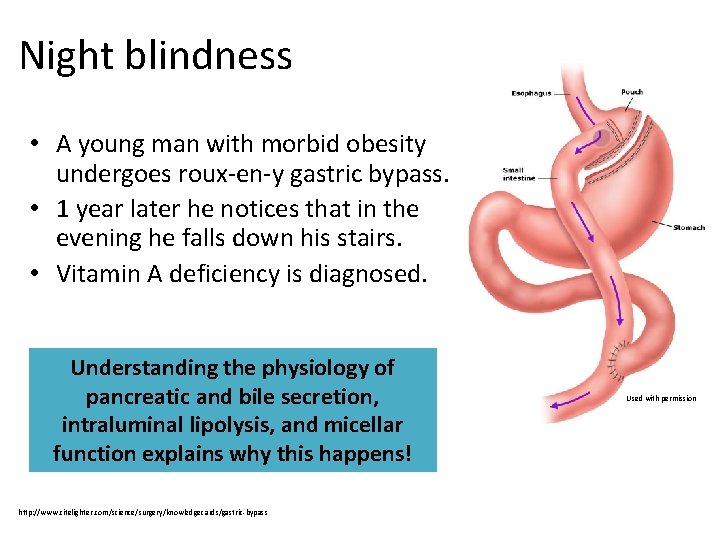
Night blindness • A young man with morbid obesity undergoes roux-en-y gastric bypass. • 1 year later he notices that in the evening he falls down his stairs. • Vitamin A deficiency is diagnosed. Understanding the physiology of pancreatic and bile secretion, intraluminal lipolysis, and micellar function explains why this happens! http: //www. citelighter. com/science/surgery/knowledgecards/gastric-bypass Used with permission
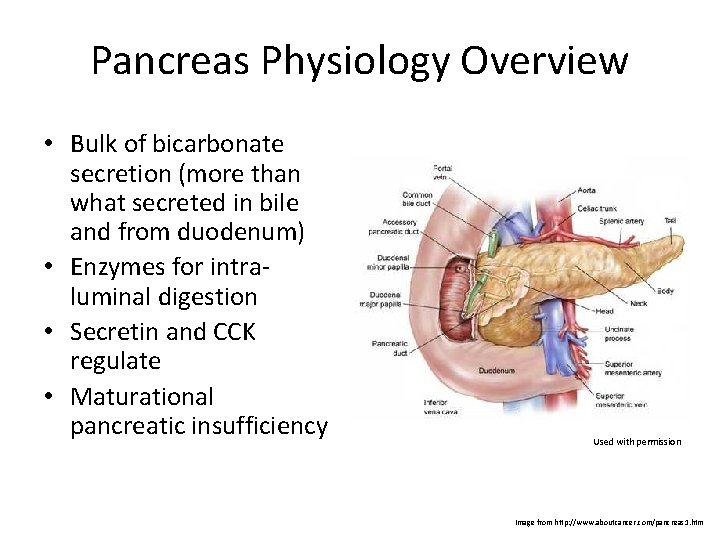
Pancreas Physiology Overview • Bulk of bicarbonate secretion (more than what secreted in bile and from duodenum) • Enzymes for intraluminal digestion • Secretin and CCK regulate • Maturational pancreatic insufficiency Used with permission Image from http: //www. aboutcancer. com/pancreas 1. htm
Pancreatic Development • See Embryology and Anatomy of the Gastrointestinal Tract
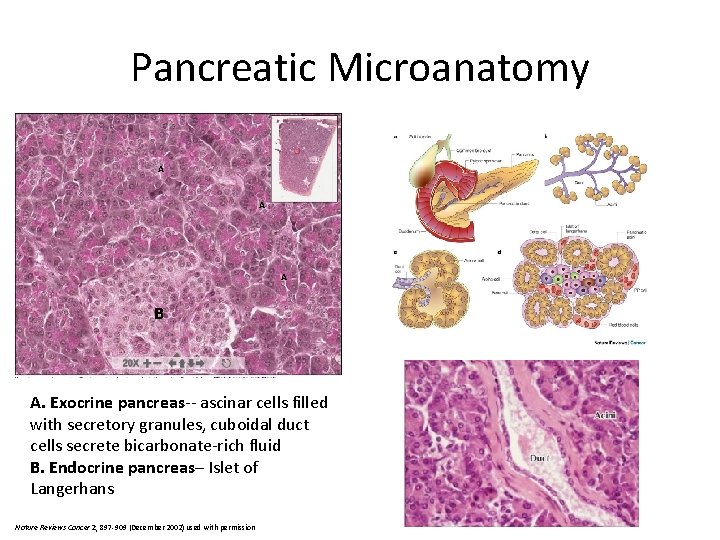
Pancreatic Microanatomy A A A B A. Exocrine pancreas-- ascinar cells filled with secretory granules, cuboidal duct cells secrete bicarbonate-rich fluid B. Endocrine pancreas– Islet of Langerhans Nature Reviews Cancer 2, 897 -909 (December 2002) used with permission
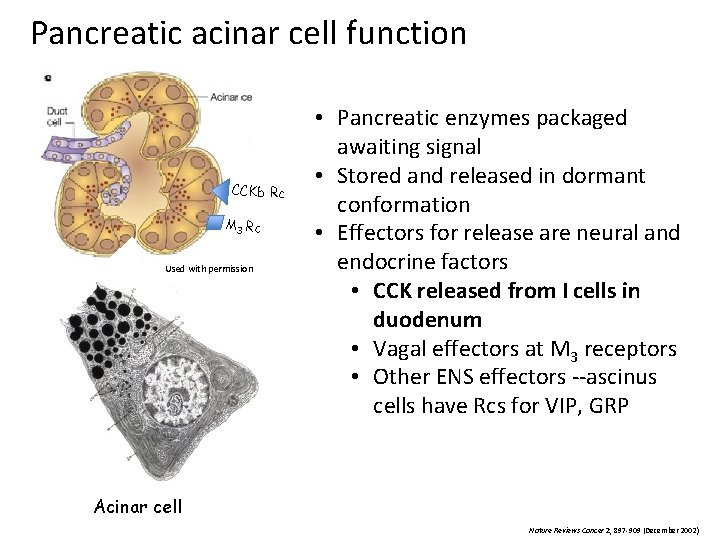
Pancreatic acinar cell function CCKb Rc M 3 Rc Used with permission • Pancreatic enzymes packaged awaiting signal • Stored and released in dormant conformation • Effectors for release are neural and endocrine factors • CCK released from I cells in duodenum • Vagal effectors at M 3 receptors • Other ENS effectors --ascinus cells have Rcs for VIP, GRP Acinar cell Nature Reviews Cancer 2, 897 -909 (December 2002)
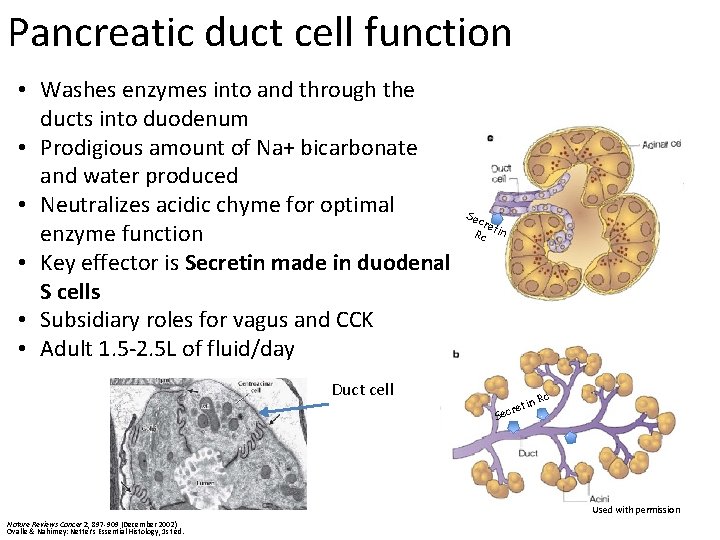
Pancreatic duct cell function • Washes enzymes into and through the ducts into duodenum • Prodigious amount of Na+ bicarbonate and water produced • Neutralizes acidic chyme for optimal enzyme function • Key effector is Secretin made in duodenal S cells • Subsidiary roles for vagus and CCK • Adult 1. 5 -2. 5 L of fluid/day Se cre Rc tin Duct cell S c in R et ecr Used with permission Nature Reviews Cancer 2, 897 -909 (December 2002) Ovalle & Nahirney: Netter's Essential Histology, 1 st ed.
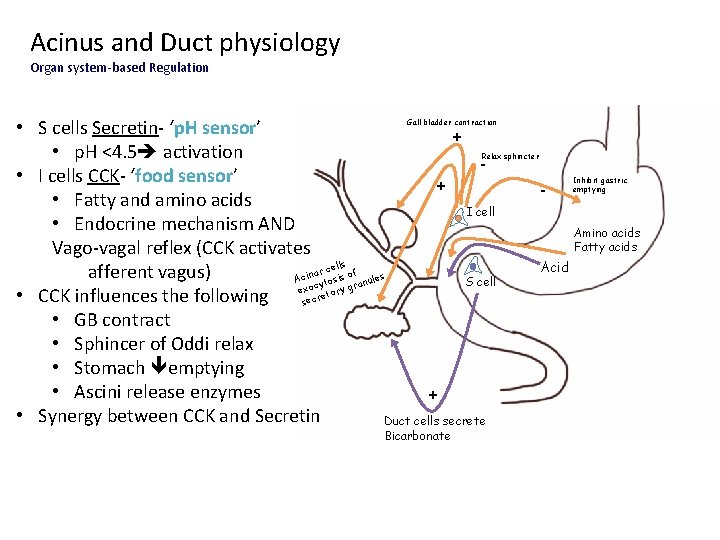
Acinus and Duct physiology Organ system-based Regulation • S cells Secretin- ‘p. H sensor’ + • p. H <4. 5 activation • I cells CCK- ‘food sensor’ + • Fatty and amino acids I cell • Endocrine mechanism AND Vago-vagal reflex (CCK activates lls r ce of a afferent vagus) n i Ac ytosis anules S cell r c exo tory g e • CCK influences the following secr • GB contract • Sphincer of Oddi relax • Stomach emptying • Ascini release enzymes + • Synergy between CCK and Secretin Duct cells secrete Gall bladder contraction Relax sphincter Bicarbonate - Inhibit gastric emptying Amino acids Fatty acids Acid
Generation of Pancreatic Juice • Adults make ~2 L/day (resting 0. 2 ml/min, stimulated 4 ml/min) • Acinar electrolyte [ ]= plasma • Duct modifies secretion by exchanging bicarbonate for chloride • Paracellular water/Na+ secretion • Pancreatic juice Osmolality = plasma Reproduced with permission from the publisher
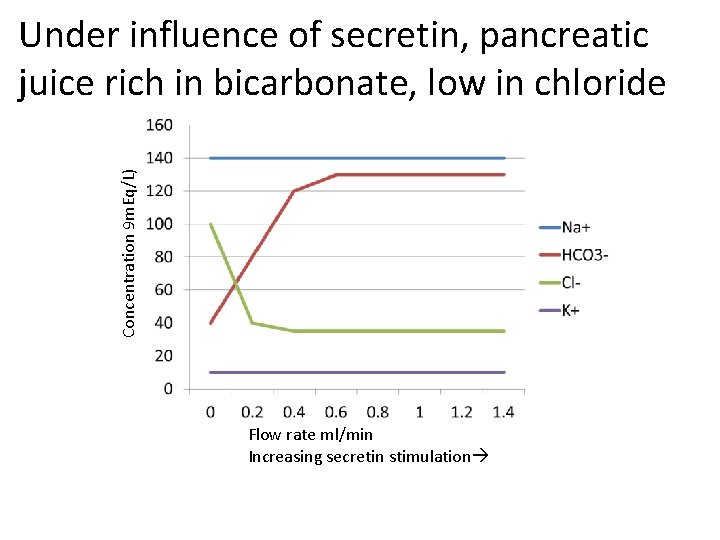
Concentration 9 m. Eq/L) Under influence of secretin, pancreatic juice rich in bicarbonate, low in chloride Flow rate ml/min Increasing secretin stimulation
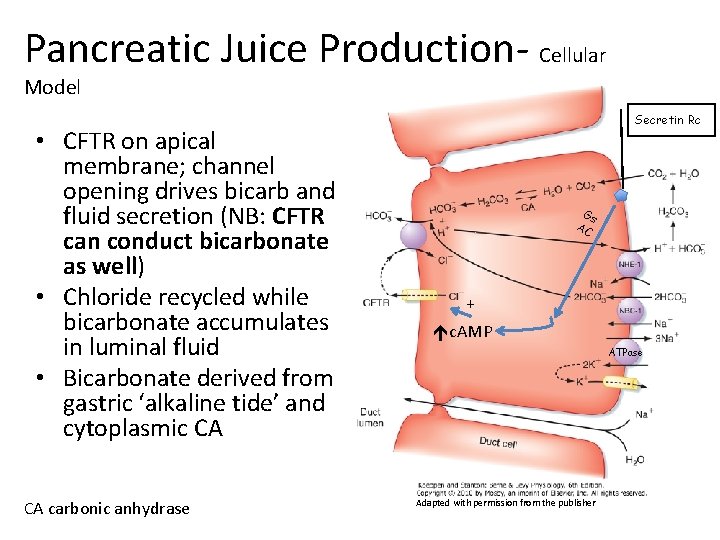
Pancreatic Juice Production- Cellular Model • CFTR on apical membrane; channel opening drives bicarb and fluid secretion (NB: CFTR can conduct bicarbonate as well) • Chloride recycled while bicarbonate accumulates in luminal fluid • Bicarbonate derived from gastric ‘alkaline tide’ and cytoplasmic CA CA carbonic anhydrase Secretin Rc Gs AC + c. AMP ATPase Adapted with permission from the publisher
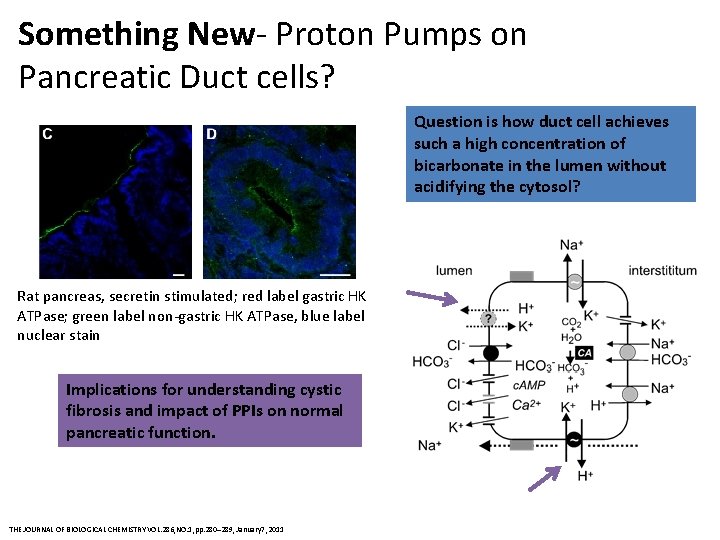
Something New- Proton Pumps on Pancreatic Duct cells? Question is how duct cell achieves such a high concentration of bicarbonate in the lumen without acidifying the cytosol? Rat pancreas, secretin stimulated; red label gastric HK ATPase; green label non-gastric HK ATPase, blue label nuclear stain Implications for understanding cystic fibrosis and impact of PPIs on normal pancreatic function. THE JOURNAL OF BIOLOGICAL CHEMISTRY VOL. 286, NO. 1, pp. 280– 289, January 7, 2011
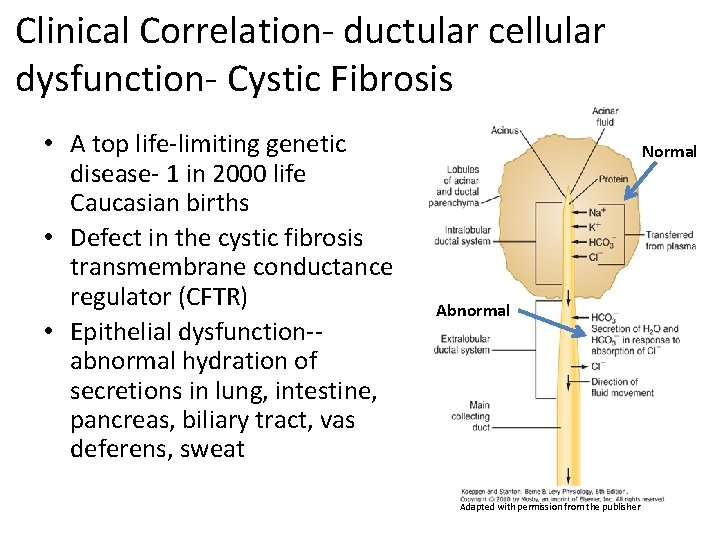
Clinical Correlation- ductular cellular dysfunction- Cystic Fibrosis • A top life-limiting genetic disease- 1 in 2000 life Caucasian births • Defect in the cystic fibrosis transmembrane conductance regulator (CFTR) • Epithelial dysfunction-abnormal hydration of secretions in lung, intestine, pancreas, biliary tract, vas deferens, sweat Normal Abnormal Adapted with permission from the publisher
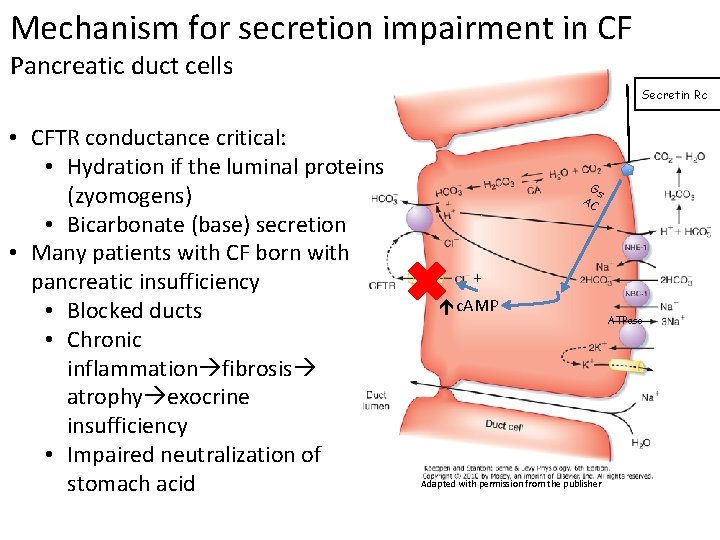
Mechanism for secretion impairment in CF Pancreatic duct cells Secretin Rc • CFTR conductance critical: • Hydration if the luminal proteins (zyomogens) • Bicarbonate (base) secretion • Many patients with CF born with pancreatic insufficiency • Blocked ducts • Chronic inflammation fibrosis atrophy exocrine insufficiency • Impaired neutralization of stomach acid Gs AC + c. AMP Adapted with permission from the publisher ATPase
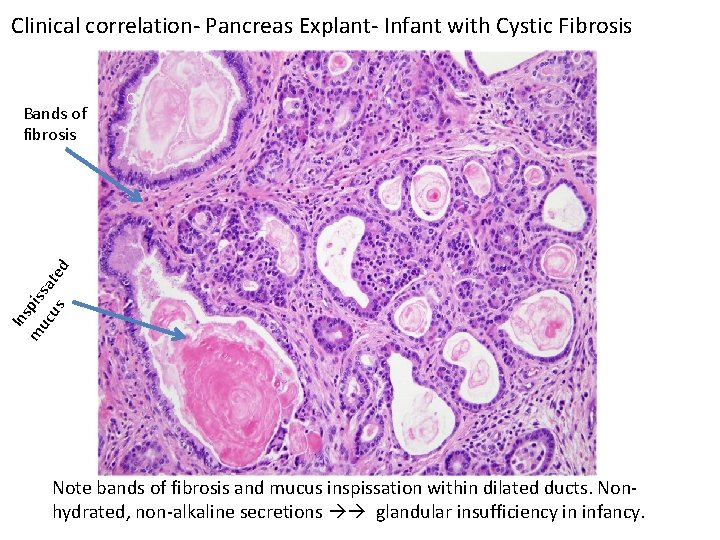
Clinical correlation- Pancreas Explant- Infant with Cystic Fibrosis C Ins m pis uc sa us ted Bands of fibrosis Note bands of fibrosis and mucus inspissation within dilated ducts. Nonhydrated, non-alkaline secretions glandular insufficiency in infancy.
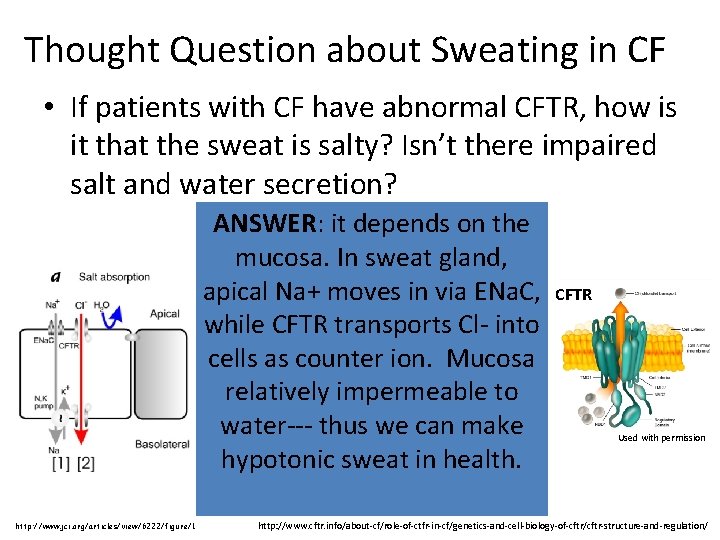
Thought Question about Sweating in CF • If patients with CF have abnormal CFTR, how is it that the sweat is salty? Isn’t there impaired salt and water secretion? ANSWER: it depends on the mucosa. In sweat gland, apical Na+ moves in via ENa. C, while CFTR transports Cl- into cells as counter ion. Mucosa relatively impermeable to water--- thus we can make hypotonic sweat in health. http: //www. jci. org/articles/view/6222/figure/1 CFTR Used with permission http: //www. cftr. info/about-cf/role-of-ctfr-in-cf/genetics-and-cell-biology-of-cftr/cftr-structure-and-regulation/
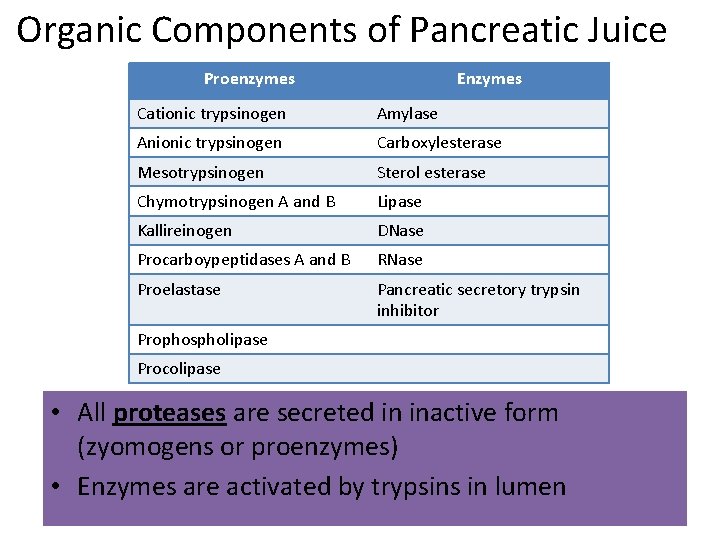
Organic Components of Pancreatic Juice Proenzymes Enzymes Cationic trypsinogen Amylase Anionic trypsinogen Carboxylesterase Mesotrypsinogen Sterol esterase Chymotrypsinogen A and B Lipase Kallireinogen DNase Procarboypeptidases A and B RNase Proelastase Pancreatic secretory trypsin inhibitor Prophospholipase Procolipase • All proteases are secreted in inactive form (zyomogens or proenzymes) • Enzymes are activated by trypsins in lumen
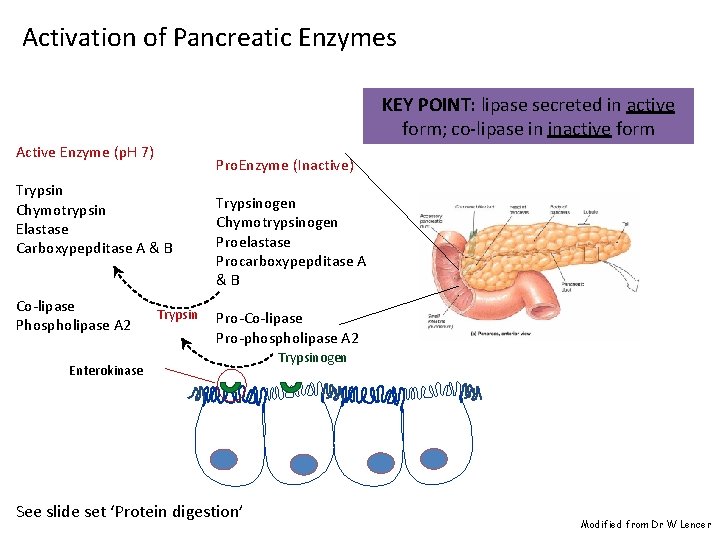
Activation of Pancreatic Enzymes KEY POINT: lipase secreted in active form; co-lipase in inactive form Active Enzyme (p. H 7) Pro. Enzyme (Inactive) Trypsin Chymotrypsin Elastase Carboxypepditase A & B Co-lipase Phospholipase A 2 Trypsinogen Chymotrypsinogen Proelastase Procarboxypepditase A &B Pro-Co-lipase Pro-phospholipase A 2 Enterokinase See slide set ‘Protein digestion’ Trypsinogen Modified from Dr W Lencer
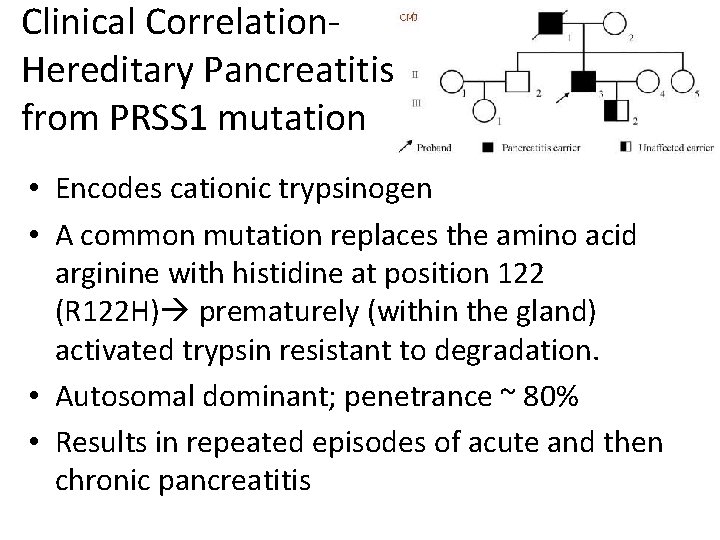
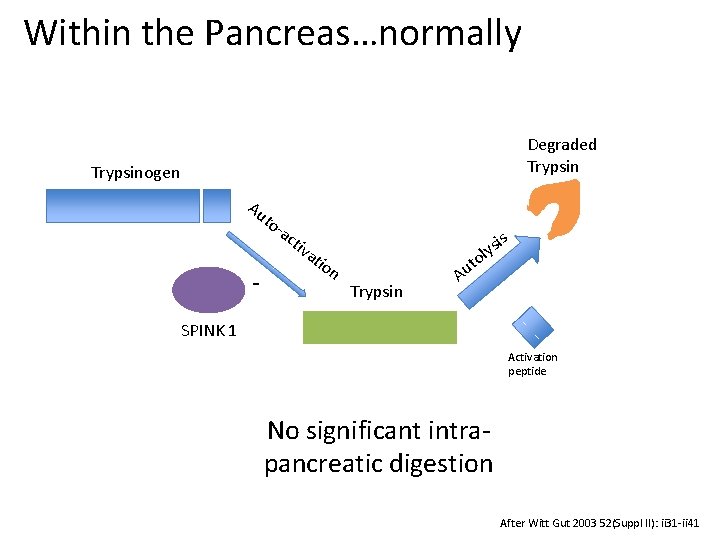
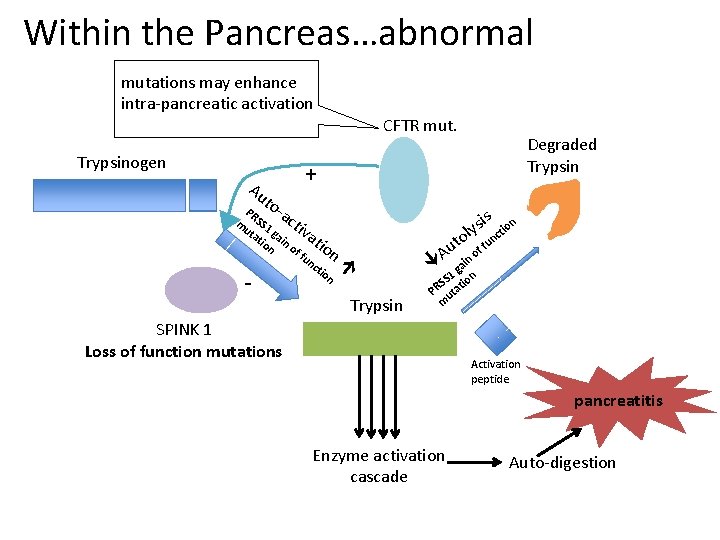
Clinical Correlation. Hereditary Pancreatitis from PRSS 1 mutation • Encodes cationic trypsinogen • A common mutation replaces the amino acid arginine with histidine at position 122 (R 122 H) prematurely (within the gland) activated trypsin resistant to degradation. • Autosomal dominant; penetrance ~ 80% • Results in repeated episodes of acute and then chronic pancreatitis
Within the Pancreas…normally Degraded Trypsinogen Au t o- - ac tiv at ion sis y l o t Trypsin Au SPINK 1 Activation peptide No significant intrapancreatic digestion After Witt Gut 2003 52(Suppl II): ii 31 -ii 41
Within the Pancreas…abnormal mutations may enhance intra-pancreatic activation Trypsinogen CFTR mut. Degraded Trypsin + Au t o -a PR m SS 1 ct ut iva at gai ion n o t f f ion un cti on - Trypsin is ion s y ol nct t u A f no fu i ga 1 n SS tio PR uta m SPINK 1 Loss of function mutations Activation peptide pancreatitis Enzyme activation cascade Auto-digestion
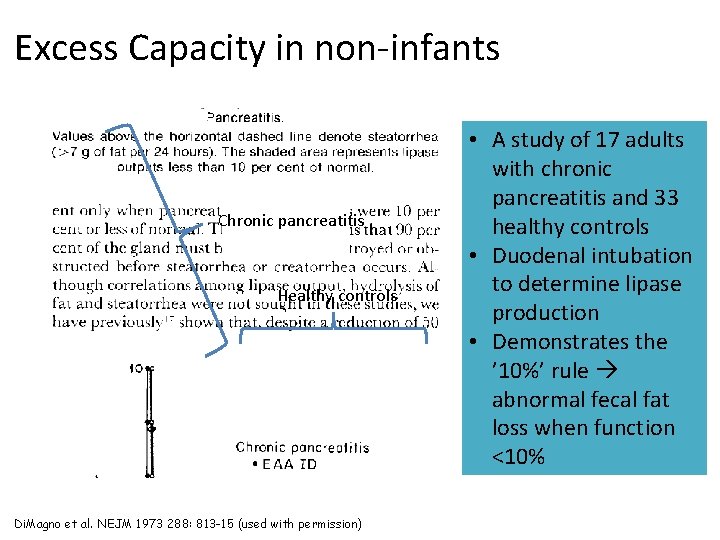
Excess Capacity in non-infants Chronic pancreatitis Healthy controls Di. Magno et al. NEJM 1973 288: 813 -15 (used with permission) • A study of 17 adults with chronic pancreatitis and 33 healthy controls • Duodenal intubation to determine lipase production • Demonstrates the ’ 10%’ rule abnormal fecal fat loss when function <10%
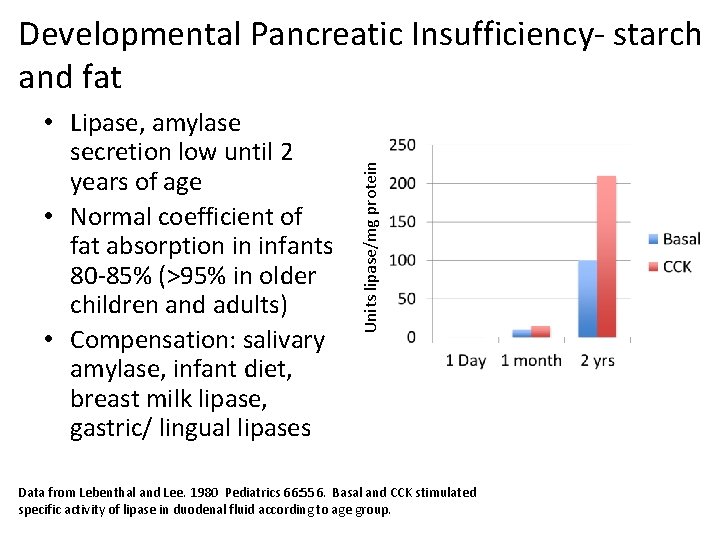
• Lipase, amylase secretion low until 2 years of age • Normal coefficient of fat absorption in infants 80 -85% (>95% in older children and adults) • Compensation: salivary amylase, infant diet, breast milk lipase, gastric/ lingual lipases Units lipase/mg protein Developmental Pancreatic Insufficiency- starch and fat Data from Lebenthal and Lee. 1980 Pediatrics 66: 556. Basal and CCK stimulated specific activity of lipase in duodenal fluid according to age group.
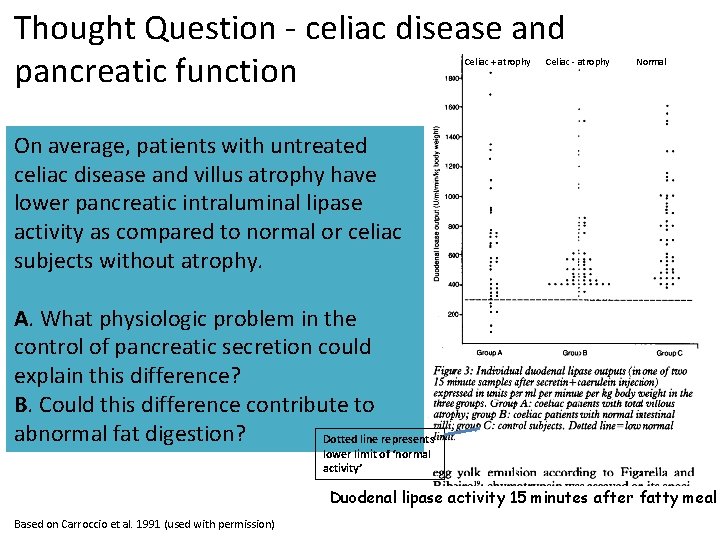
Thought Question - celiac disease and pancreatic function Celiac + atrophy Celiac - atrophy Normal On average, patients with untreated celiac disease and villus atrophy have lower pancreatic intraluminal lipase activity as compared to normal or celiac subjects without atrophy. A. What physiologic problem in the control of pancreatic secretion could explain this difference? B. Could this difference contribute to abnormal fat digestion? Dotted line represents lower limit of ‘normal activity’ Duodenal lipase activity 15 minutes after fatty meal Based on Carroccio et al. 1991 (used with permission)
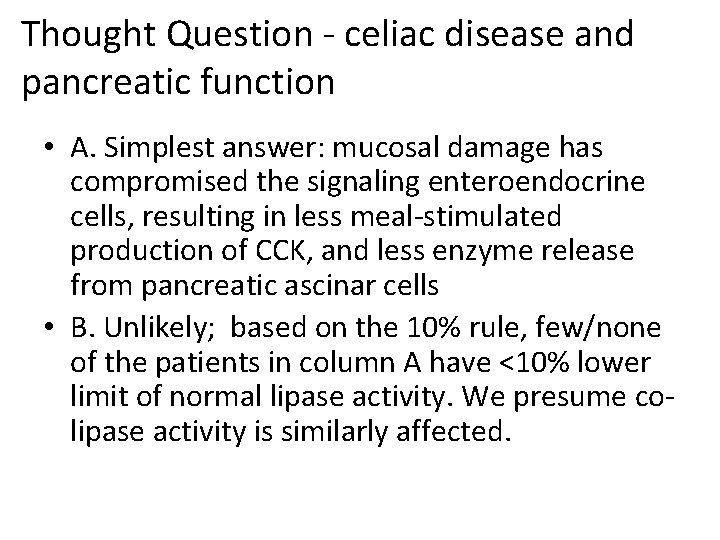
Thought Question - celiac disease and pancreatic function • A. Simplest answer: mucosal damage has compromised the signaling enteroendocrine cells, resulting in less meal-stimulated production of CCK, and less enzyme release from pancreatic ascinar cells • B. Unlikely; based on the 10% rule, few/none of the patients in column A have <10% lower limit of normal lipase activity. We presume colipase activity is similarly affected.
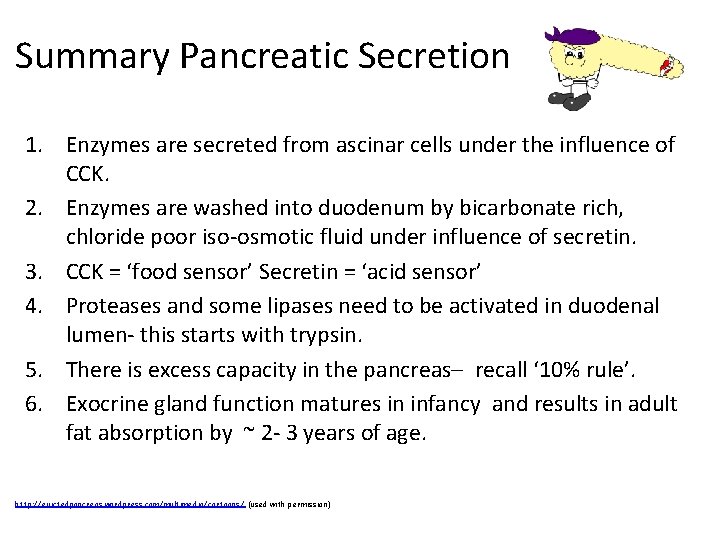
Summary Pancreatic Secretion 1. Enzymes are secreted from ascinar cells under the influence of CCK. 2. Enzymes are washed into duodenum by bicarbonate rich, chloride poor iso-osmotic fluid under influence of secretin. 3. CCK = ‘food sensor’ Secretin = ‘acid sensor’ 4. Proteases and some lipases need to be activated in duodenal lumen- this starts with trypsin. 5. There is excess capacity in the pancreas– recall ‘ 10% rule’. 6. Exocrine gland function matures in infancy and results in adult fat absorption by ~ 2 - 3 years of age. http: //evictedpancreas. wordpress. com/multimedia/cartoons/ (used with permission)
Boards-style question- Pancreas • Which of the following statements about control of pancreatic secretion is correct? A. Pancreatic enzyme secretion is maximally stimulated by intact protein in the lumen of the duodenum. B. All proteases are secreted as inactive ‘pro’ enzymes requiring activation in the duodenal lumen. C. Acidic milieu enhances the function of intraduodenal pancreatic enzymes. D. Pancreatic duct cells are maximally stimulated when the duodenal lumen is alkaline.
Please send any questions or comments to: • Christine. waasdorp@childrenscolorado. org or • Daniel. Kamin@childrens. harvard. edu