
Exercising Self Control DEVELOPING BETTER EATING HABITS IN
Exercising Self. Control DEVELOPING BETTER EATING HABITS IN ADULTS AND CHILDREN PRESENTED BY: AFCC HEALTHY CHRISTIAN MINISTRY
Self-Control - The ability to manage your actions, feelings and emotions.
Definitions Overweight- refers to an excess amount of body weight that may come from muscles, bone, fat and water Obesity- refers to an excess amount of body fat
Fast Facts More than 2 in 3 adults are considered to be overweight or obese More than 1 in 3 adults are obese More than 1 in 20 adults are extremely obese About 1/3 of children & adolescents (ages 6 -9) are overweight More than 1 in 6 children & adolescents (ages 6 -19) are obese
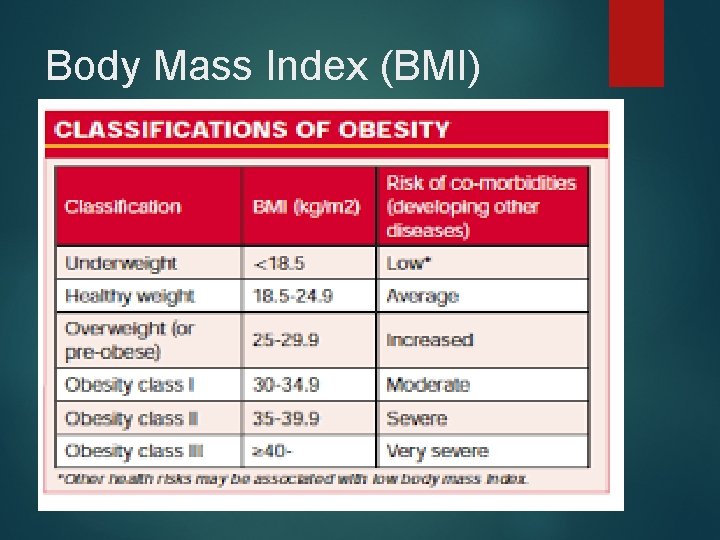
Body Mass Index (BMI)
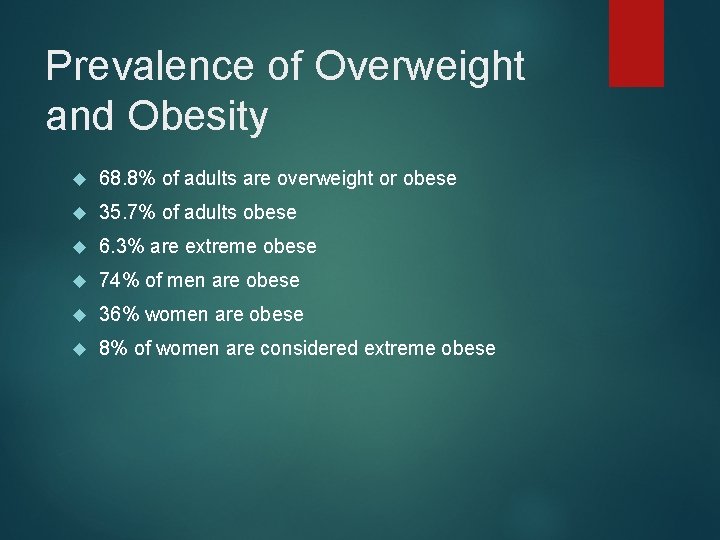
Prevalence of Overweight and Obesity 68. 8% of adults are overweight or obese 35. 7% of adults obese 6. 3% are extreme obese 74% of men are obese 36% women are obese 8% of women are considered extreme obese
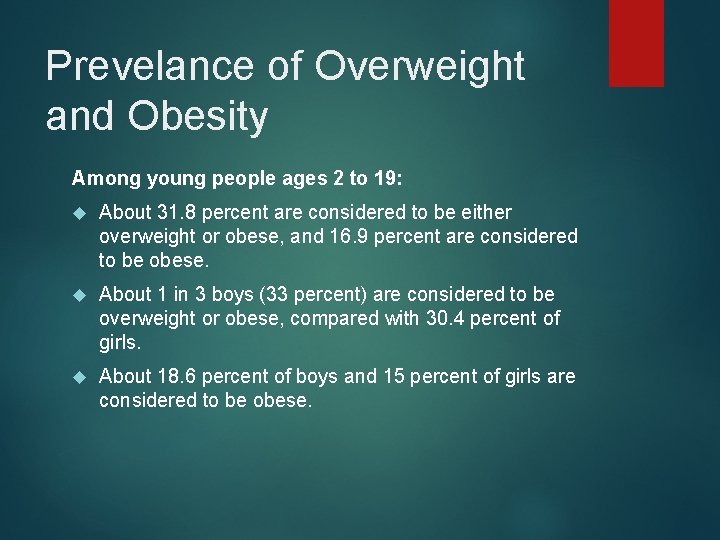
Prevelance of Overweight and Obesity Among young people ages 2 to 19: About 31. 8 percent are considered to be either overweight or obese, and 16. 9 percent are considered to be obese. About 1 in 3 boys (33 percent) are considered to be overweight or obese, compared with 30. 4 percent of girls. About 18. 6 percent of boys and 15 percent of girls are considered to be obese.
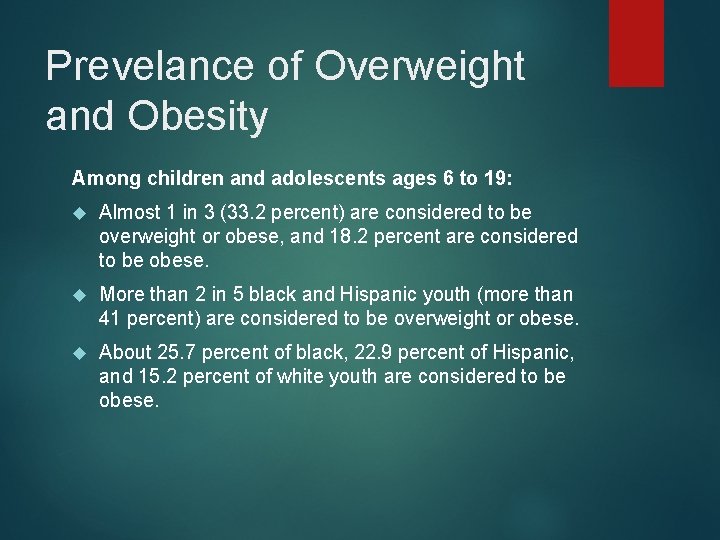
Prevelance of Overweight and Obesity Among children and adolescents ages 6 to 19: Almost 1 in 3 (33. 2 percent) are considered to be overweight or obese, and 18. 2 percent are considered to be obese. More than 2 in 5 black and Hispanic youth (more than 41 percent) are considered to be overweight or obese. About 25. 7 percent of black, 22. 9 percent of Hispanic, and 15. 2 percent of white youth are considered to be obese.
Bad Eating Habits 1. Skipping Meals 2. Food binging/ Mindless Eating 3. Emotinal eating 4. Eating during other activities/ looking at computer 5. Eating late at night 6. Eating too quickly 7. Eating Junk Food
Bad Eating Habits: The Fix 1. Have ready healthy foods you can consume on the run, such as whole fruit, yogurt, cereal bars and smoothies. 2. Eat from smaller dishes. Try swapping out your large dinner plate for a salad plate, and never eat straight from a container or package. 3. Find a new way to eleviate stress such walking, exercising, or even talking to someone about the issues. 4. Take several breaks when your in front of a computer (15 – 30 min), when watching TV be concious of what and how much your are eating.
Bad Eating Habits: The Fix 1. After dinner, teach yourself to think of the kitchen as being closed for the night, and brush your teeth. If a craving hits, wait 10 min, if it’s still there then get a small snack of fruit. 2. Slow down your eating, put your fork down between bites, chew your food thoroughly, take smaller bites and drink water while eating to make you feel fuller throughout the meal. 3. Do NOT eliminate the food totally from your diet, it will make you crave it more. Use self-control and eat it in moderation as special treats, NOT everyday.
Healthy Eating Habits 1. Using food as a comfort isn’t helpful (1 Cor 8: 8) 2. Think before you eat (Proverbs 23: 1 -3, MSG) 3. When worrying look to God for family connections (NOT food) (Psalm 68: 6)
Healthy Eating Habits 4. Bring your anxieties to God (not food) (Philippians 4: 6 -7). 5. Worrying about food waste time and life (Matthew 6: 25 -27) 6. Natural Foods straight from the Earth is healthiest. (Psalm 24: 1)
It takes discipline to be healthy (self-control) 1. Avoid compulsions (including food) of all kinds to honor God. (1 Corinthians 6: 12, 20) 2. Discipline is the road to a good life. (Proverbs 10: 17) 3. Hard work pays off, chasing fantasies doesn’t. (Proverbs 12: 11) 4. We need to put good intentions into practice to profit. (Proveerbs 14: 23) 5. Moderation is the key. (Proverbs 23: 20 -21)
EXERCISE, EX ERCISE 1. Walk 2. Yoga 3. Running 4. Hiking 5. Swimming 6. Weight training (increases short term muscle strength) ***Please consult your Physican before beginning exercise regimne. any
- Slides: 15