
Exercise Write a program that counts the number
Exercise Write a program that counts the number of unique words in a large text file (say, Moby Dick or the King James Bible). Store the words in a collection and report the # of unique words. Once you've created this collection, allow the user to search it to see whether various words appear in the text file. What collection is appropriate for this problem? 2
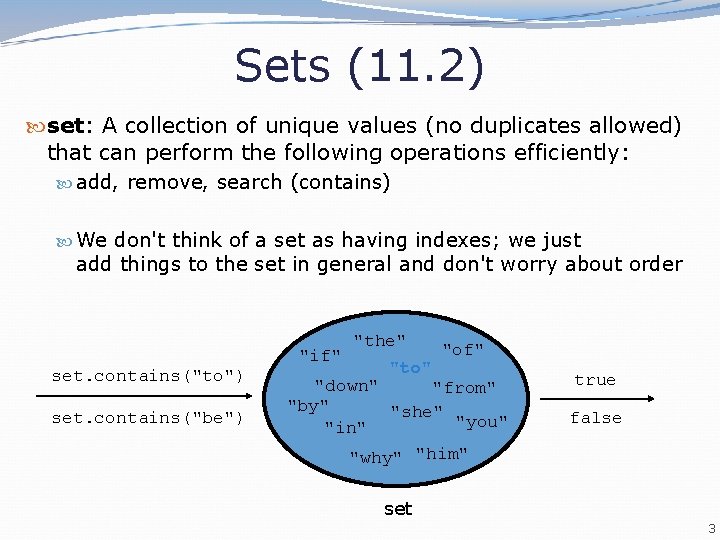
Sets (11. 2) set: A collection of unique values (no duplicates allowed) that can perform the following operations efficiently: add, remove, search (contains) We don't think of a set as having indexes; we just add things to the set in general and don't worry about order set. contains("to") set. contains("be") "if" "the" "to" "of" "down" "from" "by" "she" "you" "in" "why" "him" true false set 3
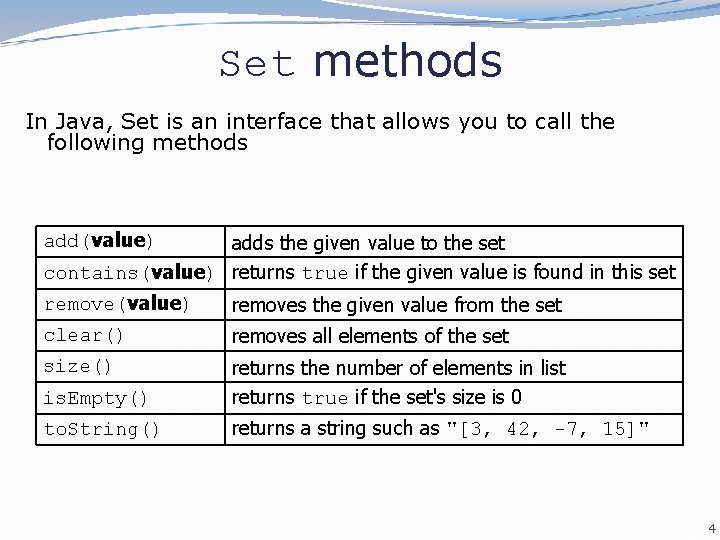
Set methods In Java, Set is an interface that allows you to call the following methods adds the given value to the set contains(value) returns true if the given value is found in this set add(value) removes the given value from the set clear() removes all elements of the set size() is. Empty() returns the number of elements in list returns true if the set's size is 0 to. String() returns a string such as "[3, 42, -7, 15]" 4

Set implementation in Java, sets are represented by Set type in java. util Set is implemented by Hash. Set and Tree. Set classes Hash. Set: implemented using a "hash table" array; very fast: O(1) for all operations elements are stored in unpredictable order Tree. Set: implemented using a "binary search tree"; pretty fast: O(log N) for all operations elements are stored in sorted order Set<Integer> numbers = new Tree. Set<Integer>(); Set<String> words = new Hash. Set<String>(); 5
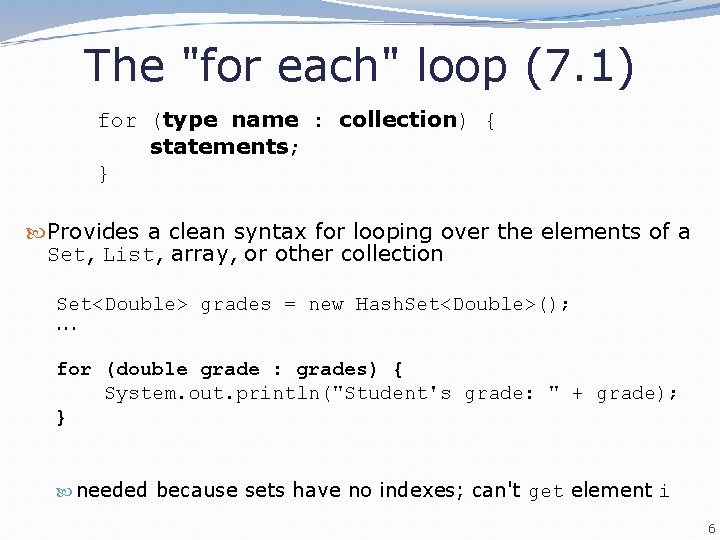
The "for each" loop (7. 1) for (type name : collection) { statements; } Provides a clean syntax for looping over the elements of a Set, List, array, or other collection Set<Double> grades = new Hash. Set<Double>(); . . . for (double grade : grades) { System. out. println("Student's grade: " + grade); } needed because sets have no indexes; can't get element i 6

Maps (11. 3) map: Holds a set of key-value pairs, where each key is unique a. k. a. "dictionary", "associative array", "hash" map. get("the") 56 key value "at" 43 key value "you" 22 "in" 37 key value "why" 14 "me" 22 key "the" value 56 set 8
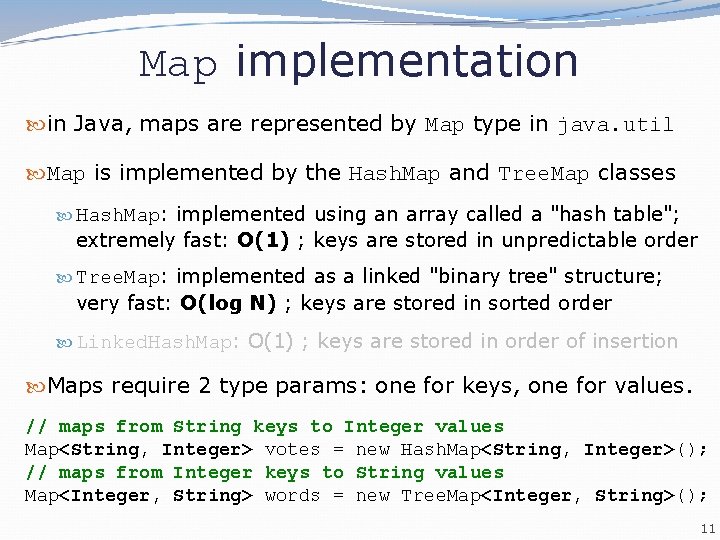
Map implementation in Java, maps are represented by Map type in java. util Map is implemented by the Hash. Map and Tree. Map classes Hash. Map: implemented using an array called a "hash table"; extremely fast: O(1) ; keys are stored in unpredictable order Tree. Map: implemented as a linked "binary tree" structure; very fast: O(log N) ; keys are stored in sorted order Linked. Hash. Map: O(1) ; keys are stored in order of insertion Maps require 2 type params: one for keys, one for values. // maps from String keys to Integer values Map<String, Integer> votes = new Hash. Map<String, Integer>(); // maps from Integer keys to String values Map<Integer, String> words = new Tree. Map<Integer, String>(); 11
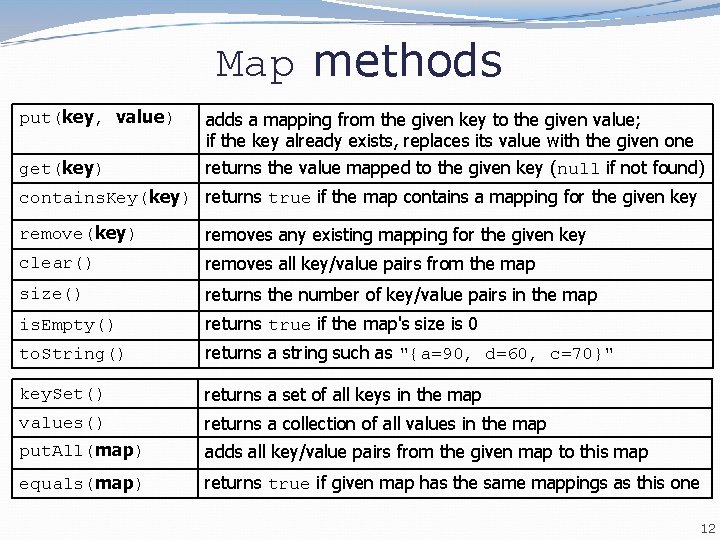
Map methods put(key, value) get(key) adds a mapping from the given key to the given value; if the key already exists, replaces its value with the given one returns the value mapped to the given key (null if not found) contains. Key(key) returns true if the map contains a mapping for the given key remove(key) removes any existing mapping for the given key clear() removes all key/value pairs from the map size() returns the number of key/value pairs in the map is. Empty() returns true if the map's size is 0 to. String() returns a string such as "{a=90, d=60, c=70}" key. Set() returns a set of all keys in the map values() returns a collection of all values in the map put. All(map) adds all key/value pairs from the given map to this map equals(map) returns true if given map has the same mappings as this one 12
15
Languages and grammars (formal) language: A set of words or symbols. grammar: A description of a language that describes which sequences of symbols are allowed in that language. describes language syntax (rules) but not semantics (meaning) can be used to generate strings from a language, or to determine whether a given string belongs to a given language 16
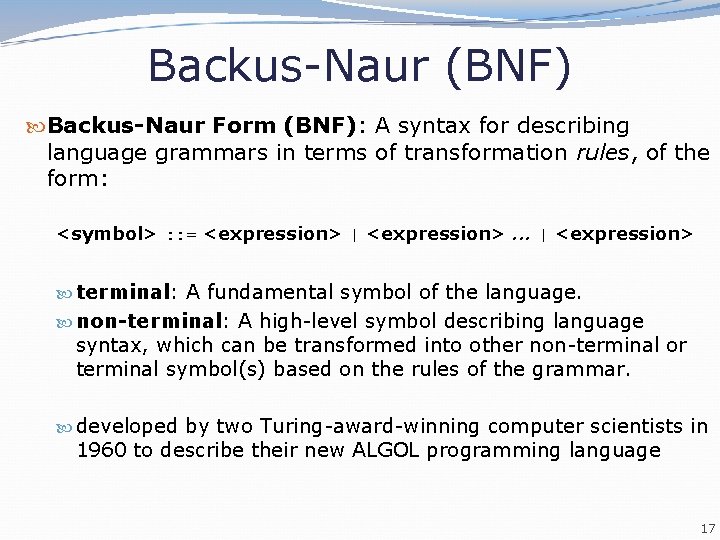
Backus-Naur (BNF) Backus-Naur Form (BNF): A syntax for describing language grammars in terms of transformation rules, of the form: <symbol> : : = <expression> | <expression>. . . | <expression> terminal: A fundamental symbol of the language. non-terminal: A high-level symbol describing language syntax, which can be transformed into other non-terminal or terminal symbol(s) based on the rules of the grammar. developed by two Turing-award-winning computer scientists in 1960 to describe their new ALGOL programming language 17
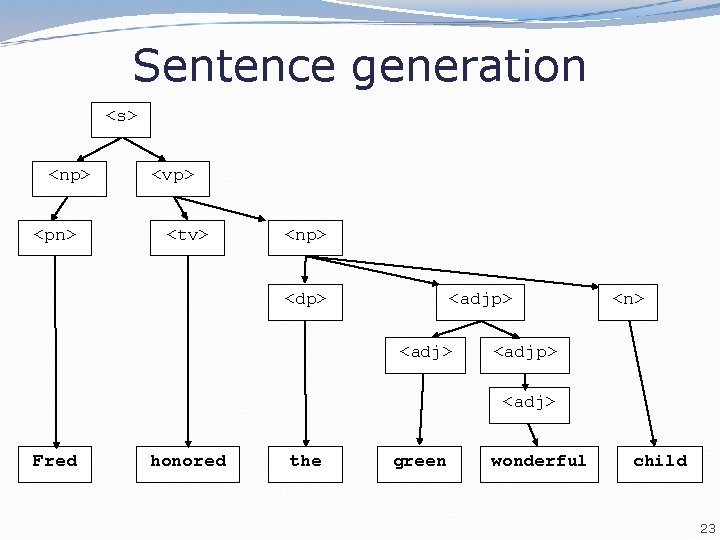
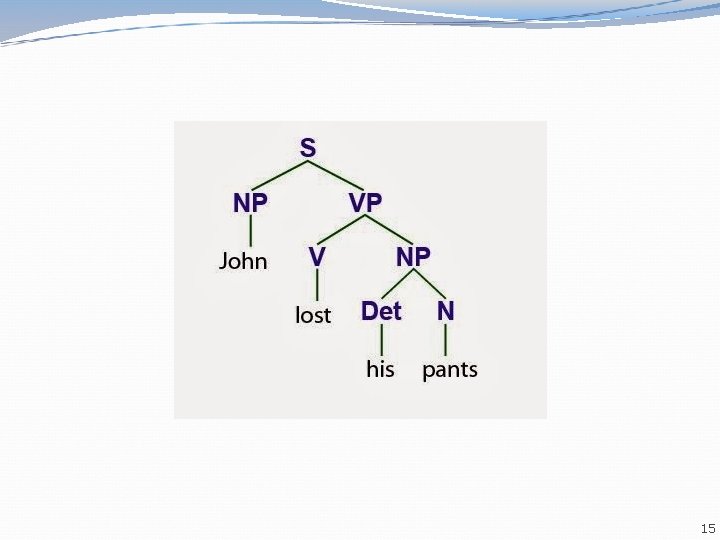
Sentence generation <s> <np> <pn> <vp> <tv> <np> <dp> <adj> <n> <adjp> <adj> Fred honored the green wonderful child 23
- Slides: 12