
Exercise One Exploring rhythm through clapping This exercise
- Slides: 7
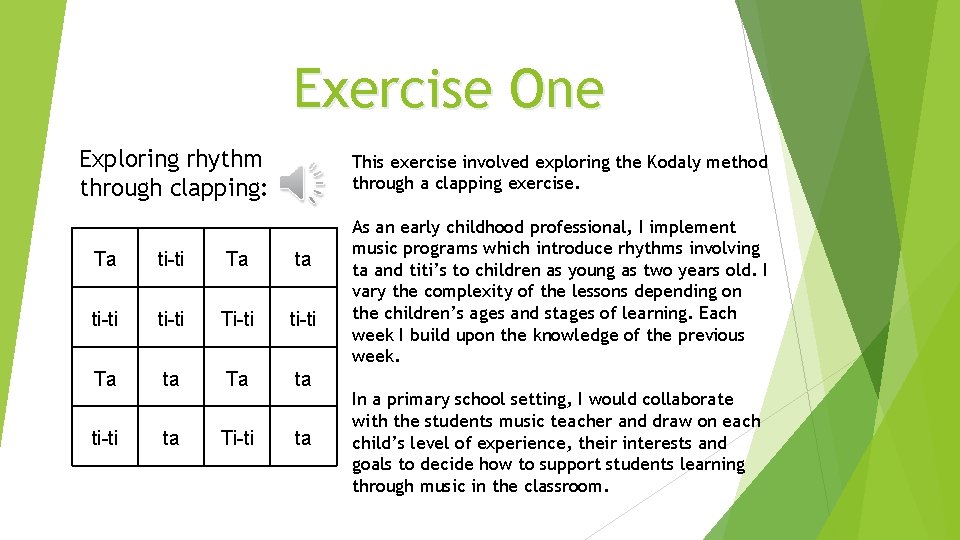
Exercise One Exploring rhythm through clapping: This exercise involved exploring the Kodaly method through a clapping exercise. Ta ti-ti Ta ta ti-ti Ti-ti ti-ti Ta ta ti-ti ta Ti-ti ta As an early childhood professional, I implement music programs which introduce rhythms involving ta and titi’s to children as young as two years old. I vary the complexity of the lessons depending on the children’s ages and stages of learning. Each week I build upon the knowledge of the previous week. In a primary school setting, I would collaborate with the students music teacher and draw on each child’s level of experience, their interests and goals to decide how to support students learning through music in the classroom.
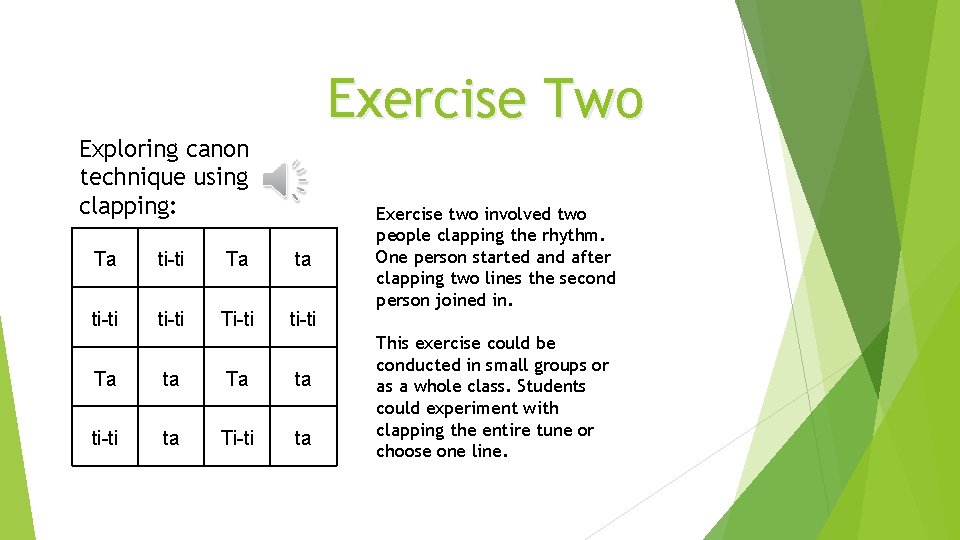
Exercise Two Exploring canon technique using clapping: Ta ti-ti Ta ta ti-ti Ti-ti ti-ti Ta ta ti-ti ta Ti-ti ta Exercise two involved two people clapping the rhythm. One person started and after clapping two lines the second person joined in. This exercise could be conducted in small groups or as a whole class. Students could experiment with clapping the entire tune or choose one line.
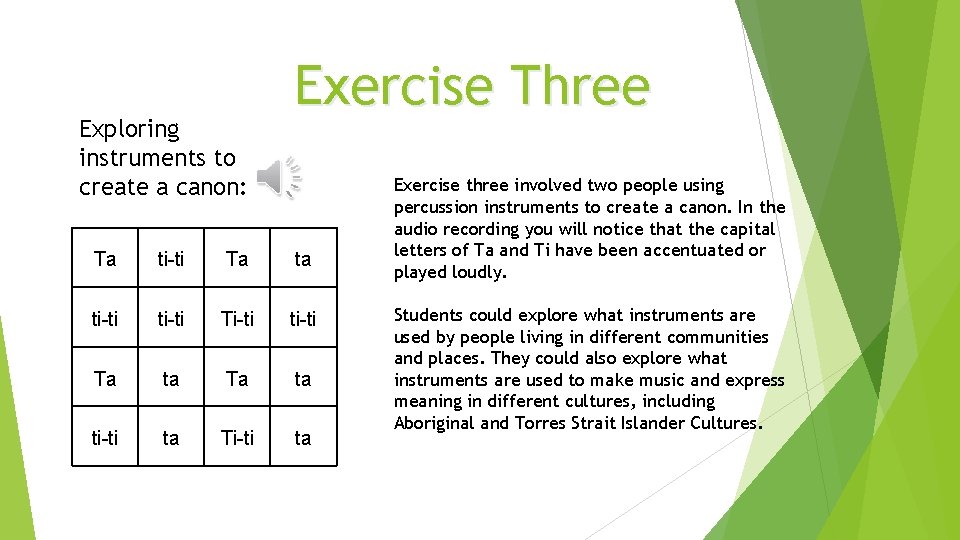
Exploring instruments to create a canon: Exercise Three Ta ti-ti Ta ta ti-ti Ti-ti ti-ti Ta ta ti-ti ta Ti-ti ta Exercise three involved two people using percussion instruments to create a canon. In the audio recording you will notice that the capital letters of Ta and Ti have been accentuated or played loudly. Students could explore what instruments are used by people living in different communities and places. They could also explore what instruments are used to make music and express meaning in different cultures, including Aboriginal and Torres Strait Islander Cultures.
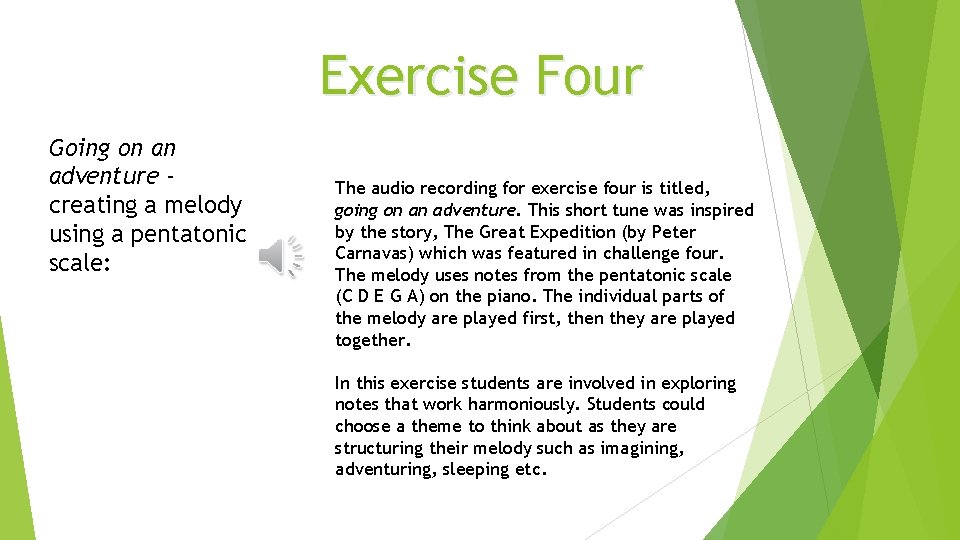
Exercise Four Going on an adventure creating a melody using a pentatonic scale: The audio recording for exercise four is titled, going on an adventure. This short tune was inspired by the story, The Great Expedition (by Peter Carnavas) which was featured in challenge four. The melody uses notes from the pentatonic scale (C D E G A) on the piano. The individual parts of the melody are played first, then they are played together. In this exercise students are involved in exploring notes that work harmoniously. Students could choose a theme to think about as they are structuring their melody such as imagining, adventuring, sleeping etc.
Exercise Five Going on an adventure - using a crescendo and a finale: The audio recording in exercise five uses music dynamics to build a crescendo and also includes an ending. In this exercise students explore dynamics and expression as they create loud and soft sounds. They also experiment with form and structure as they decide where and how to end their melody.
Exercise Six Going on an adventure – using canon and a chord: In exercise six, the fist line in part of the melody is played. This line is repeated and the next part of the melody is played to create a canon. This section also incorporates the use of a chord. This exercise involves critical and creative thinking as students use their aural skills to listen and keep in time with the rhythm, beat and sequencing of the melody.
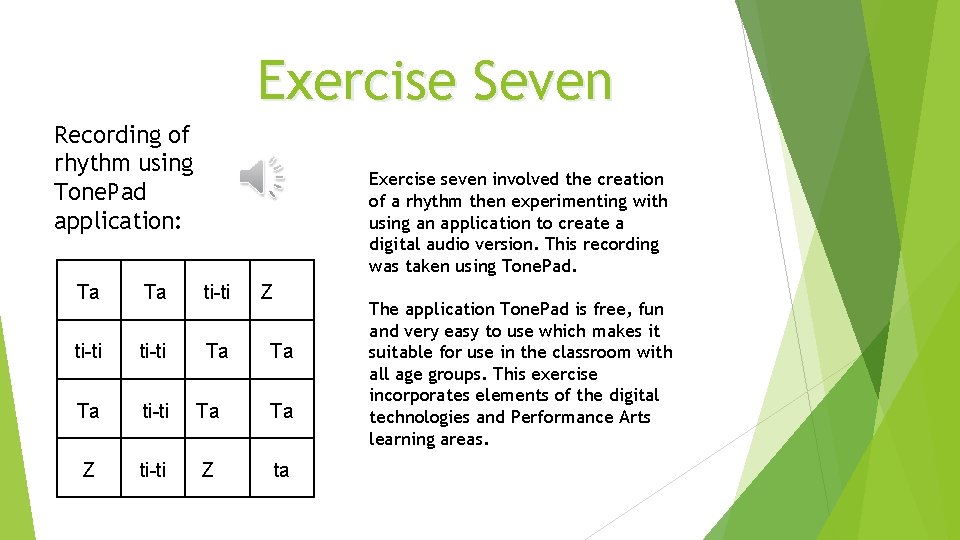
Exercise Seven Recording of rhythm using Tone. Pad application: Exercise seven involved the creation of a rhythm then experimenting with using an application to create a digital audio version. This recording was taken using Tone. Pad. Ta Ta ti-ti Z ti-ti Ta Ta Z ti-ti Z ta Ta The application Tone. Pad is free, fun and very easy to use which makes it suitable for use in the classroom with all age groups. This exercise incorporates elements of the digital technologies and Performance Arts learning areas.