
Exercise Metabolism Chapter 4 pp 53 68 1
Exercise Metabolism Chapter 4 pp 53 -68
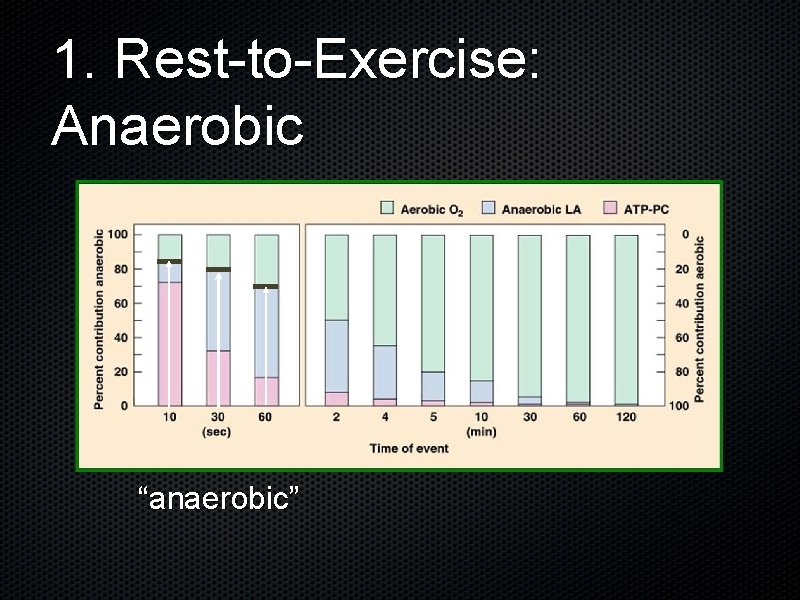
1. Rest-to-Exercise: Anaerobic “anaerobic”
2. Rest-to-Exercise: Aerobic Example. . Assume standing requires 15 ATP and 0. 4 liters/min of oxygen Assume running at 6 mph requires 100 ATP and 1. 5 liter/min of oxygen A person can go from standing to running 6 mph in a mater of seconds. But, it takes 2 -3 minutes for the oxygen requirement to go from 0. 4 to 1. 5 liters/min Where does the ATP needed to run 6 m. p. h come from until adequate oxygen can be supplied?
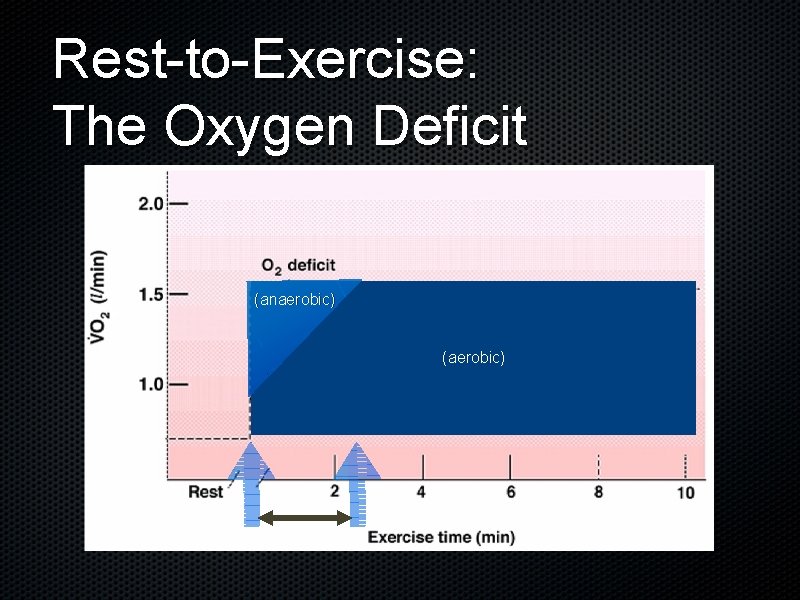
Rest-to-Exercise: The Oxygen Deficit (anaerobic) (aerobic)

3. Recovery What needs to happen in recovery? ATP-PCr system P + Cr + energy ➡ PCr Glycolysis? Where does the energy comes from? Lactic acid removal from muscle fiber

Lactic Acid Removal Where? Heart and Type I Muscle Fibers How? Lactic acid ➞ Pyruvic Acid ➞ Acetyl Co-A ➞ Krebs Cycle (aerobic system)
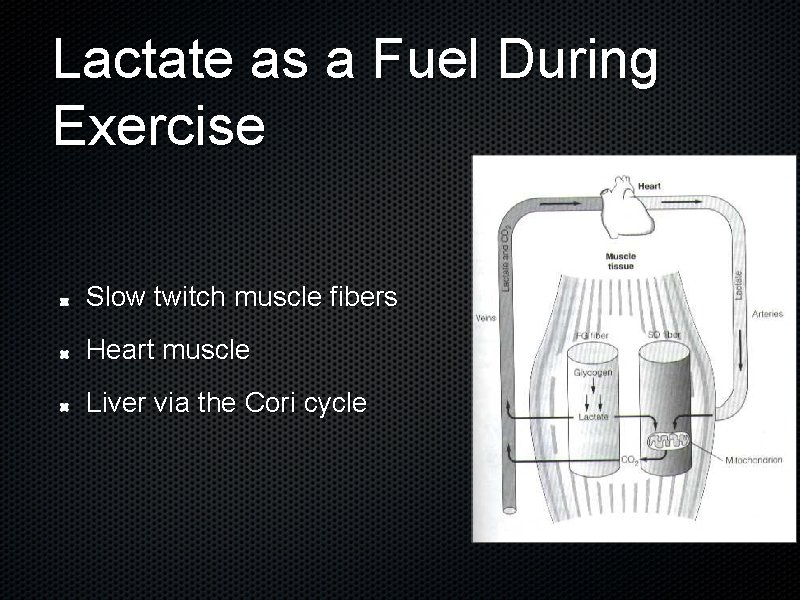
Lactate as a Fuel During Exercise Slow twitch muscle fibers Heart muscle Liver via the Cori cycle
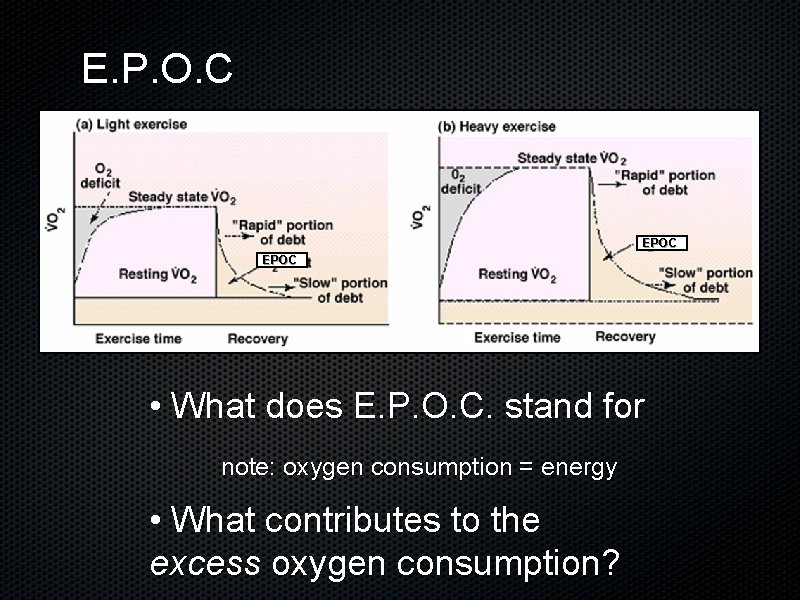
E. P. O. C EPOC • What does E. P. O. C. stand for note: oxygen consumption = energy • What contributes to the excess oxygen consumption?
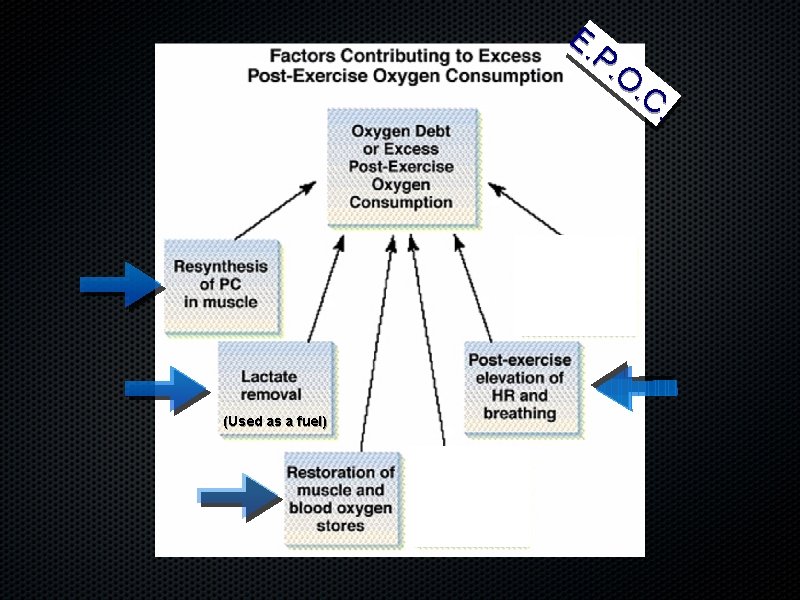
E. P. O. C. (Used as a fuel)
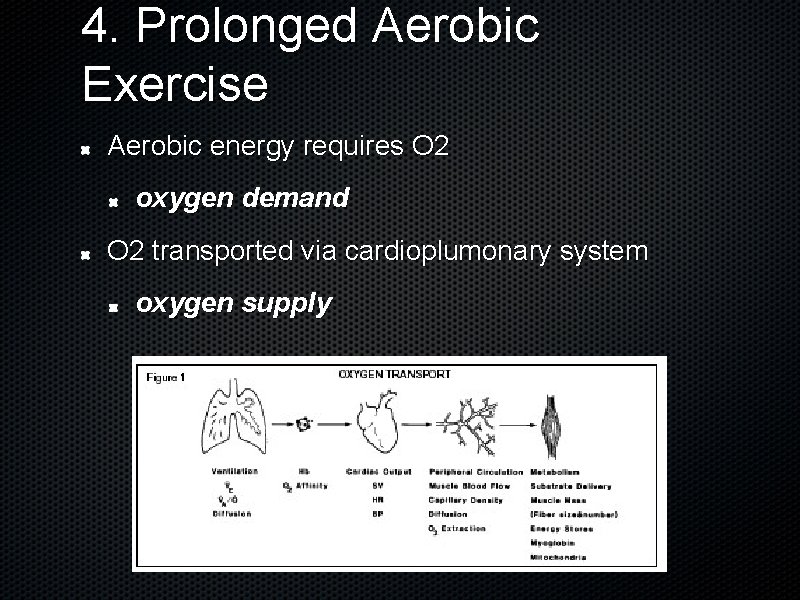
4. Prolonged Aerobic Exercise Aerobic energy requires O 2 oxygen demand O 2 transported via cardioplumonary system oxygen supply
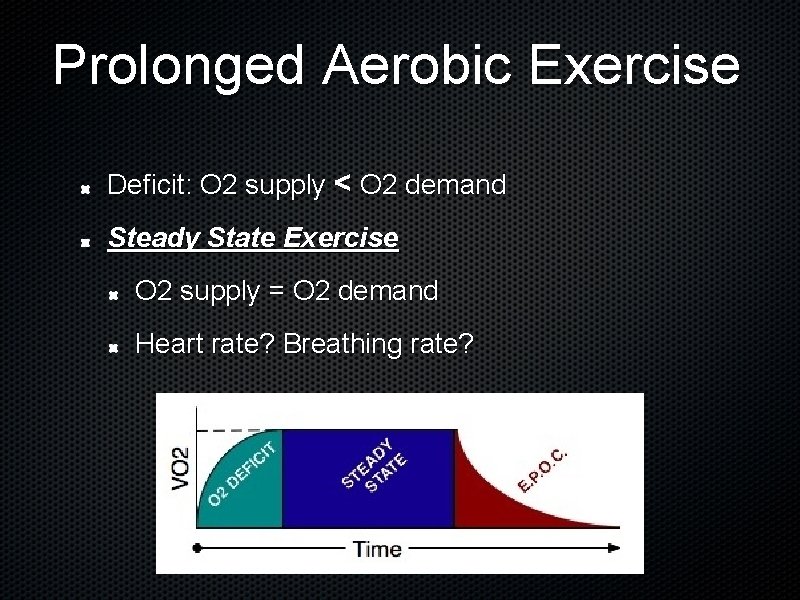
Prolonged Aerobic Exercise Deficit: O 2 supply < O 2 demand Steady State Exercise O 2 supply = O 2 demand Heart rate? Breathing rate?
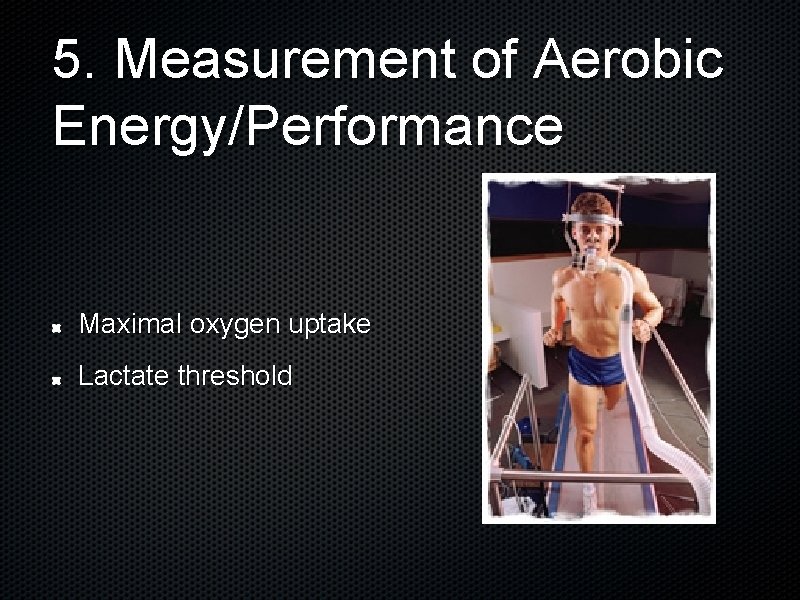
5. Measurement of Aerobic Energy/Performance Maximal oxygen uptake Lactate threshold
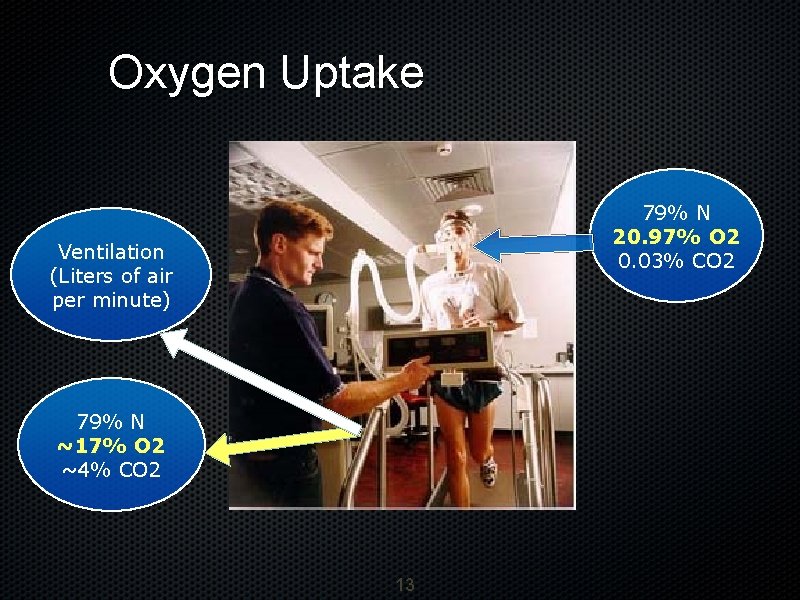
Oxygen Uptake 79% N 20. 97% O 2 0. 03% CO 2 Ventilation (Liters of air per minute) 79% N ~17% O 2 ~4% CO 2 13
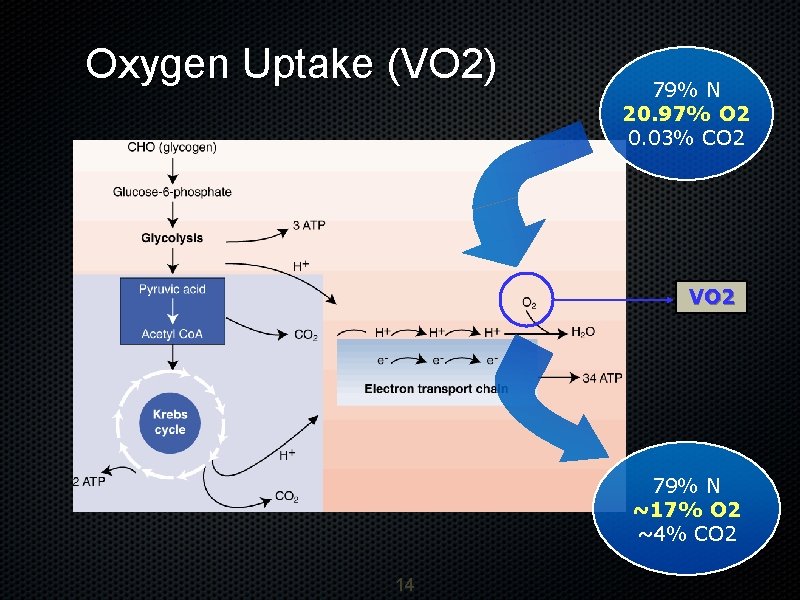
Oxygen Uptake (VO 2) 79% N 20. 97% O 2 0. 03% CO 2 VO 2 79% N ~17% O 2 ~4% CO 2 14
Oxygen Uptake (VO 2) What does it measure? How is it expressed? VO 2 ml/kg/min VO 2 liters/min
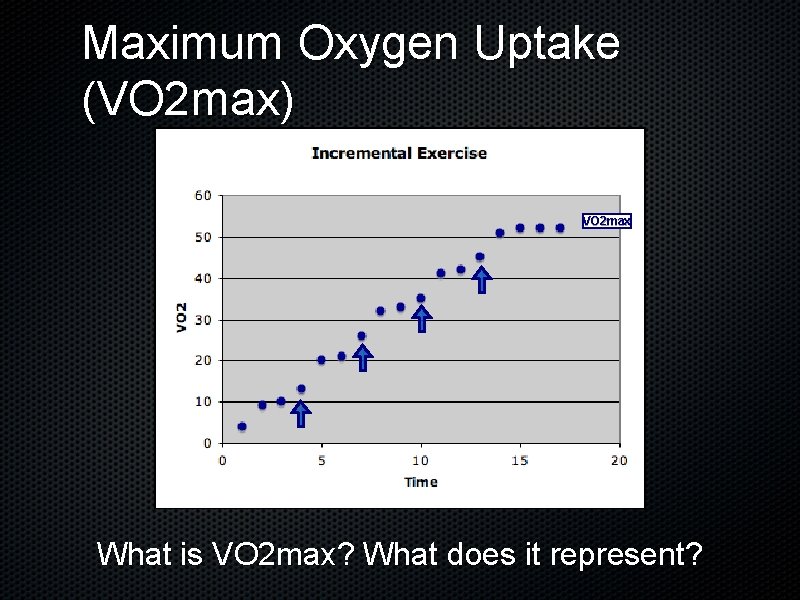
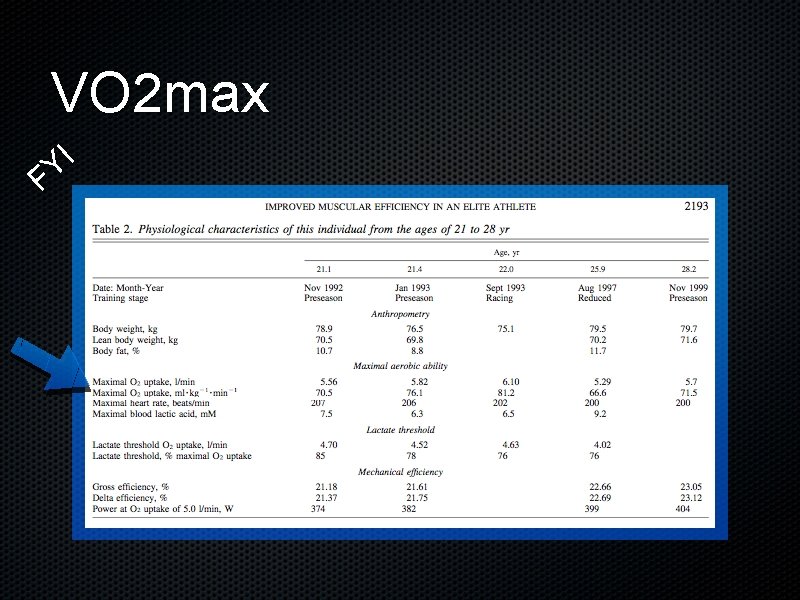
Maximum Oxygen Uptake (VO 2 max) VO 2 max What is VO 2 max? What does it represent?
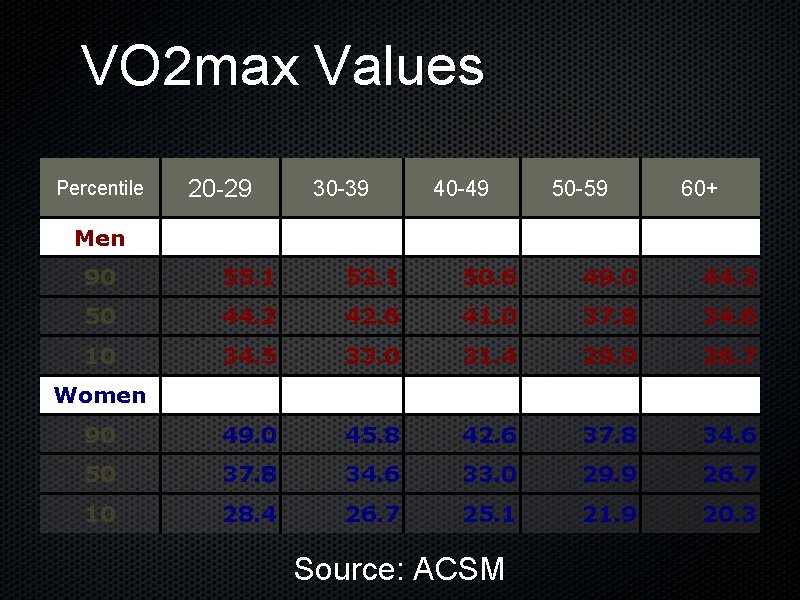
VO 2 max Values Percentile 20 -29 30 -39 40 -49 50 -59 60+ Men 90 55. 1 52. 1 50. 6 49. 0 44. 2 50 44. 2 42. 6 41. 0 37. 8 34. 6 10 34. 5 33. 0 31. 4 29. 9 26. 7 90 49. 0 45. 8 42. 6 37. 8 34. 6 50 37. 8 34. 6 33. 0 29. 9 26. 7 10 28. 4 26. 7 25. 1 21. 9 20. 3 Women Source: ACSM
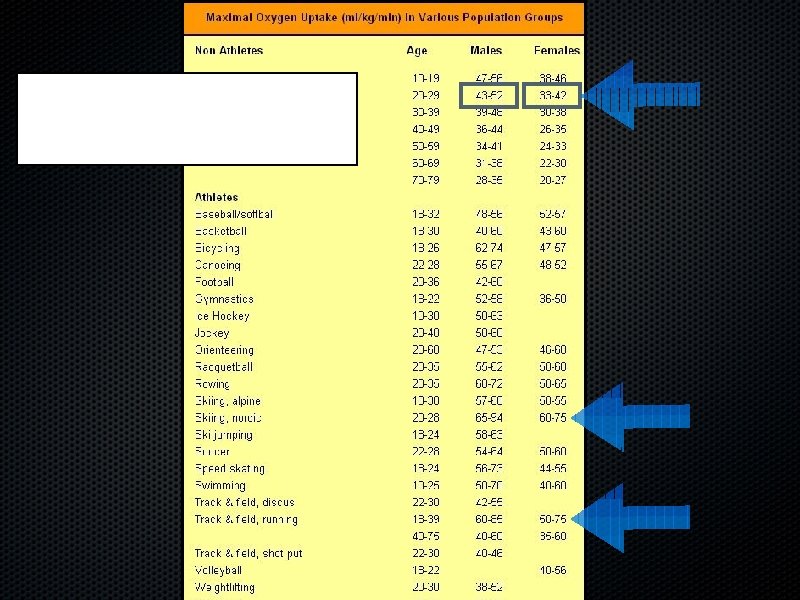
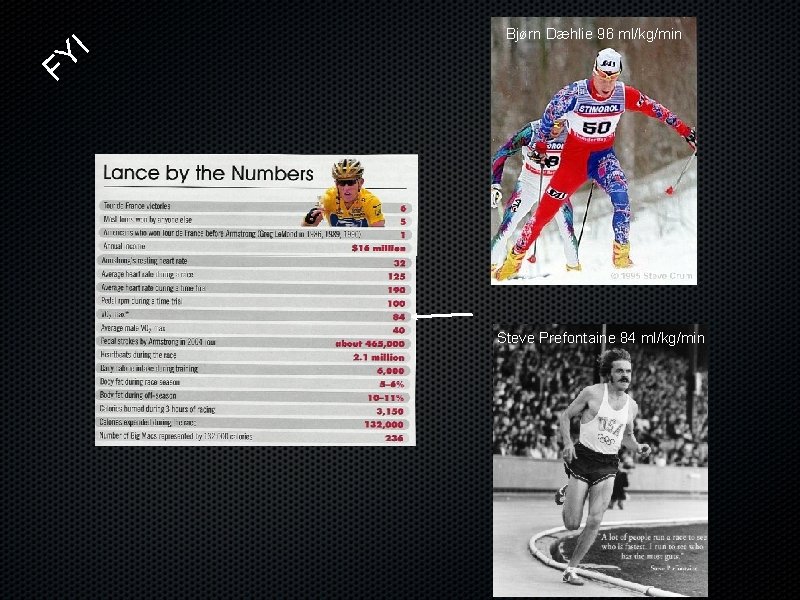
* General Population, Female, Aged 20 -29: 35 -43 ml/kg/min * General Population, Male, Aged 20 -29: 44 -51 * US College Track, Male: 57. 4 * College Students, Male: 44. 6 * Highest Recorded Female (Cross-Country Skier): 74 * Highest Recorded Male (Cross-Country Skier): 94
VO 2 max I Y F
I FY Bjørn Dæhlie 96 ml/kg/min Steve Prefontaine 84 ml/kg/min
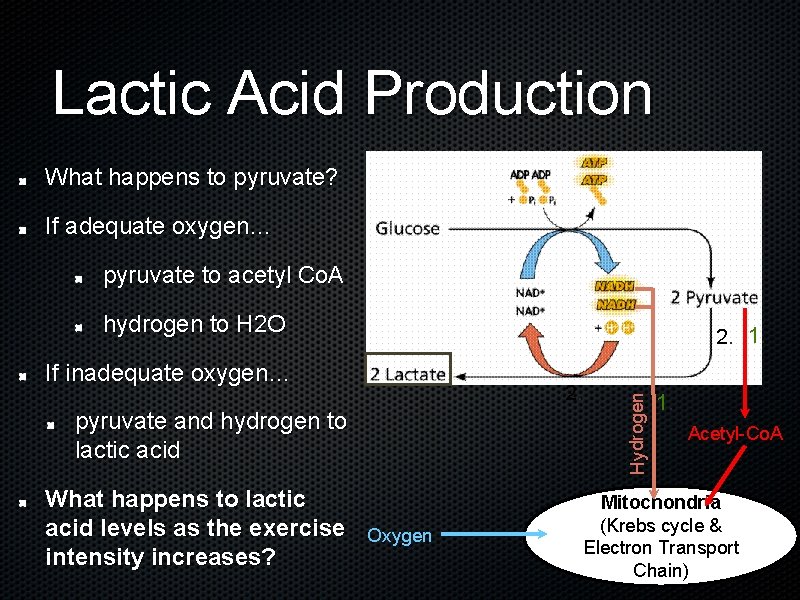
Lactic Acid Production What happens to pyruvate? If adequate oxygen… pyruvate to acetyl Co. A hydrogen to H 2 O If inadequate oxygen… 2. pyruvate and hydrogen to lactic acid What happens to lactic acid levels as the exercise intensity increases? Oxygen Hydrogen 2. 1. Acetyl-Co. A Mitochondria (Krebs cycle & Electron Transport Chain)
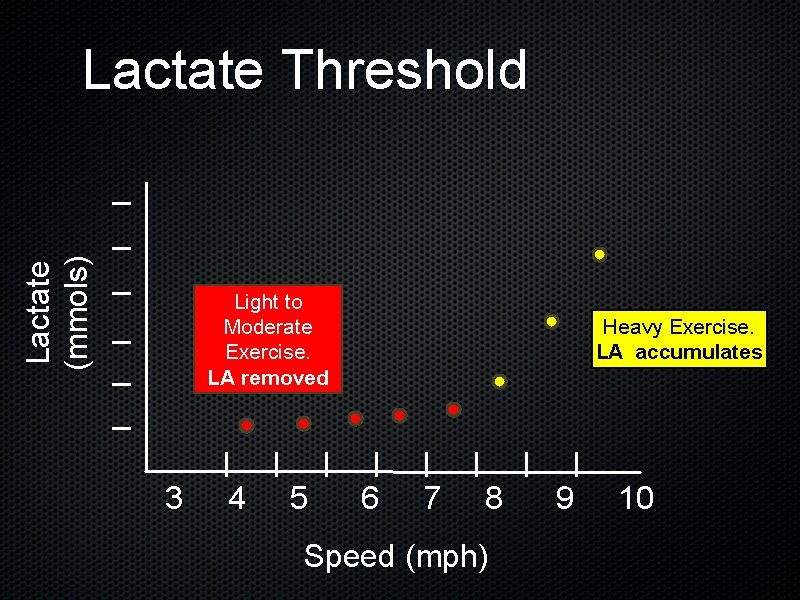
Lactate (mmols) Lactate Threshold Light to Moderate Exercise. LA removed 3 4 5 Heavy Exercise. LA accumulates 6 7 8 Speed (mph) 9 10
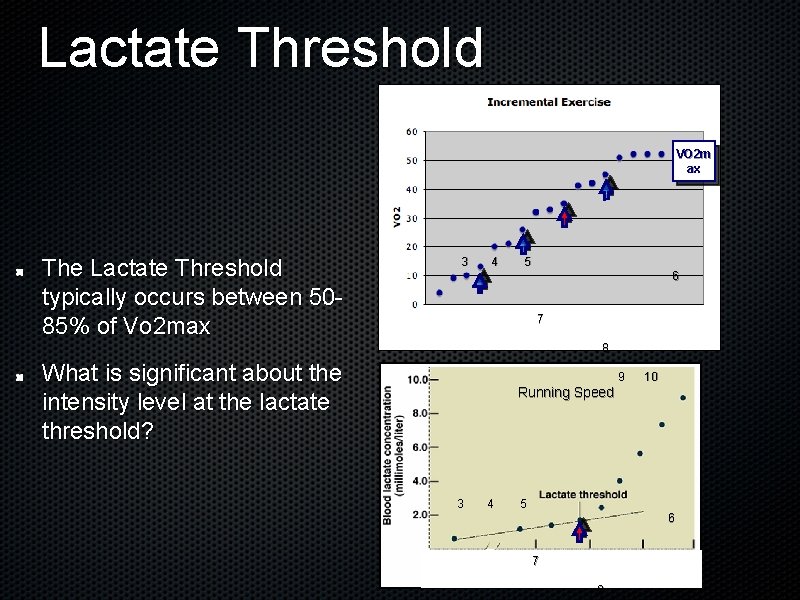
Lactate Threshold VO 2 m ax The Lactate Threshold typically occurs between 5085% of Vo 2 max 3 4 5 6 7 8 What is significant about the intensity level at the lactate threshold? 9 10 Running Speed 3 4 5 6 7 8
7. Fuel Utilization During Exercise
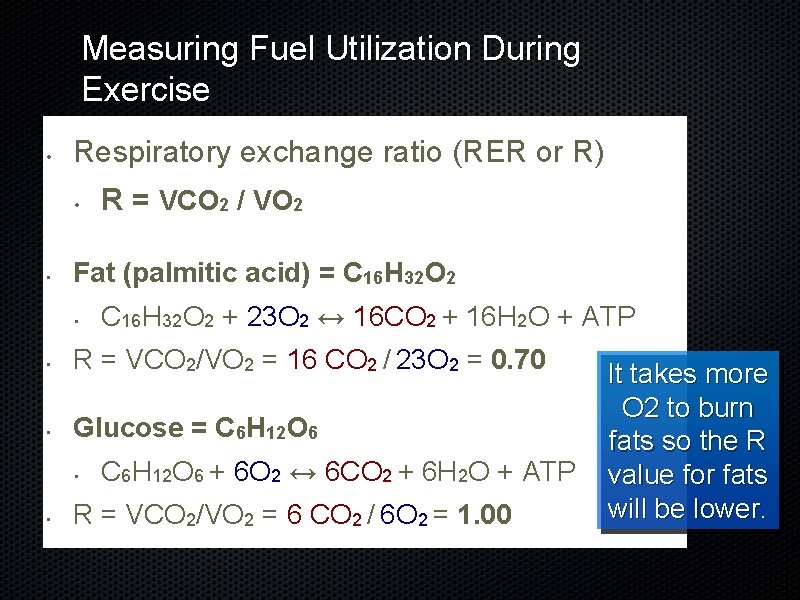
Measuring Fuel Utilization During Exercise • Respiratory exchange ratio (RER or R) • • R = VCO 2 / VO 2 Fat (palmitic acid) = C 16 H 32 O 2 • C 16 H 32 O 2 + 23 O 2 ↔ 16 CO 2 + 16 H 2 O + ATP • R = VCO 2/VO 2 = 16 CO 2 / 23 O 2 = 0. 70 • Glucose = C 6 H 12 O 6 • • C 6 H 12 O 6 + 6 O 2 ↔ 6 CO 2 + 6 H 2 O + ATP R = VCO 2/VO 2 = 6 CO 2 / 6 O 2 = 1. 00 It takes more O 2 to burn fats so the R value for fats will be lower.
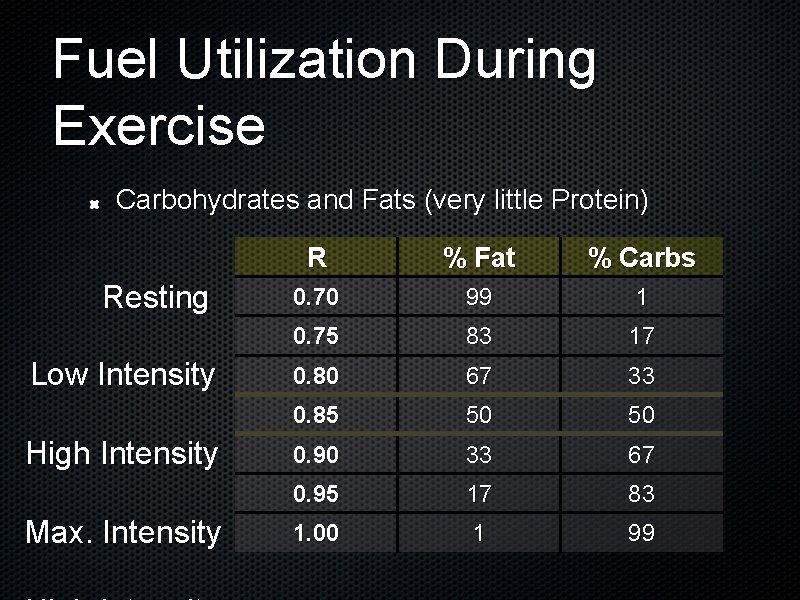
Fuel Utilization During Exercise Carbohydrates and Fats (very little Protein) Resting Low Intensity High Intensity Max. Intensity R % Fat % Carbs 0. 70 99 1 0. 75 83 17 0. 80 67 33 0. 85 50 50 0. 90 33 67 0. 95 17 83 1. 00 1 99
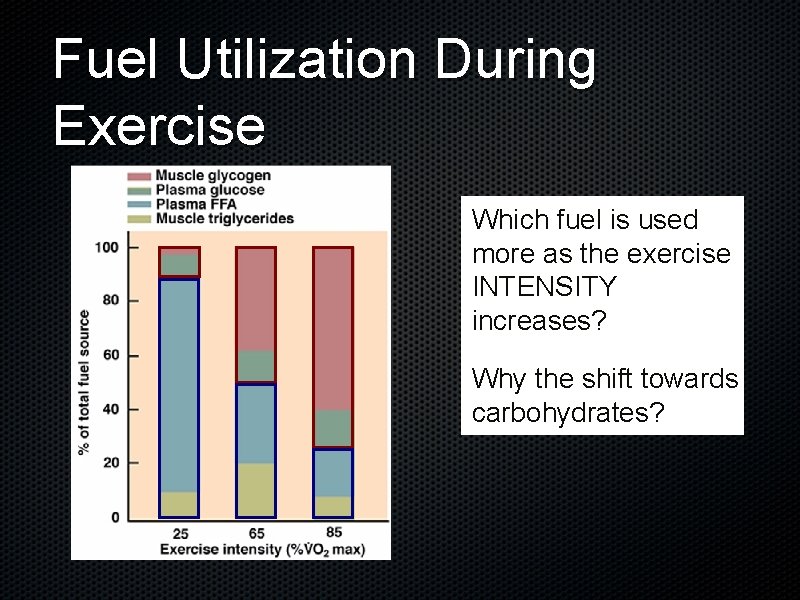
Fuel Utilization During Exercise Which fuel is used more as the exercise INTENSITY increases? Why the shift towards carbohydrates?
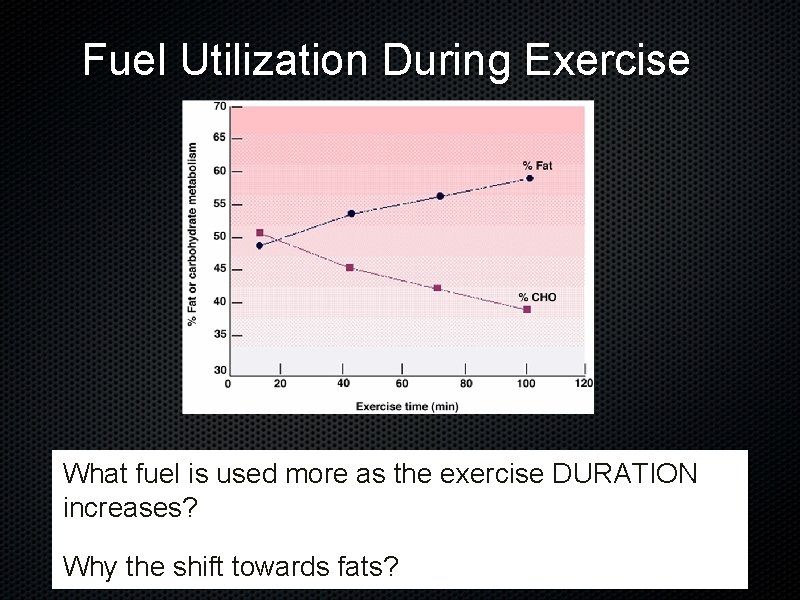
Fuel Utilization During Exercise What fuel is used more as the exercise DURATION increases? Why the shift towards fats?
8. Fuels for Exercise
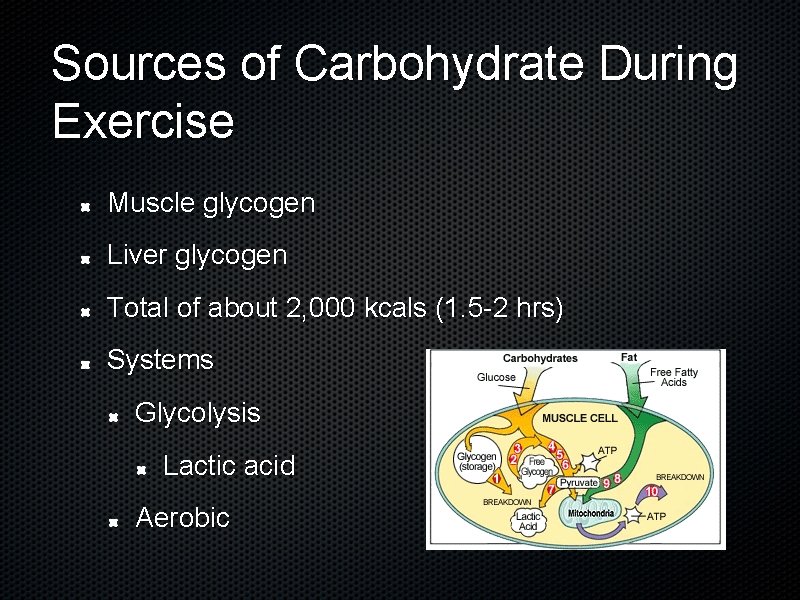
Sources of Carbohydrate During Exercise Muscle glycogen Liver glycogen Total of about 2, 000 kcals (1. 5 -2 hrs) Systems Glycolysis Lactic acid Aerobic
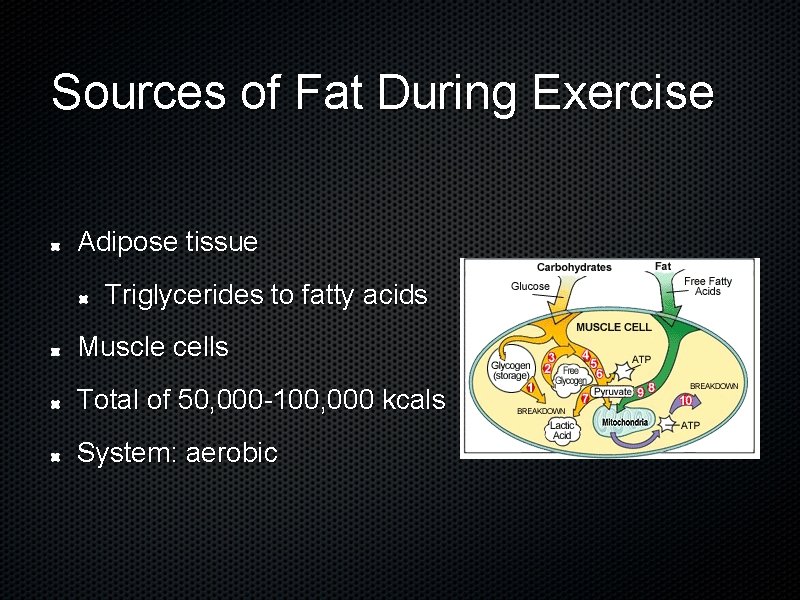
Sources of Fat During Exercise Adipose tissue Triglycerides to fatty acids Muscle cells Total of 50, 000 -100, 000 kcals System: aerobic
Protein for Energy During Exercise Skeletal muscle Amino acids and the Cori cycle Why is protein not an optimal fuel source?
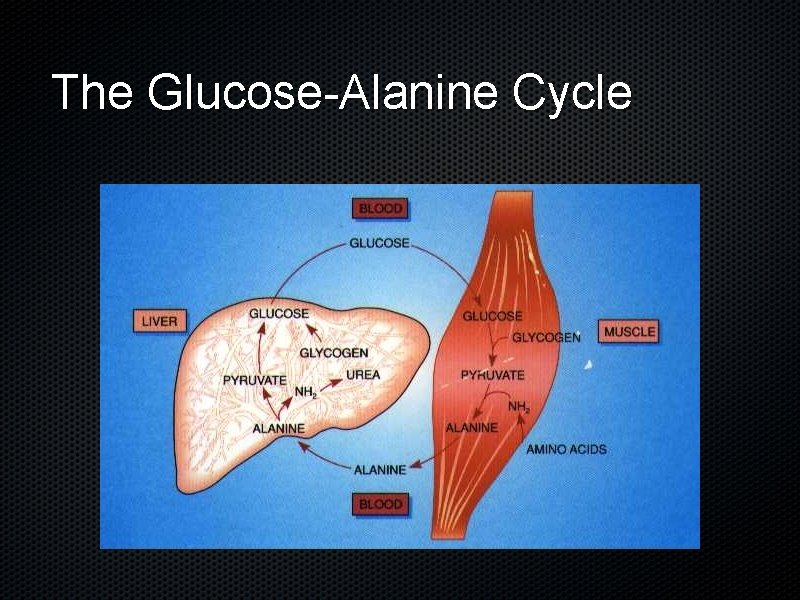
The Glucose-Alanine Cycle
Gluconeogensis The Cori cycle and the Glucose-Alanine cycle What do they have in common? Gluconeogensis
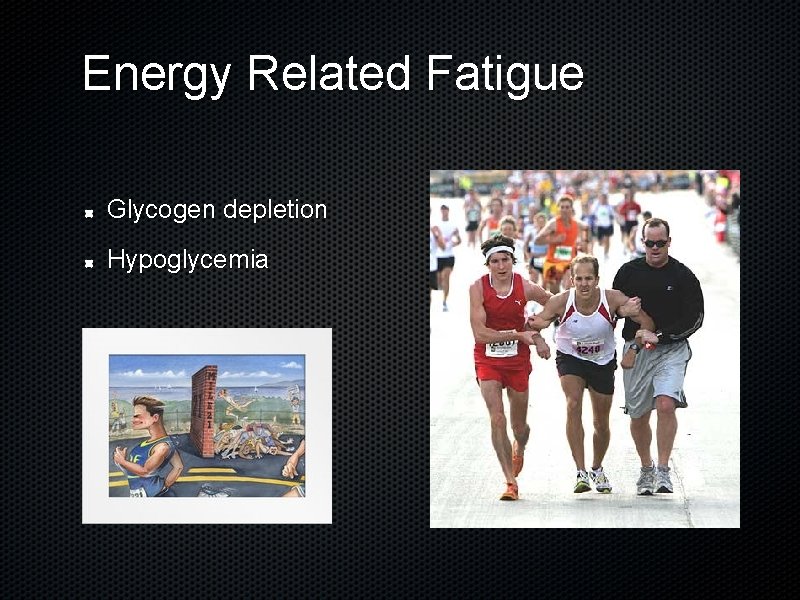
Energy Related Fatigue Glycogen depletion Hypoglycemia
- Slides: 35