
Exercise for Dialysis Patients Amanda Newberry M Ed
Exercise for Dialysis Patients Amanda Newberry, M. Ed. Exercise Physiologist University of Virginia Renal Services CRN Meeting November 2010
Objectives l To provide knowledge and supporting data on benefits of intradialytic exercise l To encourage incorporating exercise into routine patient care plan l To provide information on beginning a unit based exercise program l To describe the procedures and operations of a current unit based exercise program
Physical Functioning l The ability of an individual to perform activities required in their daily lives. l PF of dialysis patients is LOW!
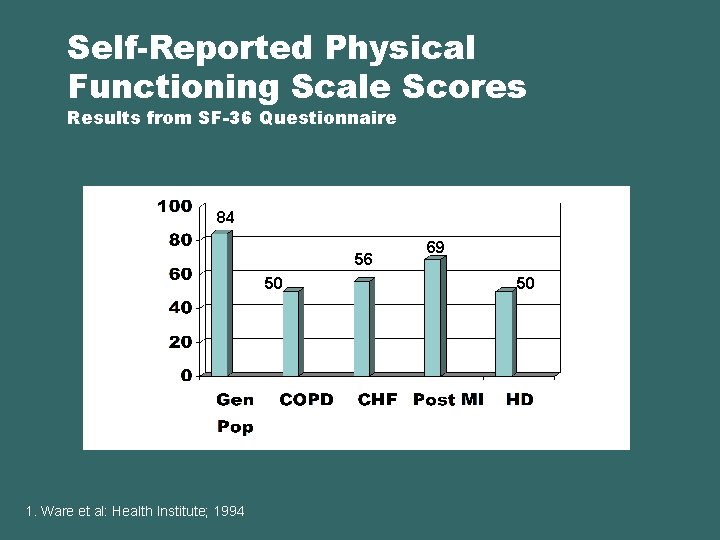
Self-Reported Physical Functioning Scale Scores Results from SF-36 Questionnaire 84 56 50 1. Ware et al: Health Institute; 1994 69 50
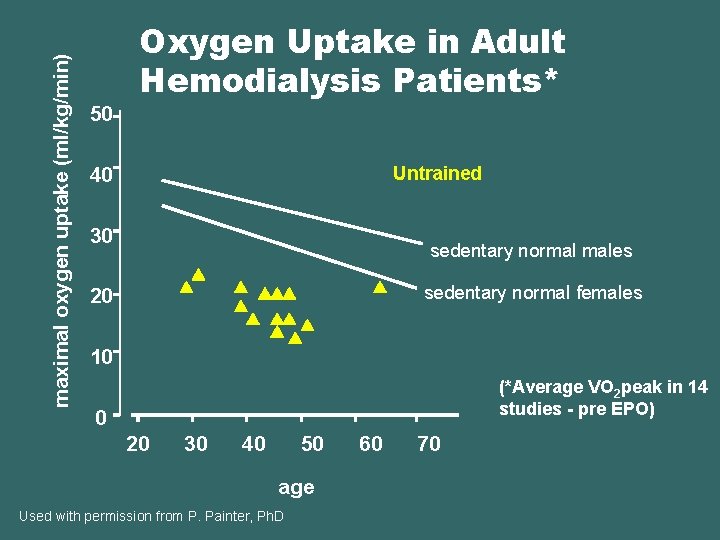
maximal oxygen uptake (ml/kg/min) 50 Oxygen Uptake in Adult Hemodialysis Patients* 40 Untrained 30 sedentary normal males sedentary normal females 20 10 (*Average VO 2 peak in 14 studies - pre EPO) 0 20 30 40 50 age Used with permission from P. Painter, Ph. D 60 70
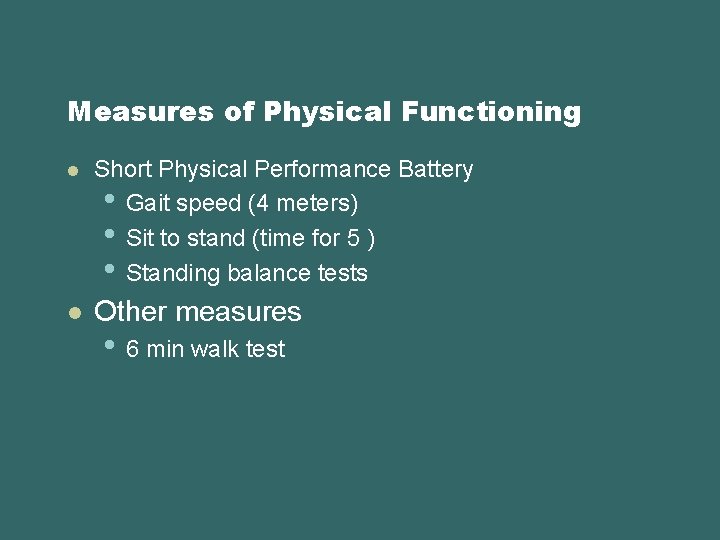
Measures of Physical Functioning l Short Physical Performance Battery • Gait speed (4 meters) • Sit to stand (time for 5 ) • Standing balance tests l Other measures • 6 min walk test
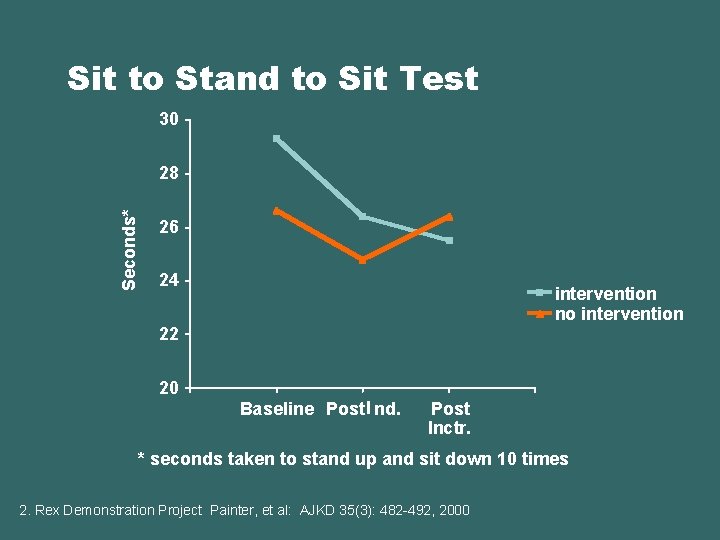
Sit to Stand to Sit Test 30 p=. 004 Seconds* 28 26 24 intervention no intervention 22 20 Baseline Post I nd. Post Inctr. * seconds taken to stand up and sit down 10 times 2. Rex Demonstration Project Painter, et al: AJKD 35(3): 482 -492, 2000
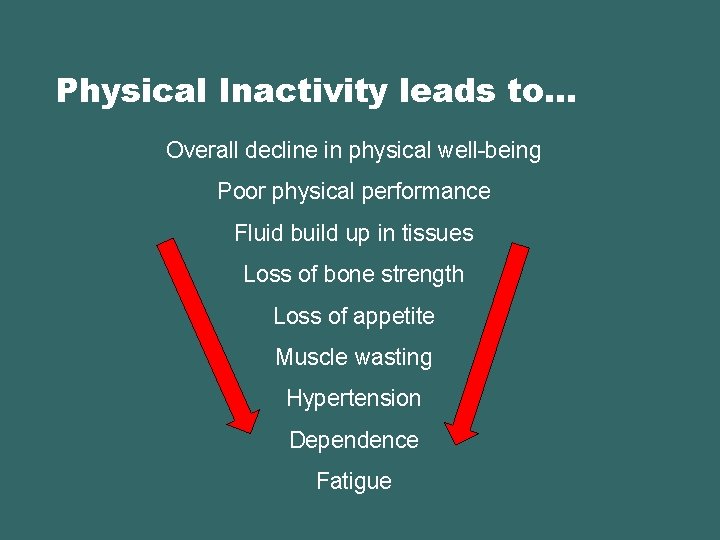
Physical Inactivity leads to… Overall decline in physical well-being Poor physical performance Fluid build up in tissues Loss of bone strength Loss of appetite Muscle wasting Hypertension Dependence Fatigue
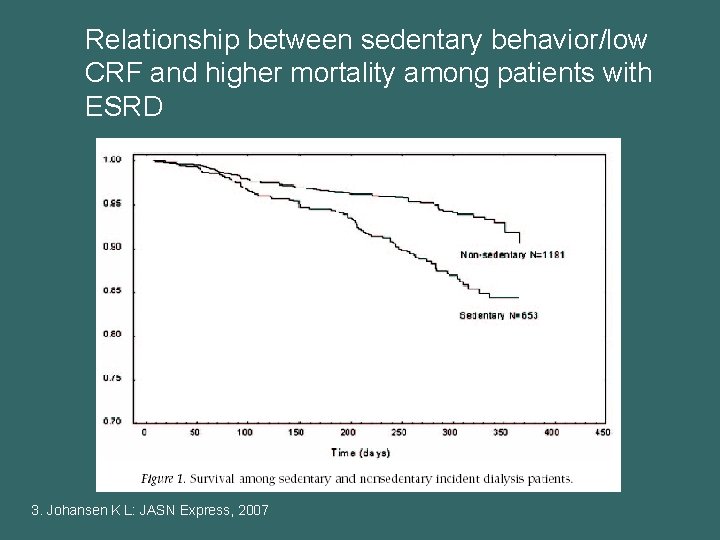
Relationship between sedentary behavior/low CRF and higher mortality among patients with ESRD 3. Johansen K L: JASN Express, 2007

Benefits
Physiological Benefits l l l l l Reduced risk of cardiovascular mortality Decreased use of antihypertensive medications Favorable adaptation of body composition Reduced C-reactive protein/increased albumin Improved removal of toxins by dialysis Improved exercise capacity Improved blood pressure control Improved lipid profile • Esp increased HDL and reduced TG • Prior to EPO therapy Increased hematocrit Improved glucose regulation
Psychological Benefits l l l l Reduced subjective fatigue symptoms Improved perception of physical functioning Improved perception of general health Reduced anxiety Improved mental health Reduced experience of bodily pain Increased vitality Improved psychological profile • Reduced anxiety, hostility, and depression, and increased participation in pleasant activities
Functional Benefits l l Improved muscle strength Increased 6 -min walk distance Reduced risk of falls in the elderly Maintenance of independence
Clearance l During dialysis: • Urea removed from blood • Urea retained in peripheral body compartments • Urea and creatinine distributed in body water • Muscle water content high • Muscle mass = ~40 -45% total body weight • Much of solute mass will be held within muscles • Some body tissue is unexposed to dialysis 4. Kong, et al: Nephrol Dial Transplant. 1999; 14: 2927 -2931.
Clearance l After dialysis: l With exercise: • Urea re-equilibrates and a rebound results • Limits the efficiency of dialysis • Muscle blood flow increases • Potential increase from 3 -4 ml/min per 100 g to 80 ml/min per 100 g • More tissue mass is exposed to the dialysis treatment 4. Kong, et al: Nephrol Dial Transplant. 1999; 14: 2927 -2931.
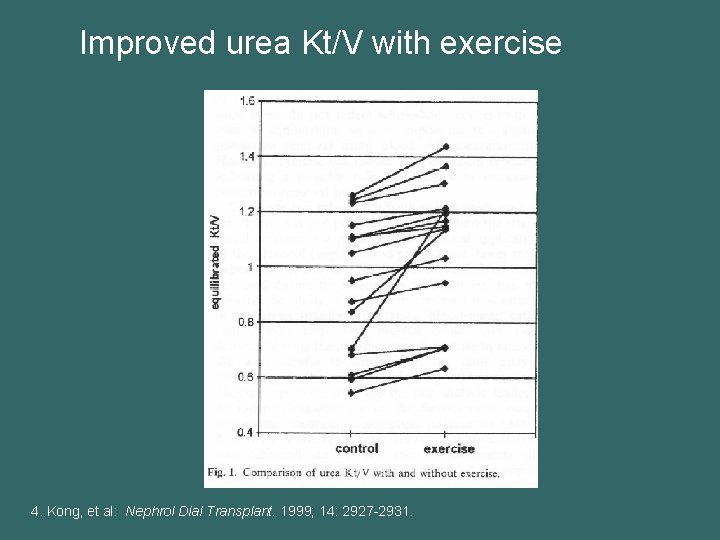
Improved urea Kt/V with exercise 4. Kong, et al: Nephrol Dial Transplant. 1999; 14: 2927 -2931.
Cramping l l l Timing of exercise Type of exercise Intensity of exercise Start slowly, Progress gradually!!!

Exercise: A Vital Sign
Exercise Rx l Surgeon General’s report: “significant health benefits can be obtained by including a moderate amount of physical activity…. on most, if not all, days of the week”.

American College of Sports Medicine (ACSM) “Exercise Prescription: every patient, every visit, every time” www. exerciseismedicine. org
Exercise is Medicine. TM l Guiding principles: • Exercise and physical activity are important to health and the prevention and treatment of many chronic diseases • More should be done to address physical activity and exercise in healthcare settings • ACSM and AMA are making efforts to bring a greater focus on physical activity and exercise in healthcare settings
Program Implementation
New Program Resources l Life Options Rehabilitation Advisory Council (LORAC)5 • “Exercise for the Dialysis Patient” • A Guide for the Dialysis Team • Author: Patricia Painter, Ph. D l Staff Responsibility to Exercise • Carlson L, Carey S. ACKD Vol 6, No 2 pp 172180, 19996
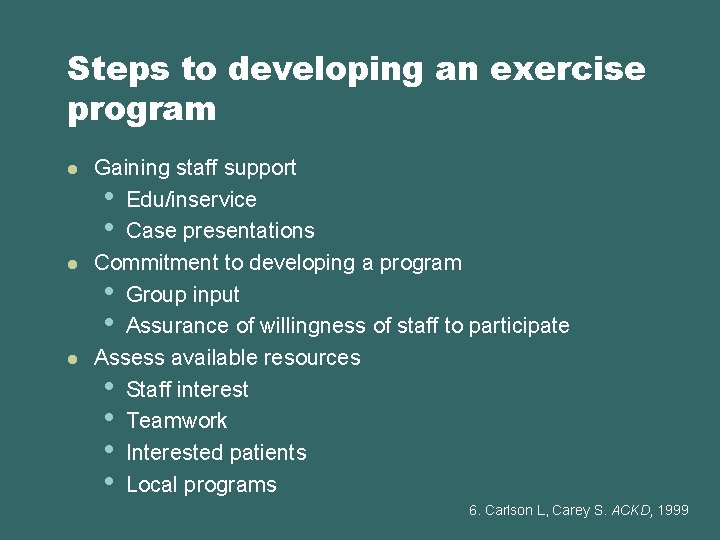
Steps to developing an exercise program l l l Gaining staff support • Edu/inservice • Case presentations Commitment to developing a program • Group input • Assurance of willingness of staff to participate Assess available resources • Staff interest • Teamwork • Interested patients • Local programs 6. Carlson L, Carey S. ACKD, 1999

Steps to developing an exercise program l l l Develop a program • Smaller working groups (care planning, motivation/education, exercise programming) • Staff responsibilities identified • Facilitate a sense of ownership amongst staff Start program • Start slowly (one shift, one bay, interested pts) • Progress gradually Ongoing evaluation • CQI • Patient reassessment 6. Carlson L, Carey S. ACKD, 1999 • Patient programs
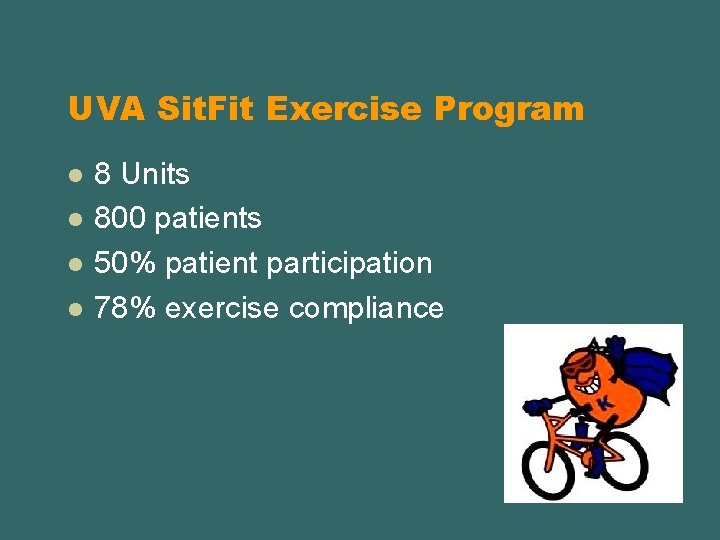
UVA Sit. Fit Exercise Program l l 8 Units 800 patients 50% patient participation 78% exercise compliance
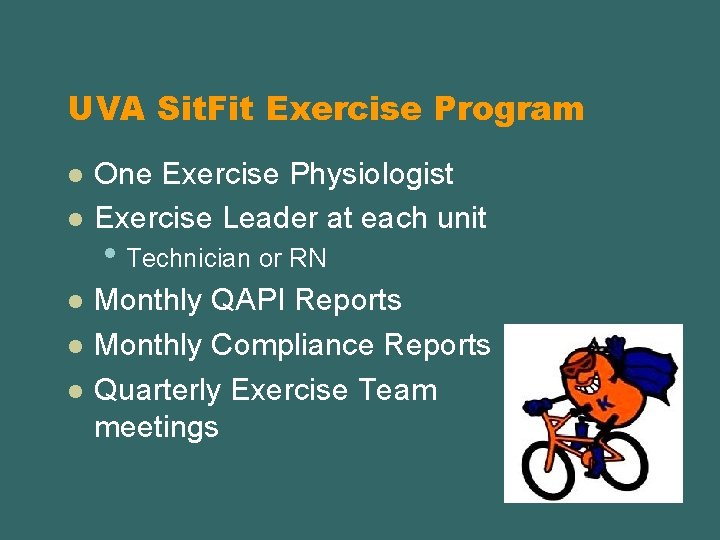
UVA Sit. Fit Exercise Program l l l One Exercise Physiologist Exercise Leader at each unit • Technician or RN Monthly QAPI Reports Monthly Compliance Reports Quarterly Exercise Team meetings
Beyond the science… l l l Setting expectations Potential for patient to exercise Motivating a non-motivated patient
Barriers to Exercise l l l Sickness Fatigue Lack of equipment Lack of motivation Depression Lack of encouragement Most can be resolved through exercise!

Influences on Patient Physical Activity Physician Family Patient Physical Activity Health Care System 6. Carlson L, Carey S. ACKD, 1999 Society Health Care Workers
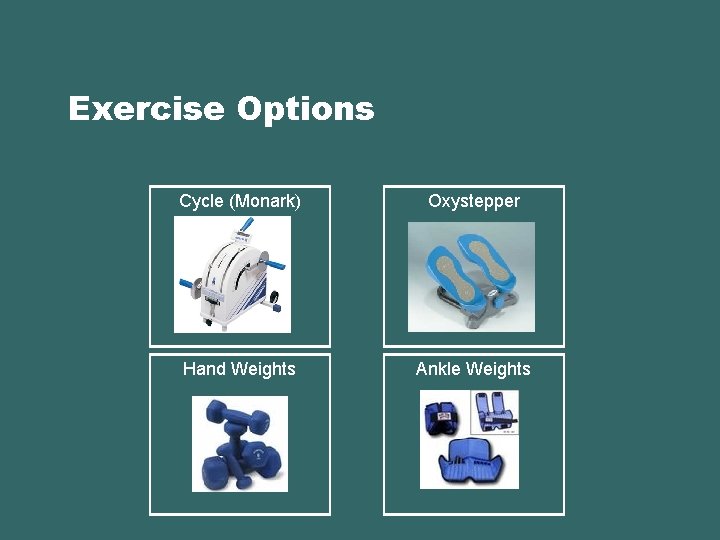
Exercise Options Cycle (Monark) Oxystepper Hand Weights Ankle Weights
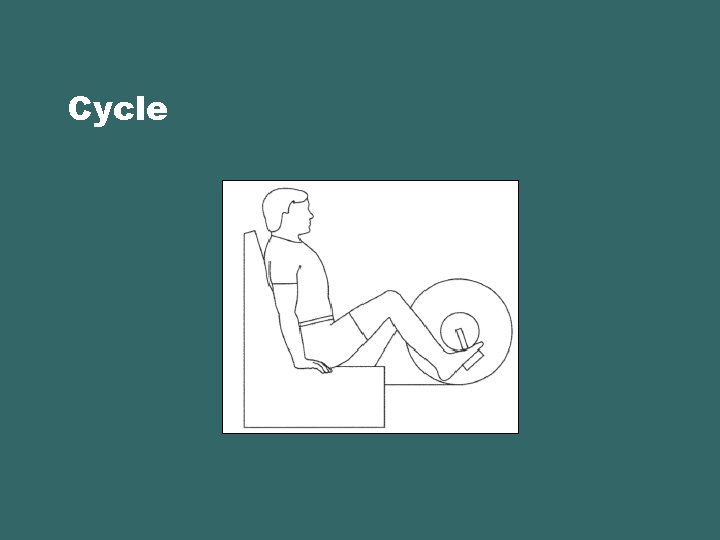
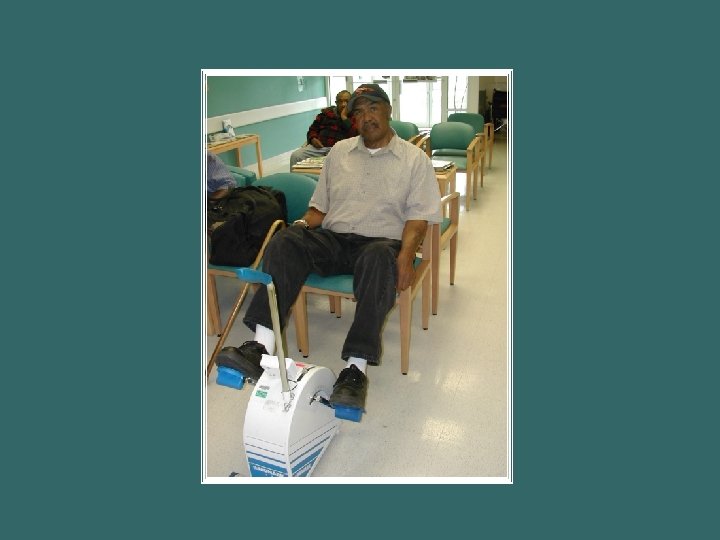
Cycle
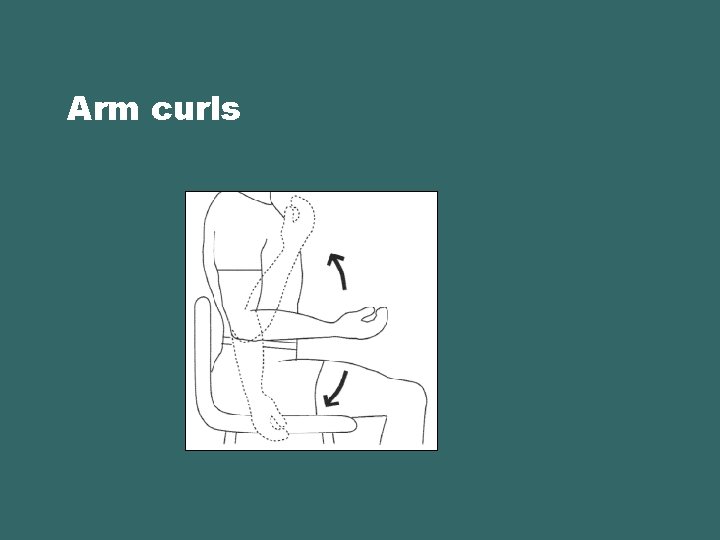
Arm curls
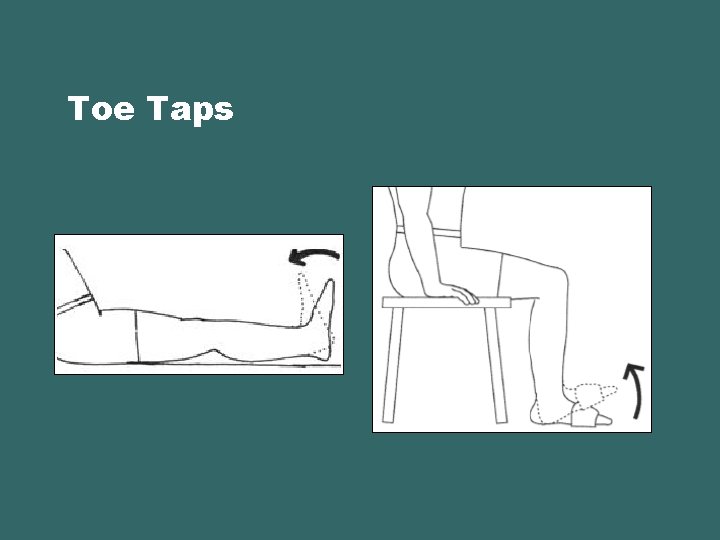
Toe Taps

Lower Leg Raises

Seated Marching
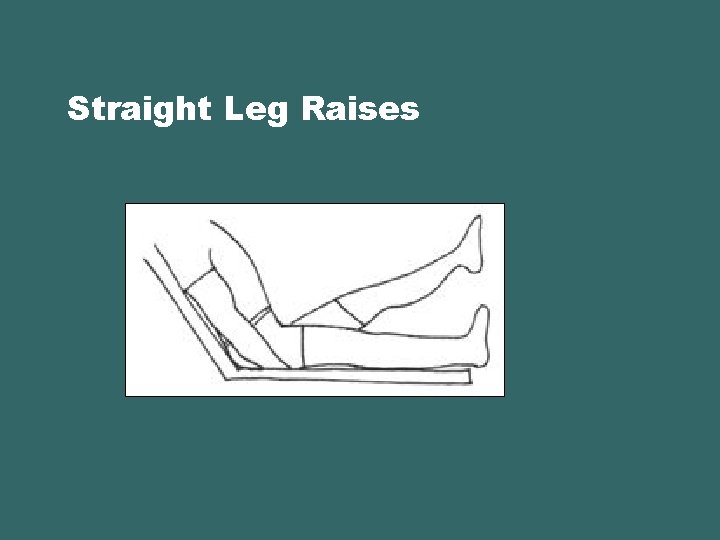
Straight Leg Raises
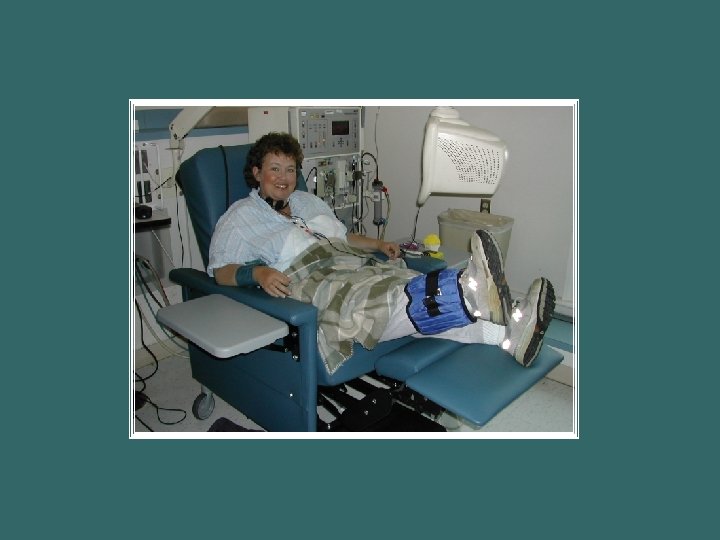
“Rear-End” Squeezes!!


Contact l Amanda Newberry, M. Ed University of Virginia Renal Services Exercise Program Coordinator • Email: alh 9 t@virginia. edu • Office: (434)243 -6218
1. 2. 3. 4. 5. 6. Ware JE, Kosinski M, Keler SD. SF-36 Physical and Mental Health Summary Scales: A User’s Manuel. 2 nd ed. Boston: Health Institute; 1994. Painter P, Carlson L, Carey S, Paul SM, Myll J. Physical functioning and health related quality of life changes with exercise training in hemodialysis patients. Am J Kidney Dis. 2000; 35(3): 482 -492. Johansen K. Exercise in the End-Stage Renal Disease Population. J Am Soc Nephrol 18: 1845 -1854, 2007 Kong C, Tattersall J, Greenwood R, Farrington K. The effect of exercise during haemodialysis on solute removal. Nephrol Dial Transplant. 1999; 14: 2927 -2931. Carlson L, Carey S. Staff Responsibility to Exercise. ACKD Vol 6, No 2 (April) pp 172 -180, 1999 Life Options Rehabilitation Advisory Council. Exercise: A Guide for the Dialysis Team. 1995; Table 2: pp 7.
- Slides: 43