
Exercise Find the opposite additive inverse of 4
- Slides: 26
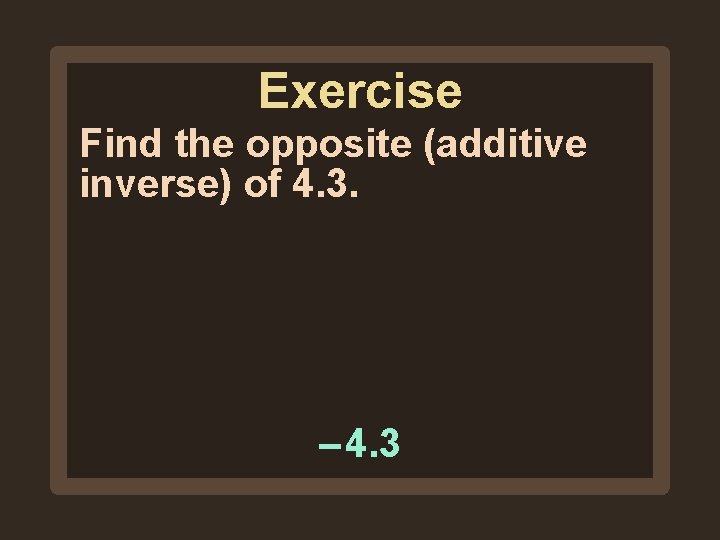
Exercise Find the opposite (additive inverse) of 4. 3. – 4. 3
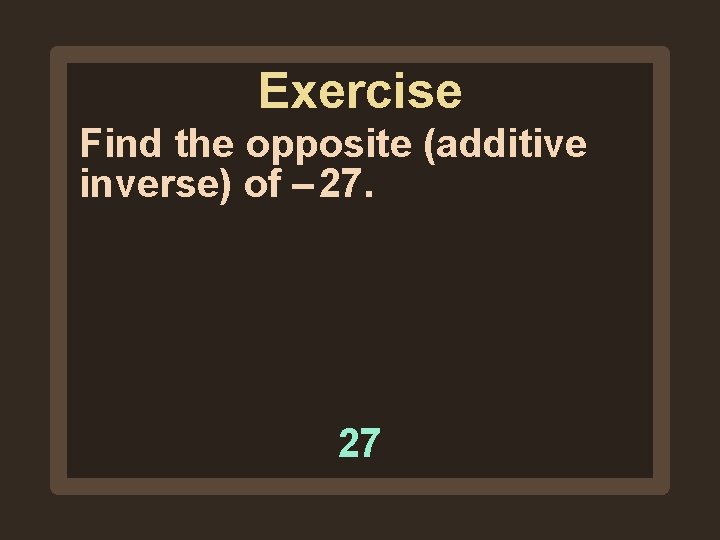
Exercise Find the opposite (additive inverse) of – 27. 27
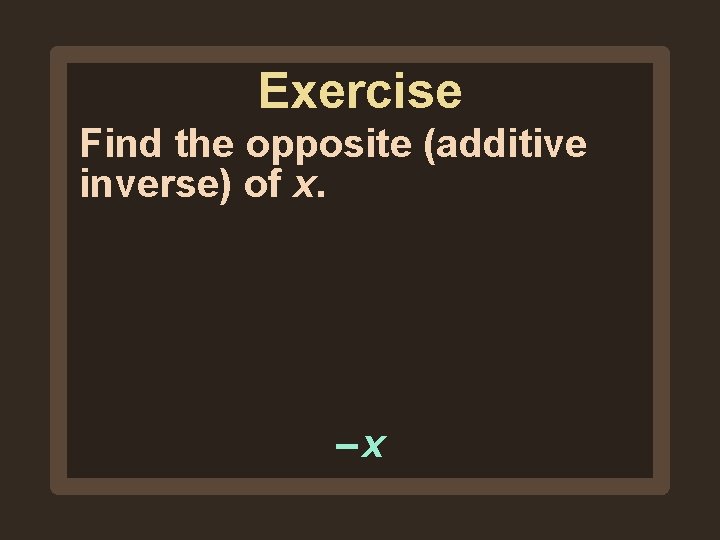
Exercise Find the opposite (additive inverse) of x. –x
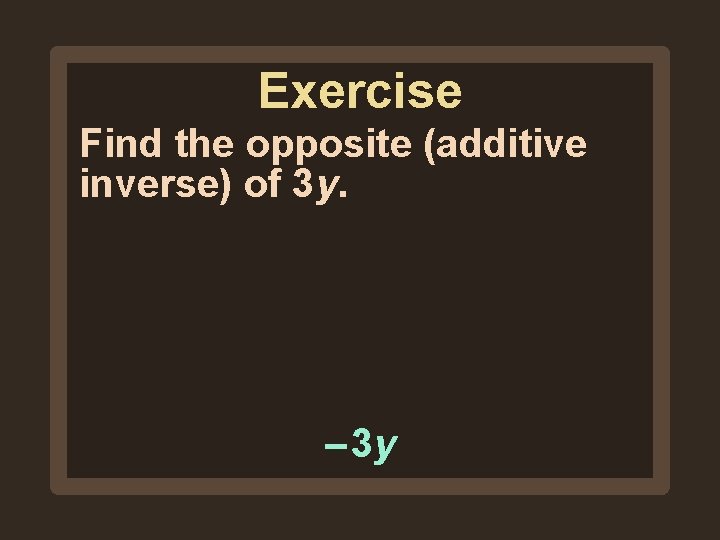
Exercise Find the opposite (additive inverse) of 3 y. – 3 y
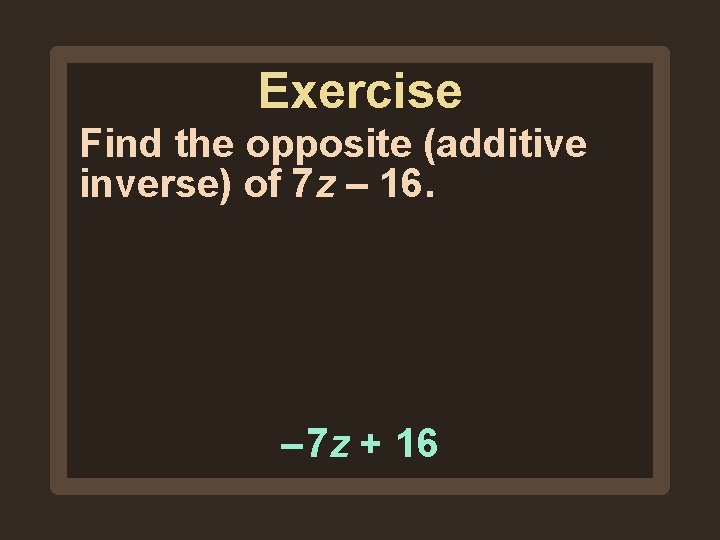
Exercise Find the opposite (additive inverse) of 7 z – 16. – 7 z + 16
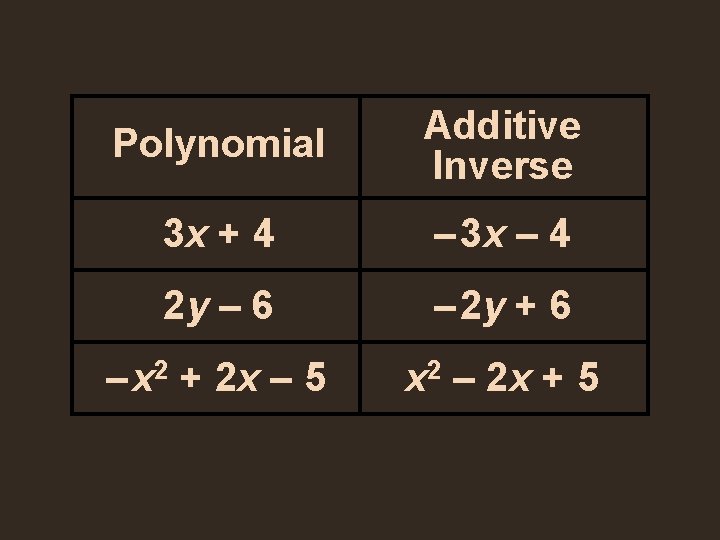
Polynomial Additive Inverse 3 x + 4 – 3 x – 4 2 y – 6 – 2 y + 6 – x 2 + 2 x – 5 x 2 – 2 x + 5
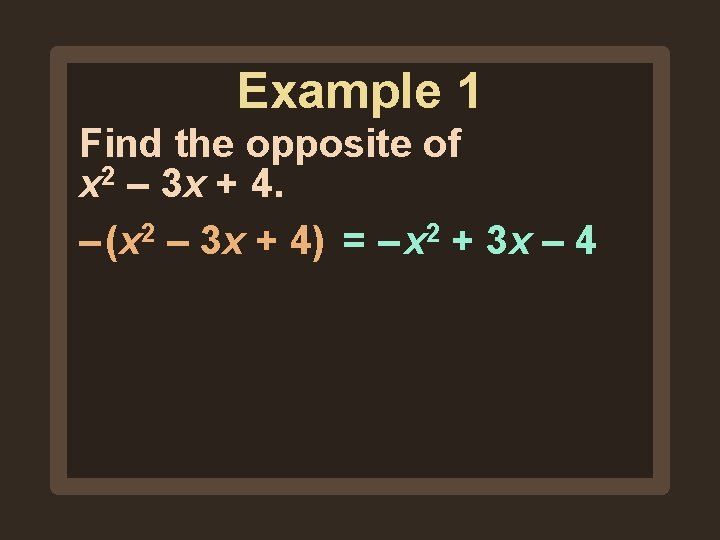
Example 1 Find the opposite of x 2 – 3 x + 4. – (x 2 – 3 x + 4) = – x 2 + 3 x – 4
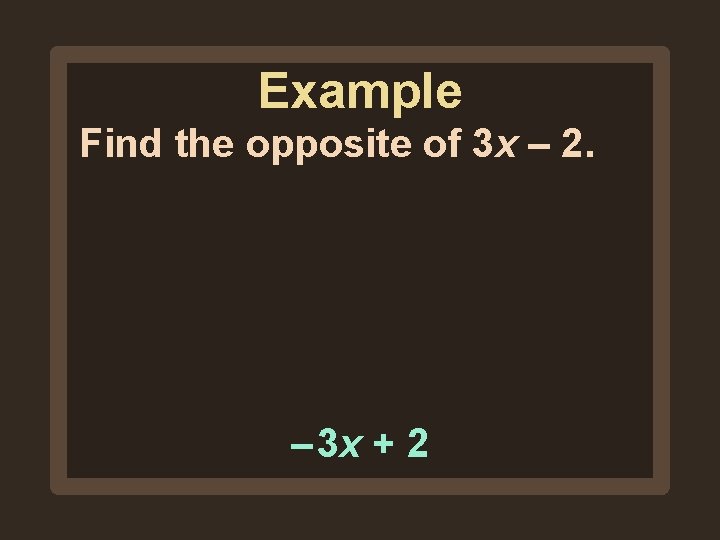
Example Find the opposite of 3 x – 2. – 3 x + 2
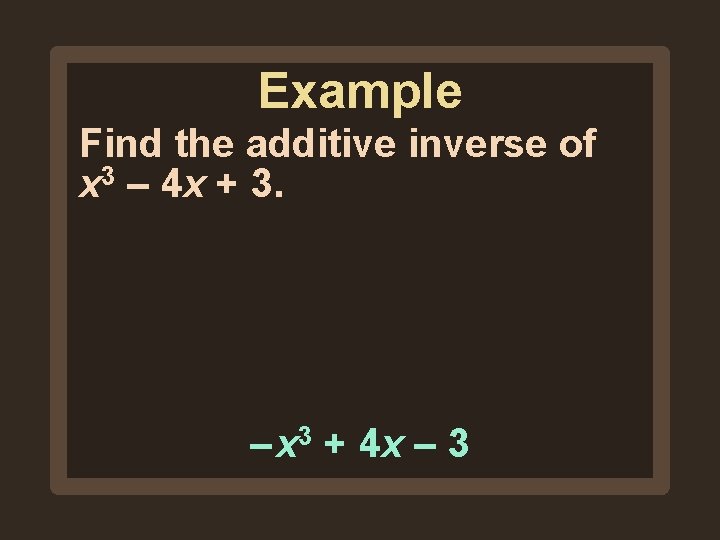
Example Find the additive inverse of x 3 – 4 x + 3. – x 3 + 4 x – 3
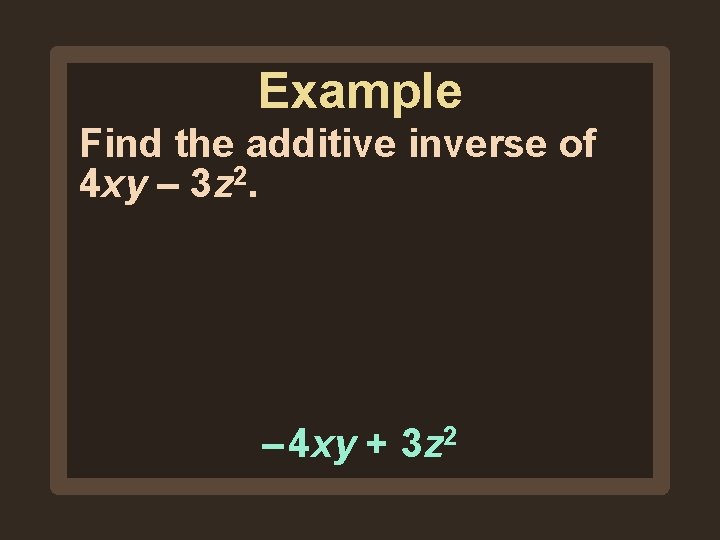
Example Find the additive inverse of 4 xy – 3 z 2. – 4 xy + 3 z 2
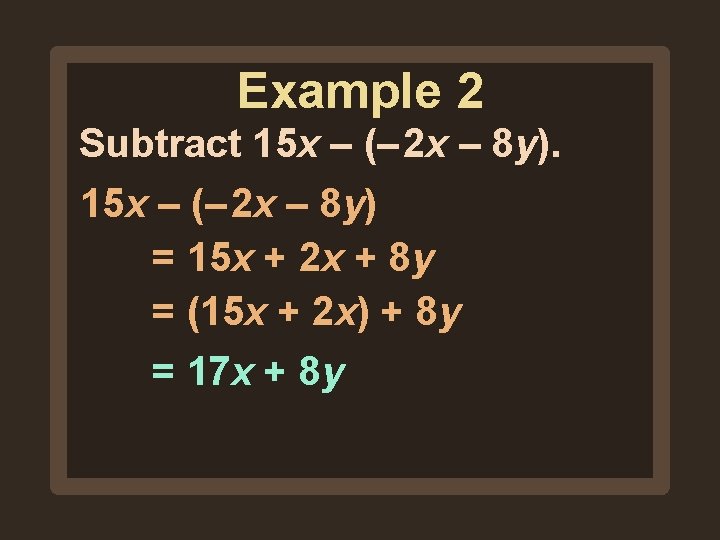
Example 2 Subtract 15 x – (– 2 x – 8 y) = 15 x + 2 x + 8 y = (15 x + 2 x) + 8 y = 17 x + 8 y
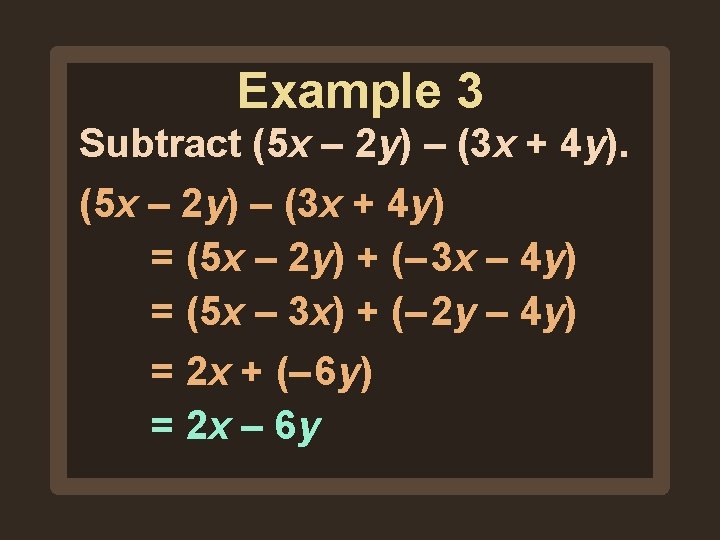
Example 3 Subtract (5 x – 2 y) – (3 x + 4 y) = (5 x – 2 y) + (– 3 x – 4 y) = (5 x – 3 x) + (– 2 y – 4 y) = 2 x + (– 6 y) = 2 x – 6 y
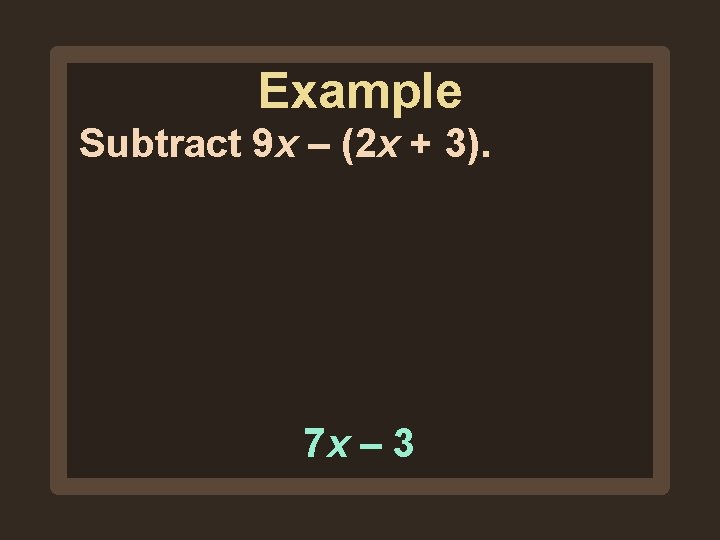
Example Subtract 9 x – (2 x + 3). 7 x – 3
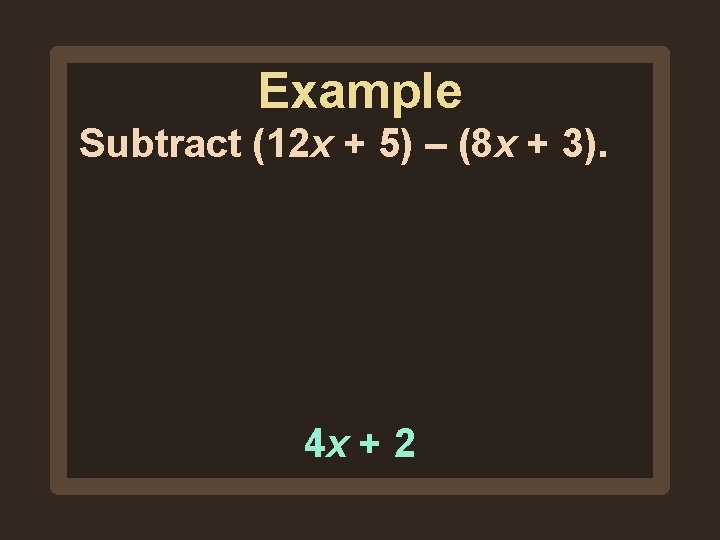
Example Subtract (12 x + 5) – (8 x + 3). 4 x + 2
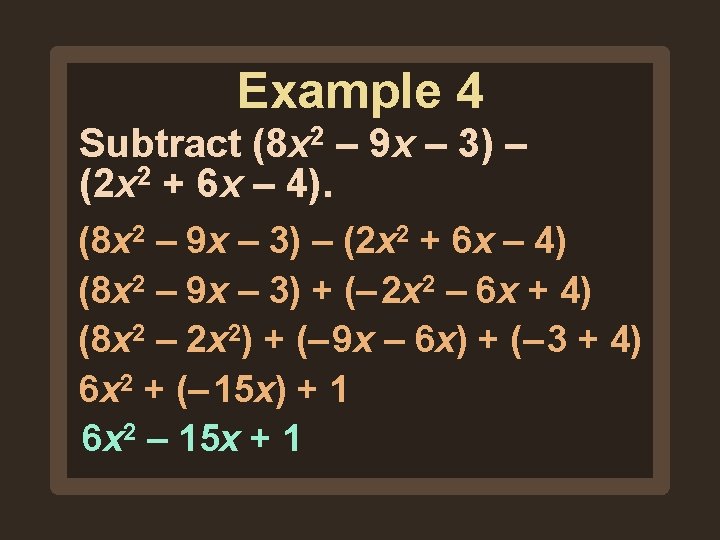
Example 4 Subtract (8 x 2 – 9 x – 3) – (2 x 2 + 6 x – 4) (8 x 2 – 9 x – 3) + (– 2 x 2 – 6 x + 4) (8 x 2 – 2 x 2) + (– 9 x – 6 x) + (– 3 + 4) 6 x 2 + (– 15 x) + 1 6 x 2 – 15 x + 1
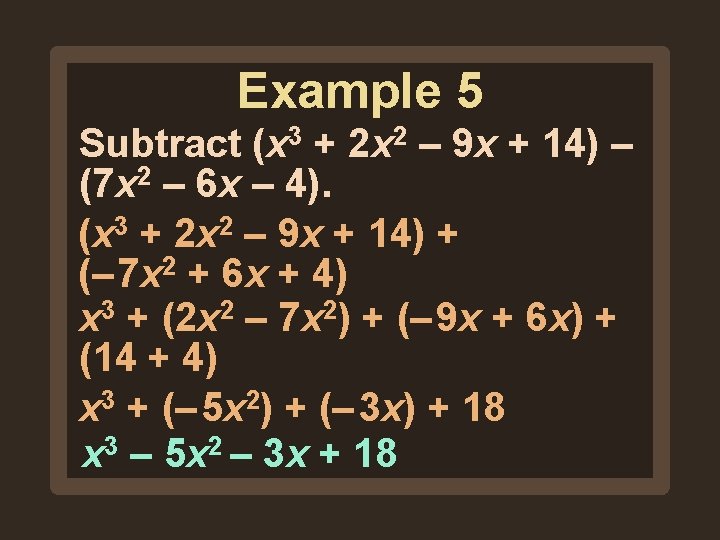
Example 5 Subtract (x 3 + 2 x 2 – 9 x + 14) – (7 x 2 – 6 x – 4). (x 3 + 2 x 2 – 9 x + 14) + (– 7 x 2 + 6 x + 4) x 3 + (2 x 2 – 7 x 2) + (– 9 x + 6 x) + (14 + 4) x 3 + (– 5 x 2) + (– 3 x) + 18 x 3 – 5 x 2 – 3 x + 18
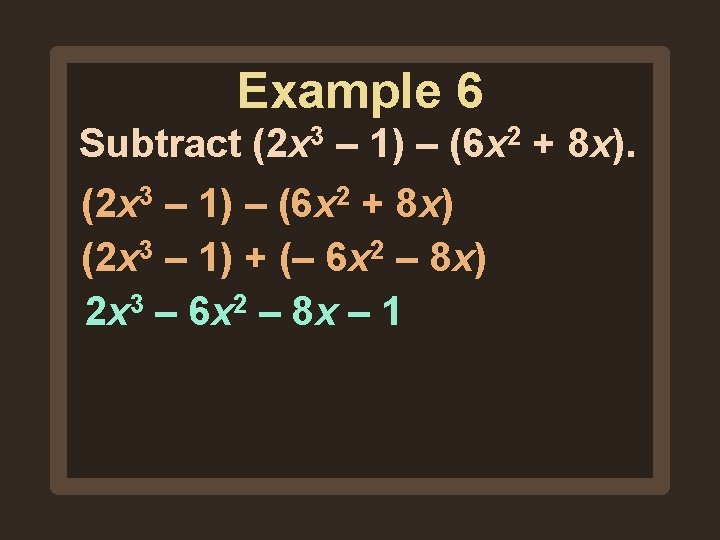
Example 6 Subtract (2 x 3 – 1) – (6 x 2 + 8 x) (2 x 3 – 1) + (– 6 x 2 – 8 x) 2 x 3 – 6 x 2 – 8 x – 1
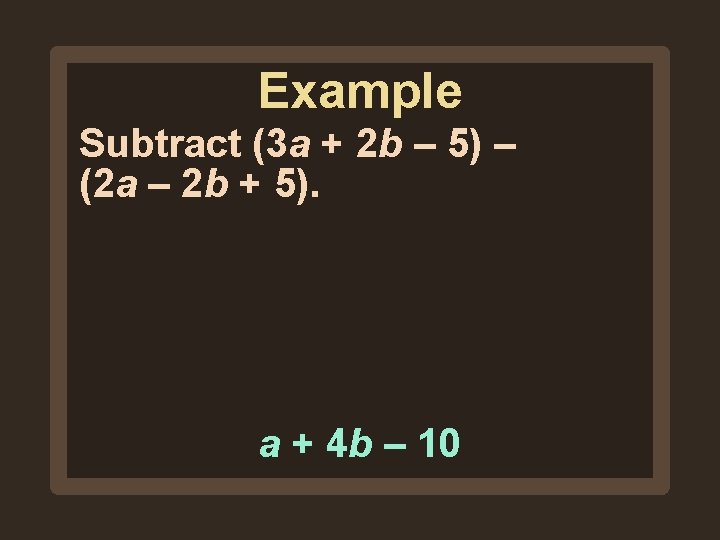
Example Subtract (3 a + 2 b – 5) – (2 a – 2 b + 5). a + 4 b – 10
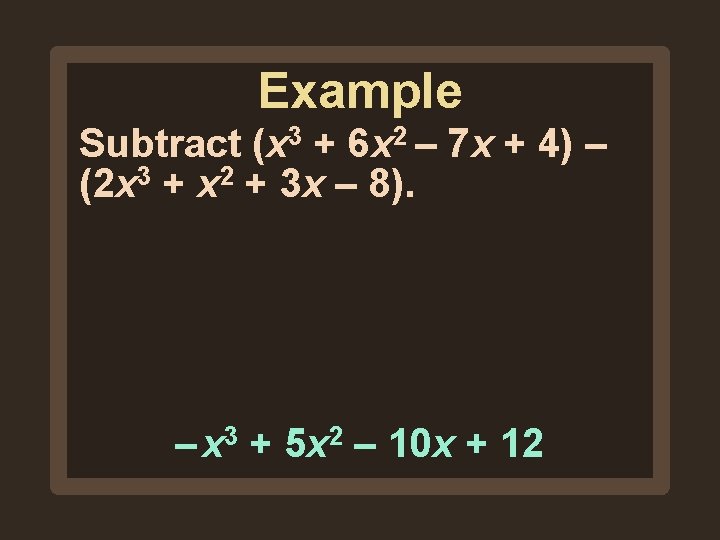
Example Subtract (x 3 + 6 x 2 – 7 x + 4) – (2 x 3 + x 2 + 3 x – 8). – x 3 + 5 x 2 – 10 x + 12
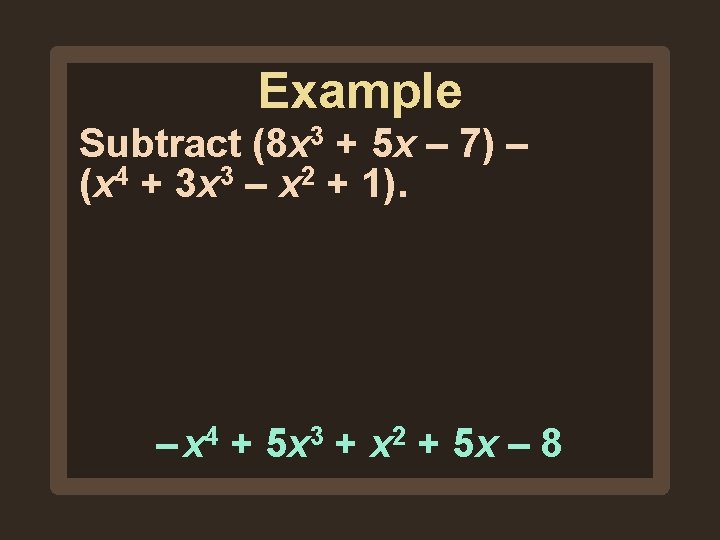
Example Subtract (8 x 3 + 5 x – 7) – (x 4 + 3 x 3 – x 2 + 1). – x 4 + 5 x 3 + x 2 + 5 x – 8
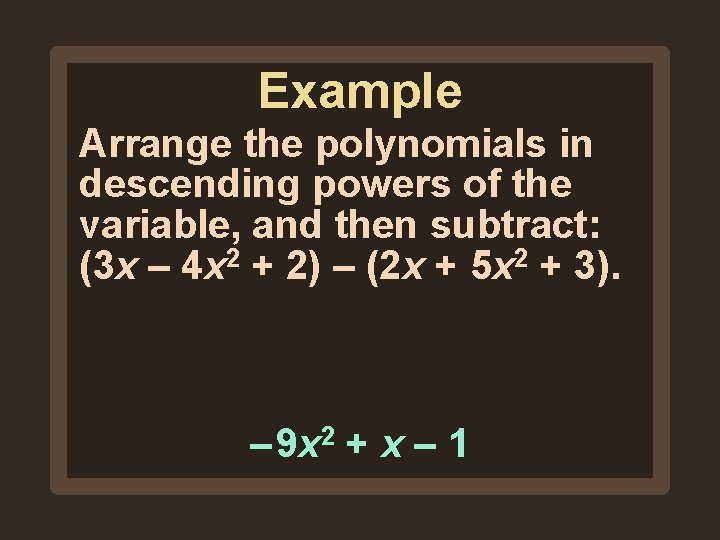
Example Arrange the polynomials in descending powers of the variable, and then subtract: (3 x – 4 x 2 + 2) – (2 x + 5 x 2 + 3). – 9 x 2 + x – 1
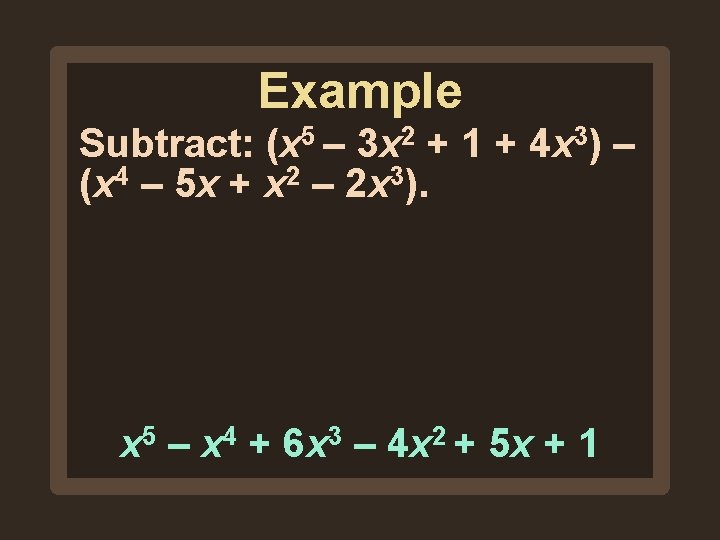
Example Subtract: (x 5 – 3 x 2 + 1 + 4 x 3) – (x 4 – 5 x + x 2 – 2 x 3). x 5 – x 4 + 6 x 3 – 4 x 2 + 5 x + 1
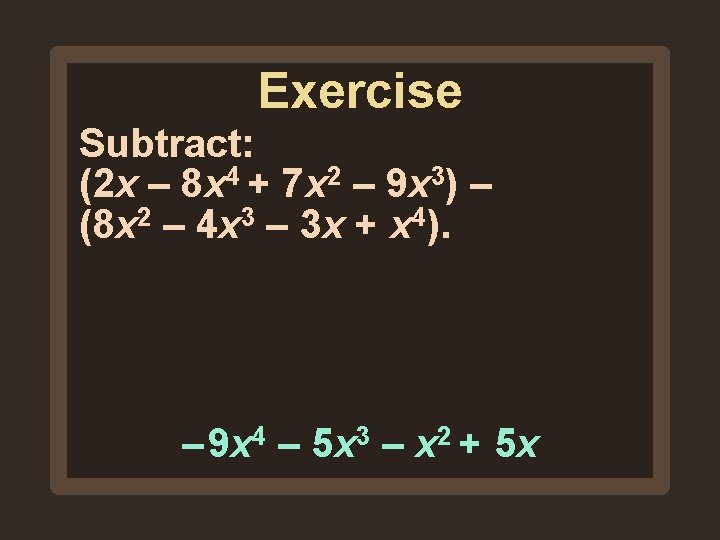
Exercise Subtract: (2 x – 8 x 4 + 7 x 2 – 9 x 3) – (8 x 2 – 4 x 3 – 3 x + x 4). – 9 x 4 – 5 x 3 – x 2 + 5 x
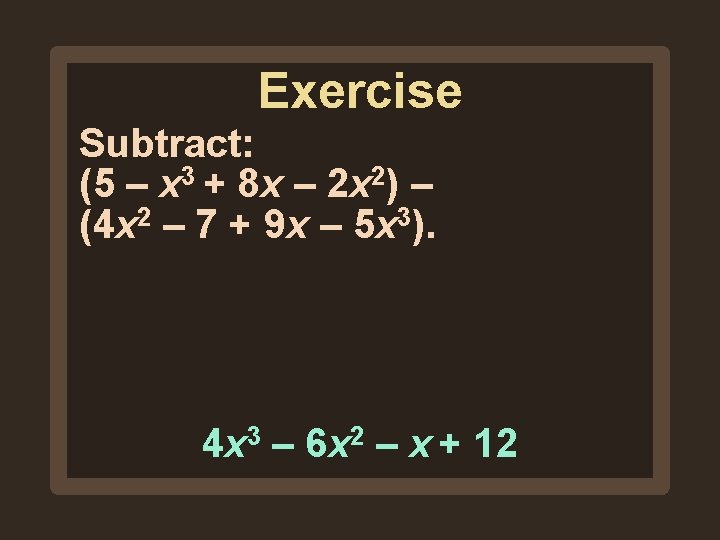
Exercise Subtract: (5 – x 3 + 8 x – 2 x 2) – (4 x 2 – 7 + 9 x – 5 x 3). 4 x 3 – 6 x 2 – x + 12
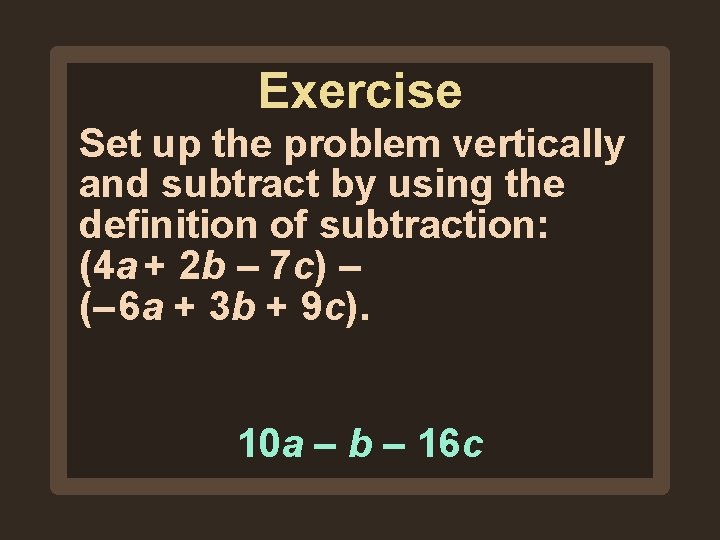
Exercise Set up the problem vertically and subtract by using the definition of subtraction: (4 a + 2 b – 7 c) – (– 6 a + 3 b + 9 c). 10 a – b – 16 c
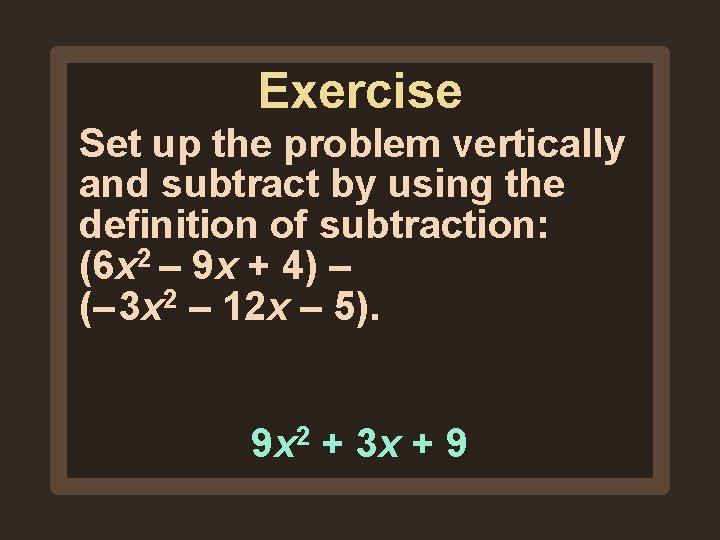
Exercise Set up the problem vertically and subtract by using the definition of subtraction: (6 x 2 – 9 x + 4) – (– 3 x 2 – 12 x – 5). 9 x 2 + 3 x + 9