
Exercise Before After Weight Loss Surgery Colette Micko
Exercise Before & After Weight Loss Surgery Colette Micko, M. S, RD, CDE Bariatric Wellness Program Coordinator
Overview of Presentation • • Benefits of regular exercise pre-operatively Benefits of regular exercise post-operatively Physical activity guidelines The basics for developing an exercise plan
Exercise & Weight Loss Surgery • Developing and maintaining a consistent exercise program helps to strengthen your heart, bones, muscles, increase your metabolic rate (thus burning more calories), improves mood and relieves stress • Exercise can also help to improve insulin sensitivity, resulting in better blood sugar control • Regular exercise is key to helping you lose weight, and more importantly KEEPING IT OFF. • Exercise is an important component pre/post wt. loss surgery
Exercise Pre-Operatively Benefits of pre-operative exercise regimen • Research suggests that patients who exercise regularly prior to surgery have a faster recovery and lower complication rate than those who do not. • Anatomical improvements that allow for an easier surgical course (reduced fat cells in the liver and abdomen). • Helps make transition to post-operative lifestyle easier

Exercise Post-Operatively Benefits of post-operative exercise regimen • Regular walking is an essential part of recovery in the first few weeks after surgery • Once cleared for exercise by your surgeon, exercise will be essential to helping you MAINTAIN your weight loss • Helps prevent lean muscle mass loss • Positive coping mechanism for stress
Recommendations Physical activity recommendations • Type: Optimal for weight loss=cardio + weight training • Duration • Weight loss: ~250 minutes per week (five 50 minutes sessions/week) • Weigh maintenance: ~150 minutes per week (five 30 minutes sessions/week)
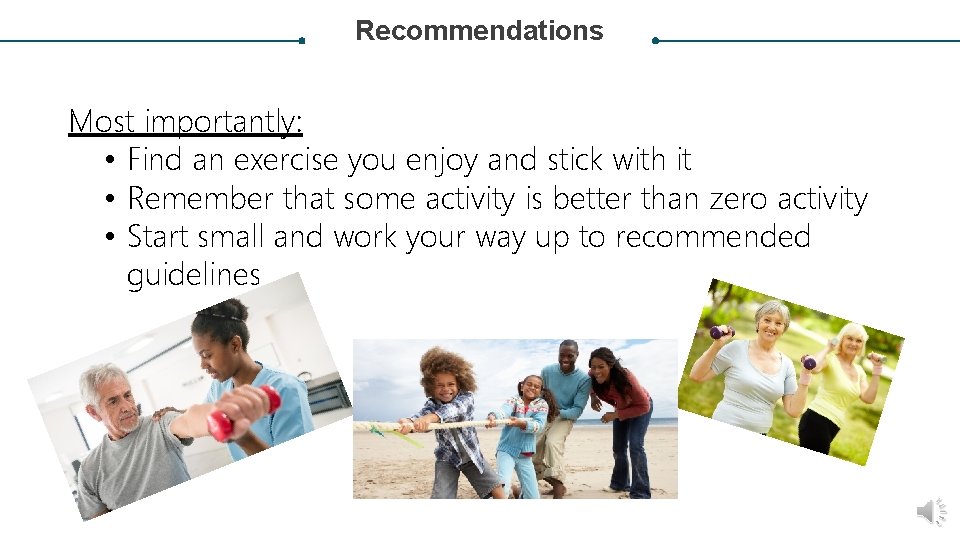
Recommendations Most importantly: • Find an exercise you enjoy and stick with it • Remember that some activity is better than zero activity • Start small and work your way up to recommended guidelines
Developing an Exercise Plan • While moderate physical activity such as walking is safe for most people, talk to your doctor before starting an exercise program if you have a history of: • Heart disease • Diabetes • Kidney disease • Arthritis • High blood pressure
Developing an Exercise Plan Exercise plan basics: 1. Find an exercise partner. You are more likely to stick with a plan if you have an accountability partner. 2. Try different activities and stick with the one you enjoy the most. 3. Walk as often as you can. 4. Create a fun/motivational playlist. 5. Make sure you have comfortable workout clothes and shoes. 6. Create a weekly plan/goals for the week. Find ways to incorporate activity into you schedule daily.

Thank You
- Slides: 10