
Exercise 6 A Classification of Tissues Note Histology
- Slides: 63
Exercise 6 A Classification of Tissues Note: Histology is the study of tissues Muse 2430 lab #3
Tissues § Tissues consist of groups of cells similar in structure & function § 4 main types: § § Epithelial Connective Muscle Nervous
Epithelial Tissues § Cover surfaces § Functions: protection, absorption, filtration, excretion, secretion, & sensory reception
Epithelial Tissues § Characteristics: § Cellularity - cells fit closely together to form membranes or sheets § Polarity - always have a free surface (apical surface) § Supported by connective tissue (basal surface) § Avascular - no blood supply; rely on diffusion of nutrients § Regeneration - if well nourished, they can regenerate
Epithelial Tissues § Classification - based on 2 criteria: § Number of layers (arrangement) § Cell shape
Epithelial Tissues § Arrangement: § Simple - 1 layer § Stratified - >1 layer § Shape: § Squamous - scale-like § Cuboidal - cube-like § Columnar - column-shaped
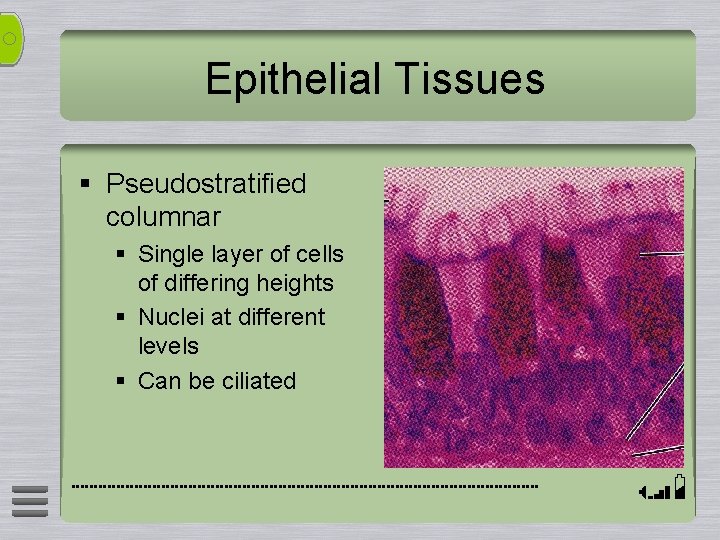
Epithelial Tissues § Alternate arrangements: § Pseudostratified - actually simple, but cells are of varying height & nuclei lie at different levels, which gives false appearance of being stratified; often ciliated § Transitional - stratified squamous; rounded cells have ability to slide over one another, giving an organ the ability to stretch (bladder)
Epithelial Tissues § Glands: § Endocrine - lose surface connection; excretions go directly into bloodstream or lymphatic vessels § Exocrine - retain ducts; secretions empty through ducts onto epithelial surface
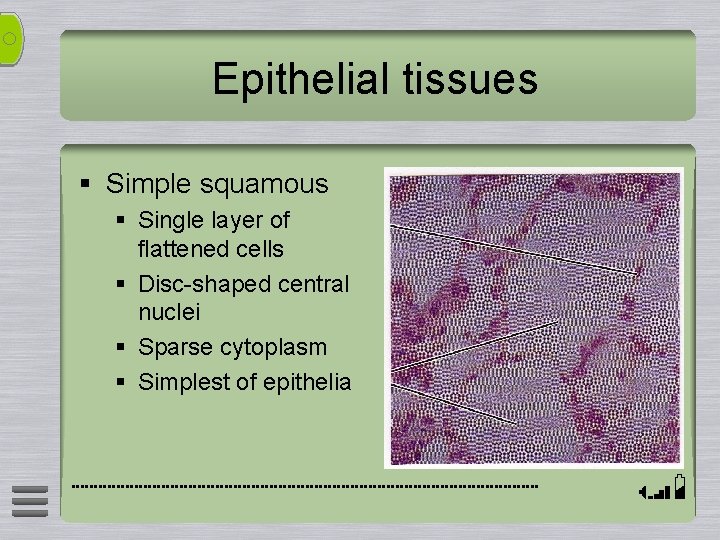
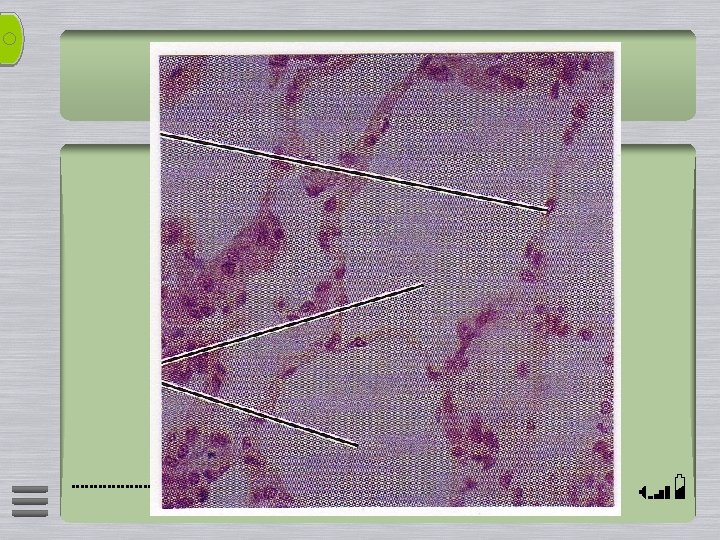
Epithelial tissues § Simple squamous § Single layer of flattened cells § Disc-shaped central nuclei § Sparse cytoplasm § Simplest of epithelia
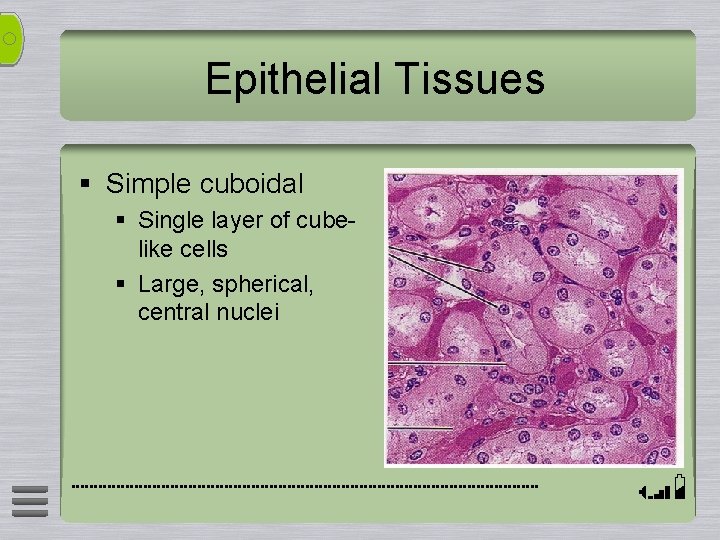
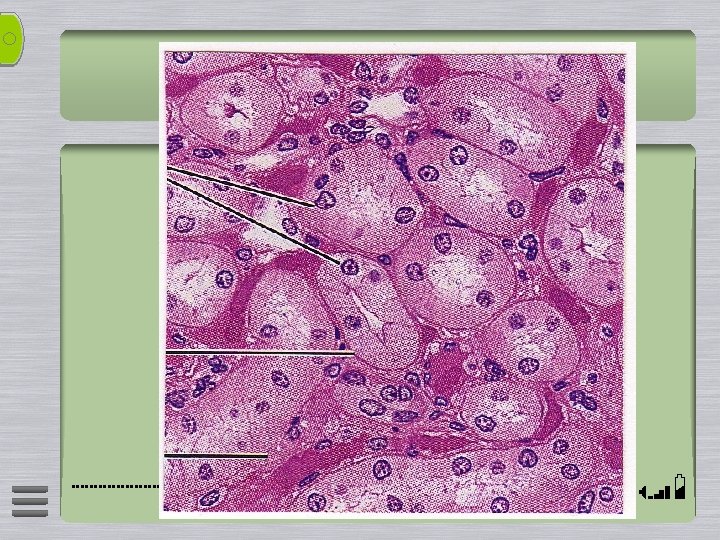
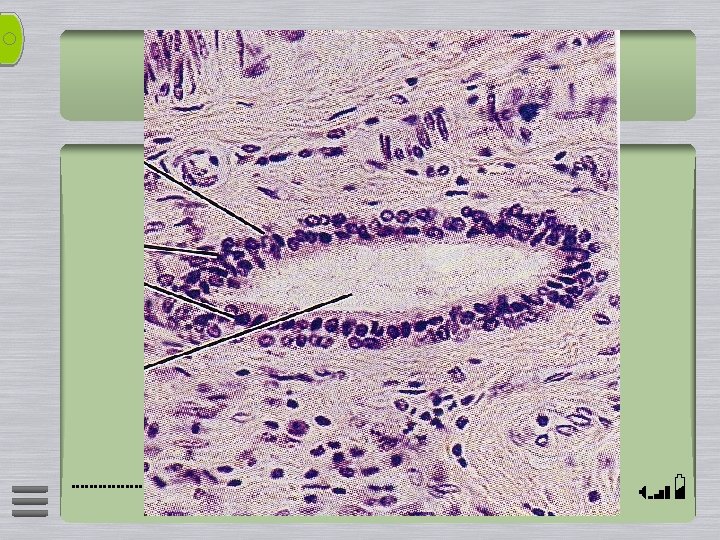
Epithelial Tissues § Simple cuboidal § Single layer of cubelike cells § Large, spherical, central nuclei
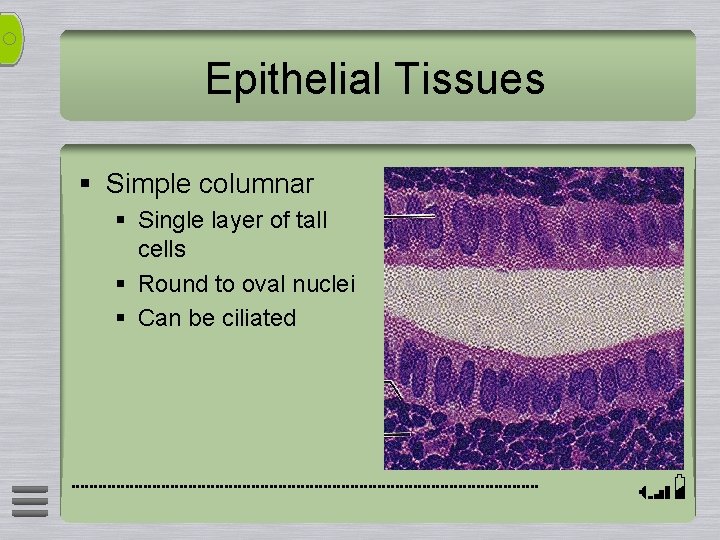
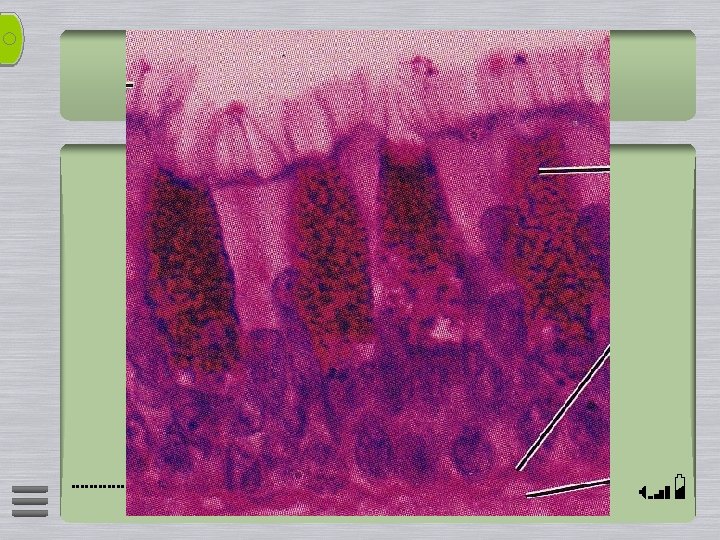
Epithelial Tissues § Simple columnar § Single layer of tall cells § Round to oval nuclei § Can be ciliated
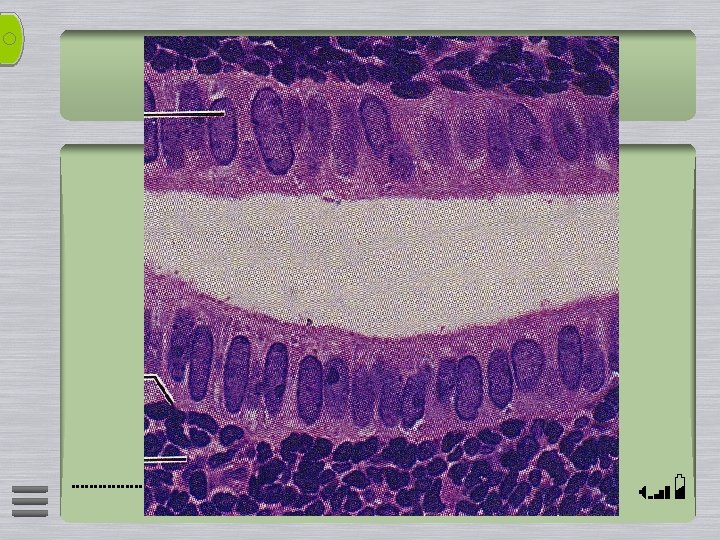
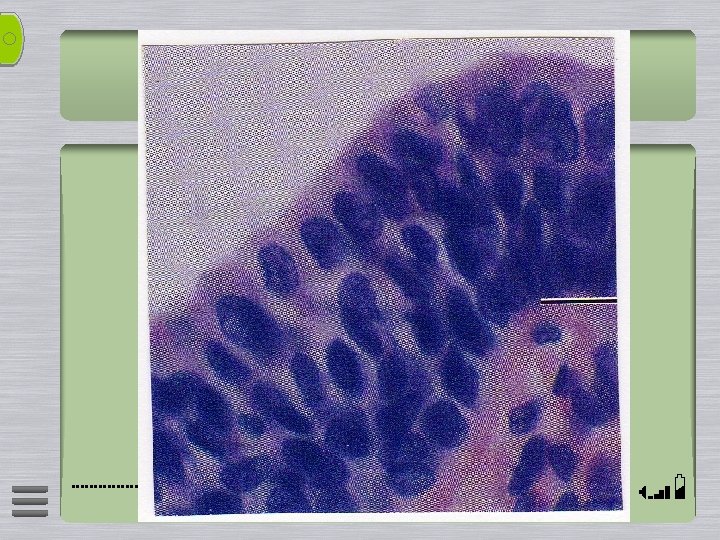
Epithelial Tissues § Pseudostratified columnar § Single layer of cells of differing heights § Nuclei at different levels § Can be ciliated
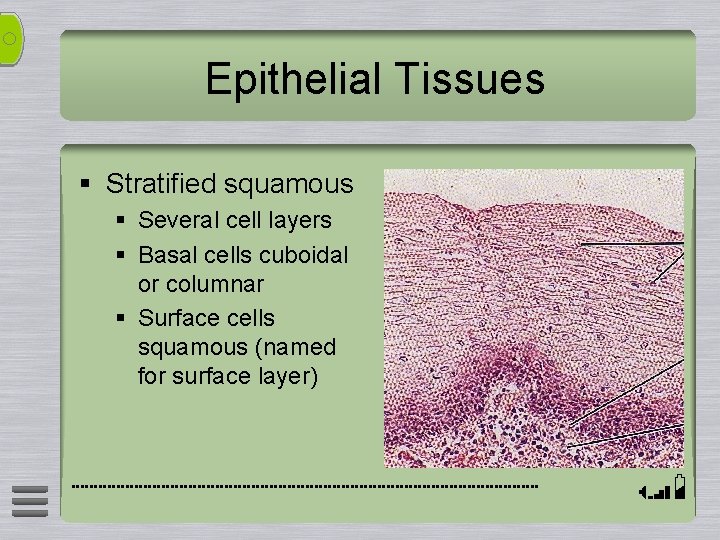
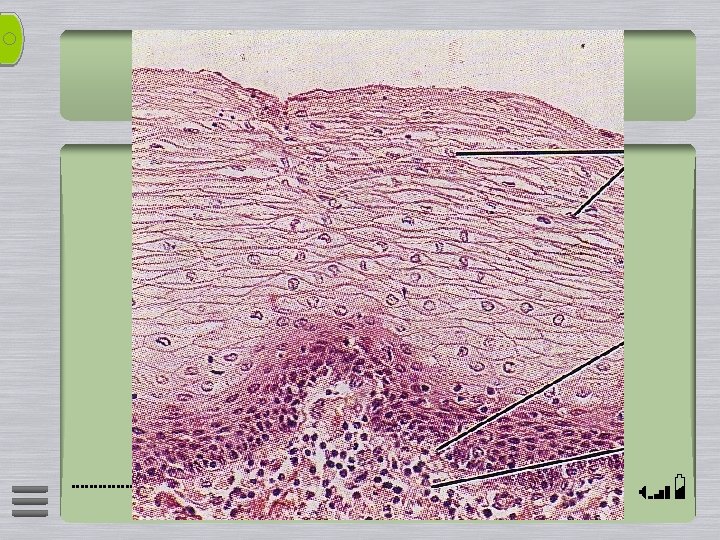
Epithelial Tissues § Stratified squamous § Several cell layers § Basal cells cuboidal or columnar § Surface cells squamous (named for surface layer)
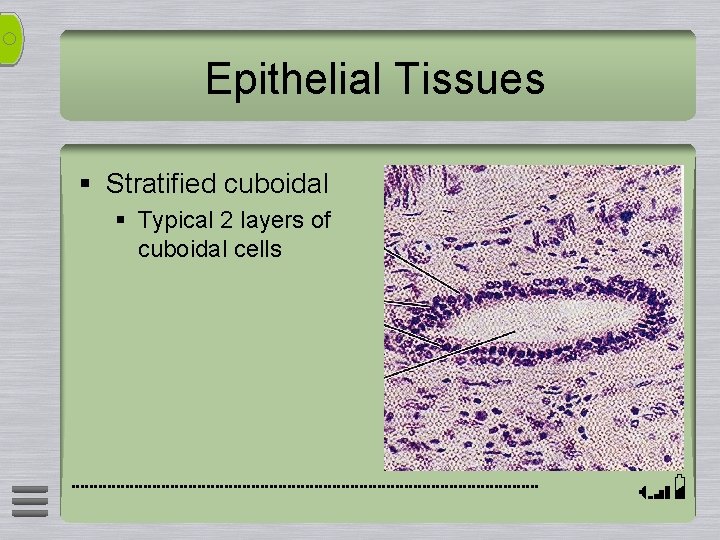
Epithelial Tissues § Stratified cuboidal § Typical 2 layers of cuboidal cells
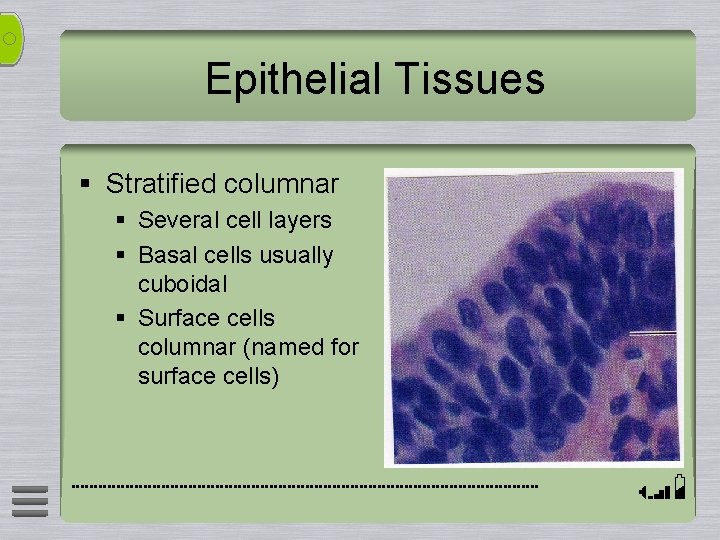
Epithelial Tissues § Stratified columnar § Several cell layers § Basal cells usually cuboidal § Surface cells columnar (named for surface cells)
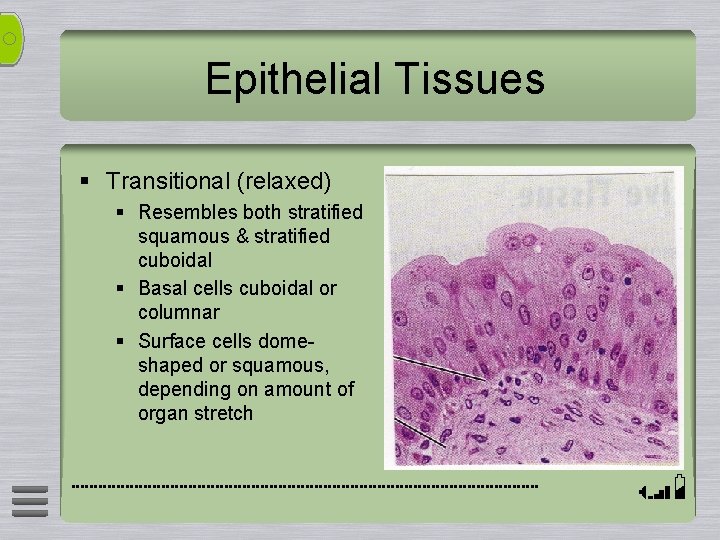
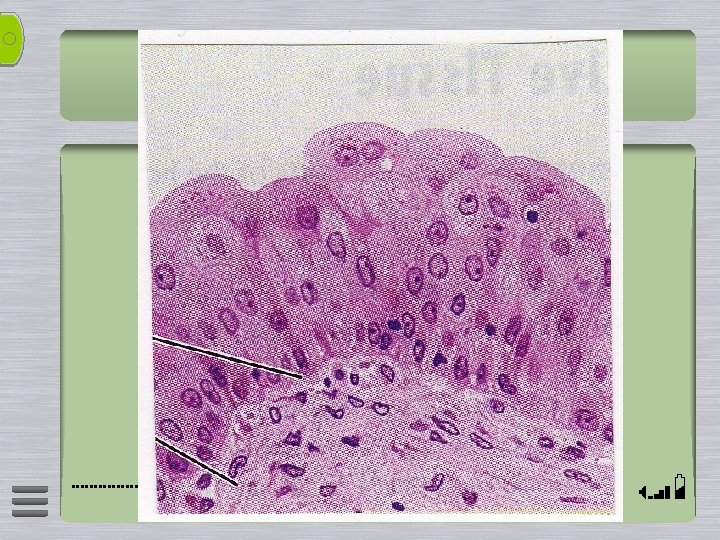
Epithelial Tissues § Transitional (relaxed) § Resembles both stratified squamous & stratified cuboidal § Basal cells cuboidal or columnar § Surface cells domeshaped or squamous, depending on amount of organ stretch
Connective Tissues § Most abundant tissue type § Functions to protect, support, & bind together other tissues § Most have rich blood supply (few exceptions) § Composed of many cell types § Great deal of noncellular, nonliving material (matrix) between cells
Connective Tissues § Matrix: § § Produced by the cells, then extruded Provides strength The more matrix, the stronger 2 components: § Ground substance - may be liquid, semi-solid, gel-like, or hard § Fibers: § Collagen (white) § Elastic (yellow) § Reticular (fine collagen)
Connective Tissues § Other notes § When matrix is firm, cells lie in cavities, called lacunae § Ground substance functions as a sieve through which nutrients diffuse between the blood and cells § Fibers make ground substance less pliable § All types of adult connective tissue are variations of areolar
Connective Tissues § Classification: § Embryonic § Adult § Connective tissue proper § Cartilage § Bone § Blood
Connective Tissues § Embryonic: § Mesenchyme
Connective Tissues § Connective tissue proper: § Loose: § Areolar § Adipose § Reticular § Dense: § Regular § Irregular
Connective Tissues § Cartilage: § Hyaline § Elastic § Fibrocartilage § Bone § Blood
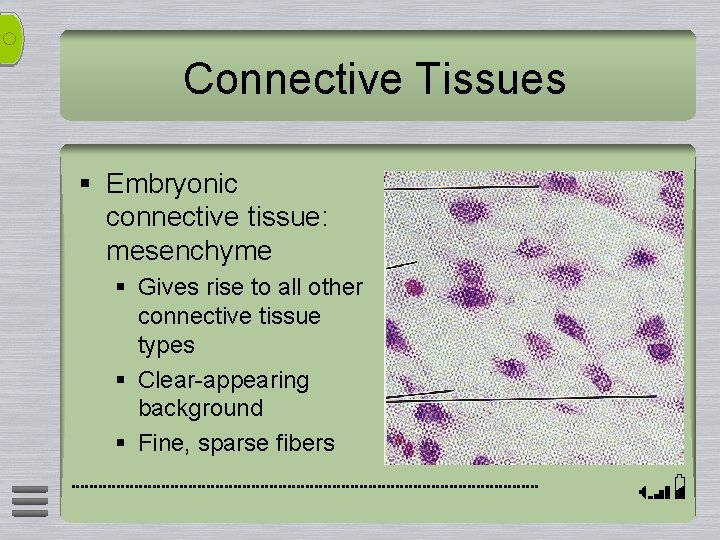
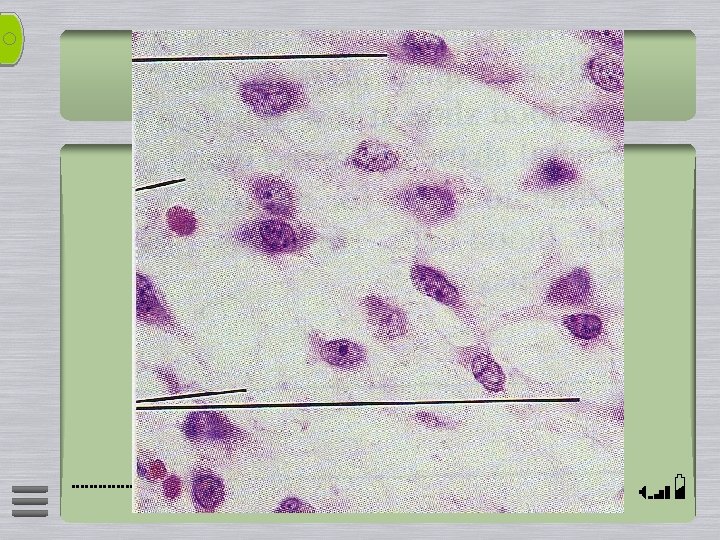
Connective Tissues § Embryonic connective tissue: mesenchyme § Gives rise to all other connective tissue types § Clear-appearing background § Fine, sparse fibers
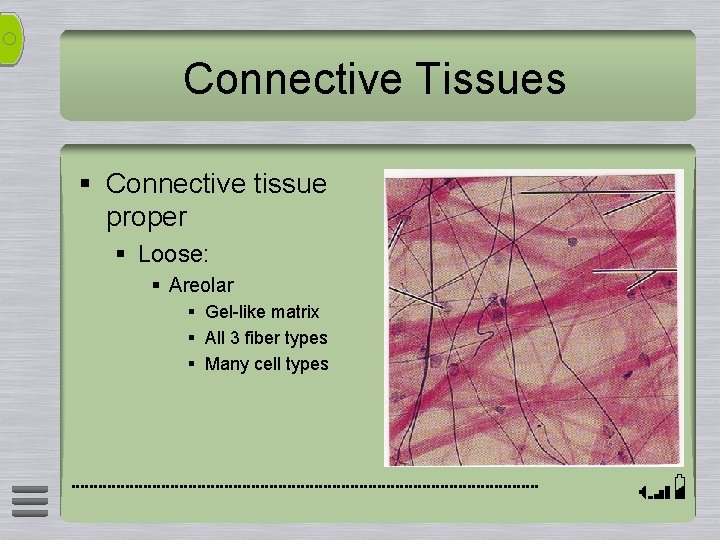
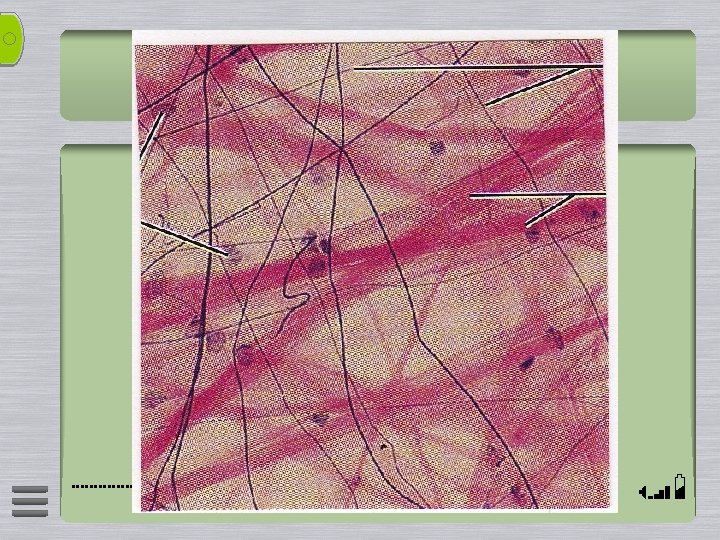
Connective Tissues § Connective tissue proper § Loose: § Areolar § Gel-like matrix § All 3 fiber types § Many cell types
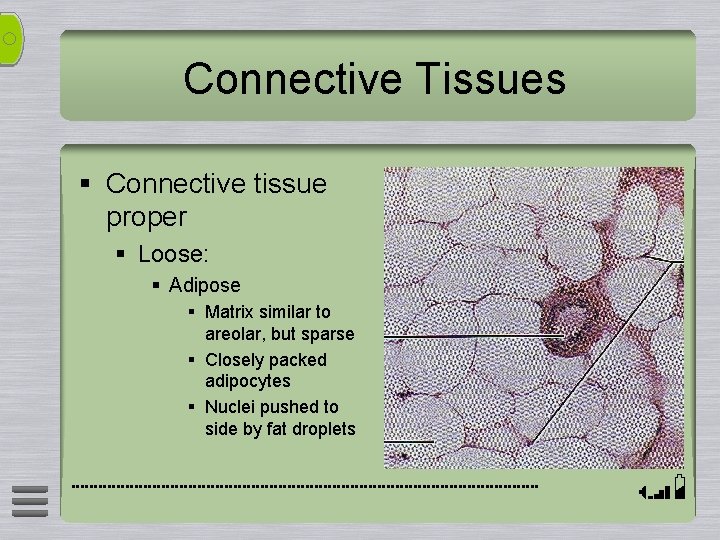
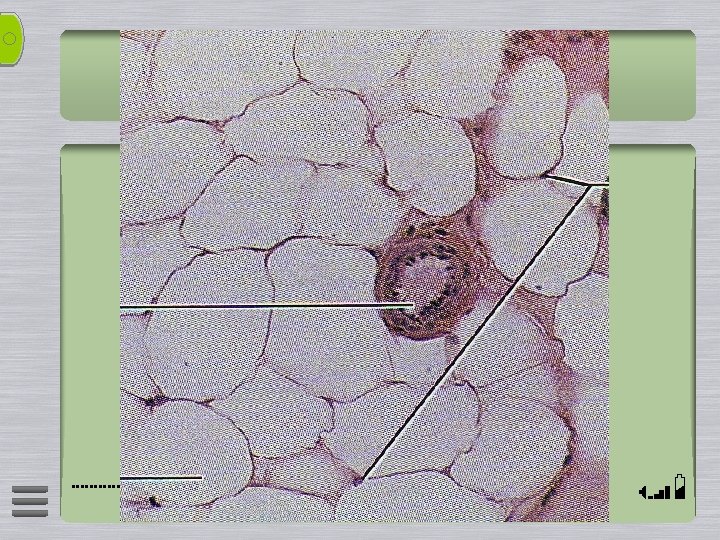
Connective Tissues § Connective tissue proper § Loose: § Adipose § Matrix similar to areolar, but sparse § Closely packed adipocytes § Nuclei pushed to side by fat droplets
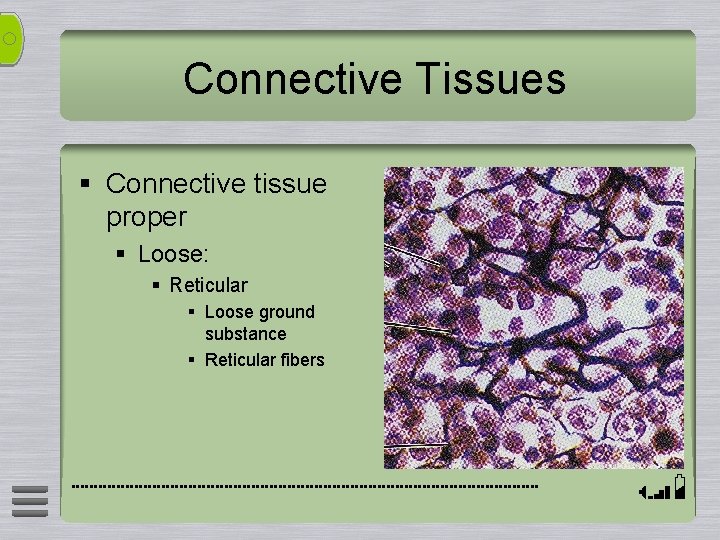
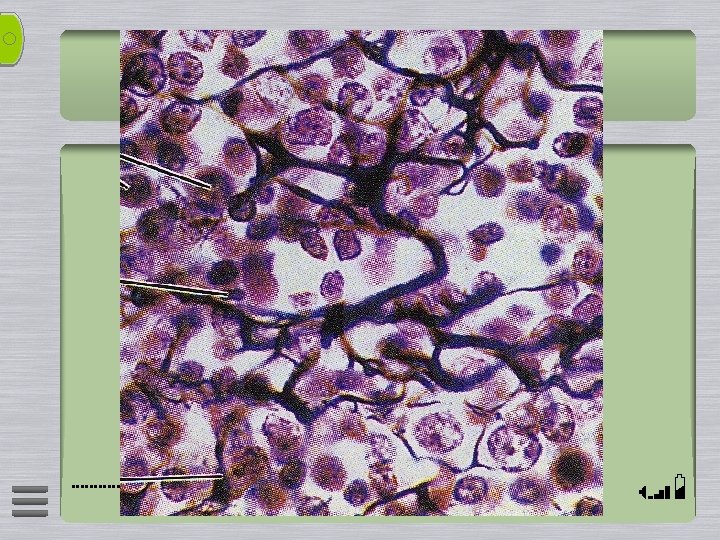
Connective Tissues § Connective tissue proper § Loose: § Reticular § Loose ground substance § Reticular fibers
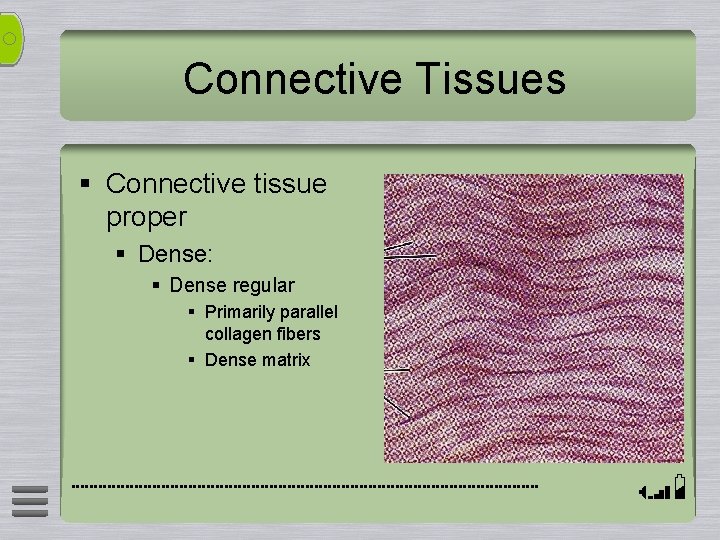
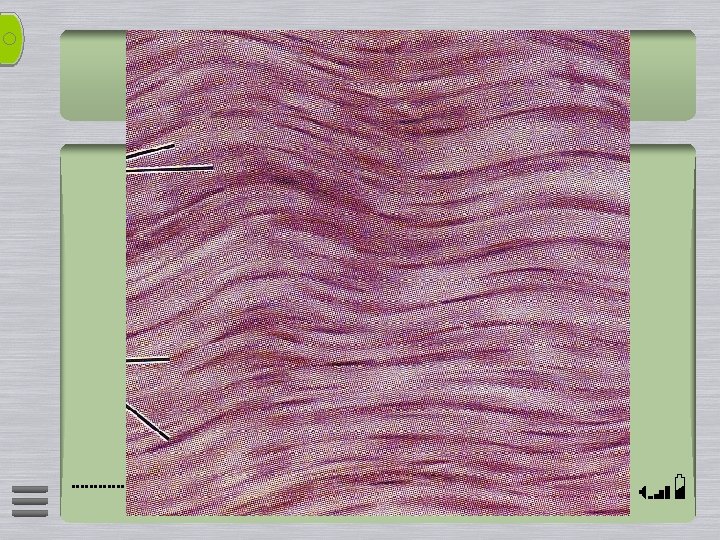
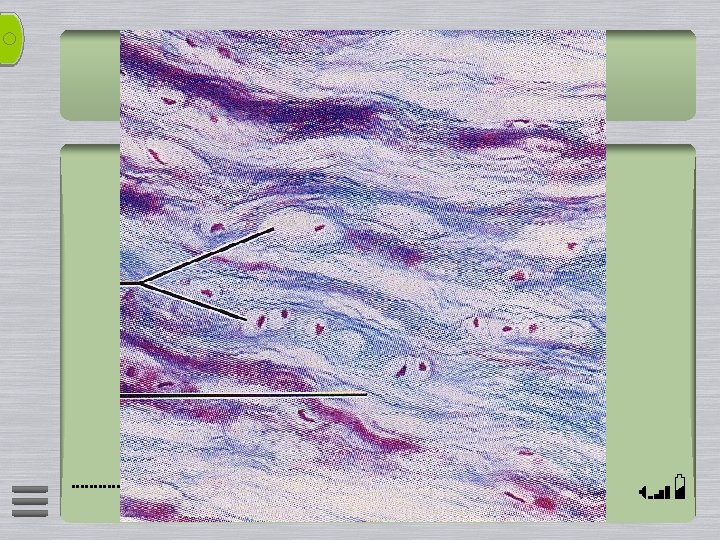
Connective Tissues § Connective tissue proper § Dense: § Dense regular § Primarily parallel collagen fibers § Dense matrix
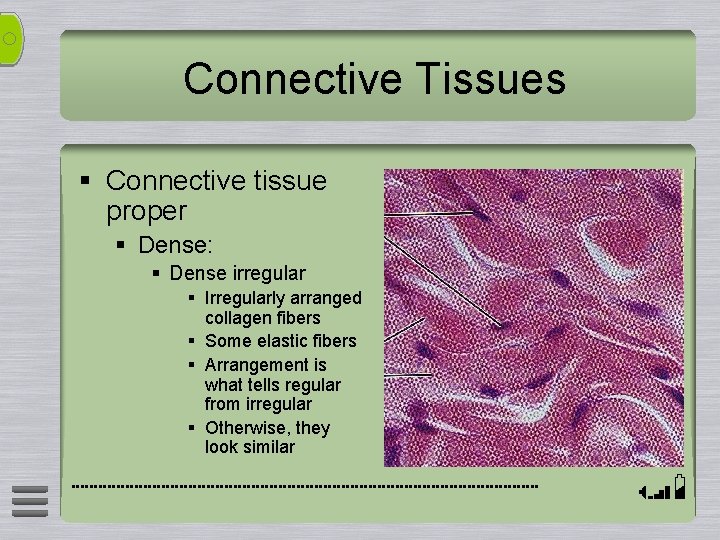
Connective Tissues § Connective tissue proper § Dense: § Dense irregular § Irregularly arranged collagen fibers § Some elastic fibers § Arrangement is what tells regular from irregular § Otherwise, they look similar
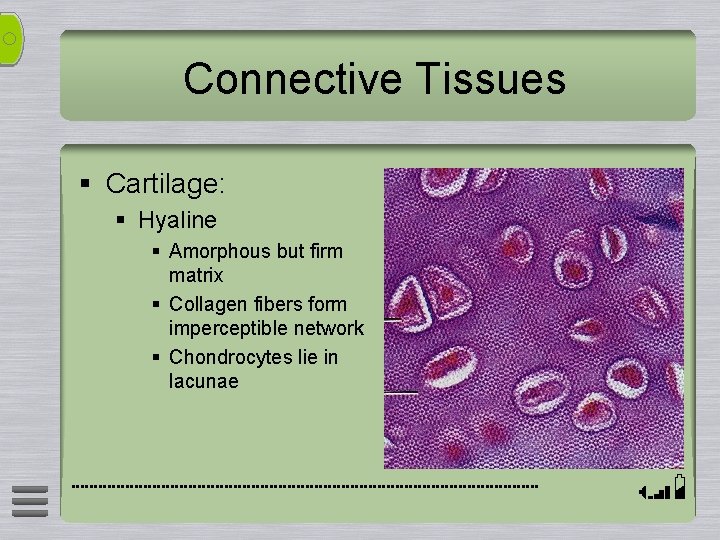
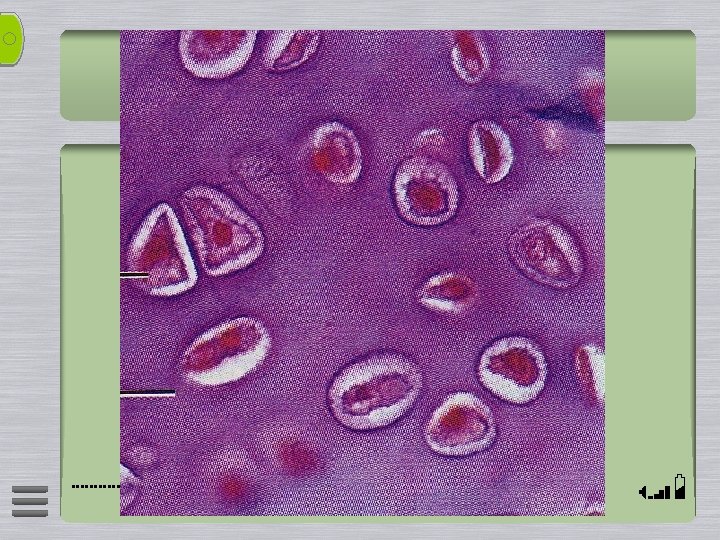
Connective Tissues § Cartilage: § Hyaline § Amorphous but firm matrix § Collagen fibers form imperceptible network § Chondrocytes lie in lacunae
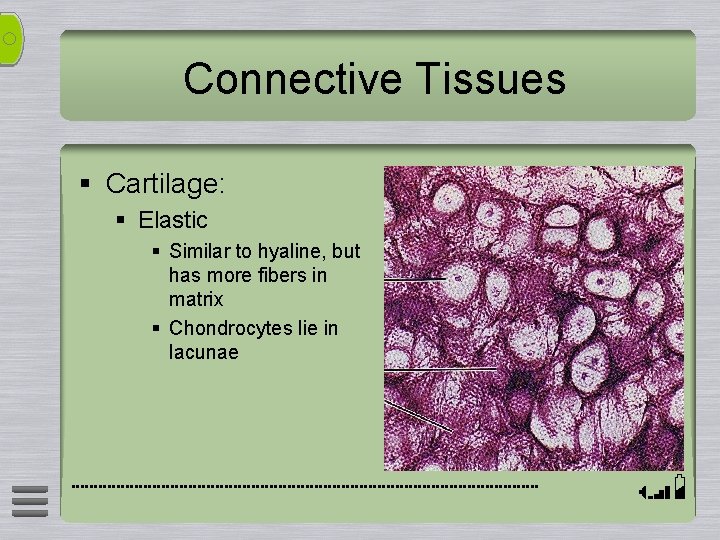
Connective Tissues § Cartilage: § Elastic § Similar to hyaline, but has more fibers in matrix § Chondrocytes lie in lacunae
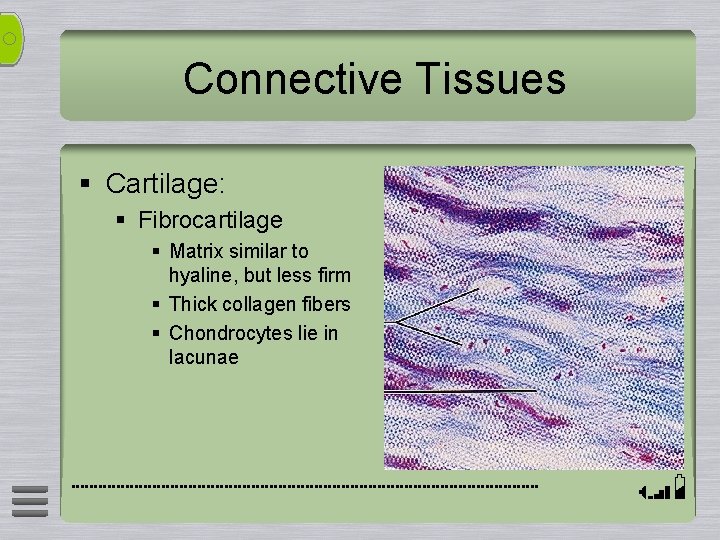
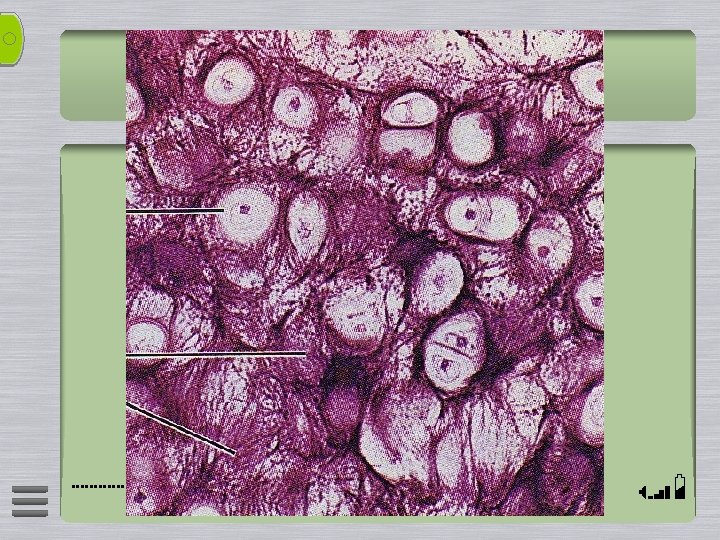
Connective Tissues § Cartilage: § Fibrocartilage § Matrix similar to hyaline, but less firm § Thick collagen fibers § Chondrocytes lie in lacunae
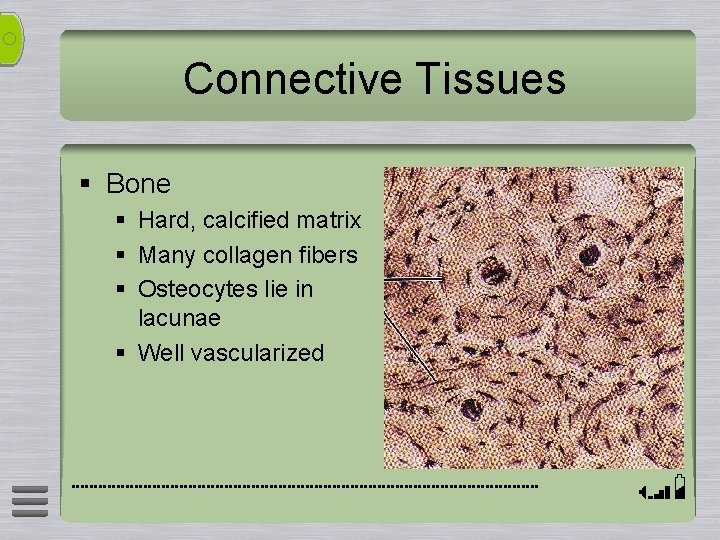
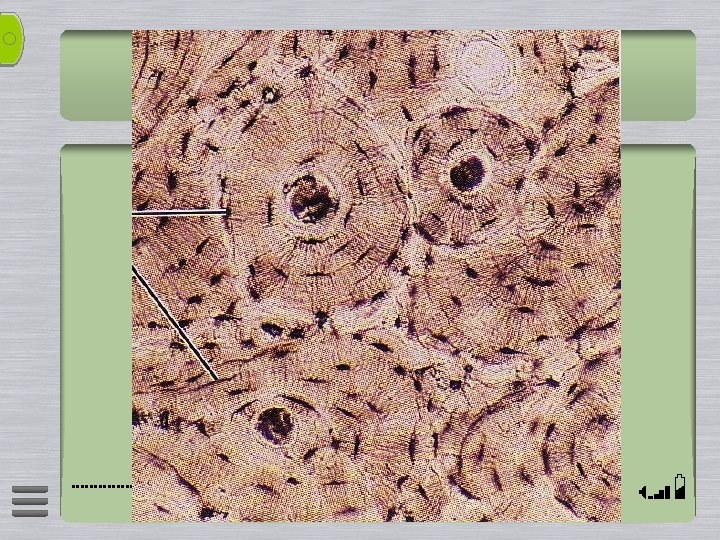
Connective Tissues § Bone § Hard, calcified matrix § Many collagen fibers § Osteocytes lie in lacunae § Well vascularized
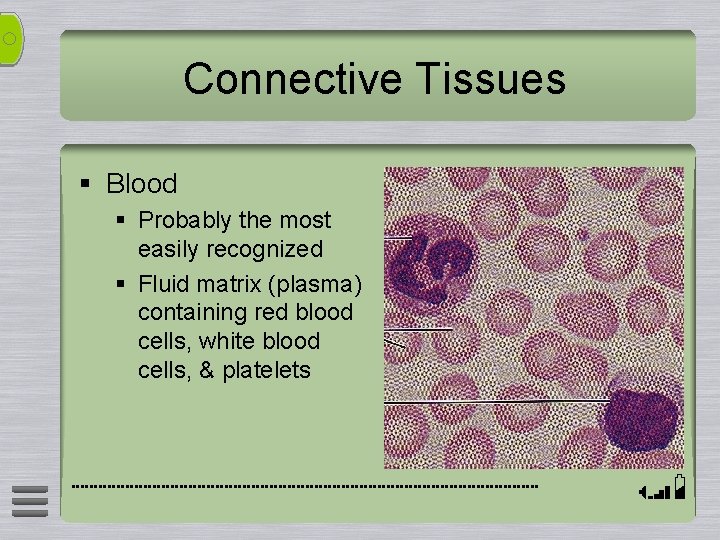
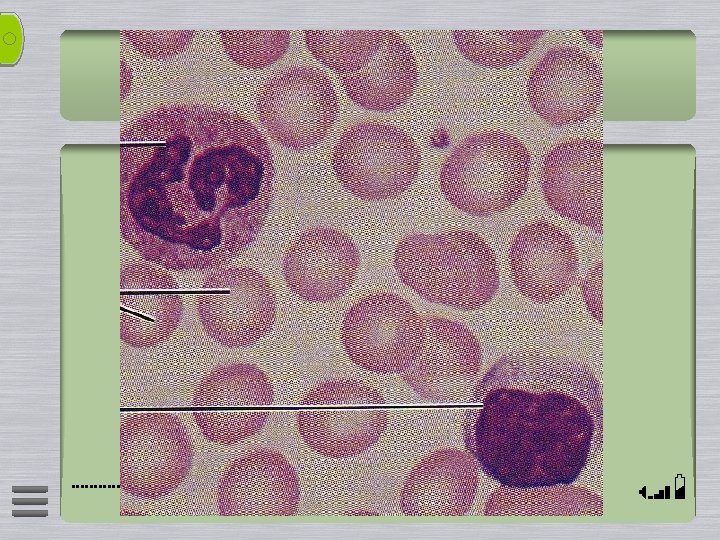
Connective Tissues § Blood § Probably the most easily recognized § Fluid matrix (plasma) containing red blood cells, white blood cells, & platelets
Muscle Tissues § § Highly specialized to contract Produces most types of body movement Tend to be elongated 3 types: § Skeletal § Cardiac § Smooth
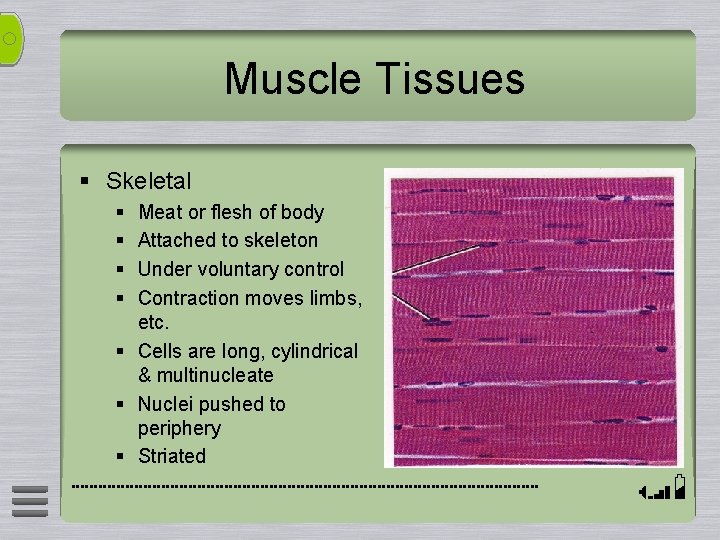
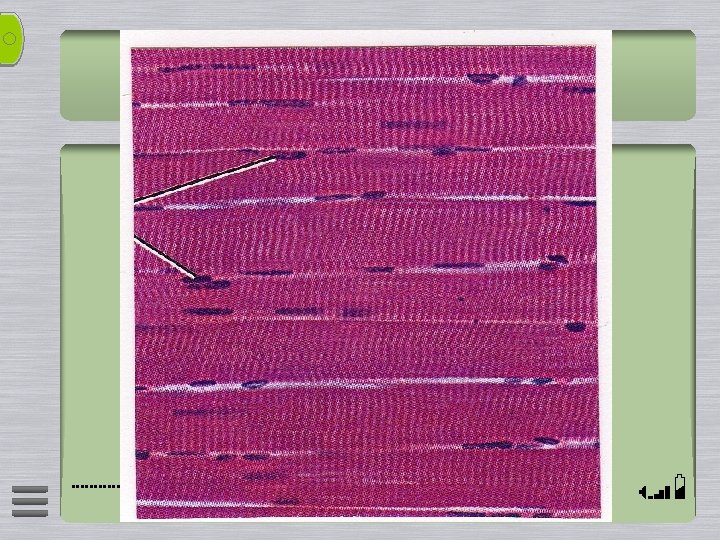
Muscle Tissues § Skeletal § § Meat or flesh of body Attached to skeleton Under voluntary control Contraction moves limbs, etc. § Cells are long, cylindrical & multinucleate § Nuclei pushed to periphery § Striated
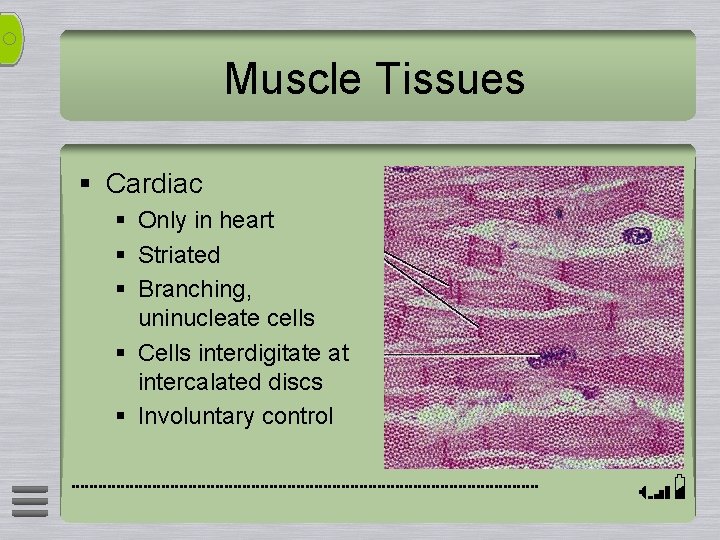
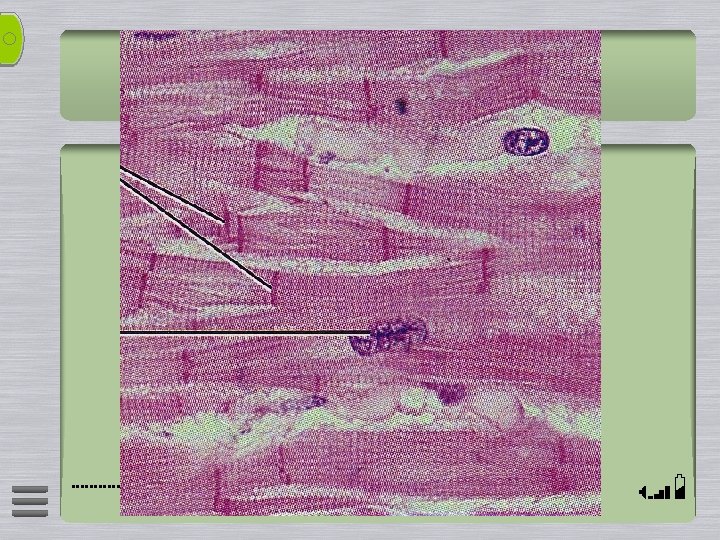
Muscle Tissues § Cardiac § Only in heart § Striated § Branching, uninucleate cells § Cells interdigitate at intercalated discs § Involuntary control
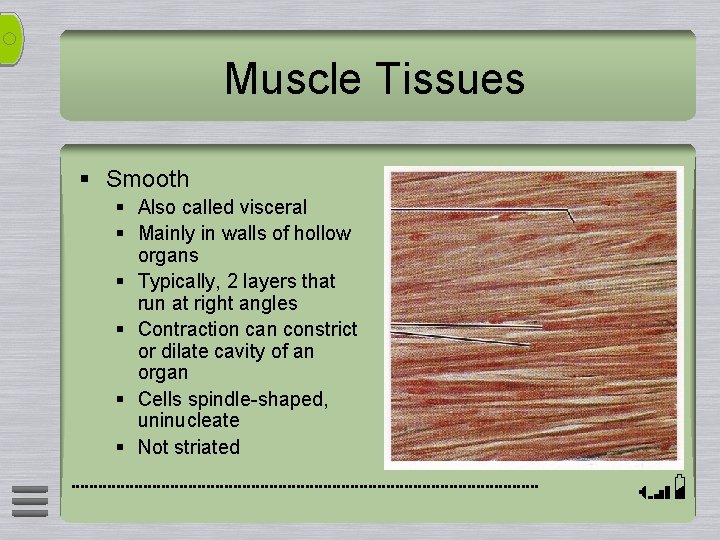
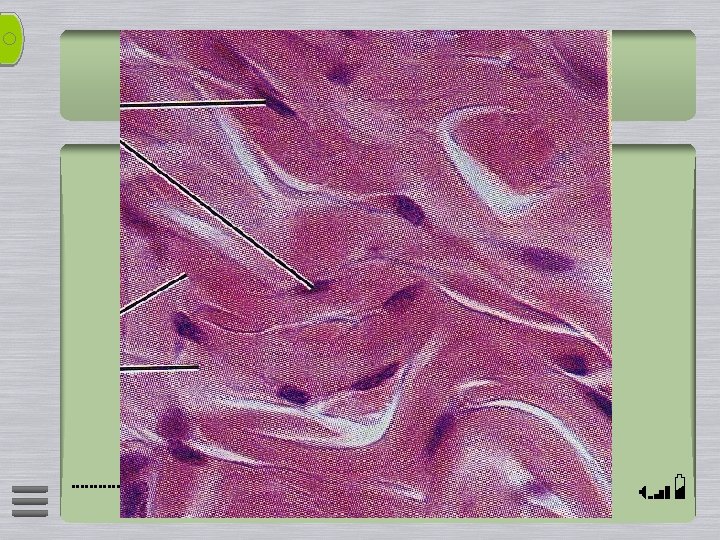
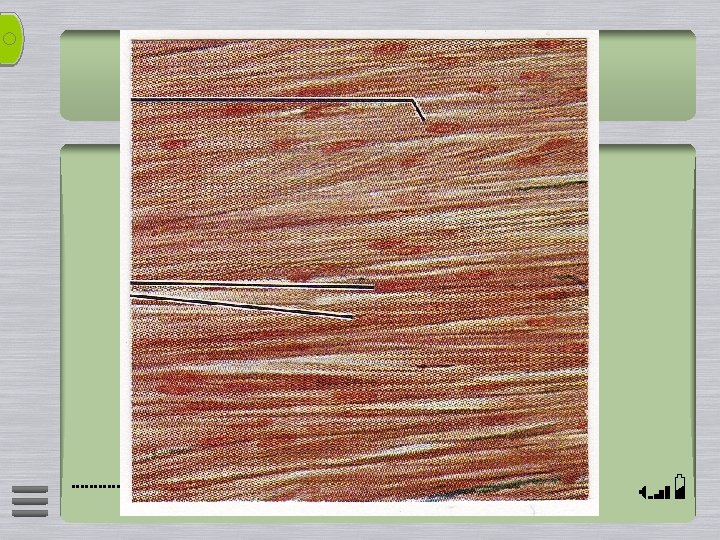
Muscle Tissues § Smooth § Also called visceral § Mainly in walls of hollow organs § Typically, 2 layers that run at right angles § Contraction can constrict or dilate cavity of an organ § Cells spindle-shaped, uninucleate § Not striated
Nervous Tissue § Composed of 2 major cell populations § Neuroglia - protect, support, & insulate neurons § Neurons - highly specialized to receive stimuli & conduct impulses to all parts of body (irritability & conductivity)
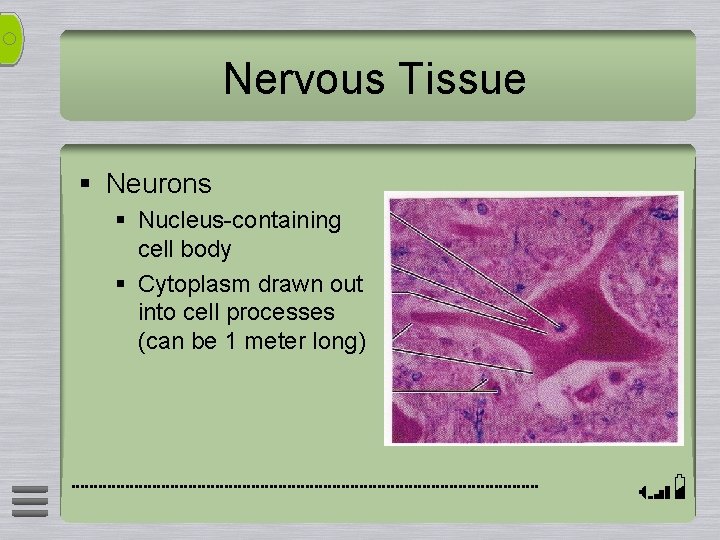
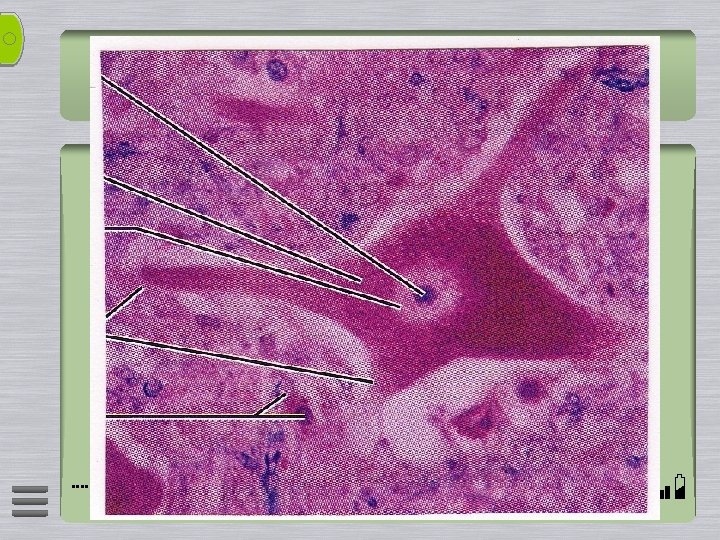
Nervous Tissue § Neurons § Nucleus-containing cell body § Cytoplasm drawn out into cell processes (can be 1 meter long)