
Exercise 5 b 1 Hodi Sextus ascendit arborarborem

Exercise 5 b 1. Hodiē Sextus ____ascendit (arbor/arborem) 2. Sextus ___conspicit. (Marcus/Marcum) 3. Nihil ____terret. (Sextum/Sextus) 4. _______puellae conspiciunt. (Lupus/Lupum)
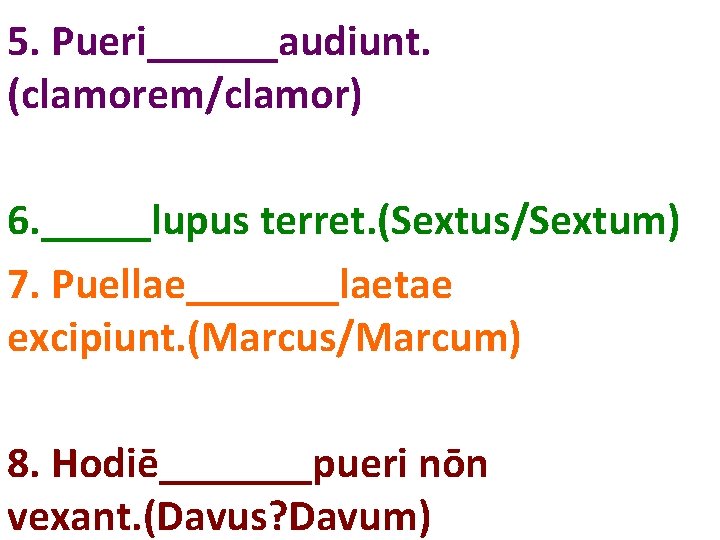
5. Pueri______audiunt. (clamorem/clamor) 6. _____lupus terret. (Sextus/Sextum) 7. Puellae_______laetae excipiunt. (Marcus/Marcum) 8. Hodiē_______pueri nōn vexant. (Davus? Davum)

Complementary Infinitive • Is a second verb used to complete the meaning of the first verb, in the infinitive form. • An infinitive is a nonfinite verb • Nonfinite verb- is a verb not limited by tense, person, or number.
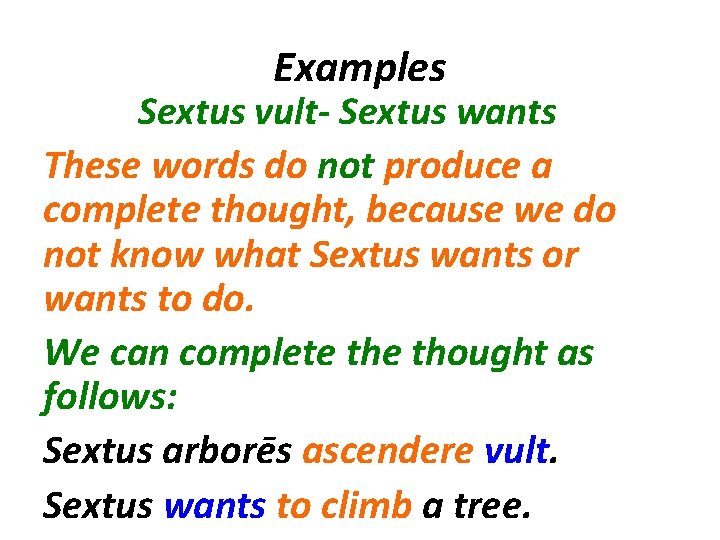
Examples Sextus vult- Sextus wants These words do not produce a complete thought, because we do not know what Sextus wants or wants to do. We can complete thought as follows: Sextus arborēs ascendere vult. Sextus wants to climb a tree.

The Infinitive • The Infinitive- is a form of a verb that can be recognized by the letters – re, and is translated, • Ridere- to laugh • Ascendere- to climb • Dormire – to sleep * A Complementary Infinitive usually comes in front of the verb.
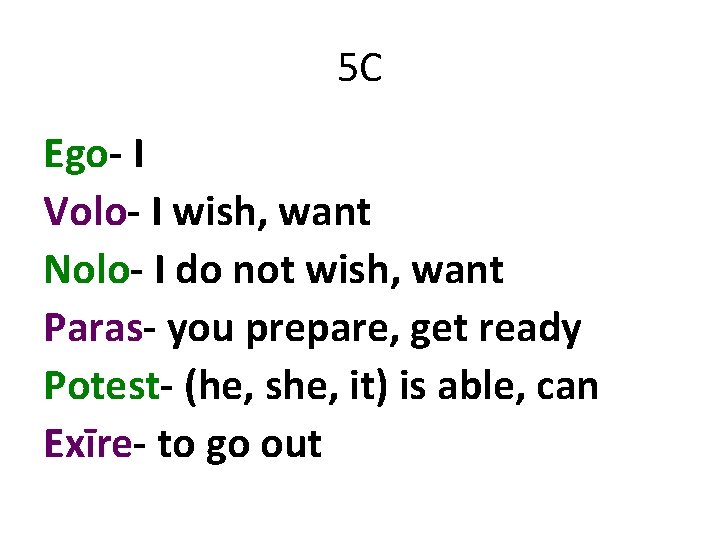
5 C Ego- I Volo- I wish, want Nolo- I do not wish, want Paras- you prepare, get ready Potest- (he, she, it) is able, can Exīre- to go out
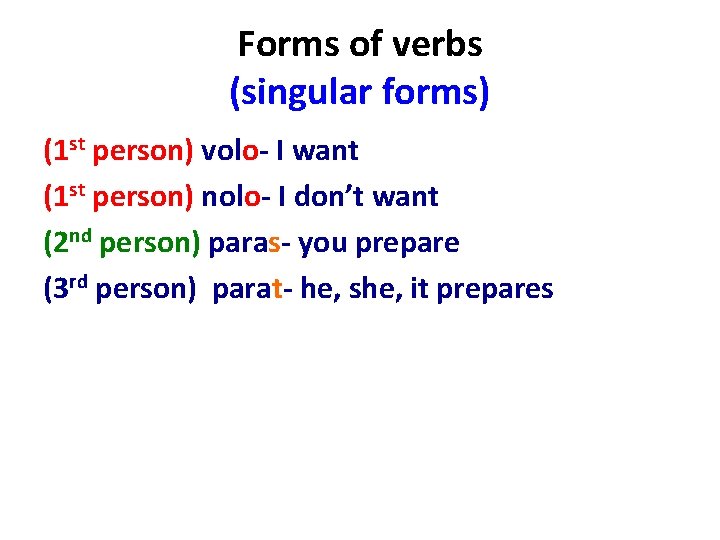
Forms of verbs (singular forms) (1 st person) volo- I want (1 st person) nolo- I don’t want (2 nd person) paras- you prepare (3 rd person) parat- he, she, it prepares
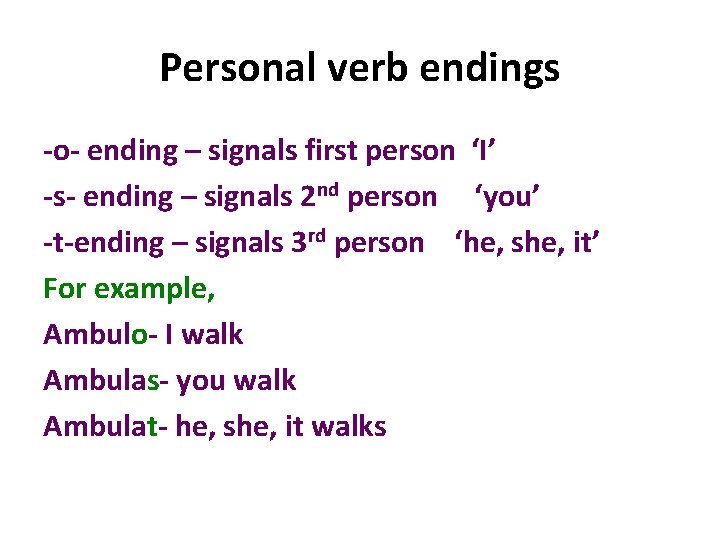
Personal verb endings -o- ending – signals first person ‘I’ -s- ending – signals 2 nd person ‘you’ -t-ending – signals 3 rd person ‘he, she, it’ For example, Ambulo- I walk Ambulas- you walk Ambulat- he, she, it walks
- Slides: 8