
Exercise 2 Objectives Statement Purpose Describe the OSI
Exercise # 2 Objectives / Statement Purpose: Describe the OSI Model Explain how Layer Model use in the internetwork Describe the purpose of Cabling Different Cabling Connection Activity Outcomes: The student should know the how Data transfer across Internetwork The student should know the OSI Model in detail with their applications The student should know how to make a UTP cable ( Straight and Cross Cable) The student should know how to connect a PC with a Router/Switch. The students should know to identify different type of connectors, cables and Network Devices.
Instructions: The OSI Reference Model 1 - International Organization for Standardization (ISO) developed a model that allowed vendors to sell and create networking devices that would be compatible and operate with other networks. This model is known as the Open Systems Interconnection (OSI) Reference Model. 2 -The OSI Reference Model is broken down into seven layers. Every process that occurs during network communication can be associated with a layer of the model. 3 - When two computers communicate with one another, one layer on one computer exchanges information with that same layer on the second computer.
THE OSI MODEL Established in 1947, the International Standards Organization (ISO) is a multinational body dedicated to worldwide agreement on international standards. An ISO standard that covers all aspects of network communications is the Open Systems Interconnection (OSI) model. It was first introduced in the late 1970 s.
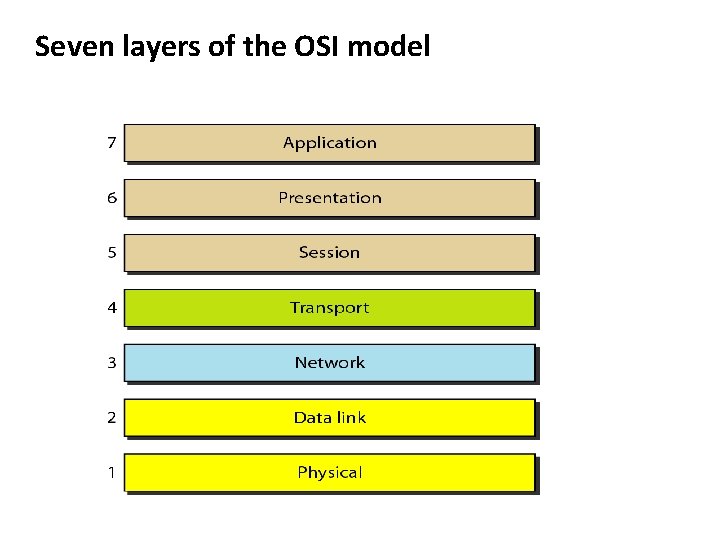
Seven layers of the OSI model

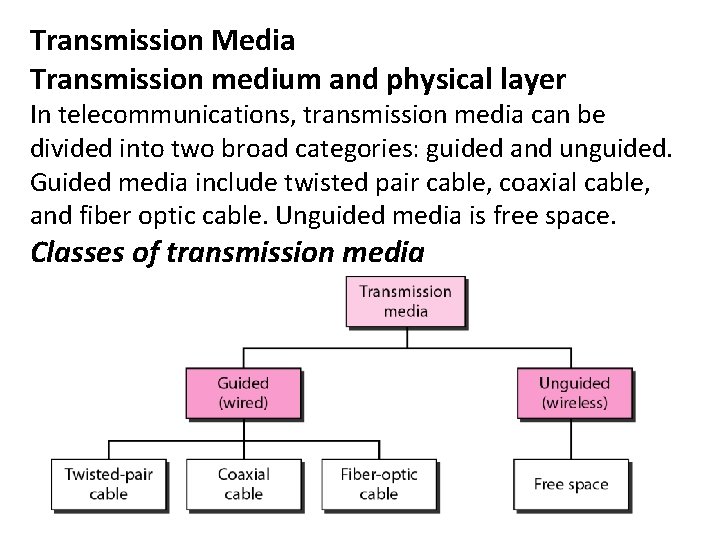
Transmission Media Transmission medium and physical layer In telecommunications, transmission media can be divided into two broad categories: guided and unguided. Guided media include twisted pair cable, coaxial cable, and fiber optic cable. Unguided media is free space. Classes of transmission media
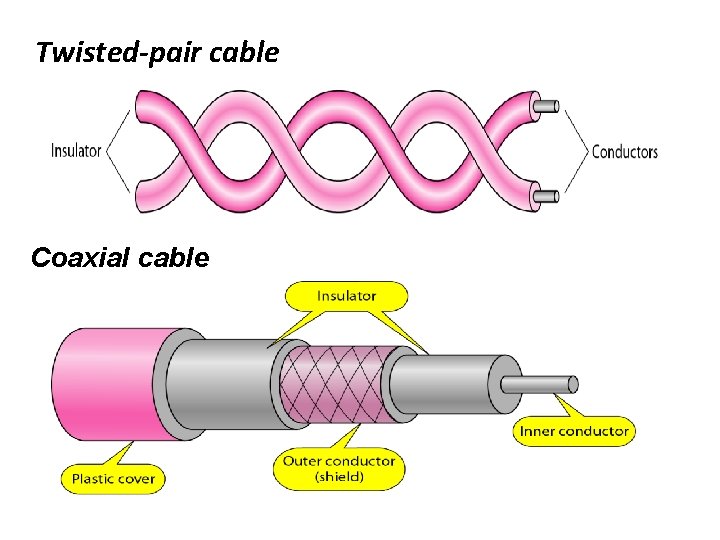
Twisted-pair cable Coaxial cable
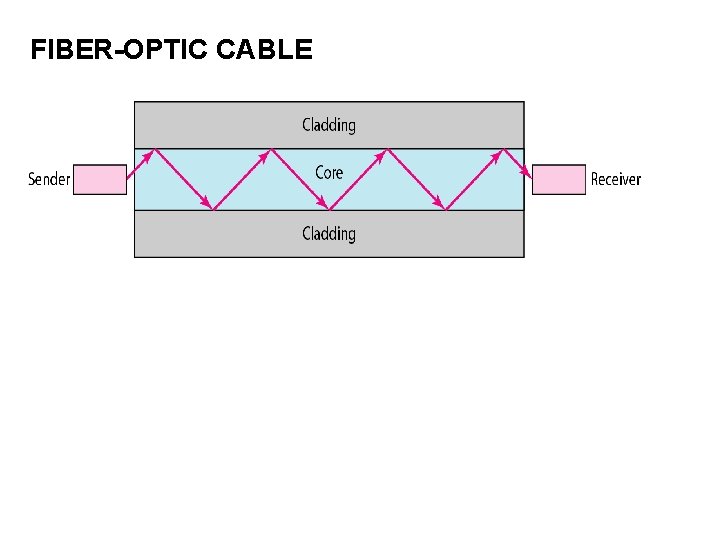
FIBER-OPTIC CABLE
ADDRESSING Four levels of addresses are used in an internet employing the TCP/IP protocols: physical, logical, port, and specific. IP addresses
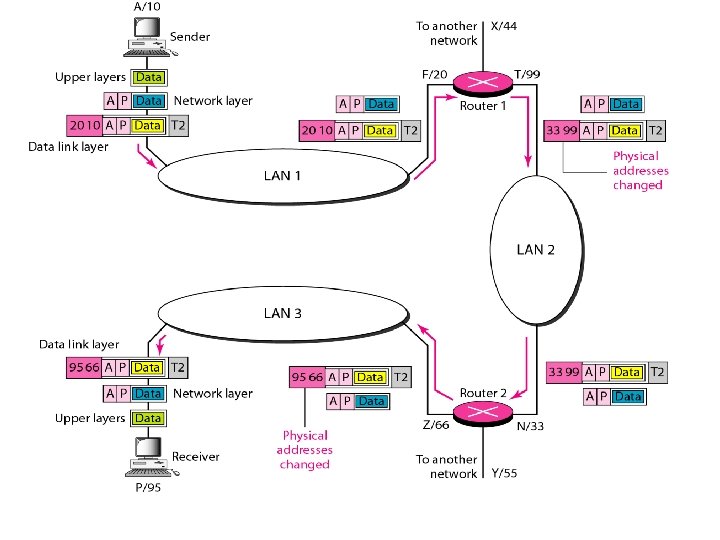
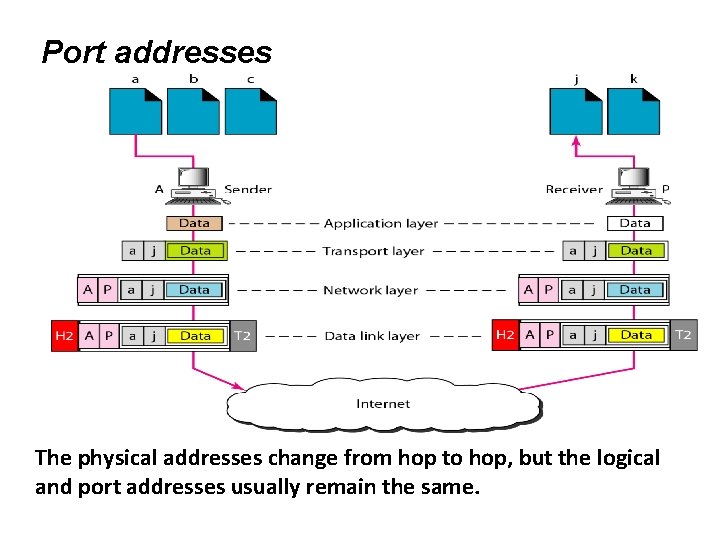
Port addresses The physical addresses change from hop to hop, but the logical and port addresses usually remain the same.
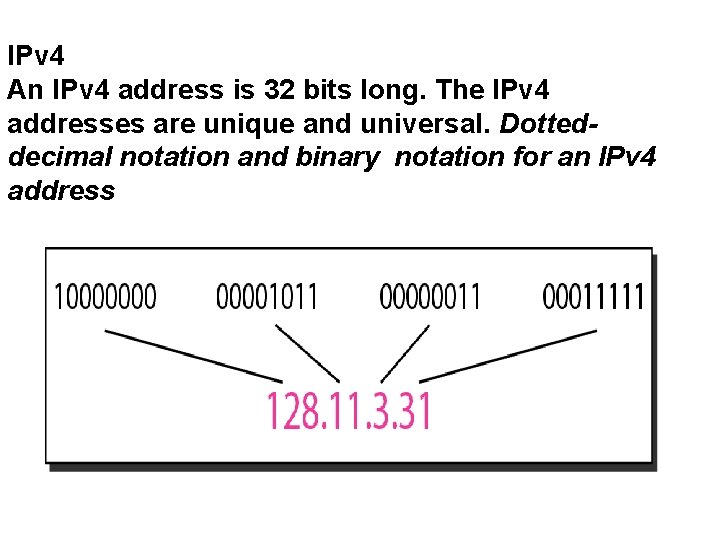
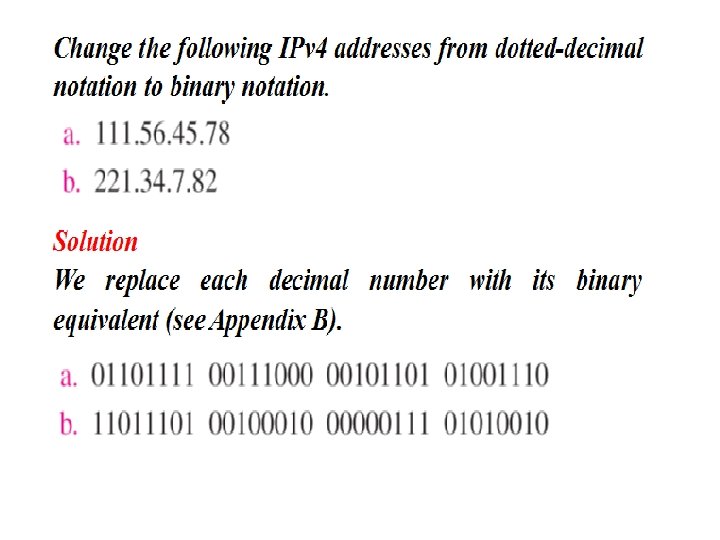
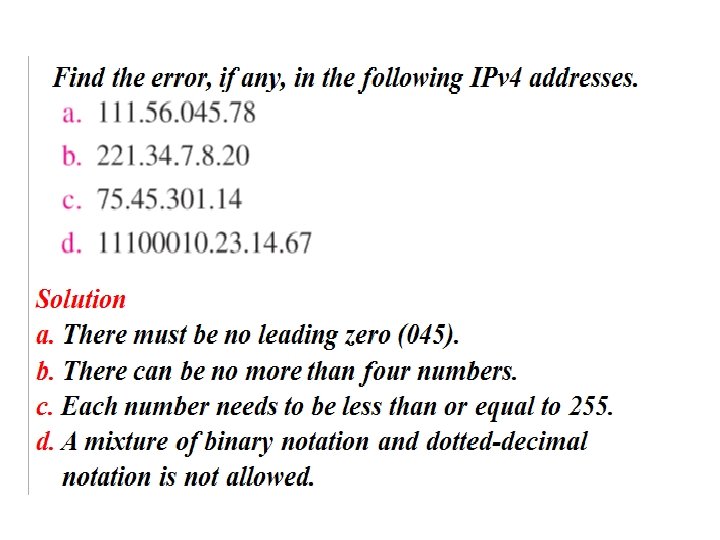
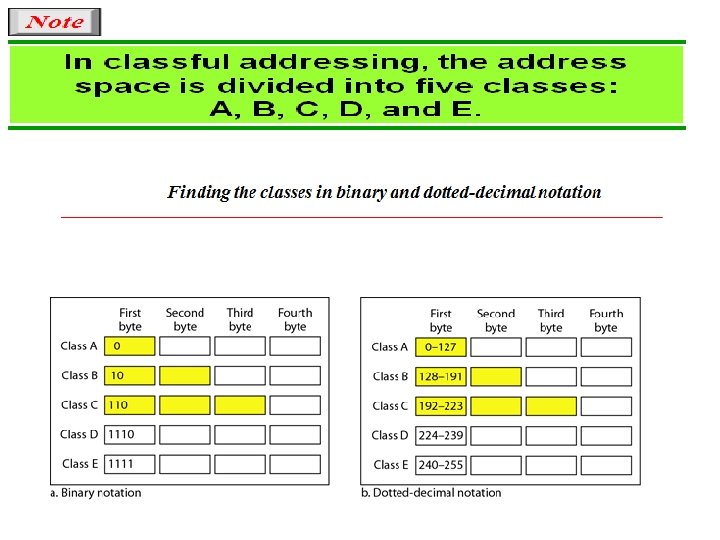
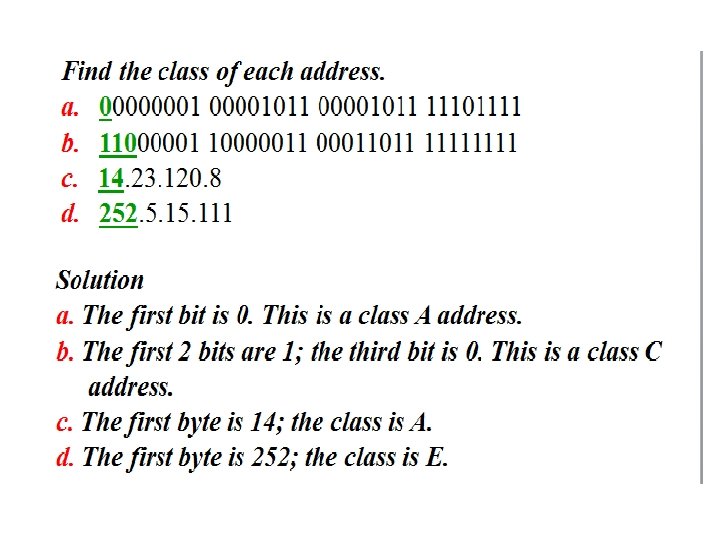
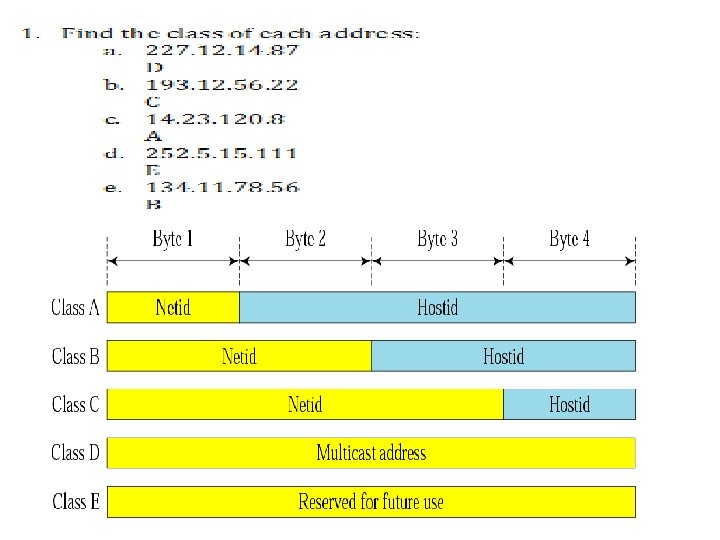
IPv 4 An IPv 4 address is 32 bits long. The IPv 4 addresses are unique and universal. Dotteddecimal notation and binary notation for an IPv 4 address
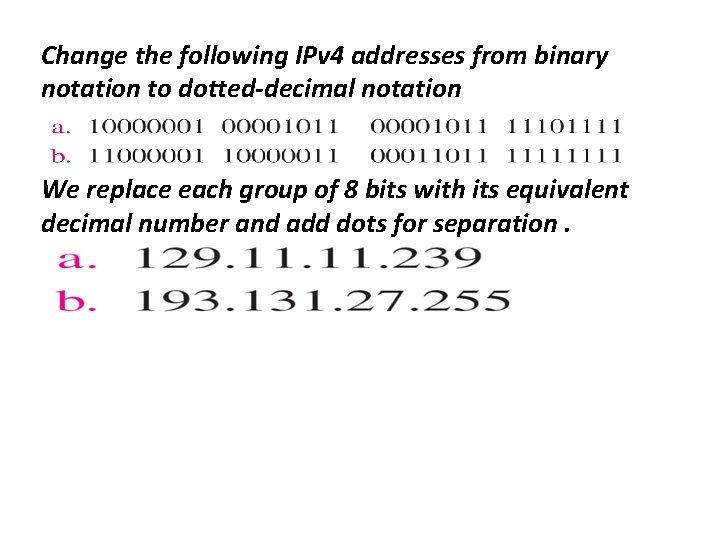
Change the following IPv 4 addresses from binary notation to dotted-decimal notation We replace each group of 8 bits with its equivalent decimal number and add dots for separation.
- Slides: 20